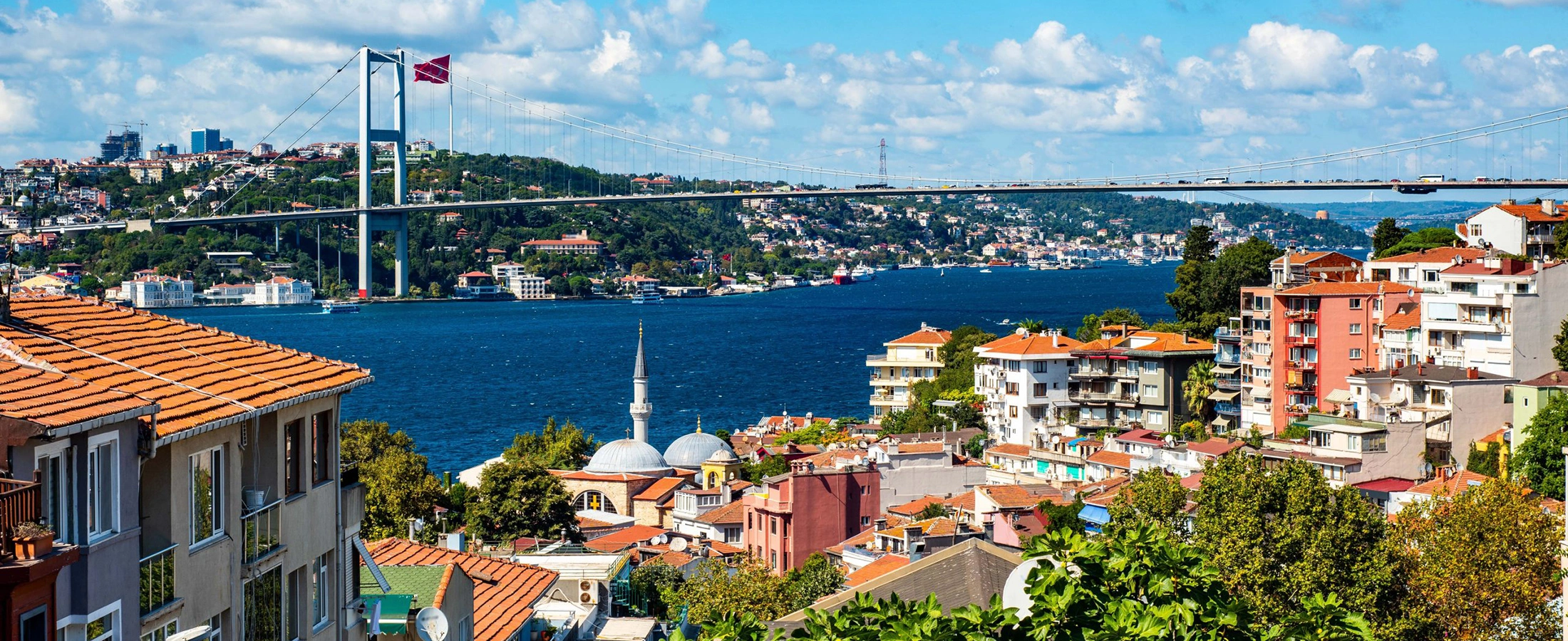
Private Kuzguncuk Walking Tour
Ask us about a tailor-made private walk through Kuzguncuk's historic houses, Jewish, Armenian, Greek and Muslim heritage, community garden, cafés and Bosphorus streets.
Request a Custom Tour





Historic Kuzguncuk lies on Istanbul's Asian shore within the Üsküdar district, between central Üsküdar and Beylerbeyi. Sheltered in a narrow green valley opening toward the Bosphorus, it feels surprisingly intimate despite being only a short distance from some of the city's busiest transport routes.
The neighborhood is best known for its colorful wooden houses, quiet side streets, İcadiye Caddesi, historic religious buildings and strong tradition of neighborhood life. Churches, synagogues and mosques stand within a remarkably compact area, reflecting the Jewish, Greek Orthodox, Armenian and Muslim communities that shaped Kuzguncuk over centuries.
Unlike the monumental Historic Peninsula, Kuzguncuk tells Istanbul's story through human-scale architecture: timber houses with bay windows, small gardens, corner shops, bakeries, neighborhood cafés, modest places of worship and streets that climb quickly toward the wooded slopes above the Bosphorus.
The district also preserves one of Istanbul's most celebrated community green spaces, Kuzguncuk Bostanı. The garden has become closely associated with local memory, urban agriculture and residents' efforts to protect open space within a rapidly changing metropolis.
For travelers interested in multicultural Istanbul, architecture, religious heritage, photography, neighborhood food, Bosphorus scenery or slower local exploration, Kuzguncuk is one of the most rewarding places to visit on the Asian side.
Synagogues, Armenian and Greek Orthodox churches and historic mosques preserve the memory of communities that lived side by side in Kuzguncuk.
Wooden and masonry houses with bay windows, gardens and pastel façades create one of Istanbul's most photogenic residential streetscapes.
A beloved neighborhood garden and green space that represents community memory, urban agriculture and local stewardship.
Cafés, bakeries, residents, small shops and everyday street life keep Kuzguncuk from feeling like an open-air museum.
Essential information about Kuzguncuk's location, multicultural history, colorful architecture, religious heritage, community garden, Bosphorus setting and the easiest way to explore the neighborhood on foot.
On Istanbul's Asian side in Üsküdar, between central Üsküdar and Beylerbeyi on the Bosphorus.
A compact historic residential neighborhood known for colorful houses, cafés, gardens and steep side streets.
Bet Yaakov and Bet Nissim preserve the memory of Kuzguncuk's historically important Jewish community.
Armenian and Greek Orthodox churches remain among the neighborhood's defining architectural landmarks.
Üryanizade Mosque and Kuzguncuk Mosque form part of the district's later Ottoman and Republican religious landscape.
Kuzguncuk Bostanı is a community garden, recreation space and symbol of neighborhood identity.
Explore slowly on foot, using İcadiye Caddesi as the main spine and wandering into the residential side streets.
Allow two to three hours for the neighborhood, or half a day with a relaxed meal, photography and religious heritage stops.
Kuzguncuk is important because it preserves one of Istanbul's clearest examples of a small Bosphorus neighborhood shaped by several religious and cultural communities.
For centuries, Jewish, Greek Orthodox, Armenian and Muslim residents contributed to the district's social and architectural landscape. Their legacy remains visible in synagogues, churches, mosques, cemeteries, street names, houses and the memory of neighborhood institutions.
The importance of Kuzguncuk is not limited to religious diversity. Its surviving wooden houses and modest urban scale provide a valuable contrast to the apartment blocks that transformed many Istanbul neighborhoods during the 20th century.
The neighborhood has also become an important example of local attachment to place. Residents have repeatedly defended the character of streets, gardens and public spaces, most famously around Kuzguncuk Bostanı.
Today Kuzguncuk is widely visited for photography and cafés, but its deeper value lies in the way architecture, memory, religion, urban gardening and ordinary daily life remain layered together within a walkable area.
The Bosphorus shoreline around modern Kuzguncuk was used long before the present neighborhood took shape. Byzantine-era traditions connect this section of the Asian shore with earlier settlements and religious foundations, although the exact relationship between ancient place names and the modern district is not always certain.
By the Ottoman period, Kuzguncuk developed as a small Bosphorus village outside the dense urban center of Üsküdar. Its sheltered valley, shoreline access and proximity to the city made it attractive to communities seeking a residential setting connected to Istanbul by road and boat.
Jewish settlement became especially important. Sources from the 17th century already describe Kuzguncuk as a place with a substantial Jewish presence, and the neighborhood later became one of the best-known centers of Jewish life on Istanbul's Asian side.
Greek Orthodox residents also formed a longstanding community, while Armenian families became increasingly visible particularly during the 18th and 19th centuries. Churches, schools, synagogues, shops and communal institutions gave the district a distinctly plural character.
The 19th century brought many of the buildings that now define historic Kuzguncuk. Religious structures were rebuilt or expanded, wooden and masonry houses lined the valley streets, and the Bosphorus villages became increasingly connected with the growing imperial capital.
During the 20th century, demographic change affected all of Istanbul's historic minority neighborhoods. Migration, political tensions, economic pressures and the wider transformation of the city reduced the size of Kuzguncuk's Greek, Armenian and Jewish communities.
Yet the architectural and cultural memory of those communities survived. From the late 20th century onward, Kuzguncuk also became associated with artists, writers, television productions, conservation-minded residents and people attracted by the neighborhood's human scale.
The valley and shoreline formed part of the wider suburban landscape beyond historic Üsküdar.
Kuzguncuk developed as a compact village with strong Jewish and Greek Orthodox communities.
Armenian settlement increased and many of the district's present religious monuments took shape.
Wooden houses, gardens, shops and places of worship established the architectural character admired today.
Population movements and Istanbul's rapid urbanization altered the district's social composition.
Conservation, neighborhood activism, cafés, arts and media attention helped renew interest in the area.
The origin of the name Kuzguncuk is not completely settled, and several explanations appear in historical writing and local tradition.
One well-known story connects the neighborhood with a dervish or holy man called Kuzgun Baba, said in tradition to have lived here during the early Ottoman period. In this interpretation, the place name became associated with his memory.
Another explanation proposes that Kuzguncuk developed linguistically from an older name such as Kosinitza or a similar Byzantine-era form. Older references to the Bosphorus shore also include names connected with Byzantine religious buildings.
In modern Turkish, kuzgun means raven, and Kuzguncuk can sound like a diminutive form meaning something close to “little raven.” That literal reading is memorable, but it does not by itself prove the historical etymology.
The most distinctive historical feature of Kuzguncuk is the closeness of religious buildings belonging to different communities.
Within a short walk, visitors encounter Bet Yaakov Synagogue, Bet Nissim Synagogue, Surp Krikor Lusavoriç Armenian Church, Agios Panteleimon Greek Orthodox Church, Agios Georgios Greek Orthodox Church, Kuzguncuk Mosque and Üryanizade Mosque.
This physical proximity reflects the neighborhood's historical composition. Jews, Greeks, Armenians and Muslims did not live in a perfectly conflict-free world, but they shared streets, shops, schools, waterfront spaces and everyday neighborhood routines over generations.
That complexity is important. Kuzguncuk should not be reduced to a romantic slogan about tolerance alone. Its history includes demographic change and difficult periods as well as cooperation, friendship and cultural exchange.
The surviving buildings therefore function as more than picturesque landmarks. Together they form a rare urban archive of Istanbul's plural social history.
Kuzguncuk holds a special place in the history of Jewish Istanbul. The neighborhood developed into one of the most significant Jewish residential centers on the Asian side of the Bosphorus.
By the Ottoman centuries, Jewish families were well established here. Community life included synagogues, schools, shops, charitable networks and nearby burial grounds.
Two synagogues remain particularly important: Bet Yaakov on İcadiye Caddesi and Bet Nissim on a quieter side street. Their scale fits the neighborhood closely; neither was designed as a monumental city landmark, but both preserve the memory of a once much larger local congregation.
On the slopes above Kuzguncuk, the historic Nakkaştepe Jewish Cemetery adds another major layer to this heritage. Old gravestones preserve Hebrew inscriptions and the memory of generations connected with Istanbul's Jewish community.
Bet Yaakov Synagogue is the best-known surviving synagogue in Kuzguncuk and one of the neighborhood's most important religious monuments.
The commonly cited date for the present building is 1878, although documentary evidence suggests that a synagogue existed on the site earlier and received permission for repair or renewal before that date.
Its location on İcadiye Caddesi places it directly within the everyday street fabric rather than in an isolated religious precinct. That relationship between worship and neighborhood life is characteristic of historic Kuzguncuk.
Although much of the former Jewish population later moved to other districts, the synagogue continues to represent the families and communal traditions connected with Kuzguncuk.
Smaller and less immediately visible than Bet Yaakov, Bet Nissim Synagogue preserves another layer of Kuzguncuk's Jewish history.
The congregation is associated with the 19th century, and the synagogue is often known by the traditional name Kal de Ariva, meaning the upper synagogue in contrast with the lower synagogue closer to the main street.
Its modest scale helps explain how religious life functioned at neighborhood level. Kuzguncuk's Jewish community did not depend on one monumental sanctuary; local worship spaces were woven into residential streets.
Because access conditions can change and the building has protected religious status, exterior appreciation is the safest assumption unless a visit has been arranged in advance.
Near the Bosphorus stands Surp Krikor Lusavoriç Armenian Church, one of the defining monuments of Kuzguncuk's Armenian heritage.
A first wooden church was constructed in 1835. The present structure was rebuilt in 1861, giving the growing Armenian community a more permanent place of worship.
The church is especially notable for its visible dome and bell tower. Its scale is substantial enough to mark the neighborhood skyline while remaining closely integrated with the surrounding houses and commercial streets.
The interior preserves decorative woodwork and later embellishments, while the courtyard contains features connected with the community's religious and social history.
The building remains a place of worship. Visitors should dress respectfully, avoid services unless attending appropriately and never treat an open church as simply a photography location.
Greek Orthodox residents formed one of the historic communities of Kuzguncuk, and their churches remain essential to understanding the district.
The best-known is Agios Panteleimon Greek Orthodox Church. A church opened here in 1831, while the present building took shape after a late-19th-century reconstruction. Its tall bell tower, added in the early 20th century, is one of Kuzguncuk's most recognizable architectural details.
A small hagiasma, or holy spring, beside the church recalls the long Byzantine and post-Byzantine tradition of sacred water sites in Istanbul.
Kuzguncuk also preserves Agios Georgios Greek Orthodox Church, another important reminder of the neighborhood's Rum community. Its history extends back before the present streetscape, with major renovation recorded in the early 19th century.
Together these churches demonstrate that Kuzguncuk's Orthodox heritage was not a minor decorative element but part of a sustained community presence.
Kuzguncuk's Muslim religious architecture is smaller in scale than the imperial mosques of nearby Üsküdar, but it is closely tied to the neighborhood's character.
The picturesque Üryanizade Ahmet Esat Efendi Mosque stands beside the Bosphorus and dates to the 19th century. Built largely in wood, it is especially admired for its delicate wooden minaret and almost residential scale.
The later Kuzguncuk Mosque, built in 1952, stands immediately beside Surp Krikor Lusavoriç Armenian Church. The side-by-side position of mosque and church has become one of the most frequently cited visual symbols of Kuzguncuk's multi-religious urban landscape.
Local historical accounts also preserve memories of support across community lines during the mosque's construction, adding another layer to the site's symbolic importance.
İcadiye Caddesi is the social and visual spine of Kuzguncuk.
Beginning close to the Bosphorus, the street climbs gradually inland through a sequence of cafés, bakeries, small restaurants, grocers, bookshops, workshops, religious buildings and residential façades.
The attraction is not a single monument. It is the rhythm created by narrow shopfronts, trees, wooden bay windows, people sitting outside cafés and side streets disappearing uphill between older houses.
İcadiye is also the easiest way to understand Kuzguncuk's scale. Most of the neighborhood's major landmarks lie either directly on the street or within a short detour from it.
Visitors should remember that this is still a functioning local street. Photographers stopping in doorways or large groups blocking the pavement can quickly disrupt daily life.
For many visitors, the first image associated with Kuzguncuk is a row of colorful historic houses.
The neighborhood preserves timber and masonry residences dating mainly from the late Ottoman and early modern periods. Projecting bay windows, narrow façades, timber cladding, shutters, balconies, garden walls and steep roofs create a distinctly domestic architectural language.
Not every old-looking house is untouched or original. Many buildings have been repaired, restored or reconstructed over time. Even so, the surviving scale of the streets remains unusually coherent for central Istanbul.
The best houses are not concentrated in one staged “photo street.” Walk slowly through the lanes rising from İcadiye Caddesi and look for changing combinations of color, timber, stone walls, gardens and Bosphorus glimpses.
Projecting upper floors create shade, privacy and strong vertical rhythm along narrow streets.
Wooden cladding gives many houses the warm, layered texture associated with old Istanbul neighborhoods.
Restored façades in red, blue, green, yellow and softer tones give Kuzguncuk its famous photographic character.
Vines, fruit trees, flowers and courtyard greenery soften the dense residential streets.
The valley sides rise quickly, creating strong views back toward rooftops and the Bosphorus.
Most buildings are homes or working premises, so photography should respect residents' privacy.
Kuzguncuk Bostanı is one of the most meaningful open spaces in the neighborhood.
Known in local memory as a historic garden area, the site became the focus of repeated efforts by residents to protect it from development. Over time, that struggle turned the bostan into a symbol of community participation and attachment to place.
Today the landscaped area combines urban agriculture, hobby plots, fruit trees, walking paths, recreation and community use. It offers a striking green break from the closely packed houses around İcadiye Caddesi.
The bostan should not be treated only as an Instagram background. Its importance comes from the relationship between local residents, land, food-growing traditions and the right to maintain open space within the city.
A visit is especially pleasant in spring and early summer when planting, greenery and fruit trees bring the garden to life.
Kuzguncuk opens directly onto the Bosphorus, but its waterfront is more intimate than the large squares of Üsküdar or Beşiktaş.
The shore offers views across the water toward the European side, passing ferries, cargo vessels, fishing boats and the constantly changing light of the strait.
Historic waterfront houses and the small-scale religious architecture near the shore help preserve the sense of an old Bosphorus village even though major roads now pass through the area.
The waterfront is particularly atmospheric in the morning and near sunset. It also provides a useful orientation point before entering the narrow streets inland.
For a longer walk, continue south toward Üsküdar or north toward Beylerbeyi, depending on weather and traffic conditions.
Kuzguncuk's food scene suits the neighborhood's scale: small cafés, bakeries, breakfast places and relaxed restaurants rather than large tourist complexes.
Several cafés serve traditional breakfast plates, eggs, cheeses, olives, bread, jams and tea.
Simit, poğaça, börek and pastries make an easy morning or afternoon snack.
A slow coffee stop fits naturally into a walk along İcadiye Caddesi.
Simple glasses of tea remain one of the best ways to sit and watch neighborhood life.
Look for small restaurants serving seasonal Turkish cooking, vegetables, soups and daily dishes.
Cake shops, pastry counters and traditional sweets make Kuzguncuk an easy place for an afternoon break.
Popular cafés can become crowded on Saturday and Sunday, especially from late morning onward.
A few steps away from the busiest stretch often brings a calmer atmosphere and more local rhythm.
Kuzguncuk's colorful houses and village-like streets have made it a favorite location for Turkish television series, films, commercials and photography.
This visibility helped create a powerful nostalgic image of the neighborhood: a place where neighbors know one another, children play in the street and old Istanbul survives behind brightly painted wooden façades.
The classic television association with Perihan Abla remains part of local popular memory, and one of the neighborhood streets carries the name.
Media attention has brought visitors and economic activity, but it has also increased pressure on residential streets. The most rewarding way to experience Kuzguncuk is therefore to look beyond filming locations and notice the real neighborhood functioning around them.
Walk the neighborhood's main street for cafés, shops, religious monuments and historic architecture.
See one of the most important surviving monuments of Kuzguncuk's Jewish community.
Discover the quieter upper synagogue associated with the historic Sephardic neighborhood.
Admire the domed 19th-century Armenian church close to the waterfront.
Look for the Greek Orthodox church, its prominent bell tower and nearby holy spring.
Explore another important layer of Kuzguncuk's historic Greek Orthodox presence.
See the mosque standing directly beside the Armenian church in the heart of the neighborhood.
Visit the small Bosphorus-side mosque admired for its wooden architecture and elegant minaret.
Experience the community garden that has become a symbol of local memory and urban green space.
Wander through side streets to photograph timber houses, bay windows, gardens and steep lanes.
Pause beside the water for ships, European-shore views and the changing light of the strait.
Climb above the neighborhood for greener surroundings, historic cemetery landscapes and wider views.
A first-time route should begin close to the Bosphorus, follow the religious heritage cluster into İcadiye Caddesi and then branch into the garden and residential streets.
Kuzguncuk is primarily a living residential neighborhood. Streets, the waterfront and public areas can be explored freely, but many of the most interesting buildings are active religious or private properties.
Church opening hours may depend on worship schedules and community use. A church that appears closed should not be treated as permanently inaccessible; equally, an open door does not mean unrestricted tourist access.
Synagogue access is more controlled. Security procedures for Jewish religious sites in Istanbul can require advance contact and identification.
Kuzguncuk Bostanı functions as a public green and community space, but cultivated areas should be respected. Do not enter planting beds, pick produce or disturb neighborhood activities.
Individual cafés and shops set their own schedules and can change seasonally. Weekends are generally much busier than weekday mornings.
Public streets and the waterfront are free to explore.
Active places of worship; opening depends on services and community arrangements.
Advance permission and security procedures may apply.
Visit respectfully outside prayer and follow appropriate dress etiquette.
Public green space with cultivated areas that should not be entered without permission.
Remain quiet around homes and avoid blocking doors, gates or narrow pavements.
Weekday mornings are usually calmer and better for appreciating the residential atmosphere.
İcadiye is manageable, but side streets climb quickly and some surfaces are uneven.
Do not arrive expecting entry without prior arrangements and required security checks.
Churches and mosques remain active community spaces rather than conventional museums.
Avoid directing people, leaning on private property or treating residents' doorways as photo sets.
Popular cafés and the most photogenic streets can become busy from late morning onward.
Some of Kuzguncuk's strongest architecture and atmosphere appear in the lanes above İcadiye.
The neighborhood works naturally with a longer Asian-side day through Üsküdar and the Bosphorus shore.
Best for quiet streets, soft light and architectural photography before cafés become busy.
A good balance between open businesses and a relatively calm neighborhood atmosphere.
Excellent for gardens, flowers, green streets and activity around Kuzguncuk Bostanı.
Leafy streets provide shade, but midday heat and weekend crowds can make the center busier.
Warm foliage and softer light suit the timber houses and garden landscape particularly well.
Good for ending beside the Bosphorus as the light changes toward the European shore.
Enough for the waterfront, lower İcadiye Caddesi, the church-mosque cluster and a quick look at the historic houses.
Add Bet Yaakov, Kuzguncuk Bostanı, the Greek Orthodox church and several residential side streets.
Ideal for a relaxed neighborhood walk with photography and a coffee or bakery stop.
Explore slowly, include lunch and spend more time with architecture, gardens and religious heritage.
Allow most of a day to combine Kuzguncuk with Üsküdar, waterfront mosques and the Maiden's Tower area.
Combine Üsküdar, Kuzguncuk and Beylerbeyi for a fuller route through the Asian shore.
Kuzguncuk is one of Istanbul's most popular neighborhoods for architectural and street photography.
Colorful houses, timber bay windows, garden walls, narrow lanes and occasional Bosphorus views create natural compositions almost everywhere. The contrast between domes, bell towers, minarets and residential roofs adds another layer.
Morning light is especially useful because streets are calmer and many façades receive softer illumination. Late afternoon works well near the waterfront.
The biggest challenge is not technical but ethical. Kuzguncuk is heavily photographed, and residents can understandably become frustrated when visitors occupy doorsteps, peer through windows or stage long photo sessions outside private homes.
İcadiye Caddesi for the broadest combination of architecture and neighborhood life.
Residential lanes rising from the main street rather than one single famous façade.
Kuzguncuk Bostanı and the tree-lined streets around it.
The area around Surp Krikor Lusavoriç Church, Kuzguncuk Mosque and nearby synagogue streets.
Early morning or late afternoon along the shore.
Doors, shutters, signs, flowers, timber textures and small architectural features.
Kuzguncuk is compact, but its valley topography creates some challenges for visitors with limited mobility.
The lower waterfront and much of İcadiye Caddesi are comparatively manageable, although pavements can be narrow and busy. Side streets often climb steeply, and some include uneven paving or steps.
Historic churches, synagogues and mosques may have thresholds, stairs or older entrances that limit access to individual areas.
Visitors who want the easiest experience should concentrate on the waterfront, lower İcadiye, the church-mosque cluster and accessible sections of the bostan rather than attempting every uphill lane.
Kuzguncuk is easy to reach because it lies just north of central Üsküdar.
For many visitors, the most enjoyable approach is to travel to Üsküdar by ferry or metro and continue north along the Bosphorus.
From Üsküdar, buses and taxis cover the short distance quickly outside heavy traffic. Walking is also possible and creates a pleasant waterfront approach if the weather is comfortable.
The M5 metro makes Üsküdar a convenient arrival point from many parts of the Asian side, while ferries connect Üsküdar with several European-side piers.
From Beylerbeyi, Kuzguncuk lies a short distance south along the Bosphorus road. Traffic near the bridge approaches can be heavy, so walking or public transport can sometimes be more predictable than a taxi.
Cross to Üsküdar by ferry connection, then continue north by bus, taxi or on foot.
Take a ferry to Üsküdar and continue along the Asian Bosphorus shore.
Use an Asian-side ferry connection to Üsküdar when convenient, then continue to Kuzguncuk.
Use the M5 line to Üsküdar and transfer to a bus, taxi or walking route.
Kuzguncuk is close enough for a scenic walk north when weather and mobility allow.
Convenient for short connections, but Bosphorus traffic can make travel time unpredictable.
This route gives enough time for Kuzguncuk's key religious monuments, architecture, garden and café culture without turning a small neighborhood into a rushed checklist.
Kuzguncuk itself does not require a full day for most visitors, but it fits beautifully into a broader exploration of the Asian Bosphorus.
Continue south for historic mosques, markets, ferry life and one of the most atmospheric Asian-side waterfronts.
See one of Istanbul's most famous Bosphorus landmarks from the Üsküdar-Salacak waterfront.
Travel north to the elegant 19th-century Ottoman summer palace beneath the Bosphorus Bridge.
Explore the green slopes above Kuzguncuk for wider Bosphorus views and historic cemetery landscapes.
Climb higher above Üsküdar for broad panoramas across Istanbul and the Bosphorus.
Discover one of Mimar Sinan's major Üsküdar complexes in the historic neighborhoods inland.
Walk beside the Bosphorus for views of the Maiden's Tower, Historic Peninsula and European skyline.
Continue planning with Istanbul's palaces, mosques, churches, museums, bazaars and historic neighborhoods.
Kuzguncuk is on the Asian side of Istanbul in the Üsküdar district, along the Bosphorus between central Üsküdar and Beylerbeyi.
Kuzguncuk is famous for its colorful wooden houses, multicultural religious heritage, İcadiye Caddesi, Kuzguncuk Bostanı, cafés and Bosphorus atmosphere.
Yes. It is one of Istanbul's best neighborhoods for combining architecture, local life, photography and the history of Jewish, Greek, Armenian and Muslim communities.
Allow two to three hours for a relaxed first visit, or half a day if you want to include lunch, detailed photography and religious heritage stops.
Travel to Üsküdar by ferry or M5 metro, then continue north by bus, taxi or on foot along the Bosphorus.
Yes. The distance is manageable for many visitors and the route follows the Asian Bosphorus shore, although traffic and pavement conditions vary.
Kuzguncuk is on the Asian side of Istanbul within the municipality of Üsküdar.
The neighborhood was historically home to Jewish, Greek Orthodox, Armenian and Muslim communities. Their places of worship developed within the same compact residential area.
Visits may be possible, but advance arrangements and security procedures generally apply. Contact the relevant Jewish community authorities before planning entry.
Kuzguncuk Bostanı is a neighborhood garden and green space used for urban agriculture, recreation and community activities. It is also an important symbol of local efforts to protect open space.
They are spread through streets around İcadiye Caddesi and the residential lanes climbing the valley. It is better to wander than to look for one single “colorful house street.”
İcadiye Caddesi is the main street of Kuzguncuk, lined with cafés, shops, bakeries, historic buildings and several important religious sites.
The main Armenian landmark is Surp Krikor Lusavoriç Armenian Church, first established in wooden form in the 19th century and rebuilt in 1861.
Agios Panteleimon is the most visually prominent, especially because of its bell tower. Agios Georgios is another important historic Greek Orthodox church in the neighborhood.
It is a small 19th-century Bosphorus-side mosque known for its wooden construction and elegant wooden minaret.
Very much so. Historic houses, religious buildings, gardens, street details and Bosphorus views make it one of Istanbul's most photogenic neighborhoods.
Weekday mornings are generally best if you want quieter streets and easier photography.
It can be. Popular cafés and the most photographed streets often become noticeably busier on Saturday and Sunday.
Yes. The main street rises gradually, but many side streets climb steeply toward Nakkaştepe and the upper neighborhoods.
Yes. They make an excellent combined route. Start in Üsküdar, continue to Kuzguncuk and return to the waterfront for sunset.
Yes. Kuzguncuk lies directly south of Beylerbeyi, making it easy to continue toward the palace and Bosphorus waterfront.
No. The neighborhood streets and public areas are free. Individual religious sites may have controlled access, and some require prior permission rather than a standard tourist ticket.
Do not enter gardens, sit on doorsteps or look through windows simply to create photographs.
Give priority to services and community use inside churches, synagogues and mosques.
Jewish religious sites may have strict access procedures; never photograph security arrangements.
Stay on public routes and do not enter cultivated plots or pick plants.
Narrow pavements and residential lanes should not be blocked for extended photo sessions.
Cafés, bakeries, small shops and neighborhood restaurants help sustain Kuzguncuk's living character.
Discover Kuzguncuk through a private route shaped around multicultural history, religious architecture, neighborhood conservation, Bosphorus scenery, photography, food and local Istanbul life — without compulsory shopping stops.
Build a private route through the waterfront, İcadiye Caddesi, synagogues, Armenian and Greek churches, historic mosques, Kuzguncuk Bostanı and colorful residential streets, with pacing adapted to your interests.
Ask us about a tailor-made private walk through Kuzguncuk's historic houses, Jewish, Armenian, Greek and Muslim heritage, community garden, cafés and Bosphorus streets.
Request a Custom Tour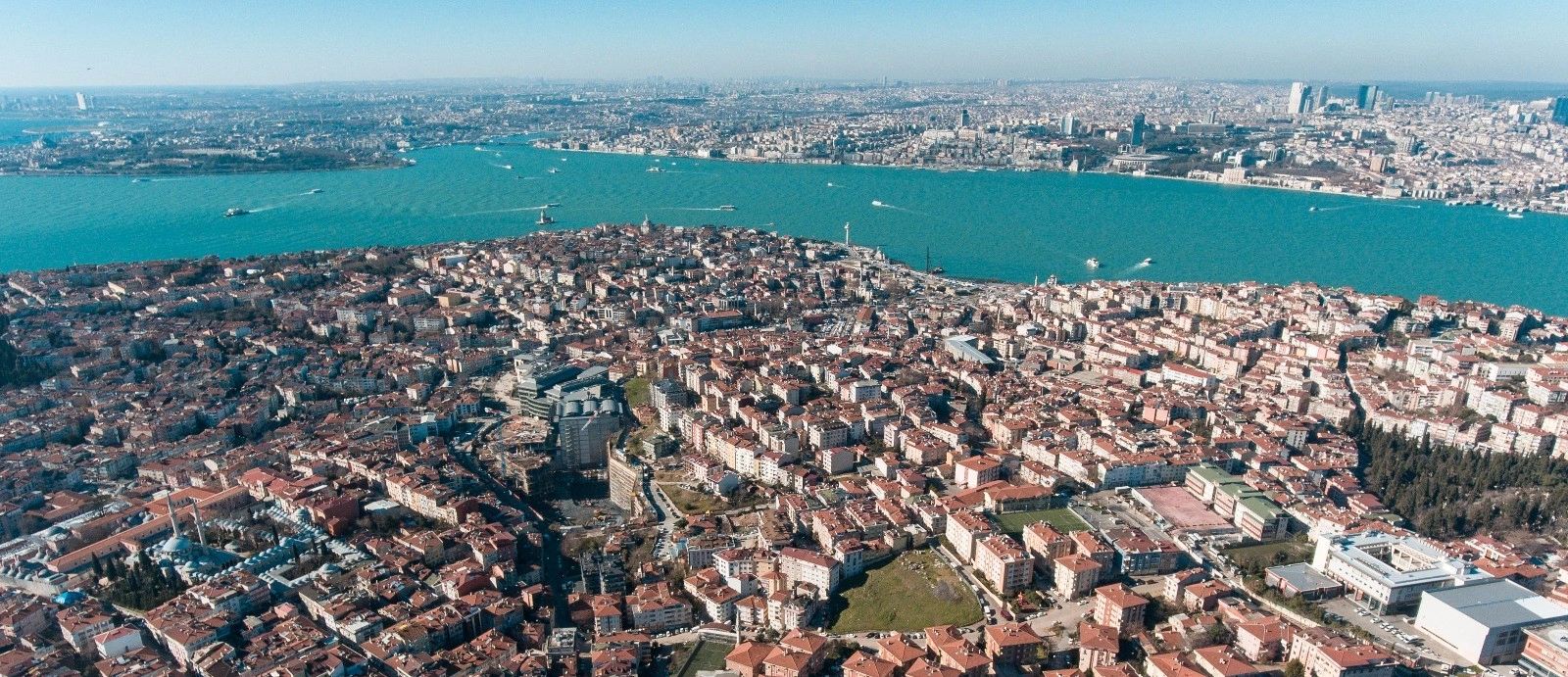
Extend your Kuzguncuk visit south toward Üsküdar's ferry square, Ottoman mosques, local markets, waterfront promenades and Maiden's Tower views.
Explore ÜsküdarCombine Kuzguncuk with Üsküdar, Beylerbeyi, the Maiden's Tower waterfront, Çamlıca or other Asian-side districts according to your interests and available time.
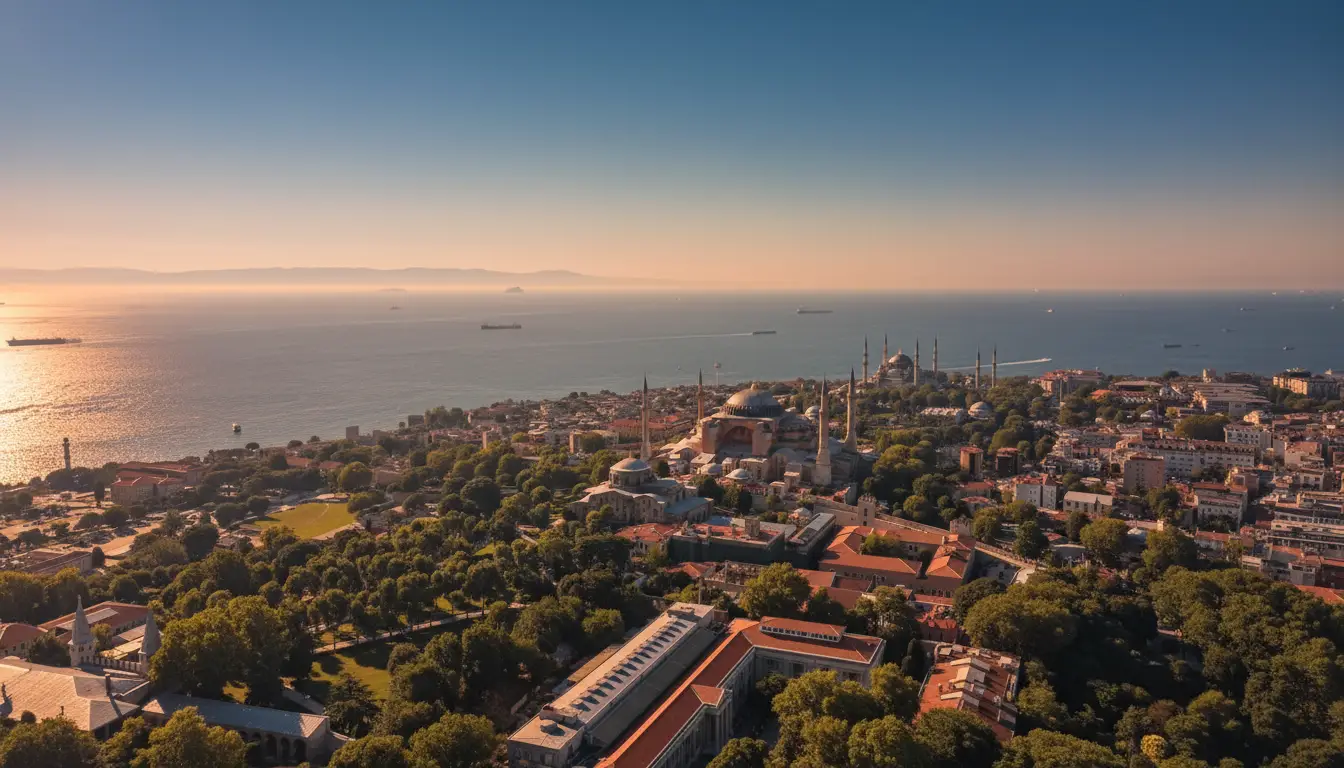
Create a private Istanbul itinerary around Bosphorus neighborhoods, Ottoman history, sacred architecture, multicultural heritage, food, photography and local culture.
View Private Istanbul Tours
Continue planning with Istanbul's palaces, mosques, churches, synagogues, museums, bazaars, Bosphorus districts and historic neighborhoods.
Explore Istanbul