Private Kybele Rock Relief at Akpınar Programme
Tell us your dates, group size and interests. We will check access and plan a sensible route.
Request Your Private Programme





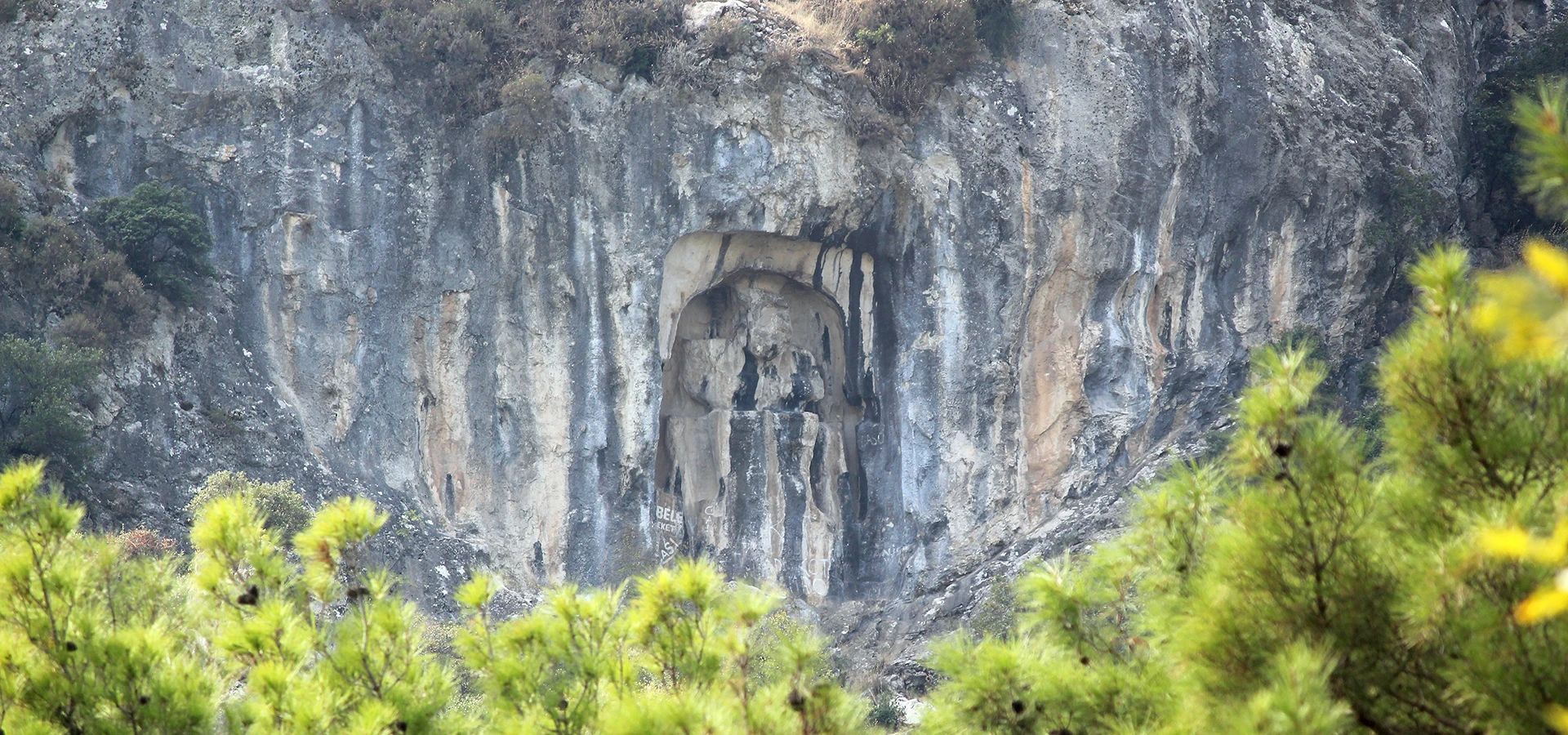
The Kybele Rock Relief is carved into the lower slopes of Mount Spil near Akpınar, east of central Manisa. It represents a seated female figure traditionally identified with the Anatolian mother goddess.
Local official descriptions commonly place the monument in the thirteenth century BCE and connect its style with Hittite influence. Exact interpretation remains a matter of scholarship: visitors should not treat every detail of its date, cult or makers as settled fact.
The relief has suffered long exposure to weather. Its damaged surface is part of the story, and a visit is as much about careful observation and preservation as about recognising a famous image.
The monumental seated form is the principal feature.
Official descriptions mention lions at the sides, although the details are difficult to distinguish today.
The relief’s orientation toward the plain helps explain its setting as a landscape monument rather than a gallery object.
Descriptions mention openings or chambers above the relief.
Essential orientation for an informed visit.
Akpınar, eastern approach to Manisa
Rock-cut ancient monument
Commonly dated to the Late Bronze Age
Manisa Province, western Türkiye
Allow 30–50 minutes
Outdoor heritage; view from approved approach
The relief links Manisa’s landscape to very early religious imagery, long before the Saruhanid and Ottoman city developed.
Its worn condition also invites a serious discussion of conservation, interpretation and how to look responsibly at ancient rock art.
The rock-cut figure belongs to the complex cultural world of western Anatolia in the Late Bronze Age. Traditions associated with a great mother goddess persisted under different names and images in later Anatolian and Mediterranean cultures.
The official provincial tourism description places the relief around seven kilometres from Manisa, on the northeast slopes of Mount Spil, facing the Gediz Plain. It describes a seated female figure once flanked by lions.
The monument is also known locally as Papaz Kayası. Its identification and precise chronology should be explained as informed interpretations rather than a complete historical record.
The setting of Kybele Rock Relief at Akpınar is Akpınar, eastern approach to Manisa. The relationship between the local terrain, historic movement and the surrounding settlements is important when planning a visit.
This rock-cut ancient monument is one element of a larger Manisa itinerary. Think about how its surroundings influenced the way people used the place, rather than separating it from the roads, communities and landscape around it.
The monumental seated form is the principal feature. Weathering has softened the outlines, so expectations should be adjusted before arrival.
Official descriptions mention lions at the sides, although the details are difficult to distinguish today. Do not invent features that are no longer visible.
The relief’s orientation toward the plain helps explain its setting as a landscape monument rather than a gallery object.
Descriptions mention openings or chambers above the relief. Their function is uncertain; do not climb toward them or treat them as visitor rooms.
Manisa's story extends from the Gediz Plain and the slopes of Mount Spil to the Yunt Mountains and the northern districts. Kybele Rock Relief at Akpınar adds a particular perspective on this diversity, and its importance is clearer when the surrounding province is considered.
A thoughtful itinerary pairs sites by theme and geography rather than rushing between distant places. See the Manisa travel hub for a broader view of the province's archaeological, natural and Ottoman heritage.
Try to distinguish surviving carved lines from natural fractures and erosion. A guide can help identify what scholars infer without overstating the evidence.
The familiar name Kybele is a useful cultural reference, but the original makers and precise ritual meaning are not documented by a modern label on the rock.
The monumental seated form is the principal feature.
Official descriptions mention lions at the sides, although the details are difficult to distinguish today.
The relief’s orientation toward the plain helps explain its setting as a landscape monument rather than a gallery object.
Descriptions mention openings or chambers above the relief.
Do not touch, wet, chalk or trace the relief to improve photographs. Even seemingly harmless contact can accelerate deterioration.
A road or picnic-area pin may not mark the precise safe viewing point. Confirm current conservation restrictions locally.
These resources provide historical background or current visitor information. Check directly before travelling, as conditions can change.
Clear daylight improves visibility of the weathered surface; summer heat and exposed ground make water and sun protection important.
For photographs of Kybele Rock Relief at Akpınar, start with a wide frame that includes the surroundings. Then choose details that reveal the character of the rock-cut ancient monument without obstructing other visitors.
Use only lawful viewpoints and respect people, religious activity, wildlife and protected surfaces. Ask permission for portraits, and do not move or touch historic material for a photograph.
The rock-cut location may require an uneven approach and does not guarantee step-free viewing. Ask about the nearest safe public vantage point.
The destination is associated with Akpınar, eastern approach to Manisa. Confirm the actual public entrance or meeting point with an up-to-date map; a generic place pin may not mark the best approach.
For a multi-stop Manisa day, plan transport according to the actual distance between sites. Historic streets, rural roads and mountain access can require more time than a straight-line map suggests.
Greek myth written into the mountainside. Consider the travel time and access arrangements before combining the stops.
Mountain nature above the Gediz Plain. Consider the travel time and access arrangements before combining the stops.
The Saruhanid masterpiece on Mount Spil. Consider the travel time and access arrangements before combining the stops.
Archaeology, art and life across Manisa. Consider the travel time and access arrangements before combining the stops.
It is near Akpınar on the slopes of Mount Spil, east of Manisa city.
Official local tourism descriptions commonly date it to around the thirteenth century BCE, although interpretation of the monument is scholarly and not absolute.
It is generally interpreted as a seated mother-goddess figure, with heavily weathered details.
Official descriptions mention flanking lions, but erosion has made these details difficult to recognise.
No. It is an outdoor rock-cut monument; respect the protected setting.
No. Avoid contact, climbing and unmarked approaches to protect the monument and yourself.
Follow official paths, barriers and directions; do not enter closed buildings or excavations.
Never touch carved surfaces, collect artefacts or climb fragile masonry.
Ask before photographing residents, worshippers or workers; keep private entrances clear.
Carry away rubbish and avoid disturbing wildlife, vegetation or historic material.
Ask Wow Cappadocia / Venere Travel to design a private, tailor-made route with a licensed guide and suitable vehicle, subject to confirmed access, with no compulsory shopping stops.
Combine heritage, village culture and landscapes at your own pace.
Tell us your dates, group size and interests. We will check access and plan a sensible route.
Request Your Private Programme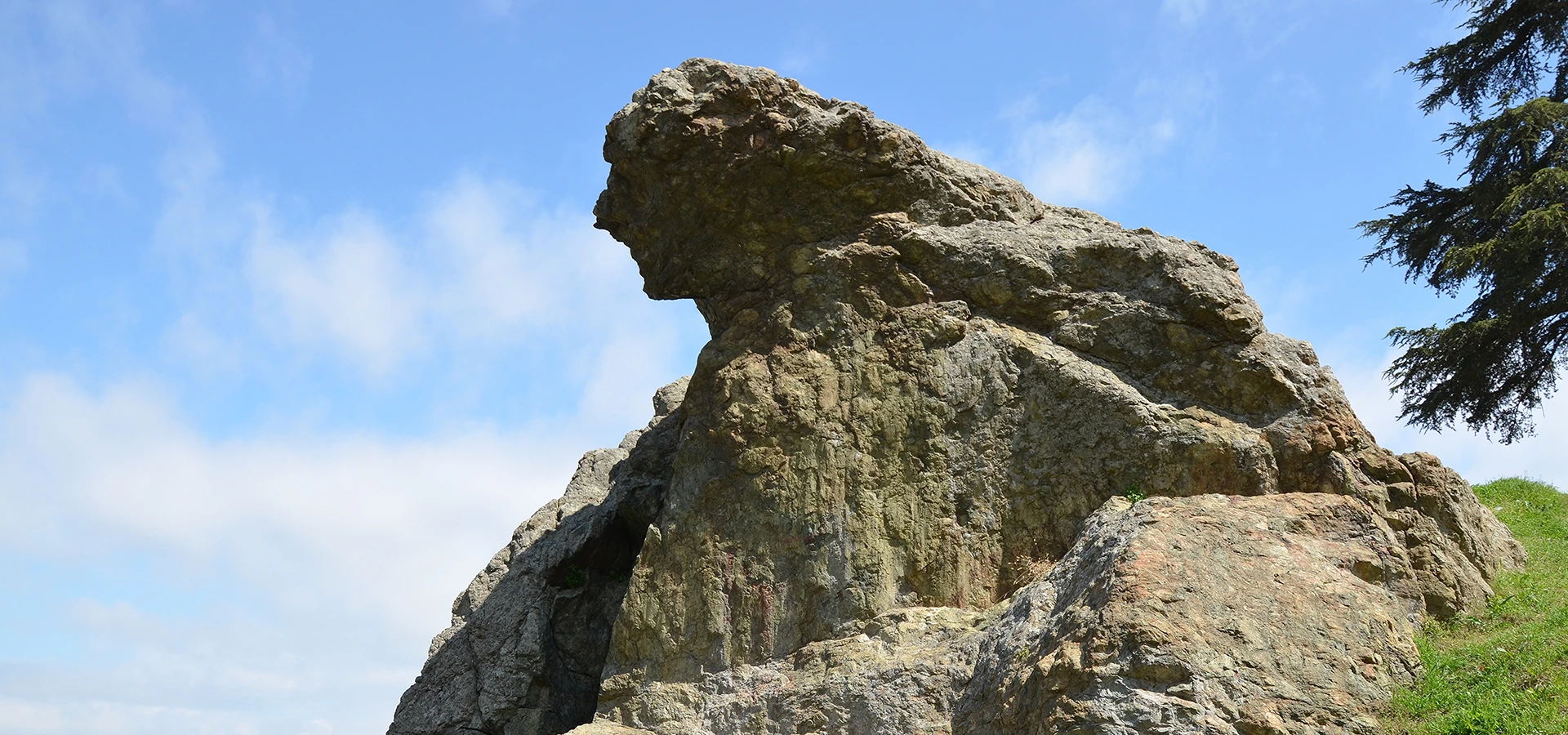
Greek myth written into the mountainside. Continue your journey with a related destination.
Read the Nearby Guide