Plan a Private Food Experience
Tell us your dates, interests and group size. We can suggest a realistic route and check local arrangements.
Request a Private Programme





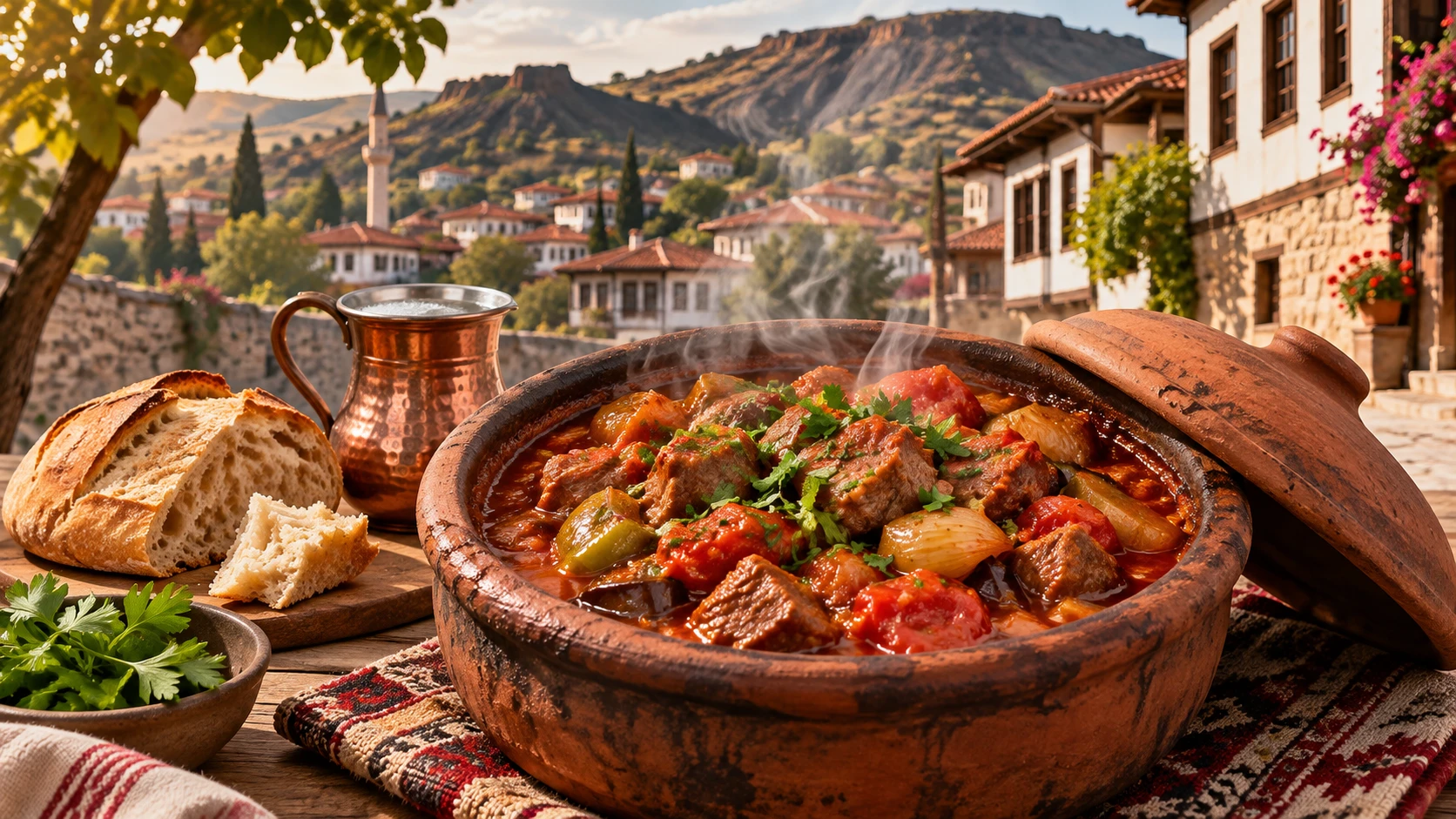
Kula güveci is a restrained meat casserole associated with the historic town of Kula. The provincial culture directorate’s recipe centres on lamb, tomato, pepper and butter, cooked in an earthenware güveç.
In the documented method, the lamb is first simmered, then arranged in a clay pot with tomato, pepper, butter and enough of its cooking liquid before being finished in the oven.
Its appeal lies in the meat and the slow cooking rather than a crowded spice list. The clay vessel is part of the presentation, but the dish’s identity is the careful preparation of lamb.
The provincial recipe calls for lamb from suitable cuts; the meat is simmered before its final oven stage.
A modest amount of vegetables flavours the meat without turning the dish into a vegetable stew.
A güveç pot helps retain heat and gives the dish its familiar serving character.
The meat’s own broth and a little butter help keep the finished casserole moist and rich.
An orientation to this Manisa food tradition.
Kula, Manisa
Slow-baked lamb casserole in an earthenware pot
Traditional Kula home and oven cooking
Ingredients and cultural identity
A leisurely meal; preparation takes longer
Check producer and ingredients
Kula güveci is a good culinary match for Kula’s historic houses and long tradition of domestic craft.
It offers a different side of Manisa food from charcoal-grilled kebabs: patient oven cooking, rich broth and simple vegetables.
The official regional recipe records a home-style method, not a precise invention date or a single restaurant origin.
Kula’s historic townscape and traditional pottery culture make clay-pot cooking a natural subject for cultural interpretation, although one should not assume that every restaurant uses locally made vessels.
The dish continues to be prepared in different domestic and commercial forms; small variations do not necessarily mean a version is inauthentic.
Kula is also known for its historic houses and the surrounding volcanic landscape. A local casserole lunch can connect architectural and geological sightseeing with food heritage.
The provincial recipe calls for lamb from suitable cuts; the meat is simmered before its final oven stage.
A modest amount of vegetables flavours the meat without turning the dish into a vegetable stew.
A güveç pot helps retain heat and gives the dish its familiar serving character.
The meat’s own broth and a little butter help keep the finished casserole moist and rich.
Unlike Manisa kebabı or Salihli odun köfte, this dish depends on slow cooking rather than direct grill heat.
A good serving should have tender meat and a balanced, savoury cooking liquid. Ask whether the dish is cooked to order, as proper oven preparation takes time.
Compare the earthenware pot with other local ceramic traditions, but avoid claiming a specific pot was made in Kula unless the restaurant knows its origin.
Compare how different producers express this characteristic.
Ask how preparation affects flavour and texture.
Consider how this element relates to local ingredients.
Look for this tradition in contemporary Manisa food culture.
Order ahead where possible, especially for group meals. The dish may take longer to prepare than a grilled item.
Ask about lamb, butter and any additional ingredients if you have dietary restrictions; the traditional recipe is not vegetarian.
Official reference: Provincial culture directorate – Kula Güveci.
Explore Kula’s historic streets and houses, then pause for güveç before continuing to the volcanic geopark landscape.
A pottery-related visit in the wider region can deepen the story of earthenware cooking, provided the workshop is genuinely operating and welcomes guests.
A warming choice in cooler months, but served whenever restaurants prepare it. Availability is more important than season.
Ask permission before photographing people, market stalls, kitchens or working premises. An authentic image should reflect the actual product and setting, not a misleading substitute.
Select a restaurant with accessible seating; Kula’s historic streets may include steep or uneven surfaces.
Ask local restaurants in Kula whether they serve Kula güveci and whether advance ordering is needed.
Explore the full guide for this nearby Manisa destination and plan travel time according to your route.
Explore the full guide for this nearby Manisa destination and plan travel time according to your route.
Explore the full guide for this nearby Manisa destination and plan travel time according to your route.
Explore the full guide for this nearby Manisa destination and plan travel time according to your route.
A traditional Kula lamb casserole with tomato, pepper and butter, finished in an earthenware pot in the oven.
No. The documented method simmers lamb and then finishes it in the oven.
Yes. Lamb is the central ingredient in the provincial recipe.
The official recipe is relatively simple and not defined by hot chilli; ask the cook about their version.
It can be wise because slow cooking may require preparation time.
Historic Kula houses and the Kula-Salihli volcanic landscape are natural companions.
Ask before entering workshops, kitchens, farms or working vineyards.
Read labels and ask about allergens or dietary restrictions.
Choose trustworthy producers and verify storage instructions.
Order realistic portions and dispose of packaging responsibly.
Explore Manisa with a tailor-made route, thoughtful pacing and no compulsory shopping stops. Availability and site access are confirmed before booking.
Combine local culture, history and food at a comfortable pace.
Tell us your dates, interests and group size. We can suggest a realistic route and check local arrangements.
Request a Private Programme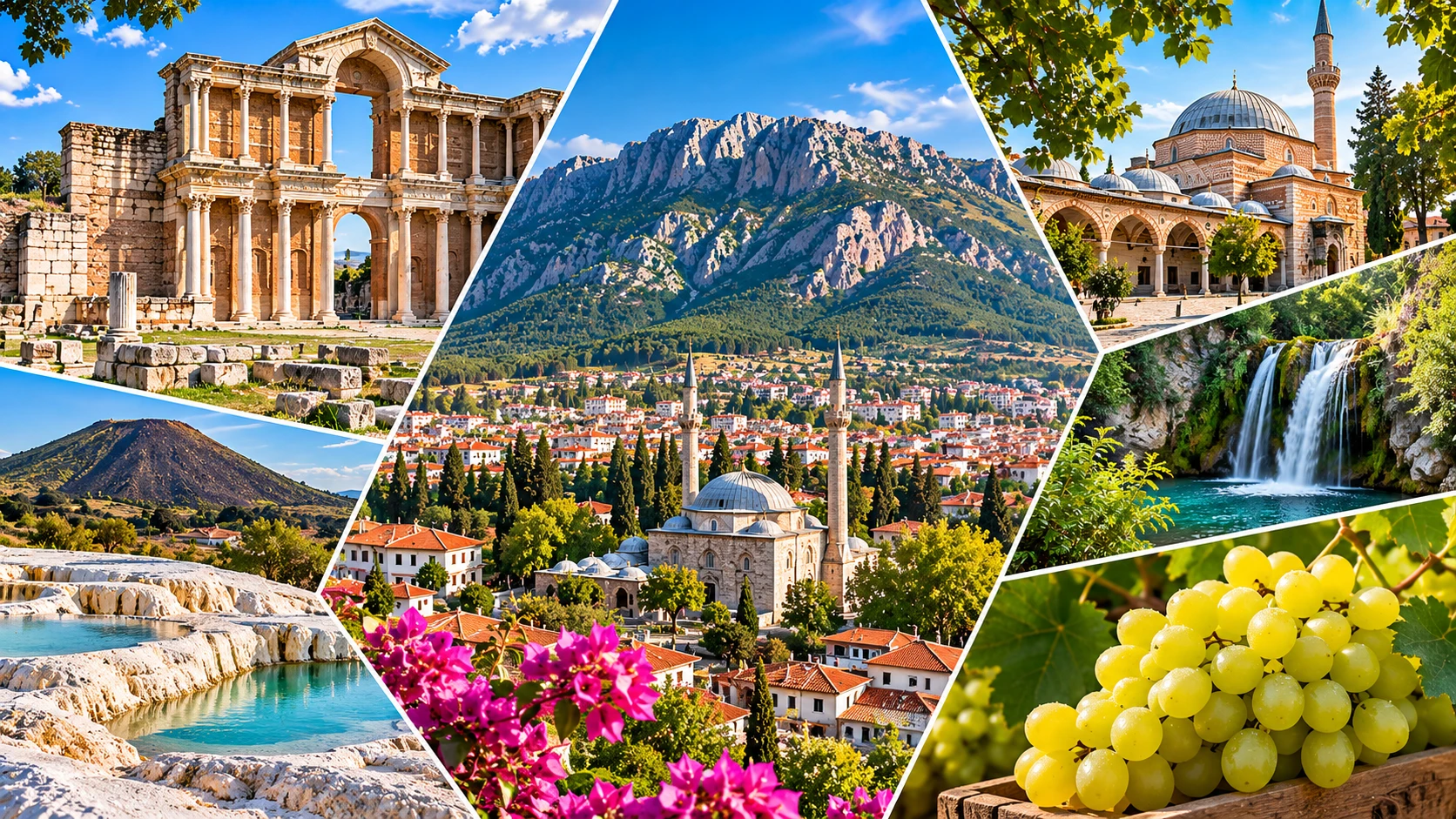
Discover the province’s other cultural, archaeological and culinary highlights.
Read the Manisa Guide