Private Historic Kula Houses Experience
Share your dates, group size and interests. We will propose a sensible route and confirm access before booking.
Request Your Private Programme





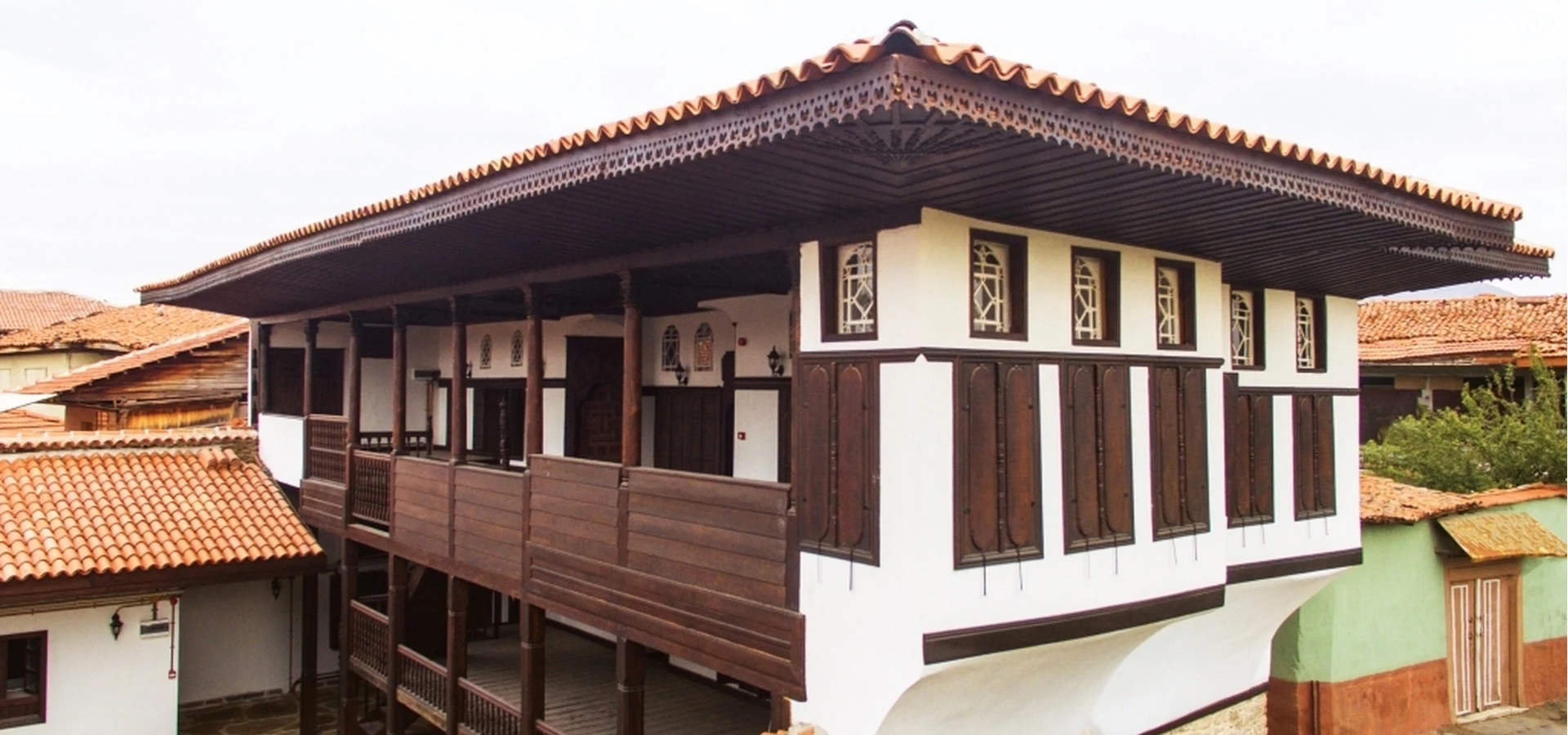
Kula's old streets offer a different kind of open-air museum: a living town whose domestic architecture preserves the rhythms of Ottoman-era household life.
Behind high courtyard walls stand houses with timber upper floors, projecting bays, broad eaves and carefully worked doors. The architectural interest is not confined to façades; the arrangement of service spaces below and living rooms above reveals how homes were organized.
Many buildings are private homes, and some may be restored, empty or under repair. A good visit respects that difference while enjoying the remarkable continuity of the streetscape.
Upper-floor çıkma or cumbalı forms extend above narrow streets, bringing light and views into interior rooms.
High walls preserve privacy and help organize daily household activities away from the street.
Doors, windows, ceilings and eaves can reveal craftsmanship; look closely without entering private buildings.
The changing width and bends of lanes create a walkable sequence of architectural views rather than a single monument.
Useful orientation before planning a visit.
Historic centre of Kula, Manisa
Protected historic townscape
Mainly 18th–19th-century Ottoman domestic architecture
Narrow streets and courtyard houses
1–2 hours for a relaxed walk
Confirm current entry and route conditions before travel
Kula provides a human-scale complement to the surrounding volcanic landscapes. Stone, timber and courtyard planning show how people adapted architecture to climate and custom.
A walk here is about details and lived history, not checking off a list of museum buildings.
The provincial tourism directorate identifies many Kula houses as eighteenth- and nineteenth-century examples of Ottoman civil architecture.
Their plans typically combine protected courtyards with lower-level service rooms and upper-level living spaces. Timber joinery, ceiling decoration and street-facing bays show local craft traditions.
The historic centre survived changes that transformed many other Anatolian towns. Conservation and continued habitation now determine whether this character can be sustained.
The town’s streets rise and fall gently or steeply in places, with uneven surfaces and occasional vehicle access.
A quiet lane may still be an active residential space. Keep doorways clear and avoid photographing inside homes.
Upper-floor çıkma or cumbalı forms extend above narrow streets, bringing light and views into interior rooms.
Look at this feature in relation to the broader setting rather than as an isolated photo opportunity.
High walls preserve privacy and help organize daily household activities away from the street.
Small construction or geological details can tell a different story from the broad panorama.
Doors, windows, ceilings and eaves can reveal craftsmanship; look closely without entering private buildings.
What is visible today may reflect more than one historical period or natural process.
The changing width and bends of lanes create a walkable sequence of architectural views rather than a single monument.
Interpret this feature alongside the other highlights, while respecting current access limits.
Manisa brings together Lydian history, the Seven Churches of Revelation, Ottoman architecture, craft villages and volcanic geology. Historic Kula Houses offers a particular window into that varied region.
For a coherent itinerary, choose neighbouring sites by theme and geography rather than trying to cover the whole province in a single day.
Notice the separation between public street and private courtyard, and compare different upper-floor projections.
Restoration can preserve character but may also change details. Avoid assuming every picturesque building is unchanged from its original construction.
Upper-floor çıkma or cumbalı forms extend above narrow streets, bringing light and views into interior rooms.
High walls preserve privacy and help organize daily household activities away from the street.
Doors, windows, ceilings and eaves can reveal craftsmanship; look closely without entering private buildings.
The changing width and bends of lanes create a walkable sequence of architectural views rather than a single monument.
Choose a daylight walk, wear comfortable shoes and ask locally which restored houses or cultural spaces admit visitors.
Do not enter courtyards without permission. Shops and cafés can support a relaxed visit, but opening arrangements vary.
Begin in the historic centre, follow a compact loop of traditional streets and pause to examine façades and timberwork.
Combine the walk with Kurşunlu Mosque and, on a separate drive, a selected geopark viewpoint.
Spring and autumn suit walking; in summer, early morning or late afternoon can be more comfortable on stone streets.
Photograph repeating rooflines, projecting bays and door details from public streets. Ask before photographing residents or interiors.
Some lanes are narrow, uneven or sloped. Confirm suitable routes and parking if step-free access is important.
Historic Kula lies in Kula district of Manisa. Use a central parking point and explore on foot where permitted.
Explore Kula Kurşunlu Mosque as a complementary stop. Check travel time and access before combining sites.
Explore Divlit Volcanic Park as a complementary stop. Check travel time and access before combining sites.
Explore Kula Fairy Chimneys as a complementary stop. Check travel time and access before combining sites.
They preserve examples of Ottoman domestic architecture, including courtyard plans, timber upper floors and projecting bays.
Many of the notable examples date to the eighteenth and nineteenth centuries.
Most are private or have specific uses; enter only buildings explicitly open to visitors.
One to two hours is a useful allowance for a relaxed circuit of the old streets.
Yes. Historic Kula is a natural cultural complement to nearby volcanic landscapes.
Conditions vary: some historic lanes are uneven, narrow or sloping, so ask about an appropriate route.
Respect signs, barriers and any directions from site staff.
Respect residential privacy, avoid leaning on fragile façades and support conservation-minded local businesses.
Keep entrances clear and ask before photographing residents or worshippers.
Carry away rubbish and avoid disturbing vegetation, rocks or historic material.
Wow Cappadocia / Venere Travel can plan a private, tailor-made route with a licensed guide and suitable vehicle, subject to confirmed access and without compulsory shopping stops.
Combine archaeology, living culture and natural landscapes at your preferred pace.
Share your dates, group size and interests. We will propose a sensible route and confirm access before booking.
Request Your Private Programme
Discover a related destination and plan a route with realistic travel times.
Read the Nearby Guide