Private Kula Basalt Columns Experience
Share your dates, group size and interests. We will propose a sensible route and confirm access before booking.
Request Your Private Programme





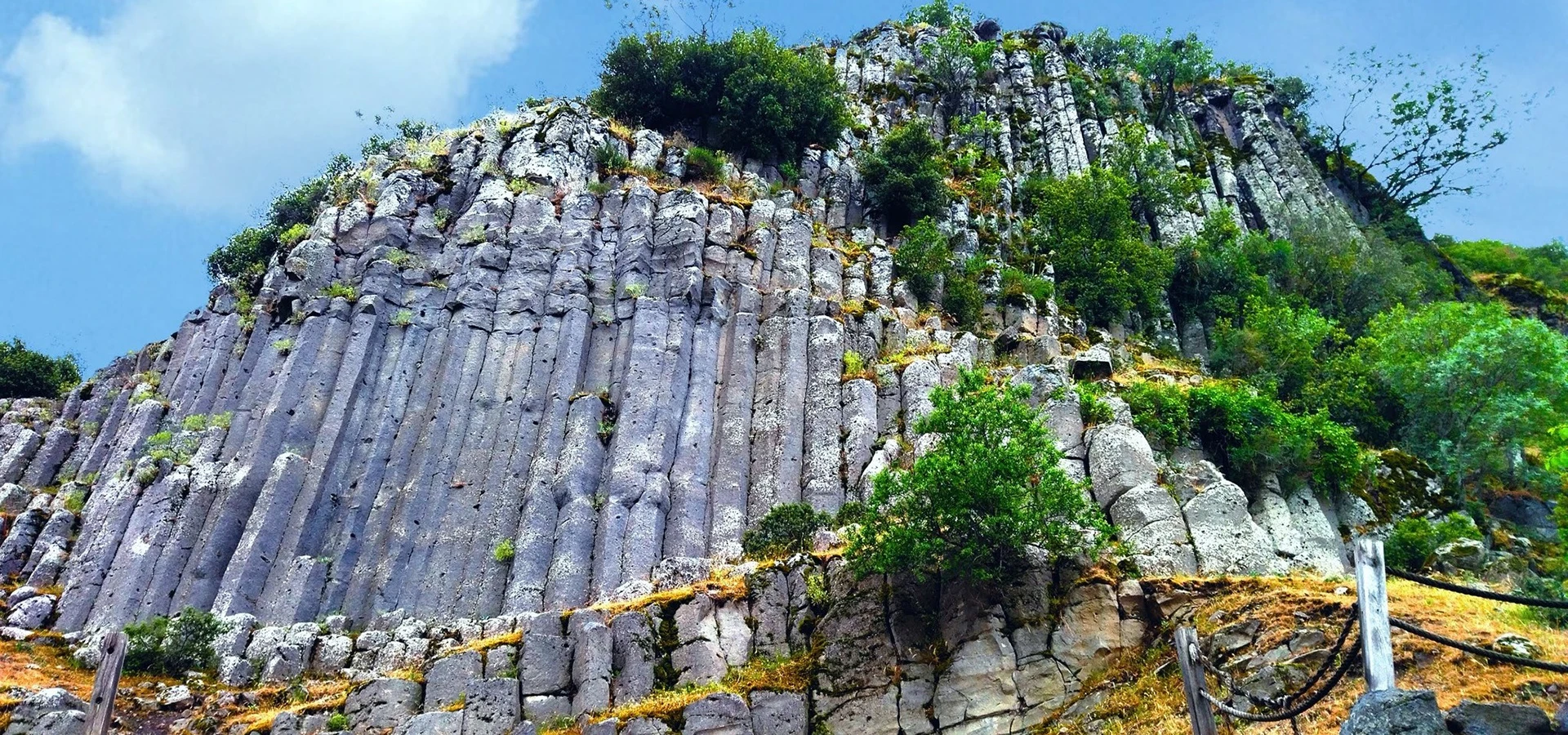
Kula's basalt columns are a geometric surprise in an otherwise rugged volcanic landscape. Their repeated, often polygonal shapes look almost built, but they formed naturally as thick lava cooled and contracted.
The district governorate identifies prominent columnar basalt in the Çakırca and Sarnıç areas, where some exposures rise more than twenty metres. These are part of the older Burgaz volcanic phase.
The columns are best appreciated as rock structures in their setting, not as objects to climb or break. An authorized viewpoint can reveal the pattern without damaging the outcrop.
Look for repeated angular column outlines. Five- or six-sided forms are common but not universal.
Outcrops around Çakırca and Sarnıç can show striking vertical relief; view from safe ground away from rockfall zones.
Column orientations help indicate how heat escaped from the lava body as it solidified.
Older columnar outcrops differ in appearance and weathering from the rough dark flows near Divlit.
Useful orientation before planning a visit.
Çakırca and Sarnıç areas, Kula
Columnar basalt geological formations
Older phase of Kula volcanism
Exposed basalt outcrops in volcanic landscape
45–90 minutes at an authorized viewpoint
Confirm current entry and route conditions before travel
Basalt columns turn an invisible cooling process into a clear, memorable shape.
They are an excellent stop for visitors who want to understand the science behind the geopark rather than only admire unusual scenery.
When a thick lava body cools, it shrinks. Networks of fractures develop, commonly forming columns with polygonal cross-sections.
Columnar joints can be vertical or inclined depending on the cooling surfaces. Their regularity records physical processes rather than human carving.
In Kula, the column-bearing Burgaz volcanic rocks belong to an older episode than the young Divlit cinder cone. Comparing them helps reveal the region’s multi-stage volcanic history.
Columns are exposed where erosion or cutting reveals the internal structure of old lava. Rock faces may shed loose pieces.
A photograph can flatten the geometry; take time to look at both the side of the columns and any visible cross-sections.
Look for repeated angular column outlines. Five- or six-sided forms are common but not universal.
Look at this feature in relation to the broader setting rather than as an isolated photo opportunity.
Outcrops around Çakırca and Sarnıç can show striking vertical relief; view from safe ground away from rockfall zones.
Small construction or geological details can tell a different story from the broad panorama.
Column orientations help indicate how heat escaped from the lava body as it solidified.
What is visible today may reflect more than one historical period or natural process.
Older columnar outcrops differ in appearance and weathering from the rough dark flows near Divlit.
Interpret this feature alongside the other highlights, while respecting current access limits.
Manisa brings together Lydian history, the Seven Churches of Revelation, Ottoman architecture, craft villages and volcanic geology. Kula Basalt Columns offers a particular window into that varied region.
For a coherent itinerary, choose neighbouring sites by theme and geography rather than trying to cover the whole province in a single day.
Think of the joints as contraction cracks, not individual crystals. The columns are sections of solid rock separated by fractures.
Compare the columns with the scoria and lava at Divlit to distinguish cooling structure from erupted fragment deposits.
Look for repeated angular column outlines. Five- or six-sided forms are common but not universal.
Outcrops around Çakırca and Sarnıç can show striking vertical relief; view from safe ground away from rockfall zones.
Column orientations help indicate how heat escaped from the lava body as it solidified.
Older columnar outcrops differ in appearance and weathering from the rough dark flows near Divlit.
Do not approach beneath unstable faces, climb the columns or hammer samples. Follow locally approved routes.
A guide or interpretive panel can help explain the geology, especially where several exposures look similar.
Use a confirmed accessible viewpoint around the Çakırca/Sarnıç geosites, then continue to another Kula feature if time allows.
Pair with Divlit for an informative comparison between older and younger volcanic episodes.
Dry weather improves footing around exposed rock. Summer heat and winter rain can affect safety on rural approaches.
Photograph from a slight angle to reveal depth and the repeating fracture pattern. Avoid positioning people beneath potentially loose rock.
Outcrop access may be uneven or unpaved. Check for safe viewing from a public road or short path if mobility is limited.
The best-known basalt-column exposures are associated with Çakırca and Sarnıç in Kula district. Verify the exact approved geosite approach.
Explore Divlit Volcanic Park as a complementary stop. Check travel time and access before combining sites.
Explore Kula–Salihli UNESCO Global Geopark as a complementary stop. Check travel time and access before combining sites.
Explore Kula Fairy Chimneys as a complementary stop. Check travel time and access before combining sites.
They formed when thick basaltic lava cooled, contracted and fractured into polygonal columns.
The Çakırca and Sarnıç areas of Kula are known for columnar basalt outcrops.
No. Their regular shapes are natural cooling fractures in volcanic rock.
Not necessarily. The well-known columnar exposures belong to an older volcanic phase than the young Divlit features.
No. Climbing or approaching unstable faces can be dangerous and may damage protected geology.
Allow roughly 45 to 90 minutes for an accessible viewpoint and interpretation, excluding longer drives.
Respect signs, barriers and any directions from site staff.
Never remove specimens, scratch surfaces or enter restricted rockfall areas. Geological formations are irreplaceable records.
Keep entrances clear and ask before photographing residents or worshippers.
Carry away rubbish and avoid disturbing vegetation, rocks or historic material.
Wow Cappadocia / Venere Travel can plan a private, tailor-made route with a licensed guide and suitable vehicle, subject to confirmed access and without compulsory shopping stops.
Combine archaeology, living culture and natural landscapes at your preferred pace.
Share your dates, group size and interests. We will propose a sensible route and confirm access before booking.
Request Your Private Programme
Discover a related destination and plan a route with realistic travel times.
Read the Nearby Guide