Made from Persimmon
The product is made from ripe Asian persimmon rather than grapes, mulberries or date-palm fruit.
- Local name: Cennet hurması
- Another Turkish name: Trabzon hurması
- English: Persimmon






Karapürçek Cennet Hurması Pekmezi is a geographically indicated molasses produced in Karapürçek district of Sakarya Province from ripe persimmons grown within the district. The fruit is locally known as cennet hurması and is also widely called Trabzon hurması in Türkiye.
Unlike the grape and mulberry molasses better known in many parts of Türkiye, this distinctive regional product begins with ripe persimmons. The protected production method uses Fuyu, Hana Fuyu and Hachiya varieties grown in Karapürçek.
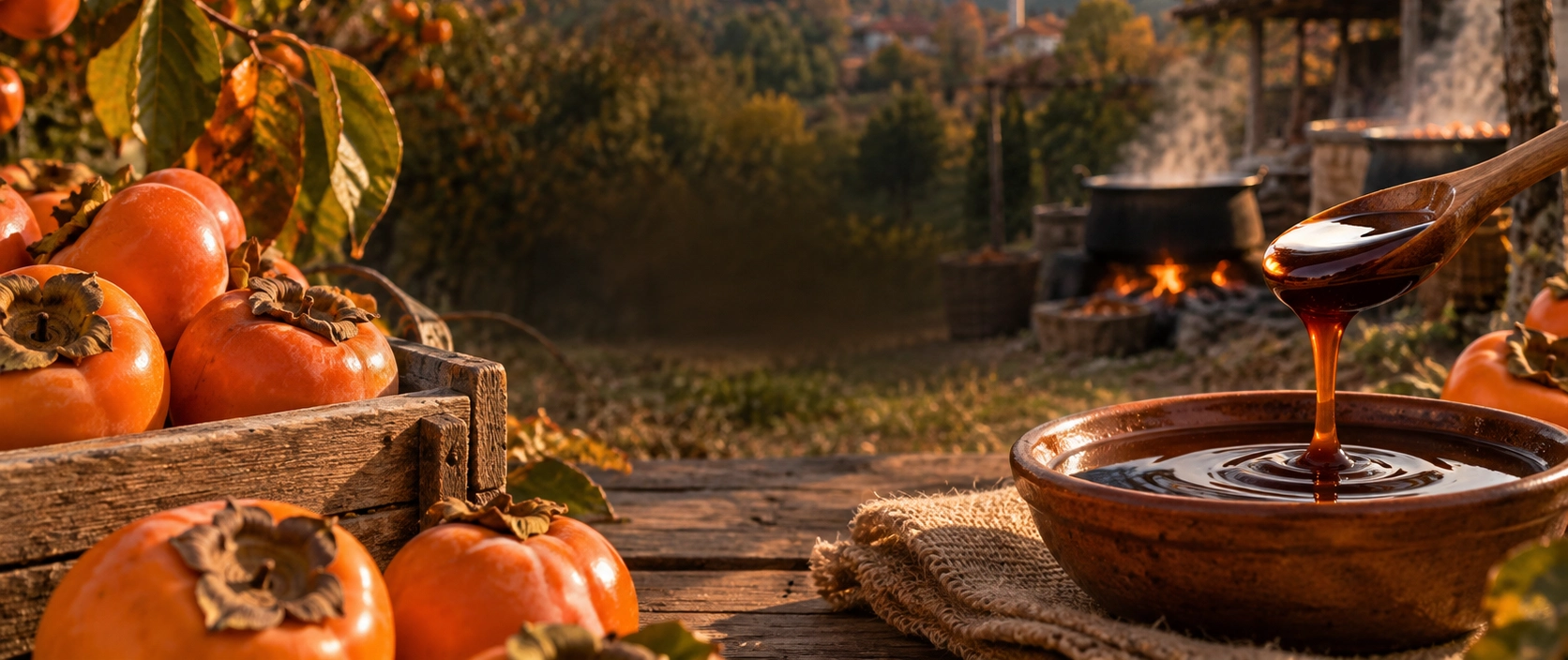
The fruit is hand-harvested, sorted and cooked with water in open cauldrons over a wood fire. The cooked fruit is then crushed, filtered and rested before the clarified liquid is boiled again for hours until it becomes dark brown, cloudy and naturally flowing molasses.
This complete guide explores the product’s geographical-indication status, local persimmon varieties, harvest period, traditional wood-fire method, filtering and resting stages, flavour, texture, storage, buying tips, serving ideas, local food culture and ways to combine a tasting with a wider journey through Sakarya.
Karapürçek Cennet Hurması Pekmezi is registered in Türkiye as geographical indication number 1354.
The registered method uses Fuyu, Hana Fuyu and Hachiya persimmons grown within Karapürçek district.
The fruit and later the clarified juice are traditionally cooked in open cauldrons over a wood fire.
The finished product is characteristically dark brown, cloudy and fluid rather than extremely thick.
Essential information about one of Sakarya’s most distinctive geographically indicated food products.
Karapürçek district in Sakarya Province, Türkiye.
Open Karapürçek on Google MapsRipe persimmon, locally called cennet hurması or Trabzon hurması.
Open-cauldron cooking over a wood fire, followed by filtering, resting and a second long boiling.
Registered as Karapürçek Cennet Hurması Pekmezi with registration number 1354.
Karapürçek’s persimmon molasses turns a familiar autumn fruit into a concentrated regional food through a long, carefully controlled process.
Karapürçek lies in the southeast of Sakarya Province, in a fertile part of the Marmara region where village gardens, orchards and small-scale agricultural production remain important elements of the landscape.
Persimmon trees have long been familiar in local gardens. In Karapürçek, the fruit is commonly called cennet hurması, while elsewhere in Türkiye it is also widely known as Trabzon hurması.
Turning ripe persimmons into pekmez provides a way to transform the autumn harvest into a product that can be stored and enjoyed long after the fresh-fruit season has ended.
The local method is much more involved than simply reducing fruit juice. The persimmons are cooked, crushed, filtered and rested, and the resulting liquid is clarified before a second long cooking stage creates the final molasses.
The Turkish Patent and Trademark Office records that the product has an established history and an important place in the culinary culture of Karapürçek. Its reputation, local fruit varieties and production method form the basis of its geographical connection.
Official geographical-indication registration in 2023 gave formal protection to the name Karapürçek Cennet Hurması Pekmezi and documented the method by which the genuine local product is produced.
The protected product is defined by its local fruit, traditional processing stages, colour, texture and measurable composition.
The product is made from ripe Asian persimmon rather than grapes, mulberries or date-palm fruit.
The specification identifies three persimmon varieties grown in Karapürçek for production.
Unlike dried persimmon, which is often processed while still firm, this molasses begins with mature, ripe fruit.
Persimmons and water are cooked in open cauldrons over a wood fire as the first heat-treatment stage.
The cooked fruit is crushed, strained and rested several times to remove skins, insoluble material and sediment.
The clarified liquid is cooked again in stainless-steel open cauldrons over a wood fire.
The registered product is dark brown, naturally cloudy and distinctly darker than the fresh fruit.
Karapürçek persimmon molasses is characteristically fluid rather than set, crystallised or paste-like.
Karapürçek Cennet Hurması Pekmezi is officially registered by the Turkish Patent and Trademark Office as a geographical indication associated with Karapürçek district of Sakarya Province.
The official protected name is Karapürçek Cennet Hurması Pekmezi.
The product carries geographical-indication registration number 1354.
The geographical indication was registered on 8 May 2023.
The application was filed on 20 April 2021.
It is registered as a Mahreç İşareti, a Turkish geographical-indication category linking a product’s reputation or production tradition with a defined place.
The registration holder is Karapürçek District Governorship.
The protected geographical area is Karapürçek district of Sakarya Province.
The registered specification requires the complete production process to take place within Karapürçek district.
The protection is closely tied to both the locally grown fruit and the established method of transforming it into molasses. Producers using the protected name must follow the registered requirements for fruit varieties, processing, physical and chemical characteristics and geographical-indication labelling.
For international travellers, the clearest English description is persimmon molasses. The Turkish word hurma can be confusing because it can also refer to date-palm fruit, but Karapürçek Cennet Hurması Pekmezi is made from persimmon.
A widely used Turkish name meaning the fruit known in English as persimmon.
Another very common Turkish name for persimmon.
A concentrated fruit product created by prolonged cooking and reduction, traditionally prepared from several fruits in Türkiye.
Karapürçek Persimmon Molasses is clear, accurate and useful for travellers.
The source fruit is persimmon, not the fruit of the date palm.
The protected Turkish name remains important because it identifies a specific local product and production tradition.
Karapürçek is located in the southeastern part of Sakarya Province, around 26 kilometres from central Sakarya according to the provincial administration. Its rural landscape is shaped by productive gardens, orchards and villages between the broader agricultural plains and wooded hills of the region.
Family gardens and small agricultural plots remain an important part of the district’s rural character.
Cennet hurması is grown locally and provides the essential raw material for the protected molasses.
The district’s persimmons mature mainly during October and the first half of November depending on variety.
The registered product must not only use fruit grown in Karapürçek; its production stages must also take place within the district.
Open cauldrons, wood fires, fruit preservation and seasonal production connect the product closely with village food traditions.
Karapürçek can be included in a wider food and countryside route through Sakarya Province.
The registered specification identifies three persimmon varieties grown within Karapürçek for the production of the protected molasses. Their harvest periods and fruit characteristics vary, extending the local processing season through autumn.
Fuyu fruit is generally flatter in shape with rounded corners and weighs approximately 100–150 grams in the registered description.
The registered harvest period for Fuyu is mainly October.
Hana Fuyu fruit is generally round, orange-skinned and larger, at approximately 170–200 grams.
The registered harvest period is mainly the first and second weeks of November.
Hachiya fruit is generally round with a pronounced tip and reddish-orange skin, at approximately 200–250 grams.
The registered harvest period is mainly the first and second weeks of November.
The harvest calendar depends on the persimmon variety. Fuyu is associated with October, while Hana Fuyu and Hachiya are generally harvested during the first two weeks of November according to the geographical-indication specification.
Fuyu persimmons reach their registered harvest period during October.
Hana Fuyu and Hachiya become central to the harvest as November begins.
Ripe fruit is collected by hand and placed in plastic crates for transport to the production site.
Stems, foreign material and fruit that is not sufficiently ripe are removed before cooking.
The protected molasses is made from mature fruit rather than the firmer fruit used for some drying traditions.
October and early November are the most relevant months for travellers interested in seeing the fruit harvest itself.
The registered method follows a sequence of harvesting, sorting, cooking, crushing, filtering, resting, clarifying and long reduction. Each step contributes to the final colour, consistency and composition.
The first heat treatment softens the ripe fruit and creates the cooked mass from which the initial juice can be extracted. The registered ratio is specific and helps standardise the process.
The registered method uses approximately 35 kilograms of ripe fruit per batch at this stage.
Ten litres of water are added to the open cauldron with the fruit.
The first cooking takes place in an open vessel rather than a sealed industrial cooking system.
Wood fire is an important part of the registered production method.
The initial fruit-and-water mixture is cooked for approximately two hours.
After cooking, the softened fruit mass is crushed before filtering.
One of the most distinctive features of the method is the time devoted to filtration and resting. The goal is to remove skins, insoluble material and sediment before the final reduction stage.
The cooked purée is placed in food-safe mesh bags so liquid can drain while skins and coarse material remain behind.
The first strained liquid is locally described in the production method as the initial şıra.
The initial liquid rests for several hours so remaining suspended material can settle.
After the first rest, the liquid is strained again to remove additional solid material.
The liquid then rests for approximately 36 hours at room temperature in a dry, shaded environment.
Another filtering stage removes settled residue before the second long boiling begins.
After the long resting and clarification stages, the liquid returns to the fire. This second heat treatment is the stage in which water is reduced and the persimmon liquid develops the concentration associated with pekmez.
The registered method specifies open cauldrons made from stainless steel for the second heat treatment.
The clarified liquid is cooked over a wood fire during the concentration stage.
The registered description gives a temperature range of approximately 160–180°C for the second heat treatment.
The second boiling continues for approximately eight hours.
As water evaporates and concentration increases, the liquid develops the product’s characteristic dark-brown appearance.
When sufficient consistency is reached, the finished pekmez is transferred hot into glass jars.
The geographical-indication specification gives measurable limits for the protected product. These values help distinguish properly produced Karapürçek Cennet Hurması Pekmezi and support official inspection.
Water-soluble dry matter must fall within the registered range of approximately 68 to 73° Brix.
The registered total-sugar range is approximately 65 to 70 percent.
The protected product is defined within a registered pH range of approximately 5.40 to 6.40.
The specification sets a registered acidity range from approximately 0.10 to 0.35 percent.
The registered ash-content range is approximately 1.9 to 2.3 percent.
The specification states that commercial glucose must not be present in the protected product.
The registered specification sets a maximum sucrose value of 1 percent.
The registered maximum for hydroxymethylfurfural, or HMF, is 75 mg/kg.
Karapürçek Cennet Hurması Pekmezi concentrates the natural character of ripe persimmon into a dark, flowing fruit molasses. Individual batches can vary subtly because of fruit variety, maturity and the details of cooking.
The flavour begins with the sweetness of ripe persimmon rather than the grape or mulberry notes associated with other Turkish pekmez varieties.
Long heating creates a deeper flavour than fresh persimmon and adds the character expected from a concentrated fruit product.
The dark-brown colour is matched by a richer and more concentrated flavour than the bright fresh fruit suggests.
The registered product is fluid enough to pour or spoon rather than being a solid paste.
Fuyu, Hana Fuyu and Hachiya can contribute slightly different fruit character to individual production batches.
A small spoonful on its own is the easiest way to understand its colour, texture and persimmon character.
The registered description identifies three easily observed characteristics: the product is dark brown, cloudy and flowing. These visual qualities distinguish it from some lighter syrups or very thick fruit concentrates.
The final molasses is much darker than the orange persimmons from which it is made.
The protected description characterises the product as cloudy rather than perfectly transparent.
Its texture remains fluid enough to move and pour rather than setting into a rigid mass.
A Brix value of 68–73° reflects the high level of soluble solids created through long cooking.
The finished product is filled into glass jars while hot after the second boiling stage.
Genuine registered product should be associated with the full name Karapürçek Cennet Hurması Pekmezi and appropriate GI marking.
The registered production specification defines controlled storage conditions for the packaged product. Travellers purchasing a jar should also follow the producer’s label after opening.
The registered storage temperature for packaged product is approximately 8 to 12°C.
The specification gives a relative-humidity range of approximately 45 to 60 percent.
The finished molasses is hot-filled into glass jars during production.
Under the registered storage conditions, the specification provides for storage for up to approximately two years.
Commercially packaged jars may include additional producer-specific instructions, especially after opening.
Keep glass jars upright, cushioned and away from excessive heat when carrying them as an edible souvenir.
Visitors may encounter the product through local producers, regional-product sellers and food outlets in and around Karapürçek and Sakarya. When buying the protected product, the full registered name and origin matter.
Karapürçek Cennet Hurması Pekmezi can be approached like other traditional fruit molasses: start simply and in a small quantity so its distinctive persimmon character remains clear.
Sampling it on its own is the best introduction to the product’s sweetness, colour and flowing consistency.
It can be presented as one element of a Turkish-style breakfast alongside bread, cheese and seasonal local foods.
A small amount on fresh bread makes the flavour easy to appreciate without competing ingredients.
Travellers familiar with the Turkish tahini-and-pekmez tradition may also enjoy exploring how persimmon molasses works in that combination.
Walnuts or hazelnuts can provide a crisp contrast to the smooth, flowing molasses.
A small tasting alongside other Sakarya products creates an easy introduction to the province’s diverse food heritage.
October and early November connect most closely with the registered persimmon harvest periods.
Production spaces may be private homes, cooperative facilities or working food areas, so visits should be arranged or requested politely.
Open-cauldron wood-fire cooking is one of the defining elements of the registered method.
This is a slow product: filtering, resting and long cooking are central to its identity.
Clear origin and producer information make the product easier to identify and transport.
Wrap jars carefully and keep them upright during road or air travel.
Karapürçek is close enough to central Sakarya to form part of a broader countryside and gastronomy route.
“Cennet hurması pekmezi” means persimmon molasses, not date molasses.
Orchards return to leaf and the countryside around Karapürçek becomes increasingly green.
Persimmon fruit develops on the trees, but the main processing season has not yet begun.
Fuyu persimmons enter their registered harvest period and autumn fruit becomes prominent in local gardens.
Hana Fuyu and Hachiya reach their key harvest period, making this one of the most relevant times for production.
Molasses-making activities can follow the harvest as ripe fruit is cooked and processed.
Properly packaged molasses can remain available beyond harvest season depending on producer stocks.
Karapürçek Cennet Hurması Pekmezi is part of a wider Sakarya food landscape in which orchard fruits, nuts, dairy products, vegetable dishes, sweets and preserved foods vary from district to district. Its persimmon base makes it particularly unusual among Türkiye’s regional pekmez traditions.
Karapürçek’s protected speciality concentrates local cennet hurması through a long wood-fire production process.
Geyve is strongly associated with quince cultivation and another important geographical indication of Sakarya Province.
Pamukova Ceviz Ezmesi represents another protected sweet speciality from the province.
Northern Sakarya preserves the same fruit in a completely different way through Kocaali’s dried-persimmon tradition.
Kocaali Çamdağı Chestnut Honey reflects Sakarya’s forest landscape and beekeeping heritage.
Taraklı’s traditional wheat-based sweet adds another very different flavour to a province-wide food journey.
During the geographical-indication application period, the product also gained attention through a women’s cooperative initiative in Hocaköy. Reporting from 2021 described local women preparing cennet hurması pekmezi in cauldrons using traditional knowledge passed through families.
A women’s cooperative established in Hocaköy helped create a more organised setting for local production during the GI application period.
Local producers described the method as something learned from earlier generations and then developed further through organised production.
Turning local persimmons into a protected regional product gives the fruit a longer marketing life than fresh harvest alone.
The geographical indication strengthens the connection between the Karapürçek name and its distinctive persimmon molasses.
Visitors interested in production stories can connect a tasting with the district’s rural landscape and orchard culture.
Cooperative or household production areas are working food environments, so access and photography should always be arranged appropriately.
A Karapürçek food stop can be combined with other protected foods, countryside routes and nature attractions across Sakarya Province.
Continue south-west through Sakarya’s fruit-growing country and discover one of the province’s best-known orchard products.
Explore another geographically indicated Sakarya speciality with a completely different texture and production tradition.
Combine regional gastronomy with the historic atmosphere and agricultural traditions of Taraklı.
Compare two protected Sakarya traditions based on persimmon: Karapürçek’s molasses and Kocaali’s hanging-dried fruit.
Discover another protected local product tied to Sakarya’s forests, villages and seasonal food heritage.
Add forest scenery and an outdoor stop to a wider Sakarya gastronomy journey.
It is a geographically indicated persimmon molasses produced in Karapürçek district of Sakarya Province using locally grown ripe persimmons and a registered traditional method.
“Karapürçek Persimmon Molasses” is the clearest English description for international travellers.
No. The fruit is persimmon, locally called cennet hurması or Trabzon hurması.
Its protected geographical boundary is Karapürçek district in Sakarya Province, Türkiye.
Yes. Karapürçek Cennet Hurması Pekmezi is officially registered as a geographical indication in Türkiye.
The geographical-indication registration number is 1354.
The product was registered on 8 May 2023.
The application was filed on 20 April 2021.
The registration holder is Karapürçek District Governorship.
It is registered as a Mahreç İşareti.
The registered method uses Fuyu, Hana Fuyu and Hachiya persimmons grown in Karapürçek.
The registered harvest period for Fuyu is mainly October.
Their registered harvest period is mainly the first and second weeks of November.
Yes. The production method describes ripe fruit being hand-harvested and transported in plastic crates.
Stems, foreign material and fruit that is not sufficiently ripe are removed before the first heat treatment.
The registered method uses approximately 35 kg of persimmon and 10 litres of water.
The first heat treatment lasts approximately 2 hours.
Yes. Wood-fire cooking in open cauldrons is part of the protected production method.
The cooked fruit is crushed, placed in food-safe mesh bags and strained to separate the liquid from skins and insoluble material.
It is the first liquid obtained after the cooked persimmon mass has been strained.
The production flow describes an initial resting period of approximately 3–4 hours.
Repeated filtering removes skins, insoluble material and sediment so the liquid is progressively clarified before final concentration.
After further filtering, the liquid rests for approximately 36 hours at room temperature in a dry place away from sunlight.
The clarified liquid is cooked for approximately 8 hours.
The registered method specifies approximately 160–180°C.
The specification describes stainless-steel open cauldrons.
The registered product is characterised as dark brown.
It is characteristically cloudy.
The registered description characterises it as flowing, so it remains fluid rather than becoming a firm paste.
The water-soluble dry-matter range is approximately 68–73° Brix.
The registered total-sugar range is approximately 65–70%.
No. The specification states that commercial glucose must not be present.
Once the desired consistency is reached, it is filled hot into glass jars and labelled.
The registered storage conditions are approximately 8–12°C and 45–60% relative humidity.
The specification provides for storage for up to approximately 2 years.
Yes. The protected specification states that all production stages take place within the defined geographical boundary.
October through the first half of November is the most relevant period, depending on the variety being harvested.
Some production spaces may be private or actively processing food, so visits should be arranged in advance and permission should always be requested.
Yes. A properly sealed and labelled jar offers a distinctive way to take home one of Sakarya’s protected regional flavours.
Geyve quince, Pamukova walnut paste, Kocaali dried persimmon, Kocaali Çamdağı chestnut honey and Taraklı Üğüt Tatlısı are among the province’s other distinctive products.
The strongest visual story follows the product from orange persimmons in the orchard to steaming open cauldrons, slow filtering and the dark finished molasses in glass jars.
Photograph ripe orange fruit among autumn leaves to establish the seasonal origin of the product.
With permission, hand-picked fruit in crates can show the transition from orchard to production.
Steam rising from a traditional cauldron over a wood fire is one of the most evocative images of the process.
Mesh-bag filtering and the flowing şıra can visually explain why this is more than a simple fruit syrup.
Use soft side light to reveal the dark-brown colour and flowing texture of the finished product.
A jar with bread, walnuts or a simple Turkish breakfast can create an appealing regional-food composition.
Always ask permission before photographing people, orchards, private homes, cooperative facilities or active food-production areas. Working kitchens and processing spaces should be treated with the same respect as any professional food environment.
Combine local food traditions, persimmon orchards, rural landscapes and selected Sakarya highlights on a private journey designed around your interests.
Custom-designed private journeys with flexible timing, private transportation and opportunities to discover regional foods, village landscapes and cultural or natural attractions across Sakarya Province.
Explore Karapürçek’s persimmon-molasses heritage, rural countryside and selected Sakarya flavours with time for local producers when available.
Request This Tour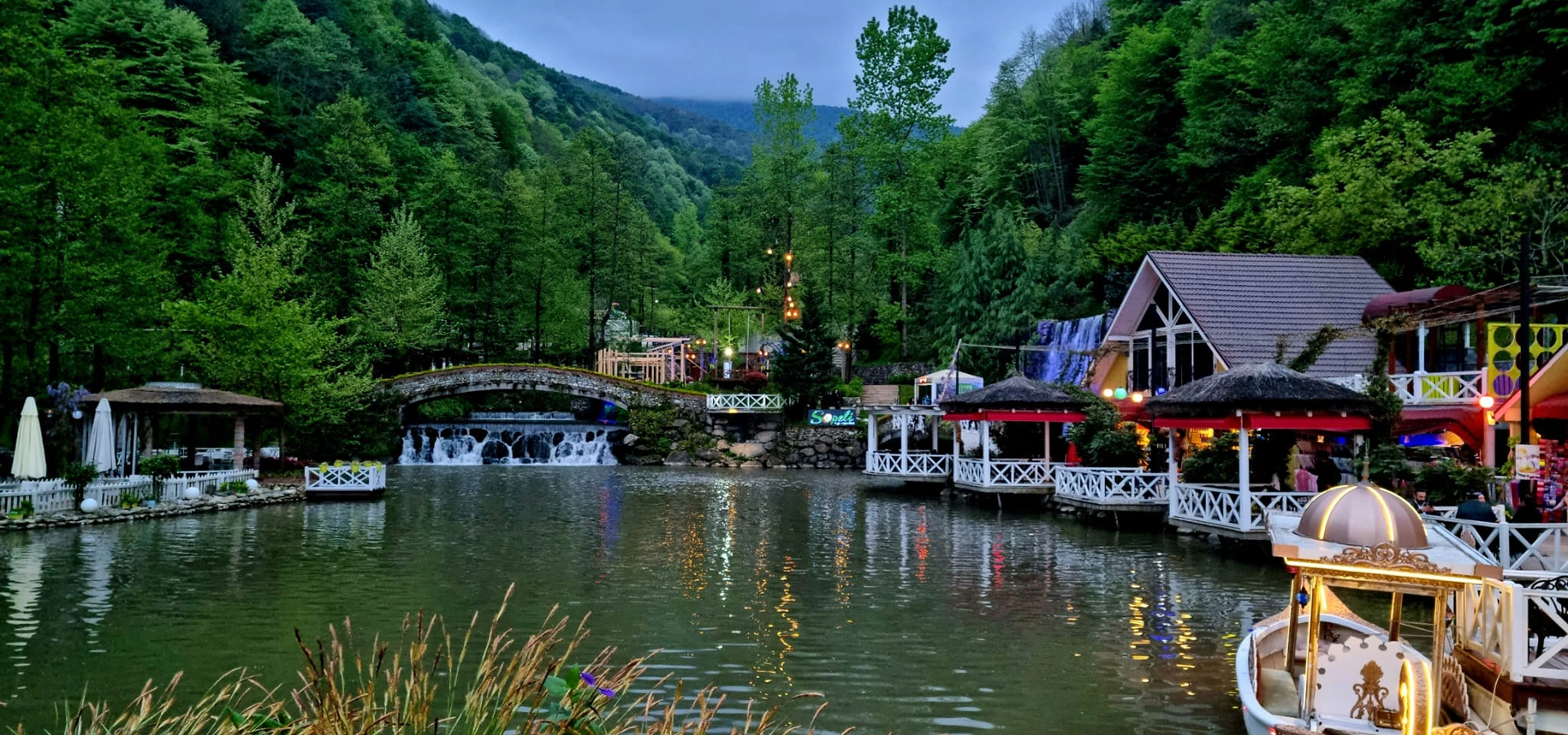
Build a flexible private route around Karapürçek persimmon molasses and other regional flavours from Geyve, Pamukova, Taraklı, Kocaali and central Sakarya.
Request This Tour