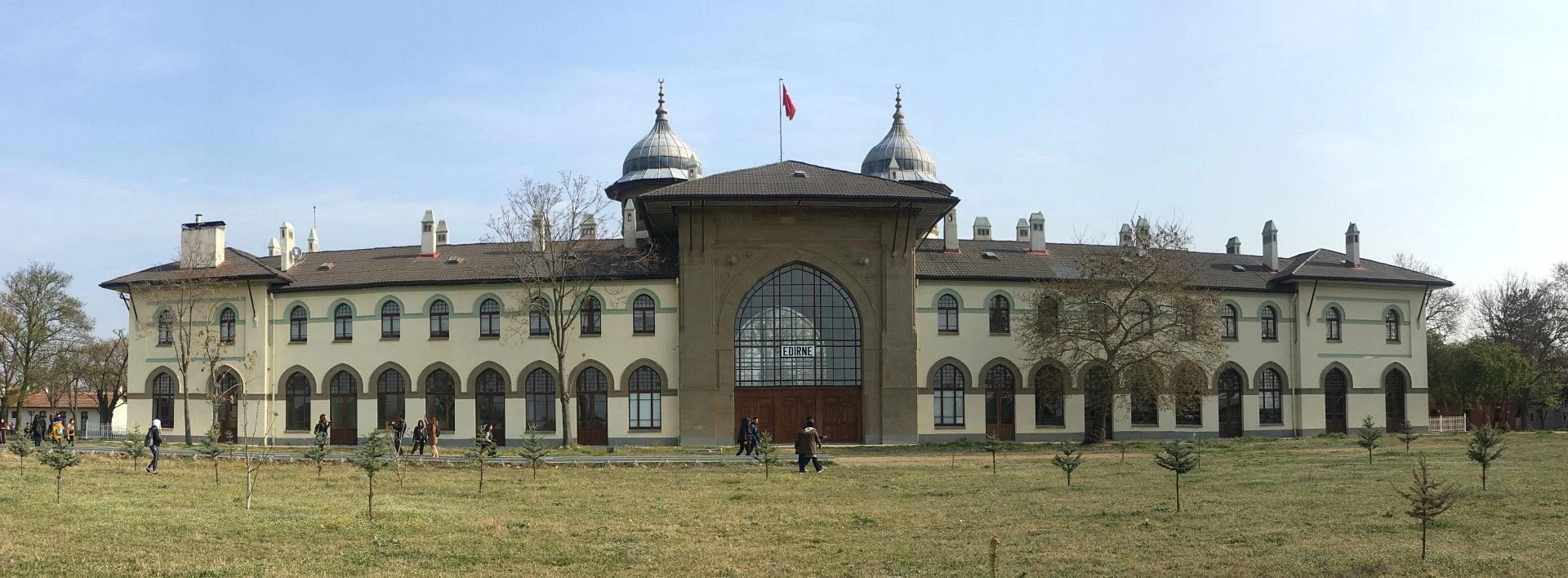
Hıdırlık Tabya, Edirne Balkan History Museum, Şükrü Pasha, Balkan Wars, Siege of Edirne, Ottoman Fortifications & Military Heritage

Hıdırlık Bastion Edirne – Complete Balkan History Museum Visitor Guide

Enter the largest bastion of Edirne's historic defense system,
where the siege of 1912–1913 and six centuries of Balkan history are interpreted inside the restored fortress.

Explore Hıdırlık Bastion

Hıdırlık Bastion – Edirne's Great Fortress of the Balkan Wars

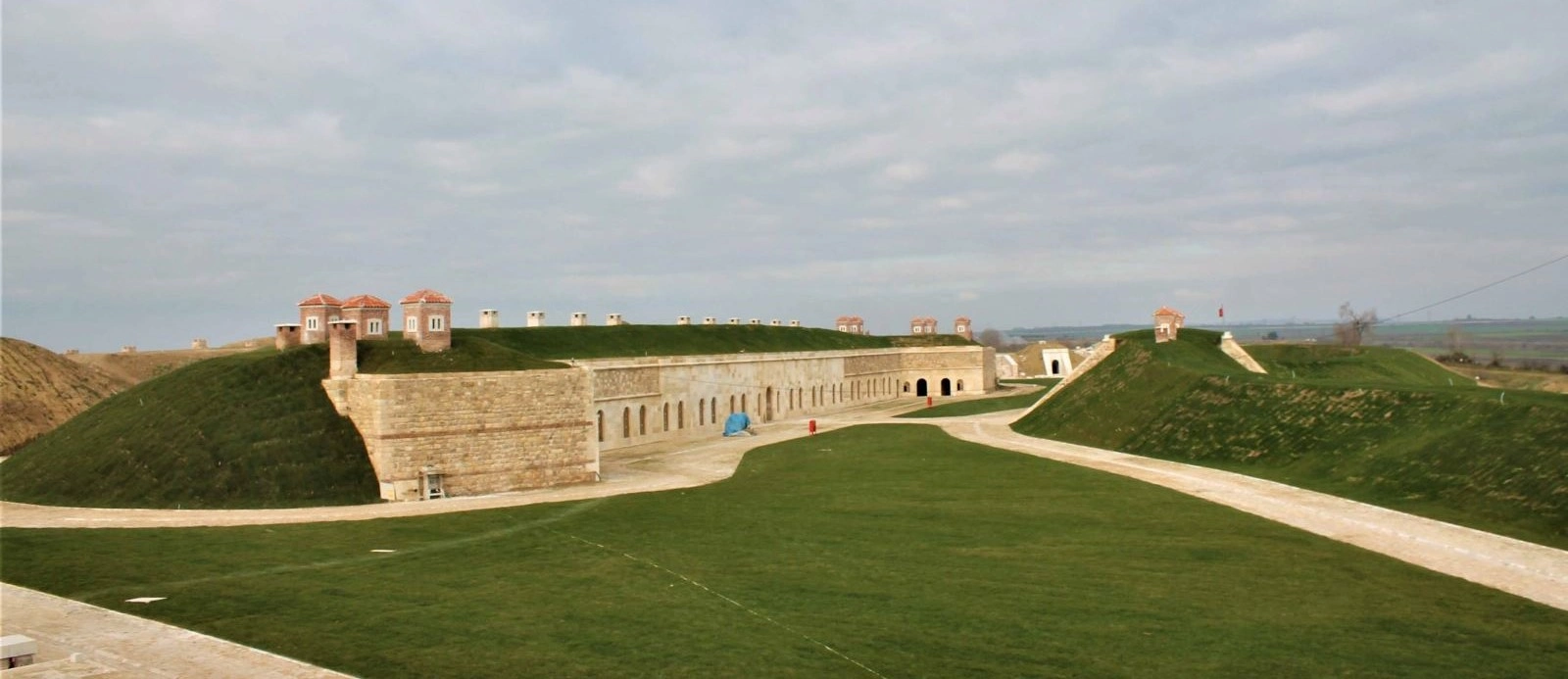
On the northern approaches to Edirne, a vast earth-covered military complex preserves one of the city's most powerful stories: Hıdırlık Tabya – Hıdırlık Bastion.

Constructed in the late 19th century as part of the defensive ring surrounding Edirne, the bastion became especially important during the First Balkan War of 1912–1913.

During the celebrated defense of Edirne, Hıdırlık served as the headquarters associated with Mehmet Şükrü Pasha, the Ottoman commander responsible for the fortress and its prolonged resistance.

Today the restored complex houses the Edirne Balkan History Museum, a major museum exploring the Ottoman presence in the Balkans, the political tensions that preceded the Balkan Wars, the siege of Edirne, wartime diaries, military life, migration and the human consequences of the collapse of Ottoman rule across much of southeastern Europe.

The museum occupies a remarkable historic structure with 22 headquarters rooms, 18 artillery rooms, 4 underground passage rooms and a 120-meter tunnel, while the wider bastion includes artillery positions, barracks, defensive earthworks, a ditch and a large courtyard.

For visitors using our complete Edirne visitor guide, Hıdırlık Bastion offers an essential contrast to Selimiye Mosque, Ottoman bazaars and palace architecture: it reveals Edirne as a strategic frontier fortress whose survival mattered directly to the defense of Istanbul.

Edirne's Largest Bastion

Explore the largest of the great late Ottoman fortifications built around Edirne, with a perimeter of roughly 1.8 kilometers.

Şükrü Pasha's Headquarters

Stand inside the command complex associated with the Ottoman defense of Edirne during the First Balkan War.

44 Museum Rooms

Discover headquarters rooms, artillery chambers and underground spaces transformed into a modern historical museum.

600 Years of Balkan History

Follow the museum narrative from the Ottoman expansion into the Balkans through the upheavals of the early 20th century.


Know Before You Go

Hıdırlık Bastion & Balkan History Museum – Quick Facts

Essential information for visiting one of Edirne's most important military monuments and one of Türkiye's most ambitious museums devoted to Balkan history.

📍

Location

Yıldırım Bayezid / Hıdırlık area on the northern side of central Edirne.

Open on Google Maps
🏰

Historic Name

Hıdırlık Tabya, commonly translated as Hıdırlık Bastion or Hıdırlık Fortification.

📜

Construction

Generally dated to 1886–1888; official cultural inventory material records the wider construction period as 1884–1888.

🛡️

Purpose

A fortified position within the late Ottoman defensive system built to protect strategically vital Edirne.

🎖️

Balkan Wars

Used as an important headquarters during the 1912–1913 defense of Edirne under Mehmet Şükrü Pasha.

🏛️

Museum

Opened to visitors as the Edirne Balkan History Museum at the end of 2021.

📐

Scale

Approximately 60 dönüm in area with a perimeter of about 1,800 meters.

🚪

Exhibition Spaces

44 interpreted rooms: 22 headquarters rooms, 18 artillery rooms and 4 underground passage rooms.

🕳️

Tunnel

A roughly 120-meter underground tunnel forms one of the bastion's most memorable surviving military features.

⏱️

Suggested Visit

Allow about 1½–2½ hours for the museum and fortress; history enthusiasts may want longer.


Fortress, Battlefield, Memory and Museum

Why Is Hıdırlık Bastion Important?

Hıdırlık Bastion is important because one place brings together late Ottoman military engineering, the strategic defense of Edirne, the trauma of the Balkan Wars and the modern remembrance of a shared regional history.

Edirne is often remembered as an Ottoman imperial capital, but its geographical position also made it one of the empire's most exposed strategic cities.

The roads leading through Thrace connected the Balkans with Istanbul, meaning that an enemy force advancing from the northwest could threaten the Ottoman capital after passing Edirne.

For this reason, the city was surrounded by a broad system of modernized fortifications during the 19th century.

Hıdırlık became the largest and one of the most significant components of that defensive landscape.

Its importance increased dramatically during the First Balkan War, when Edirne was isolated and besieged for months by Bulgarian forces supported by Serbian units.

The fortress became associated with one of the most famous Ottoman defensive episodes of the conflict: the prolonged resistance commanded by Mehmet Şükrü Pasha.

The modern museum adds another layer. Rather than treating the bastion only as a battlefield relic, it uses the historic spaces to examine centuries of Ottoman-Balkan relations, war, architecture, political change, displacement and memory.

That combination makes Hıdırlık one of the best places in Edirne to understand why the city occupies such an important position between Anatolia, Istanbul and the Balkans.

What Is a “Tabya”?

The Turkish word tabya is commonly used for a fortified military position designed to defend a strategically important location.

Unlike the high stone castles of the medieval period, 19th-century bastions were increasingly shaped by the destructive power of modern artillery.

Their architecture therefore emphasized low profiles, thick masonry, earth-covered rooms, artillery positions, defensive ditches and protected internal circulation.

From a distance, parts of Hıdırlık can appear almost to merge with the landscape.

That is intentional. Earth was not merely piled around the building for appearance; it helped absorb artillery impact, protected vaulted rooms and reduced the exposed surface of the fortification.

Useful way to look at the site: do not expect a castle with tall towers. Hıdırlık belongs to the age of artillery warfare, so many of its most important defensive elements are low, thick, partly underground or protected by earth.

The 1829 Russian Occupation and Edirne's First Modern Fortifications

The military story behind Hıdırlık begins decades before the surviving bastion was constructed.

In 1829, during the Russo-Turkish War, Russian forces occupied Edirne.

The episode demonstrated how vulnerable the city could become when an invading army successfully crossed Thrace.

Official cultural sources record that the first modern fortification works around Edirne were initiated in response to this threat under the supervision of Hoca İshak Efendi, a prominent Ottoman scholar and official.

These earlier defensive efforts did not yet create the Hıdırlık complex that visitors see today.

Instead, they marked the beginning of a long process in which Edirne was increasingly understood as a fortress city protecting the approaches to Istanbul.

Edirne's Ring of Late Ottoman Bastions

By the late 19th century, changes in artillery, rifles and military engineering required a much more extensive defensive system.

Rather than relying only on walls immediately surrounding the urban center, Ottoman planners created a broad belt of fortified positions several kilometers outside Edirne.

Official museum information identifies 24 principal tabyas forming a defensive ring around the city, roughly 5–6 kilometers from the center.

These positions were intended to support one another, control important approaches and force an attacker to confront prepared artillery defenses before reaching the city itself.

Hıdırlık occupied a particularly commanding location and became the largest bastion in the Edirne system.

Outer Defense

The bastions stood away from the historic center, creating a broad fortified perimeter rather than a single city wall.

Artillery Age

Low earthworks and protected gun positions responded to the growing power and range of modern artillery.

Mutual Support

Individual positions formed part of a larger network intended to create overlapping fields of defense.

Strategic Depth

The system sought to slow an attacking army before it could reach Edirne's urban core or continue toward Istanbul.

Construction of Hıdırlık Bastion

The surviving Hıdırlık Bastion belongs to the major late Ottoman modernization of Edirne's defenses.

Museum sources generally date its construction to 1886–1888.

The official cultural inventory gives a slightly broader date range of 1884–1888 and associates the project with İsmail Hakkı Bey and the Fortification Commission.

The difference probably reflects the distinction between planning, preparatory works and the principal building campaign.

What matters most for visitors is that Hıdırlık was created at a moment when the Ottoman Empire was attempting to modernize its military defenses in response to repeated wars and rapidly changing technology.

The result was not a ceremonial monument. It was a highly functional military landscape shaped around survival under artillery fire.

Architecture of Hıdırlık Bastion

Hıdırlık Bastion covers approximately 60 dönüm and has a perimeter approaching 1,800 meters, making it the largest of Edirne's historic tabyas.

Its plan responds directly to military needs. Protected masonry spaces are embedded behind or beneath massive earthworks, while artillery positions face outward toward the approaches to the city.

The complex includes a formal entrance, command and accommodation spaces, gun rooms, batteries, internal circulation routes, a defensive ditch and an open courtyard.

Nizamiye Gate

The controlled main entrance introduces visitors to the heavily protected military complex.

Headquarters Building

Command rooms formed the administrative and operational heart of the bastion.

Barracks

Protected accommodation supported the soldiers responsible for defending the position.

Artillery Rooms

Eighteen gun-related chambers survive as one of the defining features of the complex.

Artillery Batteries

Prepared firing positions allowed heavy weapons to cover the approaches to Edirne.

Earth Ramparts

Thick layers of earth protected masonry rooms and reduced vulnerability to artillery.

Defensive Ditch

The surrounding ditch increased the difficulty of a direct assault against the fortified position.

Courtyard

The internal open space organized movement between protected buildings and military functions.

The 22 Headquarters Rooms

The museum incorporates 22 rooms associated with the headquarters complex.

These spaces help visitors understand that a fortress was not simply a place where artillery was positioned.

It also required an enormous organization of command, communication, planning, record keeping, logistics and personnel.

During the Balkan Wars, orders had to be transmitted across a defensive perimeter extending for many kilometers.

Commanders needed information from multiple sectors, while supplies, ammunition, medical needs and troop movements had to be coordinated under conditions of isolation and bombardment.

Walking through the restored headquarters rooms therefore gives a very different perspective from simply viewing battlefield earthworks outside.

The 18 Artillery Rooms and Gun Positions

Hıdırlık contains 18 artillery rooms as well as exterior artillery batteries.

Their arrangement reflects the central role of heavy guns in late 19th- and early 20th-century fortress warfare.

Artillery crews needed protected spaces for weapons, ammunition, equipment and personnel, while gun positions required clear fields of fire toward likely enemy approaches.

The contrast between the thick protected rooms and the exposed firing sectors helps explain the basic logic of the entire tabya.

Visitors should also pay attention to the relationship between the chambers and the earth piled above them. The landscape itself formed part of the defensive architecture.

The 120-Meter Tunnel and Underground Passages

One of Hıdırlık Bastion's most atmospheric features is its approximately 120-meter tunnel.

The museum also includes four dehliz rooms, or underground passage spaces, within its interpreted exhibition areas.

These enclosed corridors reveal how military architecture attempted to keep movement protected from enemy observation and artillery fire.

The experience is especially effective because visitors are not looking at a model of a fortification. They are physically moving through the spaces where the defensive structure itself becomes part of the historical narrative.

Allow extra time here: visitors who enjoy military architecture often find the underground routes, vaults and transitions between interior and exterior spaces among the most memorable parts of Hıdırlık.

The Balkan Wars of 1912–1913

The Balkan Wars were among the most dramatic events in the final decades of the Ottoman Empire.

In October 1912, Bulgaria, Serbia, Greece and Montenegro went to war against the Ottoman Empire.

Ottoman armies suffered severe defeats across several fronts, and territories that had remained under Ottoman rule for centuries were rapidly lost.

The conflict was not only military. It transformed borders, communities and identities across the Balkans.

Large civilian populations were displaced, while refugees moved toward remaining Ottoman territories including Eastern Thrace and Anatolia.

Edirne stood directly in the path of the main Bulgarian advance toward Istanbul.

The city therefore became both a fortress under siege and a symbol of whether the Ottoman defense of Eastern Thrace could continue.

The Siege of Edirne, 1912–1913

The Edirne fortress was isolated during the opening weeks of the First Balkan War.

By early November 1912, Bulgarian forces had surrounded the city, with Serbian troops and heavy artillery later reinforcing the besieging army.

Inside the defensive perimeter, Şükrü Pasha and the Ottoman garrison attempted to hold a vast ring of forts and bastions while cut off from normal supply routes.

The siege continued through the winter, interrupted by an armistice before fighting resumed in February 1913.

Food, ammunition, medical supplies and the physical endurance of both soldiers and civilians became increasingly serious concerns.

After months of resistance, the final Bulgarian-Serbian assault broke through the fortress defenses.

On 26 March 1913, Şükrü Pasha surrendered Edirne.

The defense had lasted far longer than the short period originally expected of the fortress, and it became one of the most remembered episodes of the war in Ottoman and Turkish historical memory.

Mehmet Şükrü Pasha and Hıdırlık Bastion

The name most closely connected with Hıdırlık during the Balkan Wars is Mehmet Şükrü Pasha.

As commander of the fortified city, he was responsible for directing the defense while Edirne remained isolated from the main Ottoman forces.

Hıdırlık Bastion functioned as an important headquarters associated with his command.

The strategic problem was enormous. The defensive belt around Edirne covered a broad area, and the garrison had to respond to attacks against different sectors while increasingly short of supplies.

Şükrü Pasha's reputation was shaped not by ultimate victory—the city did surrender—but by the duration and determination of the resistance under extremely difficult conditions.

Contemporary reports across Europe also drew attention to the defense and to the commander who had prolonged it.

For modern visitors, Hıdırlık makes this story tangible: the commander is no longer simply a name in a textbook, because the military spaces in which the defense was organized still survive around you.

Life in Edirne During the Siege

Understanding the siege requires looking beyond military movements.

Edirne contained a large civilian population as well as tens of thousands of soldiers.

As the blockade continued, ordinary life was transformed by shortages, bombardment, uncertainty, disease and fear.

Food became increasingly scarce, while the ability to move people and supplies into the city was severely restricted.

The museum's use of themes such as war diaries and migration is particularly valuable because it prevents the conflict from becoming only a story of generals, forts and artillery.

The Balkan Wars reshaped the lives of civilians across an enormous region, and the consequences continued long after individual battles ended.

March 1913, Occupation and the Ottoman Return to Edirne

The fall of Edirne on 26 March 1913 was one of the most significant events of the First Balkan War.

The subsequent Treaty of London placed the Ottoman frontier west of Istanbul along the Midye–Enez line, leaving Edirne outside Ottoman control.

The situation changed rapidly.

The former Balkan allies soon went to war with one another in the Second Balkan War.

Taking advantage of Bulgaria's new military crisis, Ottoman forces advanced back into Eastern Thrace and re-entered Edirne in July 1913.

The city's return to Ottoman sovereignty was later formalized in the Treaty of Constantinople of September 1913.

Few places illustrate the instability of this period better than Edirne: within a single year, the city experienced siege, surrender, occupation, renewed war and political recovery.

Six Centuries of Ottoman and Balkan History

Although the Balkan Wars form the emotional center of the site, the Edirne Balkan History Museum deliberately presents a much longer story.

Its narrative begins with the Ottoman expansion into Rumelia and the museum's framing of the 1361 conquest of Edirne.

From there, it explores how Edirne became an Ottoman capital, how architecture and institutions spread across the Balkans, and how communities lived within a changing imperial system.

The museum then moves toward the nationalism, political tensions and military conflicts of the 19th and early 20th centuries.

The result is a broader historical arc: conquest, administration, architecture, coexistence, revolt, war, siege, migration and the redrawing of borders.

What Does the Balkan History Museum Explain?

The museum is organized around thematic interpretation rather than functioning simply as a collection of weapons in display cases.

Ottoman Rule in the Balkans

Explore the political and administrative framework through which the Ottoman Empire governed large parts of southeastern Europe.

Ottoman Architecture

See how mosques, bridges, bazaars, fountains and civic institutions transformed Balkan towns and cities.

Edirne as an Imperial Capital

Understand the city's role as a major Ottoman political and cultural center before the conquest of Constantinople.

Pax Ottomana

Encounter the museum's interpretation of long periods of imperial order and interaction among different Balkan communities.

The First Sparks

Follow political and nationalist developments that destabilized Ottoman rule in the Balkans.

Balkan Wars

Explore the alliances, campaigns and enormous territorial changes created by the wars of 1912–1913.

Siege of Edirne

Learn about the military defense, commanders, fortifications and final assault on the city.

War Diaries

Discover how personal testimony can reveal experiences hidden behind official military chronology.

Migration & Refugees

Understand how war and political change forced large populations to abandon homes and rebuild lives elsewhere.

Restoration Discoveries

See finds uncovered during conservation work and learn how the historic bastion itself was restored.

Restoration of Hıdırlık Bastion

After its military importance declined, Hıdırlık experienced a long period of changing use and deterioration.

A major conservation project was eventually developed around the centenary of the Balkan Wars.

Project work began in 2009, and restoration developed through cooperation between the Ministry of Culture and Tourism and Edirne Governorship.

During the restoration, damaged walls and windows of the headquarters complex were reconstructed in accordance with the historical fabric, while modern electrical, mechanical and exhibition systems were carefully integrated into the old military architecture.

The decision was made to transform the fortification into the Edirne Balkan History Museum, allowing the historic structure and the interpretation of the Balkan past to support one another.

The completed museum opened to visitors on 31 December 2021.

Inside the Edirne Balkan History Museum

The museum was designed so that visitors encounter history through several different forms of interpretation.

Traditional display cases are combined with digital applications, visual presentations, historical reconstructions and the surviving spaces of the bastion itself.

The museum deliberately avoids presenting the story as a simple room-by-room chronology.

Instead, themes are arranged to create memorable historical connections between Ottoman Balkan civilization, the decline of imperial control, the Balkan Wars and the experience of displacement.

This is especially effective at Hıdırlık because the visitor moves through real command rooms, artillery spaces and underground passages rather than a neutral modern gallery.

What Is Displayed in the Museum?

The museum includes objects connected with the active military life of the bastion, material found during restoration and collections representing the Balkan Wars and Early Republican period.

Cannons

Heavy weapons help explain the artillery-centered character of fortress warfare around Edirne.

Rifles

Period firearms connect the defensive architecture with the soldiers who actually occupied it.

Pistols

Smaller firearms form part of the wider collection of military objects associated with the era.

Cannonballs & Ammunition

Artillery-related material illustrates the destructive technology for which the fortress was designed.

Military Equipment

Field equipment and wartime objects reveal the practical realities of soldiers' daily lives.

Uniforms

Military clothing helps visitors visualize the human presence inside the otherwise austere fortress spaces.

Restoration Finds

Objects uncovered during conservation connect the museum displays directly with the archaeology of the bastion.

Digital Interpretation

Multimedia elements provide maps, context and narrative that are difficult to communicate through artifacts alone.

What to See at Hıdırlık Bastion

Hıdırlık is large enough that visitors can easily focus on the exhibitions and forget to study the fortress itself.

Try to read the site simultaneously as a museum and a military monument.

Main Entrance

Notice the controlled approach through the fortified gate and the transition from open landscape into the protected interior.

Headquarters Façade

Study the long masonry frontage that once contained the command and administrative spaces of the bastion.

Earth-Covered Roofs

Look at how grass-covered defensive masses conceal and protect the vaulted rooms below.

Artillery Chambers

Enter the surviving gun rooms and imagine the noise, smoke and pressure of combat conditions.

Gun Batteries

Observe how artillery positions were oriented toward the approaches that the fortress was intended to defend.

120-Meter Tunnel

Walk through one of the most atmospheric elements of the fortress's protected circulation system.

Defensive Ditch

Study the broad obstacle that helped separate the inner fortress from a direct attacking force.

Museum Objects

Look for weapons, ammunition, uniforms and material associated with the bastion's active military period.

Siege Interpretation

Give extra attention to displays explaining the 1912–1913 siege, because the events occurred in the landscape surrounding you.

Migration Galleries

Do not miss the sections explaining the civilian displacement that followed the Balkan conflicts and political change.

Restoration Story

See how the abandoned military complex was conserved and transformed into a museum without losing its historical character.

Views toward Edirne

The elevated location helps visitors understand why Hıdırlık was strategically important to the defense of the city.

How to Understand Hıdırlık Bastion

Hıdırlık becomes much more meaningful when visitors recognize that several historical layers overlap inside the same landscape.

Military Engineering Late Ottoman earthworks, artillery rooms, batteries, tunnels and defensive ditches.
Strategic Geography Edirne guarded the principal overland approaches from the Balkans toward Istanbul.
Balkan Wars The bastion became a headquarters within the long defense of Edirne in 1912–1913.
Şükrü Pasha The site is closely associated with the commander remembered as the defender of Edirne.
Civilian History The museum explores shortages, diaries, migration and the human cost of war.
Balkan Memory The exhibitions place the siege within nearly six centuries of Ottoman and Balkan history.
Conservation The restored fortress demonstrates how military heritage can be reused as an educational museum.

How Much Time Do You Need at Hıdırlık Bastion?

45 Minutes

Enough only for a rapid overview of the main fortress and selected museum rooms.

1 Hour

A workable minimum if your Edirne schedule is tight, but you will need to move quickly.

1½ Hours

Good for the principal exhibitions, military architecture and the most important siege displays.

2 Hours

Recommended for most visitors who want to understand both the museum and the bastion itself.

2½–3 Hours

Ideal for military-history enthusiasts, careful readers and visitors interested in photography and architecture.

Half Day

Combine Hıdırlık with additional Edirne military, Ottoman and river heritage sites without rushing.

Best Time to Visit Hıdırlık Bastion

Morning

A good choice for cooler temperatures, quieter galleries and unhurried exploration of the outdoor earthworks.

Late Afternoon

Excellent light often gives the ramparts, stonework and open landscape more depth for photography.

Spring

Green earthworks and mild temperatures make the large outdoor portions of the complex especially pleasant.

Summer

The museum remains rewarding, but open sections can be hot; mornings are generally more comfortable.

Autumn

Comfortable temperatures and softer light are excellent for combining indoor galleries with the fortress exterior.

Winter

The site can feel exceptionally atmospheric, although Edirne's cold, wind and rain make outdoor exploration more demanding.

Hıdırlık Bastion Balkan History Museum Visitor Information

Hıdırlık is an official museum administered within the Turkish Ministry of Culture and Tourism system.

Unlike many outdoor monuments in Edirne, it is a ticketed museum site with controlled opening hours.

Official schedules may change seasonally or for public holidays, so visitors should check the national museum portal shortly before traveling.

Turkish Name Hıdırlık Tabya Balkan Tarihi Müzesi
Location Yıldırım Bayezid / Hıdırlık area, Edirne
Opening Days Official listings state that the museum is open seven days a week.
Summer Schedule Provincial museum information lists 09:00–19:00 from 1 April to 30 September.
Winter Schedule Provincial museum information lists 09:00–17:30 from 1 October to 31 March.
National Museum Portal The current portal can display the active daily schedule and ticket-office closing time; verify before arrival.
Admission Paid museum; current ticket price should be checked on the official museum portal.
MüzeKart Accepted according to official museum information.
Suggested Time Approximately 1½–2½ hours
Before you go: museum hours and admission policies can change. For the most reliable same-day information, check the official Müze.gov.tr listing rather than relying only on older travel websites.

How to Get to Hıdırlık Bastion

Hıdırlık Bastion lies outside the densest monumental core of Edirne, in the Yıldırım / Hıdırlık area north of the city center.

Its location makes sense historically: the tabya was part of an outer defensive perimeter rather than an urban building inside the old city streets.

By Taxi

Ask for “Hıdırlık Tabya Balkan Tarihi Müzesi.” This is usually the simplest option from central Edirne.

By Car

Follow navigation to the museum in the Yıldırım Bayezid / Hıdırlık area; visitor parking is provided at the site.

From Selimiye Area

The bastion lies only a few kilometers from central Edirne, but the route is less convenient as a casual old-town walk than central monuments.

Local Transport

Local routes can serve the wider district, but services and stop locations should be confirmed locally before departure.

On Foot

Possible for strong walkers, but the visit is generally more convenient by taxi, private vehicle or organized transport.

Private Tour

Hıdırlık fits very well into a private history-focused Edirne itinerary because the guide can connect the fortress with the wider Balkan story.

Accessibility and Walking Conditions

The museum combines restored interior galleries with a large historic fortress landscape.

Visitors should therefore expect more varied walking conditions than in a conventional indoor museum.

Large Site

The bastion covers a broad area, so the overall visit involves considerably more walking than a small city museum.

Historic Passages

Tunnels, thresholds and military spaces can be narrower or less uniform than modern museum corridors.

Outdoor Sections

Some of the most important architecture is outside and exposed to sun, wind, rain and seasonal temperature changes.

Rest Areas

The museum development includes visitor facilities and rest areas near the entrance complex.

Mobility Needs

Visitors with limited mobility should ask museum staff about the most accessible route through the historic complex.

Comfortable Shoes

Supportive footwear is recommended because the visit combines interior floors, courtyards and military terrain.

Photography at Hıdırlık Bastion

Hıdırlık is particularly rewarding for visitors interested in architectural and historical photography.

Entrance Gate

Use the strong geometry of the masonry gateway to frame the transition into the defensive complex.

Long Headquarters Façade

The repeated arches and windows create excellent perspective compositions across the central courtyard.

Grass-Covered Ramparts

Wide-angle views show how dramatically the fortress blends military construction with the surrounding landscape.

Artillery Displays

Historic guns photographed against the original bastion provide strong visual context for the site's military purpose.

Tunnel Perspective

Interior passages offer dramatic lines, vaults and changes between light and shadow.

Panoramic Views

Use elevated areas to photograph the surrounding landscape and appreciate the bastion's strategic position.

Photography rules: ordinary personal photography is generally associated with museum visits, but flash, tripods, commercial shoots or photography of specific objects may be restricted. Follow current signs and staff instructions inside the galleries.

Places to Visit with Hıdırlık Bastion

Hıdırlık works especially well as part of a wider historical itinerary across Edirne. Use our complete Edirne visitor guide to continue exploring.

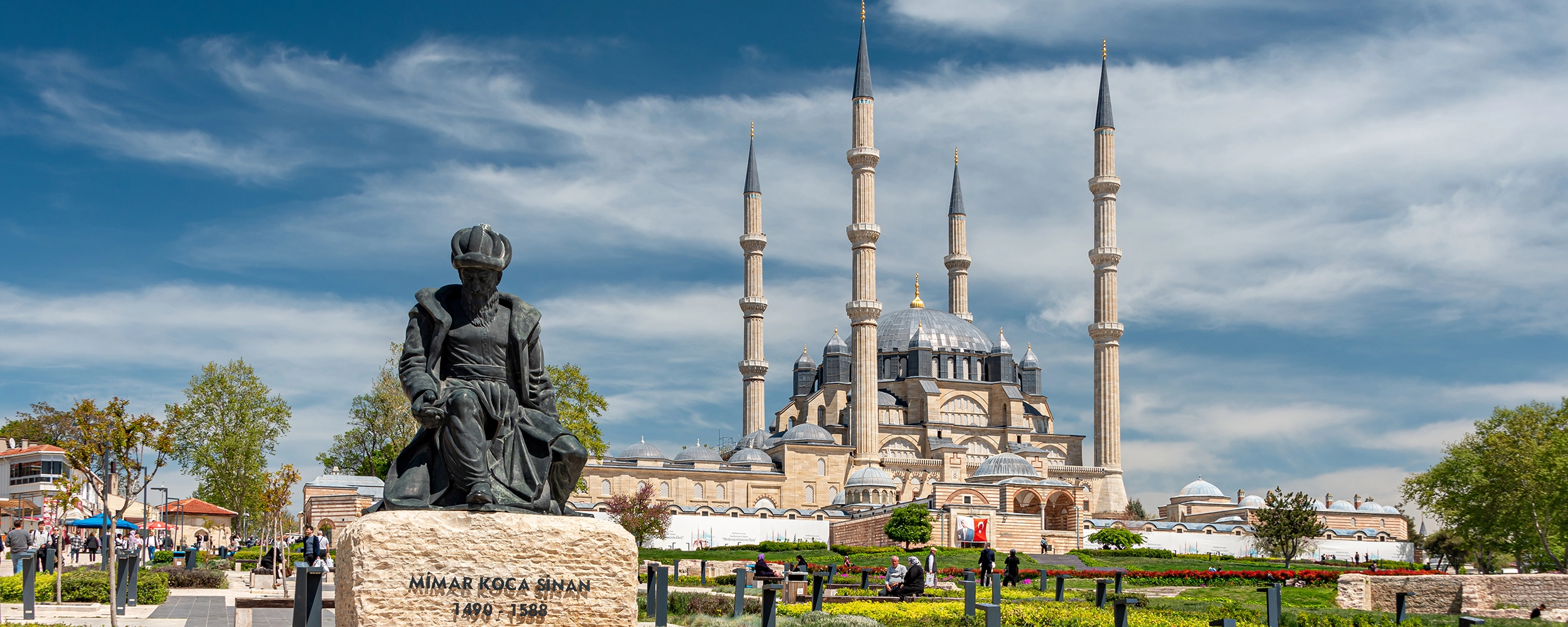
Selimiye Mosque

Contrast the military landscape of Hıdırlık with Mimar Sinan's monumental masterpiece at the heart of Ottoman Edirne.

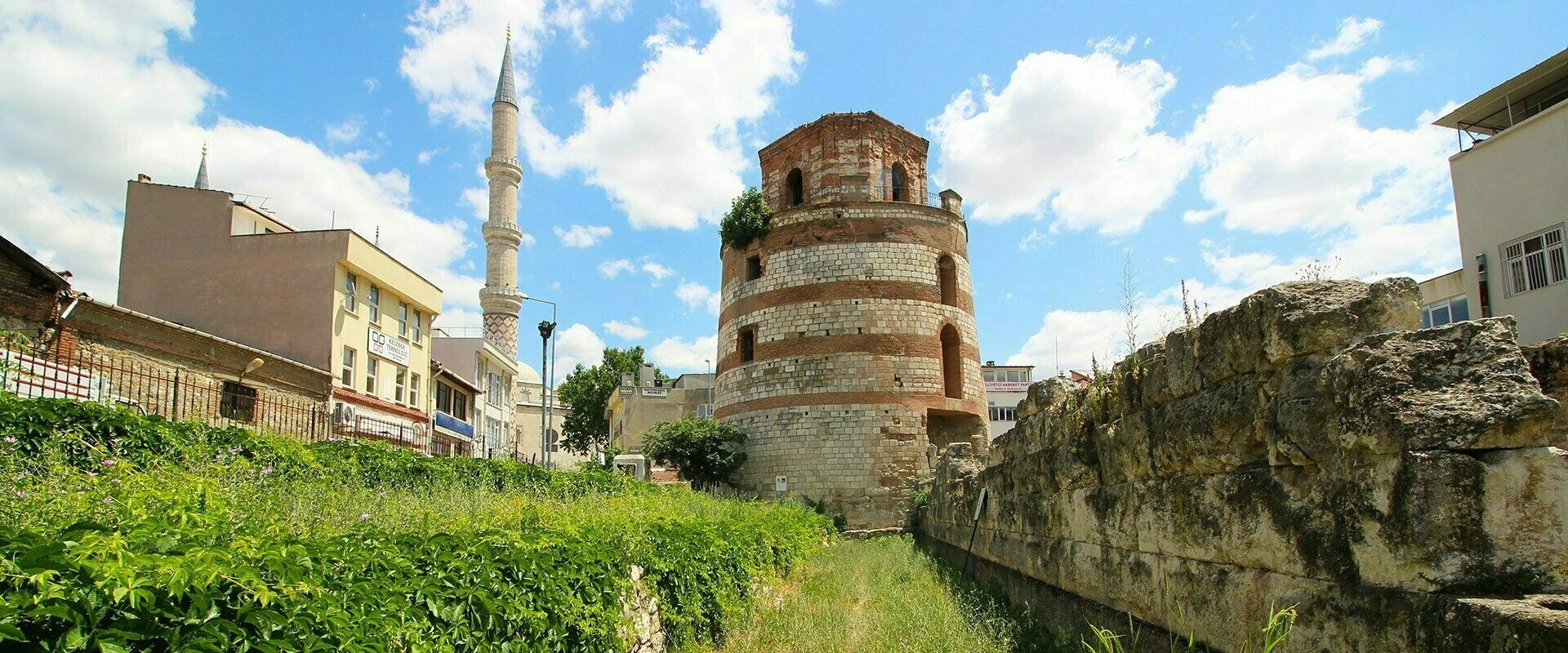
Macedonia Tower Museum

Explore the Roman and Byzantine fortifications of ancient Hadrianopolis and compare them with Edirne's late Ottoman defenses.

View Guide

Muradiye Mosque

Discover an entirely different layer of Edirne history through early Ottoman architecture and exceptional historic tiles.

View Guide

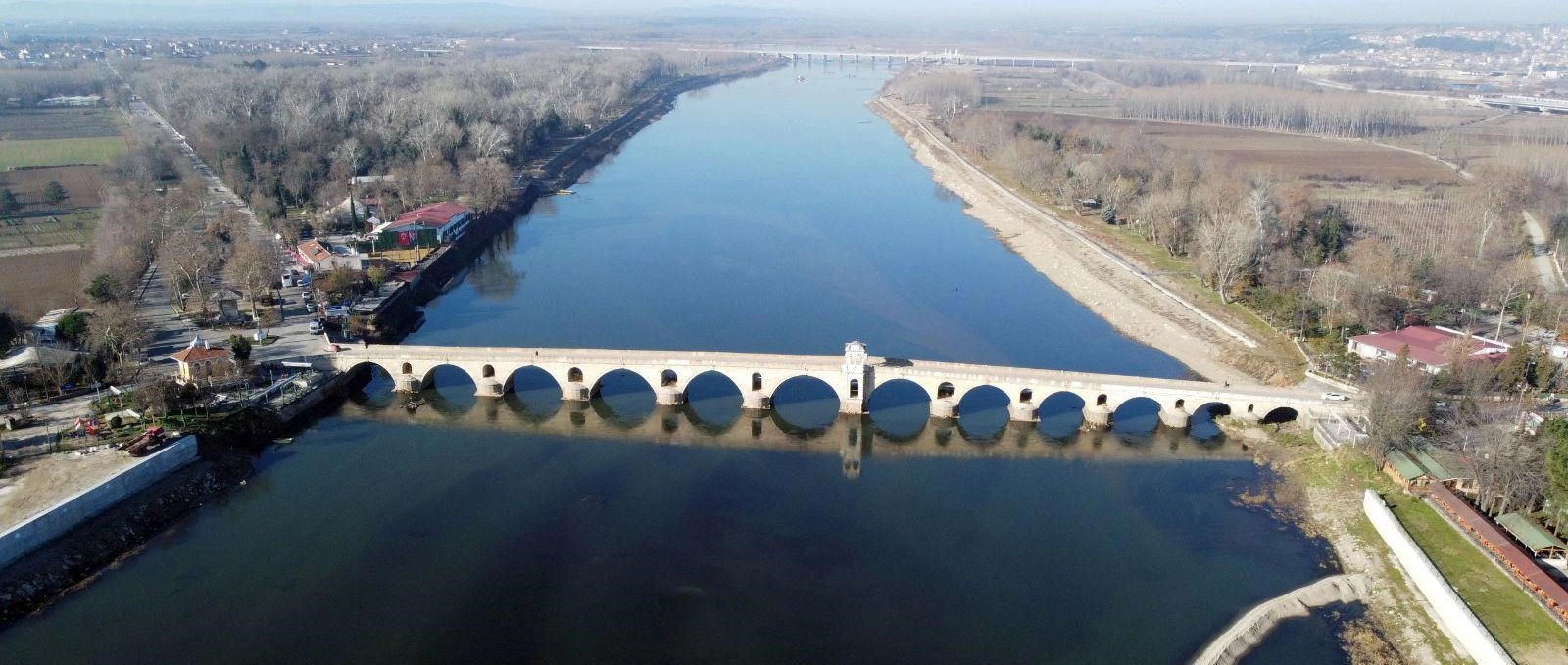
Meriç Bridge

Continue toward Edirne's river landscape and the monumental 19th-century Ottoman crossing leading to Karaağaç.

View Guide

Karaağaç Old Train Station

Follow the story into the 20th century through railway history, the Lausanne Monument and Türkiye's western frontier.

View Guide

Edirne Historic Center

Return to the old imperial core for mosques, bazaars, museums, Ottoman streets and traditional food.

Explore Edirne

Suggested Hıdırlık Bastion & Historic Edirne Route

Begin at Hıdırlık Bastion while your energy is fresh and allow around two hours for the museum and military architecture.

Then return toward central Edirne and visit Macedonia Tower Museum, where the city's defensive story moves backward from the late Ottoman period to Roman and Byzantine Hadrianopolis.

Continue through the historic center toward Selimiye Mosque, Eski Cami, Üç Şerefeli Mosque and the traditional bazaars.

In the afternoon, move southwest toward the rivers and cross Meriç Bridge.

Finish in Karaağaç, where the old railway station and Lausanne Monument explain another chapter in the transformation of Edirne's borderlands after the Balkan Wars and First World War.

Start Hıdırlık Bastion & Balkan History Museum
Ancient Defense Macedonia Tower Museum
Imperial Edirne Selimiye Mosque and historic center
Ottoman River Landscape Meriç Bridge
Modern Frontier History Karaağaç Old Train Station & Lausanne Monument
Best for history lovers: this route moves through nearly two thousand years of Edirne's strategic history—from Roman walls to Ottoman fortresses and the modern Turkish frontier.

Hıdırlık Bastion and Edirne's Strategic Geography

Hıdırlık makes the geography of Edirne easier to understand.

The city stands at the meeting point of important Balkan routes and close to the river corridors of the Meriç, Tunca and Arda.

For the Ottoman Empire, Edirne was not merely a beautiful former capital. It was the principal great city guarding the land approaches to Istanbul from southeastern Europe.

That strategic importance explains why Edirne repeatedly appears in the history of Ottoman-Russian wars, the Balkan Wars, international diplomacy and modern border formation.

Seen from this perspective, Hıdırlık is not an isolated fortress. It is a physical expression of Edirne's geographical role between empire and frontier.

Frequently Asked Questions About Hıdırlık Bastion

What is Hıdırlık Bastion?

Hıdırlık Bastion is a large late Ottoman fortified military complex in Edirne, constructed as part of the city's defensive ring and now used as the Edirne Balkan History Museum.

Is Hıdırlık Bastion the same as Hıdırlık Tabya?

Yes. Hıdırlık Tabya is the Turkish name; “Hıdırlık Bastion” or “Hıdırlık Fortification” are common English descriptions.

When was Hıdırlık Bastion built?

Museum sources generally date the surviving bastion to 1886–1888, while the official cultural inventory gives the broader period 1884–1888.

Why was Hıdırlık Bastion built?

It formed part of a modernized ring of fortifications intended to protect strategically important Edirne and the approaches toward Istanbul.

How many bastions protected Edirne?

Official museum information identifies 24 principal tabyas forming the city's late Ottoman defensive line.

Was Hıdırlık the largest bastion in Edirne?

Yes. Official cultural and museum sources describe it as Edirne's largest tabya.

How large is Hıdırlık Bastion?

The complex covers approximately 60 dönüm and has a perimeter of roughly 1,800 meters.

What was Hıdırlık's role in the Balkan Wars?

It was an important position within the Edirne fortress system and served as a headquarters associated with the defense commanded by Mehmet Şükrü Pasha.

Who was Şükrü Pasha?

Mehmet Şükrü Pasha was the Ottoman commander responsible for the defense of fortified Edirne during the First Balkan War of 1912–1913.

How long did the siege of Edirne last?

The city was isolated and fought over for roughly five months, from the autumn of 1912 until its surrender on 26 March 1913.

Who besieged Edirne?

The principal besieging force was the Bulgarian army, which was reinforced by significant Serbian forces and heavy artillery during the campaign.

When did Edirne surrender?

Şükrü Pasha surrendered the fortress on 26 March 1913 after the final assault broke through the defenses.

Did the Ottoman Empire recover Edirne?

Yes. Ottoman forces re-entered Edirne in July 1913 during the Second Balkan War, and the city's return was formalized later that year.

When did the Balkan History Museum open?

The restored Hıdırlık Bastion opened as the Edirne Balkan History Museum on 31 December 2021.

How many rooms are in the museum?

The interpreted museum complex includes 44 rooms: 22 headquarters rooms, 18 artillery rooms and 4 underground passage rooms.

Is there really a tunnel inside Hıdırlık Bastion?

Yes. The historic complex contains an approximately 120-meter tunnel.

What does the Balkan History Museum cover?

Its themes include Ottoman administration and architecture in the Balkans, Edirne as an imperial capital, the Balkan Wars, the siege of Edirne, war diaries, migration and restoration discoveries.

What objects can I see?

Displays include period firearms, cannons, cannonballs, military equipment, uniforms and finds discovered during restoration, supported by digital interpretation.

Is Hıdırlık Bastion open every day?

Official listings state that the museum is normally open seven days a week, although visitors should always verify the current schedule before traveling.

Does MüzeKart work at Hıdırlık Bastion?

Yes. Official museum information lists MüzeKart as valid.

How long should I spend at the museum?

Allow approximately 1½–2½ hours for a satisfying visit to both the exhibitions and the fortress architecture.

Is Hıdırlık Bastion suitable for children?

Yes for many families, especially children interested in forts, tunnels and interactive history. The site is large, so younger visitors may need breaks.

Is Hıdırlık Bastion worth visiting if I am not interested in military history?

Yes. The museum also explores Ottoman Balkan culture, architecture, migration, civilian experience and the transformation of borders, while the restored fortress is architecturally impressive in its own right.

Can I combine Hıdırlık Bastion with central Edirne?

Absolutely. The bastion is only a few kilometers from the historic center and works very well with Selimiye, Macedonia Tower, Muradiye Mosque and the bazaars.

What is the best related route after Hıdırlık?

For a full historical sequence, continue through central Edirne and finish with Meriç Bridge and Karaağaç Old Train Station and the Lausanne Monument.

Responsible Visiting at Hıdırlık Bastion

Respect the Architecture

Do not climb on historic walls, artillery positions, parapets or earthworks outside designated visitor routes.

Follow Museum Signs

Some military spaces may require controlled circulation for conservation and visitor safety.

Do Not Touch Artifacts

Weapons, equipment and restoration finds are protected museum objects even when displayed within the original fortress.

Remember the Human Story

The site commemorates war, siege, death and displacement; approach sensitive displays with appropriate respect.

Keep the Site Clean

Use designated bins and protect the large outdoor landscape surrounding the museum.

Give Yourself Time

Hıdırlık is best understood slowly, allowing the museum narrative and the military architecture to reinforce one another.

Private Hıdırlık Bastion & Historic Edirne Experiences

Combine Hıdırlık Bastion, Balkan Wars history, Selimiye, Roman and Byzantine remains, Ottoman monuments, historic bridges and Karaağaç through a private Edirne route shaped around your interests.

Custom Balkan Wars & Edirne History Experience

Follow Edirne from imperial capital to fortified frontier city, with a private guide connecting Hıdırlık's military architecture to the siege of 1912–1913 and the wider transformation of the Balkans.

Historic Edirne Selimiye Mosque Ottoman monuments fortifications bridges and Balkan heritage

Explore Historic Edirne

Discover Selimiye, early Ottoman mosques, Roman archaeology, Balkan history, medical heritage, historic bridges, bazaars, Karaağaç and the multicultural story of Türkiye's former Ottoman capital.

View Edirne Guide

Continue Exploring Edirne's Layers of History

Hıdırlık Bastion is a perfect starting point for an itinerary that moves backward to Roman Hadrianopolis and forward to the railway and frontier history of Karaağaç.