Whirling Dervishes, Şeyh Galib, Sema, Sufi Music, Ottoman Poetry & Istanbul's Oldest Mevlevi Lodge

Galata Mevlevi Lodge Museum Istanbul – Complete Visitor Guide

Step through a historic gate beside İstiklal Avenue and enter a quieter Istanbul shaped by Mevlevi spirituality, whirling dervishes, music, poetry, calligraphy and centuries of Sufi tradition.

Explore the Mevlevi Lodge

A Hidden World of Sema, Poetry and Sufi Culture in the Heart of Beyoğlu

Only a few steps from the crowds of İstiklal Avenue and the steep streets descending toward Galata, the Galata Mevlevi Lodge Museum opens onto an entirely different atmosphere.

Founded in 1491, the lodge — historically known as the Kulekapısı Mevlevihanesi and Galip Dede Tekkesi — became one of Istanbul's most influential centers of Mevlevi spirituality, music, literature and artistic culture.

This was far more than a place where dervishes performed the famous Sema ceremony. A Mevlevi lodge was simultaneously a spiritual school, community, residence, music academy, literary circle and place of disciplined education.

Poets, musicians, calligraphers, scholars and mystics passed through its doors. Most famously, the great Ottoman poet Şeyh Galib became the lodge's spiritual leader in the late 18th century.

Today, visitors can explore the historic Semahane, former dervish rooms, upper galleries, Mevlevi objects, musical instruments, calligraphy, tombs, courtyard and the atmospheric cemetery known as the Hamuşan.

The museum is compact enough to visit without sacrificing an entire day, yet historically rich enough to reward 1–2 hours of careful exploration.

Historic Semahane

Stand inside the ritual hall where music, movement and spiritual discipline came together in the Mevlevi Sema.

Şeyh Galib

Discover the lodge associated with one of the greatest poets of Ottoman Divan literature.

Music & Sema

Explore the instruments, traditions and symbolism behind the world popularly known through the Whirling Dervishes.

Hidden Beyoğlu

Step from busy İstiklal and Galip Dede Street into one of central Istanbul's most peaceful historic compounds.

Know Before You Go

Galata Mevlevi Lodge Museum – Quick Facts

Essential information about Istanbul's historic Galata Mevlevi Lodge, its Semahane, Şeyh Galib, Mevlevi culture, museum collections and visitor planning.

📍

Location

Galip Dede Street at the Tünel end of İstiklal Avenue in Beyoğlu.

📅

Founded

1491 during the reign of Sultan Bayezid II.

🏛️

Historic Name

Kulekapısı Mevlevihanesi and Galip Dede Tekkesi.

🌀

Famous For

Mevlevi culture, Sema, Whirling Dervishes, Sufi music and Ottoman poetry.

✒️

Famous Figure

Şeyh Galib, one of the greatest poets of classical Ottoman literature.

🎵

Collections

Mevlevi objects, manuscripts, calligraphy, musical instruments, historic photographs and related artworks.

⏱️

Recommended Visit

Approximately 1–2 hours for most visitors.

🚇

Nearest Transport

Şişhane Metro and the historic Tünel funicular terminus.


Sufism, Poetry, Music, Ottoman Intellectual Life and One of Beyoğlu's Great Historic Survivors

Why Is the Galata Mevlevi Lodge Important?

The lodge is important because it preserves the physical setting of an institution that shaped Ottoman spirituality, literature, music and artistic culture for more than four centuries.

The first reason to visit is its age. Founded in 1491, Galata became the oldest Mevlevi lodge established in Istanbul and one of the principal centers through which Mevlevi culture developed in the Ottoman capital.

The second reason is its connection with Şeyh Galib. Poet, mystic and author of Hüsn ü Aşk, Galib became postnişin — spiritual leader — of the lodge in 1791.

The third reason is music. Mevlevi lodges became extraordinary centers for Ottoman classical music, training composers, ney players, singers and musicians whose influence reached far beyond the walls of the dervish lodge.

The fourth reason is literature. Mevlevi culture encouraged poetry, calligraphy, manuscript culture, spiritual commentary and intellectual exchange. The lodge therefore belongs as much to the literary history of Istanbul as to its religious history.

Finally, the complex survives in one of Istanbul's most intensely urban districts. The transition from modern Beyoğlu into the quiet courtyard of a centuries-old Sufi institution is one of the most memorable contrasts in the city.

History of the Galata Mevlevi Lodge

The Galata Mevlevi Lodge was established in 1491 on land belonging to İskender Paşa, an important Ottoman statesman during the reigns of Fatih Sultan Mehmed and Sultan Bayezid II.

The site had formed part of İskender Paşa's estate or hunting grounds on the Galata slopes. Its first spiritual leader is traditionally identified as Mehmed Semâ-i Çelebi.

The original 15th-century buildings did not survive unchanged. The complex experienced earthquakes, fires, repairs, rebuilding and architectural enlargement over several centuries.

The great Istanbul earthquake of 1509, remembered as the Küçük Kıyamet or "Little Apocalypse," is believed to have affected the lodge. A surviving inscription records an important repair in 1651.

The lodge was again badly affected by the Tophane fire of the 18th century. Reconstruction under Sultan Mustafa III helped establish the form from which the later complex developed.

Another decisive period began when Şeyh Galib became postnişin in 1791. His close relationship with Sultan Selim III, himself deeply interested in music, poetry and Mevlevi culture, brought renewed imperial attention to the lodge.

Further alterations during the reigns of Sultan Mahmud II and Sultan Abdülmecid gave the buildings much of their later Ottoman character. Major works carried out between 1851 and 1859 helped shape the complex visitors recognize today.

The lodge continued functioning until 1925, when dervish lodges and similar religious institutions throughout the new Turkish Republic were closed.

The buildings subsequently served other purposes, including use as a school, before extensive restoration work began in the 20th century.

Following restoration, the site opened in 1975 as the Divan Literature Museum.

A later restoration and museum redevelopment between 2008 and 2011 resulted in its reopening under its present identity: the Galata Mevlevi Lodge Museum.

1491

The Galata Mevlevi Lodge is established on the Galata slopes.

17th Century

Repairs and rebuilding continue after earlier damage to the complex.

18th Century

Fire and reconstruction transform the architectural history of the lodge.

1791

Şeyh Galib becomes postnişin and the lodge enters one of its most celebrated periods.

1925

The functioning Mevlevi lodge closes following the nationwide closure of dervish institutions.

1975

The restored complex opens as the Divan Literature Museum.

2011

After further restoration, the site reopens as the Galata Mevlevi Lodge Museum.

Today

The complex preserves Mevlevi culture, architecture, music, literature and memorial spaces.

What Is the Mevlevi Order?

To understand the museum, it helps to understand the Mevlevi tradition it was created to serve.

The Mevlevi path developed after the death of the great 13th-century poet, scholar and mystic Jalal al-Din Rumi — Mevlana in Konya.

Rumi's son Sultan Veled and later followers helped organize a spiritual tradition centered around Rumi's teachings, poetry, remembrance of God, discipline, music and contemplative practice.

Over time, Mevlevi lodges appeared across Ottoman lands. They became important centers not only of Sufi spirituality but also of music, poetry, etiquette, education, calligraphy and the arts.

The famous rotating movement seen during the Sema is therefore only one visible element of a much larger tradition.

Galata is especially important because it demonstrates how this culture became deeply rooted in Ottoman Istanbul, far from the order's original center in Konya.

Useful perspective: the museum is not simply a "Whirling Dervish museum." It presents a wider cultural world in which spirituality, music, poetry, discipline, art and community life were closely connected.

The Architecture of the Mevlevi Lodge

A historic Mevlevi lodge was not a single prayer hall. It was a complex designed for ritual, education, accommodation, service and communal life.

Over centuries, Galata developed into a small külliye-like ensemble containing spaces associated with the Semahane, dervish cells, sheikh's quarters, royal lodge, women's section, library, sebil, muvakkithane, kitchen, fountains, tombs and cemetery.

Not every historic structure has survived in its original condition, and many parts were rebuilt or altered during later Ottoman restorations.

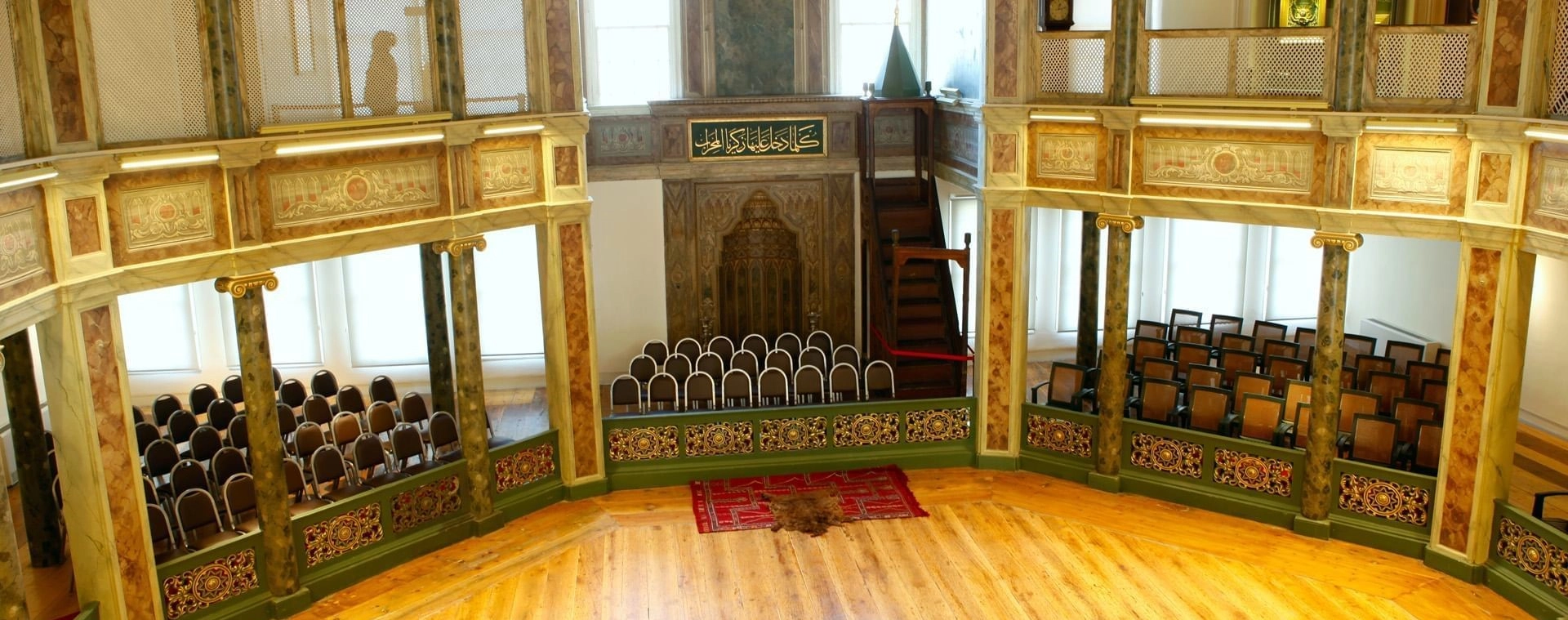
The principal surviving building has the outward character of a late Ottoman wooden mansion, but its interior organization is dominated by the ceremonial Sema space.

The Semahane is surrounded by upper-level galleries and screened sections that historically accommodated musicians, distinguished guests, members of the Mevlevi hierarchy and observers.

Outside, the courtyard, tombs, fountains and gravestones help reveal that this was once a complete spiritual community rather than an isolated ceremonial hall.

Semahane

The ceremonial heart of the complex and the space most strongly associated with the Sema.

Dervish Rooms

Former residential and community spaces now used to interpret Mevlevi life and Sufi culture.

Mahfils

Upper galleries overlooking the Sema floor once accommodated musicians and different groups of observers.

Courtyard

A remarkably peaceful transition between Galip Dede Street and the historic lodge.

Tombs

Memorial structures containing important Mevlevi sheikhs, poets and figures associated with the lodge.

Hamuşan

The historic cemetery, whose name evokes the Mevlevi expression for the "silent ones."

The Historic Semahane

The Semahane is the architectural and symbolic center of the museum.

Its polished wooden floor formed the space in which the Mevlevi Sema was performed. Around it, architectural galleries created places for musicians, Mevlevi officials, guests and observers.

The prayer direction is marked by the mihrab, while the hall also contains a minbar. The combination reminds visitors that the Sema existed within a wider Islamic devotional framework.

Above and around the ceremonial area, wooden screens and galleries give the interior much of its visual character.

Look also for Ottoman calligraphic panels, including invocations connected with Mevlana and the Mevlevi tradition.

Even when no ceremony is taking place, the empty floor is powerful because its architectural form allows visitors to imagine music, measured movement, silence and ritual unfolding together.

Take your time here: rather than treating the Semahane simply as another museum room, look upward toward the galleries and imagine how musicians, dervishes, sheikhs and visitors once occupied different parts of the same ritual space.

The Dervish Rooms

The lower-level dervish rooms contain some of the museum's most useful interpretive material.

These galleries introduce visitors to Sufism, the development of dervish orders, Mevlevi identity and daily life inside a lodge.

Objects associated with religious practice, clothing, music, manuscript culture and the fine arts help transform the history from an abstract philosophy into a lived community.

Historic photographs of the Galata lodge are especially valuable. They allow visitors to compare the modern museum with the complex before later restorations and urban transformation.

Maps showing Mevlevi lodges in Turkey and other regions also demonstrate the geographical scale of the tradition.

Do not rush through this level. Understanding the dervish rooms first can make the Semahane and upper galleries far more meaningful.

The Upper Mahfils & Museum Galleries

The upper level surrounds the ceremonial space on several sides. Historically, these mahfils served different groups within the social and ritual organization of the lodge.

Today, the galleries help interpret the broader artistic world of Ottoman and Mevlevi culture.

Visitors may encounter displays connected with calligraphy, Hilye-i Şerif panels, traditional marbling, musical instruments and Mevlevi artistic production.

The museum interpretation has also included works associated with the celebrated marbling artist Mustafa Düzgünman.

The Çelebi Mahfili and Hünkâr Mahfili remind visitors that participation in lodge ceremonies was organized through rank, function and social status.

One of the most fascinating areas is the section historically associated with foreign visitors. European travelers, artists and diplomats in Ottoman Pera sometimes observed Mevlevi ceremonies and recorded what they saw in engravings, paintings and travel accounts.

Calligraphy

Look for sacred phrases, Ottoman scripts and the artistic relationship between writing and devotion.

Ebru

Traditional marbling demonstrates another art form cultivated within Istanbul's wider Sufi artistic environment.

Musical Instruments

Explore instruments associated with Ottoman classical and Mevlevi musical traditions.

Hünkâr Mahfili

The imperial gallery reflects the relationship between the lodge and members of the Ottoman court.

Çelebi Mahfili

A space associated with the hierarchy and leadership of the Mevlevi tradition.

Foreign Visitors

Historic images and accounts reveal how outsiders encountered Mevlevi ceremonies in Ottoman Istanbul.

What Is the Mevlevi Sema?

For many international visitors, the first association with the Mevlevi tradition is the image of dervishes turning in flowing white garments.

The ritual, however, is far richer than the physical act of turning. The Sema developed as a structured form of Mevlevi spiritual practice combining music, recitation, symbolic movement, discipline and contemplation.

The ceremony traditionally unfolds according to an ordered sequence rather than as an improvised dance performance.

The ney, or reed flute, occupies a particularly important place in Mevlevi musical culture. Its sound became deeply associated with longing, separation and the soul's desire to return to its divine source.

The semazen's garments also carry layers of interpretation. The tall felt headgear, white clothing and dark cloak worn at the beginning of the ceremony are commonly understood within a symbolic spiritual vocabulary.

During the turning, one palm is characteristically directed upward and the other downward, a gesture often interpreted as receiving from the divine and transmitting toward creation.

The safest way to understand the Sema is therefore not as entertainment but as a carefully ordered devotional tradition in which movement and music become forms of remembrance.

Sema A structured Mevlevi ceremony involving music, recitation, movement and spiritual symbolism
Semazen A participant who performs the turning movement within the ceremony
Ney The reed flute closely associated with Mevlevi music and symbolism
Mutrib The musical ensemble accompanying the ritual
Semahane The architectural space in which the Sema ceremony takes place

Can You See a Whirling Dervish Ceremony Here?

The historic Semahane has continued to be used for Mevlevi Sema events on selected dates, making Galata one of Istanbul's most meaningful settings for experiencing the ceremony.

However, visitors should not assume that a Sema performance takes place during normal museum opening hours or every day.

Ceremonies are separately organized events with their own schedules, ticketing arrangements and seating conditions.

Schedules can change, and periods of restoration, museum programming or special events may affect availability.

Important: if attending a Sema ceremony is a priority, check the current event program separately before your visit. A standard daytime museum ticket should not automatically be treated as admission to a Sema performance.

Mevlevi Music & the Sound of the Lodge

One of the most important contributions of Mevlevi lodges to Ottoman culture was music.

The Mevlevi tradition developed an exceptionally sophisticated relationship with Ottoman classical music, and many important composers, instrumentalists and singers were connected with Mevlevi circles.

The ney became the instrument most strongly associated with the tradition, partly because of its symbolic importance in the opening verses of Rumi's Masnavi.

The kudüm, a pair of small kettledrums, helps establish rhythmic structure, while voices and other instruments contribute to the musical architecture of the ayin-i şerif.

Sultan Selim III, who had close connections with Şeyh Galib and the lodge, was himself a major patron and practitioner of Ottoman music.

The museum's musical instruments therefore belong to a much larger story: Galata was not merely a religious institution, but one of the environments in which Istanbul's musical culture was taught, refined and transmitted.

Şeyh Galib & the Galata Mevlevi Lodge

No individual is more closely associated with the cultural memory of Galata Mevlevihanesi than Şeyh Galib.

Born in Istanbul in the 18th century, Galib emerged as one of the final towering figures of classical Ottoman Divan poetry.

His masterpiece, Hüsn ü Aşk — often translated as Beauty and Love — is an elaborate mystical poem built around allegory, spiritual transformation and the search for ultimate truth.

Galib was deeply connected with the Mevlevi tradition and became postnişin of the Galata lodge in 1791.

His friendship with Sultan Selim III brought the lodge into close contact with one of the most artistically inclined Ottoman rulers.

Galib's presence also demonstrates how artificial it would be to separate religion, poetry, music and intellectual life in the world of the lodge.

After his death in 1799, Şeyh Galib was buried within the Galata Mevlevi complex. His tomb remains one of the essential stops during a visit.

For literature lovers: visiting Galata Mevlevihanesi adds a physical dimension to Şeyh Galib's poetry. This was not simply a place he knew — it was the spiritual community he led.

Important Figures Associated with the Lodge

Şeyh Galib is the best-known personality connected with Galata, but he belongs to a much longer succession of Mevlevi teachers, commentators, poets and spiritual leaders.

Among the most important was İsmail Rusûhî Ankaravî, an influential 17th-century Mevlevi scholar known especially for his work interpreting Rumi's Masnavi.

The tombs and gravestones around the complex preserve the names of numerous dedeler, postnişins and members of the Mevlevi community.

Rather than viewing the lodge through one celebrated personality, it is worth imagining it as an institution sustained by successive generations over more than four centuries.

Mehmed Semâ-i Çelebi

Traditionally identified as the first sheikh of the lodge after its foundation in 1491.

İsmail Ankaravî

Important Mevlevi scholar and commentator closely associated with the Galata lodge.

Şeyh Galib

Poet, mystic and postnişin whose period became one of the lodge's great cultural moments.

Sultan Selim III

Ottoman ruler, composer and patron whose relationship with Şeyh Galib connected the lodge with the imperial court.

The Tomb of Şeyh Galib

Standing within the courtyard is the Şeyh Galib Tomb, one of the most historically significant structures in the complex.

Despite its modern name, the tomb contains more than Şeyh Galib alone. Several important figures associated with the leadership of the lodge are buried here.

Among them is İsmail Rusûhî Ankaravî, whose scholarship helped shape the interpretation and transmission of Mevlevi thought.

Other Mevlevi sheikhs and dedes are also represented, turning the building into a collective memorial to the spiritual lineage of Galata.

For visitors, the tomb provides an important counterpoint to the museum galleries. Manuscripts, musical instruments and historical displays explain the tradition, while the tomb reconnects that history with the actual people who lived and taught here.

The Hamuşan Cemetery

One of the most moving areas of the complex is the historic cemetery known as the Hamuşan.

The name comes from a Persian word associated with silence, and in Mevlevi usage the cemetery became poetically connected with "the silent ones."

The phrase is deeply appropriate to the atmosphere of Galata. Only meters away, cars, shops, music and crowds move along one of central Istanbul's busiest districts. Inside the cemetery, weathered Ottoman gravestones stand among trees in remarkable stillness.

Look closely at the headstones. Their forms, inscriptions and carved headgear can communicate status, profession, religious affiliation and period.

Some burials belong to Mevlevi figures, while the wider historic cemetery also preserves the memory of individuals connected with Ottoman intellectual, military and cultural life.

Please treat the Hamuşan as a cemetery, not simply as a photographic background. Walk quietly, remain on permitted paths and avoid touching or leaning against historic gravestones.

Hâlet Efendi Tomb & Sebilküttap

The entrance area contains another group of monuments that demonstrates how the Galata lodge grew into a complex architectural ensemble.

Buildings associated with Hâlet Efendi included charitable, educational and memorial functions.

The sebil was connected with the Ottoman tradition of distributing drinking water, while the complex also included library and timekeeping functions associated with the muvakkithane.

The surviving tomb near the entrance contains burials connected with later Mevlevi figures and forms an important part of the historic street frontage.

Do not hurry directly to the Semahane. The entrance ensemble, gateway, tomb and surviving architectural details help reveal how carefully the lodge was integrated into the urban fabric of Ottoman Pera.

The Courtyard, Fountain & Historic Setting

The emotional character of Galata Mevlevihanesi begins before entering the museum building.

Passing through the monumental entrance, visitors suddenly leave the commercial energy of Beyoğlu behind and enter a tree-filled historic courtyard.

The effect is one of Istanbul's great urban contrasts. The lodge remains physically surrounded by one of the city's busiest districts, yet the compound feels surprisingly protected from it.

The courtyard once connected the principal functional areas of the institution: the Semahane, living quarters, tombs, cemetery, water structures and service buildings.

Look for the Adile Sultan Fountain and other historic water features while moving through the grounds.

The landscape is therefore not decorative. It forms part of the historical experience of the lodge.

Museum Collections & Exhibitions

The Galata Mevlevi Lodge Museum interprets Mevlevi culture through a mixture of objects, architecture, historic spaces, documents, artworks and multimedia displays.

Mevlevi Clothing

Objects and garments help explain ritual identity, rank and the visual language associated with Mevlevi life.

Musical Instruments

Ney and other instruments connect the galleries with the extraordinary musical tradition cultivated around Mevlevi lodges.

Calligraphy

Ottoman calligraphic works reveal the close relationship between devotional culture and visual art.

Manuscripts

Literary and religious texts recall the intellectual culture that flourished around Mevlevi communities.

Ebru

Traditional marbling adds another dimension to the artistic culture represented inside the museum.

Historic Photographs

Old images help visitors understand how the lodge and surrounding Beyoğlu district changed over time.

Maps

Displays trace the wider network of Mevlevi lodges across Ottoman and post-Ottoman geography.

European Images

Engravings and travel accounts show how foreign visitors interpreted the Mevlevi ceremonies of Ottoman Pera.

Foreign Visitors to the Galata Mevlevi Lodge

The location of the lodge in Pera, close to European embassies and foreign communities, made Galata particularly visible to travelers arriving in Ottoman Istanbul.

Foreign visitors were fascinated by the Sema ceremony and frequently described or illustrated what they witnessed.

The museum's interpretation includes the visual memory of artists such as Amedeo Preziosi and other European observers who depicted the lodge and Mevlevi ceremonies.

The famous Danish writer Hans Christian Andersen also encountered the world of the dervishes during his travels in Istanbul.

These accounts need to be read carefully. Foreign travelers sometimes approached Ottoman Sufi traditions through curiosity, romanticism or misunderstanding.

Yet their records remain valuable because they preserve visual and written impressions of ceremonies held here before photography became widespread.

What to See at Galata Mevlevi Lodge Museum

Historic Gateway

Notice the transition from busy Galip Dede Street into the quieter world of the lodge.

Semahane

Spend time inside the ceremonial hall and examine its Sema floor, galleries, calligraphy and architectural organization.

Dervish Rooms

Learn how Mevlevi communities lived, studied, created music and understood spiritual discipline.

Upper Galleries

Explore calligraphy, musical culture, marbling, historic mahfils and related museum collections.

Şeyh Galib

Discover the life of the great poet who became spiritual leader of the lodge in 1791.

Şeyh Galib Tomb

Visit the memorial containing Şeyh Galib and other important Mevlevi figures.

Hamuşan

Walk respectfully beside the historic gravestones of the lodge's evocative cemetery.

Hâlet Efendi Area

Examine the architectural monuments close to the historic entrance.

Musical Instruments

Look for the ney and other instruments connected with Mevlevi and Ottoman classical music.

Calligraphy

Observe how sacred words became carefully composed visual artworks.

Historic Images

Compare old photographs and engravings with the restored lodge you see today.

Courtyard

Allow a few quiet minutes outside rather than leaving immediately after the indoor galleries.

Best Way to Visit the Museum

Begin at the historic entrance rather than treating it simply as the doorway to a museum. Notice how quickly the atmosphere changes once you step away from Galip Dede Street.

Before entering the main building, look around the courtyard, tombs, fountains and cemetery landscape. This will help you understand the lodge as a complete institution.

Continue into the dervish-room exhibitions and learn the basic vocabulary of Sufism, Mevlevi life, music and lodge organization.

Move next into the Semahane. By this point, the ritual hall will make considerably more sense than it would if visited without context.

Look upward into the mahfils and imagine the relationship between the semazens on the floor, the musical ensemble and spectators or guests above.

Continue through the upper exhibitions for music, calligraphy, marbling and historic representations of the lodge.

Return outside and finish with the Şeyh Galib Tomb and Hamuşan. The silence of these spaces provides an appropriate conclusion to the visit.

Stop 1 Historic gateway and entrance architecture
Stop 2 Courtyard, fountains and overall lodge plan
Stop 3 Dervish rooms and introduction to Mevlevi culture
Stop 4 Semahane and Sema floor
Stop 5 Upper mahfils, music, calligraphy and artistic collections
Stop 6 Şeyh Galib Tomb and other memorial spaces
Finish Hamuşan cemetery and a quiet walk through the courtyard

Galata Mevlevi Lodge Museum Visitor Information

The museum is located at Galip Dede Street No. 15 near Tünel, Şişhane and the western end of İstiklal Avenue.

The current official museum listing gives regular opening hours of 09:00–19:00.

The ticket office currently closes at 18:00.

The museum is currently listed as closed on Mondays.

The official museum platform currently lists standard foreign-visitor admission at €7.

Müzekart is listed as valid for Turkish citizens. Admission conditions for other cards or passes should be checked for the exact date of your visit.

Location Galip Dede Street / Tünel / Beyoğlu
Opening Currently 09:00
Closing Currently 19:00
Ticket Office Currently closes at 18:00
Closed Day Monday
Current Foreign Admission Official listing currently shows €7
Recommended Visit 1–2 hours
Important current-access note: the official museum information may occasionally list individual galleries, tombs or garden areas as temporarily unavailable because of exhibition preparation, restoration or maintenance. Opening hours, ticket prices and accessible sections can also change. Always check the official museum information shortly before travel.

Practical Tips for Visiting

Avoid Monday

The museum is currently closed on Mondays.

Allow 1–2 Hours

The site is compact but becomes much more rewarding when you read the historical interpretation.

Start with Context

Learn the basics of Mevlevi culture before treating the Semahane simply as an architectural room.

Look Up

The galleries and screened mahfils surrounding the Sema floor explain how the ritual space functioned.

Do Not Rush the Courtyard

The cemetery, tombs and water structures are essential parts of the historic complex.

Read About Şeyh Galib

Knowing even a little about his poetry transforms the visit into a richer literary experience.

Sema Is Separate

If you want to attend a ceremony, check the current event schedule rather than assuming one occurs during museum hours.

Combine with Galata

The museum fits beautifully into a walking day through Tünel, Galata, Karaköy and İstiklal Avenue.

Best Time to Visit

Opening Time

Excellent for quieter galleries and a more contemplative courtyard atmosphere.

Late Morning

A good choice before continuing down Galip Dede Street toward Galata Tower.

Midday

The museum provides a peaceful break from the crowds and activity of İstiklal Avenue.

Late Afternoon

Atmospheric, but leave enough time to explore the tombs and grounds before closing.

Rainy Days

An excellent cultural stop, although parts of the experience remain outdoors in the courtyard.

Winter

The lodge can feel particularly evocative during quieter months when Beyoğlu is less crowded.

How Much Time Do You Need?

30–45 Minutes

Enough only for a rapid look at the Semahane, principal exhibits and courtyard.

1 Hour

A reasonable visit for travelers with limited time.

1.5 Hours

Ideal for most visitors who want to understand the history, exhibitions and memorial areas.

2 Hours

Excellent for visitors interested in Sufism, Ottoman music, literature or architecture.

2+ Hours

Worthwhile for researchers, musicians, poets and visitors reading the museum interpretation carefully.

Half-Day Galata Route

Combine the museum with Tünel, Galata Tower, Karaköy and the surrounding historic streets.

Is Galata Mevlevi Lodge Good for Children?

Yes, although the museum is better suited to older children and teenagers than to very young children expecting interactive exhibits.

The most accessible themes are music, the ney, Whirling Dervishes, historic clothing and the architecture of the Semahane.

Rather than reading every label, families can structure the visit around a few questions: Why did the dervishes turn? What is a ney? Where did the musicians sit? Why are there graves inside the complex? Who was Şeyh Galib?

The museum remains a historic and partly memorial environment, so children should understand that the tombs and Hamuşan require quiet and respectful behavior.

Family strategy: turn the visit into a search for five things — the Sema floor, a ney, Ottoman calligraphy, Şeyh Galib and the Hamuşan.

Photography at Galata Mevlevi Lodge

The museum offers beautiful photographic possibilities, but the best images are often subtle rather than monumental.

The Semahane offers architectural symmetry, wooden details, calligraphy, galleries and the circular rhythm of the ceremonial space.

Outside, the courtyard, historic gateway, tombs, trees and Ottoman gravestones create strong compositions.

The greatest visual contrast appears at the entrance: one photograph can capture the meeting of modern Beyoğlu and historic Mevlevi Istanbul.

Always follow current museum photography rules. Flash, tripods, professional equipment or photography in individual galleries may be restricted.

Photography around tombs and gravestones should also remain respectful. Avoid staged or playful poses that are inappropriate in a burial area.

Best Interior

The historic Semahane and its surrounding mahfils.

Best Exterior

The monumental entrance from Galip Dede Street.

Best Atmosphere

The quiet courtyard beneath mature trees.

Best Details

Calligraphy, musical instruments and historic architectural elements.

Most Sensitive Area

The Hamuşan cemetery and tombs — photograph respectfully.

Check Current Rules

Temporary exhibitions may have different photography restrictions.

Accessibility

Galata Mevlevihanesi is a historic religious complex adapted for museum use, so accessibility conditions differ from those of a purpose-built modern museum.

The experience includes courtyard surfaces, changes in level, historic doorways and exhibitions on more than one floor.

Visitors using wheelchairs or those who have difficulty with stairs should confirm current lift operation, step-free entrances and accessible gallery routes before visiting.

Conditions can also vary when individual areas are undergoing maintenance, restoration or exhibition changes.

The surrounding neighborhood should also be considered. Galip Dede Street is steep, especially when approaching from Karaköy or Galata Tower.

Accessibility tip: approaching from the Tünel / Şişhane side avoids much of the steep uphill climb from Karaköy. Confirm current museum access directly if a fully step-free route is essential.

How to Get to Galata Mevlevi Lodge Museum

The museum stands at the upper end of Galip Dede Street, immediately beside the Tünel end of İstiklal Avenue.

For most visitors, one of the easiest approaches is the M2 Metro to Şişhane. From the station, the museum is only a short walk away.

Another atmospheric option is Istanbul's historic Tünel funicular from Karaköy. The upper Tünel station leaves you close to the museum.

From Galata and Karaköy, you can walk uphill along Galip Dede Street. The route is fascinating but noticeably steep.

From central İstiklal Avenue, simply walk west toward Tünel. The museum stands near the end of the pedestrian avenue.

From Taksim, the walk along İstiklal is relatively straightforward, though it can take time because of crowds.

By Metro

Use the M2 line and get off at Şişhane.

By Tünel

Take the historic funicular from Karaköy to the upper Tünel station.

From İstiklal

Walk toward Tünel until you reach the beginning of Galip Dede Street.

From Galata Tower

Walk uphill along Galip Dede Street for a short but steep approach.

From Karaköy

Use Tünel for the easiest climb or walk uphill through historic Galata.

By Taxi

Traffic restrictions around İstiklal and narrow Galata streets can make public transport more convenient.

Suggested Galata Mevlevi Lodge, Galata & İstiklal Route

Begin at the Galata Mevlevi Lodge Museum in the morning, when the courtyard and Semahane are usually at their most peaceful. Allow approximately 1–1.5 hours.

After leaving the museum, walk downhill along Galip Dede Street, one of the most atmospheric historic routes between Pera and Galata.

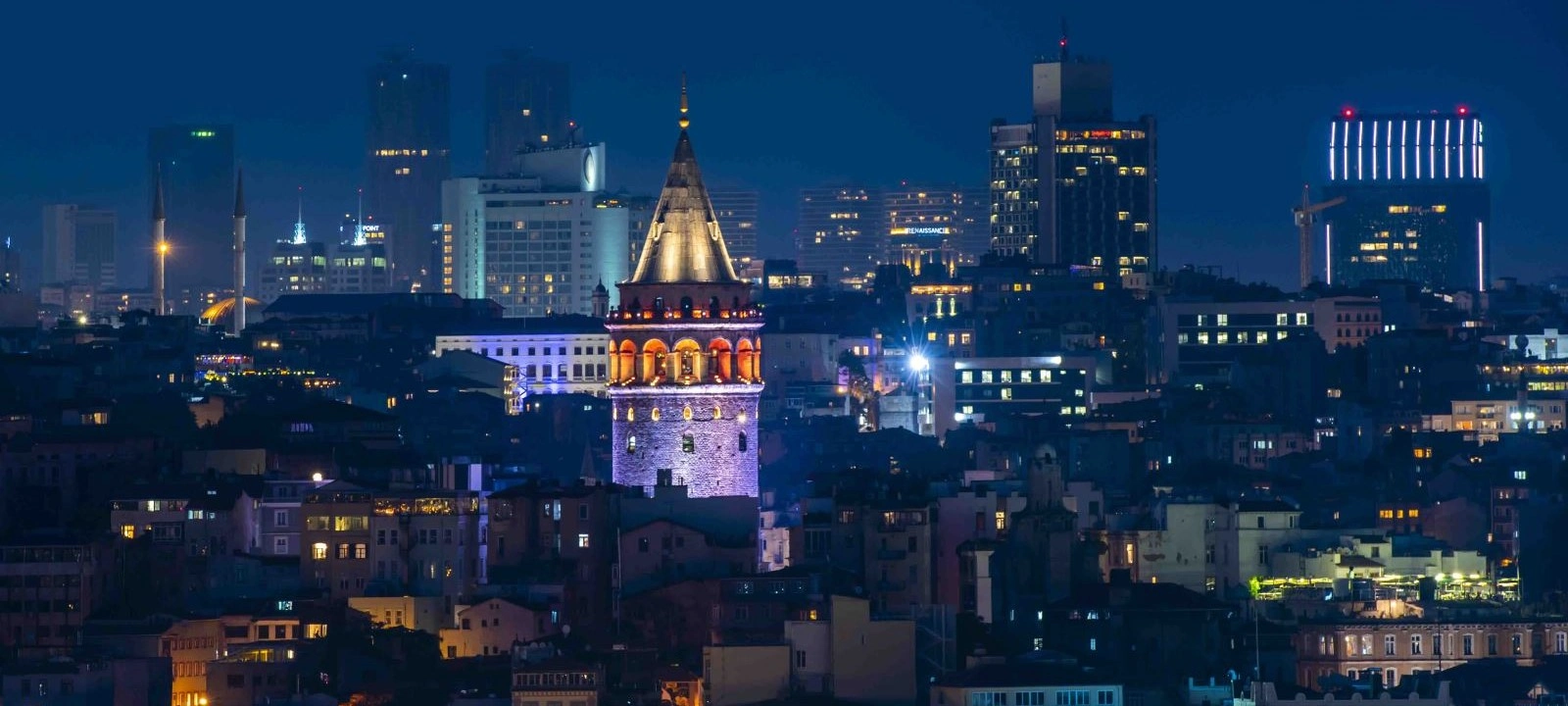
Continue toward Galata and the Galata Tower. The change from a Mevlevi lodge to the medieval Genoese urban landscape shows how many historical worlds overlap within a few hundred meters.

Explore the surrounding Galata streets before continuing downhill toward Karaköy, or return uphill toward İstiklal Avenue.

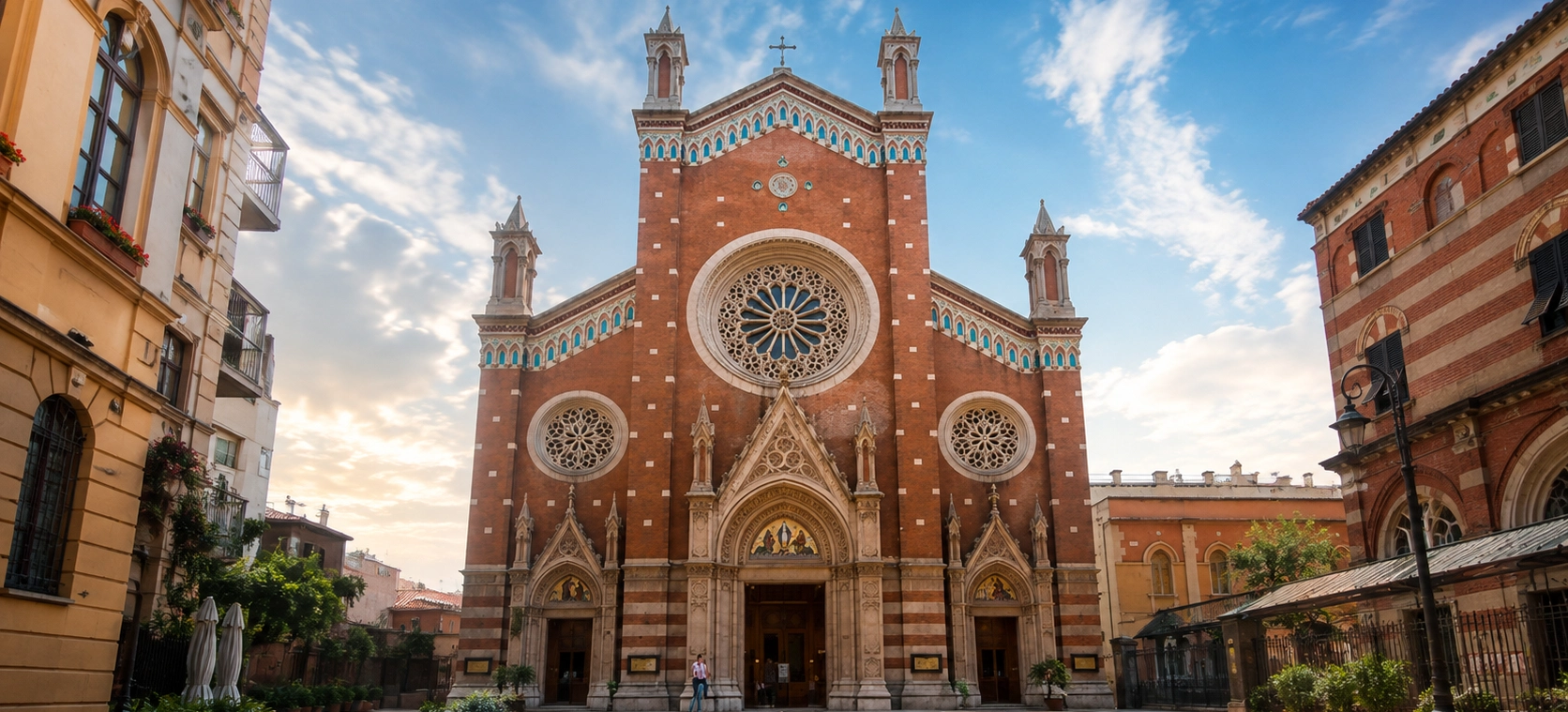
If you choose İstiklal, continue through historic Pera toward St. Anthony of Padua Church.

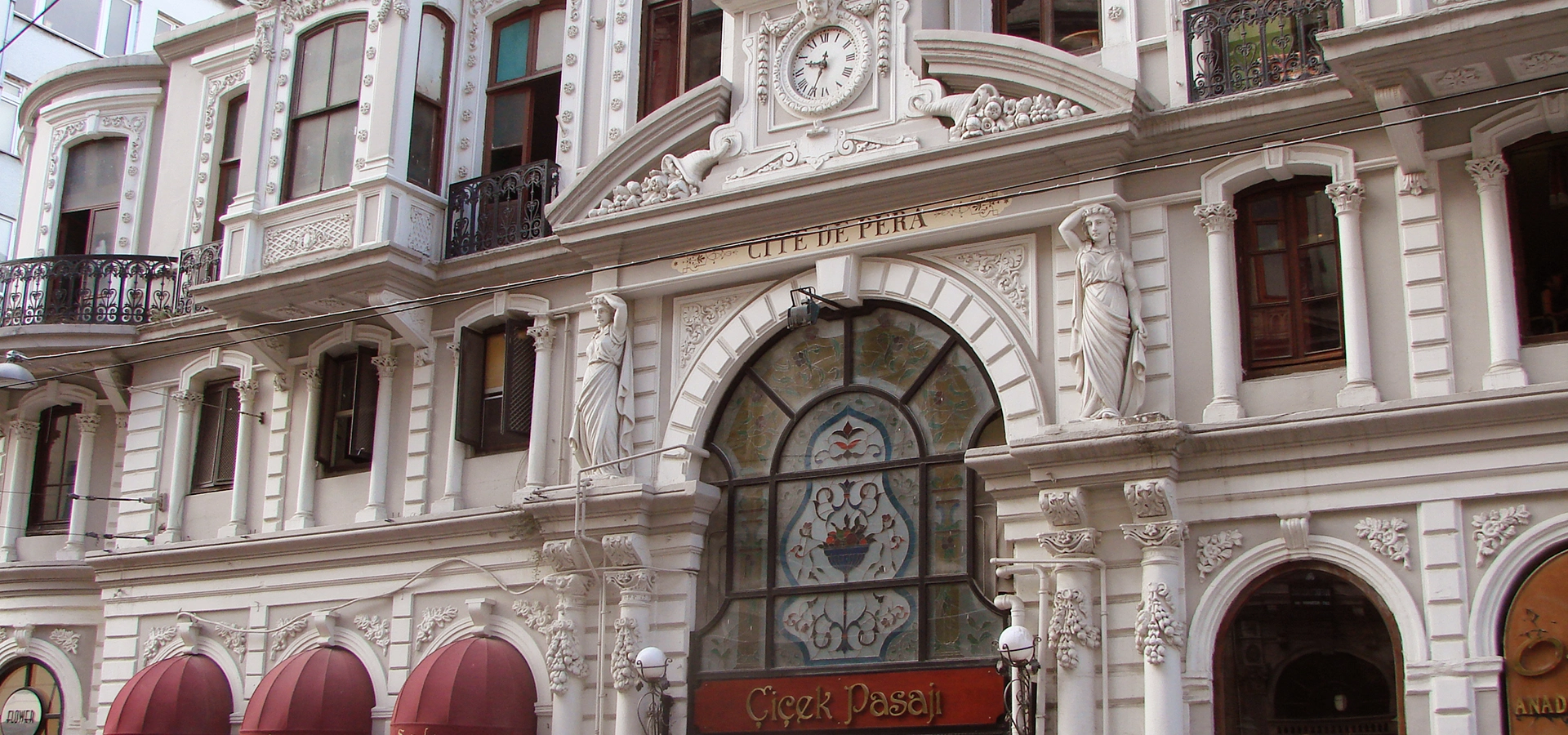
Walk onward to Çiçek Pasajı and the Galatasaray section of the avenue, where late Ottoman architecture, European cultural influence and modern Istanbul meet.

Visitors who still have time can finish around Taksim and Holy Trinity Church.

Stop 1 Galata Mevlevi Lodge Museum – allow 1–1.5 hours
Stop 2 Galip Dede Street – walk downhill through historic Galata
Stop 3 Galata Tower and surrounding streets
Stop 4 Return toward İstiklal Avenue and historic Pera
Stop 5 St. Anthony of Padua Church and surrounding passages
Stop 6 Çiçek Pasajı and Galatasaray
Optional Finish Taksim Square and Holy Trinity Church

Places to Visit Near Galata Mevlevi Lodge

The museum stands in one of Istanbul's richest walking districts. Within a short distance, visitors can explore Ottoman Sufi heritage, Genoese Galata, late Ottoman Pera, historic churches, passages and modern Beyoğlu.

Use our complete guide to places to visit in Istanbul to plan the wider city.

Galata & Karaköy

Explore steep historic streets, Genoese heritage, churches, synagogues, waterfront architecture and some of Istanbul's most layered neighborhoods.

Galata Tower

Continue downhill to the great medieval tower that dominates the skyline of historic Galata.

St. Anthony of Padua Church

Walk along İstiklal to Istanbul's best-known Roman Catholic church and explore another side of Beyoğlu's religious heritage.

Çiçek Pasajı

Discover one of İstiklal Avenue's most famous passages and the late Ottoman atmosphere of historic Pera.

Holy Trinity Church

Continue toward Taksim to visit one of Beyoğlu's most prominent Greek Orthodox churches.

İstiklal Avenue

Walk through the historic Grande Rue de Péra among passages, consulates, churches, shops and cultural institutions.

Pera

Explore the district once associated with embassies, Levantine communities, grand hotels and cosmopolitan Ottoman Istanbul.

Karaköy

Finish downhill beside the Golden Horn among historic commercial buildings, churches, cafés and the waterfront.

Frequently Asked Questions About Galata Mevlevi Lodge Museum

Where is Galata Mevlevi Lodge Museum?

It is located on Galip Dede Street near Tünel and the western end of İstiklal Avenue in Beyoğlu, Istanbul.

When was Galata Mevlevi Lodge founded?

The lodge was founded in 1491 during the reign of Sultan Bayezid II.

Is it the oldest Mevlevi lodge in Istanbul?

Yes. Galata is generally recognized as Istanbul's oldest Mevlevi lodge.

Who founded the lodge?

It was established on property belonging to the Ottoman statesman İskender Paşa.

What other names did the lodge have?

It was historically known as Kulekapısı Mevlevihanesi and Galip Dede Tekkesi as well as Galata Mevlevihanesi.

What is Galata Mevlevi Lodge famous for?

It is famous for its association with Mevlevi Sufism, the Sema ceremony, Whirling Dervishes, Ottoman classical music, Şeyh Galib, poetry and the artistic culture of Ottoman Istanbul.

Who was Şeyh Galib?

Şeyh Galib was an important Ottoman poet, Mevlevi mystic and author of Hüsn ü Aşk. He became postnişin of the Galata lodge in 1791.

Is Şeyh Galib buried here?

Yes. Şeyh Galib is buried in a tomb within the Galata Mevlevi Lodge complex together with other important Mevlevi figures.

What is the Semahane?

The Semahane is the ceremonial hall where the Mevlevi Sema was performed. It forms the architectural heart of the lodge.

What is Sema?

Sema is a structured Mevlevi devotional ceremony combining music, recitation, symbolic movement and contemplative turning.

Are the Whirling Dervishes simply performing a dance?

No. The turning movement belongs to a wider ritual and spiritual tradition. It should be understood within the context of Mevlevi devotion, music and discipline rather than simply as a folk dance.

Can I watch a Sema ceremony at the museum?

Sema events have been organized in the historic Semahane, but they are separate from ordinary museum visiting hours. Always check the current event program and ticket arrangements before planning around a ceremony.

What is the Hamuşan?

Hamuşan is the historic cemetery of the lodge. The name is connected with the Persian expression for the silent ones.

What can I see inside the museum?

Visitors can explore the historic Semahane, dervish rooms, upper mahfils, Mevlevi objects, musical instruments, calligraphy, historic photographs and exhibitions connected with the cultural history of the lodge.

Are there musical instruments?

Yes. Music is one of the museum's important themes, reflecting the central role that Mevlevi lodges played in Ottoman classical musical culture.

What is a ney?

The ney is a reed flute closely associated with Mevlevi music and spiritual symbolism. It is one of the tradition's most recognizable instruments.

Why was the lodge important for Ottoman music?

Mevlevi lodges became major centers for the teaching and performance of Ottoman classical music, producing influential composers, singers and instrumentalists.

When did the lodge stop functioning as a dervish institution?

Its traditional institutional role ended in 1925 when dervish lodges throughout Turkey were closed.

When did it become a museum?

Following restoration, the site opened in 1975 as the Divan Literature Museum. After further restoration from 2008 to 2011, it reopened as the Galata Mevlevi Lodge Museum.

What are the current opening hours?

The official museum listing currently gives regular opening hours of 09:00–19:00, with the ticket office closing at 18:00. Always verify current hours before visiting.

Which day is Galata Mevlevi Lodge Museum closed?

The museum is currently listed as closed on Mondays. Holiday arrangements and temporary closures can still occur.

How much is admission?

The official museum platform currently lists standard foreign admission at €7. Prices can change, so verify the current rate for your visit date.

Is Müzekart valid?

The official museum listing states that Müzekart is valid for Turkish citizens. Check the current conditions for other museum passes before visiting.

How long should I spend at Galata Mevlevi Lodge?

Allow approximately 1–2 hours. Visitors particularly interested in Sufism, Ottoman music, literature or historic architecture may want longer.

What is the nearest metro station?

Şişhane on Istanbul's M2 Metro line is the most convenient metro stop.

Is the museum close to Tünel?

Yes. The upper station of Istanbul's historic Tünel funicular is only a short walk from the museum.

Is the museum near Galata Tower?

Yes. Galata Tower is a short downhill walk along Galip Dede Street, making the two sites very easy to combine.

Can I combine it with İstiklal Avenue?

Absolutely. The museum stands almost directly at the Tünel end of İstiklal Avenue, making it one of the easiest historic attractions to add to a Beyoğlu walking route.

Is the museum good for children?

Yes, particularly for older children interested in music, Whirling Dervishes, historic clothing and unusual architecture. It is a traditional museum rather than an interactive children's attraction.

Is photography allowed?

Photography conditions can vary by exhibition. Follow current signs and staff instructions, avoid flash where prohibited and behave respectfully around tombs and the cemetery.

Is the museum accessible?

Because the museum occupies a historic building with different levels, visitors requiring fully step-free access should confirm current entrances, lift operation and gallery accessibility before traveling.

Is Galata Mevlevi Lodge worth visiting?

Yes. It is one of Istanbul's most distinctive smaller museums, especially for visitors interested in Sufism, Rumi, Whirling Dervishes, Ottoman music, Şeyh Galib, poetry and the cultural history of Beyoğlu. Its location also makes it exceptionally easy to combine with Galata and İstiklal Avenue.

Responsible Visiting

Respect the Hamuşan

The cemetery is a burial place. Walk quietly and remain on designated visitor routes.

Respect the Tombs

Avoid loud conversation, inappropriate poses and behavior that treats memorial spaces as theatrical scenery.

Do Not Touch Gravestones

Ottoman stones can be fragile and should never be leaned against or used as photographic props.

Protect the Semahane

Follow barriers and staff instructions around the historic wooden ritual space.

Follow Photography Rules

Temporary exhibitions and sensitive objects may have additional restrictions.

Understand the Sema

Treat the Mevlevi ceremony as a spiritual tradition rather than reducing it to entertainment.

Private Galata, Sufi Heritage & Historic Istanbul Experiences

Connect the Galata Mevlevi Lodge with historic Galata, Karaköy, İstiklal Avenue, Ottoman music, Sufi heritage, religious history, late Ottoman Pera and Istanbul's remarkable multicultural past through a private route shaped around your interests and without compulsory shopping stops.

Custom Galata Mevlevi & Sufi Heritage Experience

Choose a private Istanbul route focused on Mevlevi culture, Rumi, Şeyh Galib, Sufi history, Ottoman music, Galata, historic Pera, religious heritage and the extraordinary cultural world surrounding the Golden Horn.

Continue Through Historic Beyoğlu

Combine the spiritual heritage of Galata with İstiklal Avenue, historic churches, late Ottoman passages and the cosmopolitan world of Pera.

Private Istanbul Tours

Build a private Istanbul day around the history that interests you most, from Sufi heritage and Ottoman culture to Byzantine monuments, religious history, historic neighborhoods, food culture, archaeology and the Bosphorus.