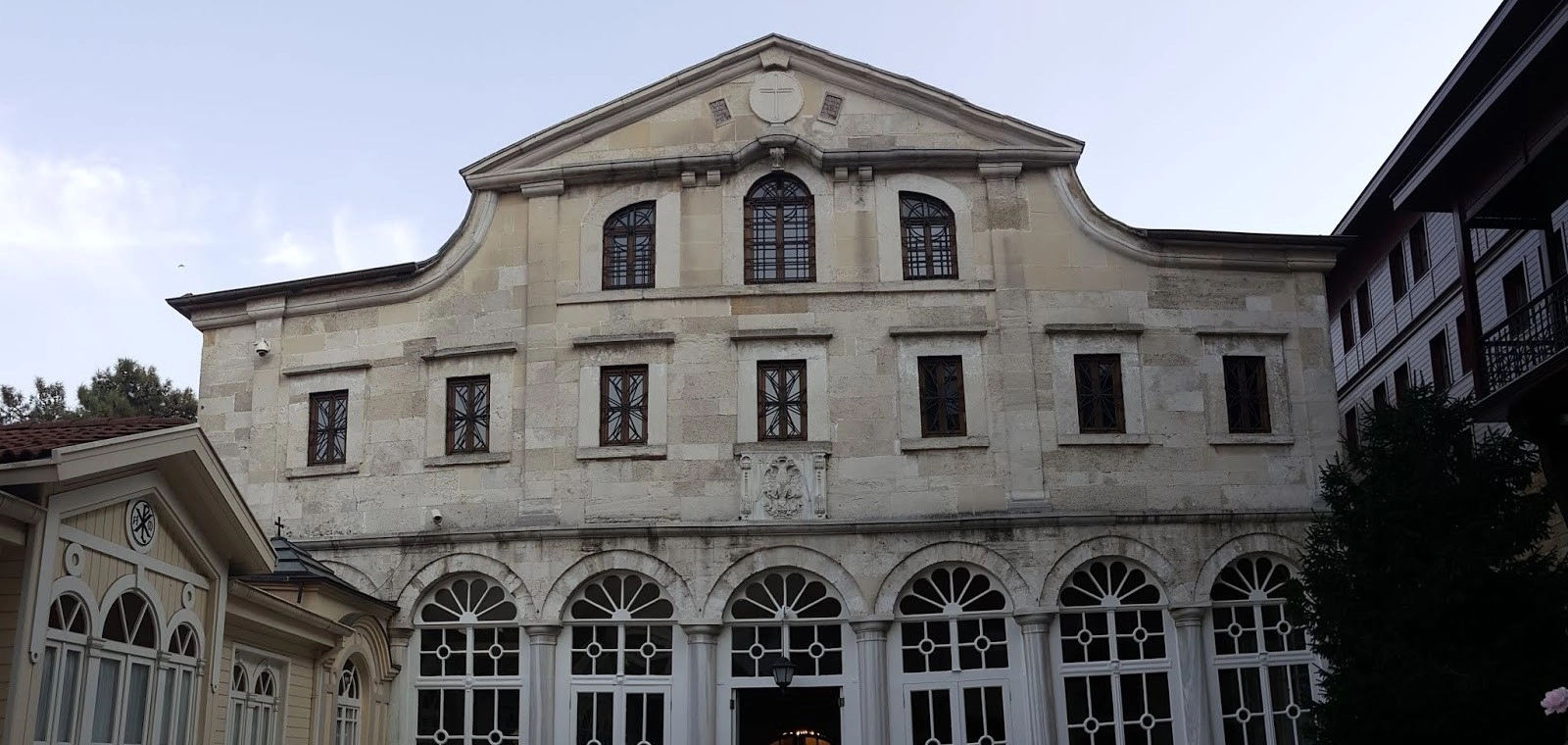
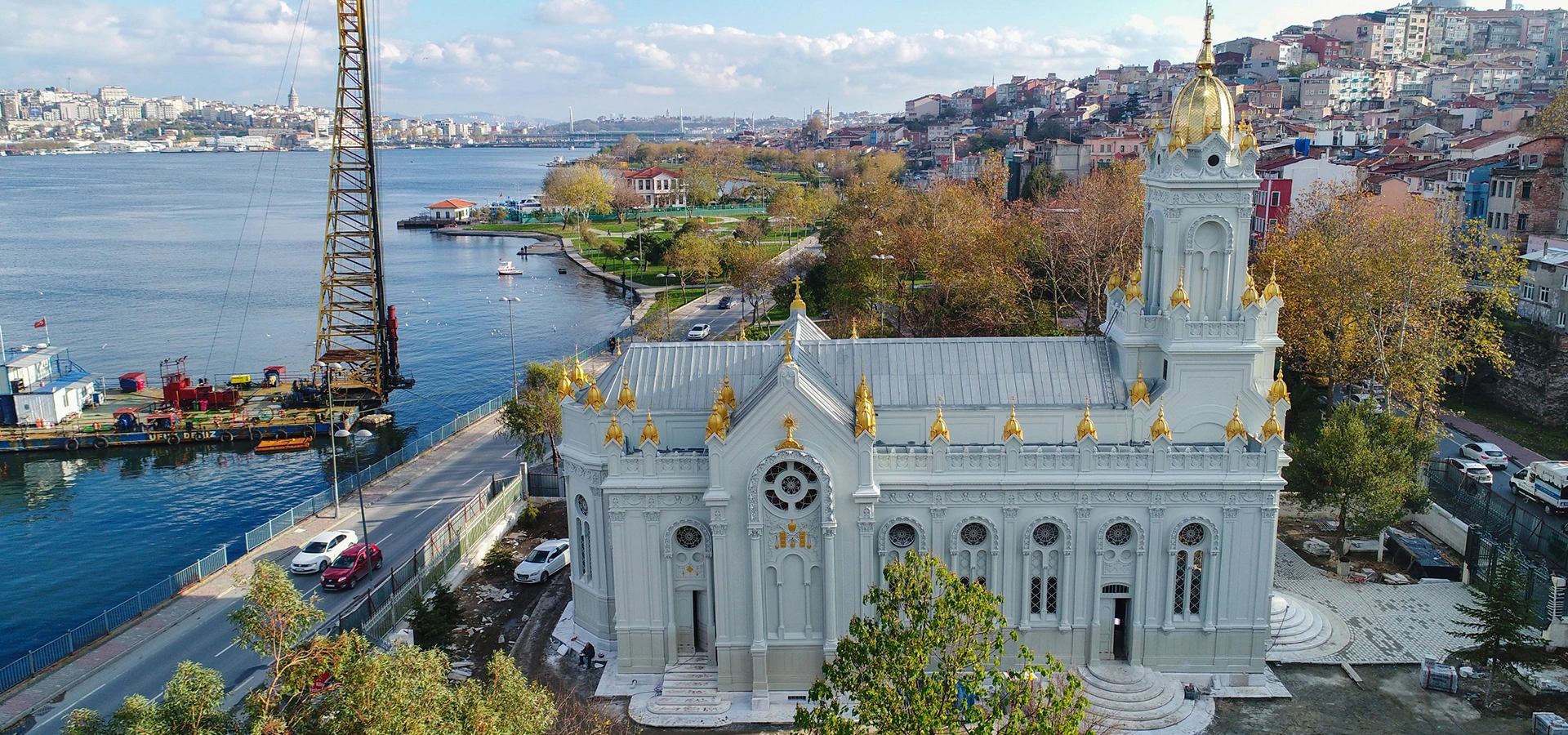
Greek Orthodox Heritage, Twin Bell Towers, Monumental Dome & Historic Taksim

Holy Trinity Church Taksim – Complete Visitor Guide

Discover Aya Triada, one of Istanbul's most impressive Greek Orthodox churches, standing beside Taksim Square with a great central dome, twin bell towers, marble iconostasis and a living worship tradition.

Explore Holy Trinity Church

Holy Trinity Church – The Great Greek Orthodox Landmark Beside Taksim Square

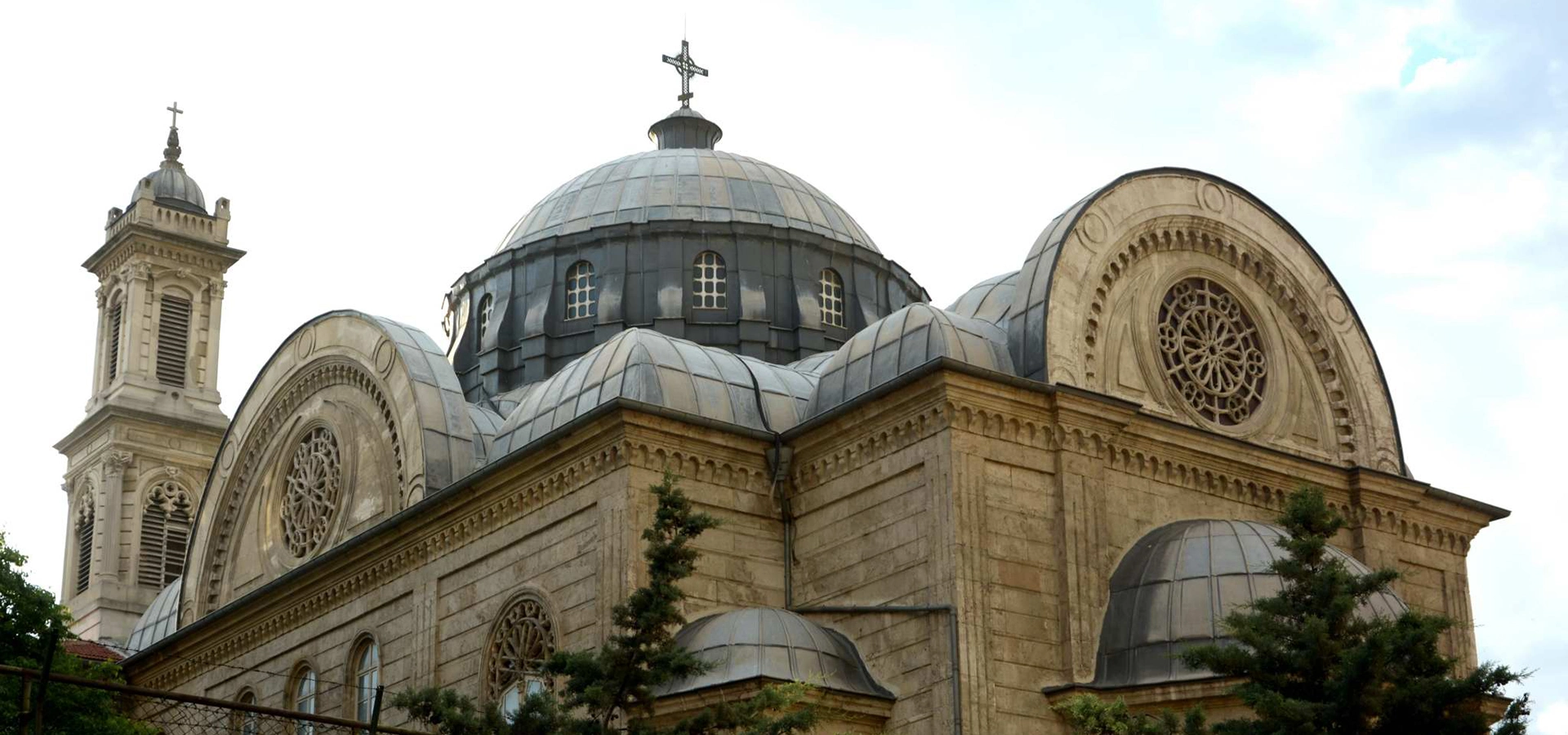
The Holy Trinity Greek Orthodox Church, known in Greek as Agia Triada and in Turkish as Aya Triada Rum Ortodoks Kilisesi, is one of the most recognizable Christian landmarks of modern Istanbul. Standing only steps from Taksim Square and the beginning of İstiklal Avenue, its dome and twin bell towers rise dramatically above the dense urban landscape of Beyoğlu.

The present church was built between 1867 and 1880 during a period when Istanbul's Greek Orthodox community was creating some of its most ambitious late Ottoman religious buildings. The church is dedicated not to an individual saint but to the Holy Trinity — Father, Son and Holy Spirit.

Its architecture is especially important. Aya Triada combines a domed cruciform basilica plan with Byzantine inspiration, Neo-Gothic bell towers, stained glass, marble liturgical furnishings and other 19th-century European influences. The result is one of Beyoğlu's most distinctive examples of late Ottoman ecclesiastical architecture.

Aya Triada is not a museum. It remains a living Greek Orthodox church connected with the historic Orthodox community of Pera / Stavrodromi. Its story includes the changing fortunes of Istanbul's Greek community, serious damage during the events of September 1955, major restoration, a ceremonial reopening in 2003 and continuing Divine Liturgy today.

1867–1880

The present monumental church was constructed over thirteen years in the heart of late Ottoman Pera.

Twin Towers

Two tall bell towers create one of the most recognizable Christian silhouettes around Taksim Square.

Holy Trinity

The church is dedicated to the central Christian doctrine of the Father, Son and Holy Spirit.

Living Church

Aya Triada continues to serve Istanbul's Greek Orthodox community and regularly hosts Orthodox worship.

Know Before You Go

Holy Trinity Church Taksim – Quick Facts

Essential information for visiting Aya Triada and understanding its place in Greek Orthodox history, late Ottoman Beyoğlu, 19th-century church architecture and the multicultural story of Istanbul.

📍

Location

Meşelik Street beside Taksim Square, at the eastern end of İstiklal Avenue in Beyoğlu.

Open on Google Maps
☦️

Faith

An active Greek Orthodox church dedicated to the Holy Trinity and connected with the historic Orthodox community of Pera.

🏗️

Construction

The present church was built between 1867 and 1880 and formally inaugurated in September 1880.

🏛️

Architecture

A domed cruciform basilica combining Byzantine inspiration with Neo-Gothic, Neoclassical and eclectic 19th-century details.

🔔

Signature Feature

Twin bell towers and a great central dome make Aya Triada one of Taksim's most recognizable historic buildings.

🕊️

Current Use

A living Orthodox church with regular liturgical life; worship schedules can vary around feasts and community events.


Greek Orthodox Pera, Ottoman Reform and a Monumental Christian Skyline

Why Is Holy Trinity Church Important?

Aya Triada is important not only as a beautiful church, but as a monument to the changing religious, architectural and social landscape of 19th-century Istanbul.

The church is one of the clearest architectural expressions of the Greek Orthodox presence in late Ottoman Pera. During the 19th century, Beyoğlu became one of Constantinople's most international districts, home to embassies, European merchants, Levantines, Greeks, Armenians, Catholics, Orthodox Christians and many other communities.

Aya Triada also belongs to the period of Ottoman reform when Christian communities gained greater freedom to construct, enlarge and monumentalize their places of worship. Its prominent dome and bell towers are therefore more than decorative elements: they represent a new degree of architectural visibility for a non-Muslim religious community in the imperial capital.

The building is equally important for its eclectic late Ottoman architecture. Its domed central composition recalls Byzantine church traditions, while the towers, windows, façade and interior details absorb Gothic, Neoclassical and broader European influences.

For travelers using our guide to places to visit in Istanbul, Holy Trinity Church provides an essential introduction to the multicultural history of Taksim and Pera. It reveals a district whose identity was shaped not only by entertainment, shopping and modern urban life, but also by churches, schools, charitable foundations and long-established religious communities.

History of Holy Trinity Church Taksim

Before the present monumental church was built, the site formed part of the religious landscape of the Greek Orthodox community of Pera. An older wooden church dedicated to Saint George and a Greek Orthodox cemetery were associated with the area. As the community expanded during the 19th century, a larger and more imposing church became desirable.

A building committee was formed in 1867, and construction of the new Holy Trinity Church began that year. The project developed over approximately thirteen years, passing through the hands of architects associated especially with Potessaros and Vasilakis Ioannidis.

The completed church was inaugurated in September 1880 during the patriarchate of Joachim III. Its scale, dome, bell towers and richly furnished interior immediately made it one of the most impressive Greek Orthodox churches in Pera.

The history of Aya Triada did not end with its construction. The church witnessed the final decades of the Ottoman Empire, the emergence of modern Taksim, the establishment of the Turkish Republic and the dramatic demographic changes that transformed Istanbul's historic Greek community during the 20th century.

1867

A committee was established and construction of the new monumental church began.

1867–1880

The church took shape over approximately thirteen years.

1880

Aya Triada was formally inaugurated and entered the liturgical life of the Greek Orthodox community of Pera.

1955

The church suffered extensive damage and plundering during the events of 6–7 September.

2003

After major restoration, the renovated church was ceremonially reopened on 23 March.

Today

Aya Triada remains an active Orthodox church at the center of one of Istanbul's busiest districts.

Ottoman Reforms and the Rise of Monumental Churches in Pera

Aya Triada is best understood within the wider transformation of the Ottoman Empire during the Tanzimat era. Reforms in the 19th century changed the legal and social environment in which Christian and Jewish communities repaired, expanded and constructed places of worship.

Earlier churches in Ottoman Constantinople were often built with a much lower profile in the urban landscape. By the second half of the 19th century, large Christian churches with prominent façades, bell towers and domes became increasingly visible in districts such as Pera.

Holy Trinity Church represents this new confidence particularly clearly. Its dome is visible from the Taksim area, while its two bell towers frame the façade with an assertive vertical composition. The building therefore expresses both religious continuity and the changing architectural possibilities available to Istanbul's non-Muslim communities.

Tanzimat Era

19th-century reforms reshaped the legal and civic environment of the Ottoman Empire.

Greater Visibility

Christian communities increasingly constructed larger and more architecturally prominent churches.

Pera

The district became a showcase of embassies, churches, schools, passages and European-style urban architecture.

Dome

Aya Triada's central dome became a powerful sign of Orthodox architectural presence near Taksim.

Bell Towers

The twin towers gave the church a commanding façade visible within the surrounding streetscape.

Urban History

The church documents how Istanbul's religious skyline evolved during the final century of the Ottoman Empire.

Who Designed Holy Trinity Church?

The architectural history of Aya Triada is associated principally with architect Potessaros, whose designs formed the basis of the project, and Vasilakis Ioannidis, who is closely connected with carrying the construction forward and bringing the church to completion.

The long construction period, from 1867 to 1880, reflects the scale and ambition of the project. The church was not conceived as a modest neighborhood chapel, but as a monumental spiritual center for one of Constantinople's most important Greek Orthodox communities.

The final building does not belong neatly to a single stylistic category. Instead, it combines a Byzantine-inspired central dome and cross-like planning with Gothicizing towers, European façade details, stained glass and rich marble work. This deliberate mixture is characteristic of the eclectic architectural culture of late Ottoman Istanbul.

PotessarosAssociated with the architectural design of the new Holy Trinity Church
Vasilakis IoannidisClosely associated with the continuation and completion of construction
1867–1880Approximately thirteen years of construction
Eclectic DesignByzantine, Gothic, Neoclassical and wider 19th-century influences meet in one composition

Architecture of Holy Trinity Church Taksim

Holy Trinity Church is a domed cruciform basilica whose plan and central spatial emphasis recall Byzantine church architecture. The large dome rises above the main body of the church and immediately distinguishes Aya Triada from many earlier Ottoman-era Christian buildings in Istanbul.

The most recognizable exterior feature is the pair of twin bell towers flanking the entrance façade. Their pointed, Gothicizing treatment introduces a strong vertical rhythm, while rose-window forms, arched openings and carved stone details add to the building's European 19th-century character.

The church stands within a large enclosed garden, creating an unexpected transition from the noise and movement of Taksim into a calmer sacred precinct. This contrast is part of the experience: one moment you are in one of Istanbul's busiest pedestrian zones, and the next you are facing a monumental Orthodox church surrounded by trees and historic community buildings.

The dome, façade and bell towers together create one of the defining architectural compositions of the Taksim area. They also make Aya Triada an excellent example of how Byzantine memory and European historicist styles could be reinterpreted within late Ottoman Istanbul.

Central Dome

The great dome forms the visual and spatial focus of the church.

Twin Bell Towers

Two tall towers frame the principal façade and dominate views from the Taksim side.

Cruciform Basilica

The plan combines basilical organization with a cross-shaped domed center.

Gothic Influence

Towers, pointed forms and façade details introduce a pronounced Neo-Gothic character.

Byzantine Inspiration

The central dome and Orthodox spatial organization draw on the architectural memory of Byzantium.

Garden Setting

A spacious churchyard separates the sanctuary from the intense movement of central Taksim.

Inside Holy Trinity Church

The interior of Aya Triada is spacious, bright and strongly symmetrical. The central dome rises above the crossing, while the nave and surrounding spaces direct the eye toward the sanctuary and the marble iconostasis.

The iconostasis, or templon, is one of the most important visual elements of the church. It separates the sanctuary from the main body of the building according to Orthodox liturgical tradition and combines white marble, icons and finely worked architectural detail.

Stained-glass windows and decorative painting soften the monumental stone architecture. The church's iconography reflects a mixture of Byzantine Orthodox tradition and Western-influenced 19th-century painting, a combination that matches the wider eclectic character of the building.

Visitors should experience the interior as a functioning sacred space rather than a museum gallery. Candles, icons, liturgical furnishings and the rhythm of Orthodox worship remain part of the church's everyday identity.

Marble Iconostasis

The sanctuary screen is one of the church's finest liturgical and artistic features.

Central Dome

The dome creates a spacious vertical focus above the heart of the church.

Icons

Sacred images combine Orthodox subjects with a mixture of Byzantine and Western-influenced painting styles.

Stained Glass

Colored glazing adds another distinctly 19th-century layer to the interior.

Marble Pulpit

The white-marble ambo is decorated with sacred imagery and contributes to the ceremonial richness of the nave.

Living Worship

The interior remains arranged first for Orthodox liturgy, prayer and community life.

The Great Dome of Aya Triada

The dome is among the church's most important architectural features. Rising above the central crossing, it gives the interior a powerful upward movement and makes the church recognizable from the surrounding streets of Taksim.

The drum of the dome is pierced by twelve windows, a number traditionally associated with the Twelve Apostles. The pendentive areas beneath the dome are decorated with seraphim, linking the architectural transition of the dome with Orthodox sacred imagery.

The dome's external metal cross has also become part of the church's recent history. After the historic cross fell in May 2025, restoration work was carried out and the cross was returned to the dome on 4 August 2025.

Twelve WindowsThe dome drum is articulated by twelve windows traditionally associated with the Apostles
SeraphimAngelic imagery decorates the transition beneath the dome
Urban LandmarkThe dome is visible from the Taksim area and helps define the church's skyline presence
4 August 2025The restored metal cross was returned to the top of the dome

Why Is the Church Called Aya Triada?

The Greek name Agia Triada means Holy Trinity. In Turkish, the church is commonly called Aya Triada or Kutsal Üçlü Rum Ortodoks Kilisesi.

The dedication refers to the central Christian doctrine of God as Father, Son and Holy Spirit. Unlike many Orthodox churches named after a particular saint, Aya Triada is dedicated directly to this theological mystery.

The church's feast is connected with the Orthodox celebration of Holy Spirit Monday / the Monday after Pentecost, when the Holy Trinity is commemorated with particular solemnity. Major feast days can bring additional liturgical activity, clergy, pilgrims and community gatherings to the church.

Agia Triada

The Greek name translates directly as “Holy Trinity.”

Father

The first person named in the Christian doctrine of the Trinity.

Son

Jesus Christ is confessed as the Son within Trinitarian Christian belief.

Holy Spirit

The third person of the Trinity gives the church's feast cycle a close connection with Pentecost.

Orthodox Worship

The dedication is expressed through liturgy, icons, hymns and the rhythm of the church year.

Living Dedication

The name is not only historical; it remains central to the church's present religious identity.

Holy Trinity Church and the Events of 6–7 September 1955

Aya Triada suffered extensive damage and plundering during the events of 6–7 September 1955, when Greek homes, businesses, churches, schools and community institutions across Istanbul were attacked.

The damage forms part of the wider story of the dramatic decline of Istanbul's historic Greek population during the 20th century. For Aya Triada, the physical destruction was accompanied by the gradual weakening of the large community that had once filled the church and surrounding institutions.

This history gives the monument an importance that goes beyond architecture. The church survives as a witness to both the flourishing and the vulnerability of Greek Orthodox life in modern Istanbul.

Historical perspective: The events of September 1955 are a painful part of Istanbul's modern history. When discussing or visiting affected religious sites, approach the subject with respect for the communities whose homes, businesses and sacred places were damaged.

The Restoration and Reopening of Holy Trinity Church

After decades of demographic change and the damage suffered in the mid-20th century, Aya Triada required substantial restoration. Major works were eventually undertaken to repair both the interior and exterior of the church.

An important contribution came through support associated with Panagiotis Aggelopoulos, a major benefactor connected with the Ecumenical Patriarchate. The restoration campaign lasted roughly two years and helped return the monumental building to a condition suitable for regular worship and ceremonial use.

The renovated church was ceremonially reopened on 23 March 2003 by Ecumenical Patriarch Bartholomew I. The reopening represented much more than architectural conservation: it reaffirmed the continuing presence of the historic Orthodox community in the center of Pera.

Major Restoration

Interior and exterior conservation repaired damage and renewed the historic church.

Community Support

Benefactors and the Orthodox community played an important role in sustaining the restoration effort.

23 March 2003

The restored church was ceremonially reopened.

Patriarch Bartholomew I

The Ecumenical Patriarch presided over the reopening ceremony.

Renewed Worship

The project strengthened Aya Triada's role as a living Orthodox church rather than a preserved monument alone.

Continuity

Restoration preserved one of the most visible symbols of Greek Orthodox Pera.

Holy Trinity Church as a Living Greek Orthodox Community

Aya Triada continues to function within the religious life of Istanbul's Rum Orthodox community. It is connected with the historic Greek Orthodox community of Stavrodromi / Pera and remains a place of Divine Liturgy, feast-day worship, prayer and community gatherings.

Official community information states that the church operates daily and that Divine Liturgy is celebrated on Sundays. Exact liturgical times, however, can change according to the monthly ecclesiastical program, major feasts and special services.

The congregation today is much smaller than the Greek population that lived in Pera when the church was built. Yet this contrast makes Aya Triada especially meaningful: a monumental 19th-century church continues to serve a living community despite more than a century of profound demographic change.

Visitors are welcome to experience the church respectfully, but worship must always take priority over sightseeing. During liturgy, remain quiet, avoid moving through the nave unnecessarily and never treat the service as a staged tourist attraction.

Greek Orthodox

Aya Triada remains part of Istanbul's historic Rum Orthodox religious tradition.

Sunday Liturgy

Divine Liturgy is regularly celebrated on Sundays, with times published through community schedules.

Feast Days

Major Orthodox feasts can bring additional services, clergy and pilgrims.

Visitors Welcome

Guests may enter respectfully when the church is accessible and no restriction is in place.

Not a Museum

Prayer, liturgy and parish life have priority over photography and sightseeing.

Living Heritage

The church preserves Greek Orthodox continuity in the modern center of Istanbul.

The Aya Triada Church Complex and Community Buildings

The church stands within a larger historical community landscape rather than as an isolated sanctuary. The spacious garden borders the grounds of the Zappeion Greek School, one of the important educational institutions associated with the Greek community of Pera.

Ancillary buildings around the church were historically connected with services such as a parish school, a clinic and charitable food distribution. These institutions reveal how Orthodox church complexes often supported education, health, charity and social life as well as worship.

The former parish school eventually closed as the local Greek population declined, while the historic clinic ceased operating in the late 20th century. The complex nevertheless remains one of the best places in central Beyoğlu to understand how a religious community once organized daily life around church, school and charitable institutions.

Zappeion

The neighboring Greek educational complex forms part of the wider historic Orthodox landscape of Taksim.

Parish School

Education once formed an important part of the institutions surrounding Aya Triada.

Clinic

The community historically maintained medical services in buildings associated with the church complex.

Charity

Food assistance and other charitable activity reflected the social mission of the parish.

Garden

The enclosed grounds create a surprisingly calm precinct beside Taksim Square.

Community History

The site preserves evidence of a complete religious and social network rather than a church building alone.

What to See at Holy Trinity Church Taksim

A visit to Aya Triada rewards attention to both the monumental architecture and the quieter details of Orthodox worship. The church is best experienced slowly, from the garden approach and twin towers to the marble iconostasis, dome, icons and surrounding community buildings.

Twin Bell Towers

Begin with the two tall towers that frame the principal façade and define the church's Taksim silhouette.

Central Dome

Look upward from both the exterior and interior to understand the church's Byzantine-inspired central composition.

Rose Windows

Notice the stained-glass and Gothicizing window forms incorporated into the façade.

Marble Iconostasis

The sanctuary screen is among the most beautiful liturgical features of the interior.

White-Marble Ambo

The pulpit contributes to the ceremonial richness and symmetry of the nave.

Icons

Observe the meeting of Byzantine Orthodox subjects with 19th-century Western artistic influence.

Dome Paintings

Look for the angelic imagery beneath the dome and the play of light from the windows above.

Church Garden

Step back to appreciate how the large precinct separates the church from the intensity of Taksim.

Living Worship

Candles, prayer and liturgy remain central to the meaning of the building today.

Remember: Aya Triada is an active Orthodox church. If a service, memorial, baptism, wedding or private prayer is taking place, allow worshippers priority and avoid intrusive sightseeing.

Practical Tips for Visiting Holy Trinity Church

Check Current Access

The church community describes Aya Triada as operating daily, but visitor access can still vary around liturgy, ceremonies and private events.

Check the Liturgy Program

Sunday Divine Liturgy is regular, while exact service times are published through changing monthly schedules.

Dress Respectfully

Choose clothing appropriate for an active Orthodox place of worship.

Enter Quietly

Lower your voice as soon as you enter the church grounds and keep phones silent inside.

Allow 30–45 Minutes

This is usually enough for the garden, architecture, interior and quiet observation outside a service.

Avoid Peak İstiklal Crowds

Morning visits can feel calmer than late afternoon and weekend evenings around Taksim.

No Museum Experience

Aya Triada is a church first; access and photography are subject to religious activity.

Combine on Foot

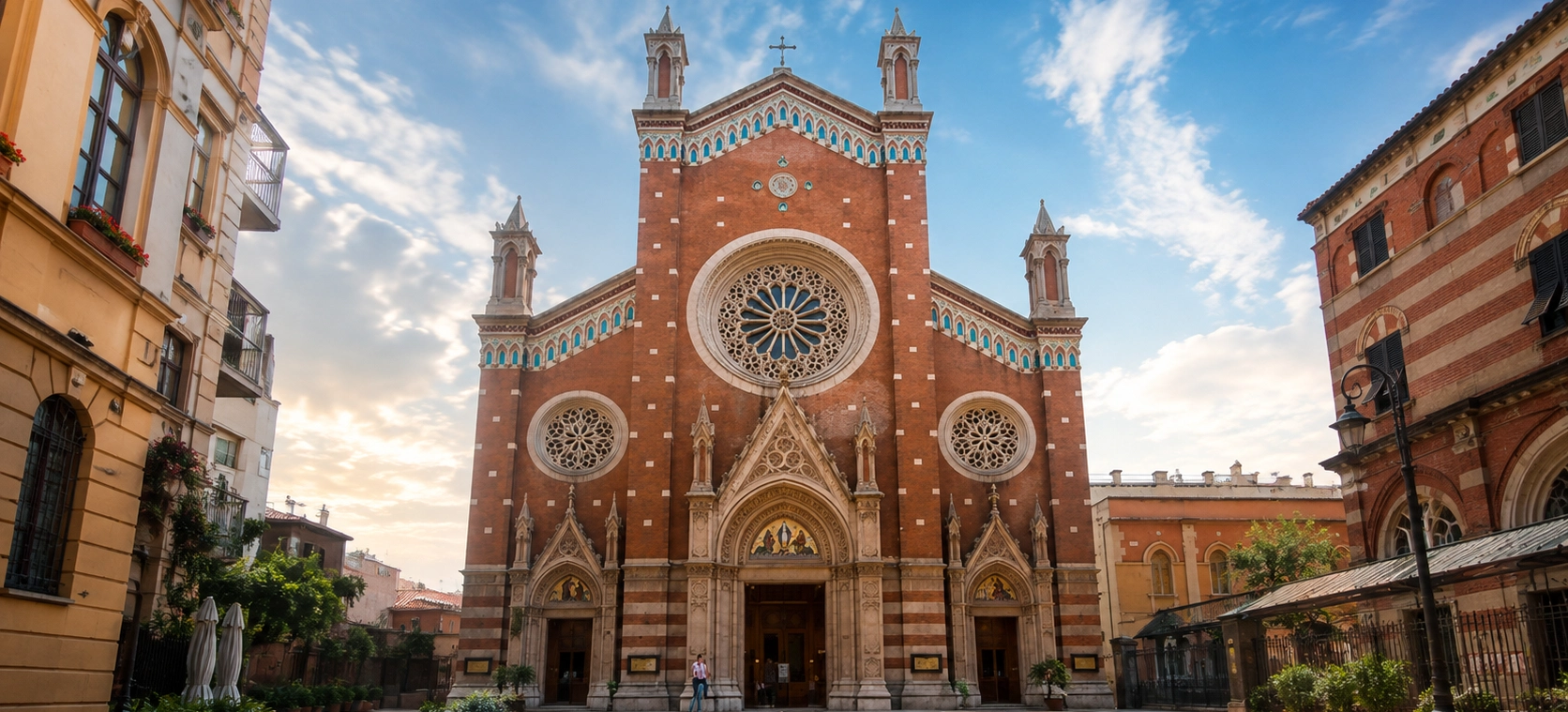
St. Anthony of Padua, Çiçek Pasajı, Galatasaray and other Beyoğlu landmarks are easy to combine in one walk.

Suggested Holy Trinity Church & İstiklal Avenue Route

Begin at Taksim Square and walk toward the entrance of İstiklal Avenue. Aya Triada stands just off the square on Meşelik Street, making it an ideal first stop before the pedestrian avenue becomes busier later in the day.

Allow around 30–45 minutes for the garden, twin towers, dome, interior, marble iconostasis and icons when normal visitor access is possible. If a service is taking place, experience the church quietly as a place of worship rather than moving around for sightseeing.

Continue west along İstiklal Avenue through the historic district once known as Pera. The street preserves passages, churches, consulates, schools, apartment buildings and institutions that reflect the cosmopolitan character of late Ottoman Istanbul.

Continue to St. Anthony of Padua Church for an important Catholic counterpart to Aya Triada. From there, walk toward Galatasaray, Çiçek Pasajı and the Tünel end of İstiklal, or extend the route toward Galata using our complete Istanbul visitor guide.

Stop 1Taksim Square
Stop 2Holy Trinity Church / Aya Triada
Stop 3İstiklal Avenue and historic Pera architecture
Stop 4St. Anthony of Padua Church
Stop 5Galatasaray, Çiçek Pasajı and historic passages
Total TimeApproximately 3–5 hours depending on church access, museums, cafés and walking pace
Planning note: Taksim and İstiklal Avenue are extremely busy in the late afternoon, evening and on weekends. For architecture and photography, an earlier start usually provides a calmer experience.

Holy Trinity Church Taksim Visitor Information

Aya Triada is located at Meşelik Sokak No: 7, Taksim-Beyoğlu, Istanbul, immediately beside Taksim Square and the eastern entrance of İstiklal Avenue. Searching for “Holy Trinity Greek Orthodox Church,” “Aya Triada” or “Aya Triada Rum Ortodoks Kilisesi” will usually bring up the correct location.

The church remains an active Orthodox sanctuary. The community's official information describes the church as operating daily and states that Divine Liturgy is celebrated every Sunday. Because exact service schedules vary by month and feast day, travelers wishing to attend worship should check the latest liturgical program before visiting.

Aya Triada is not organized as a state museum with a standard timed ticket system. Normal church access is generally connected with religious and community use. Special events, services or temporary circumstances may affect how much of the interior is accessible to casual visitors.

Official NameHoly Trinity Greek Orthodox Church of Stavrodromi / Agia Triada
Turkish NameAya Triada Rum Ortodoks Kilisesi
AddressMeşelik Sokak No: 7, Taksim-Beyoğlu, Istanbul
Current UseActive Greek Orthodox church
Sunday WorshipDivine Liturgy is regularly celebrated; check the current monthly program for exact times
General AccessThe church community describes Aya Triada as operating daily, but access may vary around services and events
AdmissionNo standard museum-style admission ticket for ordinary church access
Suggested Time30–45 minutes for a normal visit
Important: If seeing the full interior is essential to your plans, check the church's current announcements or contact the community shortly before visiting. Religious services, weddings, funerals and other parish activities can change visitor access without much notice.

Worship and Divine Liturgy at Holy Trinity Church

The Orthodox community's official information states that Divine Liturgy is celebrated every Sunday at Aya Triada. The exact starting time can vary, and the community publishes changing monthly liturgical schedules covering Sundays, major feast days, vespers and special services.

Visitors who wish to attend are welcome to do so respectfully. Orthodox worship can include incense, chanting, icons, candles, processions and periods when members of the congregation stand for much of the service.

Anyone visiting primarily for architecture should avoid walking around, filming or taking photographs during the liturgy. If you are unfamiliar with Orthodox worship, simply stand quietly toward the side or rear of the church and follow the guidance of church staff or worshippers.

Sunday

Divine Liturgy is regularly celebrated on Sundays.

Monthly Schedule

Exact times and additional services are published through changing community liturgical programs.

Feast Days

Important Orthodox feasts may include additional liturgies, vespers and ceremonial services.

Visitors

Guests should attend as respectful observers or participants rather than as sightseers.

Service etiquette: Arrive before the service begins if possible, keep phones silent, avoid flash or sightseeing photography, do not cross in front of worshippers unnecessarily and follow any instructions from clergy or church staff.

Best Time to Visit Holy Trinity Church

Morning

Usually the best choice for a calmer atmosphere before Taksim and İstiklal Avenue become busiest.

Sunday Liturgy

Best for experiencing Aya Triada as a living Orthodox church rather than for unrestricted sightseeing.

Weekday Daylight

Good natural light helps reveal the façade, towers, garden and dome.

Holy Week & Easter

Deeply meaningful liturgical periods, but expect larger congregations and reduced sightseeing freedom.

Pentecost Season

Especially relevant because the church is dedicated to the Holy Trinity.

Avoid Peak Evening

İstiklal Avenue can become extremely crowded later in the day, especially on weekends.

How Much Time Do You Need at Holy Trinity Church?

15–20 Minutes

Enough for the garden, façade, twin towers and a brief interior look.

30–45 Minutes

Ideal for the architecture, dome, iconostasis, icons and quiet observation.

60+ Minutes

Appropriate when attending Divine Liturgy or a major religious service.

Half Day

Combine Aya Triada with Taksim, İstiklal Avenue, St. Anthony of Padua, historic passages and Galatasaray.

Photography at Holy Trinity Church

Aya Triada is one of the most photogenic churches in Beyoğlu. The strongest exterior compositions often use the twin bell towers and central dome together, either from within the garden or from the approaches around Taksim.

The enclosed garden provides opportunities to step back from the façade, while the dense city beyond creates a striking contrast between sacred architecture and modern urban life. Morning light and quieter pedestrian conditions can make exterior photography easier.

Inside, the dome, marble iconostasis, icons, stained glass and symmetrical nave can be visually impressive when photography is permitted. However, rules may change according to services, ceremonies or the preferences of church staff.

Twin Towers

Use a vertical composition to emphasize the height and symmetry of the façade.

Dome

Step back in the garden to capture the relationship between the dome and bell towers.

Garden Frame

Trees and greenery can soften the monumental stone façade and create layered compositions.

Iconostasis

If interior photography is permitted, the marble sanctuary screen is one of the most important subjects.

Stained Glass

Look for colored light and rose-window details, especially during daylight.

Respect Worship

Never photograph people at prayer or a liturgy in an intrusive way.

Photography rule: If a service or private ceremony begins, stop sightseeing photography unless explicit permission has been given. Avoid flash and never photograph worshippers closely without consent.

Accessibility at Holy Trinity Church

Aya Triada is easier to reach than many of Istanbul's churches because it stands directly beside Taksim Square, one of the city's largest public-transport hubs. The surrounding streets are generally more manageable than the steep lanes of Galata, although the historic church complex itself can include thresholds, steps and changes of level.

Taksim Metro

The M2 metro provides one of the most convenient approaches to the church.

Funicular

The F1 Taksim–Kabataş funicular offers an easy connection from the Bosphorus-side tram and ferry network.

Pedestrian Area

Much of central Taksim and İstiklal Avenue is pedestrian-oriented, though crowds can be challenging.

Historic Thresholds

Entrance points and interior areas may include steps or raised thresholds.

Heavy Crowds

Weekend and evening pedestrian traffic around Taksim can make movement harder for visitors with limited mobility.

Confirm Specific Needs

Contact the church in advance if step-free access or other mobility arrangements are essential.

How to Get to Holy Trinity Church Taksim

The church stands on Meşelik Street beside Taksim Square, close to the beginning of İstiklal Avenue. Because Taksim is one of Istanbul's major transport centers, Aya Triada is among the city's easiest historic churches to reach by public transport.

From Taksim Metro

Take the M2 metro to Taksim. From the square, walk toward the entrance of İstiklal Avenue and turn toward Meşelik Street.

From Kabataş

Take the F1 funicular from Kabataş directly to Taksim, then walk only a few minutes to the church.

From Sultanahmet

Take the T1 tram to Kabataş, transfer to the F1 funicular to Taksim, then continue on foot.

From Galata

Walk uphill through Şişhane and İstiklal Avenue toward Taksim, or use the M2 metro from Şişhane for one stop.

From Beşiktaş

Use a bus or taxi toward Taksim, or connect via Kabataş and the F1 funicular depending on traffic conditions.

By Taxi

Ask for “Aya Triada Kilisesi, Taksim” or “Meşelik Sokak.” Heavy traffic and pedestrian restrictions can affect the exact drop-off point.

Navigation tip: The church is extremely close to Taksim Square, but its entrance is slightly removed from the main pedestrian flow. Search for “Aya Triada Rum Ortodoks Kilisesi” rather than relying only on the towers visible above surrounding buildings.

Places to Visit Near Holy Trinity Church

Aya Triada stands at the gateway to one of Istanbul's richest walking districts. Within a short distance, you can connect Orthodox, Catholic, Armenian, Levantine, Ottoman and modern Republican history along the streets of Beyoğlu. Use our complete Istanbul visitor guide to continue planning.

Taksim Square

Explore the symbolic center of modern Istanbul immediately beside the church.

İstiklal Avenue

Walk along the historic Grande Rue de Péra, lined with passages, churches, consulates and late Ottoman architecture.

St. Anthony of Padua

Visit Istanbul's best-known Catholic church and one of the great Neo-Gothic landmarks of İstiklal Avenue.

Çiçek Pasajı

See one of Beyoğlu's most famous 19th-century passages and the lively restaurant culture of historic Pera.

Galatasaray

Continue through the middle of İstiklal Avenue for historic schools, passages and the cultural heart of Beyoğlu.

Pera Museum

Explore art, Orientalist painting and cultural exhibitions in the historic Tepebaşı area.

Galata Tower

Continue downhill toward the medieval Genoese district and one of Istanbul's most famous viewpoints.

Explore More of Istanbul

Discover more churches, mosques, palaces, museums, neighborhoods and hidden historic sites across the city.

Frequently Asked Questions About Holy Trinity Church Taksim

What is Holy Trinity Church in Taksim?

It is a monumental 19th-century Greek Orthodox church beside Taksim Square, commonly known as Aya Triada or Agia Triada.

What is the church called in Greek?

Its Greek name is Agia Triada, meaning Holy Trinity.

What is the church called in Turkish?

It is commonly called Aya Triada Rum Ortodoks Kilisesi or Kutsal Üçlü Rum Ortodoks Kilisesi.

Where is Holy Trinity Church?

It is on Meşelik Street beside Taksim Square and the eastern end of İstiklal Avenue in Beyoğlu, Istanbul.

When was Holy Trinity Church built?

The present church was constructed between 1867 and 1880 and formally inaugurated in September 1880.

Who designed Aya Triada?

The project is associated especially with architect Potessaros and with Vasilakis Ioannidis, who is closely connected with the construction and completion of the church.

What architectural style is the church?

It is an eclectic late Ottoman church combining a Byzantine-inspired domed plan with Neo-Gothic, Neoclassical and other 19th-century European elements.

Why does Aya Triada have such a large dome?

The dome forms the center of the cruciform basilica plan and reflects the renewed use of monumental Byzantine-inspired forms in 19th-century Orthodox architecture.

Why are the twin bell towers important?

They create the church's most recognizable façade and represent the increased architectural visibility of Christian churches in late Ottoman Pera.

Is Holy Trinity Church Greek Orthodox?

Yes. Aya Triada is an active Greek Orthodox church serving the historic Rum Orthodox community of Pera / Stavrodromi.

Is the church still active?

Yes. It remains a functioning place of worship rather than a former church or conventional museum.

Are services still held at Aya Triada?

Yes. Official community information states that Divine Liturgy is celebrated every Sunday, with exact times and additional services published in changing liturgical schedules.

Can tourists attend Divine Liturgy?

Visitors may attend respectfully, but worship should not be treated as a sightseeing opportunity. Keep phones silent and avoid moving around or taking photographs during the service.

What are the opening hours?

The church community describes Aya Triada as operating daily, but visitor access can vary around liturgies, ceremonies and community events. Check current information before making a special journey for the interior.

Is there an entrance fee?

Aya Triada is not operated as a state museum with a standard admission ticket for ordinary church access.

What happened to the church in 1955?

Aya Triada suffered extensive damage and plundering during the events of 6–7 September 1955, when many Greek homes, businesses, churches and institutions in Istanbul were attacked.

When was the church restored?

A major restoration was completed in the early 2000s, and the renovated church was ceremonially reopened on 23 March 2003.

What happened to the cross on the dome in 2025?

The historic metal cross fell in May 2025. Restoration began shortly afterward, and the restored cross was returned to the dome on 4 August 2025.

What should I see inside Holy Trinity Church?

Look for the central dome, marble iconostasis, white-marble pulpit, icons, stained glass, sacred paintings and the overall symmetry of the interior.

How long should I spend at Aya Triada?

Allow around 30–45 minutes for a normal visit, or longer if attending Divine Liturgy or another religious service.

Can I take photographs?

Photography may be possible when no service is taking place, but restrictions can change. Avoid flash and never photograph worshippers intrusively.

How do I get to Holy Trinity Church?

The easiest route is usually the M2 metro to Taksim or the F1 funicular from Kabataş to Taksim, followed by a short walk toward Meşelik Street.

Is Aya Triada near İstiklal Avenue?

Yes. The church stands immediately beside Taksim Square at the eastern entrance of İstiklal Avenue.

Is Holy Trinity Church worth visiting?

Yes, especially for travelers interested in Greek Orthodox heritage, late Ottoman architecture, the history of Pera, religious diversity and the changing urban landscape of Istanbul.

Responsible Visiting at Holy Trinity Church

Respect Worship

Remain quiet and avoid sightseeing movement while Divine Liturgy or private prayer is taking place.

Dress Appropriately

Remember that Aya Triada is a functioning Orthodox place of worship.

Do Not Block Entrances

Keep doors, aisles and access routes clear for clergy, worshippers and church staff.

Use Photography Discreetly

Avoid flash, intrusive equipment and photographs of people without permission.

Respect Ceremonies

Weddings, memorials, baptisms and funerals are private religious moments, not tourist performances.

Support Voluntarily

If donations are invited, contributions help sustain a living historic church and its community.

Private Holy Trinity Church & Pera Heritage Experiences

Connect Aya Triada with Taksim Square, İstiklal Avenue, St. Anthony of Padua, historic passages, Greek and Armenian schools, Galata and the wider story of Ottoman-era Pera through a private route shaped around your interests and without compulsory shopping stops.

Custom Aya Triada, Taksim & Pera Heritage Experience

Choose a focused half-day exploration of Holy Trinity Church, Taksim and İstiklal Avenue, or build a deeper private itinerary around Greek Orthodox heritage, late Ottoman architecture, the multicultural communities of Pera, church history and Istanbul's changing 19th- and 20th-century urban landscape.

Continue Exploring Istanbul's Christian Heritage

Use Aya Triada as a Taksim starting point for a wider journey through Greek Orthodox, Catholic, Bulgarian Orthodox and Byzantine heritage across Istanbul, from Pera and Galata to Fener, Balat and the historic peninsula.