Private St. Anthony & Pera Heritage Tour
Ask us about a tailor-made route combining St. Anthony Basilica, İstiklal Avenue, Santa Maria Draperis, historic Pera, Şişhane and Galata.
Request a Custom Tour





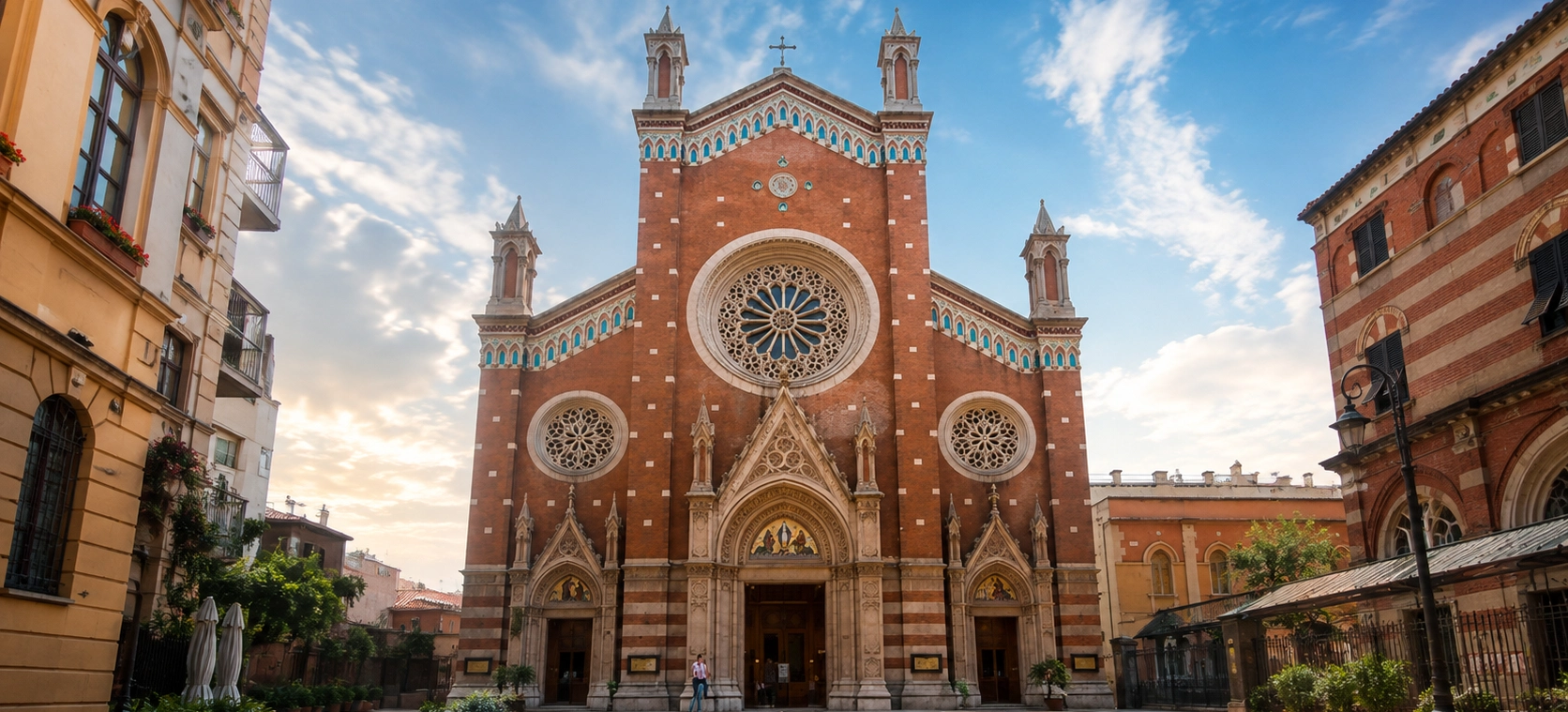
The Church of St. Anthony of Padua, known in Turkish as Sent Antuan Kilisesi or Sent Antuan Bazilikası, is one of the most recognizable Roman Catholic churches in Istanbul. Standing just off İstiklal Avenue in Beyoğlu, its red-brick façade, pointed arches and quiet forecourt create a striking contrast with one of the city's busiest pedestrian streets.
The present church was built between 1906 and 1912 and designed in a distinctive Venetian Neo-Gothic style by architects Giulio Mongeri and Edoardo de Nari. It replaced an older St. Anthony church whose roots in Pera reached back to the early 18th century. The current complex was created for Istanbul's large Italian and Levantine Catholic community and remains one of the strongest architectural reminders of cosmopolitan Pera.
St. Anthony is far more than a historic building. It remains an active Franciscan Catholic basilica, with Mass celebrated in several languages and a congregation that reflects Istanbul's international character. The church is also closely associated with Angelo Giuseppe Roncalli, the future Pope John XXIII, who served as the Holy See's representative in Turkey and became affectionately remembered for his warm relationship with the country.
For visitors, the experience combines architecture, Catholic devotion, modern Istanbul history and the multicultural story of Beyoğlu. Entry is generally free, but this is first and foremost a functioning place of worship, so services, prayer and parish life should always take priority over sightseeing.
A Franciscan church dedicated to St. Anthony was established in Pera, continuing the Latin Catholic presence in the district.
The present monumental church and its İstiklal Avenue complex were constructed in the early 20th century.
The church was honored with basilica status during the pontificate of Pope Pius XI.
Mass continues in Turkish, English, Italian and Polish, making St. Anthony one of Istanbul's most international Catholic churches.
Essential information for visiting Sent Antuan Basilica and understanding its place in the Catholic, architectural and multicultural history of Beyoğlu.
İstiklal Avenue in Tomtom, Beyoğlu, close to Galatasaray and within easy walking distance of Şişhane and Taksim.
Open on Google MapsAn active Roman Catholic Franciscan church dedicated to St. Anthony of Padua.
Constructed between 1906 and 1912 and opened for worship on 15 February 1912.
A red-brick Venetian Neo-Gothic basilica designed by Giulio Mongeri and Edoardo de Nari.
Regular Catholic worship includes Turkish, English, Italian and Polish services.
There is normally no sightseeing ticket; visitors may enter respectfully when the church is open.
St. Anthony is one of the clearest places to understand how Catholic, Levantine and European communities shaped the urban culture of late Ottoman and modern Beyoğlu.
St. Anthony's importance begins with its role as a major Roman Catholic parish of Pera. For centuries, Galata and Pera were home to Genoese descendants, Levantines, foreign diplomats, merchants, religious orders and Catholics from several linguistic communities. The Franciscan church became one of the most important institutions serving that diverse population.
Architecturally, the present basilica is an exceptional example of the Europeanizing cityscape of late Ottoman Beyoğlu. Its Venetian-inspired Neo-Gothic design, red brick, pointed arches, rose-window forms and elongated courtyard create a distinctly continental atmosphere only steps from the dense commercial life of İstiklal Avenue.
The church is also inseparable from the memory of Pope John XXIII. Before becoming pope, Angelo Giuseppe Roncalli served as the Holy See's diplomatic representative in Turkey. He preached and celebrated important liturgies at St. Anthony, and his affection for Turkey later contributed to the popular memory of him as the “Turkish Pope.” A statue in the church complex recalls that relationship.
For travelers following our guide to places to visit in Istanbul, St. Anthony adds a vital dimension to the city beyond Byzantine and Ottoman monuments. It reveals the continuing presence of Latin Christianity, Istanbul's Levantine communities and the multicultural history of Beyoğlu.
The history of St. Anthony belongs to a much longer story of Franciscan life in Constantinople. Franciscan friars were present in the city from the 13th century, and over time their institutions became closely connected with the Latin Catholic communities of Galata and Pera.
After the Franciscans lost their former church of St. Francis in Galata at the end of the 17th century, the friars moved toward Pera. In 1724, a new church dedicated to St. Anthony of Padua was established there. Pera was then developing into a district shaped by embassies, European merchants and non-Muslim communities, making it a natural center for Catholic life.
The older St. Anthony church survived repeated fires and reconstruction. It was rebuilt in masonry after an 18th-century fire, destroyed again during the great Pera fire of 1831, and reconstructed in 1835 to a design associated with Nicola Carelli. The parish served not only Latin Catholics but also other Catholic communities in an unusually cosmopolitan environment.
By the beginning of the 20th century, the older building had become inadequate for the size and ambitions of the congregation. A much larger new complex was planned. The foundation stone of the present church was laid in 1906, and despite interruptions caused by financial difficulties, construction was completed in the following years.
On 15 February 1912, the Franciscan community moved into the new church and it opened for worship. The building was formally consecrated in 1913. In 1932, Pope Pius XI elevated it to the honorary rank of a basilica, confirming its importance within Istanbul's Latin Catholic community.
Franciscans were already active in Constantinople during the early history of their order.
A church dedicated to St. Anthony of Padua was established in Pera.
The earlier church was destroyed in the Great Fire of Pera and later rebuilt.
The foundation stone of the present monumental church was laid.
The new church opened for worship on 15 February.
Pope Pius XI granted the church basilica status.
The basilica is administered within a tradition connected to the Franciscan Friars Minor Conventual. That connection is important because the history of the Franciscans in Istanbul reaches far beyond the present church and deep into the medieval city.
During the Latin period of Constantinople, Franciscans were already present in the city. Archaeological discoveries at the former Byzantine church now known as Kalenderhane Mosque revealed fragments of an early cycle depicting the life of St. Francis, evidence of just how early the order had established itself in Constantinople.
After the medieval and early Ottoman Catholic communities became concentrated around Galata, Franciscan institutions remained part of the area's religious landscape. The eventual shift toward Pera mirrored the northward expansion of the city and the rise of the avenue once known as the Grande Rue de Péra — today's İstiklal Avenue.
This gives St. Anthony an unusual historical depth. The standing basilica is an early 20th-century building, but the religious community behind it belongs to a Catholic presence in Istanbul that is many centuries older.
St. Anthony remains connected with the long Franciscan presence in Istanbul.
Franciscan activity in the city can be traced back to the 13th century.
The Genoese and Latin district became a major center of Catholic life.
As the city expanded, Catholic institutions increasingly moved toward today's Beyoğlu.
The dedication reflects one of the Franciscan world's most beloved saints.
The basilica is not a former church or museum but an active Catholic community.
The church seen today is not the first sanctuary dedicated to St. Anthony in Pera. The earlier church was founded in the early 18th century and became a major religious center for the Catholic population of the district.
Its congregation was remarkably diverse. Historical accounts show that the church served Levantine Catholics and also became important to Armenian Catholics before they had their own fully recognized parish structures. This multi-community character reflects the complicated religious and social world of Ottoman Pera.
The building suffered repeated damage from the fires that frequently swept through the wooden neighborhoods of old Istanbul. After destruction in the 1831 Pera fire, it was rebuilt in 1835. By the beginning of the 20th century, however, urban change and the growth of the congregation made a completely new project necessary.
The old church was affected by the transformation of the avenue and the creation of the modern tram corridor. A new site on the same great street was secured, and the Franciscan community began planning the larger basilica that survives today.
The present basilica was conceived on a far more ambitious scale than the church it replaced. At the beginning of the 20th century, Pera had become one of the Ottoman capital's most cosmopolitan districts, and the local Catholic population required a church capable of representing both religious life and the strong Italian presence in the city.
The project was promoted by Father Giuseppe Caneve. Property surrounding the former Concordia Theatre was acquired, and the new complex was designed not simply as a church but as a carefully planned urban ensemble. Apartment buildings along the İstiklal Avenue frontage were incorporated into the project and helped provide income for the institution.
Construction began in 1906. Financial difficulties interrupted the work, but building resumed and the church was completed by the early 1910s. Its design is credited to Giulio Mongeri and Edoardo de Nari, who created a distinctive Venetian Neo-Gothic interpretation in red brick.
The church opened for worship on 15 February 1912. Its unusual arrangement — entered from the avenue through a monumental gateway between apartment blocks before opening into a long courtyard — remains one of the most memorable architectural sequences in Beyoğlu.
A central figure behind the ambitious project for the new St. Anthony complex.
A leading architect of late Ottoman and early Republican Istanbul, associated with the church's design.
Worked with Mongeri on the Venetian Neo-Gothic design of the basilica.
The street-side buildings formed part of the wider financial and architectural concept.
The material gives the basilica one of the most distinctive façades in Beyoğlu.
The present church began its active life shortly before the final years of the Ottoman Empire.
St. Anthony is one of Istanbul's strongest examples of Neo-Gothic Catholic architecture. Rather than copying a single medieval building, the architects used a historicist vocabulary inspired particularly by northern Italian and Venetian Gothic traditions.
The exterior is immediately recognizable by its red-brick masonry, pointed arches, traceried openings, vertical emphasis and carefully framed entrance façade. The church is set back from İstiklal Avenue, so the full composition reveals itself only after visitors pass through the street-front entrance and enter the courtyard.
The plan follows the tradition of a Latin-cross basilica, with a long central nave, side aisles, a transept and a sanctuary focused on the high altar. The vertical proportions and repeated arches create an impression of greater height and depth as visitors move toward the apse.
One of the most fascinating elements is the relationship between sacred and commercial architecture. The apartment buildings at the entrance are not accidental neighbors: they were conceived as part of the wider St. Anthony project. Their presence allows the church to withdraw from the avenue, creating a transition from crowded public street to quiet religious space.
The design draws strongly on Italian Gothic forms rather than Byzantine or Ottoman religious architecture.
The warm brick exterior makes the church instantly recognizable from its courtyard.
Gothic arches organize windows, portals and the rhythm of the interior.
The basilica follows a traditional Western Christian church arrangement.
The church is dramatically revealed after visitors pass through the İstiklal Avenue frontage.
The basilica and its street-front apartment blocks were planned as a connected complex.
The interior continues the Neo-Gothic language of the exterior but feels calmer and more devotional than the busy İstiklal Avenue setting might suggest. Tall columns, repeated arches, painted surfaces, religious statues, side altars and stained glass guide attention toward the sanctuary.
The long nave emphasizes procession and perspective. Depending on the light, the stained-glass windows add changing color to the interior, while candles and votive areas reinforce the basilica's role as a place of personal prayer as well as communal worship.
Images of St. Anthony of Padua are naturally central to the devotional character of the church. Visitors may see worshippers lighting candles, leaving prayers or pausing before statues and side chapels connected with Catholic saints and Marian devotion.
The church also possesses an important organ tradition. A modern organ was installed in the mid-20th century, and sacred music continues to contribute to the atmosphere of major liturgical celebrations. When Mass is underway, visitors should avoid walking around for sightseeing and instead remain quietly at the rear or return later.
The long axial interior creates a powerful view toward the high altar and apse.
Colored windows contribute to the European Gothic atmosphere of the church.
Smaller devotional spaces reflect the richness of Catholic worship and saintly traditions.
Statues and devotional images of the church's patron saint are central to the interior experience.
Sacred music has an important place in the liturgical life of the basilica.
The interior remains an active religious space rather than a museum installation.
St. Anthony of Padua was one of the most famous Franciscan saints of the Middle Ages. Born in Lisbon around 1195, he entered religious life in Portugal and later joined the Franciscan movement inspired by St. Francis of Assisi.
Anthony became celebrated as a preacher, teacher and theologian. He died near Padua in 1231 and was canonized only a short time later. His feast day is celebrated on 13 June, a date that remains especially important at churches dedicated to him around the world.
In Catholic popular devotion, St. Anthony is especially associated with help in finding lost things, intercession for people in difficulty and compassionate care for the poor. His fame crossed cultural boundaries, and the earlier St. Anthony church in Pera attracted devotion from people beyond the parish's immediate Catholic congregation.
Understanding that devotion helps explain why the basilica remains emotionally important to worshippers. For many people, this is not simply an architectural landmark on İstiklal Avenue but a place connected with prayer, promises, thanksgiving and the continuing cult of one of Catholicism's most beloved saints.
Anthony was born in Portugal around 1195 before later becoming associated with Padua in Italy.
He joined the movement founded by St. Francis of Assisi and became one of its most famous early saints.
Anthony was renowned for preaching and theological learning.
He died near Padua and quickly became the focus of widespread devotion.
His annual feast day is one of the most important dates in the basilica's devotional calendar.
Popular Catholic devotion often invokes St. Anthony when something important has been lost.
One of the most memorable modern chapters in the history of St. Anthony is its connection with Angelo Giuseppe Roncalli, the future Pope John XXIII. Before his election as pope in 1958, Roncalli served for years as the Holy See's representative in Turkey and Greece.
Roncalli developed a warm relationship with Turkey and with Istanbul's Catholic community. He preached and presided over important liturgies at St. Anthony, including celebrations connected with the feast of the church's patron saint. His openness toward the country and his use of Turkish in pastoral settings contributed to his lasting local reputation.
The association is remembered visually through the statue of Pope John XXIII in the church complex. For visitors, it provides a human link between a Beyoğlu parish and one of the most influential popes of the 20th century.
John XXIII later convened the Second Vatican Council, which transformed many aspects of modern Catholic life. His Istanbul years therefore give St. Anthony a significance that extends well beyond the local history of Pera.
St. Anthony also played a role in another landmark moment in the history of Catholicism in Turkey. During his visit in 1967, Pope Paul VI celebrated liturgy at the basilica. The church's official historical tradition remembers the occasion as the first Mass celebrated by a pope on Turkish soil.
The visit came during an important period of Catholic–Orthodox dialogue. Paul VI's journey to Istanbul included his historic encounter with Ecumenical Patriarch Athenagoras I, part of the wider movement toward reconciliation between the Roman Catholic and Eastern Orthodox churches.
St. Anthony's role in that visit demonstrates the basilica's importance as one of the principal public Catholic churches of Istanbul. It was not only a parish church but also a natural setting for major international Catholic events in the city.
Pope Paul VI visited Istanbul during an important period in modern ecumenical relations.
He celebrated at St. Anthony, reinforcing the church's status within Istanbul Catholic life.
The papal visit was closely connected with renewed Catholic–Orthodox dialogue.
The event placed the Beyoğlu basilica within a much wider Christian story.
One of the most distinctive features of St. Anthony today is its multilingual worship schedule. The basilica serves local Catholics, foreign residents, diplomatic communities, visitors and pilgrims from many countries.
Regular Masses are celebrated in Turkish, English, Italian and Polish. The exact timetable can change with seasons, feast days and special liturgical celebrations, so anyone planning specifically to attend Mass should check the current parish schedule before travelling.
This linguistic diversity is not a modern tourist feature. It continues the deeper history of Pera as a district in which people of different nationalities and Christian traditions lived side by side. The congregation today still gives the basilica an international character rare among Istanbul's historic monuments.
Turkish-language Mass forms an important part of the basilica's regular parish life.
English Mass serves both residents and international visitors.
Italian worship preserves the church's strong historical connection with Istanbul's Italian community.
Polish Sunday worship reflects the continuing international character of the parish.
Major Catholic feasts may bring additional services and different access arrangements.
The feast of St. Anthony is especially important and may be much busier than an ordinary day.
A visit is most rewarding when you pay attention not only to the church interior but also to the unusual urban sequence that connects İstiklal Avenue with the basilica. Allow time to move slowly from the street entrance through the courtyard and into the nave.
Notice how the basilica is concealed behind the street-front apartment buildings rather than standing directly on the avenue.
The long forecourt creates a dramatic visual approach to the red-brick church façade.
Study the Neo-Gothic arches, windows and vertical composition before entering.
Look along the long central axis toward the sanctuary to appreciate the basilica's scale.
Colored glass adds changing light and atmosphere to the interior.
Smaller devotional spaces reveal the richness of Catholic religious practice.
Look for statues and images of the patron saint and observe the votive traditions around them respectfully.
The monument recalls Angelo Roncalli's long relationship with Turkey before his election as pope.
The flanking buildings are part of the original architectural and financial concept of the complex.
Notice how worship, confession, candles and daily prayer continue alongside sightseeing.
Daily access is generous, but services can affect how freely visitors may explore the interior.
The transition from noisy İstiklal Avenue to the church is dramatic; lower your voice as soon as you enter the courtyard.
Choose clothing appropriate for an active Catholic church.
This is enough for the courtyard, façade, interior and devotional details without rushing.
For architecture and photography, a period between services is usually more suitable.
İstiklal Avenue can be extremely busy even when the courtyard and church feel peaceful.
Around 13 June, expect a stronger devotional atmosphere and potentially larger congregations.
The basilica normally operates as a church rather than a ticketed attraction; voluntary donations may be welcomed.
Begin around Taksim Square and walk down İstiklal Avenue through the historic heart of Beyoğlu. The avenue itself is part of the story: in the 19th and early 20th centuries, the Grande Rue de Péra became the ceremonial and commercial spine of cosmopolitan Pera.
Stop at St. Anthony of Padua and allow around 30–45 minutes for the entrance complex, courtyard, Neo-Gothic façade, interior and Pope John XXIII memorial. If a service is taking place, prioritize worship and return to architectural sightseeing afterward if possible.
Continue along the avenue toward Santa Maria Draperis, another important Franciscan Catholic church that preserves an older layer of Pera's Latin Christian heritage. From there, walk toward the lower end of İstiklal and the Galata district.
Finish around Galata, where the medieval Genoese colony once concentrated much of Constantinople's Latin Catholic population. Use our complete Istanbul visitor guide to connect the walk with additional churches, museums, Ottoman monuments and historic neighborhoods.
St. Anthony Basilica is located at İstiklal Caddesi No: 171A, Tomtom, Beyoğlu. The church is reached through the street-front complex and courtyard rather than directly from the pavement of İstiklal Avenue.
The Istanbul Latin Catholic Apostolic Vicariate currently lists opening hours of approximately 08:00–19:30 from Monday to Saturday. On Sundays, the church generally opens around 09:00, with seasonal closing arrangements that may be earlier in winter. Religious services, feast days and special events can change normal visitor access.
The published Mass schedule includes regular services in English, Turkish, Italian and Polish. Because liturgical schedules can change seasonally, visitors wishing to attend a specific language Mass should verify the current timetable shortly before visiting.
There is normally no admission fee for entering the basilica. It is a functioning church rather than a state museum. Visitors should follow any instructions at the entrance, avoid disturbing worship and remember that donations are voluntary rather than sightseeing tickets.
The current published schedule reflects the international character of the parish. The following times are useful for planning, but visitors should always confirm them around major feasts, Holy Week, Christmas and other special celebrations.
English Mass is currently listed at 08:00.
English Mass is currently listed at 08:00, with Turkish Mass generally at 19:00.
An additional Turkish Mass is currently listed at 11:30.
English Mass is currently listed at 10:00.
Italian and Polish Masses are currently listed at 11:30, with the Polish service associated with the lower church.
Turkish Mass is generally listed at 18:00 in the October–March period and 19:00 from April–September.
Usually the best choice for a calmer courtyard and less crowded İstiklal Avenue.
Ideal if your priority is architecture, photography and a quiet interior visit.
Best for experiencing the multilingual parish at worship, but less suitable for uninterrupted sightseeing.
The feast of St. Anthony offers a particularly meaningful devotional atmosphere but can be much busier.
The church can be an atmospheric stop during a Beyoğlu walk, but Sunday closing times may be earlier.
İstiklal Avenue becomes lively and crowded; check that church access remains available before planning a late visit.
Enough for a quick look at the courtyard, façade and central nave while walking along İstiklal Avenue.
Ideal for appreciating the architecture, side altars, devotional details and Pope John XXIII connection.
Appropriate if you plan to attend Mass or spend time in prayer.
Combine St. Anthony with Santa Maria Draperis, historic Pera, Şişhane and Galata.
St. Anthony is one of Beyoğlu's most photogenic religious buildings. The strongest exterior composition often comes from the İstiklal entrance looking through the courtyard toward the red-brick façade. This perspective captures both the basilica and the urban structure that deliberately separates it from the avenue.
Inside, the long nave, arches, stained glass, altars and candlelight offer many atmospheric details. However, photography should never interfere with Mass, confession, private prayer or the lighting of devotional candles.
Rules can change during services and special events. Avoid flash, remain discreet and do not photograph worshippers at close range without permission. If signs or church staff restrict photography, follow those instructions immediately.
Use the long approach to frame the basilica symmetrically between the street-front buildings.
The exterior is especially effective when side light emphasizes the Gothic arches and brickwork.
Look for decorative stonework and the transition between the apartments and sacred precinct.
The axial view toward the altar is the most dramatic interior composition when photography is permitted.
Natural daylight brings out the strongest colors in the windows.
Services and private devotion always take priority over photographs.
The basilica's central location on pedestrianized İstiklal Avenue makes it easier to approach than many historic churches reached by steep side streets. However, visitors with specific mobility requirements should remember that this is a historic religious complex rather than a modern visitor attraction designed throughout for universal access.
İstiklal Avenue is largely pedestrianized, reducing direct vehicle access immediately in front of the church.
Taksim and Şişhane stations provide the most useful metro approaches.
Entrances and interior transitions may include historic paving or level changes.
The approach between the street entrance and church requires a short walk across the forecourt.
İstiklal Avenue can be extremely crowded, especially in the afternoon, evening and at weekends.
Visitors requiring step-free access should verify current entrance arrangements before a dedicated visit.
The basilica is located directly on İstiklal Avenue in Beyoğlu, roughly between Taksim and Şişhane. Its central position makes it easy to include in almost any walking route through Pera and Galata.
Take the M2 metro to Taksim and walk down İstiklal Avenue toward Galatasaray and Şişhane until you reach the St. Anthony entrance.
Use the M2 metro to Şişhane, take the İstiklal Avenue exit and walk uphill along the avenue toward Galatasaray.
The historic T2 tram travels along İstiklal Avenue and can shorten the walk when operating normally.
Walk uphill from the Galata Tower and Şişhane area toward İstiklal Avenue; expect some slope on the approach.
Take the T1 tram toward Karaköy, then continue uphill toward Galata and Şişhane or use onward public transport to Taksim.
Ask for “Sent Antuan Kilisesi, İstiklal Caddesi.” Because the avenue is pedestrianized, the final approach may require a short walk.
St. Anthony lies in one of Istanbul's densest cultural districts. Within a short walk you can connect Catholic churches, late Ottoman architecture, art museums, historic passages, consulates, Galata and the entertainment culture of Beyoğlu. Use our complete Istanbul visitor guide to continue planning.
Explore the historic Grande Rue de Péra, lined with passages, churches, consulates, shops and late Ottoman architecture.
Visit another important Franciscan Catholic church on İstiklal Avenue with roots deep in the history of Pera.
See one of Beyoğlu's most famous historic passages and experience the social architecture of 19th-century Pera.
Explore Orientalist painting, Anatolian weights and measures, Kütahya ceramics and rotating exhibitions.
Discover the Mevlevi Sufi heritage of Beyoğlu near the lower end of İstiklal Avenue.
Continue downhill into the former Genoese district for one of Istanbul's most recognizable medieval landmarks.
Walk to the modern symbolic center of Beyoğlu at the upper end of İstiklal Avenue.
Discover more churches, mosques, palaces, museums, neighborhoods and hidden historic sites across the city.
It is on İstiklal Avenue in the Tomtom area of Beyoğlu, between the Taksim and Şişhane ends of the avenue.
It is commonly called Sent Antuan Kilisesi or Sent Antuan Bazilikası.
The church is known as Sant'Antonio di Padova, reflecting its strong historical connection with Istanbul's Italian Catholic community.
Yes. It is an active Roman Catholic basilica connected with the Franciscan tradition.
Construction began in 1906, and the present church opened for worship on 15 February 1912.
Yes. A Franciscan church dedicated to St. Anthony was established in Pera in 1724 and was rebuilt several times after fires before the present basilica replaced it.
The present basilica was designed by Giulio Mongeri and Edoardo de Nari.
It is a Venetian-inspired Neo-Gothic church characterized by red brick, pointed arches and a traditional Western basilica plan.
The basilica forms part of a larger planned complex with apartment buildings along the street frontage. Visitors pass through this frontage and a courtyard before reaching the church.
They were conceived as part of the early 20th-century church project and helped provide income to support the institution.
Before becoming pope, Angelo Giuseppe Roncalli served as the Holy See's representative in Turkey and had a close relationship with St. Anthony and Istanbul's Catholic community.
Roncalli was remembered warmly for his years in Turkey, his respect for the country and his efforts to build friendly relations with local communities.
Yes. A statue in the St. Anthony complex commemorates his relationship with Istanbul and the basilica.
Yes. Pope Paul VI celebrated liturgy at the basilica during his historic 1967 visit to Istanbul.
The church was elevated to basilica status in 1932 during the pontificate of Pope Pius XI.
He was a 13th-century Franciscan preacher and saint, born in Lisbon and later closely associated with Padua in Italy.
His feast day is celebrated on 13 June and is an especially important date in churches dedicated to him.
The current regular schedule includes Turkish, English, Italian and Polish services.
The current published schedule generally lists English Mass at 08:00 on weekdays and Saturday, with a Sunday English Mass at 10:00. Verify before attending because schedules can change.
The current Sunday schedule generally lists Italian Mass at 11:30. Check the latest parish timetable before a dedicated visit.
The current Sunday schedule generally lists Polish Mass at 11:30, associated with the lower church. Verify the current arrangement before attending.
Turkish Mass is currently listed on several weekday evenings and on Sunday, with the Sunday time changing seasonally between the winter and summer periods.
The current church listing shows approximately 08:00–19:30 Monday through Saturday, with Sunday opening from around 09:00 and a seasonal closing time. Religious services can affect visitor access.
No conventional sightseeing ticket is normally required. The basilica operates as an active church and visitors may enter respectfully when it is open.
Allow around 30–45 minutes for the courtyard, architecture, interior and historical details, or longer if attending Mass.
Visitors may attend respectfully. During the liturgy, avoid sightseeing, photography and unnecessary movement through the church.
Photography may be possible outside services, but rules can change. Avoid flash and never interfere with prayer or worship.
Use the M2 metro to Taksim or Şişhane and walk along İstiklal Avenue. The nostalgic T2 tram is another convenient option when operating normally.
Yes. The church and Galata district can easily be combined in the same Beyoğlu walking route.
Yes, especially for travelers interested in Neo-Gothic architecture, Catholic heritage, Pope John XXIII, Levantine Istanbul and the multicultural history of Beyoğlu.
Remain quiet and avoid walking around for sightseeing while Mass, confession or private prayer is taking place.
Remember that this is an active basilica rather than a conventional museum attraction.
Keep the nave, side aisles and entrances clear for worshippers, clergy and church staff.
Give people space when they are lighting candles, praying before statues or approaching side altars.
Avoid flash, intrusive equipment and close photographs of people at prayer.
If donation boxes are available, contributions are voluntary and help support the living church community.
Connect St. Anthony Basilica with İstiklal Avenue, Santa Maria Draperis, Galata, late Ottoman architecture and the wider Christian heritage of Istanbul through a private route shaped around your interests and without compulsory shopping stops.
Choose a focused half-day exploration of St. Anthony Basilica, historic İstiklal Avenue and Pera, or build a deeper private itinerary around Catholic churches, Levantine families, European architecture, Galata and Istanbul's multicultural religious history.
Ask us about a tailor-made route combining St. Anthony Basilica, İstiklal Avenue, Santa Maria Draperis, historic Pera, Şişhane and Galata.
Request a Custom Tour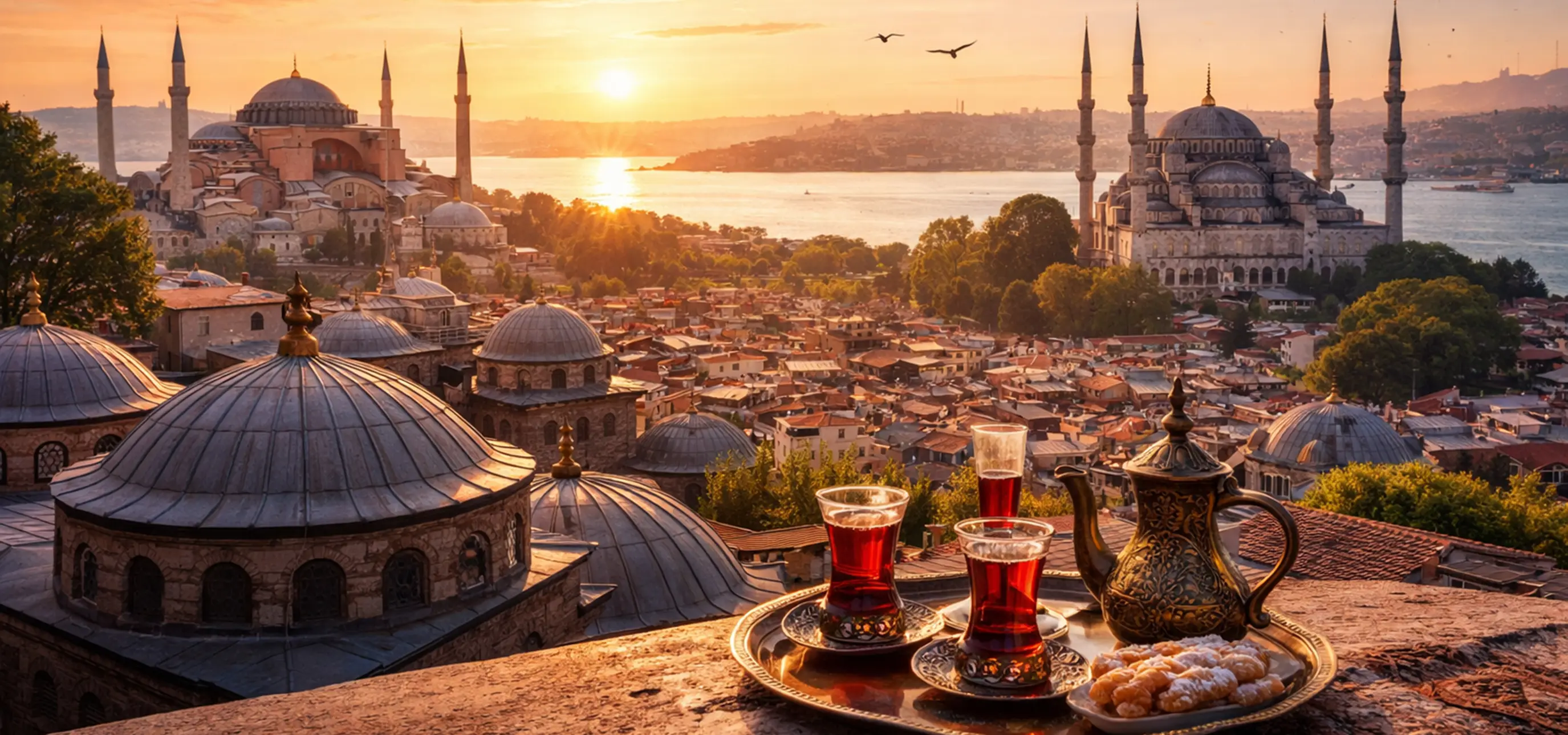
Create a private Istanbul itinerary around Christian heritage, Byzantine monuments, Ottoman history, Catholic churches, Galata, Beyoğlu and the city's lesser-visited cultural treasures.
View Private Istanbul ToursUse St. Anthony as the Beyoğlu starting point for a deeper journey through Catholic, Orthodox and Byzantine sites across Istanbul, from Galata and Pera to Fener, Balat and the historic peninsula.
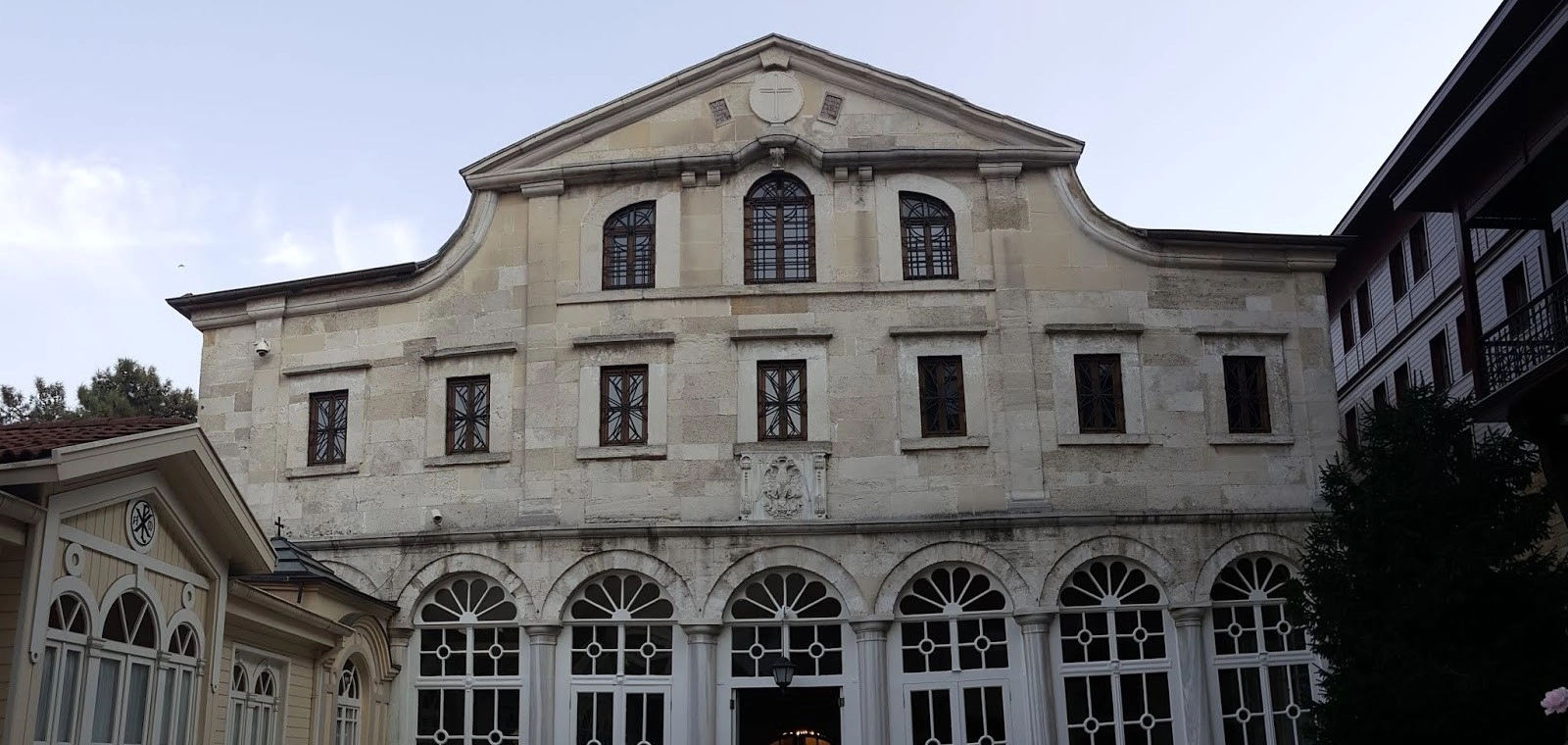
Continue to Fener for the principal church of the Ecumenical Patriarchate and one of Istanbul's most important living Orthodox sites.
Explore St. George Church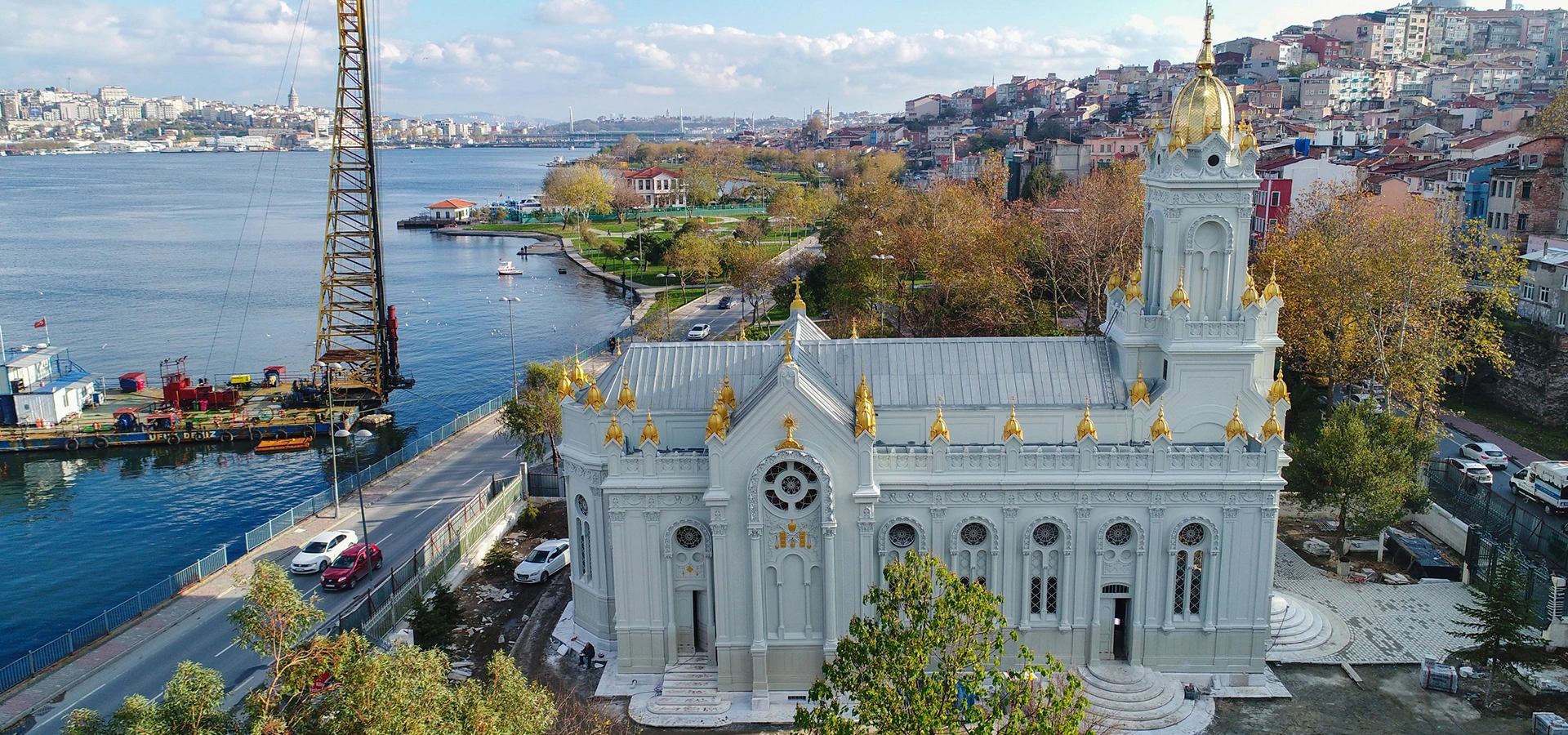
Discover the famous Iron Church on the Golden Horn and another remarkable expression of Istanbul's diverse Christian communities.
Explore St. Stephen Church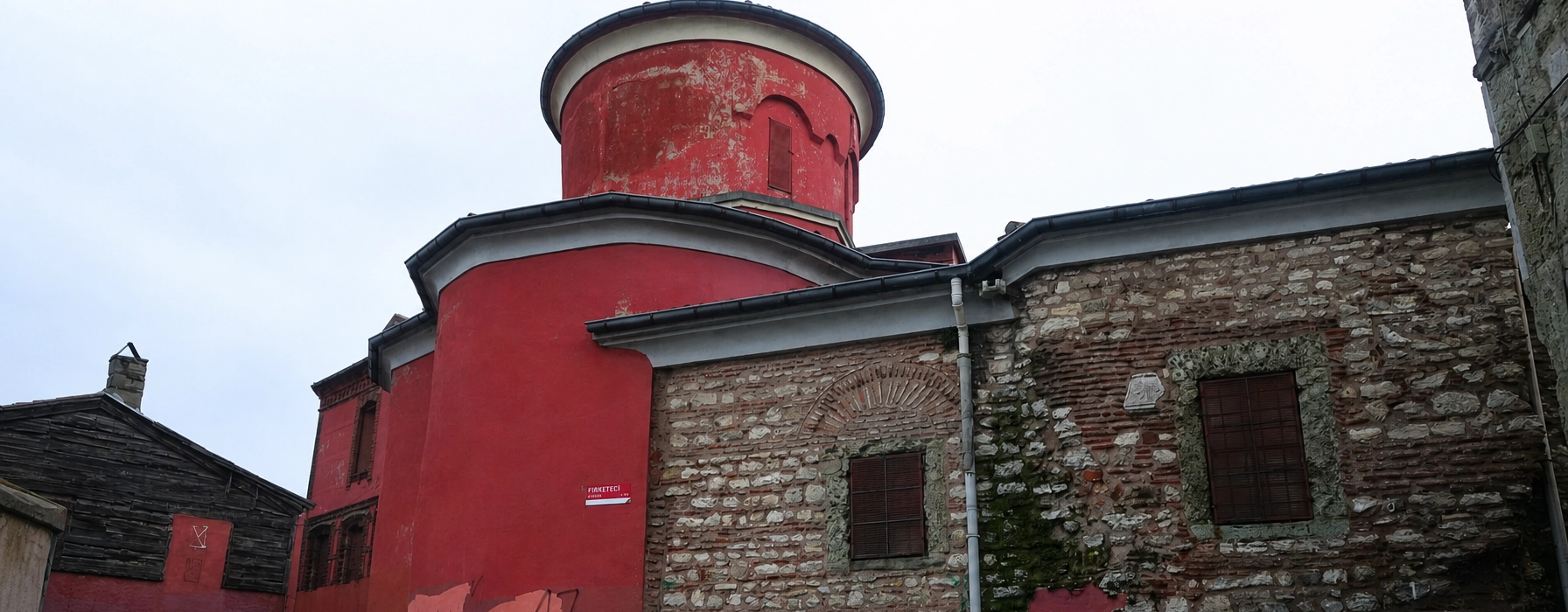
Explore one of Istanbul's most remarkable surviving Byzantine churches and a rare example of continuing Greek Orthodox use after 1453.
Explore St. Mary of the Mongols