Cité de Péra, Naum Theatre, Belle Époque Architecture, Meyhane Culture & Historic Beyoğlu

Çiçek Pasajı Istanbul – Complete Visitor Guide

Step inside one of İstiklal Avenue's most famous historic passages, built in 1876 on the site of the legendary Naum Theatre and later transformed by flower sellers, restaurants, music and the unforgettable social life of Beyoğlu.

Explore Çiçek Pasajı

Çiçek Pasajı – The Historic Flower Passage of Beyoğlu

On the lively pedestrian avenue of İstiklal Caddesi, only a few steps from Galatasaray and the entrance to Beyoğlu's famous Balık Pazarı, stands one of Istanbul's most recognizable 19th-century arcades: Çiçek Pasajı, or the Flower Passage.

The building is far more than a picturesque row of restaurants. It occupies a site connected with the Naum Theatre, one of Ottoman Istanbul's most important stages for opera and European-style theatre before the devastating Great Pera Fire of 1870.

After the fire, Greek banker Hristaki Zografos Efendi acquired the property and commissioned a new mixed commercial and residential complex. Completed in 1876, the building became known as Cité de Péra, while its arcade was called Hristaki Pasajı.

The passage later entered another chapter of Istanbul history when flower sellers gathered here during the first half of the 20th century. The flowers eventually disappeared, but their name remained.

From the 1940s onward, restaurants, beer halls and meyhanes increasingly defined the atmosphere of the passage. Musicians, writers, artists, journalists and generations of Istanbul residents made the arcade part of Beyoğlu's social memory.

Today, Çiçek Pasajı is both a historic architectural landmark and a living dining passage. You can walk through simply to admire the façade, glass-covered interior, upper galleries and decorative details, or sit down for a meal and experience the noisy, convivial side of central Beyoğlu.

1876 Landmark

The present Cité de Péra complex was completed in 1876 after the Great Pera Fire destroyed the Naum Theatre on the site.

Naum Theatre

Before the passage, this corner of Pera was home to one of 19th-century Istanbul's most important opera and theatre venues.

Flower Passage

Flower sellers who gathered here during the early 20th century gave the passage the name that survives today.

Beyoğlu Meyhanes

Restaurants, taverns, conversation and live music transformed the passage into one of Beyoğlu's best-known social landmarks.


Know Before You Go

Çiçek Pasajı Istanbul – Quick Facts

Essential information about Çiçek Pasajı's İstiklal Avenue location, 1876 architecture, Naum Theatre history, flower-seller tradition, restaurants and easy access from Taksim and Şişhane.

📍

Location

Hüseyinağa, İstiklal Avenue, Beyoğlu, beside Sahne Street and the Balık Pazarı area.

Open on Google Maps
🏛️

Completed

1876, as the Cité de Péra / Hristaki Passage commercial and residential complex.

🎭

Earlier Site

The famous Naum Theatre stood here before it was destroyed in the Great Pera Fire of 1870.

🌸

Known For

Historic architecture, the flower-seller story, restaurants, meyhane culture, music and classic Beyoğlu atmosphere.

🎟️

Admission

Free to walk through. Food, drinks and restaurant services are charged separately by individual businesses.

🚇

Public Transport

Walk from Taksim or Şişhane on the M2 metro, or use the nostalgic T2 tram along İstiklal Avenue.


Opera, Commerce, Flowers, Meyhanes and the Changing Social Life of Pera

Why Is Çiçek Pasajı Important?

Çiçek Pasajı is important because a single building preserves several layers of Beyoğlu's modern history: 19th-century theatre, European-style urban architecture, commercial life, migration, flower selling, restaurant culture and the social memory of İstiklal Avenue.

The first reason is the site's association with the Naum Theatre. During the Tanzimat era, Pera became one of the principal centers of European-style cultural life in the Ottoman capital, and the theatre helped introduce Istanbul audiences to major operatic productions.

The second reason is architectural. The 1876 complex reflects the transformation of Grande Rue de Péra into a fashionable late Ottoman boulevard lined with apartments, passages, shops, embassies, theatres and entertainment venues.

The third reason is social history. The passage did not retain one fixed identity. It moved from an elegant commercial arcade to a place associated with flower sellers, then increasingly with meyhanes, restaurants, beer halls, musicians and nightlife.

Its history also includes loss and recovery. The passage suffered a dramatic structural collapse in 1978, remained closed for years, and reopened after restoration in 1988. Further restoration followed in the 2000s.

For visitors following our guide to places to visit in Istanbul, Çiçek Pasajı offers a particularly vivid introduction to the character of Beyoğlu: cosmopolitan, architectural, noisy, nostalgic and constantly changing.

History of Çiçek Pasajı Istanbul

The story begins before the present passage existed. During the 19th century, Pera was becoming the cosmopolitan entertainment and diplomatic quarter of Istanbul. On the site later occupied by Çiçek Pasajı stood the celebrated Naum Theatre.

The theatre became closely associated with opera, European drama and the cultural life of Ottoman Pera. It attracted members of the imperial court, foreign residents, diplomats and the urban elite.

In 1870, the Great Pera Fire devastated a large part of Beyoğlu. The Naum Theatre was destroyed, ending one of the most important chapters in the history of theatrical Pera.

A few years later, Greek banker Hristaki Zografos Efendi acquired the property and commissioned a new building. The project is associated with architect Kleanthis Zannos, and the complex was completed in 1876.

The new building combined a fashionable covered arcade with residential apartments. Contemporary descriptions record 24 shops and 18 apartments. The building was known as Cité de Péra, while the arcade became Hristaki Pasajı.

Its early shops reflected the international character of late Ottoman Beyoğlu. Retailers, bakeries, tailors, confectioners, florists and other businesses occupied the arcade beneath the apartments.

In 1908, after the property passed to Grand Vizier Küçük Said Pasha, the passage also became known as Sait Paşa Geçidi.

During the first half of the 20th century, flower sellers increasingly gathered in the arcade. The association became strong enough that the passage acquired the popular name Çiçek Pasajı – Flower Passage.

Restaurants, beer halls and meyhanes gradually became more dominant. By the mid-20th century, Çiçek Pasajı was famous as a meeting place for artists, writers, journalists, musicians and regular Beyoğlu patrons.

On 10 May 1978, part of the neglected building collapsed. The passage remained out of service for years before restoration allowed it to reopen in 1988. A further major restoration and renewal took place in 2005.

Today, its function is different from the elegant shopping arcade of 1876, but the building remains one of the most powerful surviving symbols of historic Pera and modern Beyoğlu.

Naum Theatre

The site was one of Ottoman Istanbul's best-known opera and theatre addresses before 1870.

1870

The Great Pera Fire destroyed the Naum Theatre and reshaped much of the surrounding district.

1876

Cité de Péra and Hristaki Passage were completed as an elegant commercial and residential development.

Early 20th Century

Flower sellers increasingly became associated with the arcade and inspired its modern name.

1978

A major collapse forced the passage to close and marked one of the darkest moments in its modern history.

1988 & 2005

Restoration returned Çiçek Pasajı to use, followed by further conservation and renewal work.

Why Is It Called Çiçek Pasajı?

The passage has carried several names during its long history, and each one reflects a different chapter in the story of Beyoğlu.

When the building opened in 1876, the overall complex was called Cité de Péra. The arcade itself was widely known as Hristaki Pasajı, after its owner Hristaki Zografos Efendi.

After the property passed to Küçük Said Pasha in 1908, the passage also became known as Sait Paşa Geçidi.

The name that ultimately survived came from the flower sellers who gathered in and around the arcade during the first half of the 20th century. Accounts often connect some of these sellers with people displaced by the upheavals surrounding the Russian Revolution, while local florists also concentrated here as the passage became known for flowers and flower auctions.

As restaurants and meyhanes later replaced most of the florists, the flowers themselves largely disappeared from the passage. Yet the name Çiçek Pasajı – Flower Passage remained, turning a former commercial activity into the building's permanent identity.

Cité de Péra

The original French name of the residential and commercial complex completed in 1876.

Hristaki Pasajı

The arcade was named after Hristaki Zografos Efendi, the banker who commissioned the new development.

Sait Paşa Geçidi

A later name associated with the building after ownership passed to Küçük Said Pasha.

Çiçek Pasajı

The modern name recalls the flower sellers who once occupied the passage and surrounding streets.

Naum Theatre – What Stood Here Before Çiçek Pasajı?

Before Çiçek Pasajı became one of Beyoğlu's most photographed passages, the same site was associated with the Naum Theatre, one of the most important theatres in 19th-century Istanbul.

The theatre belonged to the period when Pera was emerging as the Ottoman capital's principal quarter for embassies, European merchants, hotels, restaurants, ballrooms, theatres and new forms of public entertainment.

The venue became especially famous for Italian opera. Members of the Ottoman dynasty and the city's diplomatic and cosmopolitan communities attended performances here.

The building itself experienced earlier fires and rebuilding before the final disaster. In 1870, the Great Pera Fire swept through the district and destroyed the theatre completely.

The passage that replaced it therefore represents more than architectural renewal. It marks a transition from theatrical Pera to the commercial, residential and entertainment world that would define late 19th- and 20th-century Beyoğlu.

Visitors walking through Çiçek Pasajı today should remember that the lively dining arcade occupies one of the most significant lost performance sites in Istanbul's cultural history.

Opera Culture

Naum Theatre was one of Istanbul's major venues for Italian opera and European-style stage performances.

Imperial Audiences

The theatre was associated with visits by members of the Ottoman dynasty during the Tanzimat era.

Pera Society

Diplomats, Levantines, merchants and cosmopolitan residents helped make the theatre part of Pera's fashionable public life.

Destroyed in 1870

The Great Pera Fire ended the theatre's history and cleared the way for the later Cité de Péra complex.

Architecture of Çiçek Pasajı

Çiçek Pasajı belongs to the architectural world that transformed late Ottoman Pera into one of the most European-looking urban districts of the empire.

The building was conceived as a mixed-use complex, combining commercial premises at passage level with apartments above. This arrangement reflected the new urban lifestyle developing along Grande Rue de Péra during the second half of the 19th century.

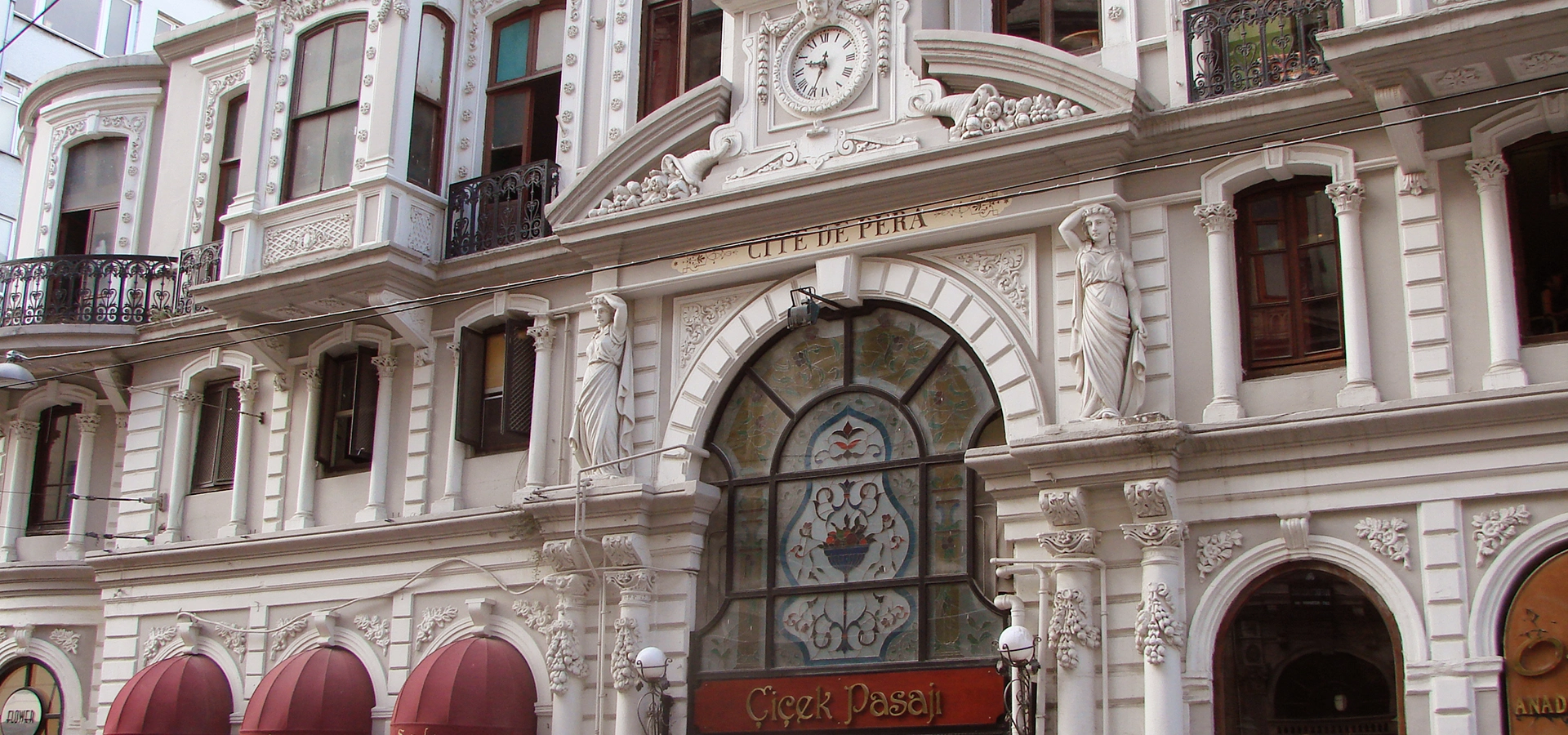
From İstiklal Avenue, the visitor first encounters the building's ornate historic façade. Decorative windows, vertical rhythm, upper-floor ornament and the monumental entrance distinguish the passage from the modern shopfronts around it.

Inside, the long covered arcade creates a dramatic change of atmosphere. Restaurants line both sides, while the upper levels, arches, railings, lighting and glazed roof draw the eye upward.

The passage is especially attractive because it feels both interior and urban: it is a sheltered room-like space, but it also functions as a route between İstiklal Avenue, Sahne Street and the Balık Pazarı area.

The building's restorations have altered parts of its fabric over time, so visitors should think of the present interior as the result of survival, collapse, reconstruction and conservation rather than a perfectly untouched 1876 environment.

1876 Design

The complex belongs to the major rebuilding phase of Pera after the 1870 fire.

Covered Arcade

A sheltered passage connects the İstiklal Avenue façade with the streets and market area behind it.

Mixed Use

The original project combined shops below with residential apartments on the upper levels.

Ornate Façade

The İstiklal Avenue elevation is among the most recognizable historic commercial façades in Beyoğlu.

Look Up

The galleries, roof structure, upper windows and decorative details are as important as the restaurant level.

Restored Landmark

Major restoration after the 1978 collapse and later conservation work allowed the passage to survive as an active building.

The Flower Sellers of Çiçek Pasajı

The most romantic part of the passage's name comes from a very practical chapter in its commercial history. During the early 20th century, flower sellers began to concentrate in and around the arcade.

Historical accounts often mention women who had fled the upheavals following the Russian Revolution and found work selling flowers in Beyoğlu, alongside Istanbul florists who increasingly used the passage as a center for their trade.

For a period, the passage was also associated with flower auctions and flower commerce. This activity became visible enough that Istanbul residents began referring to the arcade simply through its flowers.

As the 20th century progressed, restaurants, beer halls and meyhanes occupied more of the ground-floor spaces. Florists gradually moved elsewhere, but the name remained fixed in the city's memory.

This is why the modern visitor may be surprised: Çiçek Pasajı is not primarily a flower market today. The flowers belong mainly to the history of the name, while the present passage is dominated by restaurants and entertainment.

Historic TradeFlowers and flower selling
PeriodEspecially associated with the first half of the 20th century
Migration StoryAccounts connect some sellers with White Russian refugees after the Russian Revolution
Later ChangeRestaurants and meyhanes gradually replaced most flower businesses
LegacyThe name “Çiçek Pasajı” survived even after the florists largely disappeared

Çiçek Pasajı & Beyoğlu Meyhane Culture

From the 20th century onward, Çiçek Pasajı became increasingly associated with the meyhane tradition of Beyoğlu. A meyhane is not simply a restaurant serving food and drink. Historically, it is a social setting built around long conversation, shared small dishes, friendship, stories and the rhythm of an unhurried evening.

In Çiçek Pasajı, this culture became especially visible because the restaurants sit directly opposite one another in a narrow covered space. Voices, music, waiters, plates and neighboring tables all contribute to a dense communal atmosphere.

The passage became a celebrated gathering place for writers, artists, journalists, architects, performers and Beyoğlu regulars. Its reputation belongs as much to the people who met here as to the architecture around them.

Today, the experience is more visitor-oriented than it once was, and each restaurant has its own menu, prices and style. Still, the connection between Çiçek Pasajı and conversation, meze, music and nightlife remains central to its identity.

Travelers who want a quieter architectural visit should come earlier in the day. Those who want the livelier social atmosphere will generally find the passage most animated from dinner time into the evening.

Meze

Small shared dishes are strongly associated with the traditional meyhane style of dining.

Conversation

The classic experience is social and unhurried rather than simply a quick meal.

Music

Live and roaming musicians are part of the passage's modern evening atmosphere.

Historic Patrons

Artists, journalists, writers and other Beyoğlu regulars helped build the passage's cultural reputation.

Modern Restaurants

The establishments today operate independently, so menus, prices, music and service styles can vary.

Evening Energy

After dark, lighting, conversation and music transform the passage into one of İstiklal's liveliest historic interiors.

What to See at Çiçek Pasajı

İstiklal Avenue Façade

Pause before entering to study the ornate 19th-century frontage and upper architectural details facing the avenue.

Main Arcade

Walk the full length of the covered passage and observe how the narrow dining space opens toward the historic streets behind İstiklal.

Upper Galleries

Look above the restaurant signs and tables for the galleries, windows, railings and proportions of the original complex.

Naum Theatre Memory

Remember that the passage occupies the site of one of Ottoman Istanbul's most important 19th-century theatres.

Sahne Street

Continue through the passage toward Sahne Street, whose very name preserves the theatrical memory of this part of Beyoğlu.

Balık Pazarı

Step into the surrounding market streets for fish shops, food stores, restaurants and the dense street life behind İstiklal Avenue.

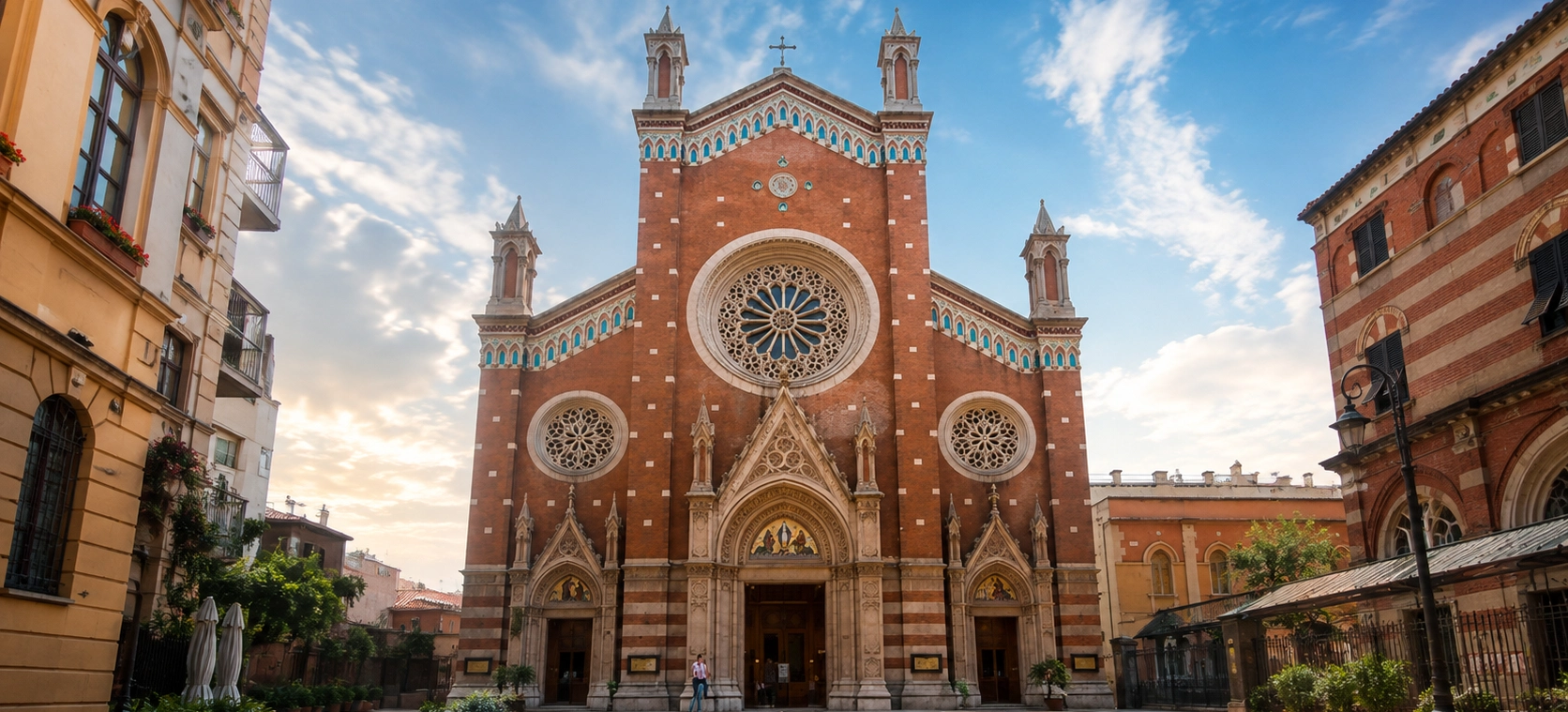
St. Anthony of Padua Church

Continue along İstiklal Avenue to visit Istanbul's best-known Catholic church and another major landmark of historic Pera.

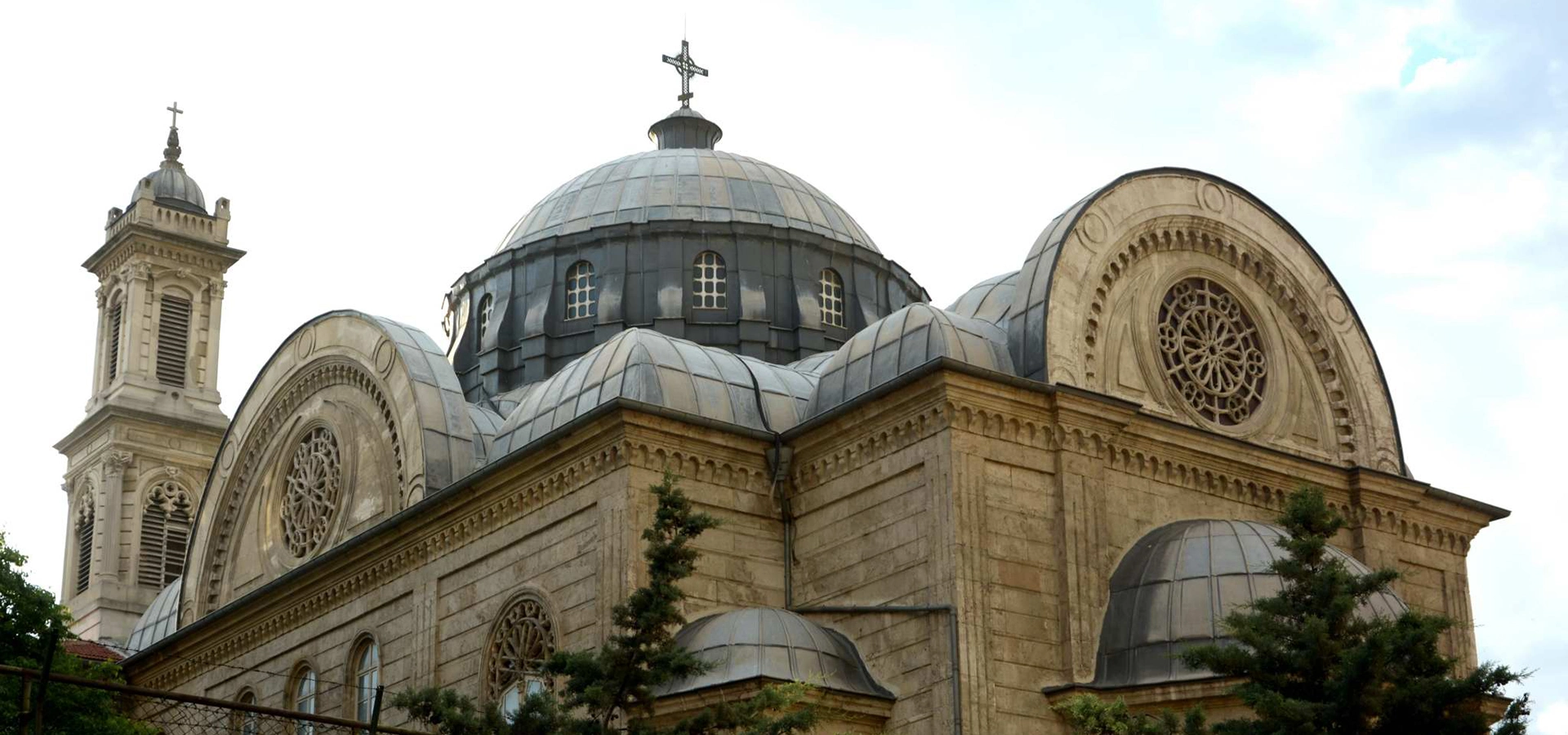
Holy Trinity Church

Walk toward Taksim to see one of Beyoğlu's great Greek Orthodox landmarks near the northern end of İstiklal Avenue.

Eating & Drinking in Çiçek Pasajı

Dining is now the dominant activity inside Çiçek Pasajı. The covered arcade contains a concentration of independently operated restaurants and meyhanes, many with tables extending into the central passage.

Typical offerings may include meze, fish and seafood, grilled dishes, salads, traditional Turkish plates and drinks. Menus and prices differ from one establishment to another.

The main reason to dine here is the historic atmosphere. The architecture, close-set tables, lighting, music and surrounding conversations create an experience very different from an ordinary restaurant elsewhere in the city.

However, Çiçek Pasajı is also a highly visible visitor destination. Before ordering, review the menu, confirm prices and ask about any cover, music or service charges that may apply at the specific establishment.

Travelers interested mainly in food quality rather than the passage atmosphere may also want to compare restaurants in the surrounding Balık Pazarı, Nevizade, Asmalımescit and Galata areas.

Meze

Shared cold and hot starters are a classic part of the meyhane-style experience.

Fish & Seafood

Seafood dishes are common in the wider Balık Pazarı and Beyoğlu dining culture.

Live Atmosphere

Music and lively table-to-table interaction can become an important part of the evening.

Check Menus First

Read the menu and prices before sitting down, especially if you are comparing several restaurants.

Ask About Extras

Clarify service, music, bread, appetizer or other possible charges before ordering if anything is unclear.

Reservations

For a specific restaurant or busy evening, contact the individual establishment directly because the passage itself does not operate one central reservation system.

Practical Tips for Visiting Çiçek Pasajı

Look at the Façade First

Do not rush straight inside. The ornate İstiklal Avenue frontage is one of the most important parts of the building.

Look Up Inside

The upper galleries, windows and roof structure reveal much more of the building's 19th-century character than the ground-floor restaurant signs.

Visit Twice if Possible

Daytime is better for architecture and photography; evening is better for the classic dining, lighting and music atmosphere.

You Do Not Have to Dine

Visitors can normally walk through the public passage without sitting at a restaurant.

Check Prices

If dining, read the menu and confirm any extra charges before ordering.

Expect Noise

Evenings can be loud and crowded, especially when musicians are performing and restaurants are full.

Watch Your Belongings

İstiklal Avenue and the surrounding market streets can become extremely crowded, so keep phones, wallets and bags secure.

Combine the Neighborhood

Çiçek Pasajı works best as one stop on a longer walk through Galatasaray, Balık Pazarı, St. Anthony Church, Tünel and Galata.

Suggested Çiçek Pasajı & Beyoğlu Walking Route

Begin at Taksim Square and enter İstiklal Avenue. This gives you the most natural introduction to the historic axis of modern Beyoğlu.

A short walk from the square brings you near Holy Trinity Church, one of the defining Greek Orthodox landmarks of the district. Continue along İstiklal while watching the historic façades above the modern storefronts.

At the Galatasaray area, stop at Çiçek Pasajı. Study the exterior first, then walk slowly through the arcade and look upward toward the galleries and roof.

Exit toward Sahne Street and Balık Pazarı. The narrow streets behind İstiklal reveal a very different side of Beyoğlu, filled with food shops, restaurants, markets and nightlife venues.

Return to İstiklal and continue toward St. Anthony of Padua Church. Its red-brick Neo-Gothic architecture creates another striking example of the cosmopolitan religious landscape of historic Pera.

Continue toward Asmalımescit and Tünel, then descend toward the Galata district. Travelers using our Galata & Karaköy guide can continue through the historic streets toward Galata Tower and the Golden Horn.

Stop 1Taksim Square
Stop 2Holy Trinity Church
Stop 3İstiklal Avenue
Stop 4Çiçek Pasajı
Stop 5Sahne Street & Balık Pazarı
Stop 6St. Anthony of Padua Church
Stop 7Asmalımescit & Tünel
Optional ExtensionGalata & Karaköy
Total TimeApproximately 3–5 hours depending on churches, food stops, shopping and photography

Çiçek Pasajı Visitor Information

Çiçek Pasajı is located in Beyoğlu on İstiklal Avenue, close to Galatasaray and the Balık Pazarı area. The historic arcade can generally be entered as part of the surrounding public pedestrian network and there is no sightseeing entrance ticket.

The passage contains independently operated restaurants and businesses. Their opening hours, menus, prices, music programs and reservation policies can differ.

The passage itself is commonly listed as accessible around the clock, but visitors specifically planning to eat should always check the operating hours of their chosen restaurant.

For architecture and photography, late morning or afternoon usually provides a calmer experience. For atmosphere, dining and music, evening is generally the most characteristic time.

District Beyoğlu, Istanbul
Address Hüseyinağa Mah., İstiklal Cad., Saitpaşa Geçidi No:176, Beyoğlu
Admission Free to walk through
Passage Access Commonly listed as open 24 hours; restaurant operating times vary individually
Best for Architecture Late morning through afternoon
Best for Atmosphere Evening
Nearest Metro Şişhane or Taksim – M2 line
Recommended Visit 15–30 minutes for architecture; 1–2 hours or more when dining
Important: individual restaurant schedules and prices can change. If you are visiting for a particular meal, live music program or reservation, confirm directly with the establishment before your visit.

Dining Advice for Çiçek Pasajı

Çiçek Pasajı's restaurants share one historic setting, but they do not operate as a single venue. Each business has its own menu, pricing, service style and reservation system.

Before choosing a table, walk through the passage, compare menus and decide whether you prefer a quieter meal or a more energetic table near live music.

If a menu item, charge or recommendation is unclear, ask before ordering. This is especially useful for seasonal seafood, large shared plates, drinks or any item priced by weight or market availability.

Read the Menu

Check the written menu and prices before sitting down if you are comparing several options.

Ask About Market Prices

For seafood or items that may be sold by weight, confirm the final pricing method before ordering.

Confirm Extra Charges

Ask about service, music, bread, appetizers or other additions if they are not clearly stated.

Choose Your Atmosphere

Some tables can be much louder than others depending on music and the concentration of diners.

Keep the Receipt

For larger meals, keeping the itemized receipt makes it easier to review what was ordered.

Compare Beyoğlu

If your priority is cuisine rather than the historic setting, compare nearby restaurants before deciding where to eat.

Best Time to Visit Çiçek Pasajı

Morning

Best for travelers who want to see the passage with fewer diners and concentrate on architecture.

Afternoon

A good compromise for combining photography, shopping on İstiklal and a lunch stop.

Early Evening

One of the best periods to experience the passage as restaurant tables fill and the lights begin to define the interior.

Night

Expect the liveliest atmosphere, louder music and heavier crowds in the surrounding Beyoğlu entertainment district.

Weekdays

Often easier for visitors who want a slightly less crowded experience than Friday and Saturday evenings.

Rainy Weather

The covered passage is a useful historic stop during wet weather, although İstiklal and the surrounding route remain largely outdoors.

How Much Time Do You Need at Çiçek Pasajı?

10–15 Minutes

Enough for a quick walk through the passage while exploring İstiklal Avenue.

20–30 Minutes

Better for studying the façade, photographing the interior and reading the architectural details more carefully.

1–2 Hours

Allow this if you plan to sit for lunch, meze, drinks or an early-evening meal.

3–5 Hours

Ideal for a complete Beyoğlu route including Taksim, İstiklal Avenue, Balık Pazarı, historic churches, Tünel and Galata.

Photography at Çiçek Pasajı

Çiçek Pasajı is one of the most photogenic historic interiors on İstiklal Avenue. The visual strength comes from the contrast between 19th-century architecture and the dense modern life of restaurants and diners.

The first important photograph is outside. Stand back on İstiklal Avenue when crowds allow and frame the main façade and entrance. Because the avenue is busy, be careful not to obstruct pedestrian flow while composing a shot.

Inside, wide vertical compositions work well because they can include tables, upper galleries, windows, lighting and the roof in a single frame.

Evening produces the most atmospheric photographs, but daytime generally makes architectural details easier to see.

Remember that the restaurants are active businesses. Ask permission before photographing diners, waiters or musicians at close range.

Main Façade

Photograph the entrance from İstiklal Avenue to capture the passage in its wider Pera streetscape.

Central Perspective

The long axis of the covered arcade creates strong symmetrical compositions.

Look Up

Upper galleries and roof details give photographs a stronger sense of the building's historic scale.

Evening Lights

After dark, warm interior lighting and restaurant activity create the classic modern image of Çiçek Pasajı.

Street Context

Include İstiklal Avenue, Sahne Street or nearby market streets to show how the passage fits into Beyoğlu.

Respect Diners

Avoid photographing people at close range without permission or blocking restaurant service routes.

Accessibility at Çiçek Pasajı

Çiçek Pasajı is easier to approach than many steep historic attractions because its main entrance opens directly from pedestrian İstiklal Avenue. However, access conditions are shaped by crowds, restaurant furniture and the surrounding historic streets.

The ground-floor passage itself is relatively short, but tables can reduce clear circulation space during busy dining periods.

Travelers using wheelchairs, walking aids or strollers may find a quieter daytime visit more comfortable than the evening peak.

The wider Beyoğlu route can involve slopes, uneven paving and crowded pedestrian areas, especially when continuing toward Galata or the side streets behind İstiklal.

Pedestrian Avenue

The main entrance is reached from İstiklal Avenue, one of Istanbul's principal pedestrian streets.

Short Interior

The passage itself can be crossed quickly without a long walking distance.

Tables & Crowds

Restaurant seating and busy periods may narrow the clear route through the arcade.

Historic Surfaces

Entrances and nearby side streets may contain thresholds, paving changes or uneven sections.

Choose Quieter Hours

Daytime is generally easier for visitors who need more space and less congestion.

Allow Extra Time

Heavy pedestrian traffic on İstiklal can slow movement even when the walking distance itself is short.

How to Get to Çiçek Pasajı Istanbul

Çiçek Pasajı stands near the middle section of İstiklal Avenue in Beyoğlu. Because private vehicles do not normally travel along most of the pedestrian avenue, public transport plus walking is usually the easiest approach.

From Taksim

Take the M2 metro to Taksim, enter İstiklal Avenue and walk toward Galatasaray. Çiçek Pasajı is roughly a 10–15 minute walk depending on crowds.

From Şişhane

Take the M2 metro to Şişhane and walk uphill along İstiklal Avenue toward Galatasaray. This is another convenient approach.

Nostalgic Tram

The historic T2 tram runs along İstiklal Avenue between Taksim and Tünel and provides a scenic connection through Beyoğlu.

From Sultanahmet

Use the T1 tram toward Kabataş, then take the F1 funicular to Taksim and continue on foot along İstiklal Avenue.

From Karaköy

Use the historic F2 Tünel funicular from Karaköy to Tünel Square, then walk along İstiklal Avenue toward Galatasaray.

From Galata

Walk uphill toward Tünel and continue along İstiklal Avenue. The route is straightforward but can be crowded.

Orientation tip: Çiçek Pasajı is close to Galatasaray on İstiklal Avenue. Look for its ornate entrance beside the streets leading toward Sahne Street and the Balık Pazarı area.

Places to Visit Near Çiçek Pasajı

Çiçek Pasajı occupies one of the best locations in Istanbul for combining architecture, religious heritage, food, museums, shopping and historic neighborhoods. Many important Beyoğlu sights are within walking distance.

Use our complete Istanbul visitor guide to continue planning your route across the city.

Balık Pazarı

Explore the lively food and restaurant streets immediately behind the passage around Sahne Street.

Galatasaray

Continue only a short distance along İstiklal to the historic Galatasaray area and the avenue's central crossroads.

St. Anthony of Padua Church

Visit Istanbul's best-known Catholic church, a major Neo-Gothic landmark of İstiklal Avenue.

Holy Trinity Church

Walk toward Taksim to see one of Beyoğlu's most important Greek Orthodox churches.

Pera Museum

Continue toward Tepebaşı for Orientalist painting, Anatolian weights and measures, Kütahya ceramics and temporary exhibitions.

Tünel & Asmalımescit

Explore another historic restaurant and entertainment district near the southern end of İstiklal Avenue.

Galata & Karaköy

Continue downhill through the historic Galata quarter toward the Golden Horn, Karaköy and the waterfront.

Explore More of Istanbul

Discover more palaces, churches, mosques, bazaars, cisterns, museums and historic neighborhoods across Istanbul.

Frequently Asked Questions About Çiçek Pasajı Istanbul

What is Çiçek Pasajı?

Çiçek Pasajı is a historic covered arcade on İstiklal Avenue in Beyoğlu, famous for its 19th-century architecture, restaurants, meyhanes and connection with the former Naum Theatre.

Where is Çiçek Pasajı in Istanbul?

It is on İstiklal Avenue in the Hüseyinağa area of Beyoğlu, close to Galatasaray, Sahne Street and Balık Pazarı.

When was Çiçek Pasajı built?

The present Cité de Péra complex was completed in 1876 after the Great Pera Fire destroyed the Naum Theatre that had occupied the site.

Who built Çiçek Pasajı?

Greek banker Hristaki Zografos Efendi commissioned the post-fire development, which is associated with architect Kleanthis Zannos.

What was Çiçek Pasajı originally called?

The building was known as Cité de Péra and the passage as Hristaki Pasajı. It was later also called Sait Paşa Geçidi.

Why is it called Çiçek Pasajı?

The name means “Flower Passage” and recalls the flower sellers who gathered in the arcade during the first half of the 20th century.

Are there still flower shops inside Çiçek Pasajı?

The passage is no longer primarily a flower market. Its modern identity is dominated by restaurants and meyhanes, while the historic flower trade survives mainly in the name.

What was Naum Theatre?

Naum Theatre was one of 19th-century Ottoman Istanbul's important opera and theatre venues. It stood on the site before being destroyed in the Great Pera Fire of 1870.

Did Ottoman sultans visit Naum Theatre?

Historical accounts associate the theatre with visits by members of the Ottoman dynasty during the Tanzimat period.

What happened to Çiçek Pasajı in 1978?

Part of the neglected structure collapsed on 10 May 1978. The passage remained closed for years before restoration and reopening in 1988.

Was Çiçek Pasajı restored?

Yes. It reopened after major restoration in 1988, and further conservation and renewal work took place in 2005.

Is Çiçek Pasajı worth visiting?

Yes, especially for travelers interested in Beyoğlu history, 19th-century architecture, historic restaurants, meyhane culture and the changing social life of İstiklal Avenue.

Is there an entrance fee for Çiçek Pasajı?

No. Walking through the historic passage is free. Dining and drinks are charged by the individual restaurants.

Is Çiçek Pasajı open all day?

The passage is commonly listed as open 24 hours, but individual restaurants and businesses determine their own operating schedules.

What is the best time to visit Çiçek Pasajı?

Visit in daylight for architecture and photography. Come in the evening for the liveliest restaurant, music and nightlife atmosphere.

How long should I spend at Çiçek Pasajı?

A quick architectural visit can take 15–30 minutes. Allow one to two hours or more if you plan to eat or drink.

Can I walk through Çiçek Pasajı without eating?

Yes. Visitors can normally pass through the arcade without sitting at a restaurant.

What can I eat in Çiçek Pasajı?

Menus vary, but meze, Turkish dishes, grilled foods, fish and seafood are common in the passage and surrounding Beyoğlu dining district.

Is there live music in Çiçek Pasajı?

Live and roaming musicians are associated with the modern atmosphere of the passage, especially in the evening, but programs can vary between restaurants and dates.

What metro station is closest to Çiçek Pasajı?

Both Şişhane and Taksim stations on the M2 metro provide convenient approaches along İstiklal Avenue.

Can I take the nostalgic tram to Çiçek Pasajı?

Yes. The T2 nostalgic tram travels along İstiklal Avenue between Taksim and Tünel and passes through the Galatasaray section close to the passage.

How far is Çiçek Pasajı from Taksim Square?

It is roughly a 10–15 minute walk along İstiklal Avenue depending on pedestrian crowds and your pace.

Can I walk from Çiçek Pasajı to Galata Tower?

Yes. Continue toward Tünel and then descend into Galata. The route is an excellent extension of a Beyoğlu walking tour.

What is Balık Pazarı?

Balık Pazarı is the historic food and market area in the streets directly behind İstiklal Avenue near Çiçek Pasajı, known for food shops, restaurants and lively pedestrian streets.

Can I visit St. Anthony of Padua Church from Çiçek Pasajı?

Yes. St. Anthony of Padua Church is only a short walk along İstiklal Avenue and combines very easily with the passage.

Is Çiçek Pasajı accessible for wheelchairs?

The main passage is short and approached from pedestrian İstiklal Avenue, but crowds, restaurant tables, thresholds and surrounding historic street conditions may make movement more difficult at busy times.

Can I take photographs inside Çiçek Pasajı?

Yes in the public areas, but avoid obstructing restaurant service and ask permission before taking close photographs of diners, staff or musicians.

Is Çiçek Pasajı safe?

It is in one of Istanbul's busiest pedestrian districts. Use normal big-city precautions and keep personal belongings secure in dense crowds.

What should I combine with Çiçek Pasajı?

Taksim Square, Holy Trinity Church, Balık Pazarı, St. Anthony of Padua Church, Pera Museum, Tünel, Galata and Karaköy form an excellent continuous route through Beyoğlu.

Responsible Visiting at Çiçek Pasajı

Keep the Passage Moving

Do not stop in narrow circulation areas for long periods when waiters, diners and other pedestrians need to pass.

Respect Diners

Avoid close photography of tables and private conversations unless people have clearly agreed.

Respect Musicians

Give performers working space and follow the customs of the venue if you choose to interact or request music.

Protect Historic Fabric

Do not climb on railings, decorative elements, stairs or architectural features simply for photographs.

Choose Businesses Carefully

Read menus, understand prices and support establishments that communicate clearly and treat guests professionally.

Explore Beyond the Passage

Spend time in the surrounding streets to understand Çiçek Pasajı as part of the wider historical landscape of Beyoğlu rather than an isolated attraction.

Private Çiçek Pasajı & Historic Beyoğlu Experiences

Connect Çiçek Pasajı with Taksim, İstiklal Avenue, Holy Trinity Church, St. Anthony of Padua Church, Balık Pazarı, Pera, Tünel, Galata and Karaköy through a private route shaped around your interests and without compulsory shopping stops.

Custom Historic Pera & Beyoğlu Experience

Choose a private route focused on 19th-century Istanbul, late Ottoman architecture, religious heritage, passages, European Pera, food culture, city stories and the extraordinary social history of İstiklal Avenue.

Continue Exploring Beyoğlu

Use Çiçek Pasajı as the center of a wider journey through historic churches, late Ottoman architecture, İstiklal Avenue, Galata, Karaköy and the multicultural heritage of old Pera.

Private Istanbul Tours

Build a private day around the parts of Istanbul that interest you most, from Byzantine churches and Ottoman mosques to historic neighborhoods, markets, food culture, Bosphorus viewpoints and lesser-visited heritage sites.