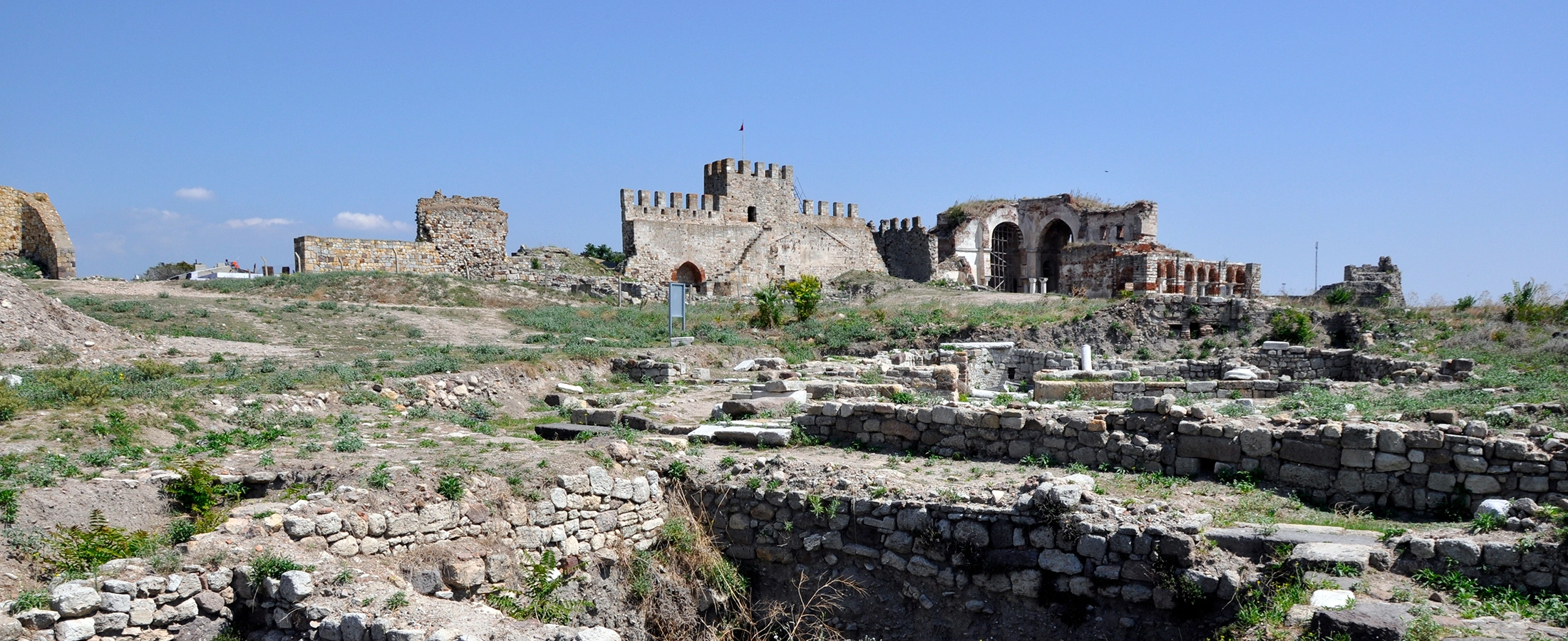
Private Ancient Ainos & Enez Experience
Ask us about a tailor-made journey through Ancient Ainos, Enez Castle, Byzantine heritage, Ottoman history, the lost harbor landscape, Meriç Delta and the North Aegean coast.
Request a Custom Tour




At the southwestern edge of Edirne Province, close to the modern border between Türkiye and Greece, stands one of Thrace's most fascinating archaeological landscapes: Ancient Ainos.
Today the town is known as Enez, but for thousands of years its position near the mouth of the Hebros – modern Meriç River connected the interior of the Balkans with the North Aegean Sea.
That geography transformed Ainos into a port, commercial center, military stronghold and cultural meeting point.
Ancient ships once approached harbors beside the settlement, merchants moved goods between the Aegean and inland Thrace, and the city produced remarkable silver coinage decorated with Hermes and a goat.
Yet the landscape visible today is very different from the ancient coastline.
Over centuries, sediment carried by the Meriç gradually altered the delta, filled former waterways and pushed the sea away from the ancient urban center.
As a result, visitors standing beside Enez Castle are looking at a place that once functioned as a maritime city, even though the open sea is now several kilometers away.
Ainos also possesses an unusually long historical sequence.
Archaeological and historical evidence connects the settlement with Thracian, Aeolian Greek, Persian, Classical Greek, Macedonian, Hellenistic, Roman, Byzantine, Genoese and Ottoman history.
The archaeological remains are spread across modern Enez rather than concentrated inside a single monumental ruin field.
The ancient acropolis survives beneath and around Enez Castle, while excavations elsewhere have revealed necropolises, churches, chapels, Roman remains, mosaics, pottery, glass, coins and traces of the city's ancient harbor landscape.
For travelers following our complete Edirne visitor guide, Ainos reveals an entirely different side of the province: not the monumental Ottoman capital of Edirne city, but a North Aegean archaeological landscape shaped by sea, river, trade and changing empires.
Ainos controlled an important position where the Meriç river system met the northern Aegean world.
The archaeological landscape preserves evidence extending from ancient settlement through Greek, Roman, Byzantine and Ottoman periods.
The medieval fortress occupies the elevated area that formed the acropolis of ancient Ainos.
The ancient coastline changed dramatically as Meriç River sediments accumulated around the delta.
Essential information for understanding the ancient city beneath modern Enez.
Enez, southwestern Edirne Province, Türkiye.
Open on Google MapsAinos, also rendered Aenus in Latinized historical literature.
A major North Aegean port close to the mouth of the ancient Hebros – today's Meriç River.
The ancient acropolis is associated with the elevated area occupied today by Enez Castle.
The name Ainos appears in ancient literary tradition including Homer's Iliad.
Ancient Ainos possessed important harbor facilities connected with Aegean and river trade.
Classical Ainos issued beautiful silver coins frequently depicting Hermes and a goat.
Churches, chapels, fortifications and other remains demonstrate the importance of medieval Ainos.
Enez entered Ottoman rule in 1456 during the reign of Mehmed II.
Systematic archaeological research at Ainos began in the 1970s and continues through modern excavation and survey projects.
The archaeological city is surrounded by lakes, wetlands and the wider Meriç Delta environment.
Allow at least 2–3 hours for the main archaeological and castle area; half a day is better for wider Enez.
Ainos occupied one of the most strategically valuable geographical positions on the northern Aegean coast.
Ancient cities rarely become important for only one reason.
Ainos possessed several advantages simultaneously.
It stood close to the mouth of the Hebros River, which provided a natural corridor deep into Thrace.
At the same time, its coastal position connected the settlement with the Aegean islands, western Anatolia, the Dardanelles and the wider Mediterranean trading world.
The fertile hinterland surrounding the Ergene and Meriç systems supplied agricultural resources, while protected harbor environments made Ainos valuable to merchants and military powers.
The city therefore operated as a meeting point between maritime Aegean culture and inland Balkan geography.
Its political history reflects this strategic importance.
Persians, Athenians, Macedonians, Hellenistic kingdoms, Romans, Byzantines, Genoese rulers and Ottomans all understood the value of controlling this corner of Thrace.
Ainos is especially important today because these historical layers remain visible within a living modern town.
The medieval castle occupies the ancient acropolis, a Byzantine church became an Ottoman mosque, ancient architectural blocks were reused in later walls, and archaeological discoveries continue to reveal older landscapes underneath modern Enez.
To understand Ainos, first imagine a landscape very different from modern Enez.
The ancient settlement developed on a limestone elevation overlooking the coastal and river environment.
Below it lay waterways, wetlands, harbor basins and access toward the mouth of the Hebros.
This position allowed Ainos to control movement in several directions.
The Hebros-Meriç river system provided access toward the interior of Thrace and the Balkans.
The North Aegean opened maritime routes toward the islands and the wider Mediterranean world.
Coastal and land connections continued toward the Gallipoli Peninsula, Dardanelles and Anatolia.
The Thracian coast continued toward modern northeastern Greece and other ancient Aegean settlements.
Ancient descriptions and modern archaeological research indicate that Ainos possessed two important harbor zones.
These were fundamental to the city's prosperity.
But rivers constantly reshape deltas.
Sediments carried by the Meriç gradually accumulated around its lower course, transforming former bays and coastal channels into lakes, wetlands and dry land.
The ancient city that once stood directly beside an active maritime environment is therefore now several kilometers inland from the modern shoreline.
The earliest history of Ainos is more complicated than a simple foundation date.
Ancient literary traditions preserve several different explanations for the city's origins.
Some sources associate Ainos with Aeolian Greeks and colonists connected with Mytilene on Lesbos and Kyme in western Anatolia.
Herodotus described Ainos within an Aeolian cultural context, and archaeological discoveries such as Aeolic-style architectural capitals add an important material dimension to that tradition.
Other ancient stories connect the city with earlier Thracian settlement.
The alternative name Poltyobria or Poltyobria was associated with the Thracian king Poltys.
The element bria appears in a number of Thracian place names and is generally interpreted in relation to a settlement or town.
Another tradition connects Ainos with the Trojan hero Aeneas.
This association later became one of the most attractive legendary explanations for travelers, especially because Aeneas' mythical journey moved through the northern Aegean and Thracian world.
One reason Ainos attracts particular attention is the antiquity of its literary tradition.
The name of the city appears in Homer's Iliad, placing Ainos within the geographical imagination of the ancient epic world.
This does not provide a modern archaeological foundation date.
It does, however, demonstrate that the name belonged to an extremely old cultural landscape remembered in Greek literary tradition.
Ancient authors writing in later centuries also discussed Ainos, its Thracian surroundings and the traditions concerning its foundation.
For visitors, this means Ainos should not be approached merely as a Roman or Byzantine ruin.
Its cultural memory reaches into the archaic world of Greek epic, Thracian kings and early Aegean colonization.
By the late Archaic and Classical periods, Ainos had become one of the significant Greek-speaking communities along the Thracian coast.
Its location made political independence difficult.
Any empire controlling Thrace naturally took an interest in a harbor positioned at the mouth of one of the region's most important rivers.
During the expansion of the Achaemenid Persian Empire, Thrace entered Persian control.
Ancient historical traditions connect the region with the campaigns of Darius I and later Xerxes I.
After the great Persian invasions of Greece, the political balance changed again.
Ainos became associated with the Delian League led by Athens.
The relationship was not merely political.
Archaeology has revealed substantial quantities of Attic pottery, including red-figure ceramics, showing close participation in the artistic and commercial networks of the Classical Aegean.
Ainos therefore occupied a fascinating cultural position: geographically Thracian, politically connected with wider Greek alliances, and economically integrated into Aegean maritime trade.
Some of the most beautiful surviving evidence for Classical Ainos does not remain in the ground at all.
It survives in museums and collections around the world in the form of silver coinage struck by the city.
Ainos issued important denominations including tetradrachms.
A particularly recognizable design shows the head of Hermes, often wearing his characteristic petasos, on the obverse.
The reverse commonly depicts a standing goat together with the city's abbreviated ethnic inscription.
The god became one of the most distinctive divine figures associated with Ainos coinage and local religious tradition.
A standing goat appears repeatedly on Ainos silver and bronze issues across different periods.
Large silver denominations demonstrate the city's participation in sophisticated regional monetary networks.
Coins acted as miniature ambassadors for Ainos, carrying its name and religious imagery throughout the ancient trading world.
The artistic quality of this coinage is one of the strongest indications that Classical Ainos was far more prosperous and culturally sophisticated than the surviving ruins alone might suggest.
The repeated presence of Hermes on Ainos coinage was not accidental.
Ancient literary tradition connected the city with a special cult image of Hermes.
Stories concerning the sacred image became part of the religious mythology surrounding Ainos.
Hermes was an especially appropriate deity for a port city.
Across Greek religion he was associated with movement, roads, boundaries, exchange, travelers and communication.
These themes matched the identity of Ainos extraordinarily well.
The city itself stood at a boundary: between river and sea, Thrace and the Aegean, Balkans and Mediterranean, land routes and maritime routes.
For visitors, the Hermes imagery preserved on ancient coins provides a rare opportunity to understand how inhabitants of Ainos may have represented their own city to the wider ancient world.
During the 4th century BC, the political independence of the Thracian coastal cities was increasingly affected by the expansion of Macedonia.
Philip II extended Macedonian power into Thrace, reshaping the region before the campaigns of his son Alexander the Great.
After Alexander's death, his enormous empire fragmented.
Ainos and the wider northern Aegean became part of the competitive Hellenistic world in which Seleucid, Ptolemaic and other regional powers struggled for territory and maritime influence.
Roman expansion again changed the political map.
By the 2nd century BC, Rome had become the dominant force in the northern Aegean and Thrace.
For Ainos, Roman rule did not destroy the city's geographical advantages.
Its harbor, river connections and access to land routes continued to make the settlement useful.
Roman-period archaeological material discovered around Enez includes glass vessels, lamps, tombs, architectural remains and occupation evidence.
The city also belonged to a transport world connected with the great road systems of Roman Thrace, including routes linking with the Via Egnatia corridor.
Ainos remained important long after the end of the Classical world.
During the Byzantine period, the city developed into a strongly fortified regional center.
Its walls protected the elevated settlement, while the surrounding maritime landscape continued to connect it with the northern Aegean islands.
Historical tradition records major repair or rebuilding of the fortress during the reign of Emperor Justinian I in the 6th century.
Archaeology reveals an especially rich Christian landscape.
Researchers have identified churches, chapels, burials, mosaics and ecclesiastical architecture both inside and outside the castle.
In the medieval period, Ainos became associated politically with territories including Imbros – modern Gökçeada – and Samothrace.
The dominant monument from this Christian landscape is the structure traditionally known as Enez Hagia Sophia, today Fatih Mosque.
But it was only one part of a much larger Christian city.
During the final centuries of Byzantium, politics across the Aegean became extraordinarily complex.
Byzantine emperors, Ottoman rulers, Venetians, Genoese families and local dynasts competed for ports, islands and trade routes.
Ainos eventually came under rulers connected with the Gattilusio family, a Genoese dynasty that established itself in several strategically important Aegean territories.
Their power was built partly on maritime commerce and partly on the fragile political environment of the late Byzantine world.
For Ainos, the medieval port, salt resources and control of nearby islands made the city particularly valuable.
The Genoese period represents one of the final chapters of independent Christian rule at Enez before the arrival of the Ottomans.
Only three years after the conquest of Constantinople, Ottoman expansion reached Ainos.
In 1456, during the reign of Sultan Mehmed II – Mehmed the Conqueror, the town was incorporated into the Ottoman Empire.
Ottoman historical tradition closely associates the conquest with Has Yunus Bey.
The transfer of power created immediate changes in the religious landscape.
The major Byzantine church inside the castle was converted into a mosque and later became known as Fatih Mosque.
But Ottoman Enez did not cease to be a port and commercial settlement.
Archival research shows that harbor activity, fisheries and salt production continued to contribute to local economic life.
Over later centuries, however, changes in trade routes, the silting of the coastal environment and wider political transformations gradually reduced the extraordinary maritime importance that Ainos had possessed in antiquity and the Middle Ages.
Modern archaeology has dramatically transformed what we know about Ainos.
Systematic excavation began in the early 1970s under Prof. Dr. Afif Erzen.
Later campaigns expanded research across the ancient acropolis, castle, necropolises and surrounding settlement areas.
From the 1990s, long-running investigations directed by Prof. Dr. Sait Başaran revealed major new evidence for the history of the city.
Research has since continued under a new generation of archaeologists, with excavation and archaeological survey projects investigating Ainos and the wider Enez district.
This is important for visitors because Ainos is not a finished archaeological story.
The ancient city continues to produce new evidence.
Excavations around the castle investigate occupation levels beneath the medieval fortress.
Different cemetery areas preserve evidence for changing burial customs across many centuries.
Byzantine religious buildings demonstrate the importance of medieval Ainos.
Streets, structures and occupation layers help reconstruct life beyond the city's major monuments.
Pottery, glass, coins and small objects reveal trade, chronology and everyday life.
Geomorphological investigation helps archaeologists reconstruct Ainos's vanished coastline and harbors.
The most immediately impressive monument in Enez is Enez Castle.
It occupies the high ground associated with the ancient acropolis of Ainos.
This elevated limestone position offered commanding views over the harbor landscape, river approaches and surrounding lowlands.
The precise first construction date of the surviving fortifications is difficult to determine.
The walls contain stone, brick and reused ancient architectural elements, showing repeated rebuilding across different historical periods.
Byzantine sources associate major restoration with Justinian I, while later medieval rebuilding continued to modify the fortress.
The castle extends approximately northwest to southeast, with its principal entrance on the northeastern side.
Historically, additional walls descended toward the harbor in order to protect maritime access.
Standing inside the castle today, visitors encounter an extraordinary historical overlap: ancient acropolis, medieval walls, Byzantine churches, Ottoman modifications and modern archaeological trenches.
Inside the castle stands the building most closely associated with medieval Enez: Enez Hagia Sophia, today known as Fatih Mosque.
The surviving church has been dated differently by scholars, with proposals ranging across the Middle and Late Byzantine periods.
Its architecture combines a cross-shaped central arrangement, narthex spaces, apse, side chambers and a prominent central dome.
The building was altered and repaired repeatedly during its long history.
After the Ottoman conquest in 1456, the church was converted into a mosque.
Islamic architectural elements including a mihrab, minbar and minaret were incorporated into the former Byzantine church.
Later layers of decoration were added, while traces of earlier Byzantine painting survived beneath portions of the plaster.
Earthquake damage, particularly in the 20th century, eventually left the monument in a severely ruined condition.
Following a major restoration, the historic building was reopened for worship in December 2021.
Archaeological remains inside the fortress include a smaller church associated with surviving mosaic pavement.
A cave within the castle landscape was adapted for Christian religious use during the medieval period.
A relief depicting Pan and dancing nymphs discovered in the cave was transferred to the Edirne Museum for protection.
A marble representation associated with the Thracian horseman tradition is incorporated near the monumental castle entrance.
Ancient stone blocks reused in medieval walls provide clues to monuments that once stood elsewhere in Ainos.
Later architectural alterations demonstrate continued use of the castle after the Ottoman conquest.
These details are easy to overlook.
But together they demonstrate why Enez Castle should be read as an archaeological palimpsest rather than a fortress belonging to only one historical period.
One of the most important excavation areas outside the castle lies at Kral Kızı, southeast of modern Enez.
The site occupies the western side of Taşaltı Lake, an area connected with the ancient eastern harbor landscape.
Excavations uncovered a remarkable Byzantine basilica.
Its plan is unusual.
The church includes a principal basilical arrangement with three apses and a spatial organization that, through secondary corridors beside the main nave system, can create the appearance of a five-aisled composition.
Archaeological evidence indicates several building phases.
The dating of the monument has been debated, with interpretations ranging from earlier Byzantine construction to major activity in the 12th century.
Beneath and around the church, archaeologists discovered evidence belonging to earlier periods, including Roman remains and burials.
The site perfectly represents Ainos's archaeological character: a Byzantine religious monument sitting on top of a much older urban landscape.
Some of the richest archaeological information from Ainos comes from its cemetery areas.
Excavations have documented burials from multiple periods, including Archaic, Classical, Hellenistic, Roman and Byzantine phases.
Different parts of the ancient landscape were used for burial at different times.
Important excavation names include areas such as Su Terazisi, Çakıllık and Taşaltı.
Stone burial containers formed part of the diverse funerary landscape surrounding Ainos.
Stone-lined graves provide evidence for changing burial practices and social traditions.
Terracotta roofing materials could be reused to create economical but carefully constructed burials.
Cremated remains placed in containers represent another funerary tradition documented in the necropolis areas.
Pottery, glass, jewelry and personal objects help archaeologists date burials and reconstruct ancient identity.
Attic pottery found in funerary contexts reveals Ainos's commercial connections with the wider Greek world.
The necropolises remind visitors that the spectacular castle represents only a small part of ancient Ainos.
The true archaeological city extends far beyond the fortress walls.
Among the most important architectural discoveries associated with Ainos are Aeolic-style column capitals.
Aeolic capitals belong to an early architectural tradition characterized by large upward-curving volutes.
Examples are comparatively rare, which makes the Ainos material especially valuable for understanding early Greek monumental architecture.
Research connects the capitals with a temple structure from the early history of the city.
The original monument itself is no longer available to visitors as a complete standing temple.
Several important architectural pieces were instead preserved and transferred to the Edirne Archaeology Museum.
Archaeologists have recovered significant quantities of Greek painted pottery from Ainos.
Especially important are Attic red-figure vessels dating mainly from the late 6th and 5th centuries BC.
Many were imported from Athens and Attica.
Their presence demonstrates that Classical Ainos participated directly in the commercial and artistic networks of the Aegean.
These vessels were not simply containers.
They carried mythological imagery, banqueting scenes, athletic subjects and sophisticated artistic styles developed in the workshops of Classical Athens.
When fragments of the same pottery appear in houses, occupation deposits and graves at Ainos, they help archaeologists reconstruct trade, taste, social identity and ritual behavior.
Some of the best evidence for daily life in Ainos comes from objects small enough to fit in one hand.
Excavations have produced glass vessels, beads, rings, ceramic lamps, coins, pottery, metal objects and architectural fragments.
Roman glass from areas including Su Terazisi and Kral Kızı has even been studied scientifically to understand its chemical composition and deterioration.
Such research may sound highly technical, but it helps archaeologists answer fundamental questions:
A visitor searching for a monumental ancient quay beside Enez Castle may initially be disappointed.
But the absence of the original harbor from the modern coastline is actually one of the most fascinating parts of the Ainos story.
Ancient Ainos developed beside major natural harbor environments.
One lay toward the east and another toward the west of the settlement.
They connected the city simultaneously with the Aegean Sea and the Hebros river system.
Over many centuries, however, the Meriç carried enormous quantities of sediment downstream.
The delta expanded.
Bays became shallower.
Channels moved.
Former marine environments gradually transformed into lagoons, lakes, marshes and agricultural land.
Modern Enez therefore preserves what might be called a fossil maritime landscape.
The city remained in place, while the coastline moved away.
Walk through the fortress occupying the elevated acropolis of ancient Ainos.
See the restored Enez Hagia Sophia, a Byzantine church transformed into an Ottoman mosque.
Search the fortress walls for reused blocks and architectural fragments belonging to earlier monuments.
Discover the cave associated with medieval religious use and the famous relief once depicting Pan and nymphs.
Look across the lowlands to understand the relationship between the city, ancient harbors and Meriç Delta.
Understand the location of one of the most important Byzantine excavation areas outside the castle.
Remember that major cemeteries spread well beyond the fortified acropolis.
Walk through the living town built directly over and beside thousands of years of settlement.
Use the surrounding lakes and delta landscape to reconstruct the vanished geography of ancient Ainos.
Continue to the modern shoreline to complete the story from ancient harbor city to today's coastal Enez.
Look for pottery, masonry transitions and reused architectural blocks rather than expecting only standing temples.
Important sculptures, architectural pieces and finds from Ainos have been transferred to Edirne for protection and display.
Ainos is most rewarding when visitors stop looking for a single famous monument and instead read the entire landscape.
Enough only for a quick look around Enez Castle and the exterior of Fatih Mosque.
A reasonable introduction to the castle, Byzantine-Ottoman monument and surrounding archaeological landscape.
Recommended if you want time to examine the walls, views, archaeological details and understand the lost harbor geography.
Excellent for combining ancient Ainos with additional archaeological areas and the wider town of Enez.
Ideal for combining archaeology with the Meriç Delta, lakes, modern harbor, beaches and local food.
Worth considering in summer if you want a relaxed combination of archaeological exploration, coast and nature.
One of the best seasons for archaeology, mild weather, green landscapes and birdlife around the wetlands.
Warm weather makes it possible to combine Ainos with the North Aegean coast without the strongest summer heat.
Excellent for a combined history-and-beach trip, but midday archaeological walking can become very hot.
Comfortable temperatures and quieter conditions make September and October attractive for cultural touring.
Best for detailed exploration of the castle before summer temperatures become uncomfortable.
Excellent light across the walls, lakes and delta makes the castle especially atmospheric for photography.
Ancient Ainos differs from archaeological parks such as Ephesus or Aphrodisias.
The remains are distributed across and around the modern town of Enez rather than enclosed within one large ticketed excavation area.
Enez lies far southwest of central Edirne, close to the Meriç Delta, North Aegean coast and Greek border.
The journey is therefore considerably longer than visiting monuments within Edirne city.
Enez is roughly 170–180 km from central Edirne depending on the route. Allow enough time for a substantial regional journey.
Keşan is the principal transport center used by many travelers approaching Enez from eastern Thrace.
A private vehicle offers the greatest flexibility for combining Enez Castle, archaeological areas, wetlands and coastal stops.
Bus and minibus connections operate through regional centers such as Keşan, but schedules should be checked locally.
The main castle and acropolis area lies within the modern town and is straightforward to locate.
A private vehicle and guide are especially useful because the archaeology is dispersed and the ancient shoreline requires explanation.
Wear comfortable shoes suitable for stone surfaces, slopes and archaeological terrain.
Some archaeological features are much easier to understand when you already know what you are looking for.
Enez can become hot and dry during summer afternoons, especially around exposed castle areas.
Excavation seasons may temporarily alter access to particular archaeological areas.
Remember that archaeological Ainos and modern Enez occupy the same landscape.
Carry water during warm-weather exploration, particularly if combining several outdoor sites.
Ainos can be especially interesting for families because the site encourages imagination.
Instead of walking through rows of completely excavated columns, children can learn to reconstruct an ancient city from walls, pottery, landscape, coins and geography.
Ask children to look for reused blocks incorporated into the medieval fortress walls.
Stand above the lowlands and ask where they think ancient ships might once have sailed.
The distinctive images on Ainos coins provide an easy introduction to ancient money and city symbols.
Fortifications make the archaeological visit visually engaging even for children less interested in ancient chronology.
Ainos offers very different photographic opportunities from a conventional classical ruin.
Use the massive fortifications to create dramatic compositions against the Thracian sky.
The restored Byzantine-Ottoman monument is one of the most distinctive architectural subjects in Enez.
Close-up photography can reveal inscriptions, carved blocks and older architectural fragments reused in later masonry.
Wide views help explain how dramatically the coastline has changed since antiquity.
Late-afternoon light emphasizes the textures of stone fortifications and the low wetland landscape.
Pottery, wall transitions, brickwork and construction techniques often create stronger archaeological photographs than wide views alone.
Few archaeological cities in Türkiye are surrounded by a landscape as important to understanding their history as Enez.
The Meriç Delta, lagoons, lakes, wetlands and North Aegean shoreline are not simply beautiful additions to the visit.
They explain why Ainos existed.
Wetland environments around Enez support rich birdlife, while the lower Meriç remains one of Türkiye's great river landscapes.
Nearby Gala Lake National Park adds another major nature destination to the wider region.
Travelers interested in both archaeology and nature can therefore create an unusually varied itinerary: ancient walls in the morning, wetland landscapes in the afternoon, and the Aegean coast toward sunset.
Enez's geography continues to shape its food culture.
Its position beside the North Aegean, lagoons and river-delta environment makes seafood and fish a natural part of a visit.
Local restaurants frequently reflect Enez's continuing relationship with the sea and fishing.
Depending on season and availability, coastal dishes provide a natural continuation of the ancient port-city experience.
Look for local meat, vegetable and dairy traditions shared with the wider Edirne and Thrace region.
If continuing toward Edirne city, complete the journey with tava ciğeri, badem ezmesi and other famous provincial flavors.
For the most enjoyable day, combine the archaeological area with a relaxed lunch in Enez rather than immediately beginning the long return journey.
Ainos is remote enough from central Edirne that it makes sense to explore the wider Enez region once you arrive.
The fortified acropolis is the essential monument of the ancient and medieval city.
Discover the extraordinary Byzantine-to-Ottoman transformation of the former Enez Hagia Sophia.
Visit the small former Byzantine chapel traditionally associated with the Ottoman commander connected to the conquest of Enez.
Understand one of the most important Byzantine archaeological areas outside the castle.
Explore the river and wetland system responsible for both the prosperity and eventual geographic transformation of ancient Ainos.
Combine archaeology with one of the region's richest wetland and birdwatching landscapes.
Continue to the modern North Aegean shoreline and compare today's coast with the vanished maritime geography of antiquity.
The principal regional town provides transport connections and a useful stop when traveling between Enez and eastern Thrace.
For a wider exploration of the province, continue with our complete Edirne visitor guide.
Begin in the morning at Enez Castle, when temperatures are cooler and the archaeological landscape is easier to explore.
Walk slowly through the fortress, looking for reused ancient stone, different phases of masonry and views across the former harbor landscape.
Continue to Fatih Mosque – Enez Hagia Sophia inside the castle.
After exploring the acropolis, look toward the lowlands and lakes and reconstruct the ancient coastline before descending into modern Enez.
Continue toward archaeological areas connected with Kral Kızı, the ancient cemeteries and the wider settlement where accessible.
Stop for lunch in Enez, ideally trying fish or seafood connected with the town's continuing maritime identity.
In the afternoon, explore the Meriç Delta landscape or continue toward Gala Lake.
Finish at the modern North Aegean coast and compare the present shoreline with the harbor city you imagined earlier in the day.
Travelers with enough time can create an exceptional journey by combining Ancient Ainos with Edirne city.
The contrast is enormous.
At Enez, the story is about Thracian geography, Greek port culture, Roman trade, Byzantine fortifications and the North Aegean.
In Edirne, the landscape is dominated by Ottoman imperial architecture, Selimiye Mosque, palaces, bazaars, bridges and Balkan urban history.
Continue the ancient story with Roman and Byzantine Hadrianopolis in central Edirne.
View GuideMove into early Ottoman Edirne and one of the city's most important historic tile ensembles.
View GuideContinue the theme of rivers through one of Edirne's most beautiful 19th-century Ottoman bridges.
View GuideExplore railway history, the Lausanne Monument and Edirne's modern frontier landscape.
View GuideAncient Ainos lies beneath and around modern Enez in Edirne Province, close to the mouth of the Meriç River and Türkiye's North Aegean coast.
Yes. Ainos is the ancient name of the settlement that developed into modern Enez.
Ainos was an important port, commercial center and fortified city connecting the North Aegean with the Hebros-Meriç river system and inland Thrace.
Yes. Ancient Ainos developed as a maritime city, but sediment carried by the Meriç gradually altered the coastline and left the ancient center several kilometers inland.
The city possessed important harbor environments on both sides of the settlement. Much of this ancient maritime geography later transformed into lakes, wetlands and delta land.
The wider Enez region has an extremely long settlement history, while Ainos emerges prominently as an ancient Thracian and Aeolian Greek city during the early first millennium BC.
There is no single certain foundation story. Ancient traditions connect the city with Aeolians, Mytilene, Kyme, Thracian Poltys and Aeneas. These accounts combine history with ancient legend.
Yes. The name Ainos appears within the geographical world of Homer's Iliad, demonstrating the antiquity of its literary tradition.
Yes. Persian expansion brought Thrace and its coastal cities under Achaemenid influence and control during the late 6th and early 5th centuries BC.
Yes. Ainos participated in the Delian League, and archaeological finds demonstrate strong commercial and cultural connections with Classical Athens.
Classical Ainos produced remarkable silver coins, especially tetradrachms, frequently depicting Hermes wearing a petasos and a standing goat.
Hermes was strongly associated with the city's religious identity and appears repeatedly on its coinage. His connections with travel, exchange, roads and boundaries also suited the character of an international port.
Enez Castle is the great fortress occupying the elevated area traditionally identified with the ancient acropolis of Ainos. Its surviving fabric includes several historical periods.
Enez Hagia Sophia is an important Byzantine church inside the castle that was converted into a mosque after the Ottoman conquest. It is now known as Fatih Mosque.
Yes. Following extensive restoration, the historic Enez Hagia Sophia – Fatih Mosque was reopened for worship in 2021.
Kral Kızı Basilica is an important Byzantine church excavated southeast of Enez near Taşaltı Lake, within an area connected with the ancient harbor landscape.
Excavations uncovered sarcophagi, cist graves, tile graves, urn burials, pottery, glass, jewelry and other grave goods from several historical periods.
They are rare architectural capitals associated with early Greek monumental architecture at Ainos. Important examples are preserved in the Edirne Archaeology Museum.
Roman power expanded across Thrace during the 2nd century BC, after which Ainos became increasingly integrated into Roman political and commercial networks.
Yes. It remained an important fortified settlement and Christian center, with churches, chapels, cemeteries and major defensive walls.
Yes. During the late medieval period, Ainos was associated with the Gattilusio family, a Genoese dynasty active across the northern Aegean.
Enez entered the Ottoman Empire in 1456 during the reign of Sultan Mehmed II.
Systematic archaeological investigations began in the 1970s and have continued through several generations of researchers.
No. The remains are distributed across Enez Castle, modern Enez and several surrounding excavation areas. Not every archaeological zone is necessarily open to visitors.
Allow at least 2–3 hours for the castle and central archaeological landscape. A half day provides a much better understanding of Enez.
Absolutely, especially for travelers interested in ancient ports, Thracian history, Greek archaeology, Byzantine architecture, medieval fortifications and historical geography.
Combine Ainos with Enez Castle, Fatih Mosque, the Meriç Delta, Gala Lake and the North Aegean coast. For a longer journey, continue with our complete Edirne guide.
Even a small pottery fragment can contain archaeological information and must remain where it belongs.
Never cross protective barriers or enter active trenches without authorization.
Ancient and medieval masonry can be damaged easily and may also be dangerous.
Remember that the former Byzantine church is again an active place of Muslim worship.
The natural landscape surrounding Ainos is ecologically important as well as historically meaningful.
Do not move stones, scratch masonry or attempt to reveal buried objects yourself.
Combine the ancient city, Enez Castle, Byzantine and Ottoman heritage, the Meriç Delta, wetland landscapes and the North Aegean through a private itinerary shaped around your interests.
Go beyond a simple castle visit by reconstructing the ancient harbor, following the history of Ainos from Greek settlement to Ottoman Enez and discovering the archaeological landscape hidden beneath the modern town.
Ask us about a tailor-made journey through Ancient Ainos, Enez Castle, Byzantine heritage, Ottoman history, the lost harbor landscape, Meriç Delta and the North Aegean coast.
Request a Custom Tour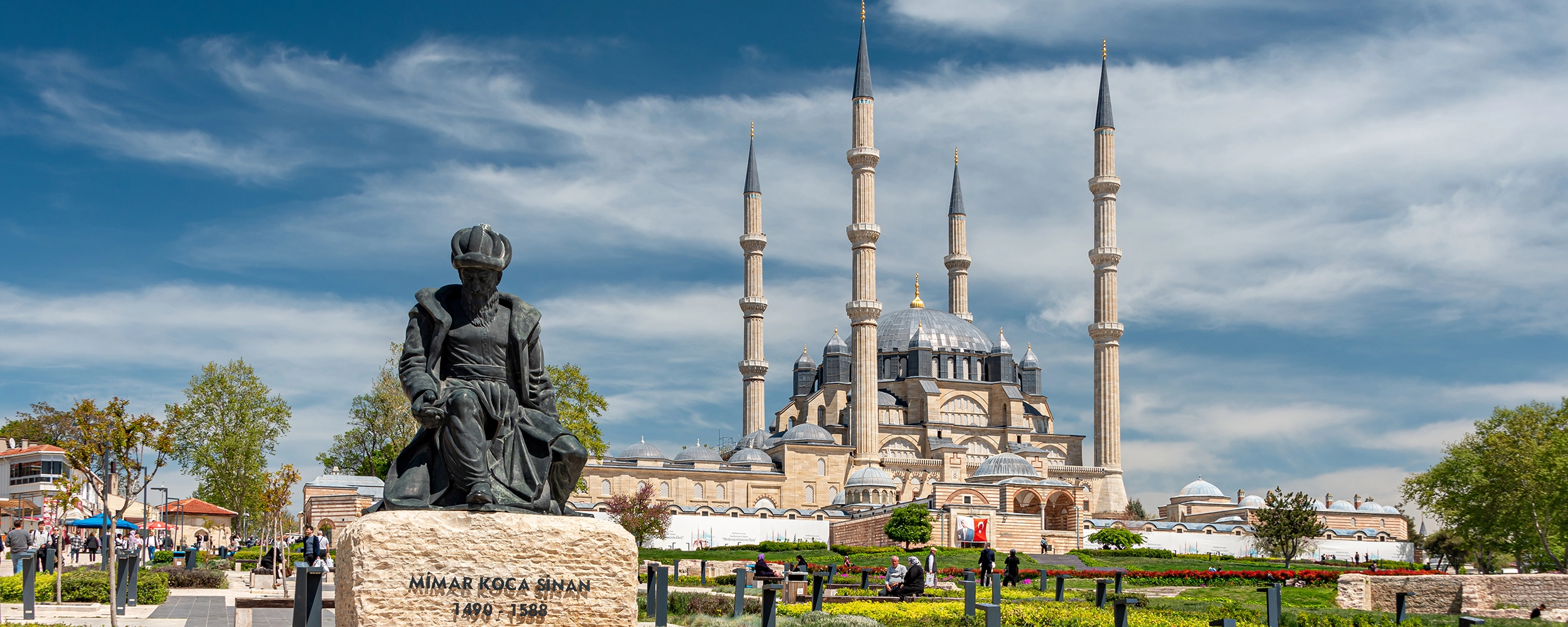
Continue from the ancient North Aegean port of Ainos to Selimiye Mosque, Ottoman imperial Edirne, Roman Hadrianopolis, historic bridges, Karaağaç, Sarayiçi and Türkiye's fascinating western frontier.
View Edirne GuideAncient Ainos represents only one chapter in an extraordinary province containing Roman, Byzantine, Ottoman, Balkan and modern Turkish heritage.
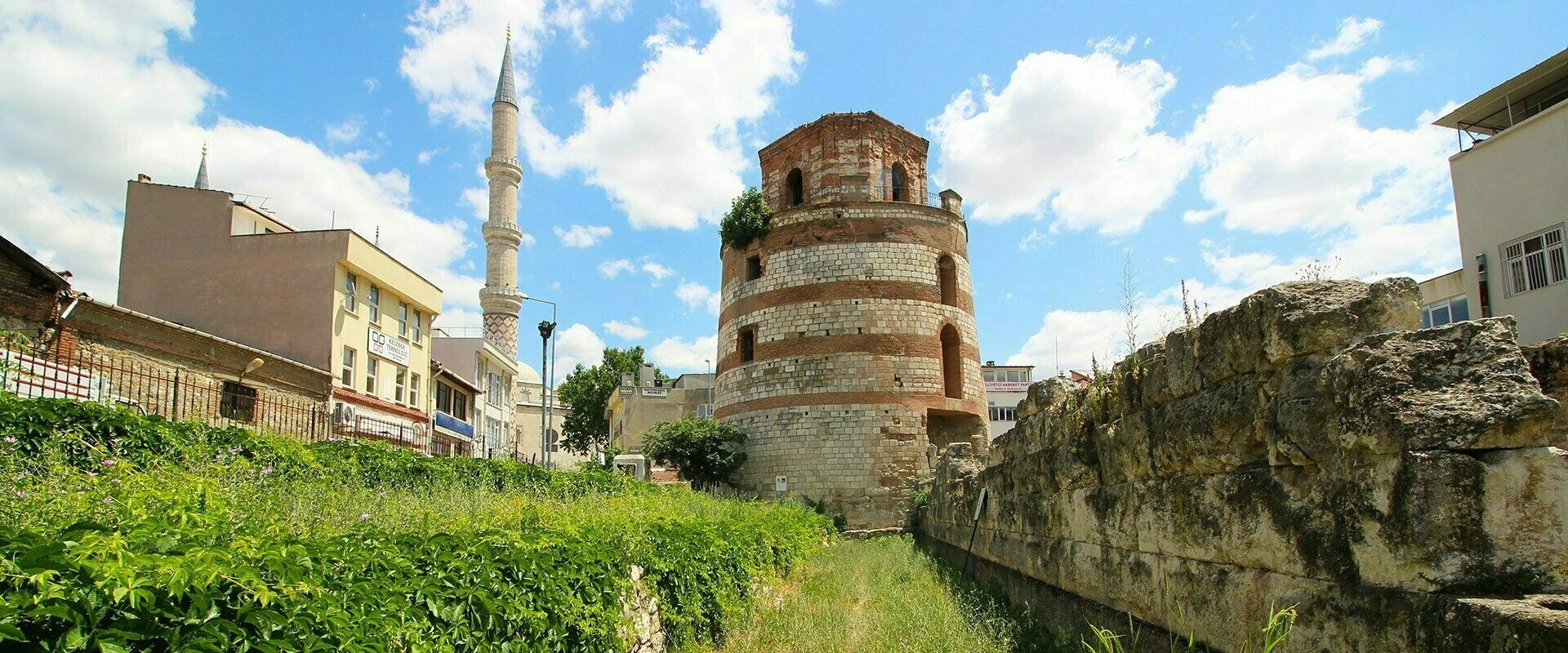
Compare coastal Ainos with ancient Hadrianopolis and explore the Roman and Byzantine layers beneath central Edirne.
Explore Macedonia Tower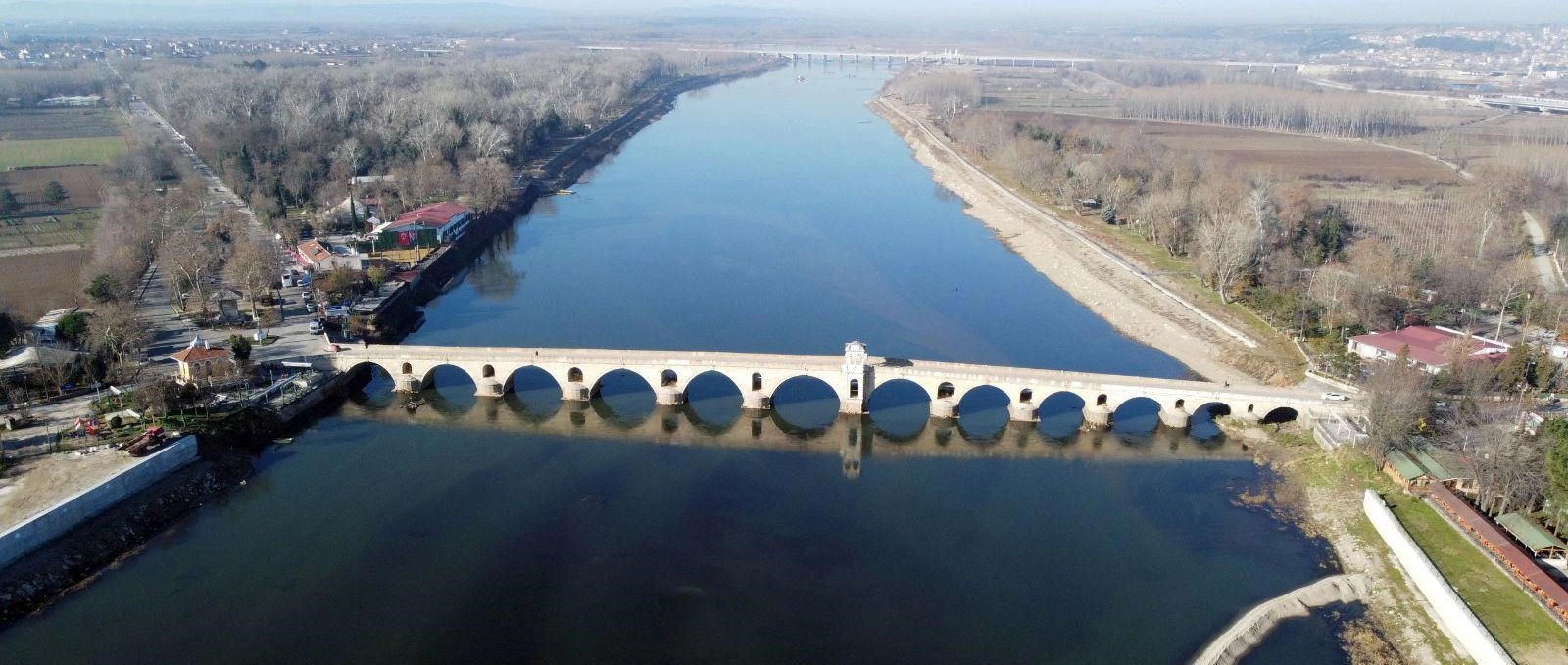
Continue the river theme of Ainos through Edirne's magnificent Meriç landscape and one of its finest Ottoman bridges.
Explore Meriç Bridge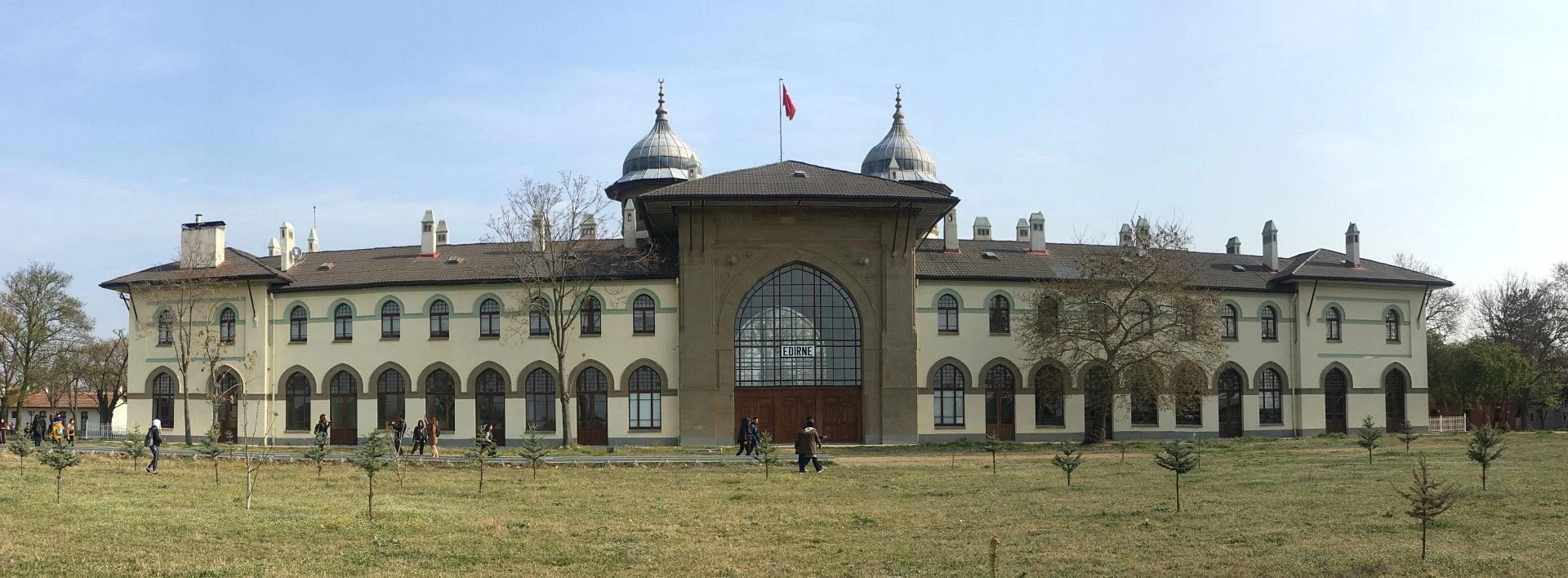
Move from the ancient frontier world of Ainos to railway history, the Lausanne Monument and the extraordinary modern border landscape of Edirne.
Explore Karaağaç