Private Binbirdirek Cistern & Byzantine Istanbul Tour
Ask us about a tailor-made route focused on Binbirdirek, the Basilica Cistern, Theodosius Cistern, the Hippodrome and Constantinople's water infrastructure.
Request a Custom Tour





Binbirdirek Cistern, also called the Cistern of Philoxenos, is one of the greatest surviving underground reservoirs of Byzantine Constantinople. It lies between the ancient Hippodrome and the Forum of Constantine, only a short walk from Sultanahmet Square.
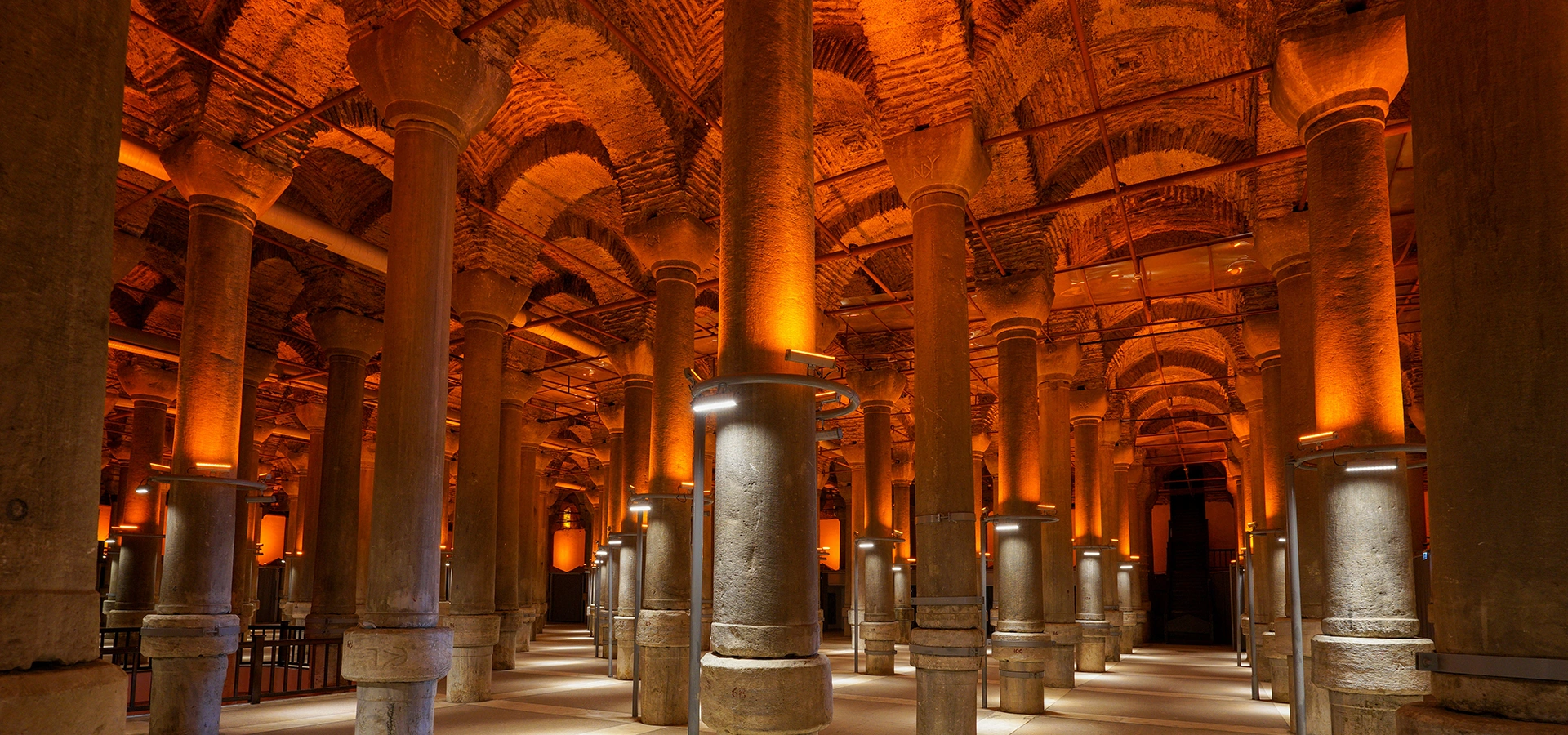
The rectangular chamber was built with 224 original marble columns arranged in 14 rows of 16. Most consist of two shafts placed one above the other and joined by a distinctive marble collar, creating a forest of repeated supports beneath the brick groin vaults.
Traditional accounts connect the cistern with a senator named Philoxenos during the reign of Constantine I in the 4th century. Modern architectural and brick-stamp studies have encouraged later dates, however, and the exact identity and chronology remain debated. This uncertainty is an important part of the monument's story.
After its water-storage role ended, the chamber served workshops and other urban uses. Today it functions as a museum and atmospheric cultural venue, though concerts and private events can occasionally affect ordinary access.
Look across 14 rows of 16 supports in one of Istanbul's largest covered cisterns.
See marble column sections joined by the unusual stone collars that define the interior.
Examine Greek letters carved by the craftsmen or workshops that prepared the stone.
Experience an ancient reservoir adapted for exhibitions, concerts and special events.
Essential information for visiting the Cistern of Philoxenos in Istanbul.
Binbirdirek, İmran Öktem Caddesi No:2, Fatih, near Sultanahmet Square.
Open on Google MapsTraditionally dated to the 4th century; some scholarship proposes a 5th- or 6th-century date.
A covered reservoir and probable distribution point in Constantinople's water network.
Approximately 64 by 56 metres, with 224 original columns and brick groin vaults.
A museum and venue for concerts, exhibitions, receptions and cultural programs.
Allow 30–45 minutes, with additional time for photography or a scheduled event.
The cistern preserves monumental water engineering beneath the heart of Istanbul's ancient ceremonial district.
Constantinople's population and imperial institutions depended on water brought over great distances. Aqueduct channels fed reservoirs throughout the city, where supplies could be stored, controlled and distributed close to the communities that needed them.
Binbirdirek is the second-largest surviving covered cistern in Istanbul after the Basilica Cistern. Its 224-column grid demonstrates how builders created a roof strong enough to carry structures and urban life above a vast water chamber.
The cistern is particularly valuable for its paired marble shafts, connecting collars, simple impost capitals and carved masons' marks. These features reveal the organization of stone production, transportation and construction in the Byzantine capital.
For travelers following our guide to places to visit in Istanbul, Binbirdirek provides a powerful comparison with the Basilica and Theodosius Cistern. Together, the three monuments show that Constantinople's underground water architecture was never uniform.
Traditional Byzantine accounts associate the cistern with Philoxenos, a senator said to have built a palace near the Hippodrome during the reign of Constantine I between 324 and 337. This tradition explains the widely used English name “Cistern of Philoxenos.”
The identification is not certain. The known Cistern of Philoxenos may have stood elsewhere nearby, while brick stamps and architectural evidence have led some researchers to place the surviving Binbirdirek structure in the 5th or 6th century. It is therefore safest to distinguish between the traditional history and the unresolved archaeological dating.
The reservoir stood close to the Mese, Constantinople's principal ceremonial avenue, between the Hippodrome and the Forum of Constantine. It likely stored water arriving through the Valens system and may have functioned as a terminal reservoir from which water was distributed locally.
After the Ottoman conquest, the cistern gradually lost its original function. From the 16th century onward, its dry interior was used by workshops; silk spinners and thread makers are frequently associated with the space. Later development above included the palace of Fazlı Paşa, and the monument was also known as the Fazlı Paşa cellar.
The chamber attracted the attention of travelers and researchers during the 19th and early 20th centuries. Modern cleaning, reinforcement and adaptation eventually made it suitable for visitors and large cultural events while preserving the dominant historic column grid.
Traditional construction date associated with Senator Philoxenos and Constantine I.
Later dating proposed through archaeological, topographical and brick-stamp research.
The chamber stores and helps distribute water near the imperial center.
The dry interior becomes a practical workshop space within Ottoman Istanbul.
Travelers, photographers and scholars document the underground colonnades.
The restored cistern serves as a museum and atmospheric event venue.
The Turkish word binbir literally means “one thousand and one,” while direk means post or column. The name does not provide a literal column count. In Turkish expression, “a thousand and one” can suggest abundance or something too numerous to count.
The original structure contained 224 columns, and the official venue states that 212 survive today. Their long, repetitive rows create the visual impression of a much larger number, especially when seen in low underground light.
Cistern of Philoxenos is the conventional historical name, based on the traditional connection with a senator and palace of that name. Travel guides may also use “Philoxenos Cistern,” “Philoxenus Cistern,” “Binbirdirek Sarnıcı” or “1001 Columns Cistern.”
Constantinople lacked sufficient freshwater sources inside its fortified center. Roman and Byzantine engineers therefore collected water far beyond the city and carried it through channels, bridges, tunnels and aqueducts using carefully calculated gradients.
Binbirdirek stood at a relatively high point on Constantinople's Second Hill—considerably higher than the nearby Basilica Cistern. Research suggests that it received water through the line associated with the Valens Aqueduct and operated as a castellum aquae or terminal distribution reservoir.
Its location near the Mese, Hippodrome and elite residences made dependable water particularly important. The thick waterproof walls, huge storage chamber and load-bearing roof allowed infrastructure and city life to occupy the same valuable urban space.
Water was collected beyond Constantinople and directed toward the fortified capital.
The supply route crossed the Valens Aqueduct before continuing through the city.
The cistern occupied a high point near the Mese and Forum of Constantine.
The chamber retained a major reserve close to a densely occupied district.
The reservoir may have marked the end of a line and redistributed water nearby.
Water-resistant coating limited leakage through the brick and masonry walls.
The cistern has a rectangular plan measuring approximately 64 by 56 metres, covering roughly 3,584 square metres. Its original capacity is commonly estimated at around 40,000 cubic metres.
The roof was supported by 224 Proconnesian marble columns from Marmara Island, set approximately 3.75 metres apart in 14 rows of 16. The regular grid carries a system of brick arches and groin vaults across the vast chamber.
Each support was formed from two marble shafts placed one above the other. A thick marble ring or collar joins them at the center, producing an original height of roughly 12 metres. Because sediment and later flooring raised the visible floor level, visitors usually see only the upper portions; an excavated area reveals more of the original height.
Simple truncated-pyramid impost capitals stand above the columns. Greek letters carved into shafts, collars and capitals are understood as masons' or workshop marks. Sockets above the capitals preserve evidence of wooden tie beams, later replaced by metal reinforcement, that helped the column grid move together during earthquakes.
One of the largest surviving covered cistern plans in Istanbul.
Originally arranged in 14 parallel rows of 16 supports.
Two marble column sections create each tall structural support.
Broad marble rings visibly connect the upper and lower shafts.
Brick vaulting transfers the immense roof load through the column grid.
Carved Greek letters record craftsmen, teams or production groups.
The architecture is the principal exhibit. Walk slowly, change your viewpoint and allow the repeated columns and arches to reveal the logic of the structure.
Look diagonally through the chamber to see the 14-by-16 grid multiply into deep perspective.
Study the broad rings that join the stacked shafts and give Binbirdirek its distinctive profile.
See how much of the lower columns lies beneath the raised modern floor.
Search the marble surfaces for marks left by Byzantine stoneworkers.
Follow the brick arches and groin vaults that repeat across the entire roof.
Notice evidence of the structural system designed to stabilize columns during movement.
Many columns, collars and capitals carry Greek letters cut into the marble. They are not commemorative inscriptions or messages for visitors. Researchers generally interpret them as marks connected with the craftsmen, workshops or production teams responsible for preparing the stone.
The marble came from Proconnesos—modern Marmara Island—which supplied building stone to Constantinople and cities throughout the empire. Marks helped organize quarrying, carving, transport, counting and payment within a complex construction project.
These modest letters bring the human process of construction into view. The cistern was not created only by an emperor or patron; it depended on quarry workers, sailors, haulers, masons, brickmakers and engineers whose coordinated labor filled an underground chamber with hundreds of precisely spaced supports.
Simple characters are cut directly into columns, collars and capitals.
The marks may identify stonecutters, teams or units of production.
The material links the cistern to the imperial quarries of Proconnesos.
Marks may have supported counting, assembly, quality control or payment.
Once the reservoir no longer held water, its sheltered interior gained a different value. Sources associate Binbirdirek with workshops from the 16th century onward, particularly silk spinning and thread production. The cool, spacious chamber could be reused without destroying its structural grid.
Later structures rose above the cistern, including a property connected with Fazlı Paşa. The underground monument was consequently known as Fazlı Paşa Bodrumu, or the Fazlı Paşa cellar. Its long survival reflects this continuous adaptation as much as deliberate archaeological preservation.
Today, lighting, platforms and modern services allow the chamber to host exhibitions, concerts, receptions and private programs. This use keeps the cistern visible and economically active, but it also means that visitor access and atmosphere can vary according to the event calendar.
The three best-known covered cisterns of central Istanbul reward different interests. Binbirdirek is distinguished by its double columns and scale; the Basilica Cistern by its theatrical immensity and Medusa bases; and the Theodosius Cistern by its compact symmetry and projection-mapping presentation.
Event setup or private programs may alter ordinary museum hours.
Admission prices can change and are not always displayed consistently online.
The underground chamber can feel cool and humid even in summer.
Use footwear suitable for dim light, steps and potentially damp surfaces.
The excavated section explains the original height of the double columns.
The Hippodrome, Blue Mosque, Basilica Cistern and Çemberlitaş are close.
Begin with a wide view from the entrance level. Count several rows in both directions and notice how the arches create a precise structural grid. Then walk toward the center, allowing the stone collars to align and separate as your viewpoint changes.
Pause beside the excavated lower area. This is the clearest place to understand that the visible modern floor is much higher than the Byzantine floor, and that each apparent column continues downward as a second shaft.
Look closely for Greek masons' marks on the marble, then look upward to the simple impost capitals, tie-beam sockets, arches and brick groin vaults. Finish with a diagonal view across the chamber, where the rhythm of the columns is most dramatic.
As checked in August 2026, the official Binbirdirek website describes the cistern as open for daily museum visits, while Istanbul's official destination guide also presents it as a visitor attraction and cultural-event venue. However, the official public pages do not provide one stable, detailed timetable or admission price that can be safely guaranteed here.
Because the chamber regularly hosts concerts, exhibitions, weddings and private events, hours, last admission and general access may change for setup or programming. Contact the venue or check its current event announcements before making a special journey.
Do not assume that Museum Pass Türkiye, Istanbul Museum Pass or another city pass is accepted. Confirm ticket conditions directly with the venue. Event tickets are separate from ordinary museum admission unless explicitly stated otherwise.
The cistern is an all-season indoor monument, but event schedules, crowd levels and the timing of your wider Old City route can influence the experience.
An early visit may provide quieter aisles and cleaner architectural photographs.
Non-holiday weekdays are generally the safest choice for a calm museum visit.
The cool chamber offers relief during the hottest part of a Historic Peninsula walk.
Binbirdirek works well with the Basilica Cistern and other nearby indoor sites.
Avoid assuming normal access while staging, sound checks or private setup is underway.
A concert can reveal the chamber differently, but requires the correct separate ticket.
A quick circuit focused on the columns, collars and excavated lower level.
The ideal standard visit for architecture, history and photography.
A slow visit for careful study of masons' marks and structural details.
Combine Binbirdirek with the Hippodrome and Theodosius Cistern.
Add the Basilica Cistern, Blue Mosque and Hagia Sophia.
Allow the full program duration plus entry and security time.
Binbirdirek offers strong symmetry and architectural depth, but illumination may vary with museum operations and events. Always follow current restrictions concerning flash, tripods, video and commercial equipment.
Shoot across several rows to create the richest pattern of columns and arches.
Use a closer frame to show how the two marble shafts connect.
Include the excavated section to explain the cistern's original depth.
Photograph carved letters without touching or leaning equipment against the marble.
Brace carefully, raise ISO when needed and keep all visitor routes clear.
Reduce exposure to preserve highlights when colored or theatrical illumination is active.
Binbirdirek is an ancient underground structure adapted for modern public use. Access routes can change with exhibition layouts and event staging, so visitors who require step-free entry should confirm arrangements directly before arrival.
Confirm the current lift or ramp route if stairs are a barrier.
Temporary seating, platforms and equipment may change circulation.
Allow time for visual adjustment and watch floor transitions carefully.
Concerts and private events may involve amplified music and intense lighting.
Contact the venue in advance when mobility support is essential.
Nearby pavements can be uneven, crowded and sloped.
The entrance is on İmran Öktem Caddesi in the Binbirdirek neighborhood, west of the Hippodrome and between the Sultanahmet and Çemberlitaş tram stops.
Use Sultanahmet or Çemberlitaş, then continue several minutes on foot.
Walk west from the Obelisk area into the Binbirdirek neighborhood.
Walk southwest through Sultanahmet; the two cisterns are easy to combine.
Walk east from Çemberlitaş toward İmran Öktem Caddesi.
Ask for “Binbirdirek Sarnıcı”; traffic restrictions may require a short final walk.
Driving is inconvenient because parking in the Historic Peninsula is limited.
Binbirdirek stands inside one of Istanbul's richest archaeological areas. Major Byzantine and Ottoman monuments can be reached on foot, making the cistern easy to add to a Sultanahmet route.
Compare Binbirdirek with Constantinople's largest surviving covered reservoir.
See an intimate 5th-century chamber with 32 columns and projection mapping.
Visit Sultan Ahmed I's imperial mosque beside the ancient Hippodrome.
Explore one of the world's most influential buildings and its layered history.
Continue through historic covered streets, hans and market lanes.
See ancient monuments from Constantinople's chariot-racing and ceremonial center.
Find the Column of Constantine on the route toward the Grand Bazaar.
Continue to the city's churches, mosques, palaces, museums and neighborhoods.
It is one of Istanbul's largest surviving Byzantine covered reservoirs, known for its 224 original marble columns.
It is traditionally identified with the Cistern of Philoxenos, although scholars continue to debate the identification and date.
Traditional accounts place it in the 4th century under Constantine I; archaeological research has also proposed a 5th- or 6th-century date.
He is traditionally described as a Roman senator who built a palace and cistern near the Hippodrome during Constantine I's reign.
It literally means “one thousand and one columns,” an expressive name for the apparently countless rows rather than a factual total.
No. The original architectural grid contained 224 columns, and the official venue states that 212 survive.
It measures about 64 by 56 metres and covers approximately 3,584 square metres.
Its original capacity is commonly estimated at around 40,000 cubic metres.
Each support consists of two stacked marble shafts joined by a broad collar, creating the required height.
They are generally understood as marks made by the stoneworkers, workshops or production teams.
Sediment and later flooring raised the present floor level; an excavated section reveals more of the original depth.
It stored and probably helped distribute water; after drying, it was reused for workshops and later as a cultural venue.
The official website describes daily museum access, but event programming can affect hours. Verify directly before arrival.
A stable detailed timetable was not displayed on the official public pages checked in August 2026. Confirm the current schedule with the venue.
Fees can change and event tickets may differ from museum admission. Check the official venue information before visiting.
Do not assume that it is accepted. Confirm current pass and ticket conditions directly with the venue.
Allow 30–45 minutes for a normal visit or up to one hour for detailed photography and architecture.
Yes. Both are within walking distance in the Sultanahmet area and make an excellent combined route.
The Basilica is larger and more theatrical; Binbirdirek is quieter and distinctive for its double shafts, collars and masons' marks.
Modern event listings describe accessible use, but visitors should confirm the current step-free route and lift arrangements directly.
Personal photography may be possible, subject to current rules for flash, tripods, video and professional equipment.
Yes, but supervise children closely around steps, low lighting and any temporary event equipment.
The underground chamber can feel cooler and more humid than the street, so a light layer is useful.
Yes, especially for travelers interested in Byzantine engineering, lesser-known monuments, architecture and atmospheric photography.
Keep hands, bags and camera equipment away from columns and carved marks.
Remain within approved visitor areas and away from excavated sections.
Respect current photography rules and the experience of other visitors.
Do not block stairs, ramps, lifts or aisles while taking photographs.
Follow staff instructions during exhibitions, concerts and private programs.
Purchase museum or event admission only through authorized channels.
Connect Binbirdirek with the Basilica Cistern, Theodosius Cistern, Hippodrome, Hagia Sophia and Blue Mosque through a private route shaped around your interests and without compulsory shopping stops.
Choose a focused half-day route or a deeper exploration of Constantinople's engineering, monuments and urban history.
Ask us about a tailor-made route focused on Binbirdirek, the Basilica Cistern, Theodosius Cistern, the Hippodrome and Constantinople's water infrastructure.
Request a Custom Tour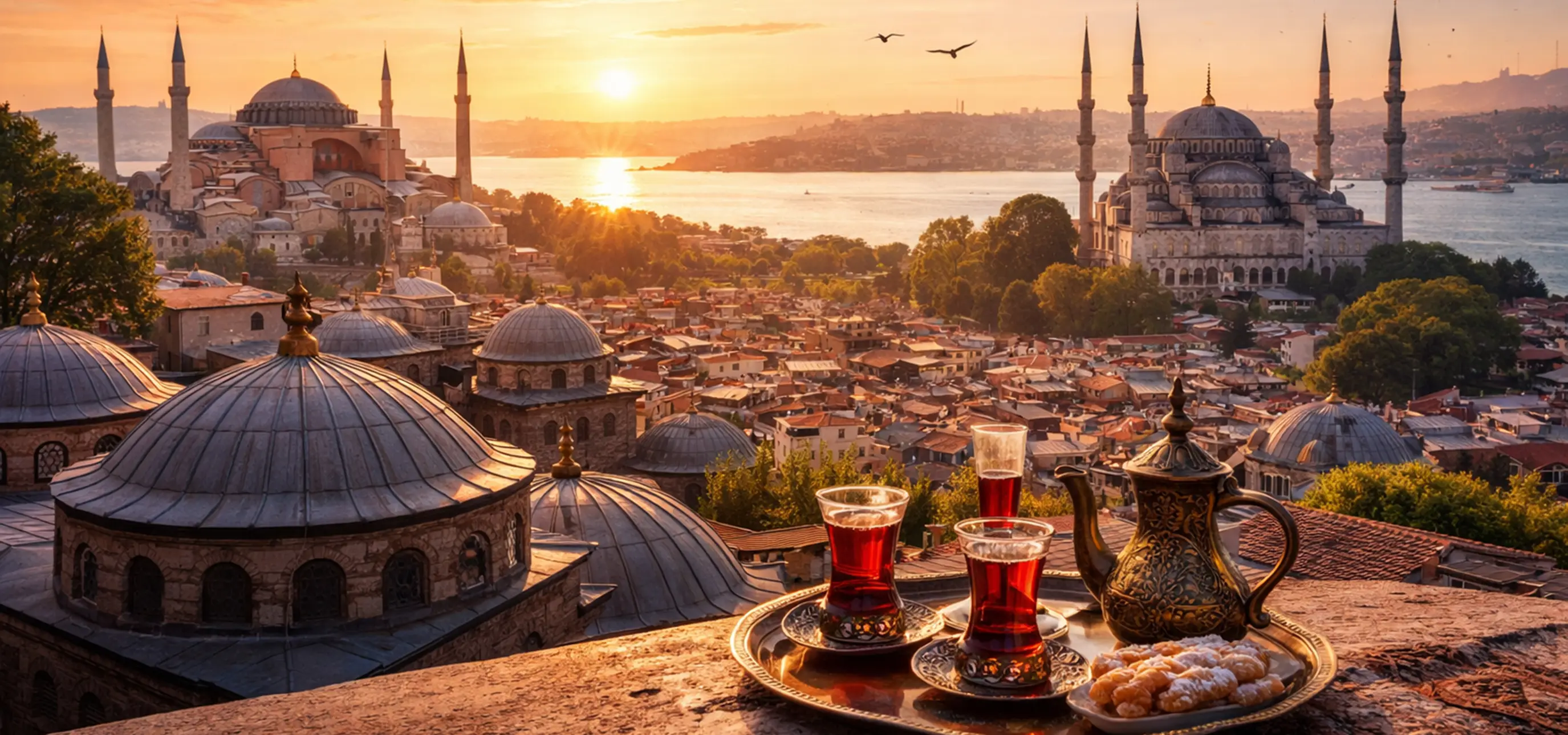
Explore Sultanahmet with a private licensed guide, carefully planned timing and an itinerary adapted to your pace.
View Private TourConnect Binbirdirek with the defining monuments of Byzantine and Ottoman Constantinople.
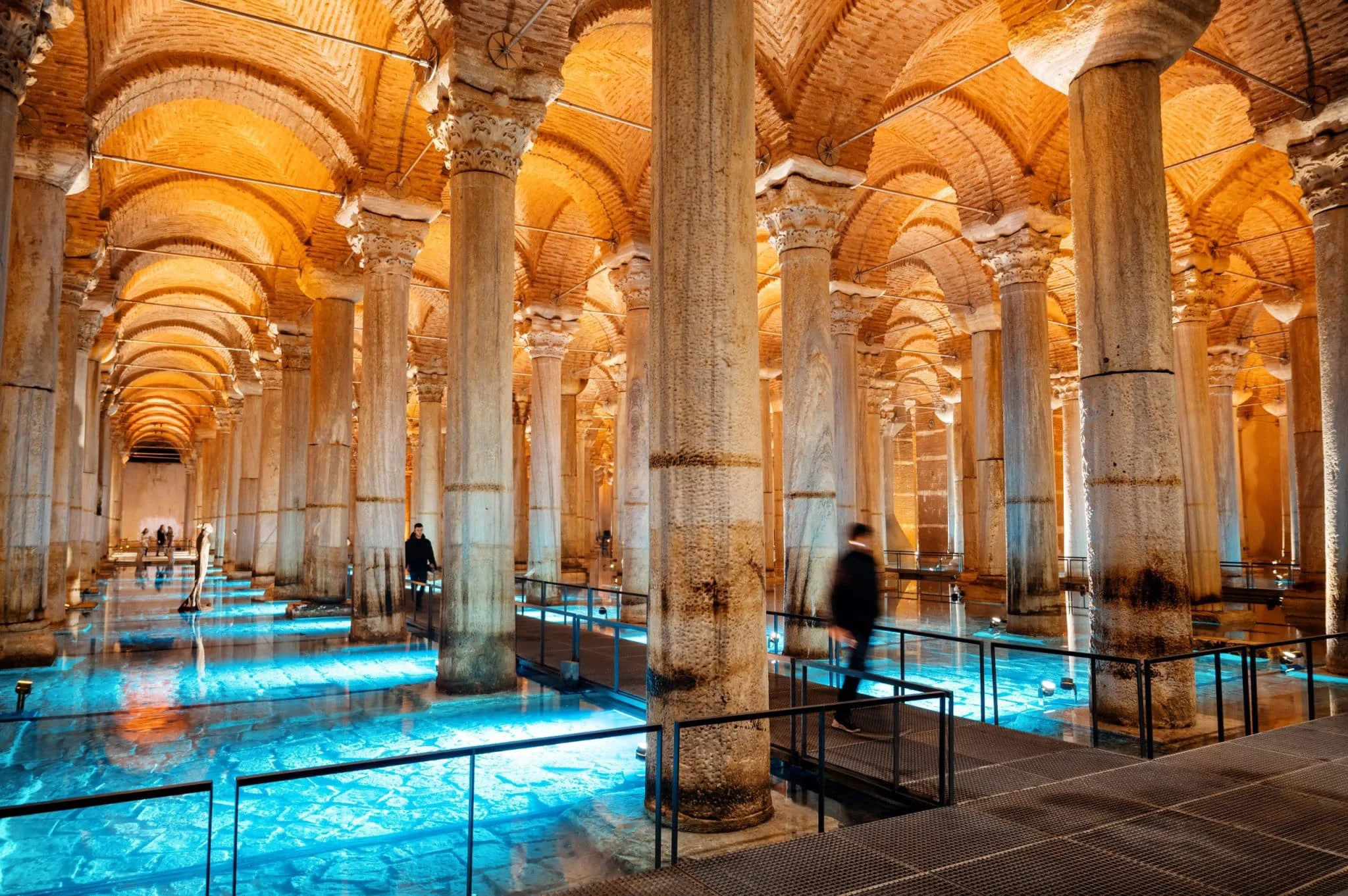
Enter Constantinople's vast underground reservoir and see its famous Medusa-head column bases.
Explore the Basilica Cistern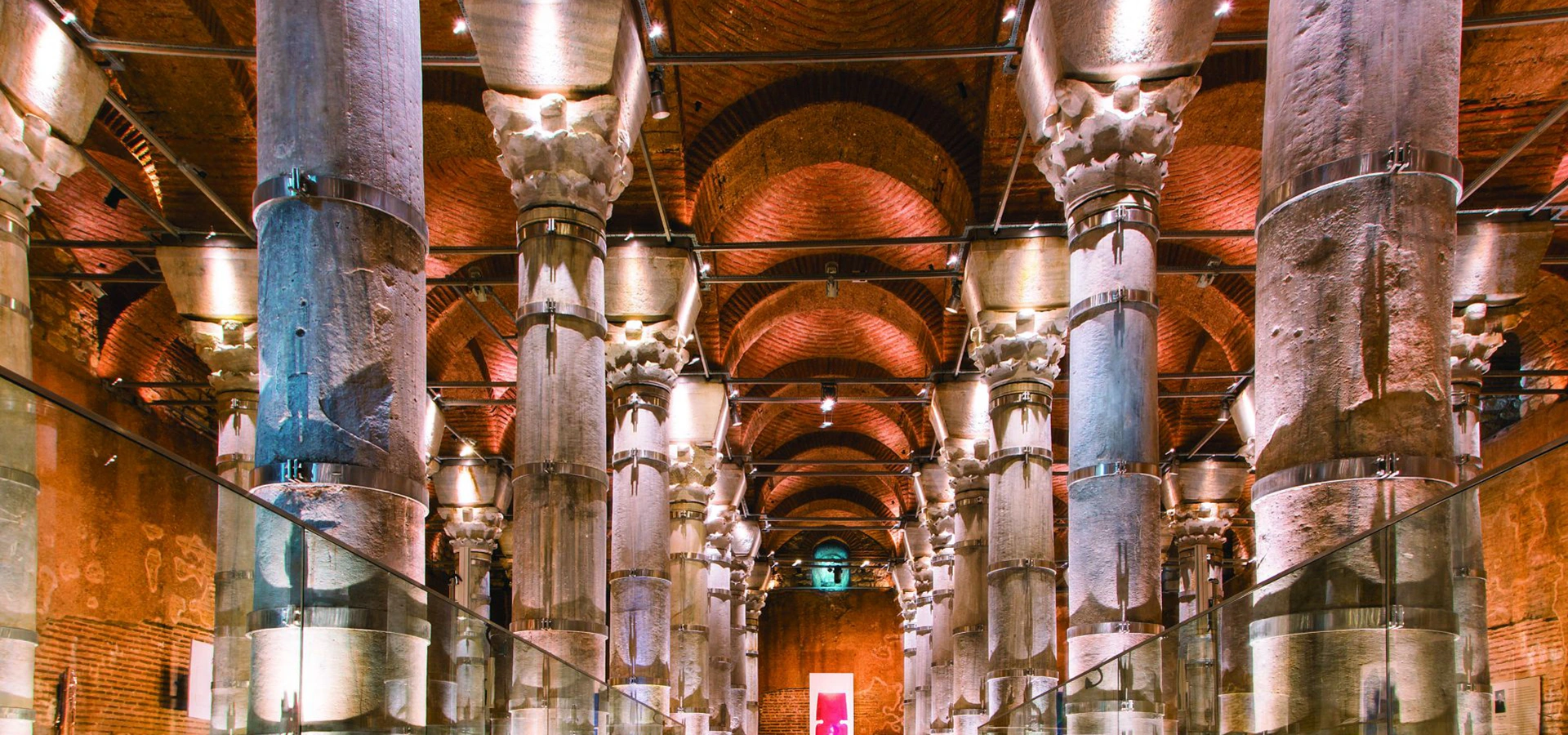
Discover an intimate 5th-century reservoir with elegant columns and immersive projection mapping.
Explore the Theodosius Cistern
Continue to the city's palaces, churches, mosques, museums, bazaars and waterfront districts.
Continue Exploring Istanbul