Fresh Lor Base
Fresh, unsalted, full-fat lor cheese forms the main ingredient rather than simply acting as a filling.






Ayvalık Lor Tatlısı is one of the most distinctive desserts of Ayvalık's northern Aegean cuisine. Unlike many traditional syrup desserts whose structure comes mainly from flour or semolina, its defining ingredient is fresh, unsalted, full-fat lor cheese.
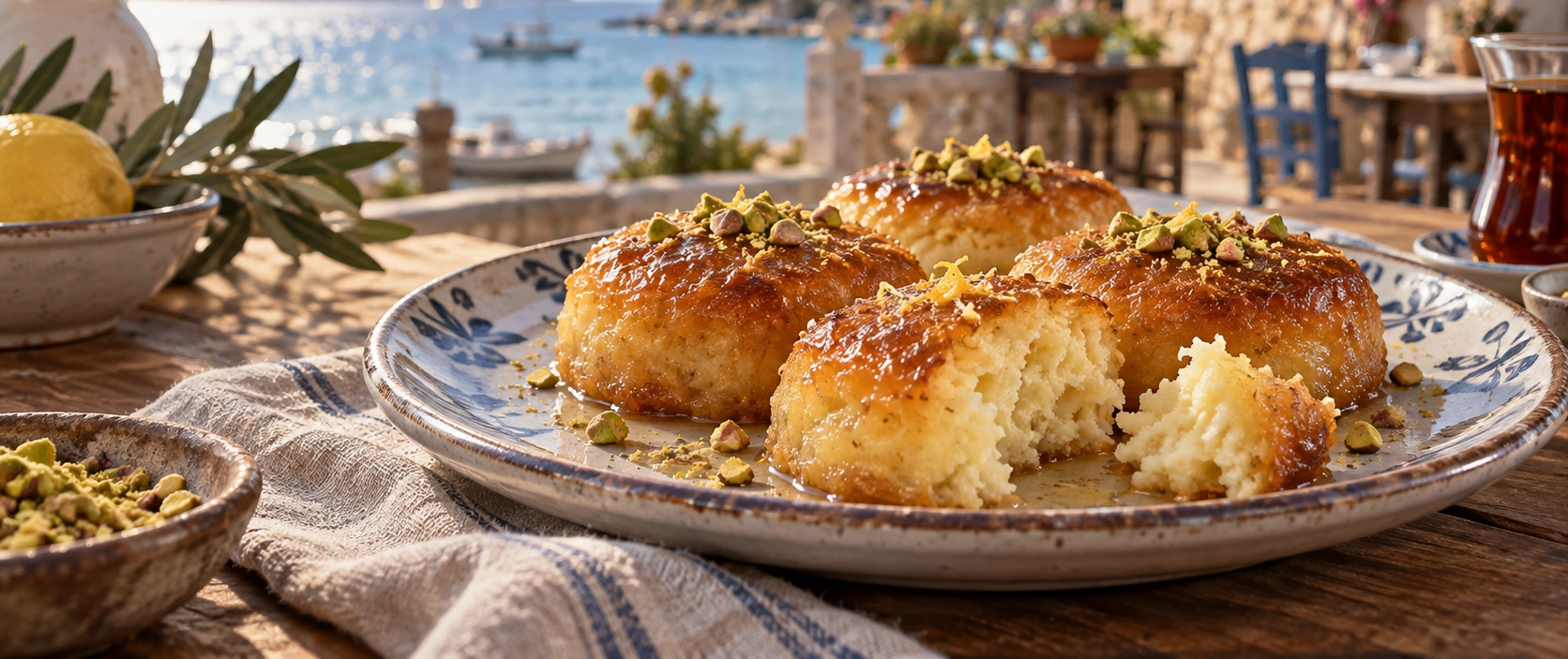
The lor is worked into a soft dough, shaped into individual pieces, baked and then finished with sugar syrup. The result is a tender cheese-based dessert with a delicate dairy flavour and a soft texture that breaks apart easily in the mouth.
Ayvalık Lor Tatlısı has been protected as a Turkish geographical indication since 2022. It is registered as a Mahreç İşareti under TÜRKPATENT registration No. 1305, formally recognising its longstanding connection with Ayvalık's culinary culture.
Ayvalık Lor Tatlısı is registered by TÜRKPATENT as geographical indication No. 1305.
Its defining ingredient is unsalted, full-fat fresh lor produced from cheese whey.
The shaped lor dough is baked before being cooked and rested in sugar syrup.
The protected geographical boundary is the Ayvalık district of Balıkesir Province.
Essential information about one of Ayvalık's most characteristic traditional desserts.
Ayvalık district in Balıkesir Province, on Türkiye's northern Aegean coast.
Open Ayvalık on Google MapsFresh, unsalted and full-fat lor cheese produced from whey.
TÜRKPATENT Mahreç İşareti registration No. 1305.
A baked cheese-based dessert finished by cooking and resting in sugar syrup.
The dessert belongs to a local culinary tradition shaped by Ayvalık's dairy culture and northern Aegean food heritage.
Ayvalık Lor Tatlısı has been prepared in Ayvalık for generations and occupies an established place within the district's culinary culture. Its identity is closely connected with the availability of fresh lor produced during traditional cheesemaking.
Instead of treating the whey remaining after cheese production simply as a by-product, local cheesemaking traditions transform it into fresh lor. That soft dairy ingredient then becomes the foundation of a dessert quite different from ordinary flour-based syrup sweets.
The result is a particularly interesting example of how one ingredient can connect different parts of a regional food culture: milk becomes cheese, cheese production creates whey, and that whey produces the lor used to make the dessert.
Formal geographical-indication registration in 2022 recognised the dessert's reputation, its established place in Ayvalık cuisine and its distinctive local production method.
Fresh lor, a soft dough, controlled shaping, baking and syruping combine to create the protected dessert's recognisable character.
Fresh, unsalted, full-fat lor cheese forms the main ingredient rather than simply acting as a filling.
The protected specification describes lor and fresh-milk flavours as prominent characteristics.
The finished dessert has a tender structure that breaks apart readily in the mouth.
The individual pieces are baked before entering the syrup stage.
After baking and cooling, the dessert is cooked briefly in sugar syrup and then left to absorb it.
The protected specification describes pieces approximately 10–12 cm in diameter and around 2 cm thick.
The registered production method specifies baking in a wood-fired traditional oven.
All stages of protected production take place within the geographical boundary.
Ayvalık Lor Tatlısı is a traditional cheese dessert prepared from fresh unsalted lor, flour and water. The mixture is worked into a soft dough, shaped, baked and finally sweetened with syrup.
What separates it from many other Turkish syrup desserts is the importance of the cheese itself. Lor is not hidden inside a pastry shell or added only in small quantities. It forms the foundation of the dough and therefore determines much of the dessert's flavour and texture.
Fresh lor forms the core of the recipe and gives the dessert its characteristic tender body.
The shaped pieces are cooked in the oven before the syrup stage begins.
Sugar syrup supplies the sweetness after baking rather than large amounts of sugar being incorporated into the dough.
The registered identity is specifically connected with the Ayvalık district.
Ayvalık Lor Tatlısı is registered by the Turkish Patent and Trademark Office as a Mahreç İşareti. Its protected specification documents the dessert's ingredients, fresh-lor production, shaping, baking, syruping and connection with Ayvalık.
Ayvalık Lor Tatlısı
The geographical-indication registration number is 1305.
The application number is C2022/000094.
The official application date is 7 March 2022.
The dessert was registered on 26 December 2022.
The registration holder is Ayvalık Municipality.
It is registered within the bakery, pastry, dough-products and desserts category.
The protected geographical area is the Ayvalık district of Balıkesir Province.
A Mahreç İşareti is a Turkish geographical-indication category for products whose reputation, quality or other characteristics are associated with a defined geographical area.
The registration for Ayvalık Lor Tatlısı goes further by stating that all production stages of the protected dessert are carried out within the defined geographical boundary.
The protected identity is specifically linked with Ayvalık.
The specification establishes the role of fresh full-fat unsalted lor and the permitted cereal ingredients.
Lor preparation, dough mixing, shaping, baking and syruping are all documented.
The registered name and Mahreç İşareti emblem are used with the protected product.
The protected dessert uses fresh, unsalted and full-fat lor cheese. This is important because a dry, heavily salted or strongly aged cheese would create a completely different result.
The official production specification connects the lor directly with local cheesemaking. It is obtained from the whey remaining after the production of full-fat cheeses such as kelle, sepet and tulum cheese made from cow's milk.
The lor is used while its dairy character remains soft, delicate and fresh.
Saltiness is avoided so the lor can form the foundation of a sweet dessert.
The protected method specifies full-fat fresh lor rather than a lean dry curd.
The lor is recovered from whey created during traditional cheese production.
The lor used for protected Ayvalık Lor Tatlısı begins with the whey remaining after full-fat cow's-milk cheeses such as kelle, sepet or tulum cheese have been produced.
The whey is heated while being stirred. As the temperature rises, small white particles begin to collect at the surface. These delicate curds are gathered with cheese ladles, drained in perforated containers and used as fresh lor.
The protected specification also permits a small quantity of drinking milk — no more than approximately 1% — to be added to the whey. This can produce a whiter lor with a sweeter dairy character.
Whey from full-fat cheese production provides the raw material.
Heating causes the remaining milk proteins to collect into visible white curds.
The fresh curds are lifted from the liquid and placed into perforated containers to drain.
The official method records that roughly 10 litres of whey produce around 1 kg of lor.
The official geographical-indication specification provides quantities for approximately 45 pieces of Ayvalık Lor Tatlısı.
Recipes prepared in homes, restaurants or cookbooks sometimes include additional ingredients. However, when discussing the geographically protected Ayvalık Lor Tatlısı, the official registered specification is the appropriate reference point.
The registered production method transforms fresh lor through a carefully controlled sequence of mixing, shaping, baking and syruping.
Traditional Ayvalık Lor Tatlısı is not simply rolled into ordinary balls. The protected specification describes a dedicated shaping method using a special funnel-shaped cloth piping bag.
The soft lor dough is piped onto the baking tray to form relatively broad, flat rounds. The finished pieces are described as approximately 2 cm thick and 10–12 cm in diameter.
The dough must remain soft enough to pass through the traditional piping bag.
The registered method documents a specialised funnel-shaped fabric bag used during shaping.
The traditional pieces are wider and flatter than many small syrup pastries.
Consistent shaping helps the pieces bake and absorb syrup evenly.
After shaping, the lor dough is placed into the oven. The protected method specifies a baking temperature of approximately 180°C and a baking period of around 40 minutes.
The registration specifically refers to an odun fırını, traditionally known as a kara fırın or wood-fired oven. Baking firms the exterior while the cheese-rich interior retains its tender character.
The registered production method specifies an oven temperature of approximately 180°C.
The pieces remain in the oven long enough to develop their baked structure.
A kara fırın forms part of the documented traditional production process.
The baked dessert is allowed to rest toward room temperature before entering the hot syrup.
The syrup stage is especially important because the protected method differs from many simplified home versions of syrup desserts.
Sugar and water are brought to the boil. The baked lor pieces, which have already cooled toward room temperature, are added directly to the syrup and boiled for approximately 10–15 minutes.
After the heat is turned off, the dessert remains in the syrup for approximately one hour. The pieces are then removed with a slotted utensil and served.
The sweetness comes from a straightforward sugar syrup rather than a heavy flavoured glaze.
The baked pieces spend a short period cooking directly in the hot syrup.
Resting allows the interior to absorb syrup while retaining its soft structure.
The goal is a moist dessert rather than a piece overwhelmed by excess liquid.
Texture is one of the most distinctive features of Ayvalık Lor Tatlısı. The official specification describes it as soft and quick to disperse in the mouth.
Fresh lor produces a more delicate internal structure than would normally be expected from a dessert based predominantly on wheat flour. Baking provides enough structure for each piece to hold its form, while the later syrup stage restores moisture.
Fresh lor keeps the centre tender rather than bread-like or dense.
The dessert breaks apart easily once eaten.
The oven creates a more structured exterior around the softer cheese-rich centre.
The final syruping stage keeps the baked pieces moist and sweet.
Despite being a syrup dessert, the defining flavour of authentic Ayvalık Lor Tatlısı is not simply sugar. The official description notes that the flavour of lor and fresh milk is distinctly perceptible.
The fresh dairy character gives the dessert a soft, rounded flavour, while baking contributes gentle toasted notes. The syrup supplies sweetness without eliminating the flavour of the cheese from which the dessert takes its name.
Lor and fresh-milk flavours form an important part of the protected sensory identity.
Sugar syrup provides the main sweetness after the baking stage.
The oven adds subtle cooked and toasted flavours to the cheese-rich dough.
The soft lor structure creates a different eating experience from dense fried or layered syrup pastries.
Ayvalık Lor Tatlısı is best approached as a regional speciality in its own right. A freshly prepared piece allows the contrast between the baked exterior, soft lor-based interior and absorbed syrup to remain clear.
It can be served alone, although local and contemporary presentations may accompany it with ice cream, fruit or another cooling element. During warmer months, mastic-flavoured ice cream can make a particularly appropriate northern Aegean pairing.
A good piece needs little decoration when the quality of the fresh lor is allowed to lead.
A cool mastic-flavoured ice cream creates a distinctly Aegean combination.
The dessert provides an appropriate finish after seafood, meze or an Ayvalık-style meal.
The delicate fresh-cheese structure is one reason the dessert is particularly rewarding when tasted locally.
One of the most fascinating aspects of Ayvalık Lor Tatlısı is its direct connection with the region's cheese culture. The fresh lor specified for the dessert is produced from whey generated during the making of full-fat cheeses.
This creates a natural connection between Ayvalık's savoury cheese traditions and one of its best-known sweets. The same dairy landscape can therefore produce both matured cheeses and an exceptionally fresh dessert ingredient.
Discover Ayvalık's protected matured cheese tradition and the wider dairy culture behind the town's lor.
Fresh lor recovers valuable milk proteins remaining in the liquid after cheesemaking.
A cheesemaking by-product becomes the defining ingredient in a traditional dessert.
The process demonstrates the resourcefulness found throughout traditional dairy cultures.
The geographical-indication specification allows Ayvalık Lor Tatlısı to be kept at approximately 24°C room temperature for no more than three days.
Because fresh lor is the primary ingredient, visitors purchasing the dessert should pay attention to the producer's own storage and transport recommendations, particularly during hot weather or when travelling long distances.
The registered specification gives a maximum three-day period at approximately 24°C.
The dessert's soft dairy character is particularly enjoyable close to production.
Hot summer conditions can make careful transport especially important.
When commercially packaged, always follow the storage instructions supplied by the bakery or producer.
Yes. Traditional Ayvalık Lor Tatlısı contains milk because fresh lor cheese is its defining ingredient. It also contains wheat and gluten, whether wheat flour or wheat-derived semolina is used in the registered formulation.
Fresh full-fat lor makes the dessert unsuitable for anyone who must avoid milk proteins.
Traditional production uses wheat flour or semolina and is therefore not gluten-free.
The baked pieces are finished in a substantial sugar-and-water syrup.
Commercial versions may introduce additional ingredients, so serious allergies should always be discussed directly with the producer.
If you have a serious food allergy or medically required dietary restriction, confirm the complete ingredient list and cross-contamination procedures before eating.
The name Ayvalık Lor Tatlısı represents more than any sweet made with curd cheese. The protected identity depends on the recognised production method and geographical connection with Ayvalık.
The protected designation should appear as Ayvalık Lor Tatlısı.
The Mahreç İşareti emblem accompanies the registered designation where required.
Fresh unsalted full-fat lor is central to the authentic protected recipe.
The dessert should remain soft and delicate rather than behaving like a dense flour biscuit.
Lor and fresh-milk notes should remain detectable beneath the syrup.
The geographical indication connects the protected dessert specifically with Ayvalık.
Ayvalık is often introduced through olives, olive oil, seafood and Aegean herbs, yet its dairy traditions reveal another side of the local kitchen.
Lor Tatlısı brings these worlds together particularly well. Its existence depends on cheesemaking, yet the final product belongs to the pastry and dessert tradition. It is therefore both a dairy speciality and a regional sweet.
Explore the protected cheese tradition connected with Ayvalık's wider dairy heritage.
Discover another geographically protected Ayvalık sweet with a completely different texture and aroma.
Move from Ayvalık's pastry traditions to the flavours of its Aegean coastline.
Explore the agricultural tradition most closely associated with Ayvalık.
The delicate lor texture is one of the dessert's defining qualities, so freshness matters.
Traditional production relies on fresh unsalted full-fat lor rather than ordinary salted curd cheese.
The syrup should not completely hide the fresh dairy character of the dessert.
A good example should feel tender and break apart easily in the mouth.
Small differences in baking and syrup absorption can create noticeably different eating experiences.
This pairing brings together two flavours strongly associated with the northern Aegean.
Ayvalık Lor Tatlısı is a baked-and-syruped cheese dough rather than a cream-cheese cake.
The fresh-cheese structure makes careful transport sensible, especially during summer.
For travellers interested in regional Turkish food, Ayvalık Lor Tatlısı offers something genuinely different from the better-known baklava-style and semolina-based desserts found across the country.
Its identity begins with cheesemaking rather than pastry making. Fresh lor determines its structure, traditional baking gives it form, and syrup turns the baked cheese dough into a dessert. That combination makes it particularly useful for understanding the diversity of Turkish regional sweets.
The soft lor-based centre gives it a character unlike most standard syrup pastries.
Fresh-milk and lor notes remain an important part of the finished dessert.
Its production reflects Ayvalık's established relationship with cheesemaking and pastry culture.
The protected specification documents the traditional method in unusual technical detail.
Ayvalık's culinary identity combines dairy traditions, olive cultivation, seafood, baking and the multicultural food heritage of the northern Aegean.
Discover the protected cheese culture that provides important context for Ayvalık's fresh lor traditions.
Try Ayvalık's protected mastic-flavoured biscuit tradition.
Explore one of the town's most famous savoury street-food traditions.
Continue toward the seafood traditions of Ayvalık's Aegean coast.
Discover the olive groves and production culture that shaped Ayvalık's economy and cuisine.
Continue along the northern Aegean coast through another celebrated olive-growing landscape.
Compare Ayvalık Lor Tatlısı with another famous Balıkesir dessert built around fresh cheese.
Explore another protected expression of Balıkesir's rich dairy culture.
Cheese and curd desserts can be found in different parts of Türkiye and the wider eastern Mediterranean. The important distinction is that Ayvalık Lor Tatlısı has a formally registered production identity connected with Ayvalık.
The protected dessert is associated specifically with Ayvalık district.
The registration describes the fresh, unsalted, full-fat lor and how it is obtained from cheese whey.
The traditional method documents the characteristic piping and dimensions of the pieces.
The registered dessert is baked, cooled, cooked in syrup and then rested before serving.
It is a traditional Ayvalık cheese dessert made primarily from fresh unsalted full-fat lor, baked and then finished in sugar syrup.
It is associated with the Ayvalık district of Balıkesir Province on Türkiye's northern Aegean coast.
Yes. It is a registered Turkish geographical indication.
Ayvalık Lor Tatlısı is registered as a Mahreç İşareti.
The TÜRKPATENT geographical-indication registration number is 1305.
It was registered on 26 December 2022.
The official application number is C2022/000094.
The geographical-indication application was filed on 7 March 2022.
The registration holder is Ayvalık Municipality.
Lor is a fresh dairy product made by recovering milk proteins from whey left during cheesemaking.
The protected recipe uses fresh, unsalted and full-fat lor.
The registered method produces it from whey generated during the making of full-fat cheeses such as kelle, sepet and tulum cheese.
Yes. Fresh lor cheese is the principal ingredient in the dough.
Yes. The shaped lor dough is baked before it is finished in syrup.
Yes. After baking, the pieces are cooked and rested in sugar syrup.
The protected specification includes fresh lor, wheat flour or a permitted semolina-and-bicarbonate alternative, water and granulated sugar.
Eggs do not appear among the ingredients listed in the official geographical-indication production specification, although modern household recipes may differ.
The lor is worked into a paste, the dry ingredient is added, and water is incorporated while the mixture is kneaded into a soft dough.
The traditional method pipes the soft dough through a specialised funnel-shaped cloth bag onto a baking tray.
The official specification describes pieces approximately 10–12 cm in diameter and about 2 cm thick.
The registered production method specifies approximately 180°C.
The protected method describes a baking period of approximately 40 minutes.
The official specification describes baking in a traditional wood-fired oven known as a kara fırın.
Granulated white sugar and water are combined and brought to the boil.
The cooled baked pieces are boiled in syrup for approximately 10–15 minutes.
Yes. The registered method leaves the dessert in its syrup for approximately one hour after cooking.
It is sweet and gently baked, with the fresh dairy flavours of lor and milk remaining noticeable.
The protected dessert has a soft texture that breaks apart readily in the mouth.
No. It is a traditional baked lor dough that is finished in syrup rather than a cream-cheese cake with a crust.
No. Both belong to Türkiye's broader cheese-dessert tradition, but their ingredients, preparation, texture and regional identities are different.
Yes. Fresh lor is a dairy product, so the dessert contains milk proteins.
Yes. The registered method uses wheat flour or semolina, both of which contain gluten.
No. Fresh dairy lor is the primary ingredient.
People following a strict vegetarian diet may wish to ask the producer about the cheesemaking process and the type of rennet used upstream in producing the whey.
The protected specification states that it may be kept for up to three days at approximately 24°C.
Yes. Its fresh-cheese character and delicate texture make it particularly rewarding when eaten close to the time and place of production.
It can be eaten alone or paired with a small serving of ice cream; mastic ice cream creates a particularly Aegean combination.
Its identity combines fresh whey-derived lor, traditional shaping, wood-oven baking, syruping and a protected culinary connection with Ayvalık.
Traditional pastry shops, bakeries and local food businesses in Ayvalık are natural places to look for the protected dessert.
It can be purchased to take away, but its fresh dairy composition means careful storage and transport are sensible, especially during warm weather.
Yes. The geographical-indication specification states that all production stages of the protected dessert take place within the defined geographical boundary.
The strongest photographs should make the dessert's golden baked surface, syrup gloss and tender cheese-rich interior immediately visible while keeping the styling authentically Aegean.
Photograph several freshly syruped pieces from a low three-quarter angle with soft natural light.
Break or cut one piece open so the soft lor-rich centre can be clearly seen.
Use side lighting to highlight the gentle gloss of syrup across the baked surface.
A restrained serving with a scoop of white mastic ice cream creates an unmistakably Aegean image.
A tray of lor tatlısı in a local pastry-shop setting provides useful cultural context.
Use simple ceramic tableware, linen and subtle Ayvalık details rather than elaborate decoration.
Discover Ayvalık Lor Tatlısı together with traditional pastry shops, local cheeses, olive-oil heritage, historic neighbourhoods and the flavours of the northern Aegean.
Custom-designed private programs can combine Ayvalık's historic streets, olive culture, traditional food shops, protected regional products and local desserts according to your route, interests and travel dates.
Explore Ayvalık through lor tatlısı, protected cheeses, mastic pastries, olives, olive oil, markets and the town's distinctive northern Aegean culinary traditions.
Request This Experience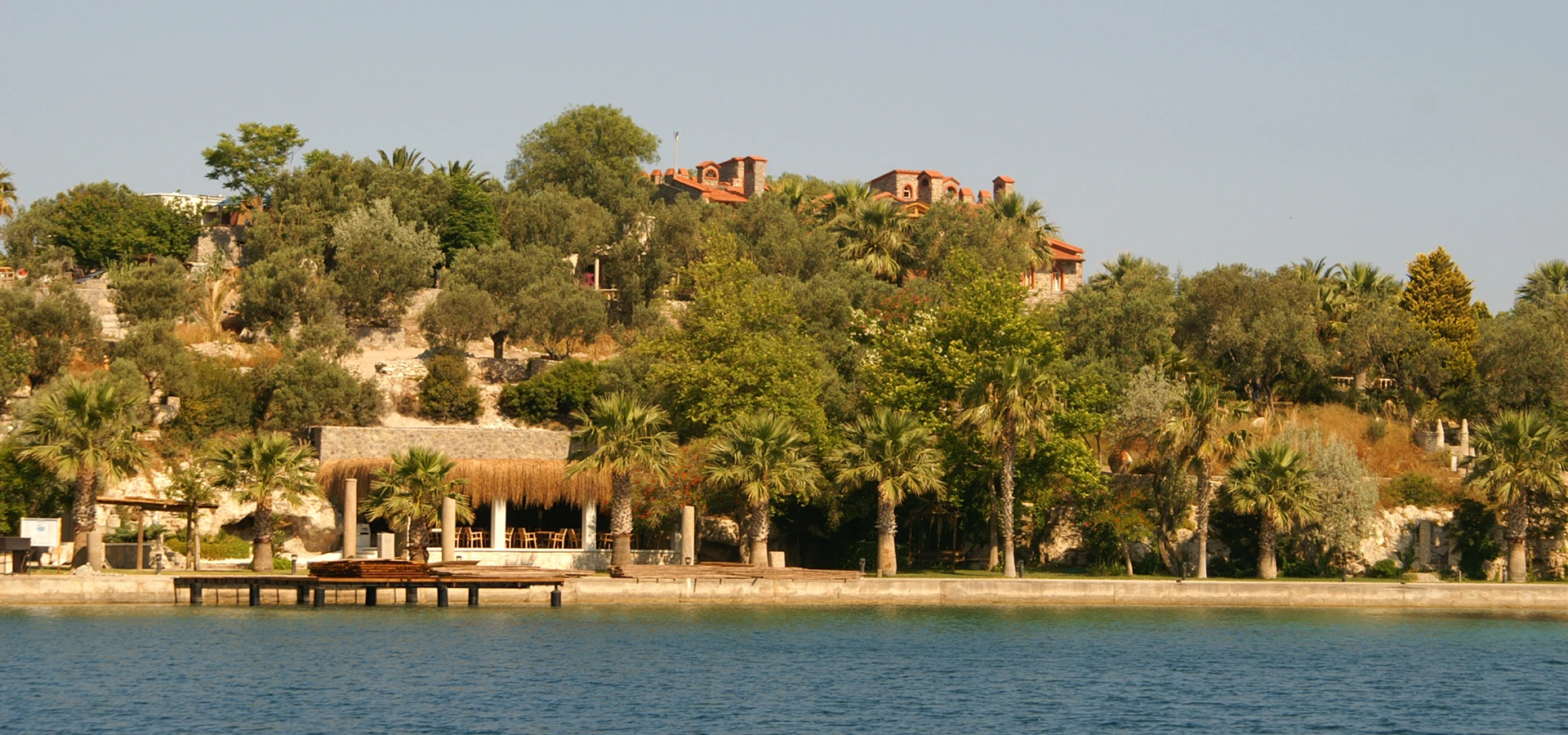
Combine Ayvalık's historic architecture and neighbourhoods with its desserts, protected foods, cheese culture, markets and celebrated olive-oil heritage.
Request This Tour