Byzantine Fortress, Genoese History, Ottoman Stronghold, Bosphorus Views & Anadolu Kavağı

Yoros Castle Istanbul – Complete History & Visitor Guide

Discover the great medieval fortress above Anadolu Kavağı, where Byzantine masonry, Genoese control, Ottoman strategy and extraordinary views reveal why the northern entrance of the Bosphorus mattered for centuries.

Explore Yoros Castle

Yoros Castle – Guardian of the Northern Bosphorus

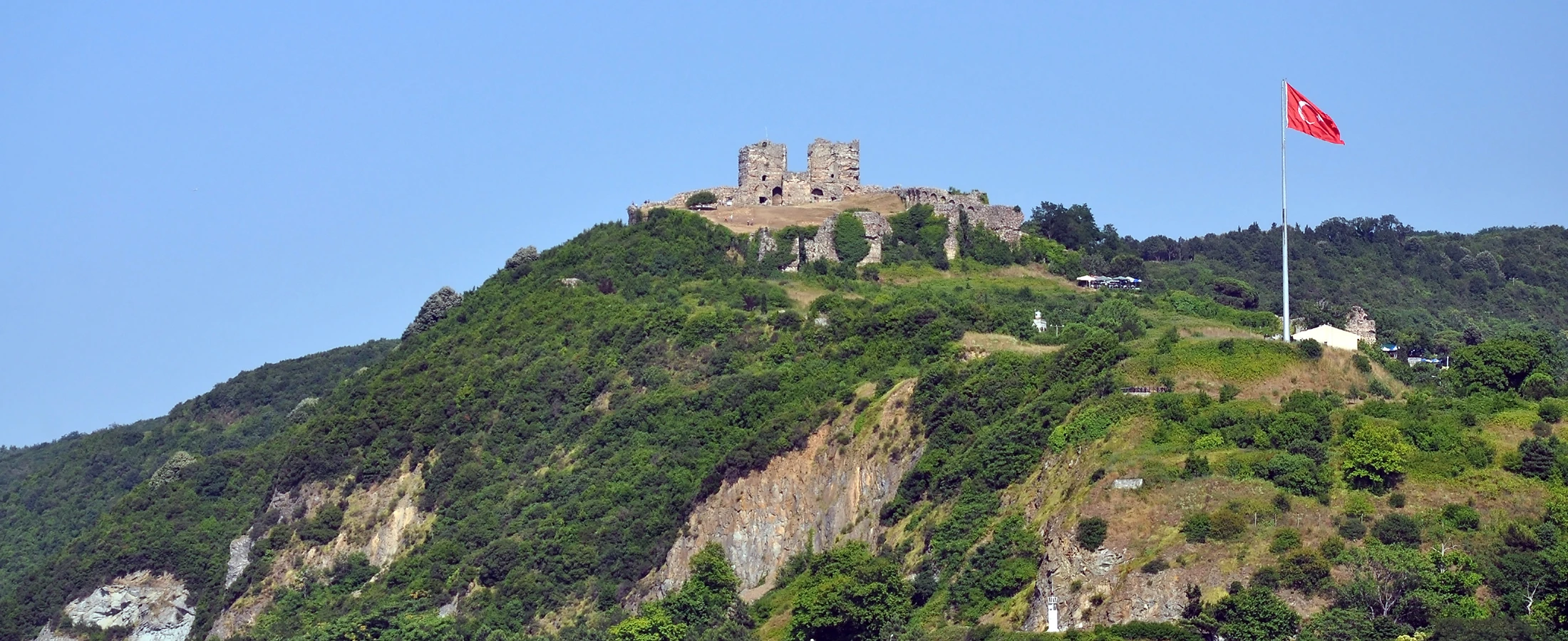
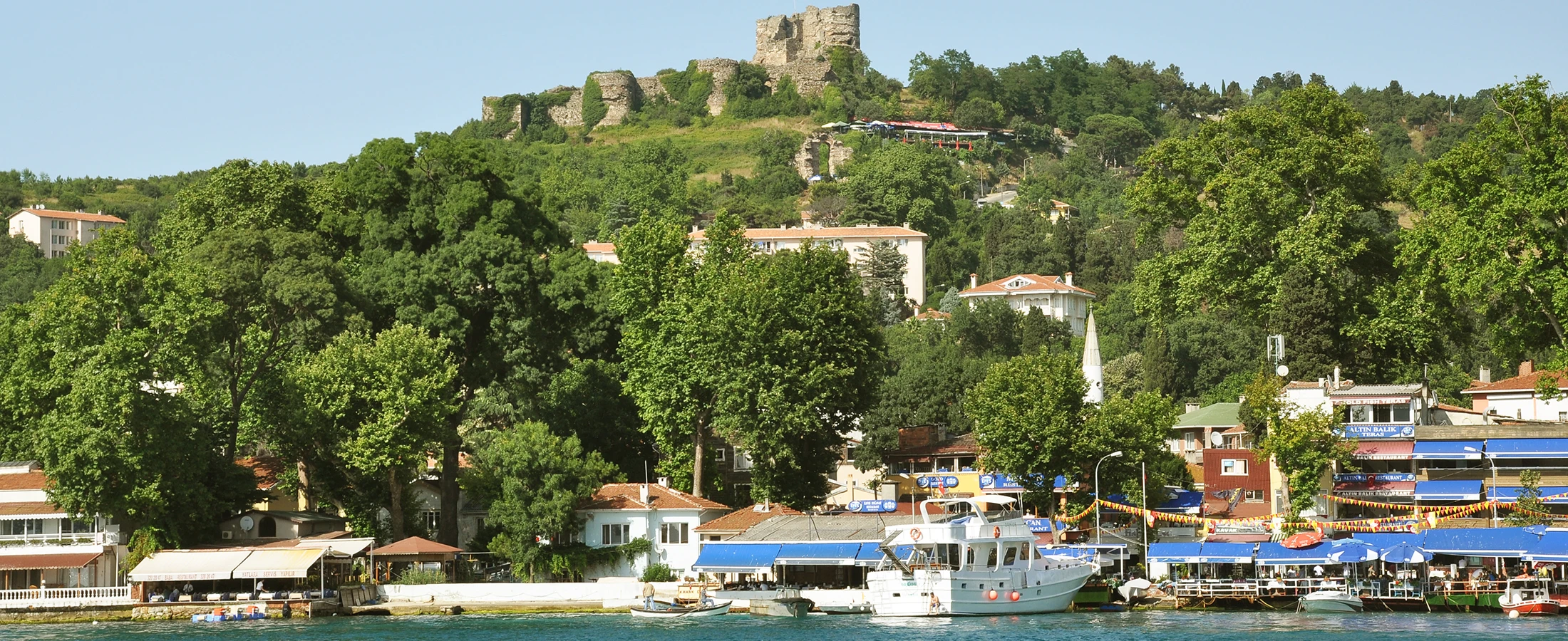
High above Anadolu Kavağı on Istanbul's Asian side, Yoros Castle occupies one of the most commanding strategic positions anywhere on the Bosphorus. The fortress stands close to the point where the narrow strait opens toward the Black Sea, watching a maritime corridor that connected Constantinople with ports, colonies, grain routes and trading networks far to the north.

Yoros is often introduced as the "Genoese Castle", but that popular name tells only part of the story. Its surviving fabric includes important Byzantine construction evidence and Greek inscriptions. The fortress later came under Genoese control during the 14th century, before becoming an Ottoman stronghold as Turkish power expanded across the Asian shore of the Bosphorus.

The castle's most memorable surviving features are the massive twin towers and monumental eastern gateway. Alternating courses of stone and brick, reused architectural material, weathered walls and fragments of inscriptions reveal a structure that was repaired, adapted and occupied across several historical periods.

Yoros is equally powerful as a landscape. From the hill, the geography that shaped the fortress becomes immediately clear: the Bosphorus below, the European shore opposite, the Black Sea approach beyond and the forested ridges of northern Istanbul surrounding the site.

A classic visit begins at the Anadolu Kavağı waterfront, continues through the village and climbs steeply toward the castle ridge. Allow around 1.5–2.5 hours for the castle and viewpoints alone, or three to four hours if you combine the visit with the village, ferry and a relaxed seafood stop.

Byzantine Fortress

See masonry, inscriptions and architectural details that reveal the castle's Byzantine origins.

Genoese & Ottoman Layers

Understand how control of Yoros changed with the political and commercial struggle for the Black Sea.

Monumental Twin Towers

Stand before the castle's most dramatic surviving feature: the great towers flanking the eastern gate.

Bosphorus Panorama

Look across one of Istanbul's most strategic landscapes toward the Black Sea entrance and European shore.


Know Before You Go

Yoros Castle Istanbul – Quick Facts

Essential information about Yoros Castle, its Byzantine origins, Genoese period, Ottoman history, architecture, archaeology, walking route, views and practical visitor planning.

📍

Location

Hill above Anadolu Kavağı in Beykoz, on Istanbul's Asian Bosphorus.

Open on Google Maps
🏰

Historic Identity

Primarily a Byzantine fortress later controlled by the Genoese and Ottomans.

🌊

Strategic Role

Observation and defense of the northern entrance of the Bosphorus from the Black Sea.

🧱

Best-Known Feature

Monumental twin towers, gate structures and mixed stone-and-brick masonry.

📜

Historic Evidence

Greek inscriptions and Byzantine architectural details survive in the fortress fabric.

⛴️

Classic Approach

Ferry to Anadolu Kavağı, followed by the uphill walk through the village.

🥾

Walking Difficulty

Moderate because of the steep ascent and uneven archaeological terrain.

⏱️

Recommended Visit

Approximately 1.5–2.5 hours for the castle hill and viewpoints.


Byzantine Defense, Genoese Black Sea Trade, Ottoman Expansion and the Geography of the Bosphorus

Why Is Yoros Castle Important?

Yoros Castle is one of Istanbul's most revealing places for understanding how geography shaped military power, trade and control of Constantinople.

The first reason Yoros matters is its strategic position. The castle stands above the eastern side of the Bosphorus near its Black Sea entrance. From this ridge, ships moving between the strait and the open sea could be watched over a wide distance.

The second reason is the fortress's Byzantine identity. Although it became famous locally as Ceneviz Kalesi, or the Genoese Castle, Greek inscriptions, construction technique and surviving architectural evidence show that important parts of the existing fortress belong to the Byzantine tradition.

The third reason is its Genoese phase. From the middle of the 14th century, Genoese control of Yoros connected the fortress with a much larger commercial world stretching through the Black Sea. The castle therefore belonged not only to the military history of Constantinople, but also to the competition for maritime trade.

The fourth reason is its role in Ottoman expansion. By the late 14th century, Ottoman power on the Asian side of the Bosphorus was growing rapidly. Yıldırım Bayezid used Yoros as a strategic base around 1391, before the construction of Anadolu Hisarı farther south.

Finally, Yoros survives as one of the best places in Istanbul to see a fortress together with the landscape that made it necessary. The ruins, the Bosphorus, the opposite shore and the Black Sea gateway can all be read as parts of the same historical system.

History of Yoros Castle

The history of Yoros Castle begins with the exceptional geography of the northern Bosphorus. Long before the surviving medieval walls were constructed, the entrance to the Black Sea was associated with dangerous navigation, religious traditions and strategic observation. Ancient authors described sacred places and maritime landmarks in the wider area.

The precise date of the surviving fortress is still discussed, but important architectural evidence connects Yoros strongly with the Byzantine period. Greek inscriptions built into the towers and walls are among the clearest reasons the castle should not simply be described as a Genoese construction.

One influential interpretation connects important sections of the upper fortress with the Palaiologan period after Byzantine Constantinople was recovered from Latin rule in 1261. The monumental eastern defenses, inscribed blocks and characteristic masonry belong to the medieval rebuilding history of the site.

In 1305, historical accounts record the castle passing temporarily into Turkish hands together with Şile, although this control did not last.

From 1348, the Genoese established control at Yoros during the period when their colonies and commercial networks were deeply involved in Black Sea trade. This phase explains why the fortress became so widely known in later tradition as the Genoese Castle.

By the end of the 14th century, Ottoman expansion transformed the political balance along the Asian shore. In 1391, Yıldırım Bayezid used Yoros as an important military base during campaigns in the region. Soon afterward, Anadolu Hisarı was built farther south as part of the growing Ottoman pressure on Constantinople.

Yoros remained strategically useful after the conquest of Constantinople. During the reign of Sultan Bayezid II, the fortress was repaired, and historical sources refer to a mosque within the castle. Later records also mention a fountain, bath and continued military occupation.

By the late 18th and early 19th centuries, travel accounts still described a small settlement and garrison within the fortress. The military importance of the northern Bosphorus continued, even as artillery, shipping and defensive technology changed.

Modern archaeological work has added a new chapter. Systematic excavation, documentation and conservation began in 2010 under Istanbul University, with later excavation campaigns continuing the study of the fortress and its surroundings.

Byzantine Construction

Greek inscriptions and architectural evidence identify Yoros as an important Byzantine fortress.

1305

The castle is recorded as passing temporarily into Turkish hands in the early 14th century.

From 1348

Genoese control linked Yoros with the struggle for Black Sea commerce and maritime routes.

1391

Yıldırım Bayezid used Yoros as a military base during Ottoman expansion along the Asian Bosphorus.

Ottoman Repairs

Later Ottoman rulers maintained the fortress and associated military and religious buildings.

Modern Archaeology

Scientific excavation and conservation work began in 2010 and continued through later campaigns.

Where Does the Name Yoros Come From?

The origin of the name Yoros is not completely settled. Like many place names around the Bosphorus, it may preserve echoes of much older Greek terminology, later adapted through centuries of local usage.

One common explanation connects Yoros with Hieron, a Greek word associated with a sacred place or sanctuary. This interpretation fits the ancient religious geography traditionally associated with the Black Sea entrance.

Another explanation connects the name with the Greek word oros, meaning mountain or hill. Beykoz municipal historical information notes this possibility as an important alternative.

The castle has also been called Anadolu Kavağı Castle and Ceneviz Kalesi – Genoese Castle. The latter name reflects a genuine Genoese period, but should not be used as evidence that the surviving fortress was originally built by the Genoese.

Historical note: the safest description is that Yoros is a Byzantine fortress with a major Genoese phase and later Ottoman use, rather than simply "a Genoese castle."

Why Was Yoros Castle Built Here?

Yoros makes sense only when viewed together with the water below. The Bosphorus forms the narrow maritime connection between the Black Sea and the Sea of Marmara, and from there toward the Aegean and Mediterranean.

For Constantinople, this route was essential. Ships carried grain, timber, wax, fish, furs, slaves, military supplies and commercial goods through the Black Sea network. Control of the northern entrance therefore had economic as well as military consequences.

The hill of Yoros offered a natural observation platform. A garrison here could watch vessels approaching from the north, observe traffic within the strait and communicate with defensive positions on the opposite European shore.

The castle also faced inland. The strongest surviving defensive zone lies toward the higher eastern side, showing that Yoros was not designed only against attack from the sea. Threats approaching across the Asian hinterland also had to be considered.

This combination of maritime surveillance, shore defense and control of inland approaches made the site useful to successive Byzantine, Genoese and Ottoman powers.

Waterway Bosphorus / Black Sea entrance
Primary Function Observation, defense and control of maritime movement
Opposite Shore Historic defensive positions around Rumeli Kavağı
Landward Defense Strong eastern fortifications facing the Anatolian approach
Modern Value The viewpoint still explains the fortress's strategic logic immediately

Architecture of Yoros Castle

Yoros Castle stretches across an irregular ridge running roughly east to west. Historical and archaeological descriptions place the fortress at approximately 500 meters in length, with its width varying considerably according to the shape of the terrain.

The surviving defenses use a characteristic combination of stone masonry and horizontal brick courses. Some blocks were reused from older structures, a common practice in medieval construction around Constantinople. These spolia add another layer of history to the fortress fabric.

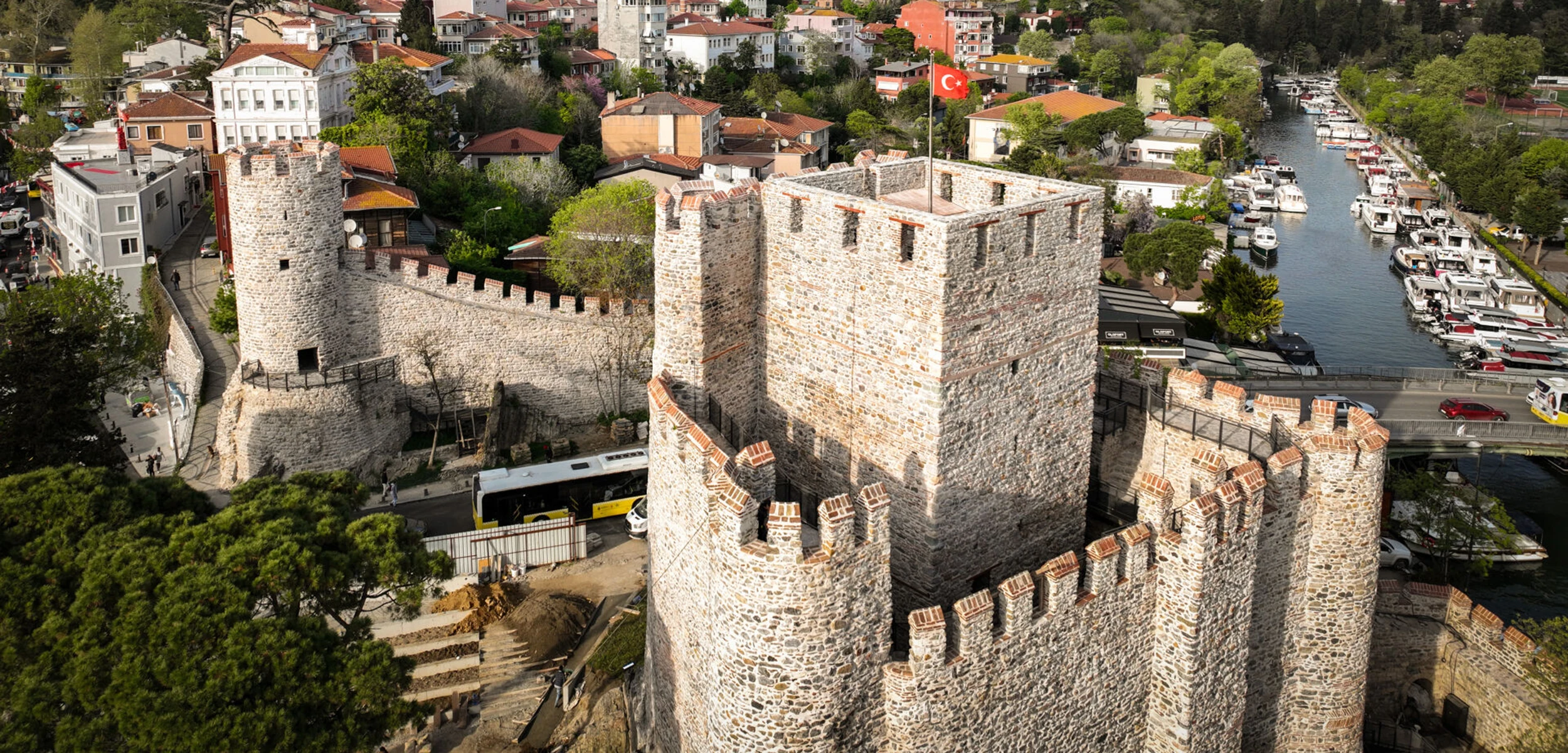
The most impressive surviving zone is the eastern upper fortress. Here, two enormous rounded towers flank the principal gateway, creating one of the most recognizable medieval fortress compositions in Istanbul.

The towers rise to roughly 20 meters in surviving sections. Their masonry shows differences between lower and upper parts, suggesting repairs, rebuilding and additions over time.

Yoros was never only a pair of towers. Long wall lines once enclosed a far larger fortified landscape extending toward the Bosphorus. Today, vegetation, later construction, restricted areas and the fragmentary survival of the walls can make the original scale difficult to understand at first glance.

Approximate Length

Around 500 meters from east to west across the ridge.

Variable Width

The fortress follows the irregular terrain rather than a simple geometric plan.

Stone & Brick

Alternating masonry courses are one of the most visible characteristics of the surviving walls.

Spolia

Reused architectural stone connects the medieval fortress with earlier building phases in the region.

Upper Fortress

The eastern high ground contains the strongest and best-known surviving defenses.

Landscape Design

The walls were shaped around two hills and the natural topography of the Bosphorus ridge.

The Twin Towers of Yoros Castle

The twin towers are the visual symbol of Yoros Castle. Standing on the eastern side of the upper fortress, they protected the principal landward entrance and created a monumental gateway visible from the surrounding heights.

The towers are broadly semicircular on their outer faces, with internal spaces adapted to the needs of defense. Their surviving masonry combines stone and brick, while differences in construction reveal that the structures were altered during later phases.

Between the towers stood the main gateway. Historic drawings and surviving architectural evidence indicate that the entrance was once more elaborate than the ruined opening seen today. Upper rooms, arches and defensive elements have been lost or heavily damaged.

The entrance area also preserves some of the castle's most important Byzantine inscriptions and monograms. These details are among the strongest arguments against the popular idea that Yoros was purely a Genoese foundation.

When photographing the towers, step back far enough to include the surrounding ridge and, where possible, the Bosphorus. The relationship between architecture and geography is far more important than the towers alone.

Greek Inscriptions & Byzantine Symbols at Yoros

Yoros Castle is especially important because inscriptions are not merely decorative details here: they help explain the identity and chronology of the surviving fortress.

Sections of the towers preserve Greek lettering formed in brick, while carved marble elements include Christian monograms. Scholars have connected some of these details with the Palaiologan dynasty and the Byzantine rebuilding history of the Bosphorus defenses.

One of the best-known symbolic forms is associated with the Christian formula IC XC NIKA, commonly understood as "Jesus Christ Conquers." Such monograms were widely used in Byzantine religious and imperial contexts.

Because parts of the inscriptions have been lost, damaged or reconstructed through historical drawings and scholarly interpretation, visitors should be cautious about expecting every element described in older publications to remain clearly visible today.

Look closely: Yoros rewards visitors who examine the masonry slowly. Brick patterns, carved blocks, reused stone and surviving monograms reveal far more than a quick photograph of the towers.

The Genoese at Yoros Castle

From the middle of the 14th century, Yoros entered one of the most fascinating chapters of its history: the struggle for Black Sea trade.

The Genoese already possessed an extensive commercial network centered on colonies and trading stations across the Black Sea and eastern Mediterranean. Control of a fortress at the northern entrance of the Bosphorus gave them a valuable strategic position close to Constantinople itself.

Historical accounts place Genoese control at Yoros from 1348. The fortress remained connected with Genoese interests until Ottoman power on the Asian shore became dominant toward the end of the century.

Later historical references record a Latin inscription once copied from the castle, stating that a Genoese official associated with the Lercari family repaired the fortress at the sacred promontory. This provides important documentary evidence for Genoese activity even though the castle itself was not originally a Genoese foundation.

The popular name Ceneviz Kalesi therefore preserves a real historical memory, but compresses a much more complex sequence of Byzantine, Genoese and Ottoman occupation.

Yoros Castle in the Ottoman Period

By the late 14th century, the balance of power along the Asian shore of the Bosphorus had shifted toward the Ottomans. Yoros became valuable not only as a coastal fortress, but also as a base for operations around the northern Bosphorus.

Ottoman chroniclers connect Yıldırım Bayezid with Yoros in 1391. From this region, Ottoman forces strengthened their control over the Asian side before Bayezid established Anadolu Hisarı farther south.

The fortress continued to be used after the conquest of Constantinople. During the reign of Bayezid II, Yoros was repaired and a mosque was established inside the fortified area. A bath and other facilities are also mentioned in later historical records.

An Ottoman document dated 1576 records repairs associated with the castle and its buildings. European travelers in the following years still described Yoros as a functioning, maintained fortress.

By the late 18th and early 19th centuries, accounts describe a small community inside the castle, including houses and a military garrison. This is a useful reminder that Yoros was once a lived fortified settlement, not merely the empty ruin seen today.

Archaeological Excavations at Yoros Castle

Modern archaeological work at Yoros has transformed understanding of the site. Istanbul University began systematic excavation, documentation, conservation and research in 2010, building on earlier historical and architectural studies.

The work has focused especially on the upper eastern fortress, where the monumental gateway, towers, wall lines and occupation layers can be studied most clearly.

Archaeology is especially important at Yoros because written sources alone cannot explain the fortress. Excavation helps distinguish building phases, repair campaigns, occupation levels and the changing use of spaces within the castle.

Research has also examined architectural materials, mortar, brick, stone, spolia, coins and other finds that help reconstruct the economic and military life of the site.

Later field campaigns have continued the investigation of Yoros and the wider Yuşa Hill–Anadolu Kavağı landscape. Because active archaeological and conservation work can affect access, visitors should always respect fencing, temporary closures and instructions on site.

Excavation Began

Systematic modern work began in 2010 under Istanbul University.

Main Focus

The upper fortress, twin towers, gateway, walls and occupation areas.

Research Methods

Excavation, architectural documentation, conservation and geophysical investigation.

Material Evidence

Masonry, ceramics, coins, architectural fragments and other archaeological finds.

Ongoing Importance

Yoros remains an active research site rather than a finished museum display.

Visitor Responsibility

Never cross archaeological barriers or disturb exposed remains.

What Can You See at Yoros Castle Today?

Twin Gate Towers

The castle's most dramatic surviving structures and the essential architectural highlight.

Eastern Gateway

The principal landward entrance between the towers, heavily altered but still monumental.

Stone-and-Brick Walls

Characteristic Byzantine-style masonry survives across several sections of the upper fortress.

Greek Inscriptions

Brick lettering and carved details preserve evidence of Byzantine building phases.

Christian Monograms

Symbolic carved elements associated with the Byzantine identity of the fortress.

Reused Stone

Older architectural material was incorporated into medieval walls and gateways.

Fortification Lines

Fragments of walls reveal how much larger the original defensive enclosure once was.

Archaeological Terrain

Excavated and uneven areas show that Yoros remains an active heritage landscape.

Bosphorus View

The panorama is essential for understanding the military logic of the site.

Black Sea Approach

Look north toward the opening where the protected strait meets the exposed Black Sea.

European Shore

See the opposite northern Bosphorus landscape around Rumeli Kavağı.

Forested Ridge

The green setting gives Yoros a dramatically different atmosphere from central Istanbul monuments.

The View from Yoros Castle

Many visitors come to Yoros for the ruins, but the view is part of the monument. Without the panorama, the strategic importance of the fortress is much harder to understand.

Looking west, the Bosphorus stretches toward the European shore. Looking north, the landscape opens toward the Black Sea. Below, Anadolu Kavağı occupies the protected waterfront beneath the fortress ridge.

Modern bridges, ships and urban infrastructure now share the landscape with medieval walls, but the basic geography remains unchanged. A vessel entering from the Black Sea still passes beneath the same high ground that medieval defenders once watched.

Clear mornings usually provide the best long-distance visibility. Late-afternoon light can be beautiful, but transport timing, wind and seasonal conditions should be considered before staying until sunset.

Look North Toward the Black Sea entrance
Look West Across the Bosphorus toward the European shore
Look Downhill Anadolu Kavağı village and ferry pier
Best Visibility Clear mornings after rain or during crisp spring and autumn weather
Best Interpretation Imagine how arriving ships would have appeared from the fortress ridge

Walking from Anadolu Kavağı to Yoros Castle

The classic way to reach Yoros Castle is on foot from Anadolu Kavağı. The route begins close to the ferry pier and climbs through the village toward the forested ridge.

The walk is not exceptionally long, but the gradient is steep. In warm weather, the climb can feel demanding, especially if you have just completed a long ferry journey.

Wear comfortable shoes, carry water and take your time. Turning around during the ascent gives increasingly impressive views over the village and Bosphorus.

Near the upper slopes, restaurants and viewpoint areas can provide places to rest. Continue only along clearly public and accessible routes, especially where archaeological or security restrictions are marked.

The descent is faster, but steep surfaces can become slippery after rain. If you arrived by ferry, always leave enough time to return to the pier without rushing.

Start Anadolu Kavağı Ferry Pier / village center
Route Village streets → steep uphill road/path → castle ridge
Difficulty Moderate because of the gradient
Footwear Comfortable walking shoes strongly recommended
Weather Hot in summer; slippery sections possible after rain
Planning Tip Know your return ferry time before beginning the climb

Yoros Castle Visitor Information

Yoros Castle should be approached as a protected archaeological landscape rather than as a conventional indoor museum. The hill, viewpoints and surviving fortifications are exposed to weather, uneven ground and changing conservation conditions.

Access to individual sections of the ruins can change because of excavation, restoration, fencing, vegetation, security or safety arrangements. Do not assume that every gate, tower or interior area described in older travel reports will be accessible during your visit.

There may be no single ticketing arrangement that applies permanently to every accessible part of the castle landscape. For a tightly scheduled trip, confirm current local conditions before traveling specifically for interior archaeological access.

The most reliable experience is the combination of the climb, the exterior fortifications, the historic setting and the panorama. Even when an individual archaeological section is restricted, the wider ridge still explains why Yoros mattered.

District Beykoz, Istanbul
Nearest Neighborhood Anadolu Kavağı
Site Type Medieval fortress / protected archaeological landscape
Recommended Visit 1.5–2.5 hours for castle hill and viewpoints
Main Challenge Steep approach and uneven terrain
Best Combination Anadolu Kavağı ferry + castle walk + waterfront meal
Important: archaeological access, paths, barriers, ferry schedules, road conditions and nearby facilities can change. Check time-sensitive information before travel and always follow on-site signs.

Practical Tips for Visiting Yoros Castle

Climb Before Lunch

The ascent is usually more comfortable before a large meal in Anadolu Kavağı.

Wear Good Shoes

Steep gradients and uneven surfaces make proper footwear more important than the short distance suggests.

Bring Water

The climb can become hot and exposed, especially during summer.

Check Ferry Times

If arriving by boat, know your return sailing before spending too long on the ridge.

Respect Barriers

Never cross fences or enter closed archaeological zones for a closer photograph.

Do Not Climb Walls

Historic masonry can be unstable and climbing damages the monument.

Expect Wind

The northern Bosphorus ridge can be much windier than central Istanbul.

Choose a Clear Day

Good visibility dramatically improves the experience because the strategic landscape is part of the visit.

Best Time to Visit Yoros Castle

Early Morning

Excellent for cooler climbing conditions, quieter paths and clearer photography.

Late Morning

Ideal when combining the castle with lunch in Anadolu Kavağı afterward.

Afternoon

Beautiful for changing light, but summer heat can make the climb more tiring.

Golden Hour

Atmospheric from the ridge if transport and access timing allow you to stay late.

Spring

One of the best seasons for green hills, comfortable walking and long views.

Autumn

Excellent for softer light, cooler temperatures and generally pleasant hiking conditions.

Summer

Great for ferry travel, but climb early and expect stronger weekend visitor numbers.

Winter

Quiet and dramatic, but the exposed hill can feel cold, wet and very windy.

How Much Time Do You Need at Yoros Castle?

45–60 Minutes

Enough for a quick exterior look and viewpoint if you arrive near the upper hill by vehicle.

1.5 Hours

A practical minimum when walking up from Anadolu Kavağı and returning without long stops.

2–2.5 Hours

Ideal for a relaxed climb, architecture, inscriptions, photography and the panorama.

3–4 Hours

Combine the castle with Anadolu Kavağı village and a waterfront meal.

Half Day

Perfect when the Bosphorus ferry journey is part of the sightseeing experience.

Full Day

Add Yuşa Hill, Beykoz, Kanlıca, Anadolu Hisarı or another northern Bosphorus stop.

Photography at Yoros Castle

Yoros is one of Istanbul's strongest locations for photographing architecture together with landscape. The best images explain not only what the castle looks like, but why it was built here.

The twin towers work well from a lower, slightly distant angle that shows their full mass. A wide lens can include the path, walls and surrounding greenery, while a longer lens is useful for masonry details and inscriptions.

For landscape photography, look for compositions that include the Bosphorus, passing ships, the European shore and surviving walls. These combinations communicate the fortress's strategic role immediately.

Clear morning light is excellent for distant visibility. Late-day light can create warmer tones on the stone and brick, but the ridge may become windier and transport options should be checked before staying late.

Never climb unstable masonry, stand on walls or cross barriers for a photograph. Some parts of the northern Bosphorus also remain sensitive or restricted, so avoid photographing clearly marked military installations.

Best Architecture Shot

The twin eastern towers framed with the surviving gateway and surrounding ridge.

Best Landscape Shot

Fortress masonry with the Bosphorus and European shore beyond.

Best Detail

Alternating brick-and-stone courses, carved blocks and weathered surfaces.

Best Historical Detail

Visible Greek lettering and Christian monogram elements where accessible.

Best Light

Clear mornings for visibility; softer late afternoon for atmosphere.

Safety First

Use public paths and never climb the monument for a better angle.

Accessibility at Yoros Castle

Yoros Castle is challenging for visitors with limited mobility. The classic route from Anadolu Kavağı involves a steep uphill climb, and the archaeological terrain around the ruins is uneven.

The site should not be assumed to provide the smooth, barrier-free circulation of a modern museum. Gradients, rough ground, steps, temporary barriers and changing path conditions may all affect movement.

Travelers who want the panorama but cannot comfortably make the full climb may consider taxi or suitable private transport for as much of the uphill road as current access permits. Even then, the final approach and archaeological areas may remain difficult.

A rewarding alternative is to focus on Anadolu Kavağı, the ferry journey, waterfront and lower village, then view the castle ridge from below.

Main Challenge

The steep ascent from the ferry pier and village.

Ground Conditions

Expect uneven archaeological surfaces rather than fully paved visitor routes.

Vehicle Assistance

A taxi or private vehicle may reduce part of the uphill walk where road access allows.

Alternative Experience

Enjoy Anadolu Kavağı waterfront and the castle hill from below if the ascent is unsuitable.

Allow Extra Time

Avoid planning a tight ferry connection if walking conditions may slow your return.

Confirm Current Conditions

Accessibility can change with archaeological work, barriers and maintenance.

How to Get to Yoros Castle

Yoros Castle stands above Anadolu Kavağı in Beykoz, near the northern end of Istanbul's Asian Bosphorus. For most visitors, the most memorable route combines ferry travel with the uphill walk from the village.

By ferry, travel to Anadolu Kavağı Pier using a current Şehir Hatları service that fits your day. Routes and stopping patterns change, so always check the official timetable before departure.

From the pier, walk through the compact village center and follow the uphill route toward Yoros Castle. The climb is straightforward in concept, but the steep gradient makes comfortable shoes important.

By road, reach Anadolu Kavağı through Beykoz. Taxis, private vehicles and public buses can bring you into the village area, although weekend congestion and limited parking can make the ferry more attractive.

If you are combining Yoros with Yuşa Hill, Beykoz, Anadolu Feneri or Poyrazköy, a taxi or private vehicle is usually more practical than relying on a single walking route.

By Ferry

The classic and most atmospheric approach through the Bosphorus.

From Anadolu Kavağı Pier

Walk uphill through the village to the castle ridge.

From Üsküdar

Check current Şehir Hatları connections toward Anadolu Kavağı.

From the European Side

Use suitable Bosphorus ferry connections or travel by road through a bridge crossing.

By Taxi

Useful for reducing the uphill approach or combining several Beykoz attractions.

By Private Vehicle

Practical for a wider northern Bosphorus itinerary, but parking can be limited at busy times.

Transport tip: ferry schedules, bus routes and road conditions change. Use current official transport information rather than an old timetable.

Suggested Yoros Castle Walking Route

Begin at Anadolu Kavağı Ferry Pier. Spend a few minutes beside the water before walking inland, because the harbor gives you the first sense of the strategic geography beneath the castle.

Continue through the historic village center and begin the uphill route. As you gain height, turn around occasionally to see how the harbor and Bosphorus open below.

Near the top, pause at a public viewpoint before approaching the castle. Look across the strait and identify the European shore, then look north toward the Black Sea entrance.

Approach the twin eastern towers and study the stone-and-brick masonry. Where visible and accessible, look for Greek lettering, carved marble and reused architectural blocks.

Walk only through clearly open parts of the archaeological area. Do not cross barriers or attempt to follow wall lines through restricted terrain.

Finish with a final panorama, then descend to Anadolu Kavağı for fish, seafood, tea or coffee beside the Bosphorus.

Stop 1 Anadolu Kavağı Ferry Pier
Stop 2 Village center and beginning of the climb
Stop 3 Mid-slope Bosphorus views
Stop 4 Upper ridge panorama
Stop 5 Yoros Castle twin towers and eastern gateway
Stop 6 Accessible Byzantine masonry and inscription details
Stop 7 Black Sea and European-shore viewpoint
Stop 8 Return downhill to Anadolu Kavağı
Total Time Approximately 1.5–2.5 hours for the castle route, excluding a long ferry journey

Places to Visit Near Yoros Castle

Yoros Castle can anchor an excellent northern Bosphorus day combining medieval fortifications, Ottoman heritage, ferry travel, pilgrimage sites, waterfront neighborhoods and forested scenery.

Use our complete guide to places to visit in Istanbul to continue planning the wider city.

Anadolu Kavağı

Explore the fishing village below Yoros, with ferry connections, Ottoman heritage and waterfront seafood.

Yuşa Hill

Visit one of Beykoz's best-known pilgrimage and viewpoint hills overlooking the northern Bosphorus.

Poyrazköy

Continue toward another northern Bosphorus settlement with coastal scenery and defensive history.

Anadolu Feneri

Travel toward the lighthouse village at the Asian side of the Black Sea entrance.

Beykoz

Explore the district center, waterfront parks and greener neighborhoods of the Asian Bosphorus.

Kanlıca

Continue south for Kanlıca yogurt, İskender Paşa Mosque, Mihrabat Grove and classic Bosphorus atmosphere.

Anadolu Hisarı

Compare Yoros with Sultan Bayezid I's later Ottoman fortress farther south on the Asian shore.

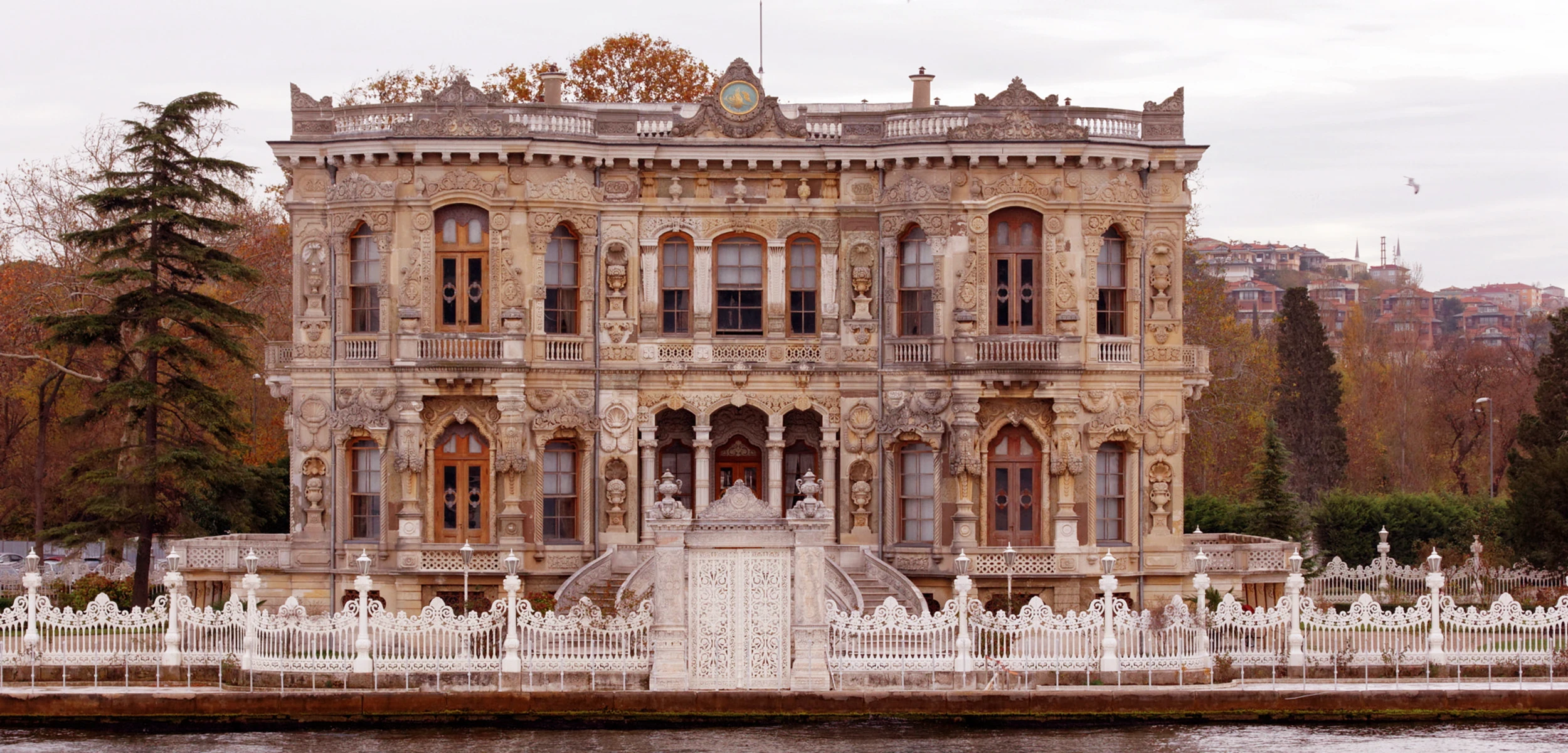
Küçüksu Pavilion

Add an elegant 19th-century Ottoman imperial pavilion beside the Bosphorus.

Ortaköy

Continue the wider Bosphorus journey toward one of Istanbul's liveliest European-side waterfront neighborhoods.

Frequently Asked Questions About Yoros Castle

Where is Yoros Castle?

Yoros Castle stands on a hill above Anadolu Kavağı in the Beykoz district on Istanbul's Asian side, close to the northern entrance of the Bosphorus from the Black Sea.

Is Yoros Castle Byzantine or Genoese?

The surviving fortress contains strong Byzantine construction evidence and Greek inscriptions. It later came under Genoese control during the 14th century and was subsequently used by the Ottomans.

Why is Yoros called the Genoese Castle?

The name reflects a genuine period of Genoese control connected with Black Sea trade, but it should not be taken to mean that the entire surviving fortress was originally built by the Genoese.

When did the Genoese control Yoros Castle?

Historical information from Beykoz Municipality places Genoese control from 1348, during the period of intense competition for Black Sea commerce.

When did Yoros become Ottoman?

Ottoman control was established by the end of the 14th century. Yıldırım Bayezid used Yoros as an important base around 1391.

Why was Yoros Castle important?

Its position allowed observation and defense of the northern entrance of the Bosphorus, a vital maritime route between Constantinople and the Black Sea.

What are the most important things to see?

The monumental twin towers, eastern gateway, stone-and-brick masonry, surviving Byzantine inscription details and the panoramic Bosphorus landscape are the principal highlights.

Are there Byzantine inscriptions at Yoros?

Yes. Greek lettering and Christian monogram elements survive in the fortress and are important evidence for its Byzantine construction history.

How large is Yoros Castle?

Historical and archaeological descriptions place the fortress at roughly 500 meters in east–west length, with its width varying according to the terrain.

How tall are the twin towers?

Surviving sections of the monumental gate towers reach roughly 20 meters in height.

When did archaeological excavation begin?

Systematic Istanbul University excavation and conservation work began in 2010, with later campaigns continuing research at Yoros and its surroundings.

Can I walk to Yoros Castle from Anadolu Kavağı?

Yes. The classic route climbs steeply from the ferry pier and village center to the castle ridge.

How difficult is the walk?

The distance is manageable for many visitors, but the steep gradient makes the route moderately demanding, especially in hot weather.

How long should I spend at Yoros Castle?

Allow around 1.5–2.5 hours for the climb, castle exterior, architectural details, viewpoints and descent.

Can I combine Yoros Castle with Anadolu Kavağı?

Yes. This is the classic visit: arrive in Anadolu Kavağı, climb to Yoros Castle, then return to the waterfront for fish or seafood.

Can I reach Yoros Castle by ferry?

The ferry brings you to Anadolu Kavağı below the castle. From the pier, continue uphill on foot or use suitable local road transport where available.

Is Yoros Castle open every day?

Yoros is an archaeological landscape rather than a simple ticketed museum. Access to particular areas can change because of excavation, conservation, safety or security arrangements, so check current conditions when interior access is essential.

Do I need a ticket?

Do not assume one permanent ticketing arrangement for every part of the castle landscape. Access conditions can change, so verify current local information before a tightly planned visit.

Is Yoros Castle good for photography?

Yes. The twin towers, Byzantine masonry, Bosphorus, Black Sea approach, passing ships and forested hills create some of the strongest fortress photographs in Istanbul.

What is the best time of day to visit?

Morning and late morning are especially good for cooler climbing conditions and clear long-distance views.

What is the best season?

Spring and autumn are ideal for walking and visibility. Summer is beautiful but can be hot, while winter is quieter and often very windy.

Is Yoros Castle wheelchair accessible?

The steep approach and uneven archaeological terrain create significant accessibility challenges. Vehicle assistance may reduce part of the uphill route, but barrier-free access should not be assumed.

Can children visit Yoros Castle?

Yes, but adults should supervise children carefully around steep paths, uneven terrain, ruins, exposed viewpoints and roads.

Can I combine Yoros Castle with Anadolu Hisarı?

Yes. The two fortresses create an excellent comparison between Byzantine Yoros and the later Ottoman Bosphorus strategy associated with Sultan Bayezid I.

Is Yoros Castle worth visiting if I have already taken a Bosphorus cruise?

Yes. A cruise shows the Bosphorus from water level, while Yoros gives you a commanding historic viewpoint that explains how the northern entrance was defended.

Responsible Visiting at Yoros Castle

Do Not Climb the Walls

Historic masonry is vulnerable and can also be unstable.

Respect Archaeological Barriers

Fences and closed areas protect both visitors and active research zones.

Do Not Remove Stones

Even apparently loose fragments belong to the protected archaeological site.

Stay on Public Paths

The wider northern Bosphorus includes restricted and sensitive areas.

Protect the Forest

Take rubbish with you and be especially careful during dry summer weather.

Photograph Responsibly

Do not cross barriers or photograph clearly marked restricted installations.

Private Yoros Castle & Northern Bosphorus Experiences

Connect Yoros Castle with Anadolu Kavağı, Beykoz, Kanlıca, Anadolu Hisarı, Byzantine history, Ottoman fortifications, Bosphorus geography, local food, ferry culture and northern Istanbul scenery through a private route shaped around your interests and without compulsory shopping stops.

Custom Yoros Castle & Anadolu Kavağı Experience

Choose a private route focused on Byzantine history, medieval fortifications, Genoese Black Sea trade, Ottoman expansion, Bosphorus viewpoints, photography, walking and the quieter northern side of Istanbul.

Continue Along the Asian Bosphorus

Use Yoros Castle as the northern anchor of a wider route through fortresses, Ottoman pavilions, waterfront neighborhoods, historic mosques, local food and the green landscapes of Beykoz.

Private Istanbul Tours

Build a private day around the parts of Istanbul that interest you most, from Byzantine and Ottoman monuments to Bosphorus neighborhoods, fortresses, local food, religious history, photography, waterfront walks and lesser-visited heritage sites.