Private Anadolu Fortress & Bosphorus Heritage Tour
Ask us about a tailor-made route focused on Bayezid I, Mehmed the Conqueror, the 1453 campaign, Göksu, Küçüksu Pavilion and the paired Bosphorus fortresses.
Request a Custom Tour





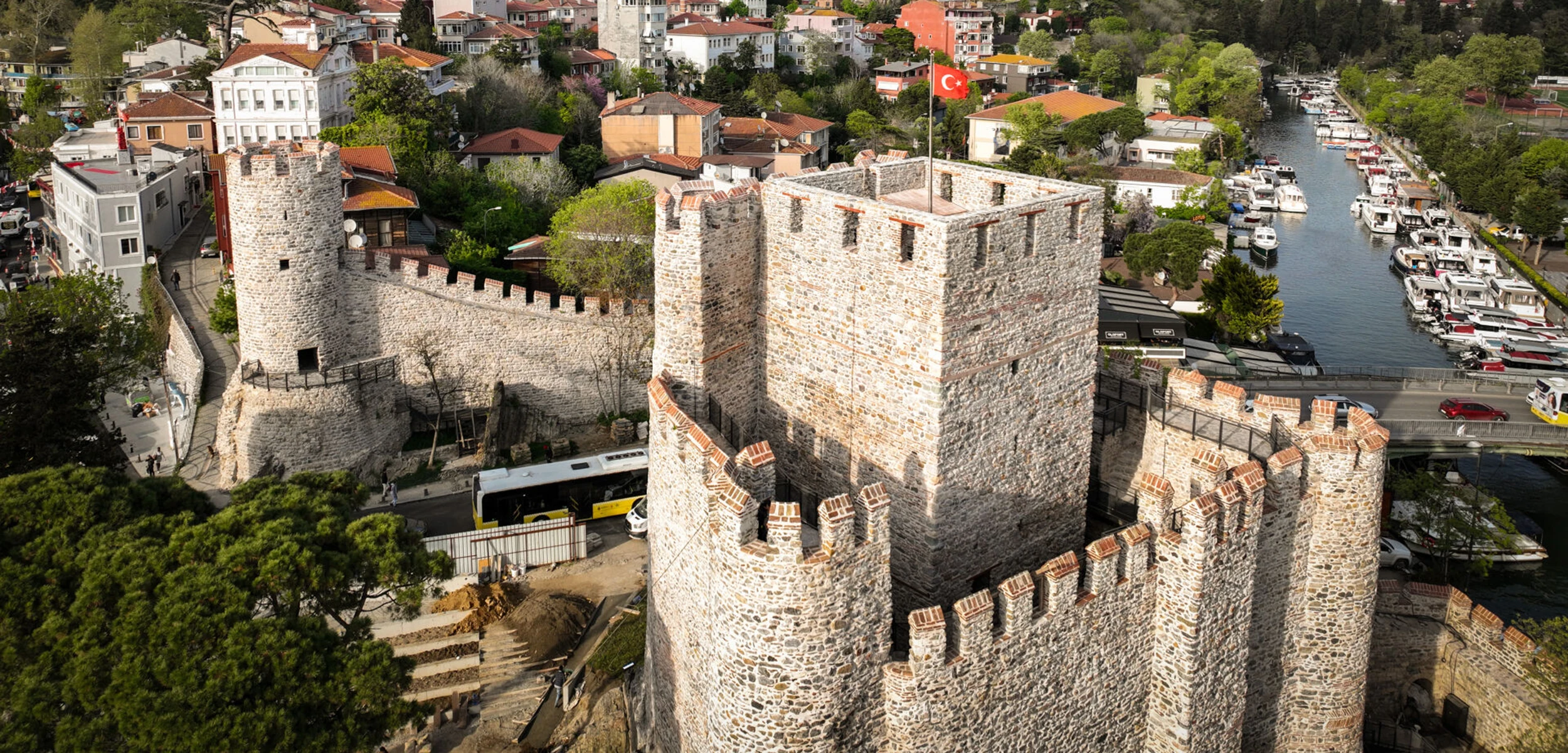
The Anadolu Fortress, known in English as the Anatolian Fortress, in Turkish as Anadolu Hisarı or Anadoluhisarı, and historically as Güzelce Hisar, rises where the Göksu stream meets the Bosphorus on Istanbul's Asian side. Commissioned by Sultan Bayezid I in the late 14th century, it is widely regarded as the oldest surviving Ottoman-built architectural monument in Istanbul.
The fortress occupied a strategically chosen position near the narrowest section of the strait, where Europe and Asia are separated by only about 660 meters. Its first purpose was to strengthen Ottoman control of the Bosphorus and restrict assistance reaching Byzantine Constantinople from the Black Sea.
In 1452, Sultan Mehmed II enlarged the stronghold with a substantial outer defensive wall and three towers while constructing the much larger Rumeli Fortress directly across the water. Together, the two fortresses formed the central elements of his Bosphorus strategy before the conquest of Constantinople in 1453.
Following an extensive conservation project, the long-closed monument reopened on 29 April 2023 as Anadolu Hisarı Museum. Visitors can now encounter the medieval stonework at close range while discovering the fortress's military history, restoration story, Bosphorus setting and new life as a museum and cultural venue.
Bayezid I built the original keep and inner fortress before an Ottoman siege of Constantinople.
Mehmed II strengthened the site with an outer wall and three additional towers.
The fortress guards one of the narrowest and most strategically important sections of the Bosphorus.
The restored fortress reopened to the public as Anadolu Hisarı Museum.
Essential information for visiting Anadolu Hisarı Museum beside the Göksu stream in Beykoz on Istanbul's Asian shore.
Anadolu Hisarı neighborhood, Beykoz, on the Asian side of the Bosphorus.
Open on Google MapsSultan Bayezid I built the original fortress; Mehmed II enlarged it in 1452.
Güzelce Hisar, meaning the “Beauteous Fortress,” is its best-known former name.
The first phase dates from the 1390s; the outer defenses were added in 1452.
Ticketed municipal museum; current prices differ for reduced, full and foreign visitor admission.
Allow 60–90 minutes, or 3–5 hours with Göksu, Küçüksu and the Bosphorus shore.
Anadolu Hisarı is where early Ottoman expansion, Bosphorus geography and the long campaign for Constantinople come together in a single monument.
The fortress is important first because of its age. Built while Constantinople was still the capital of the Byzantine Empire, it represents the earliest surviving Ottoman architectural presence within modern Istanbul and the beginning of a new strategic landscape on the Bosphorus.
Its position explains its military value. The stronghold stands on a triangular point beside Göksu, close to the narrowest channel of the strait. From here, Ottoman forces could observe maritime traffic and challenge the movement of supplies, soldiers and ships between the Black Sea and Constantinople.
The fortress is also essential to understanding Mehmed II's preparations for the conquest. When Rumeli Fortress was built opposite it in 1452, the older Asian stronghold was reinforced so the two sides of the Bosphorus could operate as a coordinated defensive system.
For travelers following our guide to places to visit in Istanbul, Anadolu Hisarı offers a compact but unusually layered experience: medieval military architecture, a restored museum, a traditional waterfront neighborhood, the Göksu valley and excellent views toward the European shore.
The original Anadolu Fortress was commissioned by Sultan Bayezid I, known as Yıldırım Bayezid, during the 1390s. It is commonly dated to approximately 1393–1394, when the Ottoman ruler was preparing to pressure and blockade Byzantine Constantinople.
The first structure was a compact stronghold centered on a high fortified keep and an irregular inner enclosure. Its location allowed the Ottomans to watch the Bosphorus and to obstruct support that might reach the Byzantine capital from the Black Sea. The fortress also encouraged the formation of an Ottoman settlement around its garrison.
In 1452, Sultan Mehmed II strengthened Anadolu Hisarı as part of his final preparations for the conquest. He added a large outer wall, known as a hisarpeçe, with three towers and complementary service spaces. At the same time, Rumeli Fortress was constructed on the European shore directly opposite.
After the conquest of Constantinople in 1453, the fortress gradually lost its central offensive role. It continued to contribute to Bosphorus security, was used at times as a place of confinement and regained defensive relevance during periods of threat from the Black Sea. Later fortifications farther north eventually reduced its strategic importance.
The surrounding area developed into one of the Bosphorus's characteristic waterfront neighborhoods. After long periods of restricted access and deterioration, the fortress underwent comprehensive conservation beginning in 2021 and reopened as a museum on 29 April 2023.
Bayezid I commissioned the original keep and inner defensive enclosure.
Ottoman pressure on Constantinople demonstrated the strategic value of the Asian stronghold.
Mehmed II added the outer wall and towers while building Rumeli Fortress opposite.
The paired fortresses supported Ottoman control of the Bosphorus before the conquest.
İBB Heritage carried out structural conservation and landscape improvements.
Anadolu Hisarı reopened as a museum and cultural venue.
Sultan Bayezid I ruled during a period of rapid Ottoman expansion in both Anatolia and the Balkans. Constantinople remained the great strategic prize at the center of his territories, but its walls, sea access and international connections made a successful siege extremely difficult.
Anadolu Hisarı was built to change that balance. Rather than attacking the city walls directly, the fortress placed an Ottoman garrison beside one of the Bosphorus's narrowest channels and created a permanent base from which maritime movement could be observed and challenged.
The original design was smaller than the outer profile visible today. It consisted principally of a powerful central keep and an inner defensive circuit adapted to the natural rock and triangular terrain beside the Göksu stream.
Bayezid's efforts to capture Constantinople were ultimately interrupted by wider conflicts and ended after his defeat by Timur at the Battle of Ankara in 1402. The fortress survived, however, and half a century later it became an essential component of Mehmed II's far more comprehensive conquest strategy.
The fortress's founder is remembered by the epithet “Thunderbolt.”
The stronghold established a permanent Ottoman military presence beside the Bosphorus.
A tall, compact tower formed the secure heart of the earliest defensive phase.
The position helped monitor assistance approaching Constantinople from the north.
When Sultan Mehmed II prepared his decisive campaign against Constantinople, he recognized that the Bosphorus had to be controlled from both shores. The city could not be isolated while ships continued to carry supplies and military support south from the Black Sea.
In 1452, Mehmed commissioned the monumental Rumeli Fortress on the European bank. At Anadolu Hisarı, he reinforced Bayezid's older structure with a broad outer defensive enclosure and three towers designed for the changing realities of early gunpowder warfare.
The two fortresses faced one another across a channel of approximately 660 meters. Their garrisons, artillery and elevated observation points enabled the Ottomans to pressure vessels attempting to pass without permission and strengthened control of the waterway immediately before the 1453 siege.
Anadolu Hisarı is therefore more than a predecessor to Rumeli Hisarı. Its two major building phases allow visitors to read the evolution of Ottoman military architecture from a late-medieval keep and enclosure to the more expansive, artillery-conscious defenses of Mehmed II.
Anadolu Hisarı is a compact but complex monument whose irregular plan responds closely to the rocky ground beside Göksu. Its oldest component is the başkule, or principal keep, rising within an inner circuit of defensive walls.
The keep provided a protected final position for the garrison, with multiple levels connected vertically inside thick masonry walls. The surrounding inner enclosure followed the terrain rather than imposing a perfectly geometric plan, a characteristic response to the fortress's restricted site.
Mehmed II's 1452 intervention greatly expanded the monument. The outer hisarpeçe enclosed the earlier core and introduced three prominent towers positioned to strengthen the landward and waterside defenses. The larger circuit created space for troops, equipment and the practical activities of an active garrison.
Stone and brick masonry, surviving beam sockets, wall joints and changes in construction technique help reveal the separate building campaigns. Modern conservation deliberately preserved much of this accumulated fabric so visitors can distinguish original surfaces, later repairs and areas stabilized during the recent restoration.
The high central keep formed the strongest and most secure part of Bayezid's fortress.
An irregular defensive wall surrounded the keep and followed the natural terrain.
Mehmed II's outer circuit expanded the fortress shortly before the 1453 conquest.
The later towers strengthened the enlarged perimeter and supported more active defense.
Layered masonry preserves evidence of construction, repair, earthquake damage and conservation.
Rock, slopes and changing levels shape both the architecture and the modern visitor route.
The strategic meaning of Anadolu Hisarı becomes clearest when viewed from the water or from the shore opposite. The Bosphorus narrows dramatically here, channeling maritime traffic between steep hills and bringing passing vessels close to both banks.
The fortress stands where Göksu Creek reaches the Bosphorus, on a triangular piece of ground that could be supplied from the Asian hinterland while commanding the waterway. Its elevated keep provided long views north and south, while the later outer towers brought defensive activity closer to the shore.
Across the strait, Rumeli Fortress occupies the European slope. Together, the two sites formed a visual and military gateway—one older and compact, the other larger and purpose-built for Mehmed II's final campaign.
Today the geography remains one of the visit's greatest pleasures. Freighters, ferries, fishing boats and private vessels pass between the fortresses, making the Bosphorus's continuing international and everyday importance immediately visible.
The principal keep dominates the ensemble and gives the fortress its distinctive silhouette. Its high masonry mass was designed for security rather than comfort, with limited openings, vertically arranged levels and a defensible entrance system.
Around it, the inner walls preserve the tighter footprint of Bayezid I's stronghold. Look for differences in masonry, wall alignment and construction joints that help separate the early phase from Mehmed II's larger outer enclosure.
The three outer towers create a broader defensive front. Their placement reflects the need to command land approaches, protect the garrison area and bring weapons closer to the Bosphorus at a moment when gunpowder was transforming siege warfare.
The modern museum route uses discreet stairs, walkways and safety interventions to bring visitors into parts of the fortress that were inaccessible for decades. Some elevated areas may be limited temporarily because of weather, events, conservation work or visitor safety.
Study the fortress's oldest and most visually dominant surviving structure.
Changes in masonry help distinguish Bayezid's core from Mehmed II's additions.
Narrow apertures reveal how observation and protection shaped the architecture.
Three prominent towers belong to the major expansion of 1452.
Restoration exposed the original levels and the dramatic ground beneath the walls.
Where access is permitted, higher points reveal the Bosphorus, Göksu and opposite shore.
The modern name Anadolu Hisarı means the “Fortress of Anatolia” or “Anatolian Fortress.” It distinguishes the stronghold on the Asian shore from Rumeli Hisarı, the “Fortress of Rumelia,” on the European side.
Historical sources and local traditions preserve several other names. The best known is Güzelce Hisar, often translated as the “Beauteous Fortress.” Forms such as Akça Hisar, Gözlüce Hisar and Yenice Hisar also appear, while some European sources used the Latin expression Nova Castrum, or “New Castle.”
The fortress eventually gave its name to the surrounding neighborhood. Anadolu Hisarı today refers not only to the monument but also to a distinctive part of Beykoz shaped by Göksu Creek, waterfront houses, cafés, local streets and the green slopes of the upper Bosphorus.
The present Turkish name identifies the fortress on the Anatolian or Asian shore.
The most familiar historic name is commonly translated as the “Beauteous Fortress.”
One of several alternative forms recorded in the fortress's long history.
A historical European designation meaning “New Castle.”
The fortress should not be experienced as an isolated museum. It stands at the heart of a neighborhood that grew from the original garrison settlement and later became part of the refined residential culture of the Bosphorus.
The nearby Göksu and Küçüksu streams were celebrated in the Ottoman period for gardens, excursions and waterside recreation. Their valleys formed a green counterpoint to the fortress, while timber houses, waterfront mansions and small landing places developed along the shore.
Modern roads altered the setting, but the relationship between water, stone defenses and neighborhood life remains powerful. Walking beyond the museum entrance reveals waterside views, local cafés, traditional streets and changing perspectives on the fortress walls.
The nearby Namazgâh, an open-air prayer place associated with the historic complex, was also included in the recent conservation program. Treat it as a religious heritage site and observe any access guidance on arrival.
The stream meets the Bosphorus directly beside the fortress's strategic site.
The wider area was famous for Ottoman leisure, gardens and waterfront excursions.
A neighborhood developed around the garrison, guards and their families.
Traditional timber architecture and waterfront residences enrich the surrounding route.
The nearby open-air prayer place adds a religious layer to the military landscape.
Allow time for the shore, creek and neighborhood rather than visiting only the museum gate.
By the early 21st century, Anadolu Hisarı had been closed to ordinary visitors for decades and required substantial structural attention. Cracks, weakened masonry, lost timber ties and earlier cement-based repairs had placed important sections of the monument at risk.
İBB Heritage began a comprehensive project in 2021 under the guidance of a scientific committee. The work focused on documenting the original fabric, strengthening vulnerable masonry, removing incompatible repairs and conserving rather than visually over-renewing the fortress.
Excavation and careful clearing revealed historic ground levels, the rock on which parts of the fortress stand and new evidence about how the spaces were used. Contemporary circulation elements were inserted with a restrained approach so visitors could move through the monument without obscuring its age.
The restored fortress opened on 29 April 2023 as Anadolu Hisarı Museum. Exhibition areas, an open-air event space and cultural programming have transformed the monument into a living public venue while preserving the weathered surfaces and “ruin aesthetic” that communicate its long history.
A specialist committee guided documentation, strengthening and treatment decisions.
Harmful cement repairs were removed and historic masonry was treated with appropriate methods.
Clearing and research revealed the historic ground and rock beneath the defensive spaces.
Weathering and authentic surfaces were retained instead of creating a falsely new appearance.
New circulation allows visitors to experience previously inaccessible areas more safely.
Concerts, talks and performances give the fortress an active contemporary role.
Begin by viewing the fortress from outside to understand how its keep, inner walls and later towers overlap. Inside the museum, follow the marked route slowly and compare the tight medieval core with the broader enclosure built for Mehmed II.
See the powerful central tower that formed the secure heart of Bayezid I's fortress.
Trace the compact first defensive circuit around the oldest building phase.
Explore the expanded enclosure created by Mehmed II in 1452.
Study the later defensive towers associated with preparations for the conquest.
Look for brick bands, stone textures, beam sockets and construction joints.
Notice how modern supports and walkways are distinguished from the original fabric.
Where the route permits, look across the narrow channel toward Rumeli Fortress.
Step beyond the walls to understand the meeting of fortress, creek and neighborhood.
Opening hours, ticket prices and event arrangements can change; confirm them before travel.
The ticket desk currently closes 30 minutes before the museum's published closing time.
Expect stone surfaces, stairs, slopes and outdoor sections that may become slippery.
Narrow passages and defensive spaces are easier to navigate without large bags.
Much of the experience is open-air, and some elevated areas may close in poor conditions.
Concerts and cultural programs can enrich a visit but may alter normal circulation.
The official museum listing currently states that ticket payments are cashless.
Combine the museum with Göksu, Küçüksu Pavilion and a Bosphorus waterfront walk.
Begin at Anadolu Hisarı Museum soon after opening, when the fortress is generally quieter and the light across the Bosphorus is clear. Allow 60–90 minutes for the keep, outer defenses, interpretation areas and viewpoints available on the day.
After leaving the museum, walk around the public streets beside Göksu Creek to appreciate the fortress from different angles. Pause where the waterway meets the Bosphorus and look across toward Rumeli Fortress on the European shore.
Continue south to Küçüksu Pavilion, an ornate 19th-century imperial retreat beside the water. Its decorative architecture provides an excellent contrast with the austere medieval defenses of Anadolu Hisarı; check the pavilion's separate opening days and ticket arrangements.
Finish with a relaxed waterfront walk or continue toward Kanlıca for another traditional upper-Bosphorus neighborhood. Alternatively, connect the route with a Bosphorus experience so the paired fortresses can be understood from the water.
Anadolu Hisarı operates as a municipal museum and cultural venue. According to the official museum listing checked in August 2026, it is open Tuesday to Sunday from 10:00 to 18:00, closed on Mondays, and the ticket office closes at 17:30.
The same official listing currently states admission of 65 TL reduced, 160 TL full and 570 TL for foreign visitors. Visitors aged 65 and over and children under 10 are listed as free of charge. Ticket payments are currently accepted by credit or bank card rather than cash.
Opening hours, admission rules, prices, free-entry categories and accessible areas may change for seasonal operations, maintenance, private events or public holidays. Before visiting, confirm the latest information on the official Anadolu Hisarı Museum page.
The museum is located in Anadolu Hisarı, Beykoz, beside Göksu Creek and near the Bosphorus coastal road. Public transport is usually more practical than driving because local streets and parking can be constrained.
Usually the calmest period for the museum route and detailed architectural study.
Good visibility improves views across the Bosphorus toward Rumeli Fortress.
Mild temperatures and green surroundings suit the open-air route and Göksu walk.
Comfortable weather and softer light make the fortress especially photogenic.
Arrive early to avoid the hottest part of the day on exposed stone surfaces.
Special programs can be memorable, but tickets and access may differ from daytime visits.
Enough for a focused walk through the principal museum route at a steady pace.
The ideal range for architecture, exhibits, restoration details and available viewpoints.
Add the exterior, Göksu Creek and a relaxed exploration of the immediate neighborhood.
Combine the fortress with Küçüksu Pavilion, waterfront views and Kanlıca or Beylerbeyi.
Anadolu Hisarı offers strong contrasts between rough medieval stonework, green slopes, flowing water and the constantly changing Bosphorus. Begin outside the museum, where wider viewpoints reveal the relationship between the keep, outer towers and surrounding neighborhood.
Inside, use wall openings, stairways and overlapping masonry to frame architectural details. The conservation project intentionally retained aged surfaces, making textures, repairs and construction phases especially rewarding for close photography.
Where elevated access is permitted, look toward Rumeli Fortress and the European shore. From the Göksu side, include boats, creek reflections or traditional houses to show how the defensive monument became part of a lived-in waterfront landscape.
Follow current museum rules for tripods, professional equipment, flash and commercial shoots. Do not climb walls, cross barriers or block narrow visitor passages for a photograph.
Use an exterior angle that separates the oldest core from the later defenses.
Photograph brick bands, stone textures, openings and visible construction joints.
Use historic apertures to frame the Bosphorus, neighborhood or opposite shore.
Calm water can create atmospheric views of the fortress and nearby buildings.
Exterior views can be beautiful when stone walls meet the lights of the Bosphorus.
A Bosphorus boat provides the clearest view of the fortress's strategic position.
Anadolu Hisarı is a medieval defensive structure with substantial changes in level. Stone stairs, narrow circulation areas, slopes and uneven historic surfaces can make full access difficult for visitors with limited mobility.
Expect original stone, restored paving and transitions between indoor and outdoor areas.
Elevated towers and parts of the keep may require climbing steep or narrow steps.
Ground-level areas may still provide architectural context when upper routes are unsuitable.
Rain, heat or strong wind can affect comfort and the availability of elevated sections.
Contact the museum directly for current step-free routes and mobility assistance.
A companion may be helpful where surfaces, thresholds and gradients change quickly.
Anadolu Hisarı Museum is in the Beykoz district on Istanbul's Asian side, beside Göksu Creek and close to the coastal road. The best route depends on your starting point and current ferry schedules.
Use a northbound Bosphorus-shore bus toward Beykoz and leave near Anadolu Hisarı.
Travel to Üsküdar, then transfer to a coastal bus or taxi for the remaining journey.
Take a bus or taxi toward Üsküdar and Beykoz; allow extra time for coastal traffic.
Some Bosphorus routes call at Anadolu Hisarı or nearby piers; check the live timetable.
Cross by ferry to Üsküdar, or use a Bosphorus crossing and continue by road transport.
Narrow local streets, traffic and limited parking make public transport preferable.
Anadolu Hisarı is ideal for a focused Asian-side route or a larger day exploring both shores of the Bosphorus. Use our complete Istanbul visitor guide to connect the fortress with the city's wider Ottoman and waterfront heritage.
Visit an ornate 19th-century imperial retreat immediately south of the fortress.
Walk beside the historic waterway that shaped the fortress site and neighborhood.
Cross to the European shore to explore Mehmed II's monumental 1452 stronghold.
See both fortresses from the water and understand why this narrow channel mattered.
Continue north to a traditional waterfront neighborhood famous for Bosphorus atmosphere.
Discover an elegant Ottoman summer palace farther south on the Asian shore.
Extend the route to a hilltop Art Nouveau pavilion surrounded by woodland.
Plan routes through fortresses, palaces, mosques, museums and historic neighborhoods.
The fortress is in the Anadolu Hisarı neighborhood of Beykoz on Istanbul's Asian side, where Göksu Creek meets the Bosphorus.
Its Turkish name is Anadolu Hisarı. It is also widely known by the historic name Güzelce Hisar.
The name means “Anatolian Fortress” or “Fortress of Anatolia,” identifying its position on the Asian shore.
Sultan Bayezid I commissioned the original fortress, and Sultan Mehmed II substantially enlarged it in 1452.
The first phase was built in the 1390s, commonly dated to 1393–1394. The outer wall and three towers were added in 1452.
It is widely regarded as the oldest surviving Ottoman-built architectural monument within modern Istanbul.
It helped the Ottomans monitor and restrict Bosphorus traffic, especially support traveling from the Black Sea toward Byzantine Constantinople.
Mehmed II reinforced it in 1452 so it could work with Rumeli Fortress to control the narrow Bosphorus before the 1453 siege.
The two fortresses face one another across a section of the Bosphorus approximately 660 meters wide.
The museum route presents the keep, inner walls, later outer defenses, three towers, historic masonry, restoration details and available viewpoints.
Yes. Following restoration, it reopened on 29 April 2023 as Anadolu Hisarı Museum.
As checked in August 2026, the official listing gives Tuesday–Sunday 10:00–18:00, Monday closed, with the ticket desk closing at 17:30. Verify before visiting.
As checked in August 2026, published prices are 65 TL reduced, 160 TL full and 570 TL for foreign visitors. Prices can change, so consult the official page.
The current official listing states that credit and bank cards are accepted and other payment methods are not used.
Allow 60–90 minutes for the museum, or around half a day when combining it with Göksu and Küçüksu Pavilion.
It can be engaging for families, but children should be closely supervised around stairs, uneven surfaces and elevated areas.
Some ground-level areas may be accessible, but the medieval layout includes stairs, slopes and narrow passages. Confirm the current step-free route directly with the museum.
Personal photography is generally possible, subject to current museum rules. Tripods, professional equipment and commercial shoots may require permission.
A clear weekday morning is ideal for a quieter museum experience and good views across the Bosphorus.
Take Marmaray to Üsküdar and continue by a northbound coastal bus or taxi toward Anadolu Hisarı.
Some Bosphorus services may call at Anadolu Hisarı or nearby piers, but routes vary. Check the current City Lines timetable before travel.
Küçüksu Pavilion, Göksu Creek, Kanlıca, Hidiv Pavilion, Beylerbeyi Palace and Rumeli Fortress are excellent additions.
Yes. It combines early Ottoman history, conquest strategy, restored military architecture and one of the Bosphorus's most atmospheric Asian-side settings.
Use marked paths and never cross barriers or enter closed conservation areas.
Historic walls and masonry are fragile, and unprotected edges can be dangerous.
Do not carve, scratch, lean equipment against or remove material from the monument.
Narrow stairs and gateways must remain open for safe two-way visitor movement.
Treat the nearby open-air prayer place as a religious heritage site.
The fortress stands within a living neighborhood; avoid noise, litter and intrusive photography.
Connect Anadolu Hisarı with Göksu, Küçüksu Pavilion, Rumeli Fortress and the wider Bosphorus through a private route shaped around your interests and without compulsory shopping stops.
Choose a focused half-day visit around Anadolu Hisarı and Küçüksu, or create a deeper private journey linking both shores, Ottoman conquest history, waterfront architecture and traditional Bosphorus neighborhoods.
Ask us about a tailor-made route focused on Bayezid I, Mehmed the Conqueror, the 1453 campaign, Göksu, Küçüksu Pavilion and the paired Bosphorus fortresses.
Request a Custom Tour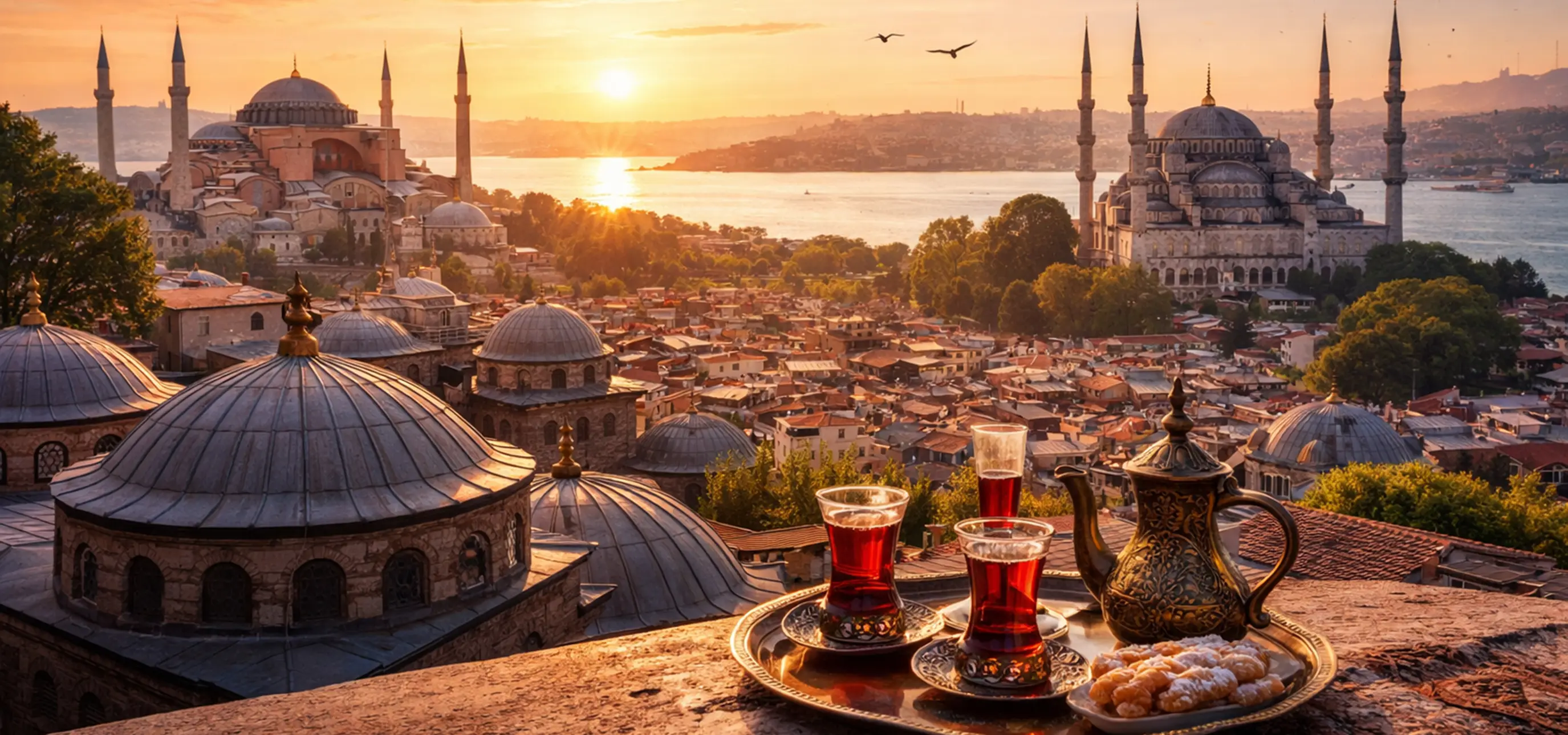
Create a private Istanbul itinerary around fortresses, imperial palaces, Byzantine monuments, Asian-side neighborhoods and the stories connecting both continents.
View Private Istanbul ToursConnect Anadolu Hisarı with the opposite fortress, the Bosphorus waterway and the imperial monuments of the Asian shore.
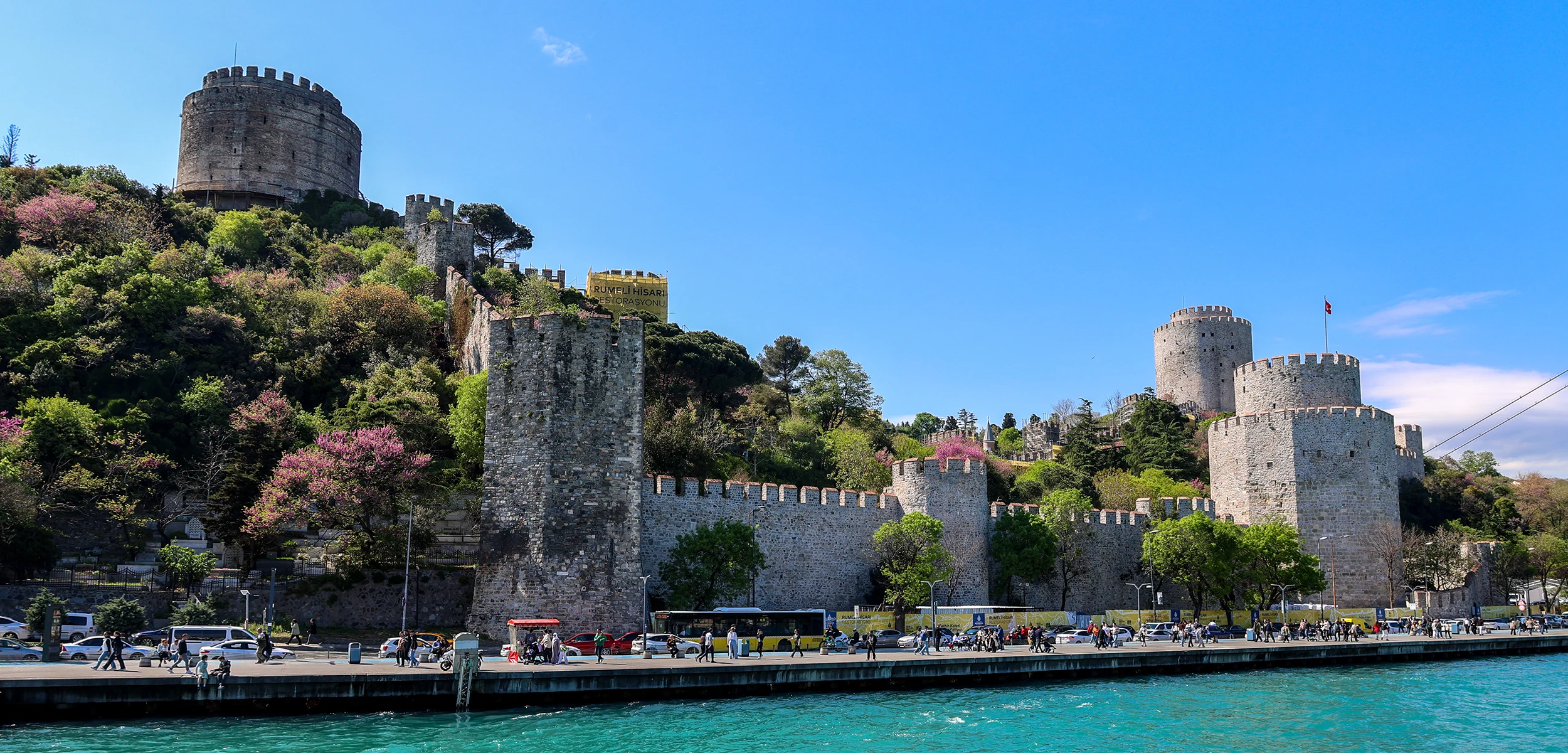
Explore Mehmed II's immense 1452 stronghold on the European shore and complete the story of Bosphorus control.
Explore Rumeli Fortress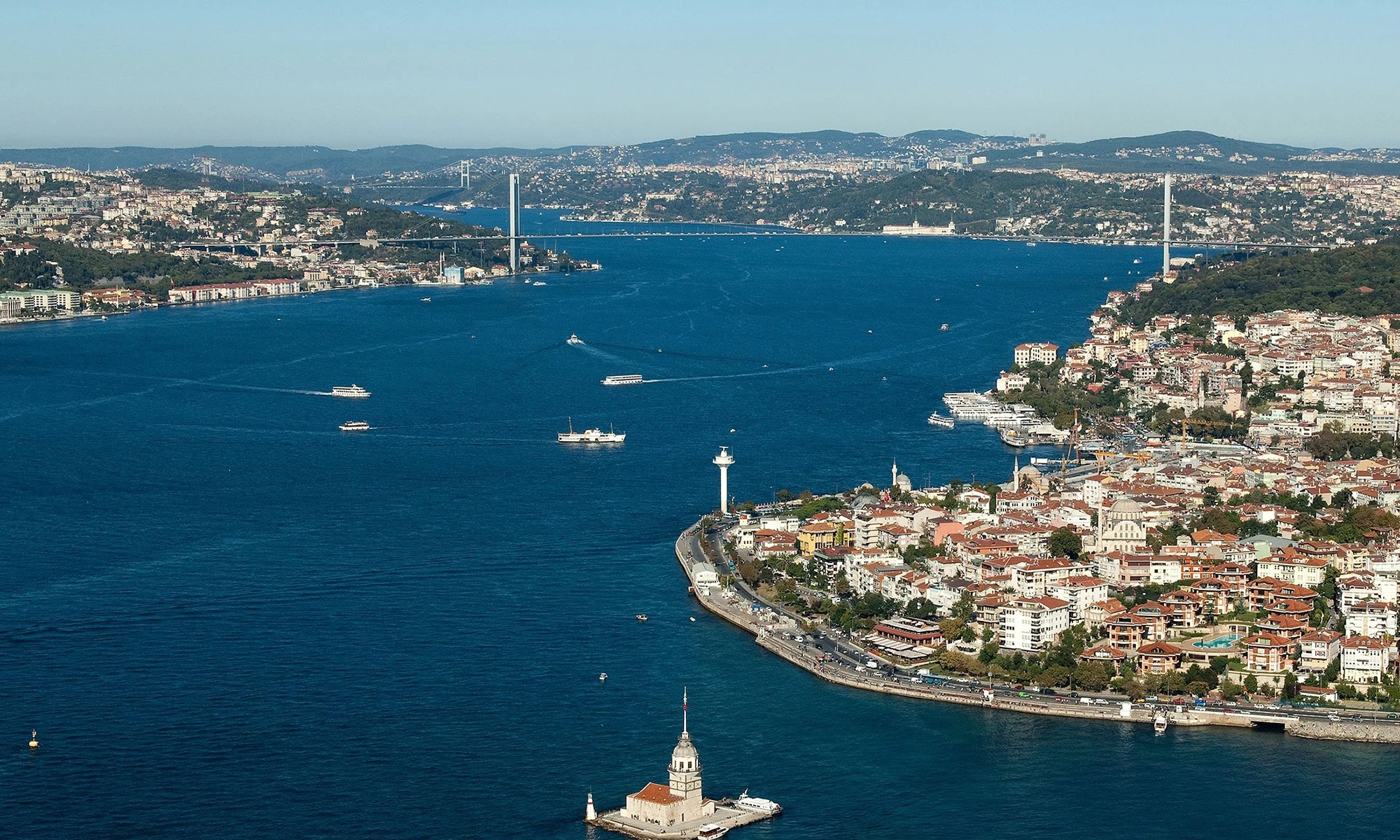
See Anadolu and Rumeli fortresses from the water while discovering palaces, mansions, bridges and historic neighborhoods.
Explore the Bosphorus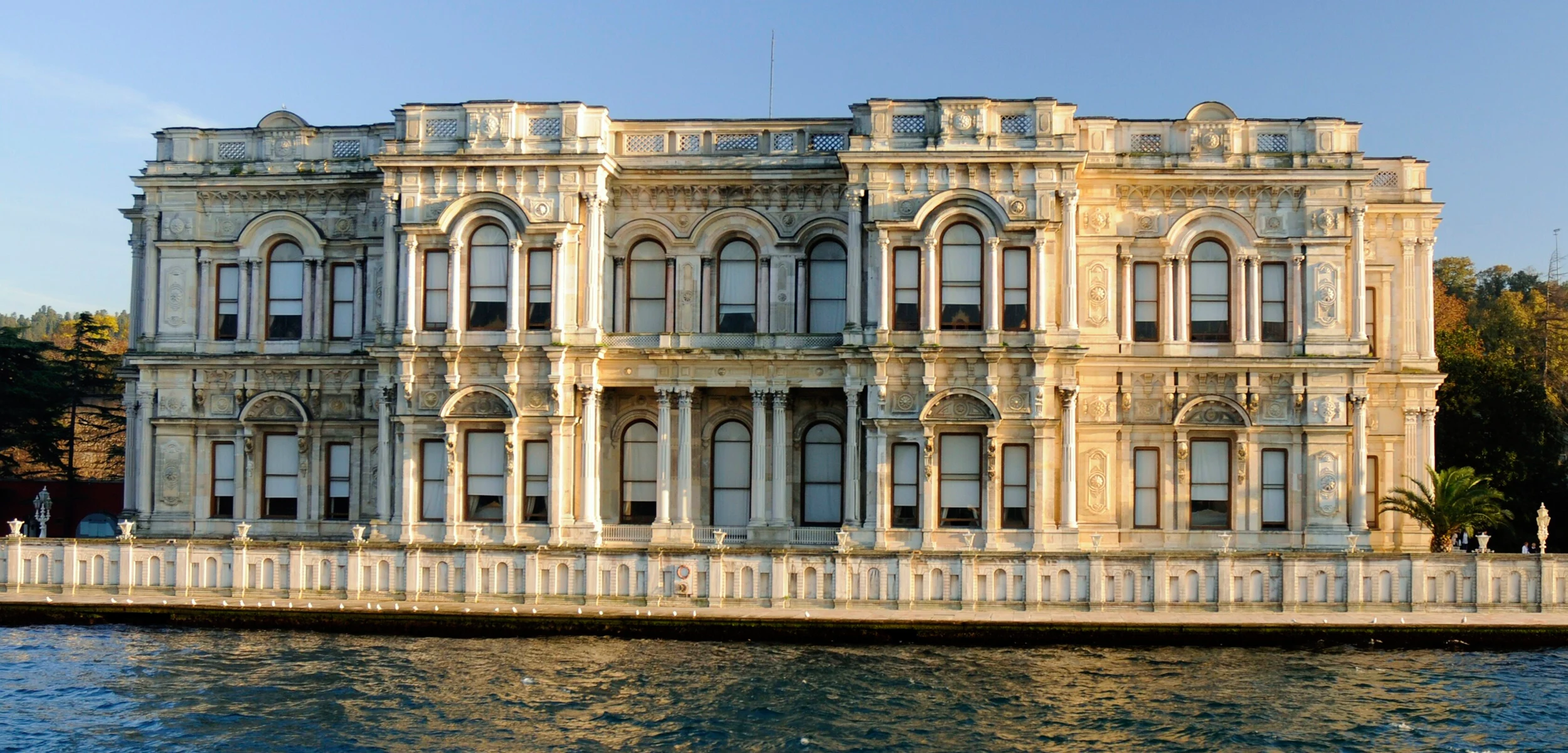
Continue along the Asian shore to an elegant 19th-century imperial summer palace beside the Bosphorus.
Explore Beylerbeyi Palace