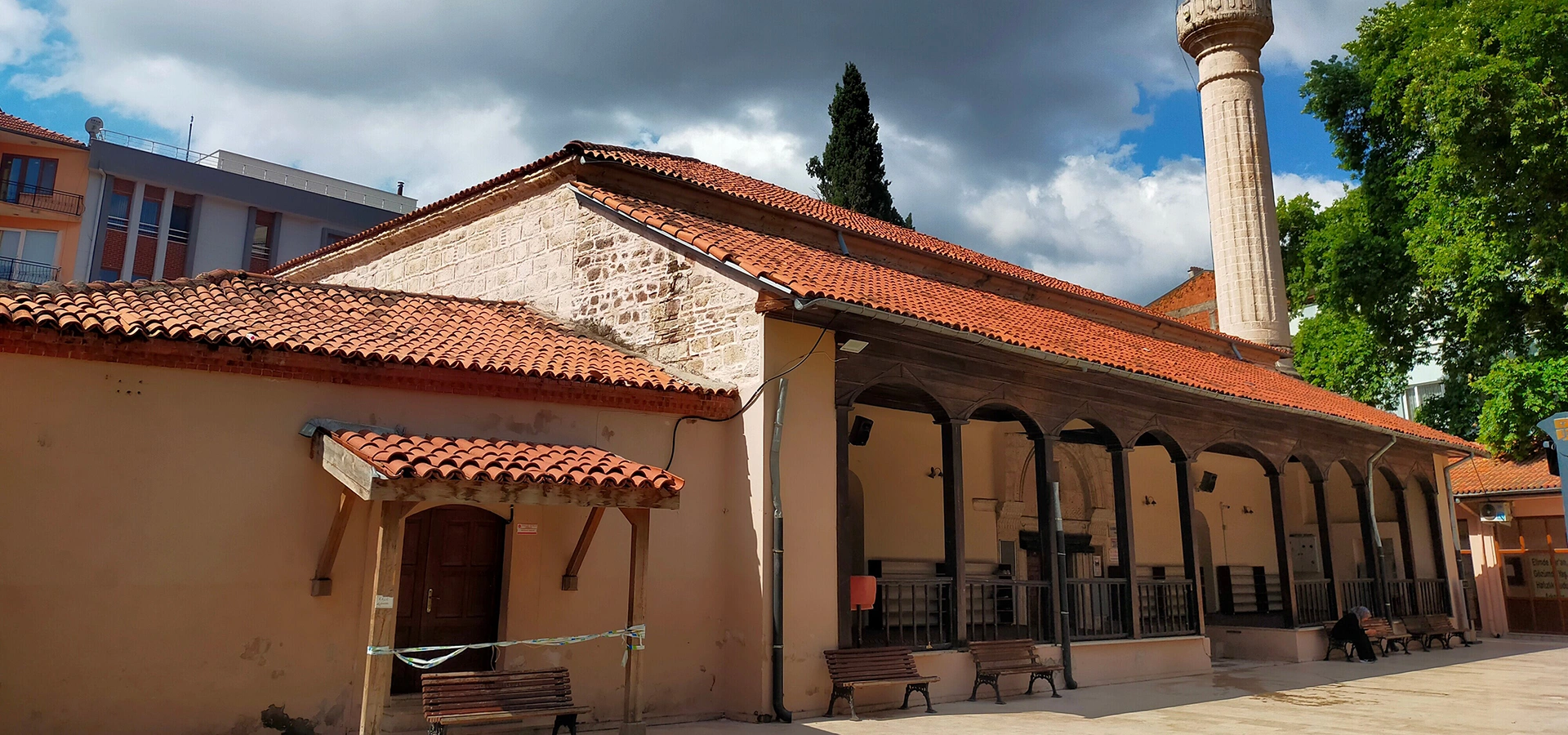
Private Balıkesir Ottoman Heritage Experience
Ask us about a tailor-made city route combining Yıldırım Mosque, Karesi Tomb, Zağnos Pasha Mosque, the Clock Tower and the historic centre.
Request a Custom Tour





In the historic centre of Balıkesir, within the neighbourhood that still carries its name, the Yıldırım Mosque and Complex preserves one of the city's most important links with the formative centuries of the Ottoman state. Known locally as Eski Cami — the Old Mosque — it is generally dated to 1388 on the basis of historical sources and foundation records and is associated with Yıldırım Bayezid.
The mosque does not survive exactly as a fourteenth-century building untouched by time. Earthquakes and major repairs, especially in 1818 and after the destructive 1897 Balıkesir earthquake, altered parts of its appearance. That layered history is part of what makes the monument so interesting: original masonry and reused ancient architectural elements coexist with nineteenth-century windows, later timber work, a renewed minaret and subsequent restoration phases.
Inside, the rectangular prayer hall is divided into three naves by two rows of five columns. Many of these supports and capitals are spolia reused from earlier buildings in the region. Official cultural inventories identify six capitals as Byzantine, three as Ottoman in character and one as resembling an older base. The result is an interior in which the early Ottoman builders visibly incorporated material from the deeper architectural history of north-western Anatolia.
The mosque was also conceived as part of a wider külliye. A medrese and an imaret or guesthouse-zaviye formed part of the religious, educational and charitable complex, turning the site into far more than a place of prayer. For visitors interested in the development of Ottoman Balıkesir, this is one of the most important monuments in the city.
The mosque has no surviving construction inscription, but official sources date it to the late fourteenth century through historical records and its vakfiye tradition.
Official Balıkesir cultural sources describe Yıldırım Mosque as the city's oldest surviving Ottoman architectural work.
Reused columns and capitals inside the prayer hall preserve visible traces of earlier architectural traditions.
Mosque, medrese and imaret-zaviye reflect the educational, charitable and religious functions of an early Ottoman urban complex.
Essential information for understanding and visiting one of the most important early Ottoman monuments in central Balıkesir.
Yıldırım Mahallesi, Gazi Bulvarı, Karesi / Balıkesir, within the historic urban centre.
The mosque is widely known in Balıkesir as Eski Cami, meaning the Old Mosque.
Generally dated to 1388 from historical sources and foundation records; no original construction inscription survives.
Associated with Yıldırım Bayezid, later the fourth Ottoman sultan.
Official provincial sources identify it as Balıkesir's oldest surviving Ottoman architectural monument.
A rectangular prayer hall divided into three naves by two rows of five columns.
Several columns, capitals and architectural pieces were reused from earlier structures in the region.
The courtyard contains a 12-cell medrese whose outer walls preserve the historic footprint despite later rebuilding.
An associated charitable and guesthouse structure survives as an important part of the külliye story.
The mosque underwent important repairs in 1818 and after the destructive 1897 earthquake.
It is an active mosque rather than a ticketed museum; visitors should respect worship and prayer times.
Allow around 30–45 minutes for the mosque and courtyard, longer if you are studying the architecture in detail.
Yıldırım Mosque is one of those monuments whose value comes not from a single spectacular feature, but from the way multiple centuries of Balıkesir history remain visible in one place.
The first reason to visit is its age. Balıkesir contains many important Ottoman monuments, but Yıldırım Mosque reaches back to the late fourteenth century and therefore belongs to a much earlier stage of Ottoman urban development than the better-known Zağnos Pasha Mosque complex of the fifteenth century.
The second reason is the interior structure. The ten-column arrangement divides the prayer hall into three long aisles and creates a rhythm very different from later centralized domed Ottoman mosques. The reused shafts and capitals make the building particularly valuable for visitors interested in spolia and the reuse of architectural material.
The third reason is the külliye context. A mosque in the Ottoman city was rarely an isolated religious shell. The surviving medrese and the historic imaret-zaviye remind visitors that education, hospitality, charity and worship once operated together around the same courtyard.
Finally, the mosque fits naturally into a historic Balıkesir walking route. Kuva-yı Milliye Museum, Alaca Mescit, the Clock Tower, Karesi Tomb and Zağnos Pasha Mosque together reveal how the city developed from medieval and early Ottoman foundations into the modern provincial centre seen today.
Yıldırım Mosque is located in Yıldırım Mahallesi on or immediately off Gazi Bulvarı in the central Karesi district of Balıkesir. The official Türkiye Culture Portal lists the address as Yıldırım Mahallesi, Gazi Bulvarı, Karesi / Balıkesir.
The site belongs to the old urban core of Balıkesir rather than to a peripheral archaeological zone. This matters historically: early Ottoman religious foundations helped organise neighbourhood life, education, charity and movement through the city, and the Yıldırım complex became one of the early focal points around which the urban fabric developed.
Today the mosque can be combined easily with the rest of central Balıkesir. Travellers using a private vehicle can approach through Gazi Bulvarı, while those already sightseeing in the centre can include the complex within a longer walking route.
The mosque does not preserve an original construction inscription, so its foundation date must be reconstructed from documentary sources. The principal official heritage descriptions used by Türkiye's Culture Portal and Balıkesir Provincial Directorate generally state that the mosque was built in 1388 by Yıldırım Bayezid.
That date places the foundation in the period when Bayezid was still a leading Ottoman prince shortly before succeeding his father, Sultan Murad I, in 1389. The chronology is one reason historians treat the site as a particularly important example of Ottoman patronage during the transition from a regional principality toward a larger imperial state.
Visitors researching the monument may encounter different dates in secondary or older listings. One official inventory table, for example, gives a broad date around 1400, while another provincial page reproduces 1338, which conflicts with the wider documentary tradition and is generally treated cautiously. The most consistent narrative in official heritage sources remains the late-fourteenth-century date, commonly given as 1388.
For a travel guide, the safest historical description is therefore: a late-fourteenth-century Ottoman foundation traditionally dated to 1388 and associated with Yıldırım Bayezid.
Balıkesir had already been an important regional centre before the construction of Yıldırım Mosque. The city was closely associated with the Karesi Beylik, one of the Turkish principalities that emerged in western Anatolia after the decline of Seljuk authority. Karesi territory was absorbed by the Ottomans during the fourteenth century and became strategically important for further expansion toward the Marmara region and the Balkans.
By the late fourteenth century, an Ottoman külliye in Balıkesir represented more than architectural patronage. A complex containing a mosque, medrese and charitable facilities helped establish religious authority, education and public welfare in an urban centre that had only relatively recently entered the Ottoman political sphere.
The Yıldırım foundation therefore belongs to the history of Ottoman urban consolidation. Instead of seeing the mosque simply as an old building, it is useful to understand it as part of the infrastructure through which early Ottoman towns were organised and sustained.
Centuries later, Zağnos Pasha's monumental fifteenth-century complex would become another major urban focus. Seen together, the two külliyes help explain how Balıkesir's centre shifted and expanded across the Ottoman period.
A külliye is an Ottoman architectural and social complex organised around a mosque and supported through charitable endowments. The Yıldırım foundation in Balıkesir combined the mosque with structures connected with education, accommodation and public welfare.
Official cultural sources describe the site as a large courtyard complex containing the mosque, medrese and imaret. Additional local and educational sources also connect the historical foundation with a hamam. What matters for visitors is the principle behind the complex: the mosque stood at the centre of a system serving both spiritual and everyday community needs.
The medrese educated students and supported religious scholarship. The imaret-zaviye provided charitable and hospitality functions. Bathing facilities associated with Ottoman complexes supported hygiene and generated income. Together, such institutions helped transform a religious foundation into an enduring urban institution.
This broader context is particularly useful when comparing Yıldırım Mosque with later Ottoman monuments. By the fifteenth and sixteenth centuries, külliye planning became increasingly monumental, but the underlying idea — linking worship with social infrastructure — was already firmly established.
The mosque has a rectangular plan and is covered externally by a tiled roof rather than by the monumental central dome associated with many later Ottoman imperial mosques. Inside, two rows of five columns divide the prayer hall into three longitudinal naves.
This arrangement creates a broad, columned interior in which the structure itself becomes the dominant visual experience. Instead of directing the eye toward a vast central dome, the prayer hall is read through repeated supports, arches, windows, timber ceiling surfaces and the progression toward the qibla wall.
The masonry is primarily cut stone with broad joints. Official inventories note a single course of brick on the western wall. Although traces of the earlier building can still be identified, the exterior as a whole also reflects later repairs, particularly those carried out after earthquakes.
The roof is covered with tiles, reinforcing the building's relatively horizontal silhouette. This distinguishes Yıldırım Mosque from the monumental domed profile that many travellers instinctively associate with classical Ottoman mosque architecture.
One of the most distinctive features inside Yıldırım Mosque is the use of spolia — architectural elements taken from earlier buildings and reused in a new structure. The ten columns separating the three naves are set without conventional bases, and their capitals do not all belong to one architectural tradition.
Official Balıkesir heritage descriptions identify six capitals as Byzantine, three as Ottoman in character and one as resembling an older architectural base. Other reused pieces from surrounding ruins were also incorporated into the mosque.
Spolia should not be understood simply as random recycling. In medieval Anatolia, reused stone was practical, valuable and often visually meaningful. Ancient cities, Byzantine settlements and earlier religious buildings supplied columns and carved blocks that could be integrated into new Turkish and Ottoman architecture.
For visitors, these elements offer a physical connection between different periods of the region's history. The columns are among the strongest reasons to slow down inside the mosque rather than viewing it only from the exterior.
The mosque's exterior is relatively restrained, but careful observation reveals the building's layered chronology. The qibla wall remains plain overall, with rectangular and round-arched windows arranged around the projecting mass of the mihrab.
The western façade is more animated. Official architectural descriptions distinguish between original lower openings and upper round-arched windows added or reshaped during nineteenth-century repairs. These differences are important because they show how the building changed while continuing to serve its original religious function.
Entrances exist on the north, east and west sides. The north entrance has a later glazed timber porch. Its doorway is framed by substantial square supports with stalactite-like capitals and a low pointed arch. Above the door is a framed panel where an inscription would normally be expected, but the field is empty.
The western entrance is more decorative and sheltered by a tiled canopy supported on wooden posts. Its timber ceiling contains a decorative central motif described in the official inventory as Empire-style, reflecting the nineteenth-century repair history of the building.
The mihrab is set within a rectangular mass that projects from the wall and is considered a later intervention rather than an untouched fourteenth-century feature. The niche itself has five sides, while its upper section narrows through a stalactite or muqarnas-like transition.
The minber is wooden. A provincial cultural description notes a rectangular panel carrying a Kufic-style inscription above its doorway. Even where later repairs have altered individual components, the mihrab and minber remain essential for understanding the mosque as a continuously used place of worship rather than a static archaeological monument.
Visitors interested in architecture should compare these liturgical elements with the reused columns and the later timber ceiling work. The interior is not a single-period composition; it is a record of repeated preservation, rebuilding and adaptation.
Because the mosque remains active, close inspection should always be balanced with religious etiquette. Avoid standing directly in front of worshippers, photographing people without permission or entering restricted areas during services.
The minaret rises at the north-west corner of the mosque. The present structure is later than the original foundation and is built of cut stone. It stands on a square base and rises as a cylindrical, fluted shaft.
Decorative ring mouldings mark the transition between base and shaft and appear again beneath the balcony. Although it is not an untouched fourteenth-century minaret, its position and vertical profile remain important to the silhouette of the complex.
The courtyard şadırvan is also a later structure. Official descriptions identify an octagonal marble basin with rounded engaged columns at its corners, covered by a glazed canopy supported on posts.
These later features are worth reading as part of the site's living history. Ottoman religious complexes were maintained and renewed continuously, and replacement elements often reveal as much about later community life as original fabric does about the foundation period.
One of the most important parts of the Yıldırım complex is the historic structure described in official inventories as the imaret, guesthouse or zaviye. It stands near the north-eastern part of the mosque complex and is dated with the foundation to the end of the fourteenth century.
The building is especially valuable because official descriptions state that it has survived with much of its original character. Its rubble-stone walls are finished with saw-tooth brick cornices, while the principal doorway sits within a large recessed niche and is surrounded by moulded framing.
Inside, the central space is flanked by lower side rooms associated with the zaviye function. The main space is timber-covered, while the side rooms are vaulted. A tiled roof covers the building externally.
In an early Ottoman context, a zaviye could serve travelling dervishes, scholars, guests and the poor while also acting as a religious and social institution. This surviving structure therefore helps explain why the site should be understood as a complex rather than simply as an old mosque.
The Yıldırım complex also included a medrese, an institution for formal religious education. Balıkesir Provincial cultural material identifies the Yıldırım Medrese as one of the foundational institutions in the city's long educational history.
The courtyard medrese is described as having 12 cells. The building suffered heavily over time and was rebuilt after the 1897 earthquake; official heritage information states that only its outer walls are original.
The medrese nevertheless remains crucial to understanding the social function of the complex. Students, teachers, mosque personnel and charitable services were connected through an endowed institutional system rather than operating independently.
Later historical records show that the medrese continued to play a role in the life of the city for centuries. Its history illustrates how Ottoman educational buildings could be adapted during periods of crisis while retaining their identity as part of a religious endowment.
Yıldırım Mosque's present appearance cannot be understood without the history of repair. Official sources record a major intervention in 1818, when parts of the building were renewed. Several upper round-arched windows are associated with this nineteenth-century phase.
A much more destructive event followed in 1897, when a major earthquake severely damaged Balıkesir and many of its historic monuments. The Yıldırım complex was repaired afterward, and the medrese was substantially rebuilt.
The decorative timber ceiling of the western entrance area was also renewed after the earthquake. The mosque's minaret and some architectural details visible today belong to later rebuilding phases rather than to the original fourteenth-century fabric.
This does not reduce the monument's historical importance. On the contrary, it makes Yıldırım Mosque a valuable example of a building whose continuity of use depended on repeated restoration. What visitors see today is the result of more than six centuries of adaptation.
The word “original” needs to be used carefully at Yıldırım Mosque because the complex has survived through earthquakes, rebuilding and centuries of continuous use. Some portions preserve late-medieval fabric, while others belong to nineteenth- or twentieth-century repair campaigns.
Parts of the mosque walls preserve the early stone construction and traces of the older building phase.
The interior supports and many capitals are historic spolia incorporated into the mosque's architectural system.
Official descriptions distinguish original lower openings from later upper windows on parts of the exterior.
This associated building preserves especially important early fabric and is a key survivor from the original complex.
The medrese was rebuilt after the 1897 earthquake; its historic outer walls preserve the earlier footprint.
The present cut-stone minaret is a replacement or later reconstruction rather than an untouched fourteenth-century structure.
The courtyard fountain is a later addition but remains part of the active religious life of the complex.
Upper windows, entrance details and timber work preserve evidence of major repair campaigns.
Stand near the entrance and read how the two column rows divide the rectangular hall into three long sections.
Compare the reused capitals rather than assuming all ten supports were made specifically for the mosque.
Look for the broad-jointed cut-stone walls and the limited brick course identified on the western side.
The more elaborate western approach preserves later timber work and a decorative ceiling renewed after the 1897 earthquake.
Notice the heavy doorway framing and the empty inscription panel above the entrance arch.
Study the later projecting frame and the five-sided niche with a stalactite-like upper transition.
Look for the decorative inscription panel associated with the entrance to the minber.
The later cut-stone minaret rises from a square base at the north-west corner and helps reveal the building's restoration history.
The octagonal marble courtyard fountain is later than the original foundation but remains visually important.
Use the 12-cell medrese to imagine the site as an educational complex rather than only a mosque courtyard.
Pay attention to the masonry, brick cornice and side rooms of one of the most historically valuable ancillary buildings.
Try to distinguish late-medieval fabric from nineteenth-century and later rebuilding rather than expecting a single-date monument.
Yıldırım Mosque remains a living place of worship. This makes the visitor experience very different from entering a museum or ruined archaeological site. Shoes are removed before entering the prayer hall, religious etiquette matters and access may naturally pause during congregational prayers.
The courtyard and surviving külliye buildings provide enough context for travellers to understand the historical scale of the foundation, even though the complex has changed considerably over the centuries.
The mosque's atmosphere is generally quieter and more neighbourhood-oriented than Balıkesir's larger central monuments. That is part of its appeal. The site feels embedded in everyday city life rather than separated from it as a monumental tourist attraction.
For architectural travellers, the strongest experience is to approach the site as a layered historic building: late-fourteenth-century foundation, reused ancient material, nineteenth-century earthquake repairs and continuing twenty-first-century religious use all coexist here.
Yıldırım Mosque is an active religious building, not a ticketed museum with fixed tourist opening hours. Visitors can normally enter when the mosque is open, but sightseeing should be planned outside congregational prayer times whenever possible.
There is generally no entrance ticket for visiting an active mosque. Donations, when accepted, should be treated as voluntary support rather than an admission charge.
Friday around the noon prayer is the least convenient period for casual sightseeing because the mosque may be especially busy. Early morning immediately around prayer, sunset prayer and evening services can also interrupt access to the main hall.
Dress modestly, remove shoes before stepping onto the carpeted prayer area and keep voices low. Women may be asked to cover their hair inside; carrying a lightweight scarf is useful when visiting historic mosques throughout Türkiye.
Cool, comfortable weather is well suited to combining the mosque with a long walking route through central Balıkesir.
Long daylight makes it easy to visit the complex and continue toward the Clock Tower, museum and Zağnos Pasha Mosque.
Visit in the morning or later afternoon and use the shaded interior as a quieter break from the summer heat.
Among the most pleasant months for architectural walking and photography around Balıkesir's historic centre.
Cooler weather and quieter streets work well for travellers focused on history rather than outdoor leisure.
The mosque remains a worthwhile indoor cultural stop, though rain and colder weather can shorten a wider city walk.
Because the site is an active mosque in the city centre, season matters less than time of day and prayer schedule. Spring and autumn are simply the most comfortable periods for combining it with a longer outdoor heritage route.
For most travellers, mid-morning is the easiest time to visit. The city is fully awake, daylight reaches the courtyard and interior, and you can usually continue afterward to the rest of the historic centre.
Late afternoon can be especially attractive for exterior photography because the light becomes softer across the stone walls and tiled roofs. However, check the changing sunset prayer time if entering the prayer hall is important to you.
Avoid arriving immediately before a prayer begins. Even when visitors are technically allowed inside, the atmosphere should remain focused on worshippers preparing for the service.
On Fridays, plan the visit well before or after the main congregational prayer. A historical mosque is most rewarding when you can observe the architecture without interfering with its primary religious function.
The mosque is within the central Karesi urban area and can be included in a historic-centre walk.
The official Culture Portal identifies Gazi Bulvarı as the main approach to Yıldırım Mahallesi and the mosque.
Continue through the central streets toward Yıldırım Mahallesi, adding Alaca Mescit or the Clock Tower along the route if desired.
The two monuments can be linked within the same half-day heritage itinerary through the old commercial centre.
Use Gazi Bulvarı for the approach, but expect ordinary city-centre traffic and limited convenient parking close to historic monuments.
Ask for “Yıldırım Camii” or “Eski Cami” in Yıldırım Mahallesi; both names are used locally.
Enough for a quick exterior view, courtyard walk and a short look inside if the mosque is open between prayers.
A good minimum for seeing the prayer hall, reused columns, mihrab, minber and courtyard buildings.
Recommended for architecture enthusiasts who want to distinguish original fabric from later repair phases.
Suitable if you also spend time understanding the medrese, imaret-zaviye and historical context of the külliye.
Combine Yıldırım Mosque with Kuva-yı Milliye Museum, Alaca Mescit, the Clock Tower and Zağnos Pasha Mosque.
Add Karesi Tomb, Çamlık Hill, a relaxed local lunch and additional historic neighbourhoods for a complete Balıkesir city day.
If you have additional time, continue toward Kuva-yı Milliye Museum and Alaca Mescit before ending at Zağnos Pasha Mosque. That sequence moves from early Ottoman Balıkesir to the city's National Struggle history and the major fifteenth-century külliye.
Wide compositions help show the mosque as part of a larger külliye rather than as an isolated façade.
Interior photographs along the nave axis reveal the repeated supports and unusual spatial character of the prayer hall.
Closer views of the reused capitals can document the contrast between Byzantine spolia and later Ottoman elements.
The timber canopy and decorative ceiling provide useful detail shots of the nineteenth-century repair layer.
Avoid active photography while worshippers are praying and never walk in front of someone performing prayer.
Do not photograph worshippers closely without clear permission, especially during private moments of prayer.
Rules can vary according to current mosque management and religious activity, so always follow local signs and instructions. Flash and intrusive equipment are best avoided inside an active historic mosque.
Yıldırım Mosque can work well for families because the key architectural ideas are easy to make visible: an old mosque, reused stone columns, different capitals, a courtyard school and a charitable building. Children can be encouraged to identify how one complex served many purposes.
The visit is relatively short, which makes it easy to combine with the museum or Clock Tower without creating an overly long historical programme.
Detailed current accessibility information is not clearly published in the official heritage listings. Historic thresholds, courtyard surfaces and level changes may create difficulty for visitors with reduced mobility.
Because the mosque is active, accessibility arrangements can also depend on which entrance is open at the time. Visitors who require step-free access should confirm locally before relying on a particular route through the building.
Shoes should be removed before entering the carpeted prayer hall and placed where indicated.
Shoulders and knees should be covered; women should be prepared to cover their hair inside the mosque.
Sightseeing is easier between prayers and less disruptive to the congregation.
The site remains a religious environment even when no formal prayer is underway.
Avoid walking directly in front of someone who is praying.
Architectural photography is different from photographing individuals at worship.
Do not touch carved capitals, lean against fragile surfaces or treat the courtyard buildings as props.
Remember that not every visible feature dates from 1388; the mosque preserves many later restoration layers.
If asking locally, “Yıldırım Camii” and “Eski Cami” can both help identify the monument.
The capitals, arches, timber work and ceiling details are easy to miss if you focus only on the carpeted floor.
The reused Byzantine elements are one of the strongest architectural reasons to visit.
The mosque makes more sense when the medrese and imaret-zaviye are understood as part of the same institution.
Do not assume every window, entrance detail or minaret element belongs to the fourteenth century.
A lightweight scarf is useful for women visiting multiple active mosques during a Balıkesir city walk.
Prayer times change daily and seasonally, so check the current schedule before a tightly timed visit.
Seeing the two complexes in one day creates a useful comparison between late-fourteenth- and fifteenth-century Ottoman Balıkesir.
Move from early Ottoman Balıkesir to the city's 1919 resistance history, Atatürk displays and archaeological collections.
A small but historically important mosque associated with the meetings that helped organise Balıkesir's National Struggle movement.
Compare Yıldırım's early Ottoman foundation with the major fifteenth-century külliye that later reshaped the city's urban centre.
The city's best-known civic landmark, reconstructed after the devastating 1897 earthquake that also affected Yıldırım Mosque.
A useful companion stop for understanding the Turkish principality that preceded Ottoman rule in Balıkesir.
Another historic religious monument that helps reveal the dense Ottoman fabric of central Balıkesir.
Walk between monuments through the commercial centre rather than treating each site as an isolated destination.
Finish the day with a wider panorama over modern Balıkesir after exploring the older urban core.
Explore the Achaemenid, Phrygian and later archaeological landscape near Lake Manyas after seeing spolia reused in Ottoman Balıkesir.
Combine cultural sightseeing with one of Türkiye's best-known wetland environments.
Visit one of the region's great ancient cities and the Marmara landscapes around Erdek.
Head west toward forested mountain scenery, mythological landscapes and villages above the Edremit Gulf.
Explore Roman domestic architecture, mosaics and necropolis archaeology beneath Mount Ida.
Spend a day among stone streets, former churches, olive-oil heritage and the northern Aegean coast.
The mosque's central location makes it easy to continue into Balıkesir's commercial streets for lunch, dessert or Turkish coffee. The province is especially famous for dairy production, cheeses and rich traditional sweets.
Balıkesir's signature dessert, traditionally prepared with fresh unsalted cheese, semolina and sugar.
A rich pastry associated with the city's dairy tradition and well suited to tea or Turkish coffee.
Balıkesir is one of Türkiye's major cheese-producing provinces, with many regional varieties found in markets and breakfast shops.
A traditional Anatolian dish using bread softened with broth and served with meat or local variations.
The province's livestock culture appears in grills, slow-cooked dishes and substantial regional meals.
Cheese, butter, kaymak, olives and bread offer an easy introduction to Balıkesir's agricultural identity.
It is in Yıldırım Mahallesi on Gazi Bulvarı in the central Karesi district of Balıkesir.
Yes. The historic mosque is widely known locally as Eski Cami, meaning the Old Mosque.
Official heritage narratives generally date the mosque to 1388, although no original construction inscription survives.
The foundation is associated with Yıldırım Bayezid, who became the fourth Ottoman sultan in 1389.
Official Balıkesir cultural sources describe it as the city's oldest surviving Ottoman architectural monument.
Yes. The complex included the mosque, medrese and charitable or guesthouse facilities described as an imaret-zaviye.
Yes. The courtyard medrese is described as a 12-cell building and was substantially rebuilt after the 1897 earthquake.
It was a charitable and hospitality building connected with the complex, serving social and religious functions beyond congregational prayer.
Yes, but the site is heavily layered. Historic masonry, reused columns and important parts of the imaret-zaviye survive, while other features belong to later repairs.
The rectangular prayer hall is divided into three naves by two rows of five columns.
Several supports and capitals are reused spolia. Official descriptions identify six capitals as Byzantine and others as Ottoman or older reused forms.
Reusing stone was common in medieval Anatolia because earlier ruins provided durable and valuable architectural elements. It also created visually distinctive interiors.
The present building is primarily characterised by its rectangular, columned hall and tiled roof rather than by a monumental central dome.
Official sources record a major repair phase in 1818, and several visible architectural changes are associated with nineteenth-century work.
The major Balıkesir earthquake damaged many city monuments. Yıldırım Mosque and especially its medrese required significant rebuilding and repair afterward.
No. The present cut-stone minaret is described in official heritage material as a later structure.
No. The current octagonal marble courtyard fountain is also a later addition.
Visitors are generally welcome outside prayer periods, provided they follow mosque etiquette and any instructions given locally.
Yıldırım Mosque is an active place of worship rather than a ticketed museum, so there is normally no standard admission fee.
Wear modest clothing covering shoulders and knees. Women should be prepared to cover their hair inside the prayer hall.
Yes. Shoes should be removed before entering the carpeted prayer area.
Usually discreet architectural photography is acceptable when no service is underway, but always follow current local guidance and avoid photographing worshippers without permission.
Mid-morning or later afternoon between prayer periods is generally best for sightseeing and photography.
You can, but avoid the main Friday noon prayer period because the mosque may be especially busy.
Allow around 30–45 minutes for a meaningful visit to the mosque, courtyard and associated buildings.
Kuva-yı Milliye Museum, Alaca Mescit, Balıkesir Clock Tower, Karesi Tomb and Zağnos Pasha Mosque all fit naturally into the same city-centre heritage route.
The two complexes show different stages of Ottoman Balıkesir, from a late-fourteenth-century foundation to the great fifteenth-century külliye of Zağnos Mehmed Pasha.
Yes. The site is important for Ottoman urban history, spolia, earthquake restoration, medieval architecture and the development of Balıkesir as a city.
A private Balıkesir route can combine Yıldırım Mosque with the city's other Ottoman monuments, National Struggle sites and archaeological collections for a much deeper understanding of the region.
Tell us whether your priority is early Ottoman architecture, the National Struggle, archaeology, photography or a wider Marmara and northern Aegean itinerary, and we can shape the route around your available time.
Ask us about a tailor-made city route combining Yıldırım Mosque, Karesi Tomb, Zağnos Pasha Mosque, the Clock Tower and the historic centre.
Request a Custom Tour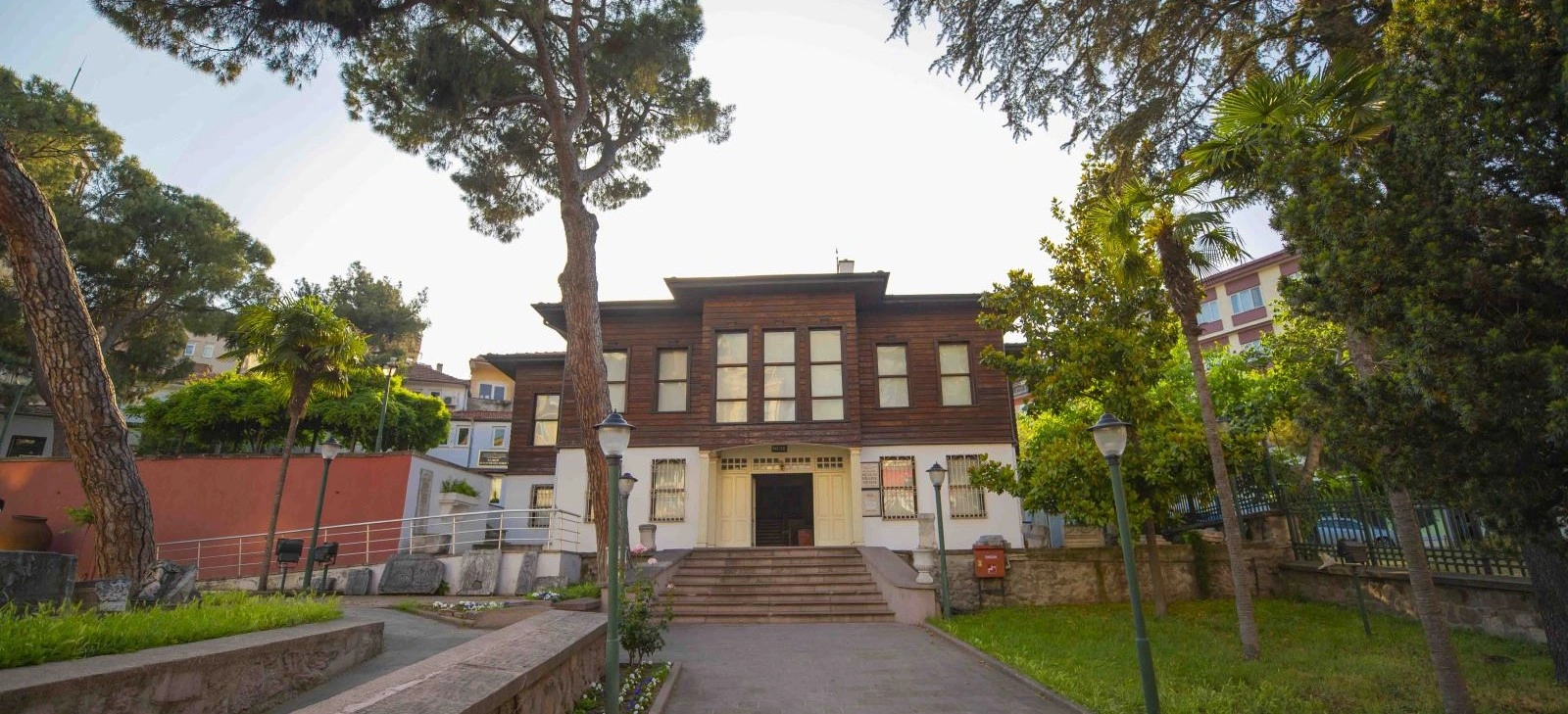
Continue from early Ottoman Balıkesir to the city's 1919 resistance history, Atatürk displays and archaeological collections.
View Kuva-yı Milliye Museum Guide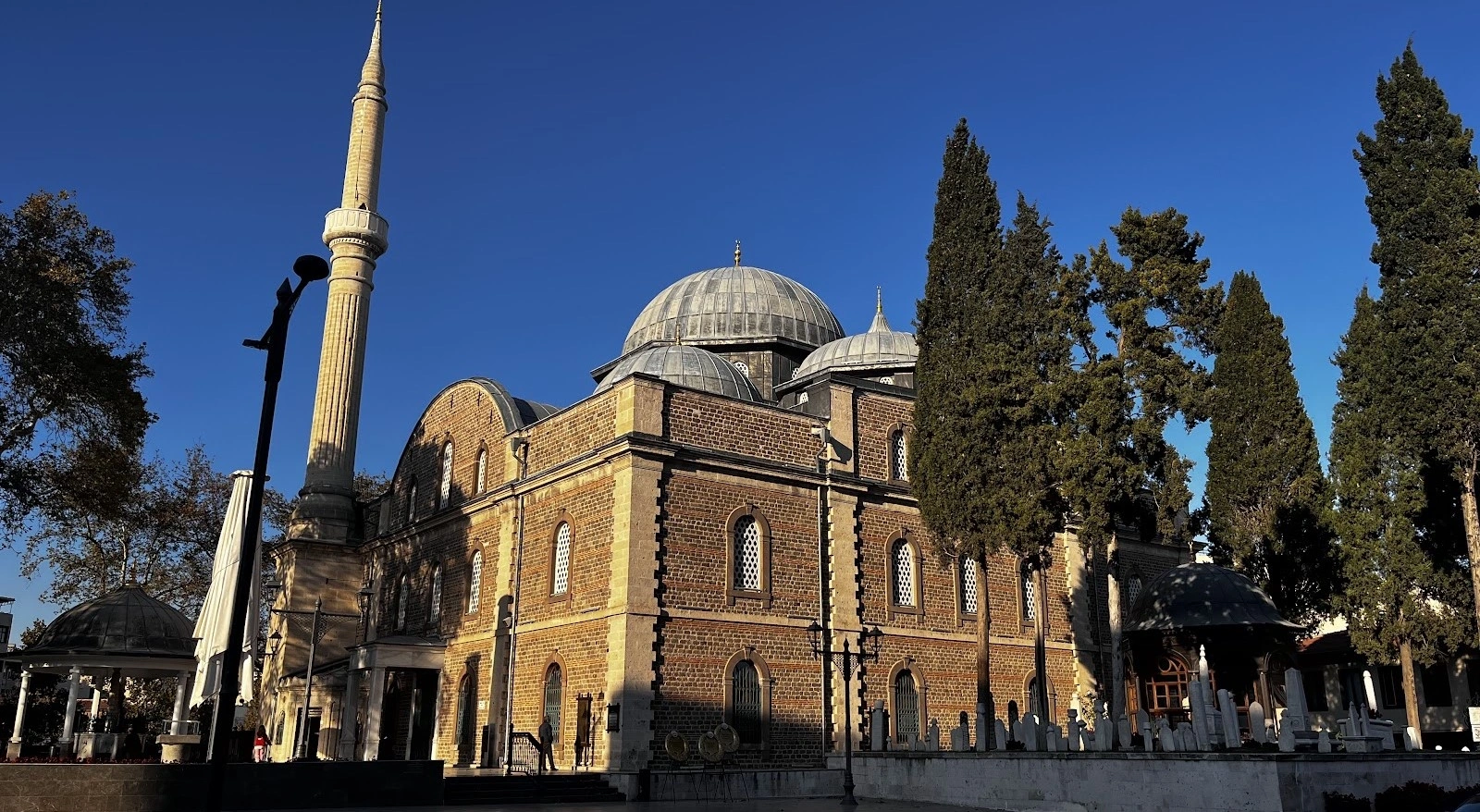
Compare Yıldırım's late-fourteenth-century foundation with the great fifteenth-century külliye built by Zağnos Mehmed Pasha.
View Zağnos Pasha Mosque Guide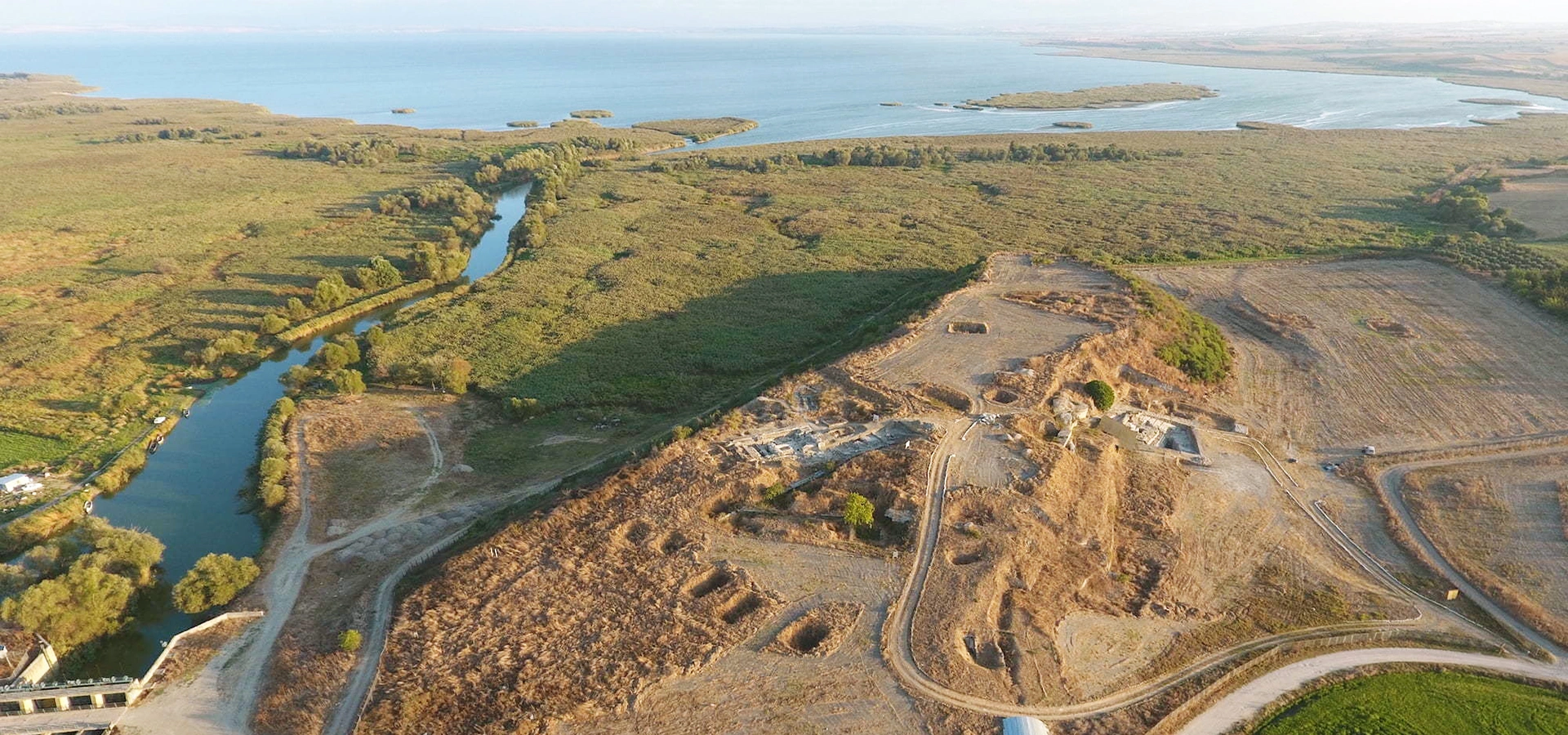
Extend your Balıkesir history route into one of north-western Anatolia's most important archaeological landscapes.
View Daskyleion Guide