Ask About a Private Uşak Programme
Share your dates, party size and interests. We will check what can realistically be arranged.
Request a Private Programme





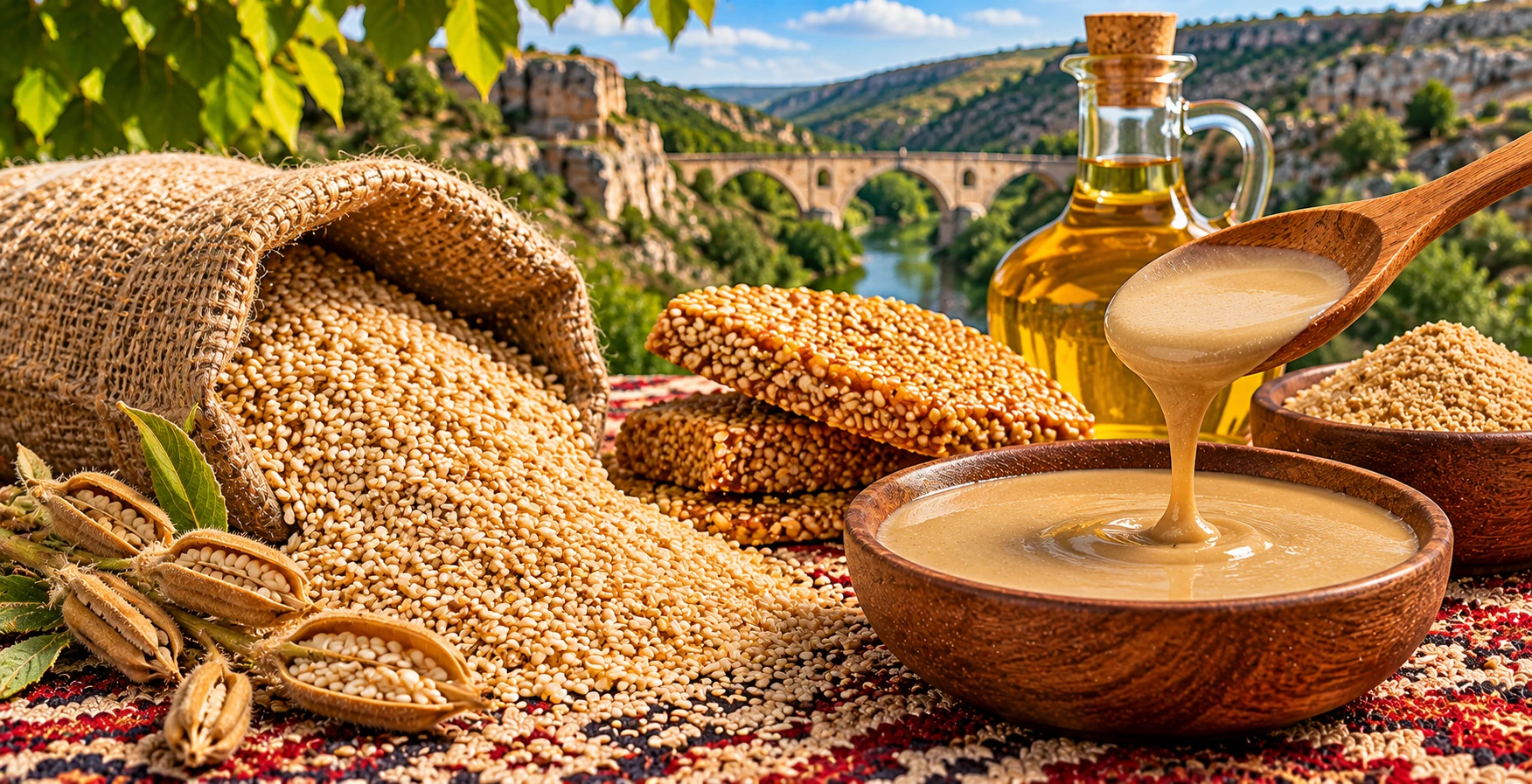
Sesame may look modest in a market stall, yet in Uşak it links agriculture to some of the province’s best-known sweets. The crop supplies the seed that is ground into tahini, toasted for breads and used in regional confectionery. Buying the seed and tasting its finished products reveals more than a single souvenir purchase.
Uşak Susamı received a Turkish geographical indication as a designation of origin on 16 June 2026, registration number 1867. That protects a named agricultural product, not every sesame seed sold in the province. The distinction is useful when examining labels: a seller’s address alone is not evidence that a product meets the registered specification.
Uşak Susamı is the harvested and dried seed of Sesamum indicum; the official designation refers to production within the specified province.
Toasting and grinding transform sesame into a rich paste used in Uşak tahin helvası and other sweets; technique changes aroma and texture.
Look for the registered name, the geographical-indication emblem where required and producer details rather than relying on decorative packaging.
Sesame is a major food allergen. Visitors with allergies should check labels and shared production equipment, including in confectionery shops.
Practical orientation for an informed Uşak visit.
Uşak Province
Geographical indication, seed quality and tahini
Registered origin product in 2026
Food heritage and local production
A short market stop; longer for a producer visit by arrangement
Check current access, local conditions and any applicable permissions.
The distinctive value of Uşak Sesame (Uşak Susamı) lies in the relationship between an oilseed with a local identity and from seed to tahini. These are useful details to ask about when tasting or buying a product associated with Uşak Province.
A local food guide should distinguish a documented recipe or registered product from a maker’s individual variation. The focus here is geographical indication, seed quality and tahini, rather than unverified claims about a single origin story.
Uşak Susamı received a Turkish geographical indication as a designation of origin on 16 June 2026, registration number 1867. That protects a named agricultural product, not every sesame seed sold in the province. The distinction is useful when examining labels: a seller’s address alone is not evidence that a product meets the registered specification.
The geographical focus is Uşak Province. For orientation, begin with an oilseed with a local identity and then consider reading the label; their relationship is more instructive than treating the subject in isolation.
Uşak Susamı is the harvested and dried seed of Sesamum indicum; the official designation refers to production within the specified province.
Toasting and grinding transform sesame into a rich paste used in Uşak tahin helvası and other sweets; technique changes aroma and texture.
Look for the registered name, the geographical-indication emblem where required and producer details rather than relying on decorative packaging.
Sesame is a major food allergen. Visitors with allergies should check labels and shared production equipment, including in confectionery shops.
For a fuller picture, compare Uşak Sesame (Uşak Susamı) with Uşak Tahini Halva and Bridal Halva. These are related but distinct subjects; follow the relevant guides for their own historical or culinary context.
A useful first question is what makes an oilseed with a local identity different from from seed to tahini. The following sections explain the practical details, materials or historical evidence needed to answer it.
The seed can appear on breads and rusks, while tahini provides the characteristic nutty body of certain halvas. It is worth tasting a plain seed, a toasted seed and a spoonful of tahini separately to understand the changes created by processing.
The relationship between crop and confectionery also makes sesame a good entry point into Uşak’s food culture: products that appear very different can share the same agricultural starting point.
Whole seeds should be dry, clean and stored away from heat and strong light. Ask whether they are raw or roasted, as this affects how they can be used at home.
If a vendor claims geographical-indication status, examine the actual product information. Registration applies to specified production and traceability conditions; it is not a blanket guarantee about every bag of seeds.
Pair a food-market visit with a confectionery counter offering fresh tahini halva. Compare the aroma of ground sesame with the finished sweet, then try a sesame-topped gül peksimeti if available.
This is a flexible food itinerary rather than a guaranteed workshop tour. Arrange any producer visit in advance and respect food-safety rules in working premises.
Uşak Susamı is the harvested and dried seed of Sesamum indicum; the official designation refers to production within the specified province.
Toasting and grinding transform sesame into a rich paste used in Uşak tahin helvası and other sweets; technique changes aroma and texture.
Look for the registered name, the geographical-indication emblem where required and producer details rather than relying on decorative packaging.
Sesame is a major food allergen. Visitors with allergies should check labels and shared production equipment, including in confectionery shops.
Markets and specialist shops are easier to combine with sightseeing than agricultural sites. Confirm opening days and do not assume a processing workshop admits visitors.
Opening hours, admission arrangements and product availability may change. Confirm them with the museum, municipality, venue or producer rather than relying on an old price list.
Begin at a local food shop, ask about the origin of the seeds and continue to a tahini-halva producer if a visit is possible. A short tasting works well between the archaeology museum and the historic centre.
Allow extra time for breaks and for local circumstances. A short, meaningful visit is preferable to a schedule that depends on unconfirmed access or shopping stops.
Harvest and availability vary with the agricultural year, while packaged sesame is sold in different seasons. Check storage and best-before information before purchasing.
If your visit involves exposed landscapes, check weather and daylight. For food or indoor heritage, opening hours and the availability of a knowledgeable host matter more than a particular season.
Photograph the preparation, product and its context only with permission. A sequence of raw ingredients, working hands and finished serving can tell a better story than a single staged plate.
Ask before photographing people, private property or production areas. Never enter restricted spaces or put objects at risk to obtain a picture.
Urban food shops are generally easier to reach than fields or mills; contact individual premises about step-free entrances.
If travelling with reduced mobility or young children, confirm gradients, steps, seating and toilet access for each individual stop.
The starting area is Uşak Province. Verify actual road and public-transport connections, especially for rural sites or specialised producers; map distances alone do not guarantee a practical visit.
If an access point or venue is not clearly identified by an official operator, request directions before setting out.
See how sesame becomes a distinctive confection.
Explore the red halva associated with gift-giving.
A tea-time rusk often finished with sesame and black cumin.
Combine a tasting with city sights.
Check actual opening conditions and travel times before combining several stops. Links to new editorial guides in this package may not appear on the Uşak hub until the site owner adds them.
It is a locally designated sesame seed product from Uşak Province, made from harvested and dried Sesamum indicum seeds.
Yes. TÜRKPATENT records Uşak Susamı as a designation of origin, registration 1867, dated 16 June 2026.
It is used as a seed topping and as tahini, which is central to several local halva varieties.
Only by prior arrangement with a producer. Agricultural land is not an open visitor attraction.
Sesame is a major allergen. Check ingredients, cross-contact risks and packaging before tasting.
Fresh tahini halva or sesame-topped local rusks make a useful comparison, subject to availability.
Do not enter fields without permission. Buy from clearly identified producers, avoid misleading origin claims and respect allergen warnings.
Information on protected heritage, opening arrangements and local production should be rechecked before travel. This guide does not grant access to archaeological or private property.
This guide draws on Turkish cultural authorities and, where relevant, academic research. For background and current institutional information, consult: Official or research reference 1 Official or research reference 2.
Wow Cappadocia / Venere Travel can discuss a tailor-made Uşak itinerary with suitable transport and guiding, subject to availability and confirmed access. No compulsory shopping stops.
Choose archaeology, craft, cuisine or landscape according to your interests.
Share your dates, party size and interests. We will check what can realistically be arranged.
Request a Private Programme