Request a Private Uşak Programme
We can discuss regional heritage and food experiences; individual access and tastings must be confirmed in advance.
Contact Wow Cappadocia





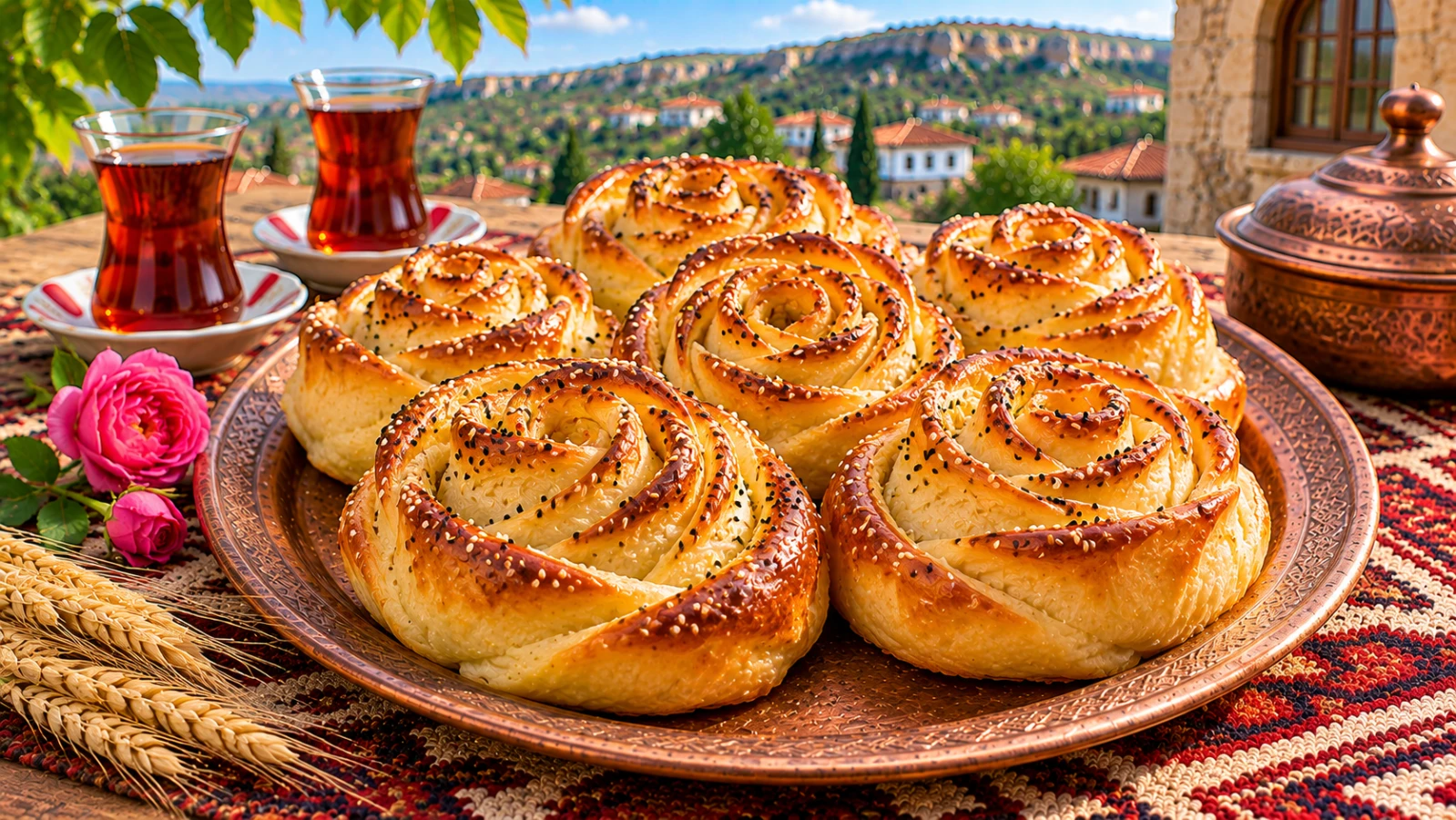
Gül peksimeti is a baked, rose-shaped rusk whose name describes its form rather than a rose-petal flavour. It is commonly offered with tea, making shape and texture as important as sweetness.
The provincial culture directorate says the rose-shaped pieces are topped with sesame and çörek otu (Nigella seeds). The available official summary does not give a single precise dough formula, so household recipes should be described as variations.
The reason for its name.
A documented topping.
The dark, aromatic garnish.
Usually enjoyed with Turkish tea.
Essential context for curious visitors and local food enthusiasts.
Uşak Province
Rose-shaped tea rusk
Rose shape
A documented topping.
Ask a local cook about the exact recipe.
Confirm local arrangements and individual variations.
Gül peksimeti is a baked, rose-shaped rusk whose name describes its form rather than a rose-petal flavour. It is commonly offered with tea, making shape and texture as important as sweetness.
Gül peksimeti belongs to the tradition of preparing durable small baked foods for guests and tea service. The rose form makes it decorative without requiring elaborate icing.
Its appeal lies in a firm bite, toasted seed topping and a shape that stands out on a tea tray. It should not be marketed as rose-flavoured unless rose is actually an ingredient.
The provincial culture directorate says the rose-shaped pieces are topped with sesame and çörek otu (Nigella seeds). The available official summary does not give a single precise dough formula, so household recipes should be described as variations.
Gül peksimeti belongs to the tradition of preparing durable small baked foods for guests and tea service. The rose form makes it decorative without requiring elaborate icing.
Its appeal lies in a firm bite, toasted seed topping and a shape that stands out on a tea tray. It should not be marketed as rose-flavoured unless rose is actually an ingredient.
Compare the distinctive elements below with other Uşak traditions. Similar names elsewhere do not always indicate identical ingredients, techniques or historical origins.
The reason for its name.
In Gül Peksimeti, rose shape is worth examining in relation to the whole preparation. A careful tasting can distinguish texture, aroma and the role of each ingredient without assuming that every family follows a single standard.
A documented topping.
In Gül Peksimeti, sesame is worth examining in relation to the whole preparation. A careful tasting can distinguish texture, aroma and the role of each ingredient without assuming that every family follows a single standard.
The dark, aromatic garnish.
In Gül Peksimeti, nigella seeds is worth examining in relation to the whole preparation. A careful tasting can distinguish texture, aroma and the role of each ingredient without assuming that every family follows a single standard.
Usually enjoyed with Turkish tea.
In Gül Peksimeti, tea companion is worth examining in relation to the whole preparation. A careful tasting can distinguish texture, aroma and the role of each ingredient without assuming that every family follows a single standard.
The following is a practical cultural outline, not a claim that every household or site follows an identical procedure.
Make a firm, workable rusk-style dough following a trusted local recipe.
Divide and shape pieces to resemble small roses, keeping sizes consistent for even baking.
Decorate the tops with sesame and Nigella seeds before baking.
Bake until set and appropriately dry for the intended rusk texture; cool before storing.
Gül peksimeti belongs to the tradition of preparing durable small baked foods for guests and tea service. The rose form makes it decorative without requiring elaborate icing.
Local terms, production methods and the stories told by residents can be as valuable as the finished food. Ask before recording a demonstration or entering privately managed spaces.
Its appeal lies in a firm bite, toasted seed topping and a shape that stands out on a tea tray. It should not be marketed as rose-flavoured unless rose is actually an ingredient.
Notice the relationship between the principal elements rather than judging the subject only by appearance. Differences between families, seasons and preservation conditions deserve attention.
Ask whether a bakery uses milk, egg or butter; these ingredients are not fixed by the brief cultural description. Store according to the producer’s instructions to preserve crispness.
The consulted official source describes shape and topping, not a measured recipe.
For local foods, availability depends on preparation schedules, seasonality and individual kitchens. Special-occasion foods may need advance notice; never assume every restaurant stocks the dish.
For a more rewarding experience, combine this topic with related Uşak heritage or cuisine rather than rushing through many unrelated stops.
In Uşak, ask a local producer, market vendor or family-run kitchen whether they make the named version; check ingredients and availability before visiting. The page is a cultural guide, not a guarantee that a particular venue serves it.
If arranging a private itinerary, tell your guide your interests and accessibility needs in advance. No shopping stops are required.
Explore this related Uşak topic to understand the region in a broader context. Check availability, travel conditions and local access before making a combined itinerary.
Explore this related Uşak topic to understand the region in a broader context. Check availability, travel conditions and local access before making a combined itinerary.
Explore this related Uşak topic to understand the region in a broader context. Check availability, travel conditions and local access before making a combined itinerary.
Support local craftspeople, farmers and small food producers without treating private homes or working spaces as public attractions. Ask permission before photographing people and leave public spaces clean.
Do not make claims about protected status, historical dates or ingredients without reliable evidence. Check the relevant official register or provincial cultural authority for updated information.
Gül peksimeti is a baked, rose-shaped rusk whose name describes its form rather than a rose-petal flavour. It is commonly offered with tea, making shape and texture as important as sweetness.
Gül Peksimeti is associated with Uşak Province, in the wider Uşak region of western Türkiye.
The reason for its name. A documented topping.
Make a firm, workable rusk-style dough following a trusted local recipe. Divide and shape pieces to resemble small roses, keeping sizes consistent for even baking.
Ask whether a bakery uses milk, egg or butter; these ingredients are not fixed by the brief cultural description. Store according to the producer’s instructions to preserve crispness.
Related Uşak topics include Uşak Katmeri, Uşak Baklavası. Check travel and opening conditions before combining places.
Wow Cappadocia / Venere Travel can help design a private itinerary focused on local culture, subject to access and availability. No compulsory shopping stops.
Share your dates, group size and interests for a thoughtful regional route.
We can discuss regional heritage and food experiences; individual access and tastings must be confirmed in advance.
Contact Wow Cappadocia