Ask About a Private Uşak Programme
Share your dates, party size and interests. We will check what can realistically be arranged.
Request a Private Programme





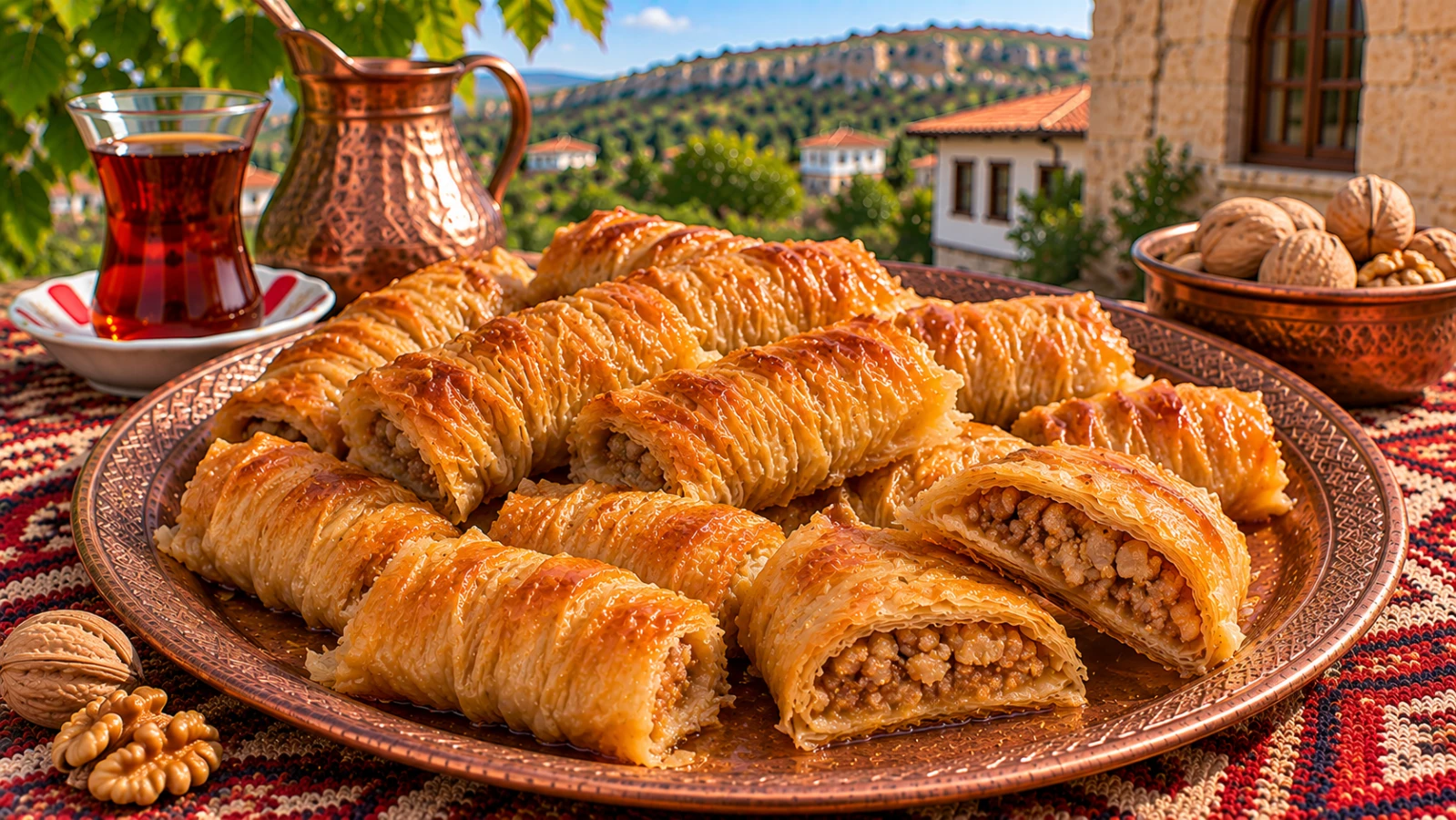
Cendere is a syrup dessert associated with Uşak’s festive table. Its distinctive form comes from thin sheets of dough scattered with walnuts, wrapped around a rolling pin and pushed together into a compressed shape. The pieces are cut, baked with butter and finished with syrup.
The Ministry’s Culture Portal publishes a local recipe, while the provincial directorate lists cendere among Uşak’s recognised traditional sweets and notes its presence at weddings and holidays. The name belongs to a specific preparation, not simply to any baklava-shaped pastry.
The dough is rested and rolled out finely, using starch to help separate the layers.
Chopped or crushed walnuts are scattered before the pastry is wrapped around the rolling pin.
The rolled pastry is compressed from both ends and then cut into small pieces.
Hot butter goes over the tray before baking; syrup is added after the pastry comes from the oven.
Practical orientation for an informed Uşak visit.
Uşak Province
Rolled walnut pastry and syrup
Documented regional dessert for celebrations
Food heritage and local production
Allow 1–2 hours for a careful home preparation
Check current access, local conditions and any applicable permissions.
The distinctive value of Uşak Cendere Dessert lies in the relationship between thin dough sheets and walnut filling. These are useful details to ask about when tasting or buying a product associated with Uşak Province.
A local food guide should distinguish a documented recipe or registered product from a maker’s individual variation. The focus here is rolled walnut pastry and syrup, rather than unverified claims about a single origin story.
The Ministry’s Culture Portal publishes a local recipe, while the provincial directorate lists cendere among Uşak’s recognised traditional sweets and notes its presence at weddings and holidays. The name belongs to a specific preparation, not simply to any baklava-shaped pastry.
The geographical focus is Uşak Province. For orientation, begin with thin dough sheets and then consider the cendere shape; their relationship is more instructive than treating the subject in isolation.
The dough is rested and rolled out finely, using starch to help separate the layers.
Chopped or crushed walnuts are scattered before the pastry is wrapped around the rolling pin.
The rolled pastry is compressed from both ends and then cut into small pieces.
Hot butter goes over the tray before baking; syrup is added after the pastry comes from the oven.
For a fuller picture, compare Uşak Cendere Dessert with Demir Tatlısı and Uşak Baklava. These are related but distinct subjects; follow the relevant guides for their own historical or culinary context.
A useful first question is what makes thin dough sheets different from walnut filling. The following sections explain the practical details, materials or historical evidence needed to answer it.
The Culture Portal lists 4 cups flour, 2 eggs, salt, water as needed, 1 cup starch, 250 g walnuts and 250 g butter. The syrup uses 3 cups sugar, 2 cups water and half a lemon.
These quantities are a published heritage version rather than a universal bakery formula. Dough hydration and oven behaviour require judgment.
Mix flour, eggs, salt and water into a pliable dough, rest it and divide it into small balls. Roll the balls into thin sheets, dusting with starch.
Sprinkle walnuts on a sheet, roll it loosely around a rolling pin and push the ends inward to gather the dough. Slide it off, cut into small portions and place the pieces in a baking tray.
Pour heated butter over the arranged pastry and bake until thoroughly golden. Prepare the sugar-water-lemon syrup separately.
The documented method adds hot syrup after baking. Because ovens and pastry thickness vary, judge doneness by colour and crispness rather than an invented universal baking time.
The dough is rested and rolled out finely, using starch to help separate the layers.
Chopped or crushed walnuts are scattered before the pastry is wrapped around the rolling pin.
The rolled pastry is compressed from both ends and then cut into small pieces.
Hot butter goes over the tray before baking; syrup is added after the pastry comes from the oven.
For home preparation, hot butter and syrup require care. A food workshop is not automatically open to the public; request permission first.
Opening hours, admission arrangements and product availability may change. Confirm them with the museum, municipality, venue or producer rather than relying on an old price list.
Taste cendere at a local bakery or confectionery if offered, preferably alongside a simpler flour halva. The contrast shows the difference between a shaped pastry and a pan-cooked sweet.
Allow extra time for breaks and for local circumstances. A short, meaningful visit is preferable to a schedule that depends on unconfirmed access or shopping stops.
Cendere is associated with hospitality and celebrations rather than a narrow season; bakery availability varies.
If your visit involves exposed landscapes, check weather and daylight. For food or indoor heritage, opening hours and the availability of a knowledgeable host matter more than a particular season.
Photograph the preparation, product and its context only with permission. A sequence of raw ingredients, working hands and finished serving can tell a better story than a single staged plate.
Ask before photographing people, private property or production areas. Never enter restricted spaces or put objects at risk to obtain a picture.
Ask the bakery or restaurant about access and seating. Home demonstrations require an agreed venue.
If travelling with reduced mobility or young children, confirm gradients, steps, seating and toilet access for each individual stop.
The starting area is Uşak Province. Verify actual road and public-transport connections, especially for rural sites or specialised producers; map distances alone do not guarantee a practical visit.
If an access point or venue is not clearly identified by an official operator, request directions before setting out.
Compare a mould-fried syrup dessert.
Explore another layered pastry.
Contrast a roasted-flour sweet.
Build a tasting itinerary.
Check actual opening conditions and travel times before combining several stops. Links to new editorial guides in this package may not appear on the Uşak hub until the site owner adds them.
It is a traditional syrup pastry made from thin rolled dough, walnuts and butter.
The pastry is rolled around a rolling pin and compressed from the ends before being cut.
The documented Uşak version is baked after butter is poured over the pastry.
The Ministry’s recorded recipe uses walnuts; ask about other nuts and cross-contact in bakeries.
Local cultural sources mention weddings, holidays and other occasions for welcoming guests.
Yes. The Culture Portal publishes a Uşak recipe with ingredients and shaping instructions.
Respect the maker’s handling of delicate pastry and avoid entering preparation areas without permission.
Information on protected heritage, opening arrangements and local production should be rechecked before travel. This guide does not grant access to archaeological or private property.
This guide draws on Turkish cultural authorities and, where relevant, academic research. For background and current institutional information, consult: Official or research reference 1 Official or research reference 2.
Wow Cappadocia / Venere Travel can discuss a tailor-made Uşak itinerary with suitable transport and guiding, subject to availability and confirmed access. No compulsory shopping stops.
Choose archaeology, craft, cuisine or landscape according to your interests.
Share your dates, party size and interests. We will check what can realistically be arranged.
Request a Private Programme