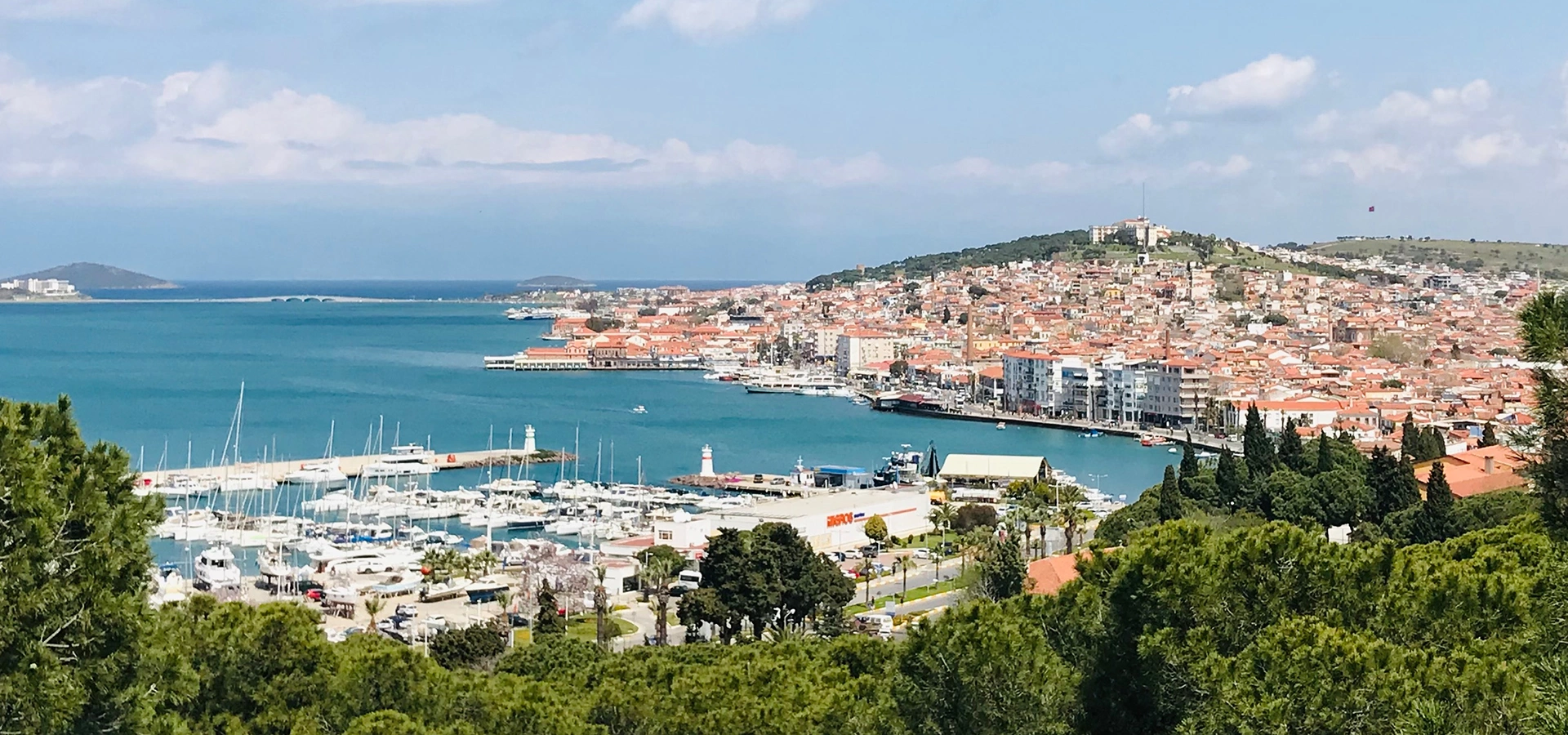
Ayvalık Travel Guide
Explore the historic town as a whole, from Greek houses and former churches to waterfront streets, islands, viewpoints and local food.
View Ayvalık Guide





Hidden among the narrow stone streets of central Ayvalık, Taksiyarhis Monument Museum occupies one of the town's most important surviving Greek Orthodox churches. The present building dates principally from 1844, but its history reaches much further back: official museum records describe an earlier small church here in the 15th century, followed by a larger phase in 1753 and the major rebuilding that created the monument visitors see today.
Taksiyarhis is described by official cultural authorities as Ayvalık's first church. The early settlement expanded around its predecessor, making the site important not only as a religious monument but also as a key reference point in the development of historic Ayvalık. After the end of its original ecclesiastical use, the building spent many years as a Tekel tobacco warehouse before being restored by the Ministry of Culture and Tourism and opened as a monument museum in 2013.
The exterior is relatively restrained compared with what waits inside. Beyond the narthex is a three-aisled basilica filled with columns, painted vaults, chandeliers, marble surfaces, gilded details and Christian iconography. The great iconostasis, the elevated ambon reached by a curling stair, and the U-shaped upper gallery create an interior that is both architectural and theatrical.
The religious imagery is equally important. Saints and angels, scenes from the life of Jesus, the Annunciation, Adam and Eve, the Last Supper, the Crucifixion, Resurrection and Ascension all belong to the visual world of Taksiyarhis. Official Ayvalık tourism material also highlights the unusual female saint portraits painted on fish skin and the fine marble craftsmanship preserved within the monument.
For travellers exploring Ayvalık, this is not an object-heavy museum that requires several hours. The building itself is the principal exhibit. Its value lies in looking carefully: at the iconostasis, painted ceilings, Corinthian-style capitals, traces of different restoration periods, the women's gallery and the relationship between the church and the surrounding old-town streets.
The site preserves the memory of Ayvalık's earliest known church and the historic neighbourhood that grew around it.
The present major phase dates from 1844, following earlier church buildings documented for the 15th century and 1753.
Marble, gold decoration, painted vaults, icons, chandeliers, an ornate ambon and a monumental iconostasis fill the three-aisled basilica.
After restoration by the Ministry of Culture and Tourism, Taksiyarhis reopened as a monument museum in 2013.
Essential information for visiting Ayvalık's historic Taksiyarhis Church and understanding what makes the monument special.
İsmetpaşa neighbourhood, central Ayvalık, within the historic old-town street network.
A Greek Orthodox church and one of the defining religious monuments of historic Ayvalık.
Official museum information places the first small church on the site in the 15th century.
The inscription over the entrance records the rebuilding of the present basilica in 1844.
A three-aisled basilica entered through a western narthex and three principal doors.
Gilded iconostasis, painted vaults, marble work, chandeliers, ambon, icons and the upper women's gallery.
Scenes of Christ's life, saints, angels, biblical narratives and unusual saint portraits painted on fish skin.
From 1927 the building was used for many years as a Tekel warehouse before eventually being abandoned.
Restored by the Republic of Türkiye Ministry of Culture and Tourism beginning in 2012.
Opened in 2013 as Taksiyarhis Monument Museum, administratively linked to Balıkesir Kuva-yi Milliye Museum.
45–75 minutes is comfortable for the monument; allow longer if you are photographing details.
Do not confuse this central Ayvalık museum with the Taksiyarhis church on Cunda, which houses the Rahmi M. Koç Museum.
Taksiyarhis is one of the strongest places in Ayvalık to understand the town as a historic Aegean settlement shaped by Greek Orthodox community life, trade, architecture and changing political eras. It is beautiful, but its importance goes much deeper than decoration.
The first reason to visit is the interior. Ayvalık has many historic religious buildings, yet Taksiyarhis gives visitors an unusually complete architectural experience. The basilical space, high vaults, marble and imitation-marble surfaces, gilded capitals, hanging chandeliers and iconostasis create a sense of scale that is difficult to guess from the narrow streets outside.
The second reason is historical continuity. Official museum information identifies three major building phases: a small 15th-century church, a second phase documented in 1753 and the 1844 rebuilding. In other words, the monument is not simply a single nineteenth-century construction but a site repeatedly enlarged and reshaped as Ayvalık itself developed.
The third reason is the artwork. Taksiyarhis contains a dense visual programme of Christian imagery that rewards slow observation. Rather than walking straight down the nave and leaving, look upward and sideways: the most interesting details are distributed across the ceiling, gallery, iconostasis, ambon and wall surfaces.
Finally, the museum sits inside Ayvalık's historic urban fabric. Reaching it through old stone streets is part of the experience. The church, nearby houses, courtyards, slopes and narrow lanes demonstrate how monumental religious architecture was embedded within an everyday neighbourhood rather than isolated on a ceremonial square.
Taksiyarhis is best understood as a monument museum. Unlike an archaeological museum organised mainly around cases of excavated objects, the primary historical object here is the church building itself. Architecture, decoration, surviving religious imagery and traces of the building's changing use form the core of the visit.
The name Taksiyarhis is associated in the Greek Orthodox tradition with the archangels. Historic Ayvalık sources describe the central church as dedicated to Archangel Gabriel. Visitors will also encounter the word written in English as Taxiarchis, Taxiarches or Taxiarchs, depending on the transliteration used.
The museum is administered within Türkiye's state museum system. After restoration, it was opened in 2013 as a unit connected to Balıkesir Kuva-yi Milliye Museum. This distinguishes it clearly from the similarly named Taksiyarhis church on nearby Cunda Island, which was restored separately and functions as a Rahmi M. Koç Museum.
For the visitor, this means you should approach Taksiyarhis less as a collection to “finish” and more as a historic interior to read. The sequence from courtyard to narthex, nave, iconostasis and upper gallery tells the story of the building far better than simply counting exhibits.
The history of Taksiyarhis is closely tied to the history of Ayvalık itself. Official museum sources identify the first phase as a small church built in the 15th century. Later accounts of the town describe Ayvalık's Greek settlement expanding around this early religious nucleus during the following centuries.
A second major phase is documented by a 1753 inscription and by religious imagery associated with that period. Museum documentation describes this stage as a three-domed, two-storey basilical structure. As Ayvalık grew in population and prosperity, the church evidently developed with it.
The third major phase is the one most visible today. An inscription above the entrance records 1844, when the church was substantially rebuilt. Official descriptions note that the basilica was covered with a barrel-vaulted system and that the upper supporting structure was made largely of wood.
Taksiyarhis belonged to a period when Ayvalık was an important Aegean commercial town whose prosperity was tied to olives, olive oil, soap production, maritime trade and an active urban Greek Orthodox community. The scale and interior richness of the church make much more sense when seen against that broader nineteenth-century economic and social setting.
After the major demographic and political changes of the early twentieth century, the church ceased functioning in its original role. From 1927 onward, official museum records state that it was used for many years as a Tekel warehouse. The building later fell out of use and suffered deterioration, compounded by earthquake damage and the long-term vulnerability of its decorative surfaces.
A comprehensive state restoration began in 2012. The Ministry of Culture and Tourism completed the work and the monument reopened in 2013 as Taksiyarhis Monument Museum, returning one of central Ayvalık's most important historic interiors to public access.
The present Taksiyarhis is organised as a three-aisled basilica. Visitors approach from the west through the narthex and enter the church through three main doors. Once inside, rows of columns separate the central nave from the side aisles and draw the eye toward the iconostasis and sanctuary end.
The spatial effect is more elaborate than the exterior suggests. The building combines stone, brick, wood, plaster, marble and painted decoration. Official museum descriptions emphasise that the upper structural system of the 1844 phase is largely wooden, while the visible interior has been finished to create a much richer impression through decorative plaster, marble effects and gilding.
The upper level contains a U-shaped wooden gallery with 16 windows. This gallery functioned as the gynaikeion, the women's section traditionally found in many Orthodox churches. From above, the geometry of the nave, chandeliers and iconostasis becomes especially clear.
The church belongs visually to the broader architectural world of historic Ayvalık, where large Greek Orthodox religious buildings stand among tightly packed houses and sloping streets. Local tourism sources also associate Taksiyarhis with the characteristic stonework of the region, including the warm-toned stone commonly known as sarımsak taşı.
One of the pleasures of Taksiyarhis is the contrast between outside and inside. The exterior is relatively restrained, especially when compared with the gilding and colour of the nave. Historic Ayvalık tourism material highlights the church's two monumental courtyard gates, which give the approach a ceremonial character despite the surrounding narrow street network.
The dense urban setting matters. Taksiyarhis is not surrounded by a large modern plaza or landscaped museum garden. It belongs to the texture of the old town, where stone houses, stepped lanes, retaining walls, courtyards and irregular street lines sit closely together.
Take a few minutes before entering to look at how the building fits into the neighbourhood. The relationship between a monumental church and modest residential streets is part of the architectural story of nineteenth-century Ayvalık and helps explain why walking is the best way to approach the museum.
The interior is the reason Taksiyarhis leaves such a strong impression. The central nave rises between columns with decorative capitals, while pale painted vaults, gold accents and large chandeliers create a luminous atmosphere. The overall effect is ornate without feeling visually chaotic because the architectural rhythm keeps directing attention toward the sanctuary.
Stand near the entrance first and look straight toward the sanctuary to understand the full depth and symmetry of the basilica.
Decorative capitals with vegetal details and gilded accents help transform the structural columns into one of the interior's strongest visual features.
Look upward for religious scenes, medallions, ornamental motifs and layers of decorative painting across the ceiling surfaces.
Large hanging chandeliers emphasise the vertical volume of the nave and create some of the museum's most recognisable photographic compositions.
Fine marble and marble-effect decoration appears around major liturgical elements, especially the iconostasis and preaching furniture.
The U-shaped gynaikeion provides a second architectural layer and helps visitors understand how different parts of the congregation once occupied the church.
Do not rush directly toward the iconostasis. The interior is best appreciated in stages: first as one complete volume, then as a series of details. Step to the side aisles, look back toward the entrance, examine the ambon and then return to the centre line for the strongest view toward the sanctuary.
At the eastern end of the nave stands the iconostasis, the screen that separates the main worship space from the sanctuary in Orthodox church architecture. At Taksiyarhis it is one of the most visually elaborate parts of the monument.
Official museum information describes the iconostasis as decorated with marble icons, marble reliefs and gold ornament, with imagery narrating episodes from the life of Jesus Christ. The combination of carved architectural form and painted religious narrative makes it both a liturgical boundary and a monumental work of art.
When viewing it, look at the whole screen first and then move visually from panel to panel. The hierarchy is intentional: doors, icons, framing elements and gilded details work together to create a ceremonial threshold before the apse.
Visitors unfamiliar with Orthodox churches sometimes treat the iconostasis as a decorative backdrop. Historically it had a much more important role, separating sacred liturgical space while presenting holy figures and biblical narratives to the congregation.
Another feature that deserves close attention is the ambon, or elevated preaching platform, positioned in the central nave. Official museum descriptions note that it is decorated with stucco reliefs including lion imagery and reached by a curving stair.
The ambon gives the interior an almost theatrical quality. Its height allowed a speaker to address the congregation from above floor level, while its sculptural form became part of the visual programme of the church.
From a photographic perspective, the ambon works particularly well when framed against the column line or viewed diagonally so that the stair, carved decoration and upper gallery appear together. Avoid focusing only on the altar end; some of Taksiyarhis's most distinctive details sit along the sides of the nave.
Taksiyarhis contains a rich visual programme intended to communicate Christian narratives through images. Official Ayvalık tourism sources identify scenes including the Annunciation, Adam and Eve and the forbidden fruit, the Baptism of Jesus, the Last Supper, the Crucifixion, Resurrection and Ascension, together with images of saints and angels.
These works should be read as a connected religious narrative rather than as isolated paintings. In a historic Orthodox church, the placement of an image matters: different surfaces, screens, vaults and liturgical zones carry different visual and theological functions.
One of the most unusual details highlighted in official tourism material is the presence of female saint portraits painted on fish skin. Whether you are interested in religious history or simply craftsmanship, these works are among the details that distinguish Taksiyarhis from a quick “historic church” visit.
The decoration also reflects more than one phase of repair and intervention. Museum authorities note that earthquakes and subsequent restorations changed parts of the wall decoration over time. What visitors see today is therefore both a religious interior and a record of repeated conservation, repair and adaptation.
The second floor contains a U-shaped wooden gallery illuminated by 16 windows. Official museum documentation identifies this as the gynaikeion, the section traditionally reserved for women in the historic congregation.
Architecturally, the gallery changes how the interior is perceived. From below it forms a horizontal layer around the nave; from above it reveals the scale of the chandeliers, the pattern of the columns and the relationship between the congregation space and sanctuary.
Even if certain gallery sections are temporarily restricted for conservation or operational reasons, look carefully at the structure from the ground floor. The gallery is essential to understanding the building as a functioning church rather than simply as a decorated hall.
After its original religious function ended, Taksiyarhis entered a very different phase. From 1927, the building was used for many years as a warehouse by the state tobacco and alcohol monopoly, commonly known as Tekel.
Adaptive reuse of historic religious buildings can be destructive, but it can also be one reason a structure survives at all. In Taksiyarhis, the warehouse period forms part of the building's twentieth-century history, even though it altered how the interior was used and contributed to the loss or displacement of some original elements.
Earthquakes and long periods of limited maintenance also affected the monument. By the time major restoration began in 2012, the challenge was not simply to repair walls but to stabilise a complex historic interior containing wood, plaster, painted decoration, marble and other vulnerable materials.
The Ministry of Culture and Tourism restoration returned the church to public life, and in 2013 it reopened as Taksiyarhis Monument Museum. The result allows visitors to experience the architecture without pretending that the building passed unchanged through the twentieth century.
This is one of the most important practical points for first-time visitors: Ayvalık has two well-known historic churches associated with the name Taksiyarhis, and online photographs are frequently mixed together.
This page describes the state-run monument museum in İsmetpaşa, central Ayvalık. Its history includes the 15th-century first phase, 1753 enlargement, 1844 rebuilding and 2013 museum opening.
A different church stands on Alibey (Cunda) Island. Restored by the Rahmi M. Koç Museums foundation, it opened as a museum in 2014 and contains a collection extending beyond church history.
Both are worth visiting, but they are not interchangeable. If your map pin, ticket information or photographs show Cunda / Alibey Island, you are looking at the Rahmi M. Koç Museum. If they show İsmetpaşa in Ayvalık centre, you are looking at the Taksiyarhis Monument Museum covered here.
Taksiyarhis is not enormous, and that is part of its appeal. You can physically walk through the main space quite quickly, but doing so would miss most of what makes the museum worthwhile. The strongest visit is built around observation rather than distance.
Pause near the entrance and absorb the full nave, columns, chandeliers, vaults and iconostasis before moving closer.
Study the side aisles, wall paintings, column capitals, ambon and decorative surfaces rather than following only the centre line.
Spend time at the iconostasis and look for narrative scenes, gilded details and the transition toward the apse.
Revisit the best viewpoints, photograph details and look for signs of different construction and restoration phases.
If you are visiting several Ayvalık churches in one day, Taksiyarhis is the place where it is worth slowing down most. Its interior provides useful architectural vocabulary — basilica, nave, narthex, iconostasis, ambon and gynaikeion — that will help you read other historic religious buildings around town more intelligently.
The strongest full-interior composition is often from the west looking toward the iconostasis, using the columns to create depth.
A symmetrical composition works beautifully with the nave, chandeliers and sanctuary aligned through the centre of the frame.
The height of the columns, vaults, ambon and chandeliers makes vertical photographs especially effective.
Gilded capitals, painted medallions, marble reliefs, icon panels and stair details tell the story better than wide views alone.
Bright windows and a darker nave can create high contrast. Expose carefully so that decorative surfaces do not disappear into shadow.
Flash, tripods or professional equipment may be restricted; follow the current instructions of museum staff.
A wide-angle lens is useful, but avoid exaggerating the architecture so much that the columns appear dramatically distorted. For a more natural record, step back where possible and keep vertical lines reasonably straight.
Excellent for combining the museum with long walks through Ayvalık's historic streets before summer heat and peak crowds arrive.
The museum provides a welcome cultural break from beaches and midday heat, although central Ayvalık can be very busy.
One of the strongest periods for a heritage-focused Ayvalık visit, with comfortable walking temperatures and softer street light.
Quieter and atmospheric. Rainy days are well suited to combining Taksiyarhis with cafés, historic streets and other indoor cultural stops.
Usually best if you want a calmer interior and cleaner photographs before day-trippers spread through the old town.
Can work beautifully for street photography outside, but always check the current museum closing and ticket-office times first.
Taksiyarhis stands within Ayvalık's old-town fabric, where streets can be narrow, sloping, uneven and partly stepped. For some visitors, reaching the museum may therefore be more demanding than moving through the main ground-floor interior.
Historic buildings also rarely offer uniform access to every architectural level. The upper gallery, historic stairs and changes in floor level may not be suitable for all visitors with reduced mobility.
If step-free access is essential, contact the museum or check the current official listing before travelling. Conditions can change after restoration work, maintenance or temporary route adjustments, and it is better to confirm the exact accessible entrance than to rely on a general description.
Visitors with strollers should also remember that old Ayvalık's street surfaces can be awkward. A compact stroller is easier than a large one if you plan to combine the museum with an extended old-town walk.
The museum is in İsmetpaşa neighbourhood, within central Ayvalık. The official address is listed around Mareşal Fevzi Çakmak Caddesi / 11. Sokak, inside the historic street network behind the waterfront area.
The best option once you are in central Ayvalık. Walking lets you appreciate the historic houses and narrow streets surrounding the church.
Avoid trying to drive directly through every old-town lane. Park in a more accessible central area and complete the final section on foot.
A taxi can take you close to the historic neighbourhood, but the final approach may still be easier on foot depending on traffic and street access.
Official tourism information notes that central Ayvalık and İsmetpaşa can be reached by local urban transport; continue on foot from the nearest practical stop.
If your navigation app sends you toward Cunda / Alibey Island, check the destination carefully. You may have selected the other Taksiyarhis church that houses the Rahmi M. Koç Museum.
The official museum listing currently gives standard hours of 08:30–17:30, with the ticket office closing at 17:00, and lists Monday as the closed day. Seasonal schedules can override those standard hours.
For example, the Ministry of Culture and Tourism's 2026 extended-hours programme lists Taksiyarhis Monument Museum as open until 19:00 between 1 May and 1 October 2026. Because seasonal extensions can change from year to year, always verify the current schedule close to your visit rather than relying permanently on an older timetable.
The official museum page marks Müzekart as valid for Turkish citizens. Ticket prices and conditions for international visitors can change, so this guide deliberately avoids publishing a fixed entrance fee that may become outdated.
Continue on foot through stone houses, old workshops, sloping lanes and the architectural fabric that gives the church its historical context.
Return toward the seafront for cafés, fishing boats, island views and a completely different sense of the town's geography.
Another major former Greek Orthodox church in central Ayvalık, later converted into a mosque, useful for comparing religious architecture and adaptive reuse.
A former church transformed into a mosque, recognisable by its prominent tower and one of the most important skyline elements in old Ayvalık.
Known historically as Kato Panagia, this converted church adds another layer to Ayvalık's complex religious and architectural history.
Continue across to Alibey Island for historic streets, waterfront restaurants, the Sevim and Necdet Kent Library and the separate Taksiyarhis / Rahmi M. Koç Museum.
The exact route is flexible. The important idea is to keep Taksiyarhis within a walking context. Arriving by car, entering for 20 minutes and immediately leaving misses much of what makes the monument historically meaningful.
Enough only for a fast look at the nave, iconostasis and principal architectural features.
A practical visit if Taksiyarhis is one stop on a busy old-town walking route.
The best range for most visitors, allowing time for paintings, decorative details, photographs and the upper architectural elements.
Worthwhile for architecture, art-history and photography enthusiasts who want to study individual surfaces and compositions carefully.
Allow additional time outside the museum. The surrounding streets are not simply the route to the entrance; they are part of the same historic landscape and deserve at least another hour if this is your first time in old Ayvalık.
Search specifically for Taksiyarhis Anıt Müzesi in central Ayvalık, not the Rahmi M. Koç Museum on Cunda.
The old neighbourhood is better experienced by walking, and parking directly beside the monument can be inconvenient.
Some of the strongest decoration is on vaults, capitals, medallions and upper surfaces rather than at eye level.
Treat it as a structured religious screen with narrative meaning, not simply as an ornate wall at the end of the nave.
The U-shaped gynaikeion explains how the congregation was spatially organised and changes the proportions of the interior.
Morning visits are usually better for photographs and for appreciating the atmosphere without large walking groups.
Summer closing times may be extended by Ministry announcement, while standard winter schedules can be shorter.
Museum admission changes over time; check official information rather than planning around an outdated blog fee.
Even though the museum itself is compact, the surrounding old-town streets can be uneven and sloping.
Seeing both Taksiyarhis buildings on the same trip is an excellent way to compare two very different museum adaptations of historic churches.
It is in İsmetpaşa neighbourhood in central Ayvalık, Balıkesir, within the historic old-town street network.
No. The monument museum described on this page is in central Ayvalık. Cunda has a different Taksiyarhis church that now houses the Rahmi M. Koç Museum.
The name Taksiyarhis is associated with the archangels and was used for more than one Greek Orthodox church. The central Ayvalık church and the Cunda church are separate historic buildings with different museum administrations.
Official cultural sources describe it as Ayvalık's first church. The site has an early phase dating to the 15th century, although the present monument is largely associated with later rebuilding.
The site has three principal phases in official museum documentation: a small church in the 15th century, a major phase in 1753 and the present major rebuilding in 1844.
The name comes from the Greek Orthodox tradition and is associated with the archangels. Historic Ayvalık sources describe the central church as dedicated to Archangel Gabriel.
It is a three-aisled basilica with a western narthex, barrel-vaulted upper structure, an ornate iconostasis, ambon and U-shaped women's gallery.
It is the screen separating the main worship space from the sanctuary in an Orthodox church. Taksiyarhis's iconostasis is decorated with marble work, religious imagery and gold ornament.
The gynaikeion is the historic women's gallery. At Taksiyarhis it is a U-shaped wooden upper level with 16 windows.
Official tourism material identifies images connected with the Annunciation, Adam and Eve, the Baptism of Jesus, Last Supper, Crucifixion, Resurrection and Ascension, together with saints and angels.
Yes. Official Ayvalık tourism information specifically highlights female saint portraits painted on fish skin among the unusual artistic features of the church.
After its original religious role ended, the building entered a new twentieth-century phase. Official museum records state that it was used for many years as a Tekel warehouse from 1927 onward.
After Ministry of Culture and Tourism restoration beginning in 2012, the monument opened to visitors as Taksiyarhis Monument Museum in 2013.
Most visitors should allow 45–75 minutes. Architecture and photography enthusiasts may easily spend longer.
The standard official listing currently shows 08:30–17:30 with ticket office closure at 17:00 and Monday closed. Seasonal Ministry announcements can extend summer hours, so confirm before visiting.
The current official museum listing identifies Monday as the closed day. Always recheck before travelling because museum schedules can change.
The official museum listing currently states that Müzekart is valid for Turkish citizens. International visitor ticket and pass rules should be checked on the official museum website.
Personal photography is generally part of the visitor experience, but flash, tripods or professional equipment may be restricted. Follow the museum's current rules and staff instructions.
Yes, especially for older children interested in art or history. The visit is relatively short, but younger children should be supervised around stairs, galleries and fragile historic surfaces.
Accessibility can be uneven because of the historic building and surrounding sloping streets. Visitors requiring step-free access should confirm the current accessible route directly with the museum.
Absolutely. Its value is architectural, artistic, urban and historical as much as religious. It is one of the best places to understand the multicultural heritage of old Ayvalık.
Yes. Central Ayvalık and Cunda are easily combined, and visiting both Taksiyarhis buildings makes an especially interesting comparison.
Continue from Taksiyarhis into Ayvalık's historic streets, cross to Cunda Island or build a wider cultural route through western Balıkesir.
Use Taksiyarhis as the starting point for a deeper exploration of Ayvalık's architecture, islands and the historic landscapes of the northern Aegean.
Explore the historic town as a whole, from Greek houses and former churches to waterfront streets, islands, viewpoints and local food.
View Ayvalık Guide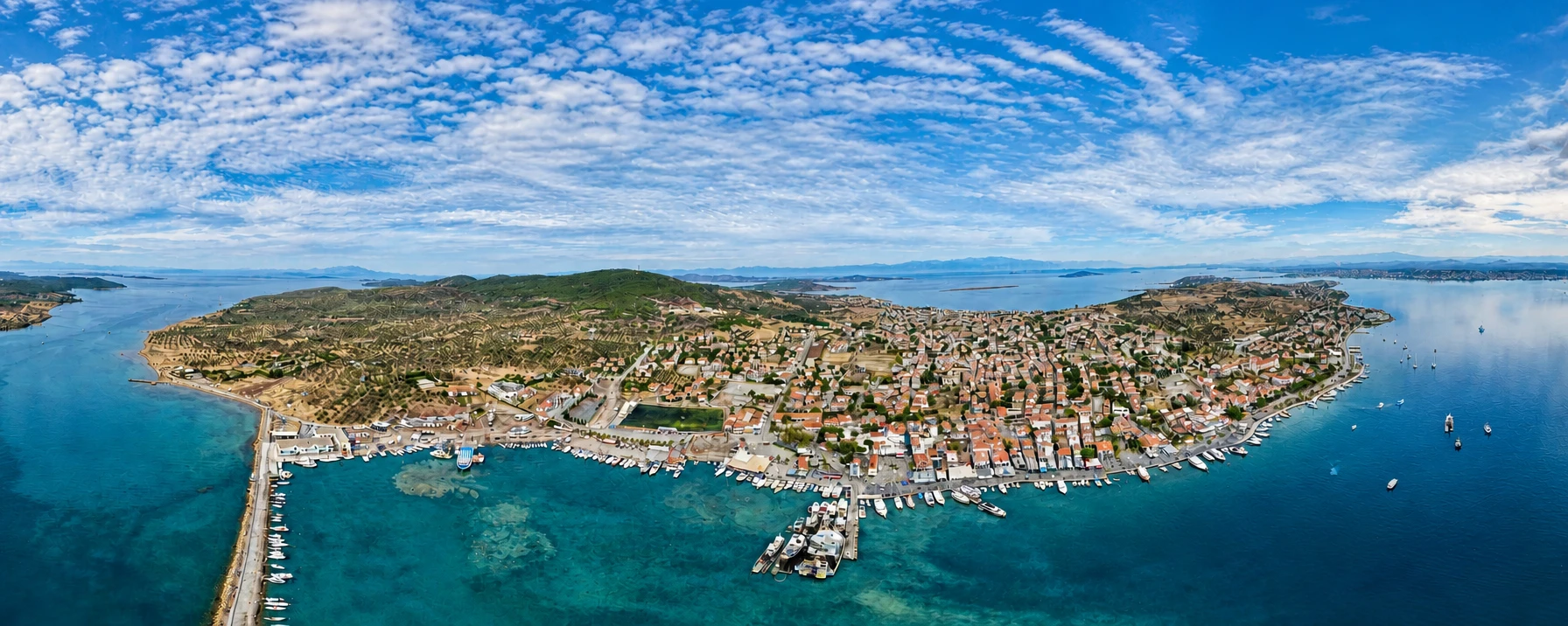
Cross to Alibey Island for stone streets, waterfront restaurants, historic churches and the separate Taksiyarhis building that houses the Rahmi M. Koç Museum.
View Cunda Guide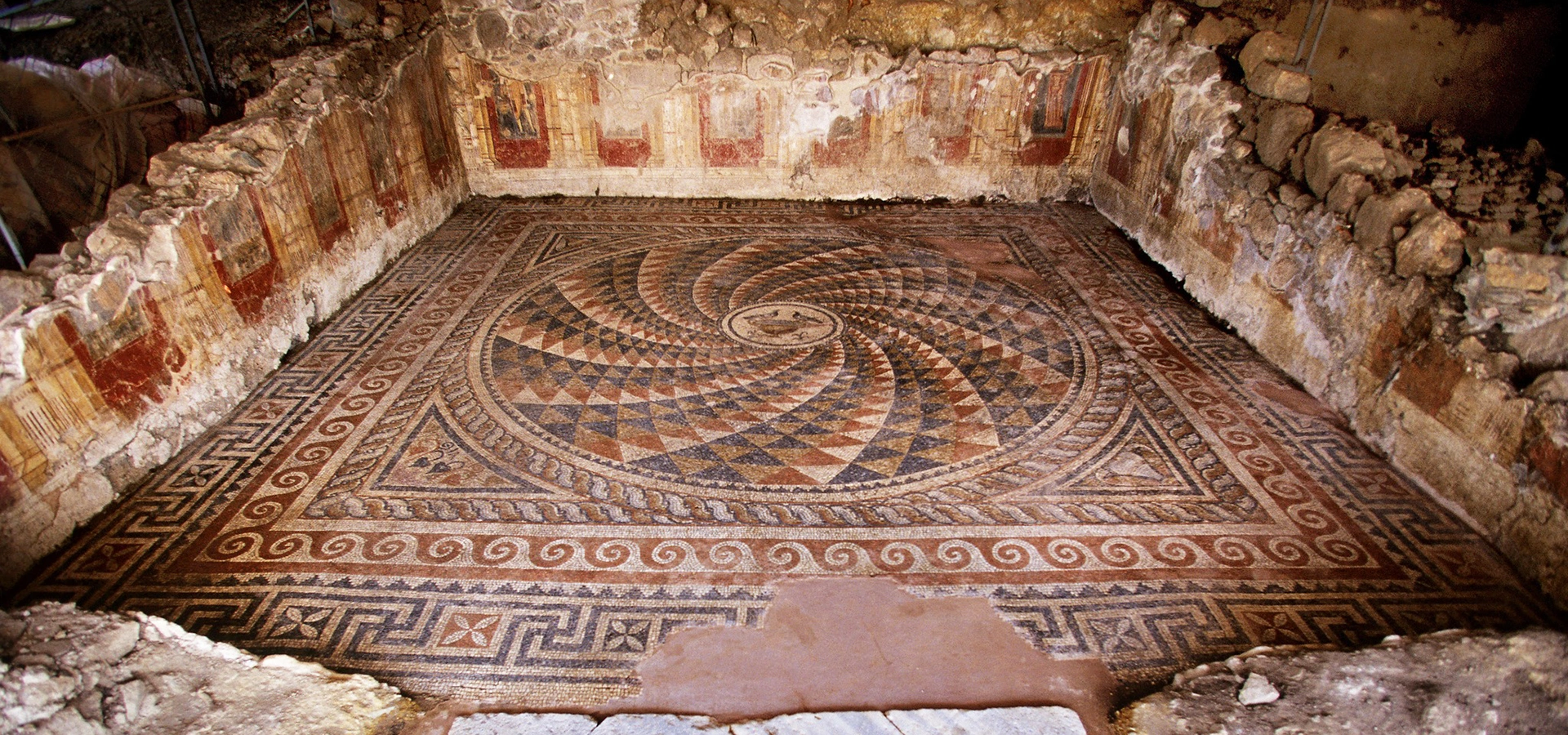
Continue south-east along the Gulf of Edremit to an important archaeological site with Roman villas, mosaics, burials and deep links to the ancient Troad.
View Antandros Guide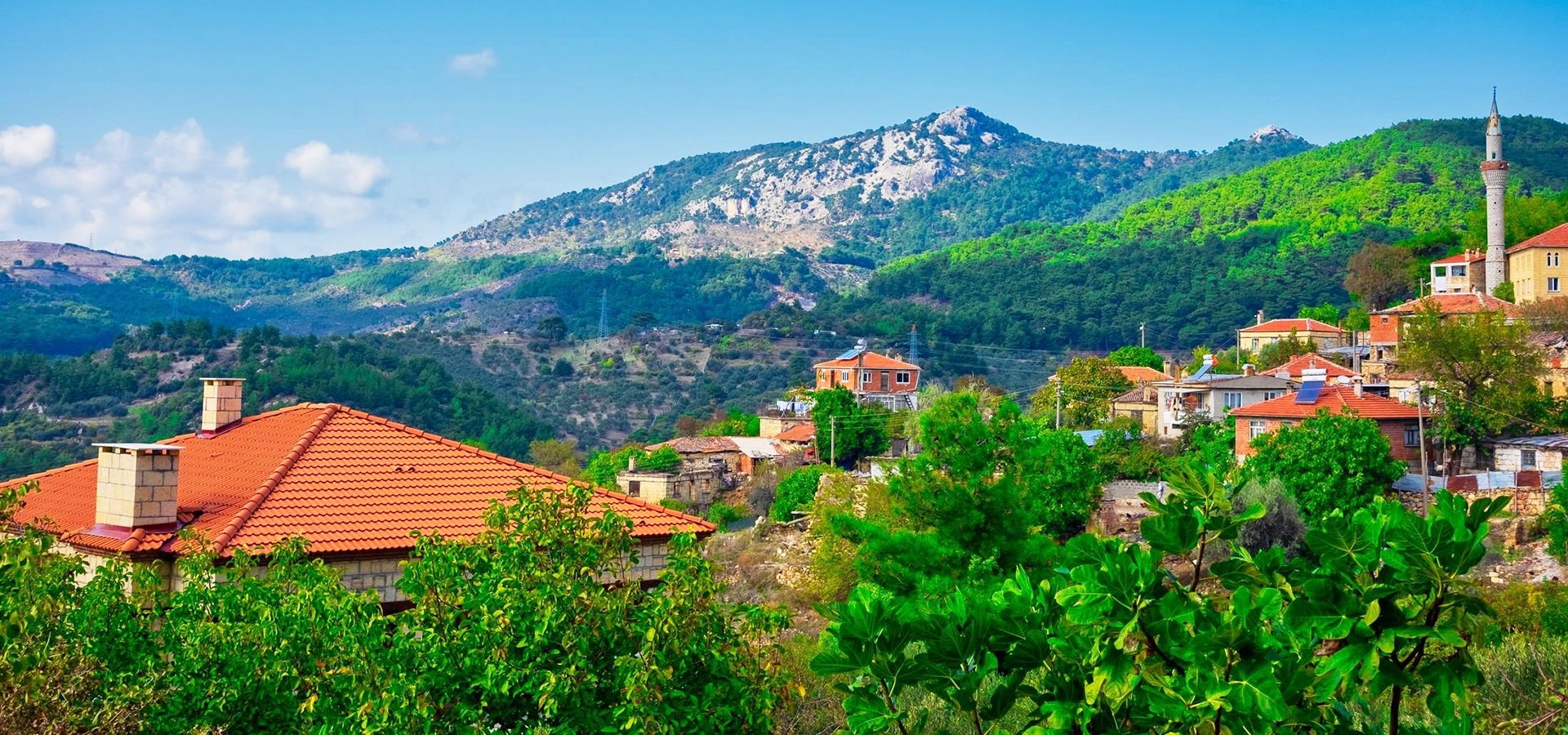
Balance Ayvalık's cultural heritage with the forests, villages, springs, mythology and mountain scenery of one of western Türkiye's great natural landscapes.
View Mount Ida Guide