Private Armenian Karaköy & Galata Heritage Tour
Ask us about a tailor-made route combining Surp Krikor Lusavoriç, Getronagan School, Karaköy, Bankalar Street, Galata Tower and the multicultural Christian history of old Galata.
Request a Custom Tour





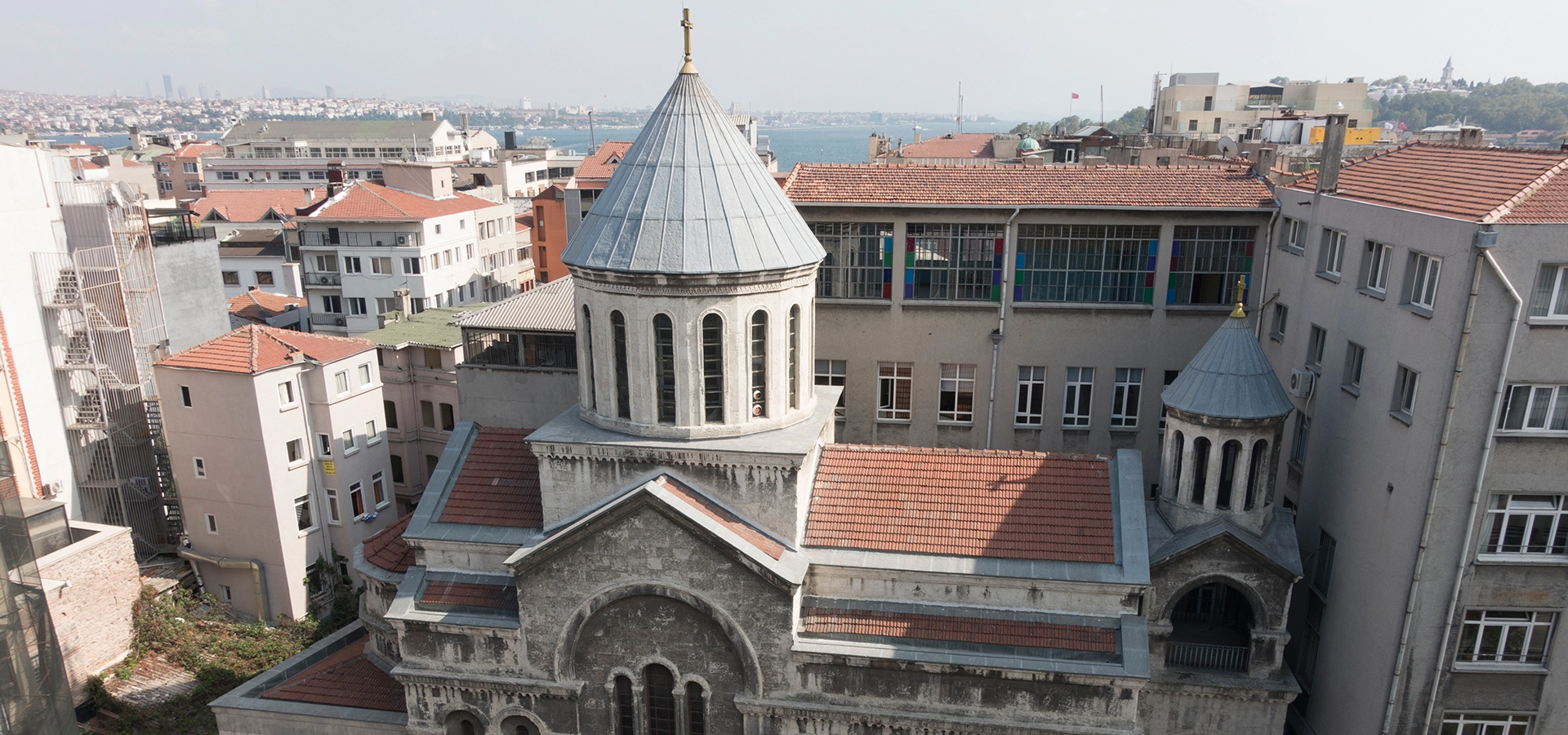
The Surp Krikor Lusavoriç Armenian Church, also known in English as the Church of Saint Gregory the Illuminator, stands in Karaköy, historic Galata, between the waterfront, Kemeraltı Street and the old commercial streets below Galata Tower. It belongs to the Armenian Apostolic Church and preserves one of the longest documented Armenian Christian traditions in Istanbul.
Armenian Patriarchate sources connect the history of the site with the late medieval period. Manuscripts from 1360 and 1361 mention an earlier church named Surp Sarkis in Galata, while later accounts associate an Armenian church dedicated to Saint Gregory the Illuminator with a merchant from Caffa in Crimea named Gozma. Historic plaques formerly preserved at the church testified to its existence by the early 15th century.
The church survived political change, urban transformation and repeated fires. It was rebuilt after major fires in 1731 and 1771, then transformed again during the 19th century. In 1958, the old complex was expropriated and demolished during road-widening works in Karaköy. A new church was designed by Armenian architect Bedros Zobyan and erected on the reduced remaining site during the 1960s.
The present church is especially important because it was deliberately designed in a classical Armenian architectural language, with a compact stone mass, a dominant central dome and a conical roof form. Beneath the main church lies the Amenapırgiç Chapel, where important Armenian patriarchs are buried. The neighboring Getronagan Armenian High School adds another layer to the site's religious, educational and cultural importance.
Documentary evidence places an Armenian church community at this Galata site before the Ottoman conquest of Constantinople.
Successive churches were rebuilt after major Galata fires that destroyed earlier structures.
Architect Bedros Zobyan designed the present church after the older complex was demolished during urban redevelopment.
Surp Krikor Lusavoriç remains an active Armenian Apostolic sanctuary rather than a museum monument.
Essential information for understanding one of Galata's most important Armenian landmarks, its medieval roots, classical Armenian architecture, Saint Gregory the Illuminator and the living Armenian Apostolic community of Istanbul.
Sakızcılar Street in Karaköy, within the historic Galata district of Beyoğlu.
Open on Google MapsAn active Armenian Apostolic church dedicated to Saint Gregory the Illuminator, one of the defining saints of Armenian Christianity.
Armenian Christian worship at or near the site is documented from the late medieval period, with records reaching back to the 14th century.
The current church was designed by architect Bedros Zobyan and built during the 1960s after the earlier complex was demolished in 1958.
A rare Istanbul example of a church deliberately shaped in a traditional Armenian architectural idiom with a prominent conical dome.
A functioning place of Armenian Apostolic worship, prayer, feast-day observance and community life.
Surp Krikor Lusavoriç is important not only as a church, but as a rare place where the history of medieval Galata, the Armenian presence in Istanbul, modern urban redevelopment and living religious tradition overlap in a single site.
The first reason for its importance is historical continuity. Armenian Patriarchate records describe Surp Krikor Lusavoriç as the oldest known Armenian church tradition in Istanbul. Written evidence refers to Armenian worship in Galata centuries before the modern building, making the site one of the strongest surviving witnesses to the Armenian presence in the city before 1453.
The church also preserves the memory of the Black Sea Armenian commercial world. Late medieval Armenian merchants moved between ports such as Caffa in Crimea, Constantinople and the wider eastern Mediterranean. The traditions surrounding the foundation of Surp Krikor Lusavoriç reflect those networks of merchants, craftsmen and clergy.
Its 20th-century story is equally significant. When road-widening projects reshaped Karaköy in 1958, the earlier church complex was expropriated and demolished. The Armenian community then built a new sanctuary on the remaining property. Instead of reproducing a typical 19th-century Istanbul church, architect Bedros Zobyan turned toward the visual vocabulary of medieval Armenian ecclesiastical architecture.
For travelers using our guide to places to visit in Istanbul, the church adds an essential Armenian layer to the story of Galata. Together with nearby Catholic, Orthodox, Jewish and Islamic landmarks, it demonstrates how the district developed through trade, migration, religious diversity, education and urban change.
The earliest history of the church is complex because several medieval records, inscriptions and later historical accounts overlap. According to Armenian Patriarchate information, manuscripts dated 1360 and 1361 mention a church called Surp Sarkis in Galata. Another tradition records that an Armenian merchant named Gozma came from Caffa in Crimea in 1391 and established a church dedicated to Saint Gregory the Illuminator.
Other surviving evidence connected with the old church confirmed that an Armenian sanctuary existed here by the early 15th century. This places the religious history of the site within Genoese Galata, when the settlement north of the Golden Horn was an international commercial colony occupied by merchants, craftsmen and religious communities from many regions.
In 1660, a major Galata fire devastated much of the district, yet the church survived. The next great fire in 1731 destroyed it. The sanctuary was rebuilt in 1733 during the patriarchate of Hovhannes IX Golod, with Sarkis Kalfa associated with the construction.
Another fire in 1771 again reduced the church to ruins. Reconstruction was eventually completed in 1799 under Minas Kalfa. The neighboring Surp Haç and Surp Garabed chapels became part of the expanded complex, and in 1888 interior walls were opened to connect the worship spaces more fully.
The greatest physical change came in 1958. Large-scale redevelopment and road widening between Karaköy and Tophane led to the expropriation of the church property. The old building was demolished, and a substantial portion of the land was absorbed into the new street layout.
Patriarch Karekin Khachadourian supported a new design by architect Bedros Zobyan. The project was approved by Holy Etchmiadzin, and the present domed church was erected during the 1960s. It was subsequently consecrated and reopened for worship under Patriarch Shnorhk Kaloustian. Later restorations were completed in 2005 and 2011.
Manuscripts mention an Armenian church called Surp Sarkis in Galata.
Tradition associates the foundation of a Surp Krikor Lusavoriç church with the merchant Gozma from Caffa.
The church was rebuilt after the destructive Galata fire of 1731.
Minas Kalfa completed another rebuilding following the fire of 1771.
The old complex was demolished during Karaköy road-widening and urban redevelopment works.
Bedros Zobyan's classical Armenian-style church replaced the earlier sanctuary on the reduced site.
The church is dedicated to Saint Gregory the Illuminator, known in Armenian as Surp Krikor Lusavoriç. He is one of the central figures of Armenian Christian history and is traditionally remembered as the first great ecclesiastical leader of Christian Armenia.
According to Armenian Church tradition, Gregory lived in the late 3rd and early 4th centuries. After years of persecution and imprisonment, he emerged as the Christian teacher who helped bring King Trdat III and the Armenian royal court to Christianity. The Armenian Church commemorates his release from the deep prison associated with Khor Virap as a decisive moment in the conversion of Armenia.
The Armenian Church traditionally dates the official adoption of Christianity by Armenia to 301, making Armenia the first state to embrace Christianity as its official religion. Gregory became the first Catholicos of the Armenian Church and a foundational symbol of Armenian religious identity.
His title “the Illuminator” reflects the belief that he brought the light of Christianity to Armenia. Churches dedicated to him therefore carry significance far beyond the memory of one individual: they evoke the origins, continuity and global identity of the Armenian Apostolic Church.
The Armenian form of Saint Gregory, one of the most important saints of Armenian Christianity.
Means “the Illuminator,” recalling Gregory's role in the Christianization of Armenia.
Armenian tradition connects Gregory with years of imprisonment in the deep pit later commemorated at Khor Virap.
The traditional year in which Armenia adopted Christianity as its official religion.
Gregory is remembered as the first Catholicos and organizing father of the Armenian Church.
He remains one of the defining saints of Armenian Apostolic spirituality and identity.
The present Surp Krikor Lusavoriç differs dramatically from many of Istanbul's surviving 19th-century churches. Rather than using a Neo-Classical, Neo-Gothic or basilican façade, the building adopts a compact Armenian ecclesiastical form centered on a dominant dome.
The church was designed by Bedros Zobyan after the demolition of the older complex. Its architecture deliberately references the visual language of historic Armenian churches, especially through the conical roof rising above the central dome, the powerful stone massing and the restrained exterior treatment.
This makes Surp Krikor Lusavoriç exceptional in Istanbul. The Armenian Patriarchate describes it as the city's only church built in a classical Armenian architectural style. It therefore offers visitors a visual connection with the sacred architecture of Armenia itself rather than simply with the cosmopolitan European styles common in late Ottoman Istanbul.
The new building was also shaped by practical limitations. The 1958 expropriation greatly reduced the available property, so the architect had to fit the sanctuary, chapels, circulation and liturgical spaces into a constrained urban parcel beside busy Karaköy streets.
The building consciously recalls the compact, domed churches associated with historic Armenian architecture.
The sharply defined conical roof over the central dome gives the church its most recognizable silhouette.
Restrained stone surfaces emphasize mass and proportion rather than elaborate street decoration.
The Armenian architect created the new church after the old property was lost to 1950s urban redevelopment.
The church is a 20th-century structure inspired by much older Armenian architectural traditions.
The reduced site required a compact design carefully inserted into dense Karaköy.
The interior is organized around the liturgical traditions of the Armenian Apostolic Church. The visual focus is the sanctuary and Holy Altar, while the domed central volume gives the worship space a strong vertical character. The atmosphere is more compact and inward-looking than that of many large basilican churches in Istanbul.
The church also preserves material memories of the structures that preceded it. Historic inscriptions, fragments and decorative elements from the former complex were retained and incorporated into the new building. These objects make the modern sanctuary a vessel for centuries of community memory.
Lighting is relatively controlled, which reinforces the devotional character of the interior. The stone architecture, altar furnishings, crosses, icons and sacred textiles should be understood within the context of Armenian liturgy rather than as museum exhibits.
Visitors unfamiliar with Armenian churches may notice that the sanctuary arrangement, clerical spaces and ceremonial focus differ from Roman Catholic or Greek Orthodox churches elsewhere in Istanbul. Surp Krikor Lusavoriç is therefore an excellent place to encounter the distinctive architectural and liturgical identity of the Armenian Apostolic tradition.
The domed interior draws the eye upward and reinforces the church's classical Armenian architectural character.
The sanctuary forms the spiritual and visual center of Armenian Apostolic worship.
Older inscriptions preserve the memory of previous church buildings and generations of worshippers.
Decorative material from the earlier complex survives within the rebuilt church.
Cross imagery and Armenian ecclesiastical symbolism reinforce the identity of the sanctuary.
The interior remains arranged for active worship rather than tourist display.
One of the most important parts of the Surp Krikor Lusavoriç complex lies beneath the main church. The lower level contains the Amenapırgiç Chapel, a sacred space associated with the memory of leading figures of the Armenian Patriarchate of Constantinople.
Among those buried here is Patriarch Hovhannes IX Golod, who died in 1741. He was a major figure in the history of the Armenian Patriarchate and played an important role in the rebuilding of the church after the fire of 1731.
The chapel is also associated with Patriarch Krikor II of Kayseri, whose burial at the church was recorded in the 17th century. Their presence gives the site a funerary and memorial significance beyond its ordinary parish function.
Historic graves are also found in the churchyard, including benefactors connected with the neighboring Getronagan School. Together, the chapel, tombs and commemorative inscriptions transform the complex into a place of collective Armenian memory.
Immediately beside the church stands Getronagan Armenian High School, one of the best-known Armenian educational institutions in Istanbul. Its presence is essential to understanding Surp Krikor Lusavoriç as more than an isolated religious building.
Getronagan developed from earlier educational activity connected with the church complex and opened as a major Armenian secondary school in 1886. Its mission was to provide advanced education to Armenian students from different social backgrounds and to train a new generation of teachers, writers and intellectuals.
The relationship between church and school reflects a longstanding pattern in Ottoman Armenian community life. Parishes often functioned as centers not only of worship, but also of education, charity, language, music and cultural identity.
Walking through this small area of Karaköy therefore reveals an unusually concentrated Armenian urban landscape: a historic church, a major school, community memory and the commercial streets of old Galata all survive side by side.
One of Istanbul's major Armenian schools, located directly beside Surp Krikor Lusavoriç.
The school opened as an important institution serving Armenian students from across the city.
The school helped educate teachers, intellectuals and community leaders.
Church and school together illustrate the close relationship between worship and education in Armenian community history.
The complex forms part of the multicultural educational and religious history of late Ottoman Galata.
Getronagan continues the Armenian educational presence in Istanbul today.
Surp Krikor Lusavoriç belongs to the Armenian Apostolic Church, one of the ancient Oriental Orthodox Christian traditions. The Armenian Church traces its apostolic origins to the preaching of Saint Thaddeus and Saint Bartholomew and recognizes Saint Gregory the Illuminator as the great organizer of the Christian Armenian nation in the early 4th century.
The church's worship follows the Armenian liturgical tradition, with its own language, chant, vestments, ceremonial forms and calendar of feasts. Visitors may hear Armenian liturgical music and encounter practices that differ from both Roman Catholic and Byzantine Greek Orthodox worship.
In Istanbul, the Armenian Apostolic community is historically organized around the Armenian Patriarchate of Constantinople. Churches such as Surp Krikor Lusavoriç remain spiritual centers for worship, baptisms, weddings, funerals, commemorations and community gatherings.
For travelers, this means the church should never be treated merely as an architectural attraction. It is part of a living religious tradition whose continuity gives the building its deepest meaning.
The Armenian Church traces its Christian roots to the apostles Thaddeus and Bartholomew.
The Armenian Apostolic Church belongs to the family of ancient Oriental Orthodox churches.
Worship uses distinctive Armenian prayers, chants, vestments and ceremonial traditions.
Istanbul's Armenian Apostolic churches are connected with the Armenian Patriarchate of Constantinople.
Major saints and events in the Armenian liturgical calendar bring special services and commemorations.
The church continues to serve the religious and cultural life of Istanbul's Armenian community.
A visit is most rewarding when you look beyond the age of the present building and read the site as a sequence of medieval, Ottoman, modern and living Armenian layers. The architecture, inscriptions, chapel and neighboring school all contribute to that story.
Begin outside by noticing the distinctive Armenian-style conical roof rising above the church.
The restrained stone massing gives the building a very different character from nearby European-style churches.
Inside, observe the central liturgical focus and the relationship between altar, dome and worship space.
Look for surviving inscriptions and fragments that preserve the memory of the older church complex.
The lower chapel is associated with historic Armenian patriarchs; access may depend on church arrangements.
The complex preserves burials connected with major figures in the Armenian Patriarchate.
Pause in the courtyard to understand the compact relationship between church, memorials and surrounding urban fabric.
Notice the historic Armenian school next door, an essential part of the wider community story.
Step back into the surrounding streets to see how the church fits within the commercial landscape of old Galata.
The church is not a standard museum with guaranteed daily tourist hours. Check locally or with the church community before making a special journey for interior access.
Religious services, funerals, weddings and private community events always take priority over sightseeing.
This is normally enough for the exterior, main interior and quiet observation when visitor access is available.
Choose clothing appropriate for an active Christian place of worship.
The church is intimate and sound carries easily inside the sanctuary.
Do not assume photography is permitted, particularly during services or when worshippers are present.
Karaköy, Galata Tower, Bankalar Street and nearby churches can easily be linked on foot.
The present building is modern, but the religious history of the location reaches back many centuries.
Begin at Karaköy Square or the waterfront and walk toward the historic commercial streets behind Kemeraltı. The Surp Krikor Lusavoriç complex appears within a dense urban setting rather than in a monumental square, which is part of the experience of discovering it.
If the church is open to visitors, allow around 20–40 minutes for the Armenian-style exterior, domed interior, historic inscriptions and any accessible memorial areas. Remember that the lower chapel or other parts of the complex may not be available during an ordinary visit.
Continue toward Bankalar Street and the Kamondo Stairs, then climb into Galata. This route reveals how Armenian, Jewish, Catholic, Orthodox and Muslim communities lived within the same commercial district during the Ottoman centuries.
From Galata, continue to St. Peter and Paul Church and Galata Tower. If you have more time, extend the walk toward St. Anthony of Padua Church and Holy Trinity Church to compare Armenian Apostolic, Roman Catholic and Greek Orthodox heritage.
The church stands in Karaköy, Beyoğlu, within the historic Galata area. It is reached from Sakızcılar Sokak, close to Kemeraltı Street, the T1 tram corridor and the streets climbing toward Galata Tower.
Unlike major state museums, Surp Krikor Lusavoriç does not operate primarily as a tourist attraction. Public access can depend on services, community events, funerals, weddings, maintenance and staff availability. For that reason, travelers should not assume that the interior is open throughout the day.
There is normally no museum-style admission ticket for ordinary church access. If donations are accepted, they should be understood as voluntary support for a living religious institution.
If seeing the interior is essential, check the latest local information shortly before visiting. Even when the doors are closed, the church remains worth including on a Galata heritage walk because its distinctive Armenian-style dome and relationship with Getronagan School can be appreciated from the surrounding streets.
Surp Krikor Lusavoriç continues to serve the Armenian Apostolic community. Its worship follows the Armenian liturgical tradition, which is shaped by ancient prayers, chant, incense, scripture readings and the celebration of the Divine Liturgy.
Service times may vary according to Sundays, saints' days, major feasts, funerals, weddings and community commemorations. Because schedules can change, visitors who specifically wish to attend worship should verify current arrangements with the church or Armenian Patriarchate community before arrival.
Visitors are generally welcome only as respectful guests when access is permitted. Arrive before a service begins, keep phones silent, avoid walking around for photographs and do not enter restricted sanctuary areas.
The liturgical language is Armenian, and the music of the service is one of the most distinctive elements of the tradition. Even for visitors who do not understand the language, the chant, ceremonial movement and architecture offer a powerful sense of continuity with Armenian Christian history.
The principal Eucharistic service of the Armenian Apostolic Church.
Traditional Armenian sacred music is central to the atmosphere of worship.
Major Armenian Church feasts can bring special services and community gatherings.
Feasts associated with Saint Gregory the Illuminator hold special meaning for a church dedicated to him.
Guests should remain quiet, follow the congregation and avoid sightseeing behavior during services.
Do not rely on a fixed tourist timetable for worship; schedules can change.
A practical time to explore Karaköy and appreciate the church exterior and surrounding historic streets.
If the interior is your priority, visit only after confirming that public entry is possible.
Potentially meaningful for experiencing the church as a living community, but service times should be checked in advance.
Liturgical commemorations of Saint Gregory the Illuminator can give the church special spiritual significance.
Karaköy and Galata are often calmer earlier in the day before cafés and pedestrian streets become crowded.
Good light helps reveal the form of the conical dome and stone exterior from the surrounding streets.
Enough for the exterior, dome and a quick look at the church's relationship with Getronagan School.
Ideal for an interior visit when access is available, including time for architecture and quiet observation.
Appropriate when attending a religious service or special community event.
Combine the church with Karaköy, Bankalar Street, Sen Piyer and Galata Tower.
The most distinctive exterior subject is the conical Armenian-style dome, especially when framed against the dense urban architecture of Karaköy. The contrast between the church's traditional sacred form and the surrounding streets makes the site visually unusual.
The nearby Getronagan School, historic street façades and tram-lined Kemeraltı corridor can provide useful context for wider architectural photographs. A close photograph of the church alone tells only part of the story; the surrounding neighborhood explains why the building is so significant.
Inside, photography should be approached with much greater caution. The church is a sacred space, not a photo venue. Always follow current instructions, ask permission when appropriate and avoid photographing worshippers, clergy or private ceremonies.
Flash, tripods and prolonged setups are likely to be intrusive in a compact active church. If photography is permitted, work quietly, use minimal equipment and prioritize the experience of the sanctuary over documentation.
The most recognizable exterior feature and the clearest expression of the church's Armenian architectural identity.
Include Karaköy's urban fabric to show the church embedded within a dense historic district.
The neighboring school adds an important educational and community dimension to exterior images.
Look closely at masonry, crosses, inscriptions and architectural transitions around the entrance.
Never assume interior photography is allowed; follow church instructions.
Put cameras away during services, prayer, funerals, weddings or other ceremonies unless explicit permission is given.
The church is centrally located in Karaköy, but the surrounding historic streets can still present uneven pavements, crowded sidewalks, tram traffic and narrow approaches. Conditions are generally easier than the steepest parts of upper Galata, but visitors with limited mobility should still allow extra time.
The church is close to Karaköy tram, ferry and bus connections.
Kemeraltı and surrounding roads can be crowded with pedestrians, vehicles and tram traffic.
Entrance transitions or internal steps may present difficulties depending on the route available.
The chapel beneath the church may involve stairs and may not be accessible during an ordinary visit.
Traffic and street restrictions can affect the nearest practical drop-off point.
If step-free access is essential, contact the church in advance rather than assuming all areas are accessible.
Surp Krikor Lusavoriç stands in Karaköy, in the lower Galata area, close to Kemeraltı Street and the route between Karaköy and Tophane. Its central position makes it easy to combine with both the historic peninsula and Beyoğlu.
Leave the T1 tram at Karaköy and walk only a few minutes through the streets behind Kemeraltı toward Sakızcılar Sokak.
Walk inland from the waterfront toward Kemeraltı. The church is a short walk from the ferry terminals.
Walk downhill through Galata toward Karaköy. The route is short but includes steep streets and steps.
Take the T1 tram toward Kabataş and get off at Karaköy, then continue on foot.
Take the M2 metro to Şişhane and descend through Galata, or use the historic Tünel funicular and walk down toward Karaköy.
Ask for “Surp Krikor Lusavoriç Ermeni Kilisesi, Karaköy.” Dense traffic may make a nearby drop-off easier than stopping directly at the entrance.
The church stands in one of Istanbul's richest multicultural heritage zones. Within a relatively small walking area, you can connect Armenian, Genoese, Catholic, Jewish, Ottoman and modern commercial history. Use our complete Istanbul visitor guide to continue planning.
Walk uphill toward Galata Tower for the historic Dominican church of Sen Piyer and another major Christian layer of Galata.
Continue uphill to the medieval tower that dominates the skyline of the former Genoese colony.
Explore the monumental banks and commercial architecture of late Ottoman Galata.
See one of Galata's most distinctive historic stairways connecting the banking district with the hill above.
Walk back toward the Golden Horn and Bosphorus for ferries, historic passages, cafés and views across the old city.
Visit one of Galata's most unusual medieval religious monuments and explore another layer of the district's Christian and Islamic history.
Continue toward İstiklal Avenue for Istanbul's monumental Neo-Gothic Catholic basilica.
Extend the route to Taksim for one of Istanbul's most prominent Greek Orthodox churches.
Discover more churches, synagogues, mosques, museums, towers and historic neighborhoods across the city.
It is an active Armenian Apostolic church in Karaköy, Istanbul, dedicated to Saint Gregory the Illuminator and rooted in one of the city's oldest documented Armenian Christian sites.
The church is on Sakızcılar Street in Karaköy, within the historic Galata district of Beyoğlu.
Yes. It belongs to the Armenian Apostolic Church and remains part of Istanbul's living Armenian religious community.
Saint Gregory the Illuminator was the central missionary and ecclesiastical figure associated with the Christianization of Armenia in the early 4th century and is remembered as the first Catholicos of the Armenian Church.
It means “the Illuminator,” the traditional title given to Saint Gregory because of his role in spreading Christianity in Armenia.
The present building dates from the 1960s, but Armenian Christian worship at or near the site is documented from the late medieval period, with records reaching back to the 14th century.
The Armenian Patriarchate presents Surp Krikor Lusavoriç in Galata as the city's oldest known Armenian church tradition, with medieval documentary evidence predating the Ottoman conquest.
Yes. Historical sources mention an earlier church called Surp Sarkis, followed by a church dedicated to Saint Gregory the Illuminator and several later rebuildings.
Galata suffered major fires, including destructive events in 1731 and 1771, which forced the Armenian community to rebuild the sanctuary.
The property was expropriated during major road-widening and urban redevelopment works in Karaköy. The old structure was demolished and much of the site was absorbed into the new street layout.
The current building was designed by Armenian architect Bedros Zobyan.
The church was deliberately designed in a classical Armenian architectural style with a prominent domed core and conical roof, making it exceptional among Istanbul churches.
The new building was constructed during the 1960s and was consecrated and reopened for worship under Patriarch Shnorhk Kaloustian.
It is the lower chapel beneath the church, associated with the burials of important Armenian patriarchs.
Among the figures associated with burials at the church are Patriarch Hovhannes IX Golod and Patriarch Krikor II of Kayseri, along with community benefactors in the courtyard.
Getronagan is a historic Armenian high school beside the church, founded in the late 19th century and closely connected with the educational life of Istanbul's Armenian community.
Yes. Surp Krikor Lusavoriç remains a functioning Armenian Apostolic church used for worship and community life.
Interior visits may be possible when the church is open and no religious or private event is taking place, but visitors should not assume museum-style daily access.
A fixed museum-style tourist schedule should not be assumed. Access can change according to worship, community events and staff availability, so verify before making a special trip.
The church is not operated as a standard ticketed museum. Ordinary religious access does not normally involve a museum-style admission ticket.
Photography depends on current church rules and religious activity. Ask when uncertain, avoid flash and never photograph worshippers or ceremonies intrusively.
Allow around 20–40 minutes when the interior is open, or longer if attending a service or exploring the wider Galata heritage route.
Yes. It lies in lower Galata/Karaköy and can be reached on foot from Galata Tower by walking downhill through the historic streets.
Yes, especially for travelers interested in Armenian heritage, Christian history, architecture, Galata's multicultural past and lesser-known sacred sites in Istanbul.
Remain quiet and avoid sightseeing movement during liturgy, prayer or private ceremonies.
Remember that Surp Krikor Lusavoriç is a functioning Armenian Apostolic place of worship.
Do not pressure staff for entry when the church is closed or being used by the community.
Avoid flash, tripods and intrusive photographs of worshippers, clergy or sacred moments.
Do not touch inscriptions, stonework, memorials, altar furnishings or sacred objects.
If donations are invited, contributions help sustain a living church and historic community institution.
Connect Surp Krikor Lusavoriç with Getronagan School, Karaköy, Bankalar Street, Galata Tower, St. Peter and Paul Church, St. Anthony of Padua and the wider multicultural history of Beyoğlu through a private route shaped around your interests and without compulsory shopping stops.
Choose a focused half-day exploration of Surp Krikor Lusavoriç, Getronagan, Karaköy and Galata, or build a deeper private itinerary around Armenian Apostolic heritage, medieval Galata, minority communities, Christian architecture, historic schools and the multicultural urban history of Istanbul.
Ask us about a tailor-made route combining Surp Krikor Lusavoriç, Getronagan School, Karaköy, Bankalar Street, Galata Tower and the multicultural Christian history of old Galata.
Request a Custom Tour
Create a private Istanbul itinerary around Armenian heritage, Byzantine monuments, Ottoman history, Galata, Pera, historic churches, synagogues and the city's lesser-visited cultural treasures.
View Private Istanbul ToursUse Surp Krikor Lusavoriç as a starting point for a wider journey through Armenian Apostolic, Roman Catholic, Greek Orthodox, Bulgarian Orthodox and Byzantine heritage across Istanbul.
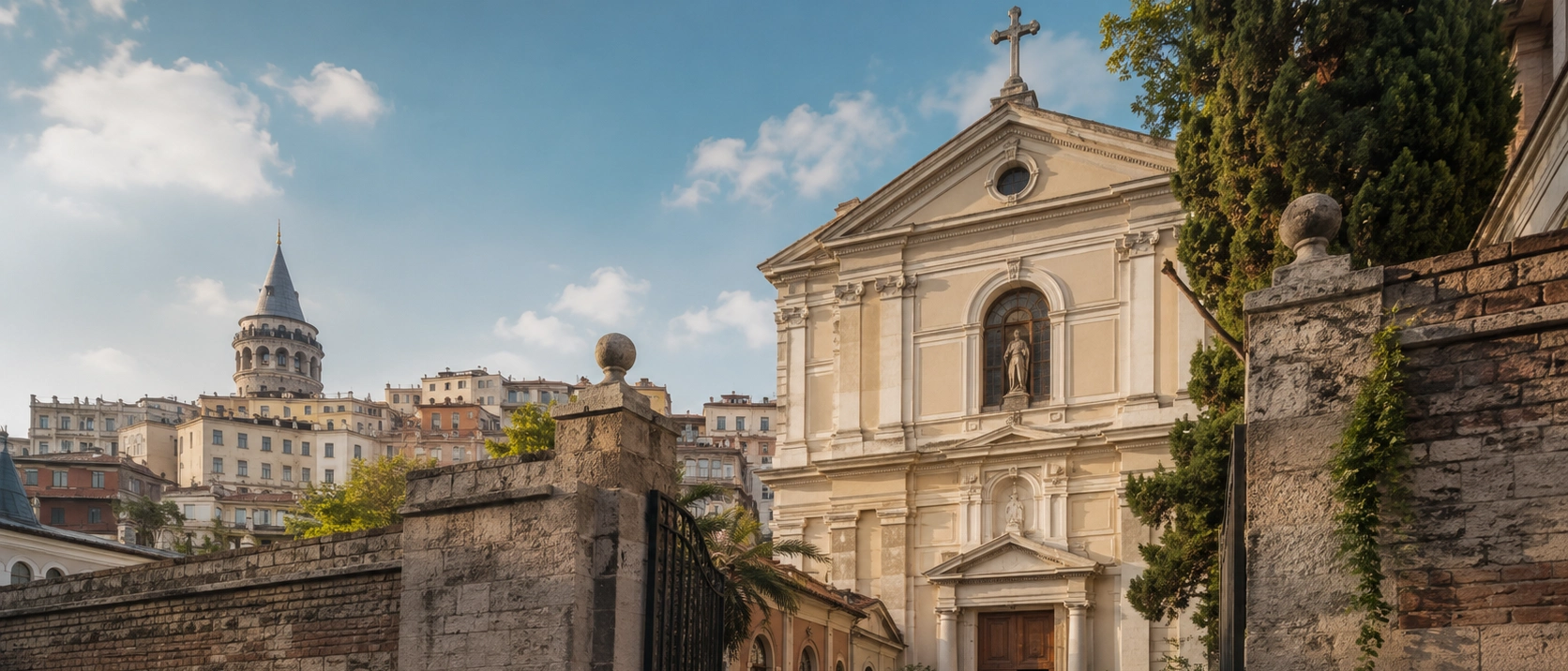
Continue uphill through Galata for the historic Dominican church of Sen Piyer and another major chapter in the Christian history of the district.
Explore St. Peter and Paul Church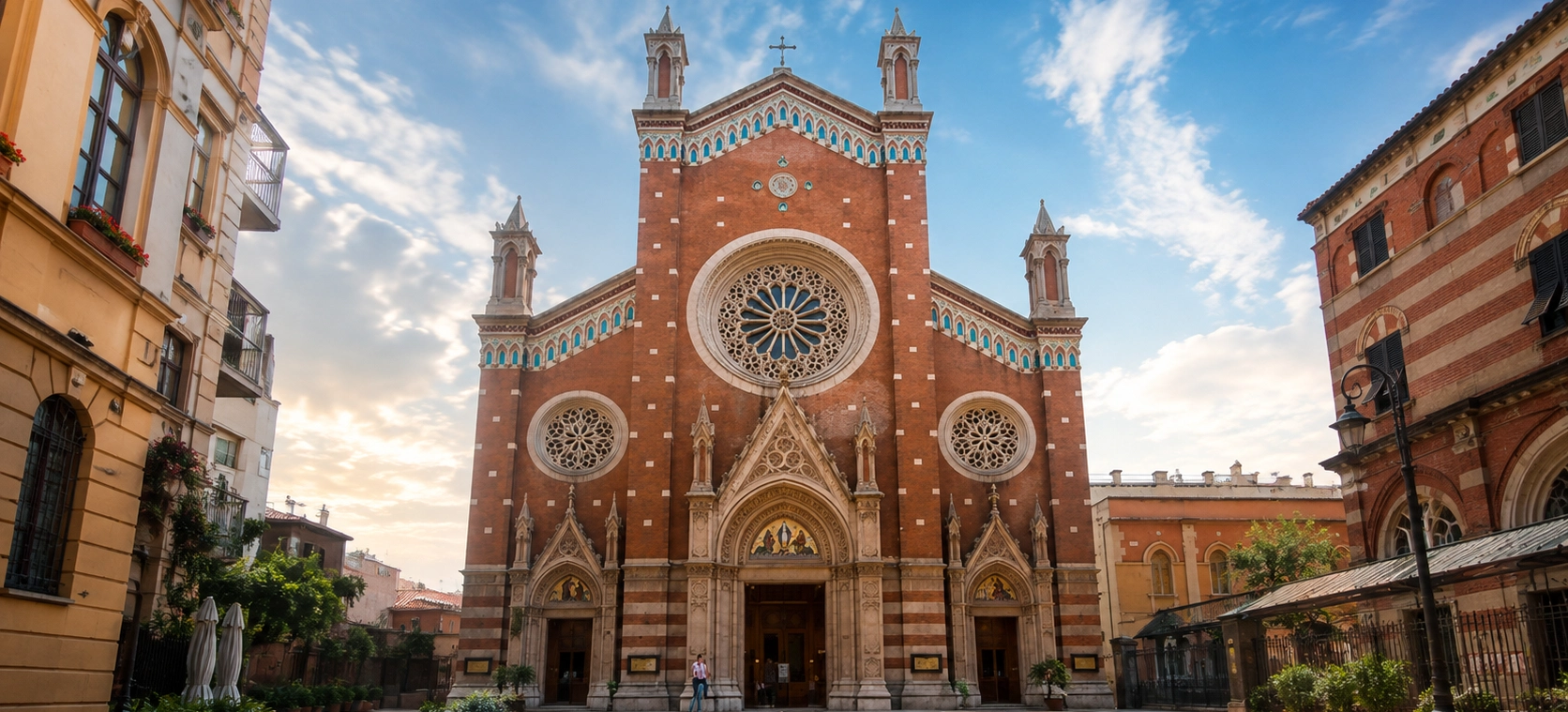
Continue to İstiklal Avenue for Istanbul's great Neo-Gothic Catholic basilica and the Franciscan heritage of Pera.
Explore St. Anthony Church
Continue to Fener for the principal church of the Ecumenical Patriarchate and one of Istanbul's most important living Orthodox Christian sites.
Explore St. George Church