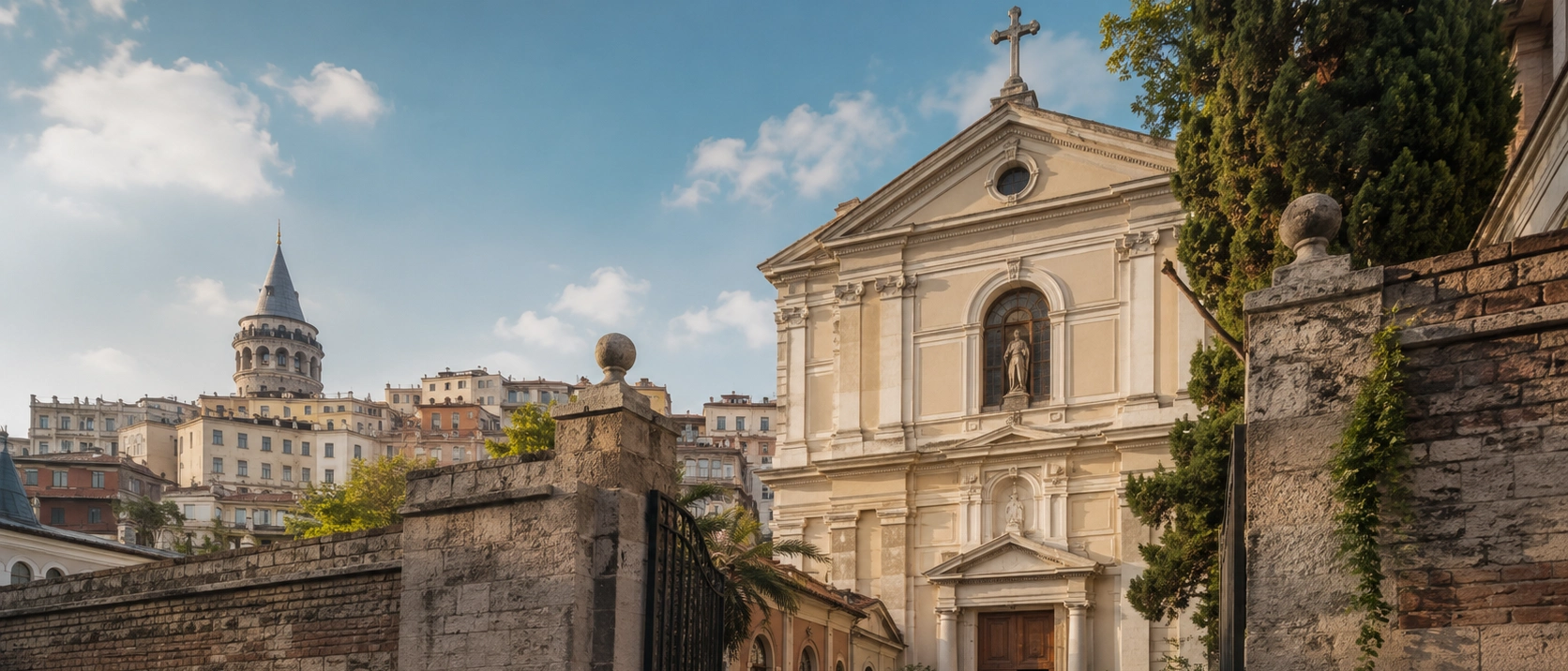
Private Sen Piyer & Galata Heritage Tour
Ask us about a tailor-made route combining St. Peter and Paul Church, Galata Tower, Bankalar Street, Karaköy, Arap Mosque and the multicultural Christian history of old Galata.
Request a Custom Tour





The Church of Saints Peter and Paul, commonly known in Istanbul as Sen Piyer Kilisesi, is one of the most historically important Roman Catholic churches in Galata. Hidden behind a modest entrance on Galata Kulesi Street, only a short walk below Galata Tower, the church preserves a religious tradition that reaches back to the medieval Latin communities of Constantinople.
The present building was constructed between 1841 and 1843 after earlier churches on the site had repeatedly suffered from fire. The Dominicans commissioned the celebrated Swiss-Italian architect Gaspare Fossati, whose work in Istanbul later became famous through the restoration of Hagia Sophia undertaken with his brother Giuseppe.
Inside, the restrained Neo-Classical architecture gives way to a rich devotional space of Corinthian columns, crystal chandeliers, marble altars, a blue star-covered sanctuary dome, religious paintings and an historic organ. Among its greatest treasures is the revered Hodegetria — “She Who Shows the Way” — icon of the Virgin Mary, whose history is linked with the Dominican world of the Black Sea and centuries of Catholic life in Istanbul.
Sen Piyer is not a museum. It remains a living Dominican Catholic church with weekday Mass, a Saturday evening celebration, prayer, community activity and cultural programs. Its rear wall also incorporates remains connected with the medieval Genoese fortifications of Galata, making the site an extraordinary meeting point of faith, architecture, urban history and the international past of Istanbul.
Dominican friars displaced from their earlier Galata church established themselves near the present site below Galata Tower.
Gaspare Fossati rebuilt the church in the durable Neo-Classical form seen today.
A revered Marian image with a long Dominican history is one of the church's most precious sacred objects.
The Dominican community continues prayer, worship, study and cultural activity in the heart of Galata.
Essential information for visiting Sen Piyer and understanding its place in Dominican history, Latin Catholic Istanbul, medieval Galata, Fossati architecture and the multicultural story of Beyoğlu.
Galata Kulesi Street in Kuledibi, on the slope between Galata Tower and Karaköy in Beyoğlu.
Open on Google MapsAn active Roman Catholic church entrusted to the Dominican Order and dedicated to the Apostles Peter and Paul.
The current church was constructed between 1841 and 1843 after a long sequence of earlier Dominican churches on the site.
The present Neo-Classical church was designed by Gaspare Fossati, one of 19th-century Istanbul's best-known architects.
The Hodegetria icon of the Virgin Mary is the church's most celebrated historic devotional object.
A living Dominican church with Mass, prayer, feast-day celebrations and cultural activities; schedules can change.
Sen Piyer is important not simply because of its beautiful 19th-century interior, but because the church preserves several layers of Galata's religious, architectural and social history in a single living sanctuary.
The church represents one of the strongest surviving links with the Dominican presence in Constantinople and Galata. Dominican friars were active in the city from the medieval period, and their history became deeply connected with Galata, where Latin Christian merchants, religious orders and European communities maintained churches and institutions for centuries.
The site is also closely tied to the transformation of Genoese Galata after the Ottoman conquest. When the Dominicans' earlier church of San Paolo was converted into a mosque in 1475 — the building known today as Arap Mosque — the friars relocated near Galata Tower. That move helped establish the long religious continuity that ultimately produced the present Church of Saints Peter and Paul.
Architecturally, the church is significant as a work of Gaspare Fossati, one of the major figures of 19th-century Istanbul architecture. Its Neo-Classical interior, marble furnishings and carefully organized sacred space belong to the same cosmopolitan city that produced embassies, apartment buildings, banks, schools and churches throughout Galata and Pera during the Tanzimat era.
For travelers using our guide to places to visit in Istanbul, Sen Piyer offers a different perspective on Galata. Beyond the tower, cafés and steep streets, the church reveals a district shaped by Genoese memory, Catholic religious orders, Levantine families, European migration and centuries of coexistence.
The Dominican story in Istanbul begins well before the present building. Friars of the Order of Preachers were established in Constantinople and Galata during the medieval period, and by the late Middle Ages they were associated with an important church dedicated to Saint Paul in the lower Galata area.
In 1475, after the Ottoman conquest of Constantinople, that earlier Dominican church was converted into a mosque. It survives today as Arap Mosque, one of the most remarkable medieval religious buildings in Galata. In the following year, 1476, the Dominican community moved uphill to a property near Galata Tower connected with the Genoese Zaccaria family.
The early sanctuary on the new site was modest. As the Catholic community developed, a larger church and monastery were established in the early 17th century. But Galata was repeatedly devastated by fire. The Dominican complex burned in 1660 and again in 1731, forcing the community to rebuild more than once.
By the 19th century, the friars decided that another wooden rebuilding was no longer enough. The older structure was demolished in 1841, and architect Gaspare Fossati was commissioned to create a more durable stone church. The present Church of Saints Peter and Paul was completed in 1843.
Dominican friars were already active in Constantinople and the Latin Christian world of Galata.
The Dominicans' earlier Church of San Paolo was converted into the mosque now known as Arap Mosque.
The friars relocated near Galata Tower, beginning the long continuity of the present site.
Major fires destroyed successive church buildings and forced repeated reconstruction.
Gaspare Fossati created the durable Neo-Classical church that survives today.
Sen Piyer remains a functioning Dominican Catholic church beneath Galata Tower.
The Church of Saints Peter and Paul cannot be separated from the history of the Dominican Order, officially known as the Order of Preachers. Founded in the early 13th century by Saint Dominic, the order placed strong emphasis on preaching, study, theology and education.
Dominicans reached the eastern Mediterranean very early in the order's history. Their communities became part of the complex religious environment connecting Constantinople, the Black Sea, Italy, the Crusader world and the great commercial ports of the medieval Mediterranean.
In Galata, the friars survived political change, property transfers, fires and demographic transformation. The shift from their medieval church near the Golden Horn to the present site below Galata Tower after 1475 did not end the Dominican presence; it created a new center that continued through the Ottoman centuries.
Today, Sen Piyer remains entrusted to Dominican friars. The complex is connected not only with worship but also with study, lectures, interreligious and cultural dialogue and the Dominican Study Institute in Istanbul, continuing the order's long intellectual tradition in a modern form.
The Dominicans were founded around preaching, study, theology and religious formation.
The friars were established in Constantinople and Galata centuries before the present church was built.
The move below Galata Tower created the foundation for the community's present location.
War, political change and repeated fires never completely ended Dominican life at the site.
Contemporary Dominican activity includes lectures, research and cultural encounters as well as worship.
Sen Piyer remains a religious house rather than a historical monument alone.
After centuries of rebuilding, the Dominican community wanted a church that was stronger, safer and architecturally more permanent. In 1841, the existing structure was removed and the friars turned to Gaspare Fossati, a Swiss-Italian architect already establishing an important career in Ottoman Istanbul.
Fossati designed a church in a restrained Neo-Classical style. Official church information describes the building as approximately 35 meters long, 14 meters high and roughly 8–10 meters wide. Its elongated rectangular form was well suited to the narrow urban parcel beneath Galata Tower.
The commission belongs to the most productive period of the Fossati family's Istanbul career. Gaspare and his brother Giuseppe later became especially famous for their 1847–1849 restoration of Hagia Sophia for Sultan Abdülmecid I, but Sen Piyer shows the architect working on a much more intimate scale for a Latin Catholic religious community.
One of the building's most fascinating characteristics is the way it fits into the inherited fabric of Galata. Rather than presenting a monumental façade directly to the street, the church is reached through a more discreet entrance and courtyard, while the rear of the sanctuary incorporates masonry associated with the old Genoese fortifications.
Unlike many churches designed to dominate a broad avenue or square, Sen Piyer is deliberately hidden within the dense street pattern of Galata. Its modest street entrance gives little indication of the scale and richness of the sanctuary beyond.
The present church is essentially a rectangular Neo-Classical hall organized toward the main altar. Rows of Corinthian-style columns and pilasters establish a measured rhythm, while arched openings, marble surfaces, ornamental plasterwork and carefully controlled color create an elegant but devotional atmosphere.
The sanctuary area is especially important. It is covered by a broad semi-dome, and the blue vaulting above is decorated with golden stars, creating a celestial canopy over the liturgical focus of the church. The architectural effect is quite different from the medieval stone churches of Galata: it belongs firmly to the cosmopolitan 19th century.
Yet the building is also rooted in a much older city. The wall behind the principal altar uses or incorporates fabric connected with the medieval Genoese walls of Galata. This physical meeting of 19th-century Catholic architecture and medieval fortification is one of the reasons the church is so important for understanding the district.
The church uses clear proportions, classical columns and an orderly longitudinal composition.
The sanctuary is approached through a restrained gateway rather than a monumental street façade.
Columns and capitals add vertical rhythm and ceremonial richness to the interior.
The sanctuary ceiling uses a deep blue field scattered with golden stars.
Altars, balustrades and liturgical details contribute to the refined 19th-century interior.
Medieval masonry survives directly behind the church, linking the building to fortified Galata.
Passing through the understated entrance is one of the most memorable parts of a visit. The crowded streets of Galata give way to a calm interior filled with marble, soft light, religious paintings and crystal chandeliers. The contrast between exterior discretion and interior richness is central to the church's character.
The great altar was created by Giovanni Isola of Carrara. Its marble decoration incorporates Eucharistic symbolism and sculpted details associated with the Passion and Resurrection of Christ. The tabernacle forms the liturgical heart of the sanctuary, framed by the architectural rhythm of the church.
Behind the altar is an important painting dated 1847 and attributed to the Dominican Serafino Guidotti, depicting the meeting of Saints Peter and Paul. The work reinforces the dual dedication of the church and visually joins the two apostles above the sanctuary.
Elsewhere, visitors can find side altars, sculpture, a baptismal font, Dominican emblems and an historic organ installed in the 19th century. The interior should be experienced first as a place of worship, where the architecture remains shaped by Catholic liturgy rather than museum display.
A richly worked marble altar by Giovanni Isola forms the ceremonial focus of the sanctuary.
An 1847 work associated with Serafino Guidotti depicts the encounter of the church's two patron apostles.
Large chandeliers illuminate the nave and heighten the refined 19th-century atmosphere.
Classical columns frame the nave and guide attention toward the principal altar.
The church preserves a 19th-century organ associated with organ builder Camillo Bianchi.
Altars, candles and devotional objects remain part of active Catholic worship today.
The most famous sacred object in Sen Piyer is the Hodegetria icon, a devotional image of the Virgin Mary whose title means “She Who Shows the Way.” In this traditional iconographic type, Mary directs attention toward Christ, presenting him as the way of salvation.
The icon's history is connected with the wider Dominican world of the Black Sea and Constantinople. Historical accounts associate it with Caffa in Crimea and later with another Dominican church in Istanbul before it was transferred to the Galata community. The image survived the destructive fires that repeatedly affected the church complex.
The present appearance of the icon reflects later restoration and embellishment. A silver covering was added around the original painted image, showing figures sheltered beneath the Virgin's mantle and emphasizing her protective role within Dominican devotion.
For visitors, the icon is important not because of any single legend alone, but because it embodies movement, survival and religious continuity across the Black Sea and Ottoman Istanbul. It links medieval Catholic networks with the living Dominican church that still preserves it today.
Galata was once a fortified Genoese settlement facing Constantinople across the Golden Horn. Walls, towers, gates, churches, merchant houses and administrative buildings formed a dense medieval colony whose traces still survive beneath the modern district.
Sen Piyer stands directly inside this historic landscape. The church's rear wall is connected with surviving masonry from the Genoese fortifications, while Galata Tower rises only a short distance uphill. This means that the church should be understood not as an isolated 19th-century monument, but as part of a site occupied and reshaped over many centuries.
The narrow street, the hidden courtyard and the compressed building plot all reflect the urban grain inherited from medieval Galata. Unlike churches built later along the broad avenues of Pera, Sen Piyer occupies a tightly layered environment where religious buildings, commercial structures and fragments of fortification remain interwoven.
A careful visit therefore rewards attention to the area outside the sanctuary as well as the interior. Walking from the church toward Galata Tower, Bankalar Street and Karaköy reveals how the medieval colony evolved into one of the most cosmopolitan financial and commercial districts of the Ottoman capital.
The great medieval tower rises immediately uphill from the church and anchors the historic district.
Surviving wall fabric behind the church preserves a physical link with fortified medieval Galata.
The church occupies a compressed historic parcel shaped by the dense medieval street network.
Genoese and later Levantine communities made Galata a major center of Latin Christian life.
The district remained international after the Ottoman conquest and grew into an important commercial quarter.
Medieval, Ottoman and modern layers remain visible within a few streets of Sen Piyer.
The church is dedicated jointly to Saint Peter and Saint Paul, two of the most important apostles in Christian tradition. Their names have been linked in liturgy for centuries, and the Catholic Church celebrates their principal feast together on 29 June.
Peter is traditionally remembered as the leading figure among the Twelve Apostles, while Paul became the great missionary and letter-writer who carried the Christian message throughout the eastern Mediterranean and toward Rome. Together, they symbolize both continuity and mission within the early Church.
Their joint dedication has special resonance in Istanbul. The city stands within the geographical world crossed by early Christian communities, Roman roads, Mediterranean trade routes and apostolic traditions. For the Dominicans, whose identity is closely connected with preaching, the missionary example of Peter and Paul also carries an obvious spiritual meaning.
The church continues to celebrate the feast of its patron apostles. Special liturgies and community events may be organized around late June, so visitors planning to attend should check the current church announcements before arrival.
Remembered as a principal apostle and foundational figure in the early Christian community.
The great missionary apostle whose journeys and letters shaped early Christianity across the Mediterranean.
The principal Catholic feast of Saints Peter and Paul is celebrated each year at the end of June.
The apostles are frequently commemorated together as complementary witnesses to the early Church.
The dedication resonates strongly with the preaching vocation of the Dominican Order.
Sen Piyer marks the feast of its titular saints with special liturgical and community celebrations.
Sen Piyer continues to function as an active Roman Catholic church under Dominican care. The friars celebrate Mass, maintain the church, organize prayer and welcome the faithful within a neighborhood that has changed dramatically since the 19th century.
The present community reflects Istanbul's international Catholic life. Services and activities may include Turkish, English, Italian and other languages depending on the occasion. The church's role today therefore continues the cosmopolitan history of Galata rather than simply preserving it as a memory.
The complex also supports intellectual and cultural programs. Lectures, conferences, research initiatives, religious study and dialogue events are associated with the Dominican community and the Dominican Study Institute–Istanbul. This gives the site a contemporary educational role that fits naturally with Dominican tradition.
Visitors should remember that sightseeing access is secondary to the church's religious life. Mass, private prayer, community events and scheduled programs always take priority, and parts of the complex may be closed outside announced visiting periods.
Sen Piyer belongs to Istanbul's Latin Catholic religious landscape.
The church continues to be entrusted to members of the Order of Preachers.
Regular weekday liturgy remains part of the church's active religious life.
The weekly Sunday-vigil Mass is normally celebrated on Saturday evening rather than Sunday.
Lectures, research and cultural events continue the Dominican emphasis on learning and dialogue.
The church is first a place of prayer and community life, with visitor access arranged around that purpose.
A visit to Sen Piyer is about discovering details that are easy to miss from the street. The experience begins with the discreet entrance and then opens into an unexpectedly refined interior where architecture, Dominican symbolism, Marian devotion and the medieval fabric of Galata meet in one place.
Begin with the deliberately modest gateway that conceals the larger church complex beyond.
Look for Dominican symbols incorporated into the entrance area and decorative stonework.
Notice the Neo-Classical proportions, Corinthian columns and long view toward the sanctuary.
The deep-blue sanctuary vault scattered with gold stars is one of the interior's most memorable features.
The principal altar by Giovanni Isola contains carefully worked Eucharistic and Passion symbolism.
Seek out the revered image of the Virgin Mary known as “She Who Shows the Way.”
The 1847 painting behind the altar reinforces the church's dedication to the two apostles.
Look toward the gallery for the 19th-century organ associated with Camillo Bianchi.
Remember that medieval Galata survives directly behind the sanctuary in the fabric of the old fortifications.
The church's own website currently lists public visiting hours only on Friday and Saturday afternoons; verify before traveling.
Mass times and public visiting periods are different, and the church may not be open for casual sightseeing outside announced hours.
This is usually sufficient for the nave, altars, Hodegetria icon, architecture and quiet observation.
Choose clothing appropriate for an active Catholic place of worship.
Galata is built on a hill; approaches from Karaköy and Bankalar Street can involve significant gradients.
The church stands just below the tower, though the entrance itself is easy to overlook.
The interior is intimate and quiet; conversations and phone sounds carry easily.
Galata Tower, Bankalar Street, Karaköy, İstiklal Avenue and other churches of Beyoğlu can be linked in one route.
Begin around Galata Tower, where the medieval topography of the former Genoese colony is easiest to understand. Walk downhill along Galata Kulesi Street toward Sen Piyer, watching for the church's discreet entrance rather than expecting a monumental façade.
If you are visiting during the church's announced public access period, allow around 30–45 minutes for the Neo-Classical nave, main altar, Hodegetria icon, starry sanctuary ceiling, paintings and surviving connection with the Genoese walls.
Continue downhill toward Bankalar Street and Karaköy. This area preserves banks, merchant buildings, stairways, religious monuments and the urban structure of late Ottoman Galata. The route makes it easier to understand why Sen Piyer belonged to one of the city's most international neighborhoods.
From Karaköy, you can return uphill toward Pera and continue to St. Anthony of Padua Church and Holy Trinity Church, creating a broader walk through Catholic and Orthodox heritage in Beyoğlu.
Sen Piyer is located on Galata Kulesi Sokak in Kuledibi, Beyoğlu, just below Galata Tower. The church's current official event notices use the address Galata Kulesi Sokak No: 26. Searching for “Sen Piyer Kilisesi” or “Church of Saints Peter and Paul Galata” usually brings up the correct location.
The church's own website currently lists public visiting hours as Friday and Saturday, 14:30–17:30. These hours are much more limited than ordinary museum opening times and can be affected by liturgy, religious events, conferences, maintenance or special circumstances.
Current regular Mass information lists Monday–Friday at 08:00 and a Saturday evening Mass at 19:00. The church's recent schedule states that Mass is generally not celebrated there on Sundays; special feast-day arrangements can differ.
Sen Piyer is not operated as a ticketed state museum. Ordinary access is connected with worship and the Dominican community. Visitors should therefore check the church's latest announcements shortly before arrival, especially if seeing the interior is essential to their plans.
Sen Piyer's current regular schedule lists Mass from Monday through Friday at 08:00. The Saturday evening celebration is currently listed at 19:00 and functions as the weekly Sunday-vigil Mass.
Recent church announcements explain that regular Sunday Mass is generally not celebrated at Sen Piyer. Major feasts can follow special schedules, and Christmas, Holy Week, Easter or the feast of Saints Peter and Paul may include additional liturgies.
Visitors who attend Mass should do so as respectful guests in a functioning Catholic community. Arrive before the service begins, keep phones silent, avoid walking around for photographs and follow the guidance of the Dominican friars and congregation.
The language of worship can vary according to the service and community needs. The church has long served an international Catholic population, and contemporary liturgy and events may include Turkish, English or Italian.
Current regular Mass is listed at 08:00.
The current weekly vigil Mass is listed at 19:00.
Recent church schedules state that regular Sunday Mass is generally not celebrated at Sen Piyer.
Major Catholic and Dominican feasts can bring special liturgies and different times.
Turkish, English and Italian may be used depending on the service and occasion.
Guests should participate quietly and avoid treating worship as a sightseeing opportunity.
One of the church's currently announced public visiting periods and a good choice for interior sightseeing.
Another currently announced visitor period, with the possibility of staying in Galata before the evening Mass.
Best for experiencing Sen Piyer primarily as a living Catholic church rather than for unrestricted sightseeing.
The Feast of Saints Peter and Paul gives the church special liturgical significance around 29 June.
Natural light helps reveal the interior colors, stained glass and architectural details when the church is open.
Galata can become extremely crowded; allow extra walking time on steep pedestrian streets.
Enough for a brief interior look at the nave, altar and main architectural character.
Ideal for the Hodegetria icon, sanctuary, paintings, organ and a closer study of the interior.
Appropriate when attending Mass, a feast-day celebration, lecture or special religious event.
Combine Sen Piyer with Galata Tower, Bankalar Street, Karaköy and the Christian heritage of Pera.
Sen Piyer offers a very different photographic experience from monumental churches with broad exterior façades. The approach is defined by narrow Galata streets, a discreet gateway and the sudden reveal of the church interior.
Inside, the strongest subjects include the long view toward the main altar, the blue star-covered sanctuary ceiling, Corinthian columns, crystal chandeliers, religious paintings and the relationship between marble surfaces and natural light.
The Hodegetria icon is an important sacred object rather than simply a decorative artwork. Photography should never interfere with prayer or devotional use, and visitors should respect any restrictions posted by the church or communicated by the friars.
Because the interior is relatively intimate, tripods, flash and prolonged photo setups can be especially intrusive. If photography is permitted, work quietly and keep equipment minimal.
Use the narrow Galata street and understated entrance to show how discreetly the church sits in the neighborhood.
A central view toward the altar highlights the symmetry and classical rhythm of the interior.
The blue ceiling with gold stars creates one of the church's most recognizable interior compositions.
Look closely at the altar, balustrades and sculptural work rather than photographing only the whole space.
Photograph only when permitted and without disturbing anyone praying before the image.
Put the camera away during Mass, confession, private prayer or any ceremony unless explicit permission is given.
The greatest accessibility challenge is often not the distance to Sen Piyer but the steep terrain of Galata. The church lies on the slope between Galata Tower and the lower streets of Karaköy, where gradients, cobbled surfaces and narrow sidewalks can make movement difficult.
Routes from Karaköy and Bankalar Street climb sharply toward Galata Tower.
Uneven surfaces, thresholds and narrow streets can be challenging for visitors with limited mobility.
Approaching from the upper Galata side can reduce some of the climb compared with walking up from the waterfront.
Pedestrian restrictions and narrow streets may prevent vehicles from stopping directly at the church entrance.
The historic complex may include steps or raised transitions between entrance and church spaces.
Contact the church in advance if step-free access or mobility assistance is essential.
The church is on Galata Kulesi Street in Kuledibi, just downhill from Galata Tower. Because the entrance is modest and surrounded by dense historic buildings, use the church name on navigation rather than relying on a visible bell tower or large façade.
Walk downhill along Galata Kulesi Street for only a few minutes. Watch carefully for the discreet church entrance.
Take the M2 metro to Şişhane, then walk through the upper Galata streets toward Galata Tower and continue downhill to the church.
Walk uphill through Galata toward Kuledibi. The climb is relatively short but can be steep.
Take the T1 tram to Karaköy, then continue uphill on foot toward Galata Tower and Sen Piyer.
Walk along İstiklal Avenue toward Tünel and descend through Galata, or take the M2 metro to Şişhane and continue on foot.
Ask for “Sen Piyer Kilisesi, Galata Kulesi Sokak.” Narrow streets and pedestrian restrictions can affect the nearest drop-off point.
Sen Piyer stands in one of Istanbul's densest heritage districts. Within a short walk, you can connect medieval Genoese, Latin Catholic, Ottoman commercial, Jewish, Levantine and modern urban history. Use our complete Istanbul visitor guide to continue planning.
Walk only a few minutes uphill to the medieval tower that dominates the historic skyline of Galata.
Explore the monumental banks and commercial buildings of late Ottoman Galata.
Continue downhill to the waterfront for historic passages, cafés, ferries and the Golden Horn.
Visit the former Dominican Church of San Paolo, converted into a mosque after 1475 and directly linked with Sen Piyer's early history.
Continue toward İstiklal Avenue for Istanbul's great Neo-Gothic Catholic basilica and Franciscan heritage.
Explore the monumental Greek Orthodox church beside Taksim Square and compare two very different Christian traditions of Beyoğlu.
See one of Galata's most photogenic urban stairways between the old banking district and the hill above.
Discover more churches, mosques, synagogues, towers, museums and historic neighborhoods across the city.
It is an active Roman Catholic church in Istanbul's Galata district, entrusted to the Dominican Order and commonly known as Sen Piyer Kilisesi.
The church is on Galata Kulesi Street in Kuledibi, Beyoğlu, only a short walk downhill from Galata Tower.
It is commonly called Sen Piyer Kilisesi or Aziz Piyer ve Paul Kilisesi.
Yes. It is a Latin Catholic church and remains under the care of Dominican friars.
The current building was constructed between 1841 and 1843 after earlier churches on the site had been destroyed or rebuilt several times.
The present Neo-Classical church was designed by Gaspare Fossati, the Swiss-Italian architect later famous for major projects in Ottoman Istanbul.
Their earlier Church of San Paolo in Galata was converted into a mosque in 1475 and survives today as Arap Mosque.
The friars relocated near Galata Tower in 1476, beginning the long continuity of the present Sen Piyer site.
Major fires repeatedly devastated Galata. Earlier Sen Piyer church buildings were destroyed or heavily affected, including during fires in 1660 and 1731.
It is primarily Neo-Classical, with an orderly rectangular interior, Corinthian details, marble furnishings and a richly decorated sanctuary.
It is a revered image of the Virgin Mary whose title means “She Who Shows the Way.” It is one of the church's most important historic devotional objects.
Historical accounts associate the icon's earlier history with the Dominican world of Caffa in Crimea before it became part of the Catholic religious heritage preserved in Istanbul.
Yes. The church is physically connected with surviving medieval fabric associated with the old Genoese fortifications of Galata.
Yes. Sen Piyer remains a functioning Dominican Catholic church with Mass, prayer, feast-day celebrations and cultural activities.
The church's own website currently lists public visiting hours on Friday and Saturday from 14:30 to 17:30. Always verify the latest schedule before visiting.
The current regular schedule lists Mass Monday through Friday at 08:00 and Saturday at 19:00. Special feast days can follow different times.
Recent official schedules state that regular Sunday Mass is generally not celebrated at Sen Piyer; the weekly vigil Mass is normally on Saturday evening.
Sen Piyer is not operated as a standard ticketed museum. Normal access is connected with the church's religious and community use.
Yes, during announced public visiting periods and when no religious or private restriction is in place. Visitors should enter quietly and respect the sacred character of the church.
Photography depends on current church rules and religious activity. Never use flash or photograph worshippers intrusively, and put cameras away during Mass unless permission is given.
Allow around 30–45 minutes for a normal visit, or longer if attending Mass, a feast-day celebration or a cultural event.
Yes. It lies only a few minutes downhill from Galata Tower on Galata Kulesi Street.
The location is central, but the entrance is surprisingly discreet. Use navigation and look carefully for the church gate rather than expecting a monumental façade.
Yes, especially for travelers interested in Christian heritage, Dominican history, the Fossati architects, Genoese Galata and lesser-known historic interiors in Istanbul.
Remain quiet and avoid sightseeing movement while Mass or private prayer is taking place.
Remember that Sen Piyer is a functioning Catholic place of worship and Dominican religious house.
Do not expect access outside the church's announced public visitor periods.
Avoid flash, tripods and intrusive photographs of worshippers or sacred moments.
Do not touch paintings, icons, marble altars or other historic furnishings.
If donations are invited, contributions help sustain a living church, religious community and historic building.
Connect Sen Piyer with Galata Tower, Bankalar Street, Karaköy, Arap Mosque, St. Anthony of Padua, Holy Trinity Church and the wider multicultural history of Beyoğlu through a private route shaped around your interests and without compulsory shopping stops.
Choose a focused half-day exploration of St. Peter and Paul Church, Galata Tower and historic Kuledibi, or build a deeper private itinerary around Dominican heritage, Genoese Galata, Catholic Istanbul, Fossati architecture, Levantine communities and the religious history of Beyoğlu.
Ask us about a tailor-made route combining St. Peter and Paul Church, Galata Tower, Bankalar Street, Karaköy, Arap Mosque and the multicultural Christian history of old Galata.
Request a Custom Tour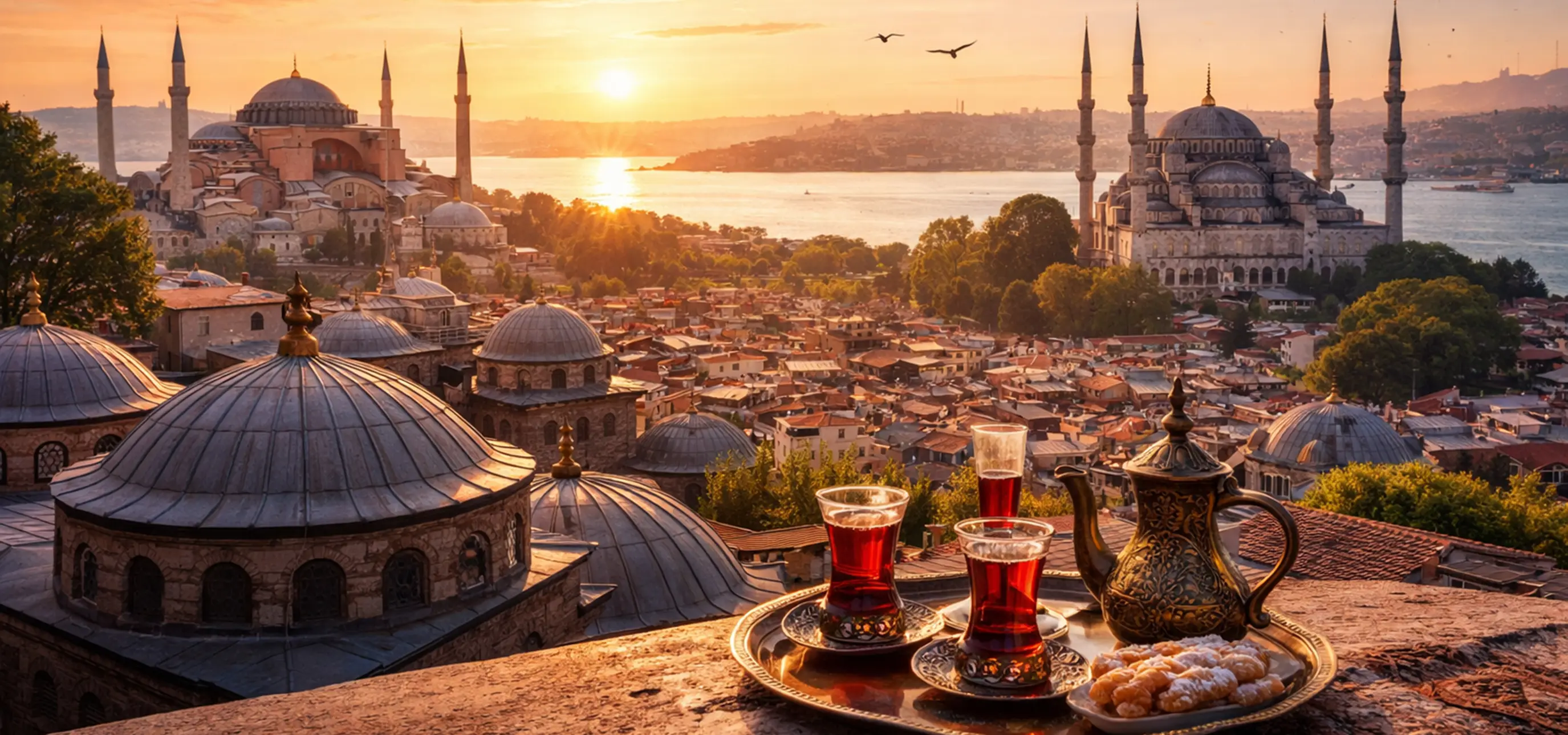
Create a private Istanbul itinerary around Christian heritage, Byzantine monuments, Ottoman history, Galata, Pera, Catholic churches and the city's lesser-visited cultural treasures.
View Private Istanbul ToursUse Sen Piyer as a Galata starting point for a wider journey through Catholic, Greek Orthodox, Bulgarian Orthodox and Byzantine heritage across Istanbul, from Pera and Taksim to Fener, Balat and the historic peninsula.
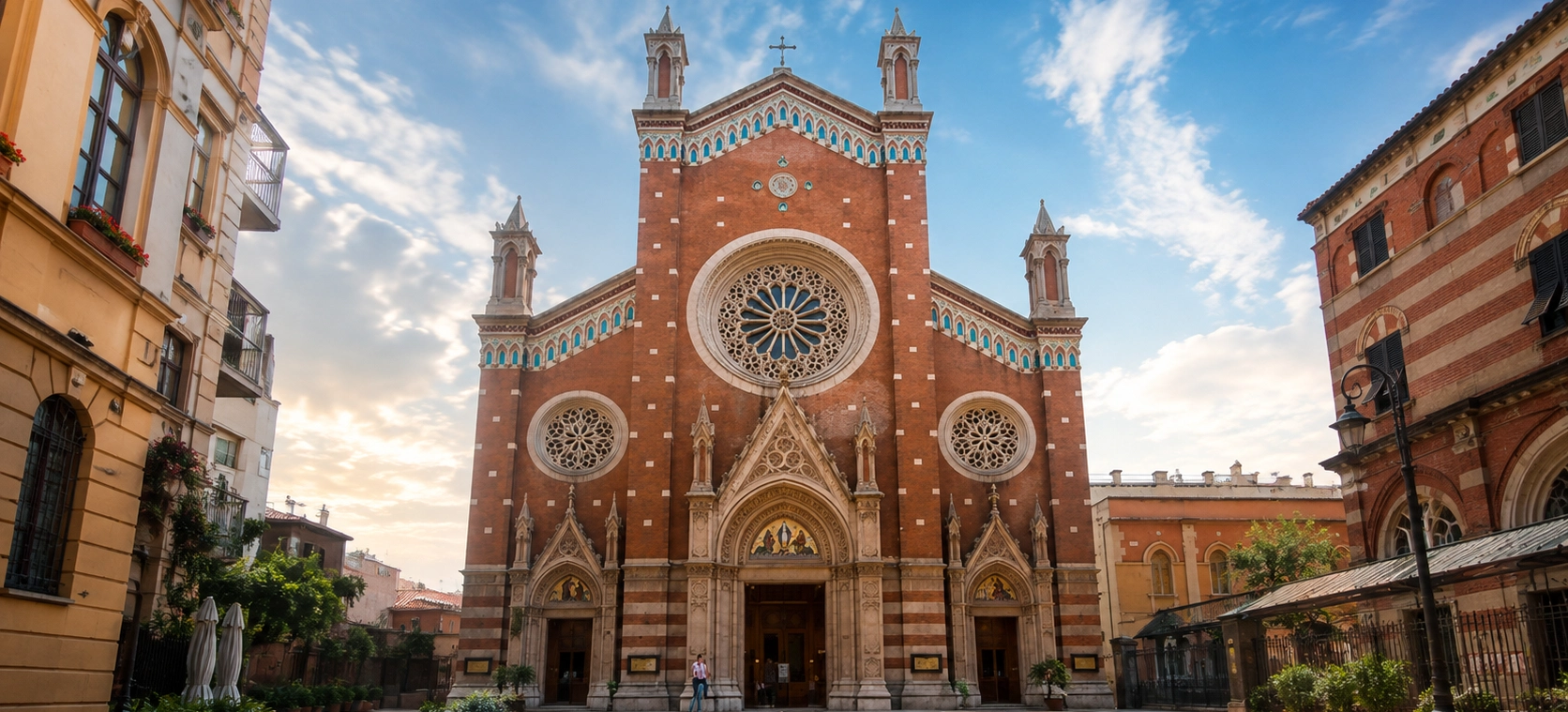
Continue to İstiklal Avenue for Istanbul's great Neo-Gothic Catholic basilica and another major chapter in the Latin Christian history of Beyoğlu.
Explore St. Anthony Church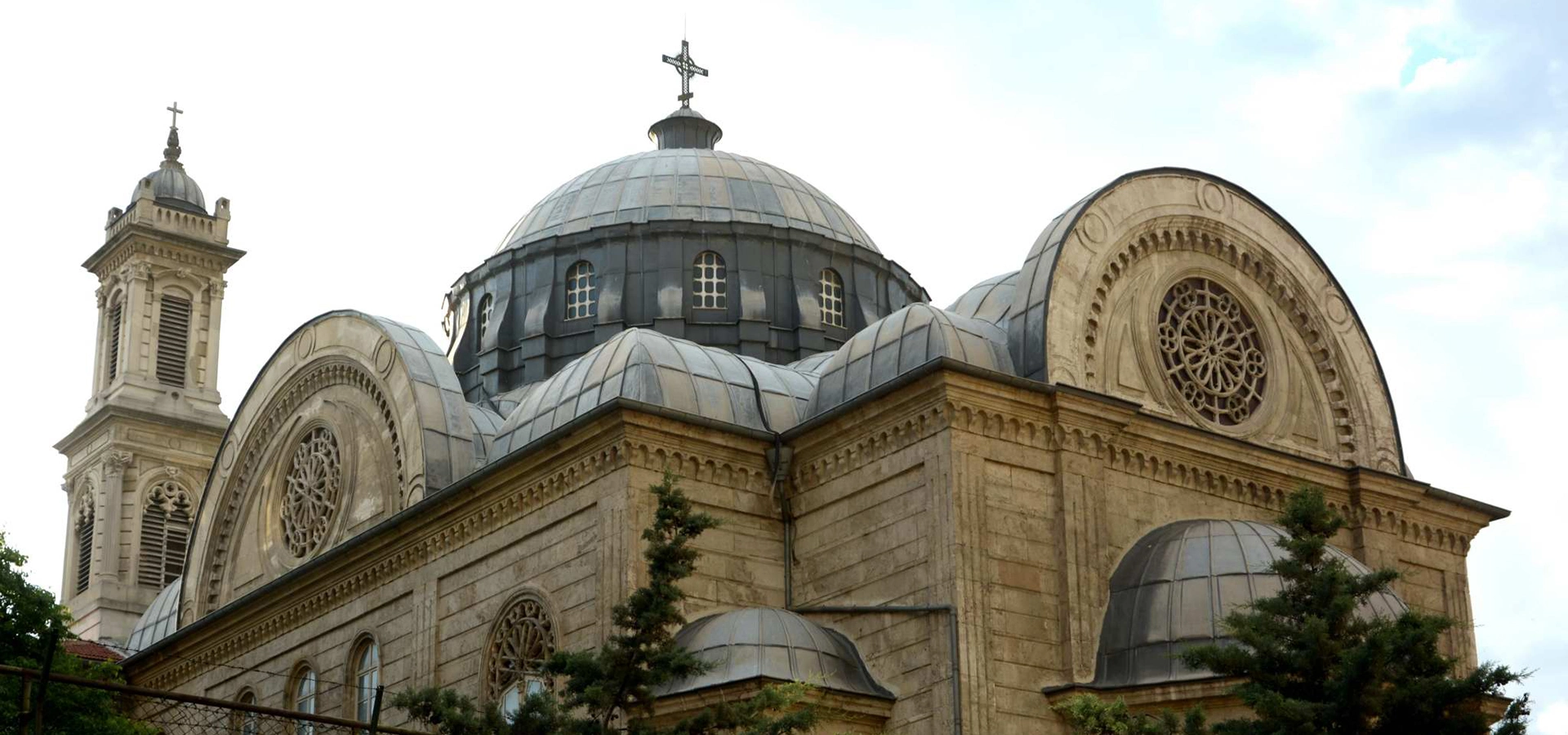
Compare Sen Piyer's hidden Dominican sanctuary with the monumental Greek Orthodox dome and twin towers of Aya Triada beside Taksim Square.
Explore Holy Trinity Church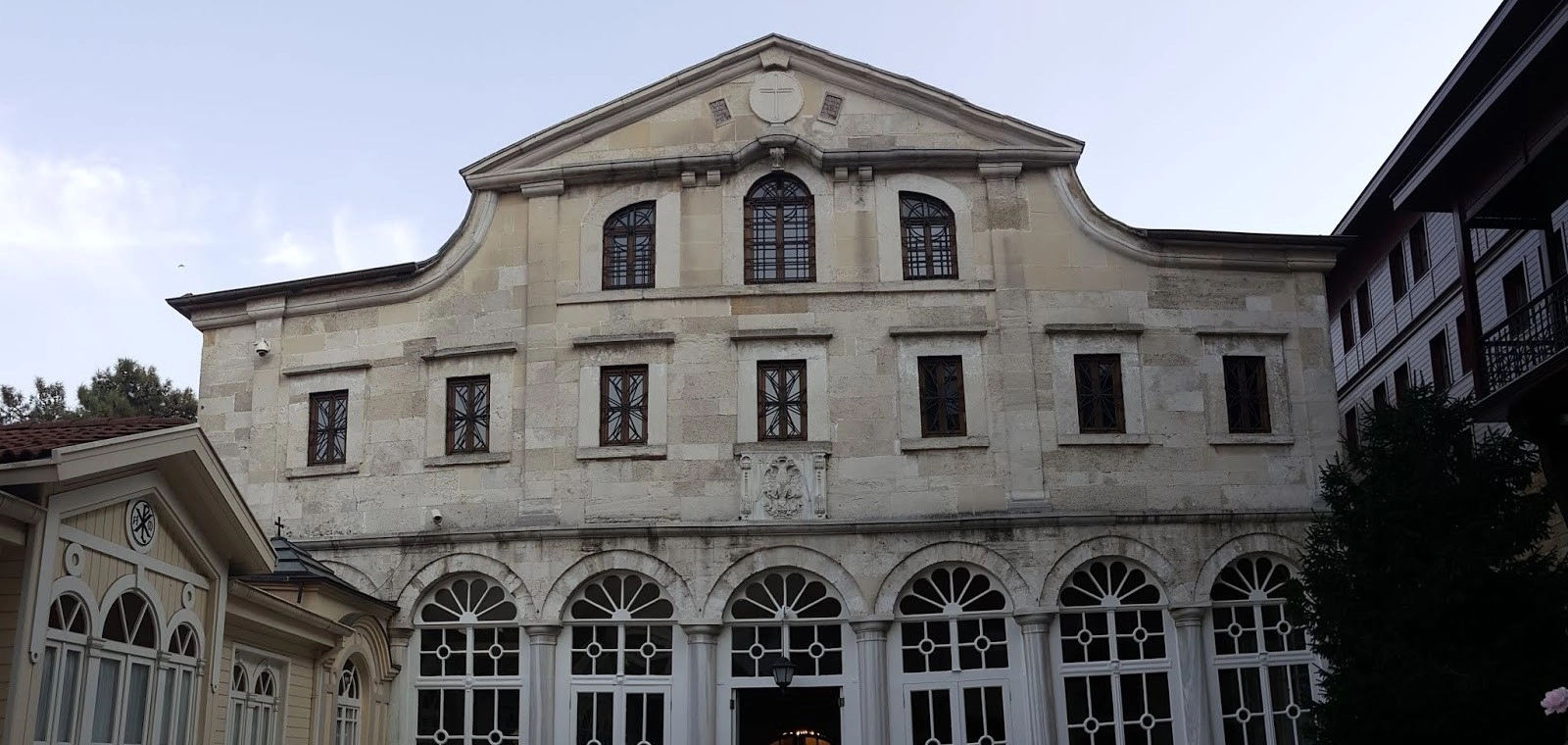
Continue to Fener for the principal church of the Ecumenical Patriarchate and one of Istanbul's most important living Orthodox Christian sites.
Explore St. George Church