Sertel & Vertina
The protected production method specifies the use of Sertel and Vertina seeds.






Sındırgı Kornişonu is a geographically protected cornichon, or pickling cucumber, grown within the district of Sındırgı in Balıkesir Province. It is cultivated specifically for pickle production and has become an important agricultural product of the district.
The protected product is produced from Sertel and Vertina seed types. Its character is shaped by Sındırgı's well-drained soils, elevation, climate and access to irrigation, while its naturally firm structure makes it particularly suitable for processing as pickles.
Sındırgı Kornişonu received Turkish geographical-indication registration in 2023. It is protected as a Menşe Adı under TÜRKPATENT registration No. 1403.
Sındırgı Kornişonu is registered by TÜRKPATENT as geographical indication No. 1403.
The protected cornichons are classified into three quality groups according to length and width.
The fruit's firm physical structure makes it especially well suited to pickle production.
The registered geographical boundary covers the entire Sındırgı district of Balıkesir.
Essential information about one of Sındırgı's best-known protected agricultural products.
Sındırgı district, Balıkesir Province, Türkiye.
Open Sındırgı on Google MapsA firm cornichon cultivated especially for pickle production.
TÜRKPATENT Menşe Adı registration No. 1403.
The registered production method uses Sertel and Vertina seeds.
The cornichon has become closely connected with farming life, irrigation and rural production throughout Sındırgı.
According to its official geographical-indication specification, Sındırgı Kornişonu has been cultivated in the district for more than 50 years. Over time, the crop developed from a local agricultural product into one of the best-known elements of Sındırgı's rural economy.
The product is particularly suited to areas with good drainage and access to plentiful irrigation. Improvements in local water infrastructure have also helped cornichon cultivation expand across several rural communities of the district.
Cornichon growing is labour intensive. The plants require regular irrigation, careful field management and repeated harvesting as fruits reach the required dimensions. Once picked, the crop must be cooled and transported rapidly because freshness is essential for high-quality pickle production.
On 6 July 2023, Sındırgı Kornişonu was formally registered as a Turkish geographical indication, legally protecting its relationship with the Sındırgı district and its defined production method.
Firm texture, controlled size grading, high moisture and suitability for pickling define the protected product.
The protected production method specifies the use of Sertel and Vertina seeds.
Sındırgı Kornişonu is characterised by a firm physical structure suitable for pickle processing.
The smallest first-quality fruits measure up to approximately 6 cm in length.
Medium-sized protected cornichons fall within the approximately 6–9 cm class.
The largest registered size category extends from approximately 9 to 12 cm.
The protected specification records a naturally high moisture level in the fresh fruit.
The crop is cultivated principally for transformation into cornichon pickles.
Protected production is geographically tied to the Sındırgı district.
Sındırgı Kornişonu is the protected fresh cornichon grown within Sındırgı district and intended especially for pickle production.
It is important to distinguish the protected agricultural product from the finished pickle. The geographical indication primarily defines the cornichon itself: its geographical origin, approved seed types, cultivation practices, physical characteristics, chemical profile, harvesting and handling requirements.
The protected product is a small cucumber cultivated primarily for pickling.
Production under the protected name is tied to Sındırgı in Balıkesir.
Harvested fruits are separated into three registered size categories.
The registration covers seedling preparation, planting, irrigation, cultivation, harvesting and handling.
Sındırgı Kornişonu is registered by the Turkish Patent and Trademark Office as a Menşe Adı. The designation protects the connection between the product, the Sındırgı geographical area and the officially registered production system.
Sındırgı Kornişonu
The TÜRKPATENT geographical-indication registration number is 1403.
The official application number is C2020/467.
The application was filed on 31 December 2020.
The geographical indication was registered on 6 July 2023.
The registration holder is Sındırgı Municipality.
The protected designation is a Menşe Adı.
The protected production area is Sındırgı district in Balıkesir Province.
A Turkish Menşe Adı identifies a product whose characteristics are strongly connected with a defined geographical environment and whose protected production takes place within that geographical boundary.
For Sındırgı Kornişonu, the designation connects the protected name with the Sındırgı district, approved Sertel and Vertina seed material, local growing conditions and the registered cultivation, harvesting and handling requirements.
Protected production takes place within Sındırgı district.
The registered method specifies Sertel and Vertina.
Cultivation and harvesting follow documented agricultural procedures.
Origin, production method, composition and protected-name use are inspected.
The protected geographical area covers Sındırgı district, an inland part of Balıkesir shaped by upland landscapes, agricultural valleys, villages and irrigated farmland.
The official specification emphasises the importance of well-drained sandy-loam or loamy-sand soils rich in organic matter, together with relatively elevated growing areas.
Water availability is equally important. Cornichon plants require frequent irrigation during their rapid summer growth, making appropriate irrigation infrastructure an important part of successful production.
The protected specification associates production with relatively high-altitude growing areas.
Well-drained soil helps protect the shallow and sensitive root system.
Productive growing soils should contain adequate organic matter.
Frequent irrigation is particularly important during hot summer growth.
Sındırgı Kornişonu performs best in soils that combine good drainage with sufficient moisture and fertility. Sandy-loam and loamy-sand soils are particularly suitable, while loam soils can support abundant production.
Heavy soils are less desirable because poor drainage can delay flower formation and increase the risk of root disease and decay. Lighter soils can be improved with organic matter and appropriate fertilisation.
The registered specification gives an appropriate soil pH range of approximately 5.5–6.7.
The official specification identifies this as an appropriate range for cultivation.
Lighter, well-drained soils can help support early production.
Loamy soils are suitable when the aim is strong overall productivity.
Heavy poorly drained soil can increase the risk of root problems and decay.
The geographical-indication specification identifies Sertel and Vertina seeds for the production of Sındırgı Kornişonu.
The protected identity therefore comes from more than simply growing any small cucumber in Sındırgı. Appropriate plant material, the local production environment and conformity with the registered agricultural method work together to define the product.
One of the two seed types identified in the registered production specification.
The second seed type authorised within the registered Sındırgı production system.
The plants must be cultivated within the registered Sındırgı geographical boundary.
The resulting crop is cultivated especially for processing as pickled cornichons.
After harvest, Sındırgı Kornişonu is passed through sizing equipment and classified according to fruit dimensions. The protected specification defines three quality grades.
Size is especially important in the cornichon market because smaller fruits can be particularly desirable for certain styles of whole pickles, while larger grades may be used differently by processors.
The official geographical-indication specification records several measurable properties of Sındırgı Kornişonu. These values form part of the documented profile of the protected product and can also be examined during geographical-indication inspections.
The protected specification describes Sındırgı Kornişonu principally through its physical structure, composition and suitability for processing rather than through an elaborate tasting vocabulary.
Its most important practical characteristic is its firm structure. For a cornichon intended for pickling, firmness matters because the fruit must tolerate harvesting, transport and processing while still producing the crisp texture associated with a good pickle.
A firm structure is one of the product's defining registered characteristics.
Fresh fruit contains more than 93% moisture according to the registered range.
The crop is separated into carefully defined size groups after harvest.
The protected cornichon is cultivated specifically with pickle processing in mind.
The registered production cycle begins around the last week of May, when Sertel and Vertina seeds are sown into seedling trays under greenhouse conditions.
The newly sown seeds are normally watered approximately every two days. During particularly hot weather above about 35°C, watering can become necessary every day.
The seeds germinate rapidly, and the young plants continue developing before being transferred to the field.
Seedling production begins around the final week of May.
Sertel and Vertina seeds are initially sown in trays under protected conditions.
Young seedlings are normally watered every two days, depending on temperature.
During temperatures above approximately 35°C, daily watering may be necessary.
Before planting, the field is cultivated to a depth of approximately 25–30 cm and planting furrows are prepared.
The registered production method describes the use of black agricultural covering material laid lengthwise along the furrows. Planting openings are spaced at approximately 30 cm intervals.
This system helps organise the growing rows and supports efficient crop management during the rapid summer production cycle.
The soil is worked deeply before the young plants are introduced.
Planting rows are formed before transplantation.
The registered method describes black agricultural covering along the planting rows.
Planting openings are arranged at roughly 30 cm intervals.
The seedlings normally begin germinating within approximately 15 days. About one month after sowing, sufficiently developed plants are transplanted into the prepared field.
The registered specification indicates that seedlings should reach more than approximately 25–30 cm in height before transplantation.
Part of the lower stem is covered with soil during planting. This helps stabilise the young plant and protects the root system from movement caused by wind and other external forces.
The seeds normally germinate within roughly two weeks.
Field transplantation takes place about a month after the initial sowing.
Seedlings should be sufficiently tall and developed before they are transferred.
Careful planting helps protect the young root system against wind and movement.
After transplantation, the seedlings receive their first water and are generally irrigated every other day. The preferred system identified by the registered method is drip irrigation.
Where drip irrigation is unavailable, water can be supplied through furrows alongside the planting beds. Irrigation is generally carried out in the morning or evening rather than during the hottest part of the day.
During temperatures above approximately 35°C, daily drip irrigation may be required. Appropriate timing is important because excessive moisture under unsuitable conditions can encourage mould and decay.
Regular irrigation supports the crop during its rapid summer development.
Drip irrigation is identified as the most appropriate method in the registration.
Cooler periods of the day are preferred for irrigation.
Temperatures above about 35°C can require more frequent watering.
Temperature has an important influence on Sındırgı Kornişonu. The registration specifically notes that temperatures during May and August remaining below approximately 35°C affect the characteristics of the crop.
Heat also affects watering frequency and harvest duration. Cooler conditions can extend the harvesting period, while sustained high summer temperatures accelerate crop development.
Most of the crop's rapid vegetative and fruit development takes place during the warm season.
The registered method repeatedly uses approximately 35°C as an important management threshold.
Hotter weather increases the need for frequent watering.
Harvest duration varies according to prevailing summer temperatures.
During development, the crop is monitored for disease and insect pressure. The registered production method also allows the use of appropriate crop-protection practices during the growing period.
Natural fertilisers are used to help support productivity. The specification places particular importance on using well-aged organic fertiliser rather than fresh material.
Because cornichon plants grow rapidly and spread across the soil surface, field work becomes progressively more difficult as the season advances.
Plants require close observation during their rapid summer development.
Well-aged natural fertilisers are particularly associated with the registered method.
Cornichon vines can cover the spaces between planting rows within a relatively short period.
The short but intensive season requires regular attention from growers.
After irrigation, cultivation takes place when soil conditions are suitable. Hoeing helps aerate the root zone, break the surface crust and control weeds.
This work continues until the growing plants begin covering the spaces between rows. According to the registered production method, the crop can spread sufficiently across the field within approximately one month of planting.
Once the vines have spread over the soil surface, hoeing is stopped to avoid damaging the plants.
Light cultivation improves the immediate soil environment around the plants.
Hoeing prevents the upper soil layer from becoming excessively compacted.
Early-season cultivation reduces competition around the young crop.
Once vines cover the row spaces, further hoeing could damage the crop.
Seedling production begins in late May and field planting follows approximately one month later. Under warm summer conditions, the first fruits can be ready for harvest only 25–30 days after transplantation.
This places the principal harvesting period in the summer months, although exact dates change according to yearly weather, planting time and local conditions.
The official specification indicates that when average temperatures are around 35°C the harvesting period may last approximately one and a half months. In cooler conditions below this level, it can extend toward approximately two months.
Seeds begin their journey in greenhouse seedling trays.
Developed seedlings are transferred into prepared fields.
Under suitable warm conditions, the first harvest can arrive surprisingly quickly.
The rapidly developing fruits require fields to be checked repeatedly throughout the season.
Cornichons grow quickly during warm weather. Farmers therefore follow the fields closely and harvest fruits as they reach the desired dimensions.
The registered specification records approximately 8–15 fruits per plant. Because commercial classification depends heavily on size, timely picking is important.
After harvest, the cornichons are passed through sizing machines and separated into the three official quality groups.
Rapid fruit growth means harvesting cannot simply be left to a single date.
Fruit dimensions directly determine the quality grade.
The registered specification records approximately 8–15 fruits per plant.
Harvested fruits are separated by size before they move onward for processing.
The work does not end when the cornichons leave the field. The harvested crop needs rapid post-harvest handling to preserve the qualities required by pickle processors.
The registered method states that harvested cornichons should be immediately cooled using very cold water.
They can then be held for up to approximately two days at 7–10°C. However, the preferred approach is to send them to pickle-processing facilities on the same day using vehicles equipped with appropriate refrigeration.
Freshly harvested cornichons are rapidly cooled with cold water.
This is the registered short-term storage temperature range.
Short refrigerated storage is possible, but prolonged holding is avoided.
The ideal system moves the crop rapidly from field to processing facility.
Sındırgı Kornişonu is cultivated specifically as a pickling cucumber. The combination of controlled fruit size and naturally firm structure gives processors the raw material required for crisp whole or prepared cornichon pickles.
The smallest fruits are particularly associated with the classic visual character of cornichon pickles. Larger grades remain useful for other commercial pickle formats.
The protected geographical indication belongs to the agricultural product and its registered production system. The final flavour of a pickle will also depend on the processor's brine, acidity, seasoning and fermentation or preservation method.
Firmness helps the fruit retain an appealing texture through pickle processing.
Three quality grades allow processors to select fruit for different products.
Fast movement from field to factory helps protect fresh-fruit quality.
Pickle flavour ultimately depends on how each producer processes and seasons the cornichons.
The principal purpose of Sındırgı Kornişonu is pickle production. Freshly harvested fruit is graded and transported quickly to processors where it can become the crisp cornichon pickles familiar on Turkish tables and in international markets.
Smaller fruits are well suited to classic whole-cornichon presentation.
Cornichons can form part of broader vegetable-pickle selections.
Pickles are frequently served alongside cheeses, olives and other savoury foods in Türkiye.
Crisp cornichon pickles can provide acidity and texture beside richer dishes.
A small pickling cucumber is not automatically Sındırgı Kornişonu. The protected designation identifies cornichons grown within the registered Sındırgı geographical boundary and produced according to the official specification.
The protected wording, registered Sındırgı Kornişonu logo and Turkish Menşe Adı emblem are required on the product or packaging. Where they cannot be placed directly on the product or packaging, they must be displayed clearly at the business.
Look for the protected wording Sındırgı Kornişonu.
The Menşe Adı emblem identifies the protected designation of origin.
Protected production must take place within Sındırgı district.
The registered agricultural method uses Sertel and Vertina.
Authentic product can be separated into the three registered size classes.
Clear origin information is important when purchasing a geographically protected product.
When buying fresh Sındırgı Kornişonu during the production season, origin matters more than appearance alone. Look for clear information connecting the product to Sındırgı and, where applicable, geographical-indication identification.
Fresh cornichons intended for pickling should appear sound and firm rather than soft, badly damaged or deteriorated. If buying processed pickles, remember that the final recipe belongs to the pickle producer even when the raw cornichons originate from Sındırgı.
Formal GI identification provides the clearest link with the registered product.
The geographical boundary is the entire Sındırgı district.
Different fruit grades suit different pickle preferences and processing styles.
The protected crop is known for its firm structure.
Freshly harvested cornichons benefit from proper refrigeration and rapid handling.
For processed products, distinguish the origin of the cornichon from the producer's individual pickle recipe.
The warmer months provide the best possibility of seeing active cornichon fields and harvest work.
The story of the product is found in the agricultural villages and valleys surrounding the district centre.
Locally harvested cornichons reveal the product before it becomes the familiar pickle.
Seeing the three commercial classes side by side makes the grading system easy to understand.
Tasting finished pickles connects the agricultural crop with its principal culinary purpose.
Cornichon fields are active agricultural properties and should only be entered with permission.
Summer agricultural work often begins early before temperatures rise.
Sındırgı's agricultural traditions can be explored alongside the district's forests, thermal landscapes and rural scenery.
Sındırgı Kornişonu illustrates the close relationship between agriculture and everyday Turkish food traditions. The crop itself is produced in rural fields, while its best-known destination is the pickle jar.
Pickles occupy a familiar place in Turkish cuisine, served with everything from home-cooked meals to sandwiches, grilled dishes and traditional breakfast spreads. Behind that simple jar, however, lies an intensive agricultural cycle involving seedling preparation, irrigation, field work, repeated harvesting, grading, cooling and transport.
For food travellers, Sındırgı Kornişonu offers an opportunity to understand how an apparently everyday ingredient can reflect a specific landscape and agricultural community.
The protected crop has become closely associated with farming life in Sındırgı.
The short intensive season requires substantial hands-on work.
The harvested fruit connects local agriculture directly with one of Türkiye's familiar preserved foods.
The Menşe Adı formally protects the link between the cornichon and Sındırgı.
Cornichon cultivation has become an important seasonal agricultural activity in Sındırgı. Production is spread across the district's rural communities, where suitable farmland and improved access to irrigation support commercial cultivation.
The crop also creates a wider chain of activity beyond the farm. Harvesting, grading, cooling, transport and pickle processing all contribute to the journey between the Sındırgı field and the final consumer.
This is one reason the geographical indication carries significance beyond branding. It formally associates an established agricultural activity with the district whose growers developed it over decades.
The labour-intensive growing and harvesting season creates substantial agricultural activity.
Water infrastructure has helped support the expansion of higher-value summer crops.
Fresh produce moves quickly toward pickle-processing facilities after harvest.
The protected name connects Sındırgı directly with a recognisable agricultural product.
For travellers interested in regional Turkish food and agriculture, Sındırgı Kornişonu provides an excellent example of how a seemingly simple vegetable can carry a distinct geographical identity.
Its story combines firm pickling fruit, precise size grading, specialised summer cultivation, rapid post-harvest cooling and more than half a century of production within one Balıkesir district.
The most meaningful way to discover the product is to connect the finished pickle with the fields behind it: visit Sındırgı during the growing season, explore the agricultural landscape and look for products that clearly identify their local origin.
The crop reveals the intensity behind small-scale summer vegetable production.
Its firm structure explains why it is valued for pickling.
Three size categories show how closely the harvested crop is sorted.
The protected identity connects the product directly with rural Sındırgı.
Sındırgı Kornişonu belongs to an exceptionally diverse Balıkesir food landscape shaped by fertile plains, mountain districts, olive groves, dairy farming, vineyards and generations of regional food production.
Explore the district, rural landscapes and local culture behind the protected cornichon.
Continue with one of Balıkesir's best-known geographically protected desserts.
Discover a protected cheese tradition from another inland Balıkesir district.
Explore Balıkesir's dairy traditions through this distinctive protected hard cheese.
Move from Sındırgı's irrigated vegetable fields to the protected rice-growing traditions of Gönen.
Discover another protected inland Balıkesir product rooted in local farming and dairy culture.
A cucumber does not become protected Sındırgı Kornişonu simply because it is small enough to make pickles. The designation represents a defined combination of geographical origin, approved plant material, physical characteristics and agricultural production methods.
Protected Sındırgı Kornişonu must originate within Sındırgı district.
The specification identifies Sertel and Vertina.
Moisture, magnesium, acidity, ash and iron ranges are documented.
Three fruit categories are recognised according to dimensions.
Seedling, planting, irrigation and harvesting procedures are specified.
The protected name, logo and Menşe Adı emblem are subject to defined usage rules.
Geographical-indication inspections are coordinated by Sındırgı Municipality. The inspection body includes representatives with relevant expertise from Sındırgı Municipality, the Sındırgı District Directorate of Agriculture and Forestry and the S.S. Yaylabayır Village Agricultural Development Cooperative.
Regular inspections are carried out once each year. Additional inspections may be performed when complaints are received or whenever they are considered necessary.
Controls cover the seed types used, conformity with the registered production method, specified analytical values and correct use of the Sındırgı Kornişonu name and Menşe Adı emblem.
Inspectors can verify conformity with the registered Sertel and Vertina requirement.
Cultivation practices are checked against the geographical-indication specification.
Moisture, magnesium, acidity, ash and iron values form part of the control system.
Correct use of the protected wording and Menşe Adı identification is inspected.
Sındırgı Kornişonu is a geographically protected cornichon grown in Sındırgı district and cultivated primarily for pickle production.
The registered geographical boundary is Sındırgı district in Balıkesir Province, Türkiye.
Yes. It is a registered Turkish geographical indication.
It is protected as a Menşe Adı.
The TÜRKPATENT registration number is 1403.
It was registered on 6 July 2023.
The geographical-indication application number is C2020/467.
The application was filed on 31 December 2020.
The registration holder is Sındırgı Municipality.
The registered production method specifies Sertel and Vertina seeds.
Yes. It is a small cucumber, or cornichon, cultivated specifically for pickle production.
Its protected identity combines a firm structure, defined seed types, three size grades, documented composition and cultivation within Sındırgı.
The official specification defines three quality grades.
First-quality fruits are approximately 0–6 cm long and no more than about 2 cm wide.
The second grade is approximately 6–9 cm long and around 2–3 cm wide.
The third grade measures approximately 9–12 cm long and more than about 3 cm wide.
The registered range is approximately 93–95.16 g per 100 g.
Well-drained sandy-loam, loamy-sand and suitable loamy soils rich in organic matter are preferred.
The registered specification gives an appropriate range of approximately pH 5.5–6.7.
Seedling production begins around the last week of May.
The registered method indicates germination within approximately 15 days.
They should generally exceed approximately 25–30 cm before transplantation.
After transplantation, watering is normally carried out every other day, with more frequent irrigation possible during very hot weather.
Drip irrigation is identified as the most appropriate system.
Under warm summer conditions, the first harvest may occur approximately 25–30 days after transplantation.
The official specification records approximately 8–15 fruits per plant.
They are passed through sizing machines and separated according to the three registered dimensional categories.
The cornichons should be rapidly cooled with very cold water to protect their post-harvest quality.
The registered method permits short storage at approximately 7–10°C.
They can be held for approximately two days under appropriate cold conditions, although same-day transportation to the processing facility is preferred.
The protected product is the Sındırgı Kornişonu cornichon itself. Finished pickle recipes can vary according to the processor.
The official registration states that it has been grown in the district for more than 50 years.
Its combination of protected Sındırgı origin, firm pickling structure, carefully graded sizes, registered growing method and long local production history distinguishes it from generic pickling cucumbers.
The strongest photography should connect the small green cornichon with the much larger agricultural story behind it: irrigated fields, summer harvesting, grading and the rural landscape of Sındırgı.
Photograph freshly harvested cornichons piled naturally in a wooden or agricultural harvest crate.
A close-up of fruit beneath broad cucumber leaves immediately explains where the product begins.
Show growers collecting individual fruits among dense summer vines.
Arrange the three registered size categories side by side for an informative documentary image.
Irrigated cornichon fields surrounded by Sındırgı's upland countryside establish geographical context.
A fresh cornichon beside a traditional jar of pickles can visually tell the complete field-to-table story.
Discover Sındırgı Kornişonu together with rural villages, local food traditions, agricultural landscapes and the lesser-known interior of Balıkesir.
Custom-designed private programs can combine Sındırgı, seasonal agricultural experiences, village food culture, local markets and other Balıkesir highlights according to your dates and interests.
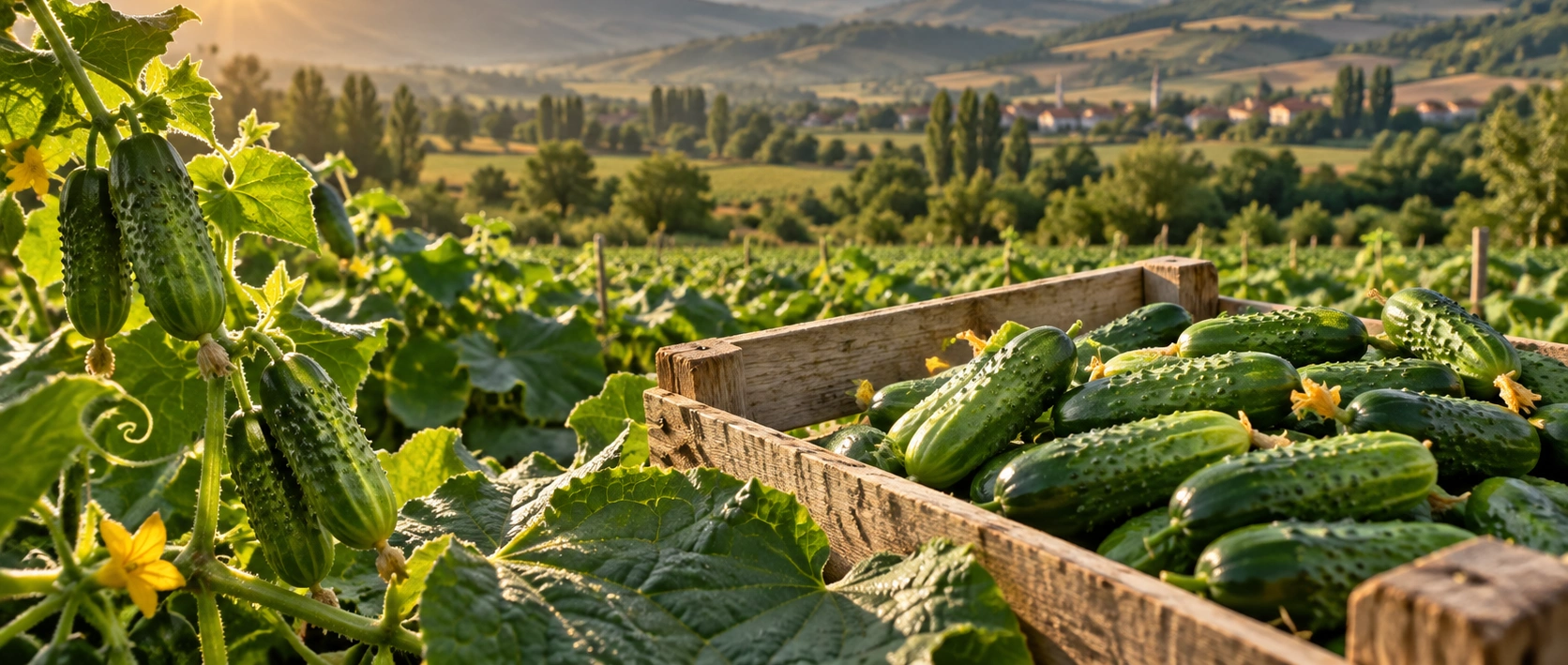
Explore Sındırgı through its protected cornichon, agricultural landscape, local food traditions and seasonal rural life.
Request This Experience
Combine Sındırgı's protected agricultural products with village landscapes, regional cuisine and other food traditions across Balıkesir.
Request This Tour