Minimum 80% Milk Fat
The registered finished-product profile requires at least 80% milk fat.






Balya Tereyağı is a geographically protected butter produced in Balya district of Balıkesir Province. Its registered identity is closely connected with local milk, pasture-fed animals, yogurt-based traditional churning and a long-standing place in Balya's food culture.
Traditional production may use cow's milk, sheep's milk or a mixture of the two. Sheep's milk is seasonal and is used only during May, June and July, while industrial production uses cow's milk. No additives are permitted in the registered product.
Balya Tereyağı received Turkish geographical-indication registration in 2023. It is protected as a Mahreç İşareti under TÜRKPATENT registration No. 1449, with the geographical boundary defined as Balya district in Balıkesir.
Balya Tereyağı is registered by TÜRKPATENT as geographical indication No. 1449.
The registered finished-product profile requires a minimum milk-fat content of 80%.
Traditional production turns cultured yogurt into butter through churning in a yayık.
The milk and all registered production stages are connected with Balya district.
Essential information about one of Balıkesir's protected dairy traditions.
Balya district in Balıkesir Province, north-western Türkiye.
Open Balya on Google MapsTraditional butter made from local cow's milk, sheep's milk or a mixture of both.
TÜRKPATENT Mahreç İşareti registration No. 1449.
The registered finished butter contains at least 80% milk fat.
Balya butter reflects the relationship between livestock farming, local pasture, yogurt culture and traditional household churning.
Balya Tereyağı has a long-established place in the food culture and rural economy of Balya. The district's livestock tradition provides the milk, while local knowledge determines how that milk is cultured, churned, washed and turned into butter.
The protected specification recognises both traditional household production and industrial production. The traditional method is especially distinctive because the butter is produced from yogurt rather than simply by churning uncultured sweet cream.
The animals supplying the milk graze on fresh grasses, flowers and aromatic plants for much of the year. During the grazing season, higher beta-carotene levels in the milk contribute to a more yellow colour, while the product develops the characteristic sweet-sour aromatic profile described in the registration.
In 2023, this regional reputation and production tradition were formally recognised when Balya Tereyağı was registered as a Turkish geographical indication.
Milk origin, seasonal feeding, yogurt fermentation, churning and measurable composition all contribute to the protected identity.
The registered finished-product profile requires at least 80% milk fat.
The technical specification limits salt in the finished product to a maximum of 1%.
The protected description links its characteristic aroma to fresh forage and yogurt fermentation.
Butter made during the grazing period can show a stronger yellow colour because of higher beta-carotene in the milk.
The registered production specification states that no additives are used.
The milk used for protected Balya Tereyağı is obtained from sheep and cattle raised in Balya.
In household production, cultured yogurt is churned in a yayık to separate butter from ayran.
All registered production stages must take place within Balya district.
Balya Tereyağı is butter produced in Balya district from milk obtained from local sheep and cattle. Traditional production can use cow's milk, sheep's milk or a mixture of both, while industrial production uses cow's milk.
The protected name refers to a defined regional product rather than any butter sold in Balya. Its registration sets requirements for the origin of the milk, production area, production method, composition, packaging, storage and geographical-indication labelling.
The registered milk source is sheep and cattle raised within Balya district.
Traditional production cultures the milk into yogurt before the butter is separated by churning.
No additives are used in the protected production specification.
The product's reputation and production tradition are tied directly to Balya's dairy culture.
Balya Tereyağı is registered by the Turkish Patent and Trademark Office as a Mahreç İşareti. The registration defines its geographical area, milk source, distinguishing characteristics, production methods, storage conditions, labelling and inspection system.
Balya Tereyağı
The TÜRKPATENT geographical-indication registration number is 1449.
The official application number is C2022/000049.
The application was filed on 9 February 2022.
The geographical indication was registered on 15 August 2023.
The registration holder is Balıkesir Metropolitan Municipality.
The protected designation is a Mahreç İşareti.
The registered geographical area is Balya district, Balıkesir Province.
A Turkish Mahreç İşareti protects a product whose distinctive quality, reputation or other characteristics are associated with a defined geographical area.
For Balya Tereyağı, the official specification requires the milk to come from animals raised in Balya and all production stages to take place within the district. The protected name therefore identifies a production tradition connected with a specific place, not simply a style of butter.
The protected boundary is Balya district rather than Balıkesir Province as a whole.
The milk used in protected production must come from sheep and cattle raised in Balya.
Traditional and industrial production procedures are documented in the registration.
Milk source, composition, production, storage and correct use of the protected name are inspected.
Balya's dairy tradition is closely connected with the natural vegetation available to grazing animals. The official registration lists a diverse mixture of grasses, forage plants, shrubs and aromatic plants growing within the district.
From around the middle of March until the end of November, animals can feed on fresh grasses and flowers in the landscape. This seasonal diet influences the milk and helps explain why butter made during the grazing period can have a more pronounced yellow colour and characteristic aroma.
Wild oats, fescues, vetches, sainfoin and other meadow plants form part of the local forage environment.
Thyme, sage and milk thistle are among the aromatic plants specifically noted in the protected specification.
Fresh outdoor feeding is described from mid-March through the end of November.
Higher beta-carotene in grazing-season milk contributes to a more yellow butter.
The registered product may be produced from cow's milk, sheep's milk or a mixture of the two in traditional production. Sheep's milk is available for butter production only during the seasonal period identified in the registration.
Industrial production uses cow's milk because of the larger scale involved. In all cases, the protected product depends on milk obtained from animals raised inside Balya district.
Used in both traditional and industrial Balya Tereyağı production.
Used in traditional production during May, June and July.
Traditional producers may combine cow's and sheep's milk when the seasonal supply allows.
The milk itself must come from animals raised within the registered geographical boundary.
The protected specification states that sheep's milk in Balya is produced for butter making during May, June and July. This creates a distinct seasonal window for traditional butter made entirely or partly with sheep's milk.
Outside this period, production depends on cow's milk. For food travellers, this means that the milk composition of Balya Tereyağı can legitimately vary according to season and production method.
The registered sheep-milk period begins in May.
Sheep's milk remains part of the seasonal traditional butter cycle.
The protected specification identifies July as the final month of the sheep-milk period.
Traditional butter may therefore differ subtly according to the milk available at the time of production.
The geographical-indication registration includes measurable composition ranges that help define the protected butter.
The protected specification recognises two production routes: a traditional yogurt-based household method and an industrial cow's-milk method. Both remain tied to Balya and both prohibit additives.
Traditional Balya Tereyağı is produced in family households using yayık churning. Milk is first filtered and then heated to approximately 98°C before being cooled to around 45°C for yogurt fermentation.
Previously prepared yogurt is used as the culture at approximately 2–3% of the milk quantity. Fermentation lasts around 3–3.5 hours, after which the yogurt is left overnight so its aroma can fully develop.
Fresh cow's milk, sheep's milk or their mixture is passed through a fine strainer.
The milk is heated to about 98°C and cooled to approximately 45°C.
A small proportion of previously made yogurt starts fermentation.
The yogurt is left for one night to complete aroma development.
A yayık is the traditional vessel used to churn yogurt and separate butterfat from ayran. In the registered Balya method, the rested yogurt is transferred to the yayık and mixed with an equal quantity of drinking-quality water.
Churning takes approximately 30 minutes. As the fat gathers into butter, it separates from the liquid ayran. The butter is collected, washed without excessive heating and then left to firm before it is ready to eat.
The traditional process begins with cultured yogurt rather than uncultured cream.
An amount of drinking-quality water equal to the yogurt quantity is added before churning.
The registration describes approximately half an hour of churning.
The process produces both butter and the liquid ayran from which the butter is separated.
Industrial Balya Tereyağı is made from cow's milk obtained within the district. Incoming milk is checked, filtered and analysed before the cream is separated.
The cream is heated, cooled and cultured with yogurt culture, then matured in cold storage before churning. The finished butter is washed with cold drinking-quality water, checked for taste, aroma and colour, shaped and packaged.
Incoming milk is checked for antibiotic status and pH, while dry matter, protein and fat values are recorded.
The milk is warmed to about 35°C before the cream is separated.
The cream is heated to 81–82°C, cooled to about 45°C and cultured with yogurt culture.
The cultured cream is matured at 0–4°C for approximately one week.
Matured cream is churned until the butterfat separates from the buttermilk.
The butter is washed with approximately 2°C drinking-quality water until the wash water becomes clear.
The official description gives Balya Tereyağı a characteristic sweet-sour aroma. This is not simply a tasting phrase: the registration connects the sweet side with the fresh grasses and flowers eaten by the animals and the sour side with cultured-yogurt production.
During yogurt fermentation, lactic-acid bacteria convert lactose into lactic acid. Part of this cultured character carries through into the butter, giving traditional Balya Tereyağı a profile that can feel more complex than neutral sweet-cream butter.
Fresh milk and grazing-season forage contribute to the butter's rounded dairy character.
Yogurt fermentation introduces a mild sour aromatic dimension.
Fresh grasses, flowers and aromatic plants form part of the sensory story behind the milk.
Milk type and grazing conditions can naturally influence colour and aromatic intensity.
The registration specifically links the more yellow colour of grazing-season Balya Tereyağı with the higher beta-carotene content of milk produced when animals are feeding on fresh vegetation.
Colour therefore does not have to remain identical throughout the year. Seasonal feeding, milk type and production conditions can naturally influence whether the butter appears pale cream, yellow or more deeply golden.
Animals feed on naturally available grasses and flowers through much of the year.
Higher beta-carotene levels during the grazing period contribute to a stronger yellow colour.
A protected traditional food does not need to have exactly the same shade in every season.
Authenticity depends on origin, method and labelling rather than colour alone.
The protected specification notes that Holstein and Simmental cattle are common in Balya, while the local Turkish Grey breed is also raised in the district.
During winter, when fresh pasture is less available, cattle feeding shifts toward roughage and pellet feed. The specification describes a winter ration dominated by roughage, including silage, alfalfa and straw, supplemented with prepared feeds and barley-oat mixtures.
One of the cattle breeds specifically noted as common in Balya.
Another widely raised dairy and dual-purpose breed in the district.
The native Boz cattle breed is also recorded in Balya.
Winter rations replace much of the fresh grazing available from spring through autumn.
The official specification gives clear storage limits for the protected butter. At refrigerator temperature, Balya Tereyağı can be kept at 0–4°C for up to one month.
After shock freezing, it can be stored at -18°C for up to 18 months. At home, the butter should be kept well wrapped or in a sealed food-safe container to limit exposure to air and strong refrigerator odours.
The registered chilled-storage temperature range.
The registered refrigerated storage period.
The registered frozen-storage temperature after shock freezing.
The registered frozen-storage period under the stated conditions.
Balya Tereyağı can be used anywhere a flavourful cultured butter is welcome. Its most direct use is simply spread on warm bread, where the butter's aroma and texture remain easy to appreciate.
It also works naturally in Turkish breakfasts, eggs, pilaf, vegetable dishes, soups, pastries and recipes where butter is browned or melted over the finished dish.
Serve at a spreadable temperature with fresh bread, honey, preserves or regional cheeses.
Its cultured dairy aroma works especially well with simple fried or scrambled eggs.
Use a small amount to bring richness and aroma to rice or bulgur pilaf.
Butter can be used in savoury or sweet doughs where its flavour remains part of the finished result.
A spoonful melted at the end can enrich roasted, boiled or sautéed vegetables.
Brown lightly and spoon over soups, dumplings or other dishes for a more aromatic finish.
To understand the product itself, begin simply. A small amount of butter served with good bread lets you notice its colour, cultured aroma and texture without other ingredients dominating the experience.
If the butter has been refrigerated, allow only the portion you plan to eat to soften briefly at room temperature. Return the remainder to cold storage promptly.
Warm village bread, sourdough or pide provides a neutral base for tasting.
A little butter is enough to appreciate aroma and texture without unnecessary warming.
Honey and cultured butter create one of the simplest Turkish breakfast combinations.
Only soften what you intend to serve and return the main package to the refrigerator.
A butter being sold in Balya does not automatically mean it is protected Balya Tereyağı. The registered name and geographical-indication identification are the most useful clues.
The specification requires the Balya Tereyağı wording and the Mahreç İşareti emblem to appear on the product or packaging. The type of milk, or the milk mixture used, must also be stated beneath the protected name.
Look for the wording Balya Tereyağı.
The Turkish Mahreç İşareti emblem is part of the registered usage requirements.
The label should identify whether cow's milk, sheep's milk or a mixture was used.
Clear producer and storage information makes provenance easier to understand.
The milk and production are tied to Balya district.
Choose butter that has been handled and stored under appropriate refrigerated conditions.
When buying the protected butter, begin with the label rather than colour alone. Look for the registered name, geographical-indication emblem, producer information, milk type and proper cold storage.
For travellers visiting Balya, local producers, dairy shops and reliable regional food sellers can be useful places to ask about seasonal production and whether the butter contains cow's milk, sheep's milk or a mixture.
Check the protected name, producer and milk description.
The Mahreç İşareti emblem helps distinguish the protected product.
Butter should be sold under appropriate cold-storage conditions.
Seasonal sheep's-milk and mixed-milk versions are part of the traditional production story.
Established local producers and food shops make provenance easier to verify.
If travelling, use suitable chilled transport and refrigerate the butter promptly.
Balya Tereyağı can be produced throughout the year, but the character of the milk changes with the seasons. The strongest grazing period runs from around mid-March through the end of November, when animals feed on fresh vegetation outdoors.
For visitors especially interested in traditional sheep's-milk or mixed-milk butter, May through July is the key period identified in the registration.
The registered description marks the beginning of the main fresh-grazing period.
The seasonal window when sheep's milk is used in traditional butter production.
Fresh grazing can contribute to stronger yellow colour and aromatic character.
The main outdoor fresh-forage period described in the registration comes to an end.
Traditional butter may be made from cow's milk, sheep's milk or a seasonal mixture.
May through July is the most relevant period if you are interested in sheep's-milk production.
Farms and dairies are workplaces; visit only where public access or permission is available.
Bread and butter is the easiest way to experience the product without masking its aroma.
Plan for suitable cold transport if you are taking butter away from Balya.
Combine the food experience with the district's rural landscapes, villages and wider Balıkesir countryside.
The milk description and Mahreç İşareti emblem help explain exactly what you are buying.
Colour and aroma can vary naturally with feed, grazing and milk composition.
Butter has long been one of the practical ways dairy-farming communities preserve and concentrate the richness of milk. In Balya, that everyday necessity developed into a product with enough local reputation and identifiable production character to receive geographical-indication protection.
The traditional process also creates a close relationship between butter and yogurt-making. Milk becomes yogurt, the yogurt is rested for aroma, and churning then separates butter from ayran. One dairy process therefore produces several foods that belong naturally to the same local kitchen.
Butter is at home on a Turkish breakfast table alongside bread, honey, cheese and preserves.
Traditional Balya butter begins with cultured yogurt, connecting two important dairy foods.
The protected product begins with animals raised within Balya's agricultural landscape.
Fermentation, churning and washing require practical judgement developed through repeated production.
For travellers interested in regional Turkish dairy foods, Balya Tereyağı offers more than the flavour of butter alone. It tells a clear story about pasture, milk seasonality, household yogurt-making and a traditional churning technique still recognised in the protected specification.
Its most interesting feature is the combination of place and process: milk from Balya, production inside Balya, a cultured dairy character, and seasonal differences that can be traced back to the animals and their feed.
The protected description identifies a characteristic sweet-sour profile.
Traditional yayık butter begins with yogurt and reflects a distinctive dairy process.
Spring and summer reveal the strongest connection between fresh pasture and the finished butter.
The protected name connects an everyday ingredient directly with the rural landscape of Balya.
Balya butter belongs to a much larger Balıkesir food landscape shaped by dairying, olives, livestock, grains, desserts and distinctive local drinks.
Discover the district behind the protected butter, from its rural landscape to its local history.
Continue exploring Balıkesir's protected dairy traditions through its rich manda kaymağı.
Move from butter to one of the province's distinctive protected hard-cheese traditions.
Discover another geographically protected dairy product from northern Balıkesir.
Explore Balıkesir's famous foamy ayran and the dairy culture of Susurluk.
Finish the dairy journey with one of Balıkesir's best-known traditional cheese-based desserts.
Butter does not become Balya Tereyağı simply because it is yellow, cultured or sold in Balıkesir. The protected designation represents a specific combination of geographical origin, local milk, registered production methods, measurable composition and official labelling.
Protected Balya Tereyağı is tied specifically to Balya district.
The milk must come from sheep and cattle raised within the geographical boundary.
Both traditional and industrial production routes are documented.
The finished product has registered milk-fat, salt and fatty-acid parameters.
The protected name, GI emblem and milk description follow defined usage rules.
Production and labelling are subject to regular geographical-indication controls.
The geographical-indication system includes formal controls coordinated by Balıkesir Metropolitan Municipality. The inspection body includes specialists from relevant local institutions and carries out regular checks at least once a year, with additional inspections when necessary.
Controls can cover the origin of the raw milk, ingredients, fermentation and churning methods, milk-fat and salt values, packaging, storage conditions, fatty-acid analysis when required, and correct use of the Balya Tereyağı name and Mahreç İşareti emblem.
Inspectors verify that raw milk is sourced from within Balya.
Particular attention is given to fermentation and churning requirements.
Milk-fat and salt levels form part of the inspection criteria.
Cold storage, packaging and market presentation are also checked.
Balya Tereyağı is a geographically protected butter produced in Balya district of Balıkesir Province from local cow's milk, sheep's milk or, in traditional production, a mixture of both.
The registered geographical boundary is Balya district in Balıkesir Province, Türkiye.
Yes. It is a registered Turkish geographical indication.
It is registered as a Mahreç İşareti.
The TÜRKPATENT registration number is 1449.
It was registered on 15 August 2023.
The official application number is C2022/000049.
The application was filed on 9 February 2022.
The registration holder is Balıkesir Metropolitan Municipality.
Traditional production can use cow's milk, sheep's milk or a mixture of both. Industrial production uses cow's milk.
The protected specification identifies May, June and July as the seasonal period for sheep's milk in Balya butter production.
No. The registered specification states that no additives are used.
The registered finished product contains at least 80% milk fat.
The registered finished-product profile allows no more than 1% salt.
The registration links its stronger grazing-season yellow colour to higher beta-carotene levels in milk from animals eating fresh grasses and flowers.
The official description characterises it with a sweet-sour aroma connected with fresh forage and yogurt fermentation.
Milk is cultured into yogurt, rested overnight and then churned in a yayık with drinking-quality water until butter separates from ayran.
A yayık is a traditional butter-churning vessel used to separate butterfat from cultured yogurt or ayran.
The registered traditional method describes approximately 30 minutes of yayık churning.
Yes. The registered industrial method cultures separated cream with yogurt culture before cold maturation and churning.
The registration allows storage at 0–4°C for up to one month, or after shock freezing at -18°C for up to 18 months.
Look for the protected Balya Tereyağı name, the Mahreç İşareti emblem, producer information and a statement describing the milk used.
No. Cow's milk can be used alone, and sheep's milk is seasonal. Traditional butter may contain cow's milk, sheep's milk or a mixture.
Yes. It can be used for breakfast, eggs, pilaf, pastries, vegetables, soups and other dishes where a flavourful butter is appropriate.
May through July is the key period identified in the protected specification.
Its protected identity combines local milk, Balya's pasture environment, cultured-yogurt or cultured-cream production, traditional churning knowledge and a documented technical profile.
The strongest images should connect the finished butter with the milk, pasture and traditional dairy work behind it.
Photograph a generous curl or block of golden butter on rustic bread or a ceramic plate in soft natural light.
A traditional churning scene immediately explains the process that makes the product distinctive.
Spring or summer meadow imagery connects the butter with Balya's grazing environment.
Fresh milk beside the finished butter creates a simple visual story of transformation.
Butter with village bread, honey and regional cheese places the product naturally in Turkish food culture.
Close-up photographs of shaping, washing or serving butter add a human sense of craft.
Discover Balya's protected butter together with rural landscapes, local dairy traditions and the wider food culture of Balıkesir.
Custom-designed private programs can combine Balya, local food, seasonal countryside, traditional dairy culture and nearby destinations according to your travel dates and interests.
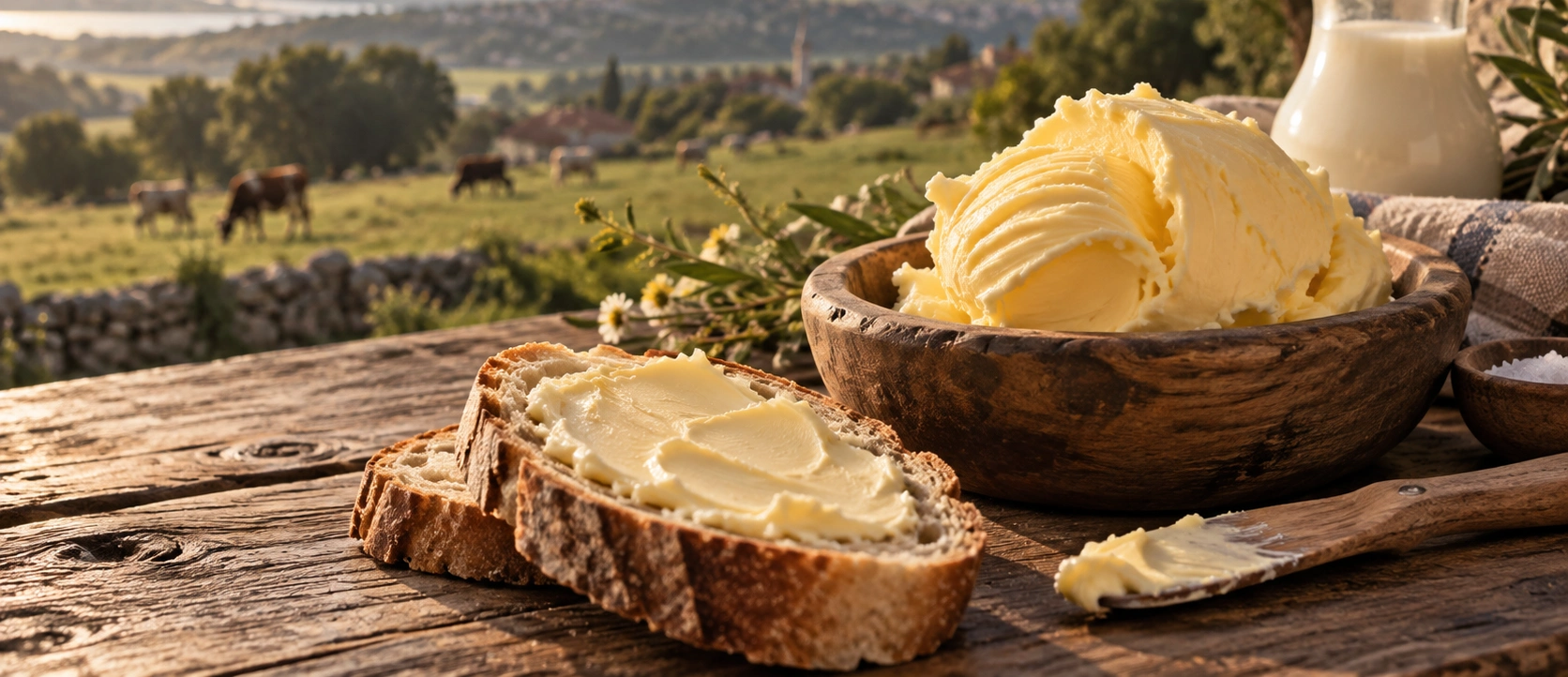
Explore Balya through its protected butter, seasonal dairy landscape, local food traditions and rural culture.
Request This Experience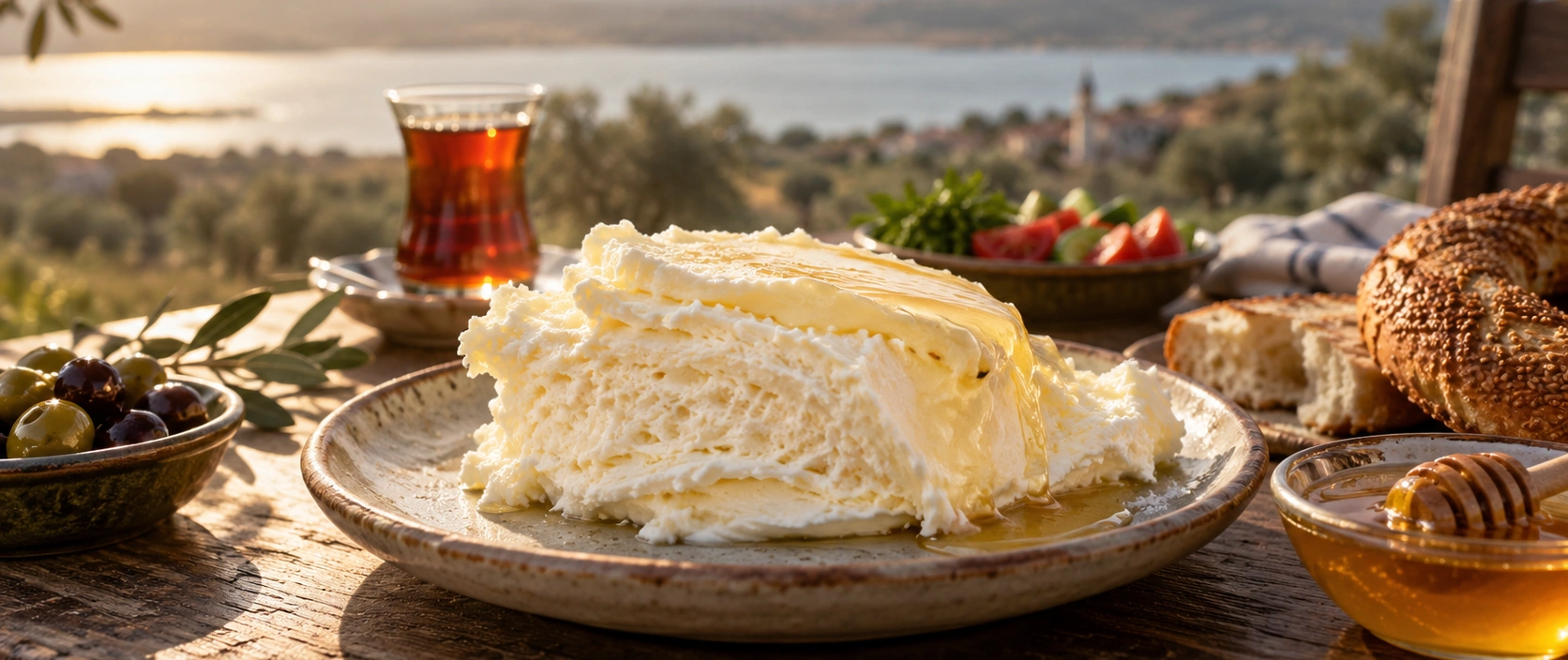
Combine Balya Tereyağı with Balıkesir's protected cheeses, buffalo cream, ayran and other regional food traditions.
Request This Tour