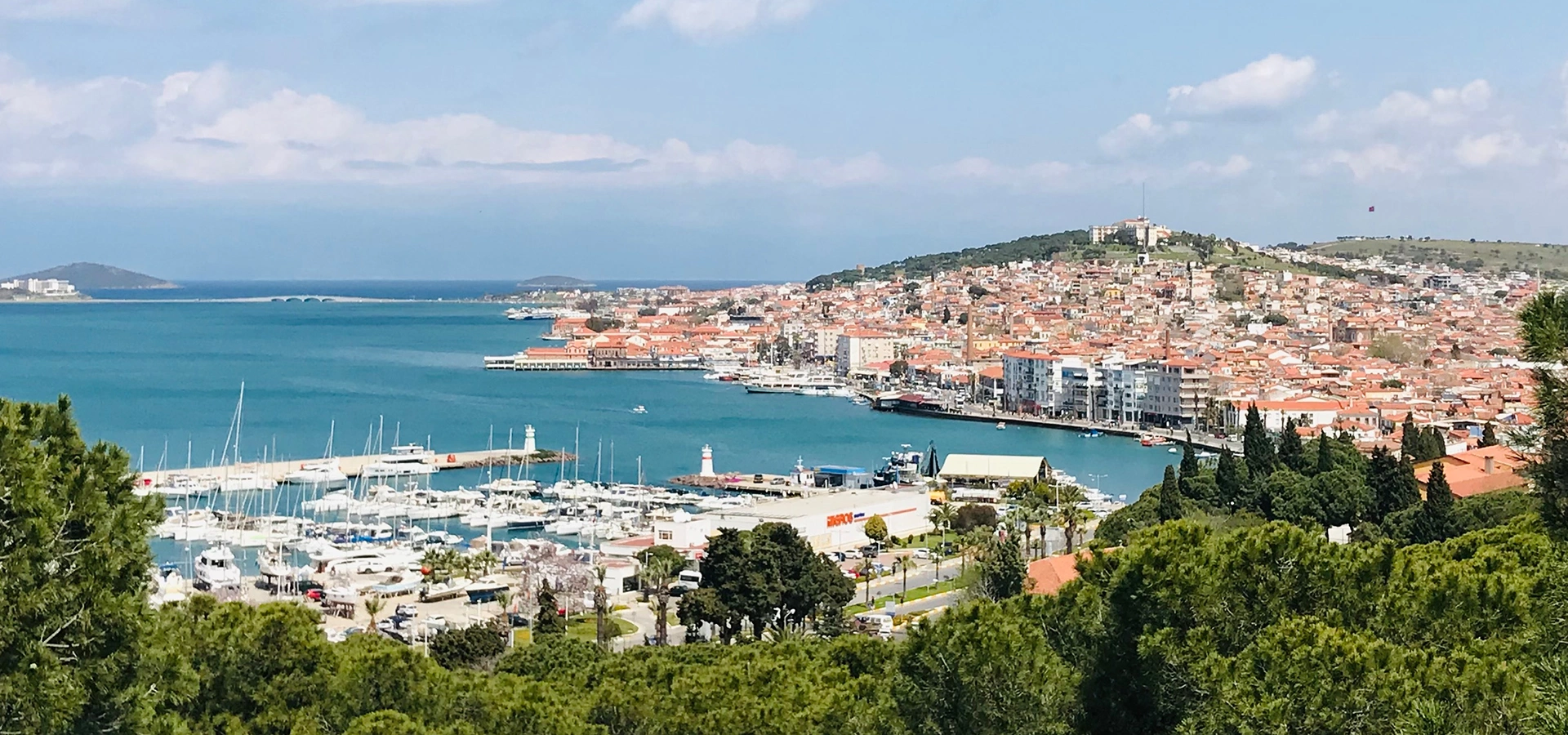
Ayvalık Travel Guide
Explore Ayvalık's old Greek neighbourhoods, waterfront, historic churches, local food, beaches and island-filled coastal landscape.
View Ayvalık Guide





Rising above the indented coastline south of central Ayvalık, Şeytan Sofrası — literally the Devil's Table — is one of the best-known panoramic viewpoints on Türkiye's northern Aegean coast. The attraction is not a monument, archaeological site or museum in the conventional sense. It is a dramatic hilltop landscape where volcanic rock, island views, folklore and sunset combine into one of Ayvalık's classic visitor experiences.
Official cultural sources place the viewpoint approximately 8 kilometres south of Ayvalık town centre, in the Küçükköy area between central Ayvalık and Sarımsaklı. The summit is associated with ancient volcanic formations: accumulated lava left by extinct volcanic activity created the broad rocky form that later generations compared to a large round dining table.
The geography is the real reason to come. From the high ground, the view opens across the Ayvalık archipelago, pine-covered peninsulas, narrow channels, sheltered bays and the open North Aegean. On a sufficiently clear day, the Greek island of Lesbos — Midilli in Turkish — can also be seen beyond the Turkish islands.
Then there is the legend. A depression in the volcanic rock, now traditionally identified as the Devil's Footprint, has long attracted stories and local customs. The formation is protected by ironwork, and visitors have historically thrown coins nearby while making wishes. Several different stories attempt to explain both the footprint and the unusual name of the hill, but these belong to folklore rather than documented history.
Most people arrive for sunset, when the descending sun illuminates the islands, bays and distant horizon in changing shades of gold, orange and red. That fame also creates the viewpoint's greatest practical challenge: late afternoon can become extremely busy in summer. Visit earlier, stay after the main rush where conditions allow, or come in another season and Şeytan Sofrası becomes a much calmer landscape experience.
The table-like rocky summit is associated with ancient lava formations created by the volcanic history of the Ayvalık region.
Look across Ayvalık's islands, wooded peninsulas, hidden bays and, in clear conditions, toward Lesbos across the Aegean.
A rock depression traditionally identified as the Devil's footprint has inspired legends, wishes and visitor rituals for generations.
Şeytan Sofrası is one of Ayvalık's signature places for watching the sun descend across the island-filled Aegean horizon.
Essential information for visiting Ayvalık's famous Devil's Table viewpoint and understanding the landscape behind the legend.
Küçükköy, Ayvalık, approximately 8 km south of central Ayvalık and close to the route toward Sarımsaklı.
A rocky hill associated with ancient volcanic activity and accumulated lava formations in the Ayvalık region.
Şeytan Sofrası means “Devil's Table”; the broad summit was traditionally compared with a round dining table.
A rock depression enclosed by ironwork and popularly known as the Devil's Footprint.
A sweeping panorama over the Ayvalık islands, bays, peninsulas and North Aegean Sea.
Lesbos / Midilli Island can be visible across the Aegean when atmospheric conditions are clear.
One of the most famous places in Ayvalık for sunset watching and panoramic photography.
Landscape photography, sunset viewing and simply identifying the islands and bays spread below the summit.
Reached by a winding paved road branching from the Ayvalık–Sarımsaklı direction.
Allow 45–90 minutes; longer if you arrive well before sunset and stay through twilight.
The exposed hilltop can be windier and cooler than the beaches and streets below, especially after sunset.
Summer sunset is the busiest period. Arriving well before the sun reaches the horizon makes the experience much easier.
Şeytan Sofrası is famous for sunset, but reducing it to a sunset stop misses much of what makes the viewpoint interesting. From here, visitors can understand how fragmented, island-filled and geographically complex the Ayvalık coastline really is.
From street level in Ayvalık, the coast can feel relatively simple: town, waterfront and open sea. From Şeytan Sofrası, that impression disappears. Islands overlap with peninsulas, narrow channels divide one body of land from another, and sheltered bays appear behind ridges that are almost invisible from below.
That elevated perspective also explains why the wider Ayvalık landscape feels so different from a straightforward beach resort. The relationship between rock, sea, pine-covered slopes, olive landscapes and offshore islands is unusually intricate, and Şeytan Sofrası provides one of the clearest places to see those elements together.
The geological character adds another layer. The viewpoint belongs to a region with a long volcanic history, and official tourism material specifically describes the summit in relation to old lava formations. The “table” is therefore not simply a modern observation deck placed on a convenient hill: the underlying landscape is itself part of the attraction.
Finally, the legends make the site memorable. The Devil's Footprint may not belong to verifiable history, but folklore is part of how landscapes acquire cultural meaning. At Şeytan Sofrası, natural geology has been interpreted through stories, wishes and imaginative explanations for generations.
Şeytan Sofrası is best understood as a rocky panoramic summit shaped by the volcanic landscape of the Ayvalık region. It is not an ancient sanctuary, archaeological excavation or historic building, despite the mythology and legends attached to its name.
Official cultural descriptions connect the hill with lava accumulations left by extinct volcanic activity. The resulting rocky form has a broad, relatively level appearance that was compared locally with a traditional round dining table — a sofra.
Over time, the geological formation became associated with a large depression in the rock said in folklore to resemble the footprint of the Devil. The footprint tradition and the name of the hill eventually became inseparable from the viewpoint itself.
Today, visitors come principally for the scenery. The famous footprint takes only a few minutes to see; the much greater experience is standing at the edge of the hill and reading the extraordinary coastal geography spread across the horizon.
The wider Ayvalık region contains extensive volcanic rocks produced during several phases of geological activity over millions of years. Geological research around Ayvalık identifies multiple volcanic formations extending from the late Oligocene through later phases of the Tertiary geological record.
At Şeytan Sofrası, official tourism descriptions simplify that complex geological story by describing the hill as a formation created from lava accumulations associated with an extinct volcano. Those volcanic materials give the summit its rugged rock surfaces and distinctive form.
This geological explanation is important because visitors sometimes encounter stories presenting Şeytan Sofrası as though the unusual rock shapes themselves were supernatural. In reality, the visible forms belong to a natural volcanic landscape; folklore developed later as people attempted to explain or give meaning to those forms.
The best way to appreciate the geology is not to search for one spectacular volcanic crater. Instead, look at the shape and texture of the summit, exposed rock surfaces and the broader relationship between the hill and surrounding landscape.
The Turkish name can be translated directly as “Devil's Table”: şeytan means devil and sofra means a table or spread prepared for eating.
The simplest explanation is geographical. The rocky summit has traditionally been compared with a large round table, while the footprint-shaped depression nearby provided the supernatural association. Together they created a memorable name that became attached to the entire viewpoint.
The more colourful explanations come from folklore. Different versions have circulated around Ayvalık, and they should not be treated as a single documented historical narrative. Some attempt to explain the footprint; another widely repeated local story connects the name with a person nicknamed the Devil and an elaborate meal prepared on the hill.
Rather than trying to decide which legend is “correct,” it is more useful to see the stories as examples of local oral tradition developing around a striking natural formation. Landscapes that look unusual frequently attract mythology, and Şeytan Sofrası is a particularly vivid example.
Near the summit is a depression in the rock traditionally interpreted as a giant footprint. Because of the stories attached to it, the feature has been enclosed by ironwork and has become one of the hill's best-known visual symbols.
Visitors have traditionally thrown coins around the footprint while making wishes. Ribbons and other wish-related objects have also appeared around the site at different times. These practices are expressions of popular culture rather than part of any formal religious ritual.
The footprint itself should be approached as folklore attached to a natural rock formation. Official cultural sources describe it as a footprint-like shape around which various legends developed; they do not present it as an archaeological or supernatural artefact.
It is worth seeing, but do not spend the entire visit concentrating on the fenced rock. The extraordinary coastal panorama surrounding it is ultimately the much larger reason Şeytan Sofrası became famous.
There is no single universally established legend explaining Şeytan Sofrası. Instead, the hill has accumulated several overlapping folk narratives, and modern retellings sometimes combine details from different versions.
One tradition imagines the Devil fleeing across the Aegean landscape and leaving a footprint in the rock at Şeytan Sofrası before continuing toward other distant points.
Some modern retellings place the story within the mythological geography of Mount Ida, Lesbos and the northern Aegean, linking the footprint with the world of ancient gods and legends.
Another popular local tale tells of an outcast person, often called Penelope in modern versions, who was blamed for hardship and sought refuge on the hill.
According to that story, when hostile villagers approached, an enormous meal was prepared. The hungry crowd stopped to eat, allowing the supposed “Devil” to escape — hence the Devil's Table.
These stories are fascinating precisely because they are legends rather than secure historical records. Names, dates and details vary between tellings. The safest way to interpret them is as part of Ayvalık's evolving oral culture rather than as evidence for a specific event.
They also demonstrate how geography influences storytelling. Mount Ida, Lesbos, Ayvalık's islands and the volcanic landscape all provide dramatic landmarks onto which later generations could attach stories of supernatural journeys, exile and escape.
The panorama is exceptionally wide because the viewpoint looks across one of the most fragmented sections of the northern Aegean coast. Water, islands and peninsulas overlap in layers, making it difficult at first to distinguish where one landform ends and another begins.
The islands scattered through Ayvalık Bay dominate the middle distance and create the layered seascape for which the viewpoint is famous.
Wooded slopes and narrow peninsulas divide sheltered bays below the summit, adding deep green layers between the viewpoint and open sea.
In sufficiently clear atmospheric conditions, the large Greek island of Lesbos forms a distant backdrop beyond the Turkish coastline and islands.
The height reveals how dramatically bays, channels, islands and headlands shape the wider Ayvalık landscape.
The southern coastline toward Sarımsaklı and its surrounding peninsulas adds another geographical layer to the wider view.
At sunset the open horizon becomes the focal point, with islands and distant landforms turning progressively darker against the illuminated sky.
Visibility changes enormously with humidity, haze and wind. A perfectly cloudless summer afternoon can still produce a hazy horizon, while a cooler day after weather has cleared may reveal distant landforms with surprising sharpness.
Sunset is the classic Şeytan Sofrası experience. As the light drops, the blue-green landscape gradually loses colour, the islands become silhouettes and the western sky takes over as the dominant element of the panorama.
The beauty comes from the number of layers between you and the horizon. Instead of watching the sun descend across an empty sea, you see successive islands, ridges, coves and distant landforms changing tone as the light becomes warmer.
Arrive well before the calculated sunset time. During summer, reaching the area only ten or fifteen minutes before sunset can mean joining the busiest traffic, looking for parking and then competing for space at the most popular viewing positions.
A more relaxed plan is to arrive 60–90 minutes before sunset. This gives you time to walk around the summit, identify the footprint, explore different angles and choose where you want to watch the final part of the evening.
Do not necessarily leave the instant the sun disappears. Some of the most attractive colours can develop during the following twilight, while a portion of the sunset crowd begins descending immediately after the solar disc vanishes.
The physical visit is straightforward. You drive or travel up the hill, reach the summit area, walk between the principal viewpoints and the Devil's Footprint, and spend time looking across the surrounding landscape.
The atmosphere, however, changes dramatically through the day. A quiet morning visit is primarily about geography and photography. A summer sunset visit becomes a much more social experience, with groups arriving specifically for the evening spectacle.
Generally calmer and useful for studying the landscape without the concentrated sunset crowd.
The sea can look beautifully blue, but strong summer light and heat may reduce atmosphere and photographic depth.
The landscape becomes warmer and more dimensional as shadows lengthen across the islands and slopes.
The signature experience, but also the time when vehicle traffic, parking demand and viewpoint congestion can be highest.
Often overlooked. The western sky can remain colourful after sunset while the islands turn into dark silhouettes.
Excellent visibility is possible, but the exposed summit can feel significantly cooler than Ayvalık or Sarımsaklı below.
The distinctive feature of Şeytan Sofrası is the island-filled foreground. Include coastlines and silhouettes to give the sunset a sense of place.
A wide-angle composition is ideal for showing the relationship between rocky foreground, bays, islands and open horizon.
Longer focal lengths compress distant islands and Lesbos, creating stacked layers that can look very different from wide panoramic images.
Near sunset the foreground becomes much darker than the horizon. Protect bright sky detail and allow some silhouettes if necessary.
The hour before sunset often produces better landscape detail than the final few minutes when the scene becomes strongly backlit.
If practical, twilight can produce softer colours and fewer people after the main sunset rush begins to leave.
Volcanic-looking rock surfaces can provide depth and remind viewers that this is more than a distant seascape.
With so much sea in the composition, even a slight tilt becomes obvious. Check the horizon before taking the photograph.
A tripod may be useful for twilight photography, but busy periods can make large equipment awkward around crowded viewing areas. A small travel tripod or good image stabilisation is usually easier to manage.
One of the best seasons for comfortable temperatures, clearer landscapes and combining the viewpoint with long days exploring Ayvalık.
Beautiful but busiest, particularly near sunset. Arrive early and expect heat below the hill but stronger wind at the summit.
Excellent for softer light, fewer crowds and combining sunset with heritage walks, olive landscapes and Cunda.
Quiet and highly atmospheric. Clear winter air can produce excellent visibility, but wind and rapidly changing weather matter much more.
A clear day following rain or a weather change can reveal distant islands and coastlines much more sharply than a hazy summer afternoon.
Late afternoon through twilight remains the classic choice, provided you are prepared for the sunset crowd.
Şeytan Sofrası's popularity is concentrated into a surprisingly short period each day. Many visitors touring Ayvalık and Cunda plan their schedules so that they arrive on the summit shortly before sunset.
As a result, the final hour of daylight in July and August can feel completely different from the rest of the day. Vehicle arrivals increase, parking becomes more competitive and the most obvious sunset-facing positions fill quickly.
Coming 60–90 minutes before sunset is the easiest way to reduce parking stress and secure a comfortable viewing position.
If sunset is not essential, morning transforms Şeytan Sofrası into a much quieter panoramic viewpoint.
April–May and September–October provide a much better balance between pleasant weather and manageable visitor numbers.
Do not assume that the busiest railing or platform is the only worthwhile viewpoint. Walk around and study the landscape from several directions.
Crowds should not discourage you from visiting at sunset — the view is famous for good reason. The key is simply to treat sunset as an event that requires a little planning rather than arriving at the final possible moment.
Şeytan Sofrası is exposed to Aegean winds, and conditions at the summit can feel quite different from those at sea level. On a warm summer evening, that breeze can be welcome. In spring, autumn or winter, the same wind can make the viewpoint feel unexpectedly cold.
Bring a light outer layer if you plan to stay through sunset, even when the afternoon has been warm. Once the sun drops, the combination of elevation and wind can change the temperature surprisingly quickly.
Visibility is just as important as temperature. Summer humidity can soften the distant horizon and obscure Lesbos even on an otherwise sunny day. Cooler, cleaner air following rain or strong weather systems can create much more detailed long-distance views.
Clouds are not necessarily bad for sunset. A completely clear sky produces a clean horizon, while broken clouds can create far more dramatic colour if the western horizon remains open.
The viewpoint belongs to the broader natural landscape associated with the Ayvalık Islands Nature Park, one of the most extensive protected coastal environments in this part of the northern Aegean.
The protected landscape incorporates marine areas, islands, forest and scrub vegetation, traditional olive landscapes and habitats supporting numerous bird and plant species. From Şeytan Sofrası, visitors can visually understand why the interaction between land and sea is the defining natural feature of Ayvalık.
A locally important wetland area carrying the Şeytan Sofrası name was formally designated in 2017 within the wider protected landscape. Nature-conservation authorities have highlighted the area's importance for birdlife and landscape photography.
This ecological context makes responsible behaviour especially important. Do not leave ribbons, plastic, food packaging or other objects in the landscape, and avoid creating new informal paths through vegetation simply to reach a photograph.
The tradition of throwing coins and tying wishes around the Devil's Footprint is visually associated with Şeytan Sofrası, but modern visitors should remember that the hill is first and foremost a natural landscape.
Wish customs are not an invitation to leave rubbish. Avoid tying tissues, plastic strips or synthetic materials to fences or vegetation, and never leave bottles, food packaging or cigarette waste on the summit.
Wind can carry even small pieces of waste from the summit into surrounding vegetation and slopes.
Use established walking surfaces rather than creating new shortcuts across vegetation or unstable rocky ground.
Observe the traditional feature without climbing on protective structures or attempting to reach inaccessible sections.
The dry Aegean landscape can be highly vulnerable during summer. Never discard cigarettes or create any open flame.
Şeytan Sofrası is considerably easier to reach than a remote hiking viewpoint because a paved road climbs close to the summit area. Visitors do not need to complete a long mountain walk simply to experience the panorama.
However, the viewpoint itself includes rocky and irregular surfaces, changes in level and potentially crowded circulation areas. Not every photographic position or natural rock edge will be suitable for visitors with reduced mobility.
Anyone requiring fully step-free access should check current conditions before travelling because parking arrangements, barriers and visitor circulation can change. The most accessible viewpoint may not necessarily be the same position used in photographs taken from the surrounding rocks.
Families with small children should also take care near exposed rocky areas. The hilltop is a landscape viewpoint rather than a completely enclosed urban observation terrace.
Şeytan Sofrası lies approximately 8 kilometres south of Ayvalık town centre in the Küçükköy area. The usual approach follows the direction of Sarımsaklı before turning toward the hill on the seaward side.
The final approach climbs through a winding landscape toward the summit. Official tourism information describes the road as paved and signposted from the Ayvalık–Sarımsaklı direction.
The easiest option. Follow the Sarımsaklı direction from Ayvalık and then the signs for Şeytan Sofrası before climbing to the summit area.
Practical from both central Ayvalık and Sarımsaklı. For sunset, arrange your return in advance rather than assuming a vehicle will immediately be available.
Official tourism information has historically listed local minibus connections from central Ayvalık. Routes and seasonal frequency should be confirmed locally.
The viewpoint is relatively close to the resort area, making it particularly easy to combine with an afternoon beach visit followed by sunset.
If driving close to sunset in high season, allow substantially more time than the short distance suggests. The road itself is not long, but concentrated vehicle arrivals can slow the final approach.
Parking conditions are one of the most changeable aspects of visiting Şeytan Sofrası. Arrangements, management and charges can vary, so it is better not to plan around an old parking price found in a previous travel blog.
The important point is timing. Outside busy sunset periods, parking is generally much less stressful. During summer evenings, many vehicles arrive within the same short window and spaces close to the viewpoint can fill rapidly.
If you are travelling during July or August, aim to arrive at least an hour before sunset. That gives you a better chance of parking without rushing and allows time to enjoy the landscape before the busiest period.
Drive carefully on the approach and departure, particularly after sunset. Vehicles may be leaving simultaneously, pedestrians may be walking near the road, and evening light can change quickly.
Şeytan Sofrası does not function like an archaeological museum with a nationally standardised admission timetable. Visitor arrangements can depend on the summit access, local operations, parking management and any temporary conservation or safety restrictions.
For that reason, this guide deliberately avoids publishing a permanent entrance or parking price. Online figures become outdated quickly and may refer to parking or privately managed facilities rather than admission to the natural viewpoint itself.
If you intend to visit very early, very late or outside the main tourism season, confirm current access locally before making the trip specifically for a sunrise, night view or other unusual time.
Commercial facilities have existed around the summit area at different times, but individual businesses, operating periods and services can change. It is therefore better to treat Şeytan Sofrası primarily as a viewpoint rather than depending on a particular restaurant or café being available.
Carry water in warm weather, especially if you intend to arrive early and wait for sunset. If you want a substantial meal, central Ayvalık, Sarımsaklı and Cunda offer far greater choice than the summit.
A good itinerary is often to enjoy the sunset first and then return to Ayvalık or continue elsewhere for dinner rather than trying to combine the best viewing position with a restaurant reservation.
Enough for a fast daytime stop, the Devil's Footprint and several panoramic photographs.
A comfortable daytime visit with time to explore different viewpoints and study the island geography.
The best choice if you are arriving before sunset and want time to find a good viewing position without rushing.
Ideal for photographers who want golden-hour landscapes, sunset, silhouettes and twilight from the same location.
The site itself does not require hours of walking. Most of the extra time comes from waiting for changing light, photographing the view and simply enjoying the panorama.
Times should be adjusted to the season because sunset changes significantly through the year. The important principle is to reach Şeytan Sofrası before the final rush rather than scheduling the drive to finish exactly at sunset.
One of Ayvalık's best-known beach areas and an easy place to combine with Şeytan Sofrası for an afternoon swim followed by sunset.
A quieter coastal landscape beyond Sarımsaklı, known for rocky shores, clear water and a more natural atmosphere.
The wooded coastal area between central Ayvalık and the southern beaches provides attractive bays and one of the approaches toward Şeytan Sofrası.
A small historic and natural site near Çamlık with the surviving remains of the Aya Paraskevi / Taşlı Monastery and views toward Ayvalık's coastal landscape.
Explore stone houses, narrow streets, former Greek Orthodox churches, markets and the waterfront before driving south for sunset.
Cross to Alibey Island for historic streets, churches, seafood restaurants, sunset promenades and another perspective on the Ayvalık archipelago.
During summer, 60–90 minutes before sunset is a much more comfortable arrival time than the final 15 minutes.
The exposed summit can become windy and surprisingly cool after sunset even when Ayvalık has been hot all afternoon.
Natural rocky surfaces are easier and safer in shoes with good grip than in loose sandals or smooth soles.
Do not depend entirely on summit facilities, particularly outside peak season or if you arrive early.
The legendary rock takes only minutes to see. Spend most of your visit exploring the wider panorama.
If distant island views matter to you, clear low-humidity weather is more important than simply choosing a sunny day.
Do not leave ribbons, tissues, packaging or other wish objects around fences, rocks or vegetation.
Summer vegetation can be extremely dry. Never discard cigarette ends or use any form of open flame.
If using a taxi or public transport, organise the journey back before sunset rather than improvising after dark.
Twilight can be as beautiful as sunset itself and the landscape often becomes more peaceful once the main crowd starts leaving.
Şeytan Sofrası is in Küçükköy, Ayvalık, Balıkesir, approximately 8 kilometres south of central Ayvalık and close to the route toward Sarımsaklı.
The name means “Devil's Table”. Şeytan means devil and sofra refers to a dining table or prepared spread.
The broad rocky volcanic summit was compared with a round table, while a footprint-shaped rock depression became associated with legends of the Devil. Several folk stories later developed around the name.
It is part of a volcanic landscape. Official tourism sources describe the hill as formed from old lava accumulations associated with extinct volcanic activity in the Ayvalık region.
There is a natural depression in the rock traditionally identified as the Devil's footprint. The supernatural interpretation is folklore rather than archaeological evidence.
The footprint-shaped formation became a popular visitor attraction and is enclosed by protective ironwork. Visitors have traditionally thrown coins nearby while making wishes.
There are several versions. Some describe the Devil leaving a footprint while fleeing across the Aegean landscape; another popular story tells of an outcast person who prepared a huge feast to distract hostile villagers and escape.
No. The Penelope story is best treated as local folklore. Versions differ in names, dates and details, and it should not be presented as a documented historical event.
The viewpoint overlooks the Ayvalık archipelago, surrounding bays and peninsulas and the North Aegean Sea. Lesbos / Midilli can also be visible in clear weather.
Yes. The Greek island of Lesbos, called Midilli in Turkish, can be visible across the Aegean when atmospheric visibility is good.
Yes. It is one of Ayvalık's most famous sunset locations because the western view combines open sea with multiple layers of islands and distant landforms.
During busy summer periods, arrive around 60–90 minutes before sunset. This gives you time to park, explore and choose a viewpoint before the largest crowd arrives.
It can be extremely busy around sunset in July and August. Morning, earlier afternoon and the spring or autumn shoulder seasons are considerably calmer.
Allow 45–60 minutes for a normal visit or 60–90 minutes if you are arriving before sunset. Photographers may prefer two hours or more.
Yes. A paved road climbs toward the summit from the Ayvalık–Sarımsaklı direction, making the viewpoint accessible without a long hike.
Parking is generally available around the visitor area, but arrangements and charges can change. Spaces become much more competitive shortly before summer sunset.
Şeytan Sofrası is a natural viewpoint rather than a conventional museum. Parking or locally managed visitor facilities may have changing charges, so avoid relying on old online prices.
Official tourism information has listed local minibus access from Ayvalık. Because routes and frequencies can change seasonally, confirm the current service locally before depending on it.
Yes. Taxi is a practical option from central Ayvalık or Sarımsaklı. If visiting for sunset, arranging the return journey in advance is sensible.
Yes, but children should be supervised carefully because parts of the summit contain natural rock, uneven surfaces and exposed viewpoints.
Road access reaches close to the viewpoint, but natural rock surfaces and changes in level mean that not every section is fully accessible. Confirm current arrangements if step-free access is essential.
Often. The exposed hilltop can be noticeably windier than Ayvalık or Sarımsaklı below, particularly during the evening.
Wear comfortable shoes suitable for rocky ground and bring a light jacket or layer if you plan to stay after sunset.
Spring and autumn provide an excellent balance of pleasant temperatures, good light and fewer crowds. Summer offers beautiful sunsets but is much busier.
Yes. Morning lacks the famous sunset atmosphere but offers a quieter experience and can be excellent for understanding and photographing the coastal geography.
On a clear day, yes. A moderate telephoto lens is particularly useful for bringing distant Lesbos and the nearer islands visually closer together.
Commercial facilities have operated around the summit, but businesses and opening arrangements can change. Do not depend on a particular venue without checking current conditions.
Yes. This is one of the easiest combinations: spend the afternoon around Sarımsaklı or nearby beaches and drive up to Şeytan Sofrası before sunset.
Yes. A full Ayvalık day can include Cunda and central Ayvalık before finishing at Şeytan Sofrası, although allow extra driving time during peak summer traffic.
Absolutely. The panoramic geography and sunset are the principal reasons to visit. The legends add cultural interest but are not necessary to appreciate the viewpoint.
Continue from Ayvalık's most famous viewpoint into the old town, across to Cunda Island or south and east through the cultural and natural landscapes of Balıkesir.
Combine Şeytan Sofrası with historic churches, island streets, archaeological sites and the mountain landscapes of the northern Aegean.
Explore Ayvalık's old Greek neighbourhoods, waterfront, historic churches, local food, beaches and island-filled coastal landscape.
View Ayvalık Guide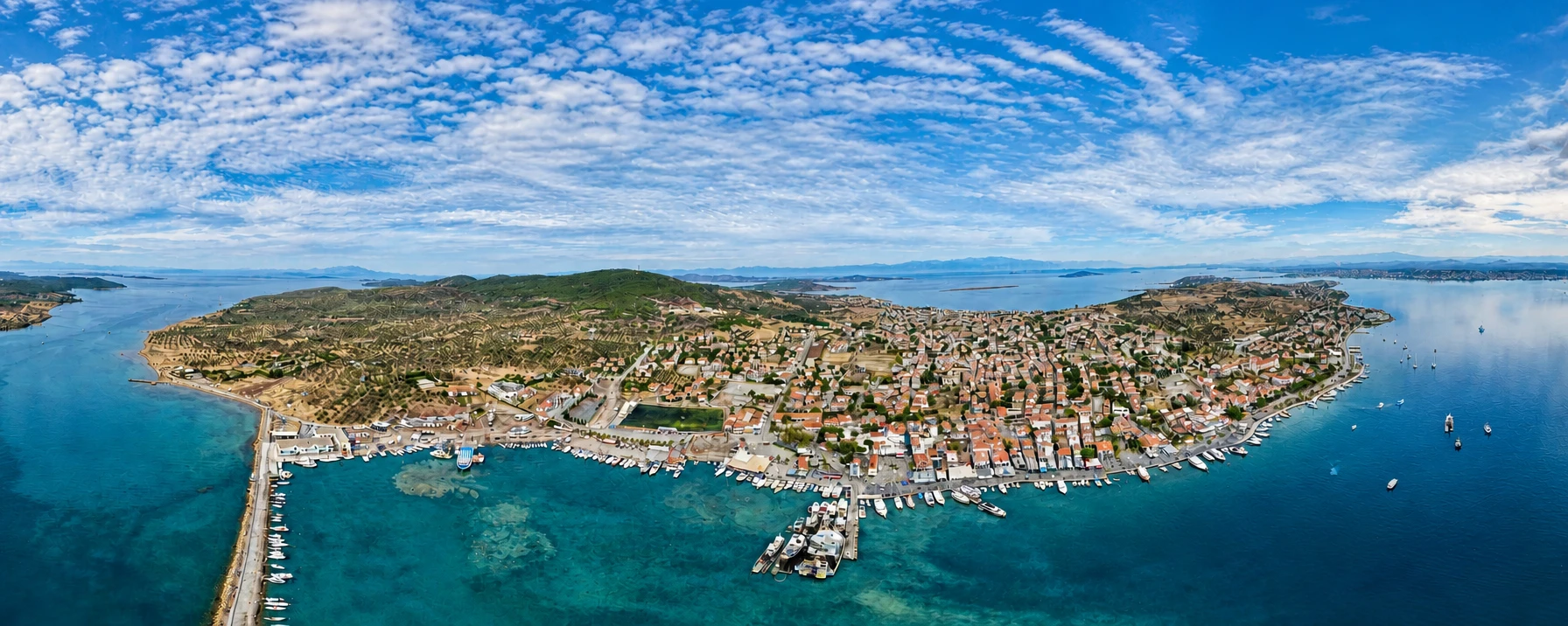
Cross to Alibey Island for stone streets, waterfront restaurants, historic churches, old windmills and another beautiful Aegean sunset atmosphere.
View Cunda Guide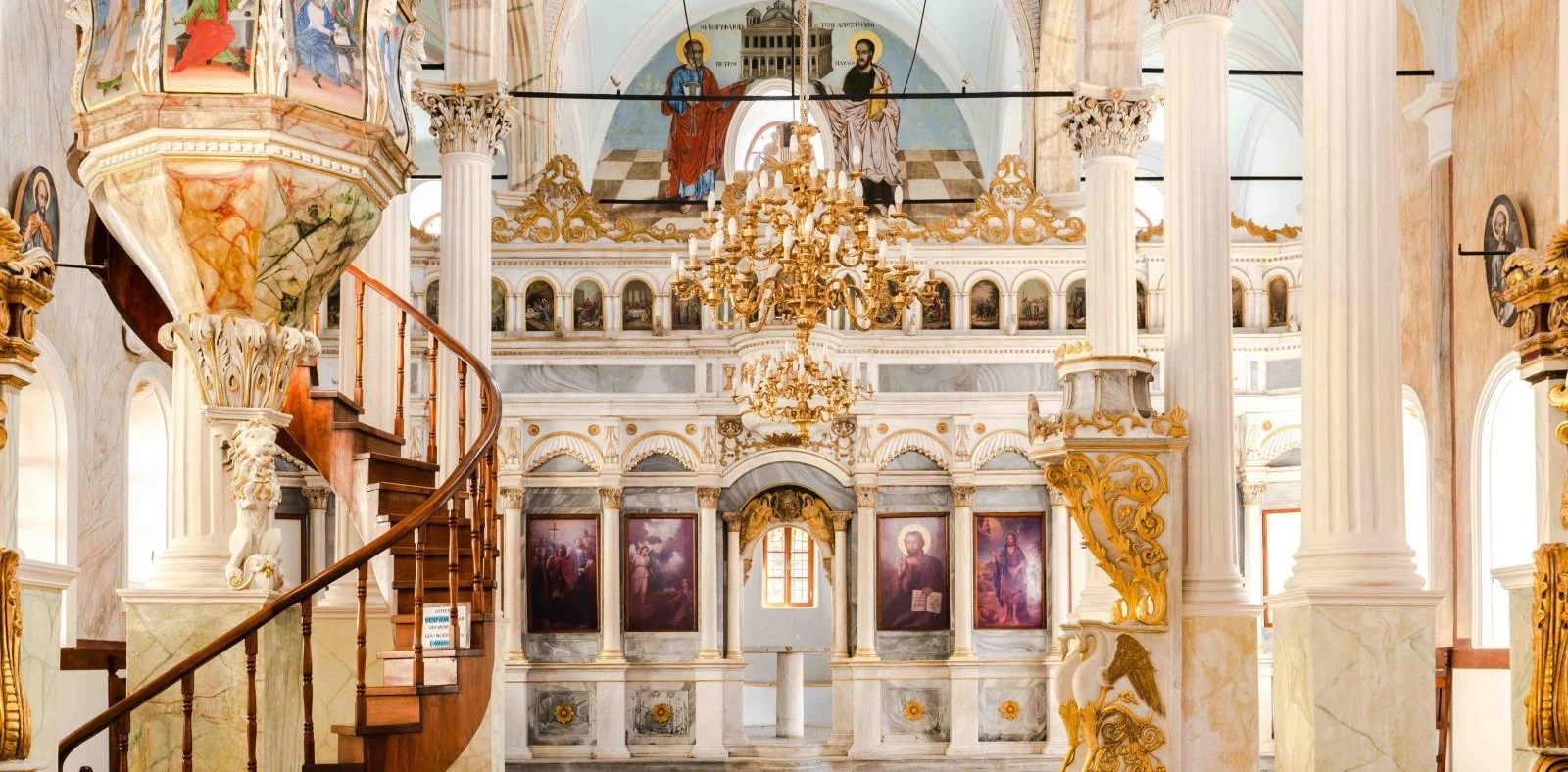
Step inside one of central Ayvalık's most important historic churches, filled with painted vaults, marble work, gilded decoration and Orthodox iconography.
View Taksiyarhis Guide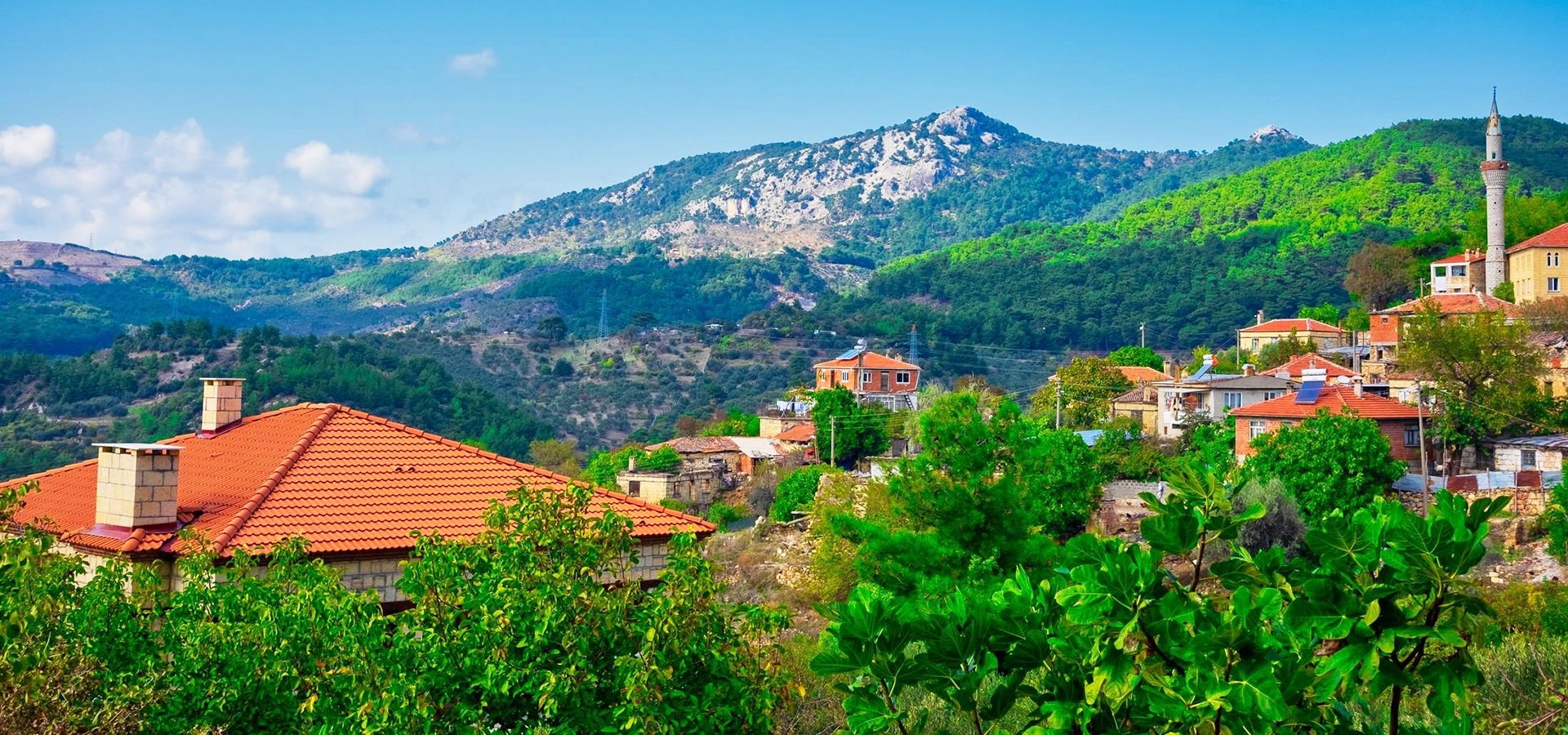
Continue through northern Aegean mythology and nature with forested mountains, springs, traditional villages and landscapes associated with ancient Mount Ida.
View Mount Ida Guide