Private Otağtepe & Bosphorus Route
Ask us about a tailor-made route combining Otağtepe Fatih Grove, Kanlıca, Anadolu Hisarı, Küçüksu Pavilion and other Asian-side Bosphorus highlights.
Request a Custom Tour





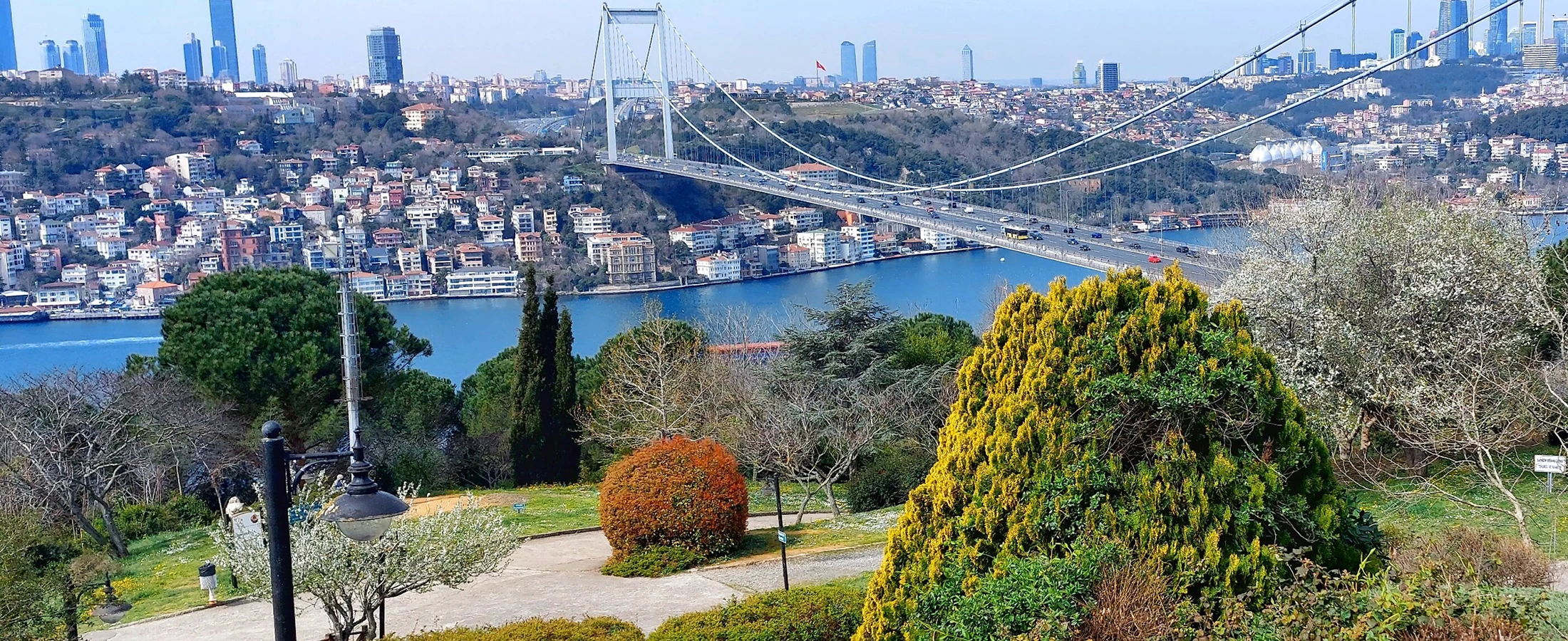
High above the Asian shore of the Bosphorus, immediately beside the northern approaches of the Fatih Sultan Mehmet Bridge, a landscaped green hillside opens toward one of the most dramatic panoramas in Istanbul.
This is Otağtepe Fatih Grove — Otağtepe Fatih Korusu, a peaceful viewpoint and walking area in the Kavacık neighborhood of Beykoz.
From its terraces and paths, visitors can look directly across the Bosphorus toward the European shore while the immense suspension structure of the Fatih Sultan Mehmet Bridge cuts across the landscape below.
Farther along the water, the towers and walls of Rumeli Hisarı — Rumeli Fortress can be recognized on the opposite bank, creating one of Istanbul's most striking combinations of nature, history and modern engineering.
The grove is also historically interesting.
The Otağtepe area is associated in local history with Ottoman military encampments during the period when Constantinople was repeatedly besieged, while the modern landscaped park owes much of its appearance to a major environmental project undertaken by the TEMA Foundation with support from the Vehbi Koç Foundation beginning in the 1990s.
Today Otağtepe is best experienced not as a conventional picnic park or entertainment destination, but as a scenic garden, walking area and panoramic Bosphorus viewpoint.
See one of the widest and most memorable elevated views of the central Bosphorus from Istanbul's Asian side.
Photograph Istanbul's second Bosphorus bridge from remarkably close viewpoints surrounded by lawns, trees and landscaped terraces.
Discover a hill associated with the Ottoman sieges of Constantinople and the strategic geography of the Bosphorus.
Walk through landscaped paths, lawns, terraces, trees and planted areas far removed from the atmosphere of central Istanbul's busiest monuments.
Essential information about Otağtepe Fatih Grove's location, Bosphorus views, history, TEMA landscape project, photography, visiting conditions, transportation and the best way to plan your visit.
Kavacık, Beykoz, on Istanbul's Asian side immediately beside the Fatih Sultan Mehmet Bridge.
Panoramic views over the Bosphorus and one of the closest elevated viewpoints of the Fatih Sultan Mehmet Bridge.
A landscaped historic grove, public green space, walking area and panoramic viewpoint.
Lawns, planted gardens, trees, shrubs, walking paths, terraces, viewpoints and changing Bosphorus perspectives.
Bosphorus photography, bridge views, landscape photography, relaxed walking and a quieter Asian-side Istanbul experience.
The landscape was extensively developed by TEMA with financial support from the Vehbi Koç Foundation beginning in 1995.
Entry has generally been free, but visitors should check current access arrangements before travelling.
Allow approximately one to two hours, or longer when combining Otağtepe with Kanlıca, Anadolu Hisarı or Küçüksu.
Otağtepe Fatih Grove is important because it combines one of Istanbul's great natural viewpoints with an unusual meeting of Ottoman history, Bosphorus geography, environmental restoration and modern infrastructure.
Its position is exceptional.
The grove occupies high ground immediately above the Asian shore near one of the narrowest and historically most strategic sections of the Bosphorus.
From here visitors can understand the geography of Istanbul in a way that is difficult from street level.
The European and Asian hillsides rise sharply on both sides of the water, historic settlements occupy sheltered bays, fortifications guard the strait and the immense Fatih Sultan Mehmet Bridge connects the two continents almost directly in front of the viewpoint.
Otağtepe is also a significant example of urban environmental rehabilitation.
Beginning in the 1990s, TEMA transformed and planted the site with support from the Vehbi Koç Foundation, creating the terraces, vegetation and recreational landscape that helped establish its modern character.
For visitors today, the result is one of Istanbul's most rewarding places to experience landscape rather than monuments.
There is no single palace, mosque or museum that defines the visit.
Instead, Otağtepe is about the relationship between green space, topography, water, bridge, historic fortifications and the extraordinary physical setting of Istanbul itself.
The history of Otağtepe begins with its location.
Long before the modern bridge, highways and residential neighborhoods transformed Kavacık, the high ground above this section of the Bosphorus had obvious strategic importance.
The Turkish word otağ refers to a large ceremonial or military tent, especially one associated with rulers and commanders.
The name Otağtepe can therefore be understood as approximately "Tent Hill" or "Encampment Hill."
Local historical material published by Beykoz Municipality associates the hill with Sultan Yıldırım Bayezid, who is said to have established his imperial encampment in this area during his attempts to besiege Constantinople at the end of the 14th century.
Bayezid repeatedly pressured Byzantine Constantinople and strengthened Ottoman control around the Bosphorus long before the final conquest of 1453.
The landscape therefore belonged to a much larger strategic zone surrounding the city.
Across and along the strait, hills, valleys and shorelines that today appear primarily scenic were once essential to controlling movement between the Black Sea and Constantinople.
The easiest way to understand Otağtepe's historical significance is to look at the Bosphorus itself.
Only a short distance south of the grove stands Anadolu Hisarı, the Ottoman fortress commissioned by Sultan Bayezid I near the end of the 14th century.
Across the water stands Rumeli Hisarı, constructed by Sultan Mehmed II in 1452 as he prepared for the final conquest of Constantinople.
Together, the two fortresses demonstrate the extraordinary strategic importance of this narrow section of the Bosphorus.
Control of the strait meant influence over shipping between the Black Sea and Constantinople.
From the hills around Otağtepe, the logic of these fortifications becomes immediately visible.
The Asian and European shores approach one another closely, steep hills dominate the water and movement through the strait can be observed across a wide area.
The modern Fatih Sultan Mehmet Bridge now crosses almost the same strategic corridor that Ottoman rulers once sought to control militarily.
Few viewpoints in Istanbul reveal the continuity between geography, military history and modern transportation so clearly.
The landscaped Otağtepe visitors experience today is largely the result of an ambitious environmental project that began in the 1990s.
In 1995, the General Directorate of Highways allocated the site to the TEMA Foundation under a protocol.
TEMA developed the area as a grove and environmental landscape under the name Fatih Korusu TEMA Vehbi Koç Doğa ve Kültür Merkezi.
The landscaping program was extensive.
According to TEMA, approximately 2,645 trees and 12,355 additional plants were planted.
Approximately 20,655 square meters of lawn were established, while irrigation infrastructure, paths, terraces, seating areas, pergolas, a pond, a stone bridge and other landscape elements were also created.
Financial support for the project was provided by the Vehbi Koç Foundation.
These works transformed the site into a carefully maintained urban green landscape while preserving its extraordinary relationship with the Bosphorus.
TEMA's official allocation ended in 2011, and the site was formally returned to the General Directorate of Highways in July 2013.
Otağtepe is different from Istanbul's larger natural forests and historic hunting grounds.
Its character comes from a combination of carefully landscaped gardens and the natural topography of the Bosphorus hills.
Walking paths descend and curve between lawns, shrubs and groups of trees.
Changes in elevation constantly reveal new perspectives.
At one moment the Fatih Sultan Mehmet Bridge dominates the view; a few steps later, vegetation frames the European shore or a long section of the Bosphorus.
The landscaping is especially effective because it does not compete with the panorama.
Low plantings and open lawns preserve major sightlines, while taller trees create shade and foreground framing for photographs.
Terraces and seating areas invite visitors to stop rather than simply walk through the site.
The result feels somewhere between a botanical garden, a neighborhood park and a panoramic observation area.
The principal reason most visitors come to Otağtepe is the Bosphorus panorama.
The elevated position allows the strait to be seen not as a narrow strip of water between buildings but as a complete geographical landscape.
The hills of Europe and Asia rise on either side, neighborhoods follow the shoreline and the water curves away toward central Istanbul.
The view is particularly interesting because the grove stands beside the Fatih Sultan Mehmet Bridge rather than directly underneath it.
This provides enough distance to appreciate the complete scale of the bridge while remaining close enough for its towers, cables and roadway to dominate the composition.
Across the Bosphorus, the green and built-up hills surrounding Rumeli Hisarı form the visual counterpoint to Kavacık and Anadolu Hisarı on the Asian side.
When atmospheric conditions are clear, the depth of the panorama is remarkable.
On hazy days, however, distant districts can almost disappear.
Few places provide a better land-based view of the Fatih Sultan Mehmet Bridge.
Opened in 1988, the bridge was Istanbul's second permanent road crossing over the Bosphorus after the original Bosphorus Bridge, today officially called the 15 July Martyrs Bridge.
The Fatih Sultan Mehmet Bridge connects the European and Asian sides between the Rumelihisarı–Hisarüstü area and Kavacık.
From Otağtepe, the bridge becomes part of the landscape rather than simply a transportation structure.
Its towers rise above the trees, the suspension cables create enormous geometric curves and vehicles cross continuously between two continents.
The contrast is particularly strong from the landscaped foreground of the grove.
Flowers, lawns and trees occupy the lower part of the view while steel cables, urban neighborhoods and the Bosphorus fill the distance.
This combination makes Otağtepe one of Istanbul's strongest locations for photographing nature and infrastructure together.
Across the Bosphorus, one of Istanbul's most important Ottoman monuments forms part of the Otağtepe panorama.
Rumeli Hisarı was built for Sultan Mehmed II in 1452, only months before the conquest of Constantinople.
The fortress occupied a strategic point opposite Anadolu Hisarı and helped the Ottomans control maritime traffic through the Bosphorus.
From Otağtepe, visitors can see why the location was chosen.
The European and Asian shores narrow dramatically here, creating a natural strategic gateway.
The Fatih Sultan Mehmet Bridge now rises above approximately the same historic corridor.
Seeing the modern bridge, the fortress landscape and the Bosphorus together provides an unusually powerful visual summary of more than five centuries of Istanbul history.
Otağtepe does not have only one fixed observation platform.
The experience develops gradually as visitors move between paths, terraces and open areas.
Look for open areas where the full span and towers of the Fatih Sultan Mehmet Bridge appear above the landscaped foreground.
Descending paths create excellent compositions with wooden railings, vegetation and the Bosphorus appearing progressively in the distance.
Wider grassy sections are useful when you want an uncluttered panorama rather than a tightly framed bridge photograph.
Branches and foliage can naturally frame the bridge and European shore, especially in spring and early autumn.
Look beyond the bridge toward the European shoreline for historical context and views toward the fortress landscape.
Higher sections reveal a broader relationship between the garden, bridge, Bosphorus and surrounding Kavacık hills.
One of the best seasons for fresh greenery, flowering plants, comfortable walking temperatures and colorful foregrounds.
The gardens are intensely green, although increasing humidity can create haze over the Bosphorus.
Expect strong sunlight and warm conditions. Morning visits are generally more comfortable than midday.
A particularly atmospheric period as foliage begins changing color and cooler air can improve visibility.
Vegetation is less dramatic, but crisp winter air can produce exceptionally clear long-distance Bosphorus views.
Often one of the best moments for photography because atmospheric haze can temporarily clear.
Excellent for quieter paths, softer light, clearer air and a more peaceful garden atmosphere.
A good general visiting period, particularly outside the busiest weekend hours.
The angle of light can become excellent for the bridge and European-side hills, depending on season and weather.
Visibility matters more here than almost anything else. Choose a low-haze day whenever possible.
Preferable for photography and a more peaceful experience, particularly during spring and autumn.
The strongest overall combination of garden color, comfortable temperatures and atmospheric Bosphorus views.
Enough for the principal panorama and several quick photographs if Otağtepe is only one stop on a longer route.
A good minimum for walking through the main landscaped sections and visiting several different viewpoints.
Ideal for a relaxed first visit with photography, garden walking and time to sit and enjoy the Bosphorus.
Recommended for photographers or visitors who want to explore the grove slowly rather than treating it only as a viewpoint.
Combine Otağtepe with Kanlıca, Mihrabat Grove or Anadolu Hisarı.
Add Küçüksu Pavilion, Beylerbeyi, Çengelköy or other Asian-shore neighborhoods.
Otağtepe is one of the strongest photography locations on Istanbul's Asian side.
Unlike observation decks surrounded by buildings or railings, the grove provides natural foreground elements that allow photographers to create depth.
Paths, flowers, lawns, branches and shrubs can all be incorporated into the image before the eye reaches the bridge and Bosphorus.
Frame a descending garden path in the foreground with the Fatih Sultan Mehmet Bridge stretching across the Bosphorus behind it.
Use an open lawn or terrace to capture the grove, bridge, water and both continental shorelines in a single image.
Compress the bridge, Rumeli Hisarı area and European-side neighborhoods to emphasize Istanbul's dense geography.
Use branches, flowering plants or autumn foliage around the edge of the composition rather than photographing only the bridge.
Choose a clear day following rain when atmospheric haze is low and the European shore appears sharply defined.
Visit on a weekday morning when popular viewpoints are less likely to be occupied by large groups.
Otağtepe can be a pleasant stop for families looking for a quieter alternative to Istanbul's busy museums and historic districts.
The landscaped paths and open green spaces allow children to experience a more relaxed environment while adults enjoy the Bosphorus views.
However, families should remember that Otağtepe is primarily a landscape and viewpoint destination.
It should not be approached as a major amusement park or picnic complex.
Some sections involve slopes, steps and elevated viewpoints, so younger children should remain supervised.
A visit of approximately one hour is generally enough for families unless Otağtepe forms part of a longer nature-focused day.
Otağtepe contains maintained paths and landscaped areas, but its hillside location means that gradients vary considerably.
Some principal areas may be manageable for visitors with limited mobility, while other sections involve slopes or steps.
Wheelchair users and visitors with mobility aids should not assume that every viewpoint or garden path is equally accessible.
Families using strollers will generally find the broader paths easier than routes involving stairs or steeper transitions between terraces.
If accessibility is central to your visit, checking current entrance arrangements and the easiest accessible route before travelling is recommended.
Otağtepe is best treated as a protected landscaped viewpoint and walking area rather than a conventional picnic ground.
Visitors should not assume that barbecues, large picnic setups or unrestricted food consumption are permitted.
Facilities and regulations can change, and the site's landscaped character requires stricter protection than many ordinary municipal parks.
For a meal or café stop, nearby Kanlıca is a much better option.
The historic Bosphorus neighborhood is famous for its waterfront atmosphere and traditional Kanlıca yogurt, making it an easy continuation after visiting Otağtepe.
Otağtepe Fatih Grove is located in Kavacık in the Beykoz district on Istanbul's Asian side.
It lies close to the Asian approach of the Fatih Sultan Mehmet Bridge and is therefore much easier to reach by road than its peaceful appearance might suggest.
Visitors using public transport generally travel first toward Kavacık and then continue toward Otağtepe by local transport, taxi or walking depending on the exact connection.
Because Istanbul's public transport routes change periodically, checking a live navigation application on the day of travel is preferable to relying on a fixed bus number published years in advance.
Use a northbound bus connection toward Beykoz or Kavacık and continue toward Otağtepe from the nearest convenient stop.
Travel toward the Bosphorus or Kavacık using current public transport connections; a taxi may be easier when travelling in a small group.
Cross to the Asian side by ferry or road and continue toward Kavacık. The best route depends heavily on your starting district and traffic.
A taxi or private vehicle using the Fatih Sultan Mehmet Bridge corridor can be practical outside peak traffic periods.
One of the simplest options because the entrance lies away from Istanbul's main tourist walking routes.
Approach via Kavacık and follow current navigation toward Otağtepe. Parking conditions should be checked locally.
Otağtepe operates with controlled daytime access and closing times can change. Verify current information before making a special journey.
The quality of the experience depends heavily on Bosphorus visibility, so avoid extremely hazy weather if possible.
Weekday mornings generally provide a quieter atmosphere for walking and photography.
Paths are landscaped, but the terrain includes gradients and sections of steps.
The elevated position beside the Bosphorus can feel noticeably windier than sheltered neighborhoods nearby.
The combination of gardens, Bosphorus, bridge and European shoreline makes Otağtepe exceptionally photogenic.
Do not assume that ordinary picnic-park rules apply. Follow all signs concerning food, picnicking and protected areas.
Kanlıca, Anadolu Hisarı and Küçüksu Pavilion fit naturally into the same Asian-side Bosphorus itinerary.
Otağtepe is compact enough to explore without a complicated route, but moving slowly through the different elevations produces a much better experience than walking directly to one viewpoint and leaving.
One hour is enough for a satisfying first visit if your priority is the panorama rather than detailed nature photography.
Otağtepe becomes even more rewarding when combined with the historic neighborhoods and monuments immediately south along the Asian Bosphorus.
History lovers can use Otağtepe as the starting point for a route focused on the strategic geography of the Bosphorus.
Together these places explain how the Bosphorus changed from a medieval military frontier into an Ottoman imperial landscape and finally into the modern metropolitan corridor visible today.
Visit one of the Asian Bosphorus's best-known waterfront neighborhoods, famous for its historic ferry pier, small square and traditional yogurt.
Explore another historic green area above Kanlıca with elevated Bosphorus views and a very different atmosphere from Otağtepe.
Discover the Ottoman fortress built under Sultan Bayezid I near the narrowest part of the Bosphorus.
Visit an elegant 19th-century Ottoman imperial pavilion beside the Göksu and Küçüksu streams.
See the monumental fortress built by Mehmed II in 1452 directly across the Bosphorus from the Asian shore.
Continue south to one of the Bosphorus's great 19th-century Ottoman summer palaces.
Experience another atmospheric Asian-side Bosphorus neighborhood known for tea gardens, historic houses and waterfront life.
Continue planning with Istanbul's palaces, mosques, churches, museums, parks, viewpoints and historic neighborhoods.
Otağtepe Fatih Grove is in Kavacık in Istanbul's Beykoz district, on the Asian side of the Bosphorus beside the Fatih Sultan Mehmet Bridge.
Yes. It offers one of the best elevated views of the Bosphorus and Fatih Sultan Mehmet Bridge and is particularly rewarding for photography, landscape lovers and visitors exploring Istanbul's Asian side.
It is best known for panoramic views over the Bosphorus, particularly the close view of the Fatih Sultan Mehmet Bridge and the European-side hills around Rumeli Hisarı.
The word otağ refers to a large ceremonial or military tent. Otağtepe can therefore be translated approximately as “Tent Hill” or “Encampment Hill.”
The hill is widely associated with Ottoman military history, but local Beykoz historical material specifically connects the Otağtepe name with an encampment of Yıldırım Bayezid during his sieges of Constantinople. Claims that Mehmed II definitely camped on this exact location should therefore be treated cautiously.
Fatih Korusu is the modern name used for the landscaped grove. The area later became widely known through the TEMA environmental project as Fatih Korusu TEMA Vehbi Koç Doğa ve Kültür Merkezi.
Beginning in 1995, TEMA developed and planted the area with financial support from the Vehbi Koç Foundation, creating extensive gardens, trees, lawns, paths, terraces and other landscape infrastructure.
No. TEMA states that its allocation ended in 2011 and that the site was formally returned to the General Directorate of Highways in 2013.
Entry has generally been free. Because visitor policies can change, check current information before travelling.
The grove normally operates during daytime hours, but seasonal and administrative changes are possible. Confirm the current opening and closing times before making a special journey.
Yes. The bridge is the dominant feature of the panorama and Otağtepe provides one of its finest elevated land-based viewpoints.
Yes. The Rumeli Hisarı area lies across the Bosphorus and forms part of the historic panorama visible from the grove, particularly in clear weather.
Allow approximately one to two hours. Thirty minutes can be enough for a quick viewpoint stop, while photographers may want considerably longer.
Weekday mornings are excellent for quieter paths and clear light. Spring and autumn offer the strongest combination of garden scenery and comfortable temperatures.
Yes. It is one of Istanbul's strongest viewpoints for photographing the Bosphorus and Fatih Sultan Mehmet Bridge with landscaped vegetation in the foreground.
The landscape can be beautiful in late-afternoon light, but access is controlled by daytime operating hours. Check the current closing time before planning specifically for sunset.
Popular viewpoints can become busy during good weather and on weekends. Weekday mornings are usually a better choice for peaceful walking and photography.
Otağtepe should be treated primarily as a protected landscaped garden and viewpoint rather than a conventional picnic area. Follow current signs and regulations concerning food and picnicking.
Visitors should not plan on barbecuing or lighting fires. The grove is a carefully landscaped green area and all current fire and park regulations must be followed.
Facilities can change and visitors should not rely on finding a full café or restaurant service inside the grove. Nearby Kanlıca offers much better options for eating and drinking.
Yes, particularly for a short nature and viewpoint visit. Children should be supervised around slopes, steps and elevated viewing areas.
Some principal paths may be accessible, but the hillside terrain means that not every section is equally suitable for wheelchairs or visitors with limited mobility.
Strollers are easiest on wider maintained paths, while stairs and steeper sections may require an alternative route.
Yes. Kanlıca is one of the easiest places to combine with Otağtepe and provides a pleasant waterfront stop for tea, food or traditional Kanlıca yogurt.
Yes. Anadolu Hisarı lies nearby and creates an excellent historical combination with Otağtepe's views over the strategic Bosphorus narrows.
Yes. Küçüksu Pavilion, Anadolu Hisarı and Otağtepe can easily form part of the same half-day Asian Bosphorus itinerary.
No. The grove is easy to enjoy independently. A knowledgeable guide becomes more valuable when Otağtepe is combined with Anadolu Hisarı, Küçüksu, Ottoman Bosphorus history or a wider Asian-side itinerary.
Stay outside planted beds and do not damage flowers, shrubs or young trees for photographs.
Use established walking routes rather than creating shortcuts across landscaped areas.
Never use barbecues, open flames or other fire sources unless expressly permitted by current regulations.
Observe birds and small animals quietly without chasing, feeding or disturbing them.
Avoid blocking narrow terraces or paths with large photography equipment for extended periods.
Take all rubbish with you or dispose of it in designated bins.
Do not climb railings or enter closed sections simply to obtain a different view.
Temporary restrictions may protect vegetation, visitors or the site during maintenance and severe weather.
Discover Otağtepe as part of a private Istanbul route connecting spectacular Bosphorus viewpoints, Ottoman history, palaces, fortresses, waterfront neighborhoods and local Asian-side life — without compulsory shopping stops.
Create a private route focusing on Bosphorus scenery, photography, Ottoman history, gardens and waterfront neighborhoods according to your interests and available time.
Ask us about a tailor-made route combining Otağtepe Fatih Grove, Kanlıca, Anadolu Hisarı, Küçüksu Pavilion and other Asian-side Bosphorus highlights.
Request a Custom Tour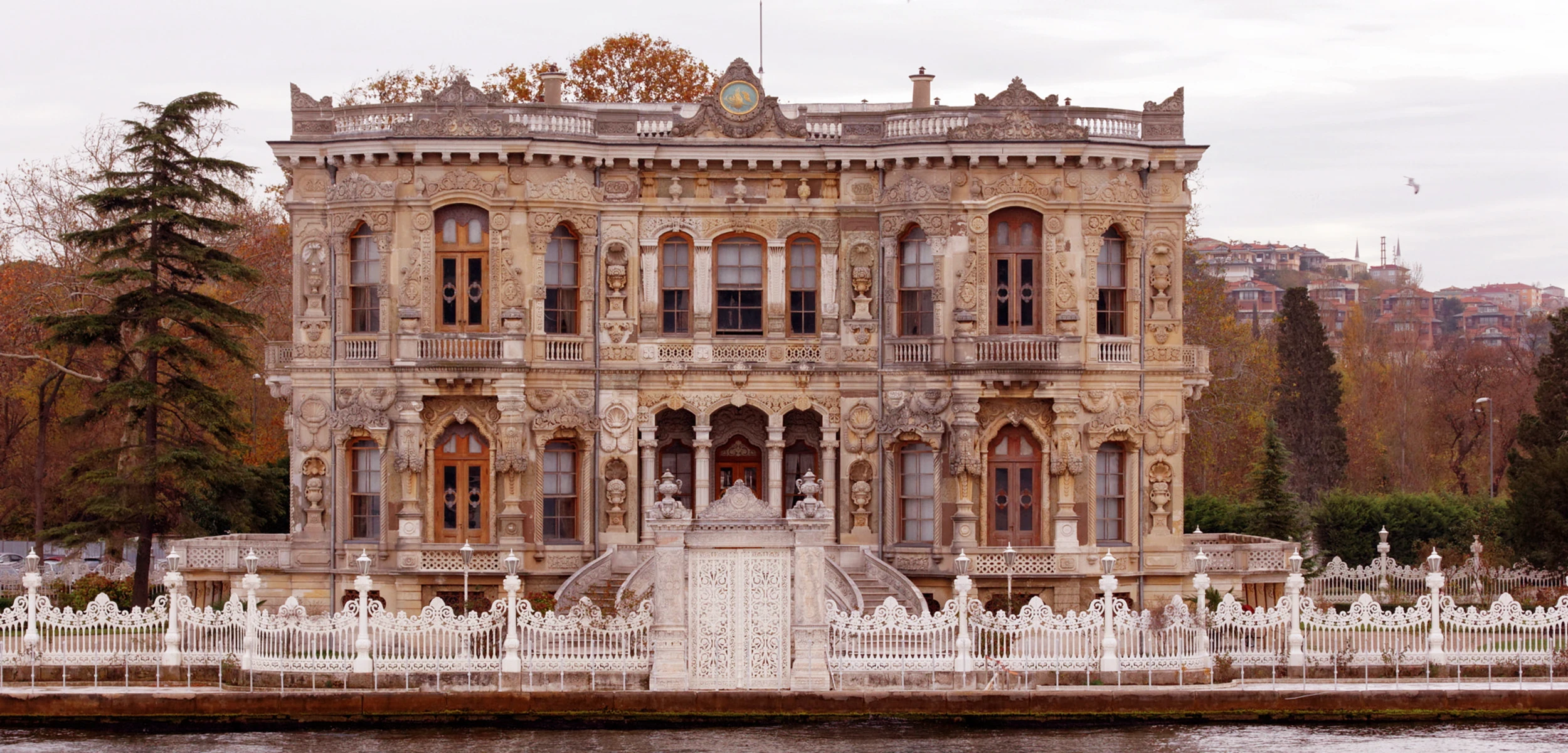
Pair Otağtepe's panoramic landscape with one of the Asian Bosphorus's most elegant Ottoman imperial pavilions.
Explore Küçüksu PavilionCombine Otağtepe with Anadolu Hisarı, Beylerbeyi Palace, Çengelköy, Üsküdar, Asian-side neighborhoods, Bosphorus viewpoints or other places according to your interests.
Create a private Istanbul itinerary around Byzantine and Ottoman history, architecture, museums, gardens, neighborhoods, food and Bosphorus scenery.
View Private Istanbul Tours
Continue planning with Istanbul's mosques, churches, palaces, museums, bazaars, parks, Bosphorus districts and historic neighborhoods.
Explore Istanbul