About 90 g
The fruit averages around 90 grams, with a registered range of 85–95 grams.






Havran Mandalinası is a geographically protected Satsuma mandarin grown in Havran district of Balıkesir Province. Its protected identity combines an early-ripening fruit, dark-orange appearance, thin peel, easy peeling and production conditions shaped by Havran's low-altitude alluvial landscape.
The official specification identifies Havran Mandalinası as a Satsuma mandarin within the Citrus reticulata group. The fruit averages about 90 grams, usually contains 10–11 segments, and reaches harvest maturity from October, with the harvest season continuing until January.
Havran Mandalinası received Turkish geographical-indication registration in 2023. It is protected as a Mahreç İşareti under TÜRKPATENT registration No. 1446, with the geographical boundary defined as Havran district in Balıkesir.
Havran Mandalinası is registered by TÜRKPATENT as geographical indication No. 1446.
The protected fruit reaches natural orange colour, brightness and harvest maturity beginning in October.
The registration describes the fruit as dark orange with a thin peel that separates easily.
All registered production stages must take place within Havran district.
Essential information about one of Balıkesir's protected citrus products.
Havran district in Balıkesir Province, western Türkiye.
Open Havran on Google MapsA protected Satsuma mandarin with dark-orange skin, thin peel and easy peeling.
TÜRKPATENT Mahreç İşareti registration No. 1446.
Harvest begins in October and can continue until January.
Havran's mandarin tradition reflects the district's mild coastal influence, fertile soils and long connection with fruit growing.
Havran Mandalinası has an established reputation within the district and an important place in the local economy. Its geographical indication recognises not only the fruit's measurable characteristics but also the connection between the product and Havran's agricultural landscape.
The registered fruit is a Satsuma mandarin, an early-ripening citrus type valued for its thin skin and easy peeling. Under Havran conditions, the fruit develops a dark-orange appearance and reaches harvest maturity beginning in October.
The official specification links its development with Havran's natural setting: the district lies at roughly 33 metres above sea level, receives humid air moving inland from the Aegean, has alluvial soils, and is influenced by moisture associated with Havran Stream.
In 2023, this regional reputation and production tradition were formally recognised when Havran Mandalinası was registered as a Turkish geographical indication.
Fruit size, peel structure, juice content, segment count and aromatic compounds all help define the registered product.
The fruit averages around 90 grams, with a registered range of 85–95 grams.
The protected description identifies a characteristic dark-orange external appearance.
The peel measures approximately 3.5–4.0 mm in the registered physical profile.
One of its defining consumer characteristics is a peel that separates easily from the fruit.
The protected fruit typically contains between ten and eleven segments.
The registered physical specification gives a fruit-juice proportion of 33–35%.
Havran Mandalinası is described as an early variety, reaching harvest maturity in October.
All protected production stages take place within Havran district.
Havran Mandalinası is a protected Satsuma mandarin grown in Havran district of Balıkesir Province. It belongs to the Rutaceae family and the citrus group identified in the official registration as Citrus reticulata.
The protected name refers to fruit produced according to a defined regional specification. It therefore represents more than a generic Satsuma sold in Havran: the geographical indication sets out the production area, propagation and orchard practices, physical fruit characteristics, harvest method, storage requirements, labelling and inspection.
The registered product belongs to the Satsuma mandarin group.
The fruit develops its mature orange colour and flavour beginning in October.
Thin skin and easy peeling are central parts of the protected product description.
The fruit's reputation, cultivation and registered production system are connected directly with the district.
Havran Mandalinası is registered by the Turkish Patent and Trademark Office as a Mahreç İşareti. The registration defines its geographical area, fruit characteristics, production method, harvesting, storage, labelling and inspection system.
Havran Mandalinası
The TÜRKPATENT geographical-indication registration number is 1446.
The official application number is C2021/000552.
The application was filed on 29 December 2021.
The geographical indication was registered on 9 August 2023.
The registration holder is Havran Municipality.
The protected designation is a Mahreç İşareti.
The registered geographical area is Havran district, Balıkesir Province.
A Turkish Mahreç İşareti protects a product whose distinctive quality, reputation or other characteristics are associated with a defined geographical area.
For Havran Mandalinası, the registered specification is especially place-focused: it states that all production stages must occur within the defined geographical boundary because of the product's reputation and its connection with Havran's economy and culture.
The protected geographical boundary is Havran district in Balıkesir.
Weight, peel thickness, segment count, juice content and other physical characteristics are specified.
Propagation, orchard establishment, irrigation, pruning, harvest and storage are documented.
Production area, method, physical characteristics and use of the protected name are inspected.
The official registration links Havran Mandalinası with a combination of local environmental conditions. Havran lies at approximately 33 metres above sea level, close enough to the Aegean to receive moist maritime air while remaining part of an agricultural inland valley system.
The specification also highlights the district's alluvial soils and humidity created by evaporation from Havran Stream. Together, these factors contribute to the conditions in which the protected mandarin develops.
Havran's elevation is given as approximately 33 metres above sea level.
Moist winds from the Aegean contribute to the citrus-growing environment.
The district's alluvial soil structure forms part of the registered geographical explanation.
Moisture associated with evaporation from the stream contributes to local humidity.
Havran Mandalinası grows on evergreen citrus trees that can reach approximately 4–5 metres in height. The trees flower with white blossoms in April and May and begin setting fruit in June.
Once an orchard is established, the trees generally begin fruiting after about 4–5 years. Their registered economic production life is described as approximately 40–60 years.
Mature trees can grow to approximately four to five metres.
The citrus foliage remains green throughout the year.
White citrus blossoms appear during spring.
The trees begin setting the season's fruit around June.
Newly planted trees generally require several years before regular fruit production begins.
The registered specification gives a long economic production life for established trees.
The geographical-indication registration includes measurable physical ranges that help distinguish the protected fruit.
The official registration also records principal components detected in the fruit's volatile-oil analysis. These figures are part of the documented technical profile of Havran Mandalinası.
The registered production method describes propagation using trifoliate orange (Poncirus trifoliata) as rootstock. Seeds are sown in spring, typically during March and April, to produce rootstock seedlings onto which mandarin material is grafted.
Budding is the principal grafting technique described for citrus production. The specification emphasises the use of healthy, certified or controlled nursery plants in order to reduce the risk of bacterial and viral diseases.
Poncirus trifoliata is used to produce the rootstock seedlings.
Rootstock seeds are sown during March and April.
Bud grafting is the preferred technique described in the protected production method.
Certified or controlled plants are required to protect orchard health.
The official specification sets practical requirements for orchard establishment. Heavy clay soils with a high water table are avoided, while planting takes place in spring once soil temperature reaches approximately 13°C.
Trees are planted in holes approximately 40–50 cm wide and deep, normally at spacings of 5.5 × 5.5 metres or 6 × 6 metres. The graft union is kept above soil level and newly planted trees receive water immediately.
Planting begins once soil temperatures become suitable for young citrus trees.
The specification uses approximately 13°C as the spring planting threshold.
Orchards use generous spacing to allow tree development and access.
The grafting point is kept above the soil surface during planting.
Registered orchard practice calls for regular irrigation from approximately mid-April until the end of October. Drip irrigation is preferred because it delivers water efficiently around the root zone.
During especially dry summer periods, irrigation frequency can be increased. Because citrus feeder roots remain relatively close to the soil surface, orchard management also avoids unnecessarily deep cultivation around the trees.
Regular seasonal watering begins as spring growth becomes active.
Irrigation continues through the principal fruit-development period.
Drip irrigation is identified as the preferred method.
Deep cultivation is avoided because citrus feeder roots lie close to the surface.
Pruning helps maintain a strong, balanced canopy, extend productive life and support fruit quality. The registered method recommends pruning outside periods of severe cold, usually in March when frost risk has passed.
Young trees are shaped around three or four principal branches. Once trees reach productive age, damaged, crossing and excessively vigorous shoots are removed while care is taken not to expose the trunk and main branches too heavily to direct sun.
Early spring is the principal pruning period described in the registration.
Young trees are trained to form a strong and evenly spaced framework.
Broken, dry, crossing and excessive shoots are cleaned from mature trees.
Pruning should not expose the trunk and major branches excessively to direct sunlight.
The annual cycle begins with white blossoms in April and May. Fruit set occurs around June, followed by development through summer and early autumn.
In October, the mandarins naturally develop their orange colour and brightness and reach harvest maturity. Picking can continue through January, making late autumn and early winter the most relevant period for travellers hoping to encounter the fruit in season.
White citrus blossoms appear on the evergreen trees.
The season's fruit begins to set.
The mandarins reach natural orange colour and begin to mature for harvest.
The registered harvest period can continue into mid-winter.
Harvest begins once the fruit reaches its natural orange colour, brightness and eating maturity. The mandarins are cut using harvest scissors so the fruit is removed without tearing or damaging the stem area.
The specification warns against harvesting during rainy or dew-covered conditions. Surface moisture can encourage decay, reduce shelf life and lower fruit quality. After picking, mandarins are placed carefully into crates to minimise bruising.
Fruit is harvested after it develops the expected natural colour and maturity.
Harvest scissors help protect the fruit and stem area.
Rainy or dew-heavy conditions are avoided because wet fruit is more vulnerable to spoilage.
Picked mandarins are arranged in crates without bruising or unnecessary pressure.
Most harvested Havran mandarins are intended to reach the market without long storage. When cold storage is necessary, the official specification allows the fruit to be kept at 6–8°C and 85–90% relative humidity.
Under those conditions, the registered maximum storage period is one month. Careful handling remains important because damage or surface moisture can shorten shelf life.
The registered temperature range for cold storage.
The specified relative-humidity range helps reduce dehydration during storage.
The maximum registered cold-storage period.
A large proportion of the crop is marketed without extended storage.
The most immediately recognisable qualities are physical: a deep orange appearance, relatively thin skin and an easy-peeling structure. Its 10–11 segments make it naturally convenient for eating fresh.
Rather than defining the protected fruit through subjective tasting language, the registration gives measurable qualities such as fruit size, juice proportion and dry matter. For travellers, the best way to understand the product is to taste it fresh during the October–January harvest period.
The thin skin separates readily, one of the fruit's most distinctive practical qualities.
The registered fruit contains approximately 33–35% juice.
The fruit divides naturally into a compact set of individual citrus segments.
Fresh harvest fruit offers the clearest way to experience Havran Mandalinası.
Havran Mandalinası is most naturally enjoyed fresh. Its easy-peeling skin makes it an uncomplicated seasonal fruit for breakfast tables, snacks, picnics and travel days.
For tasting, serve the fruit at a comfortable cool temperature rather than ice-cold so its citrus aroma is easier to notice. Wash the exterior before peeling, especially if the peel will be handled for zest or culinary use.
Peel and separate the segments just before eating.
Its compact size and easy peeling make it convenient on a Turkish breakfast table.
Autumn and winter are the natural months to enjoy Havran mandarins locally.
Fresh peel can add citrus fragrance to suitable sweet and savoury preparations.
Fresh eating is the most direct use, but mandarins also work well in fruit plates, salads, desserts, cakes, preserves, sauces and drinks. The peel can contribute aromatic citrus oils when recipes call for zest.
When using the protected fruit in cooking, keep preparation simple enough for its fresh citrus character to remain recognisable. The naturally segmented structure also makes it attractive for garnishes and seasonal breakfast presentations.
Serve whole or peeled as a simple seasonal snack.
Individual segments add colour and citrus freshness without much preparation.
Use juice, segments or zest in cakes, creams and other citrus-friendly sweets.
Mandarin flavour can be carried into jams, marmalades and syrups.
Fresh juice can be used in breakfast drinks, mocktails and other seasonal beverages.
The aromatic peel can be grated finely when recipes call for fresh citrus fragrance.
Not every Satsuma mandarin sold in Balıkesir is protected Havran Mandalinası. The geographical indication refers to fruit produced within the registered boundary and according to the official specification.
The registered usage rules require the wording Havran Mandalinası and the Mahreç İşareti emblem to appear on the product packaging. Where the emblem and wording cannot be placed on packaging, they must be displayed clearly at the business.
Look for the full protected wording Havran Mandalinası.
The Turkish Mahreç İşareti emblem identifies the registered geographical indication.
Protected production takes place within Havran district.
Fresh local harvest begins in October and can continue until January.
Choose fruit without major bruising, splitting or visible decay.
Clear provenance makes it easier to understand whether the fruit is genuinely from Havran.
For the best chance of finding genuinely local fruit, look during the registered harvest season and ask sellers directly about origin. Markets and produce shops in and around Havran are natural places to encounter the crop when it is fresh.
Select mandarins that feel sound for their size and have intact skin. Because colour develops naturally during the harvest season, appearance should be considered together with provenance and product identification rather than used as the only sign of authenticity.
October through January is the core period for freshly harvested Havran mandarins.
The geographical indication is tied specifically to Havran district.
Packaging or point-of-sale presentation should use the registered name and emblem appropriately.
Bruising, cuts and moisture damage can reduce quality and storage life.
Thin-skinned citrus benefits from careful transport and storage.
Fresh fruit is the simplest way to appreciate the product during its natural season.
October and November are especially relevant months for seeing the harvest season begin.
The registered harvest period can continue through January.
Citrus groves are working agricultural properties; enter only where access is permitted.
Local markets and produce sellers can help connect the fruit with its place of origin.
Eating a freshly peeled mandarin is the clearest introduction to the product.
Combine the food experience with the district's countryside, local history and nearby Edremit Gulf region.
Autumn orchards with orange fruit against evergreen leaves make especially strong travel images.
Avoid crushing fruit under heavy luggage during onward travel.
Havran Mandalinası is more than an orchard crop. The geographical-indication registration specifically notes its long history and its importance within the economy of the district, creating a recognised reputation link between the fruit and Havran.
Its season also gives it a clear place in the local calendar. The fruit matures as autumn advances, when orange mandarins stand out against dark evergreen foliage and fresh citrus begins appearing in markets across the region.
The mandarin crop marks an important autumn and winter phase in Havran agriculture.
The registration identifies the fruit as economically important within its geographical boundary.
Evergreen citrus groves form part of Havran's agricultural character.
The Mahreç İşareti formally recognises the fruit's established association with Havran.
For travellers interested in regional Turkish produce, Havran Mandalinası offers a clear example of how an everyday fruit can express a specific agricultural landscape. Its identity is built around place, season, orchard practice and measurable characteristics rather than a generic citrus label.
The most interesting way to experience it is in Havran during harvest season, when the connection between fruit, evergreen groves, local markets and the district's autumn landscape is easiest to see.
Fresh autumn and winter fruit shows the product in its natural harvest window.
Thin peel and easy separation make it particularly convenient to eat fresh.
The protected name connects the fruit directly with Havran's orchards and local economy.
The geographical indication documents the environmental and farming conditions behind the fruit.
Havran Mandalinası belongs to a wider Balıkesir food landscape shaped by olives, dairy products, grains, livestock, fruit and distinctive regional specialities.
Continue through the Gulf of Edremit with one of the region's defining olive-oil traditions.
Explore another protected product connected with the olive landscapes near Havran.
Move from citrus and olives to one of the northern Aegean's distinctive cheese traditions.
Discover Balıkesir's famous cheese-based dessert and one of the province's best-known sweet traditions.
Explore the foamy ayran culture of Susurluk and another protected Balıkesir speciality.
Continue inland with Balya's geographically protected traditional butter.
A Satsuma does not become Havran Mandalinası simply because it has thin skin or is sold in Balıkesir. The protected designation represents a defined combination of geographical origin, registered cultivation practices, measurable fruit characteristics, harvest procedures and official identification.
Protected Havran Mandalinası is tied specifically to Havran district.
Weight, segment count, peel thickness, juice and dry-matter ranges are documented.
Propagation, planting, irrigation, pruning and harvest practices are specified.
Fruit is harvested from October, using careful handling practices designed to protect quality.
The protected name and Mahreç İşareti emblem follow defined usage rules.
Production, physical characteristics and protected-name use are subject to formal controls.
Geographical-indication inspections are coordinated by Havran Municipality. The inspection body includes representatives from Havran Municipality, the Havran District Directorate of Agriculture and Forestry, Havran Chamber of Tradesmen and Havran Chamber of Agriculture.
Regular inspections are carried out at least once a year, with additional controls when needed or following complaints. The principal criteria include production within the geographical boundary, compliance with the registered production method, conformity with physical fruit characteristics, and correct use of the Havran Mandalinası name and Mahreç İşareti emblem.
Inspectors verify that protected fruit is produced within Havran district.
Registered orchard, harvest and handling requirements form part of the controls.
The fruit is checked against the documented protected product profile.
Correct use of Havran Mandalinası wording and the Mahreç İşareti emblem is inspected.
Havran Mandalinası is a geographically protected Satsuma mandarin grown in Havran district of Balıkesir Province.
The registered geographical boundary is Havran district in Balıkesir Province, Türkiye.
Yes. It is a registered Turkish geographical indication.
It is registered as a Mahreç İşareti.
The TÜRKPATENT registration number is 1446.
It was registered on 9 August 2023.
The official application number is C2021/000552.
The application was filed on 29 December 2021.
The registration holder is Havran Municipality.
It is a Satsuma mandarin within the citrus group identified in the registration as Citrus reticulata.
The official description characterises the mature fruit as dark orange.
Yes. Thin skin and easy peeling are specifically noted among its distinguishing characteristics.
The registered fruit weight is 85–95 grams, with an average of around 90 grams.
The protected specification gives a typical range of 10–11 segments.
The registered peel thickness is approximately 3.5–4.0 mm.
The official physical profile gives a juice proportion of approximately 33–35%.
The trees generally produce white flowers during April and May.
The registration describes fruit set beginning around June.
Harvest begins in October and can continue until January.
The fruit is cut with harvest scissors and handled carefully to avoid damage.
The protected method advises against harvesting during rainy or dew-covered conditions because moisture can increase spoilage and reduce shelf life.
When cold storage is necessary, the registration allows 6–8°C and 85–90% relative humidity for up to one month.
The trees can reach approximately 4–5 metres in height.
The registered economic production life is approximately 40–60 years.
The registration highlights the district's low elevation, Aegean-influenced humid air, alluvial soils and moisture associated with Havran Stream.
Look for the protected name, the Mahreç İşareti emblem where required, and reliable information showing that the fruit comes from Havran.
Its protected identity combines an early-ripening Satsuma profile, thin easy-peeling skin, documented physical characteristics and a strong geographical connection with Havran's citrus-growing landscape.
The strongest images should connect the ripe fruit with Havran's orchards, evergreen foliage and autumn harvest season.
Photograph a basket of ripe dark-orange mandarins in soft natural light with a few green leaves still attached.
Orange fruit against glossy evergreen leaves immediately communicates the orchard setting.
A close-up of careful scissor harvesting adds a strong human and agricultural story.
Show the thin skin opening easily to reveal the individual segments inside.
Wide orchard views place the protected fruit within its geographical landscape.
Freshly harvested mandarins arranged in traditional produce crates create a seasonal market image.
Discover Havran's protected mandarin together with local orchards, seasonal produce, olive landscapes and the wider food culture of the Edremit Gulf region.
Custom-designed private programs can combine Havran, seasonal citrus, local markets, countryside, olive culture and nearby destinations according to your travel dates and interests.
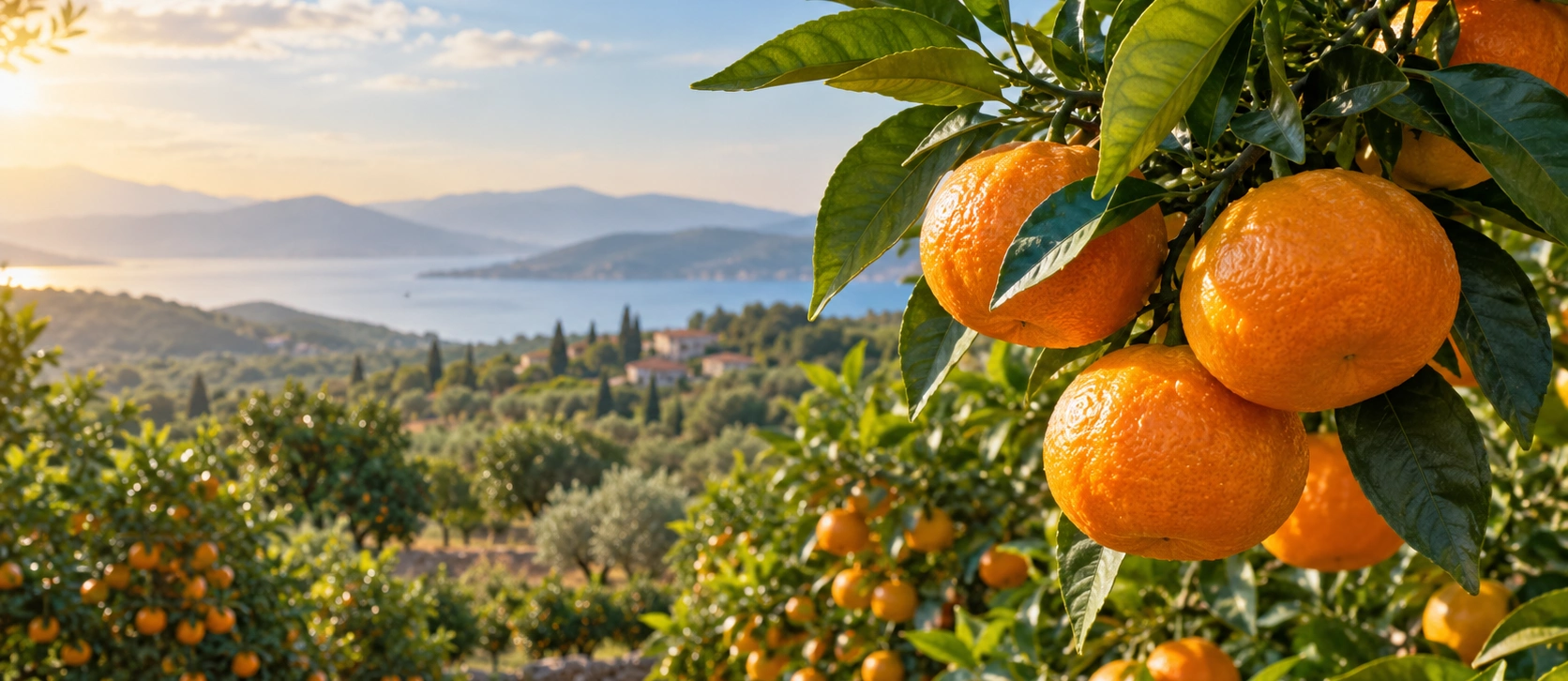
Explore Havran through its protected mandarin, seasonal orchard landscape, local produce and rural food culture.
Request This Experience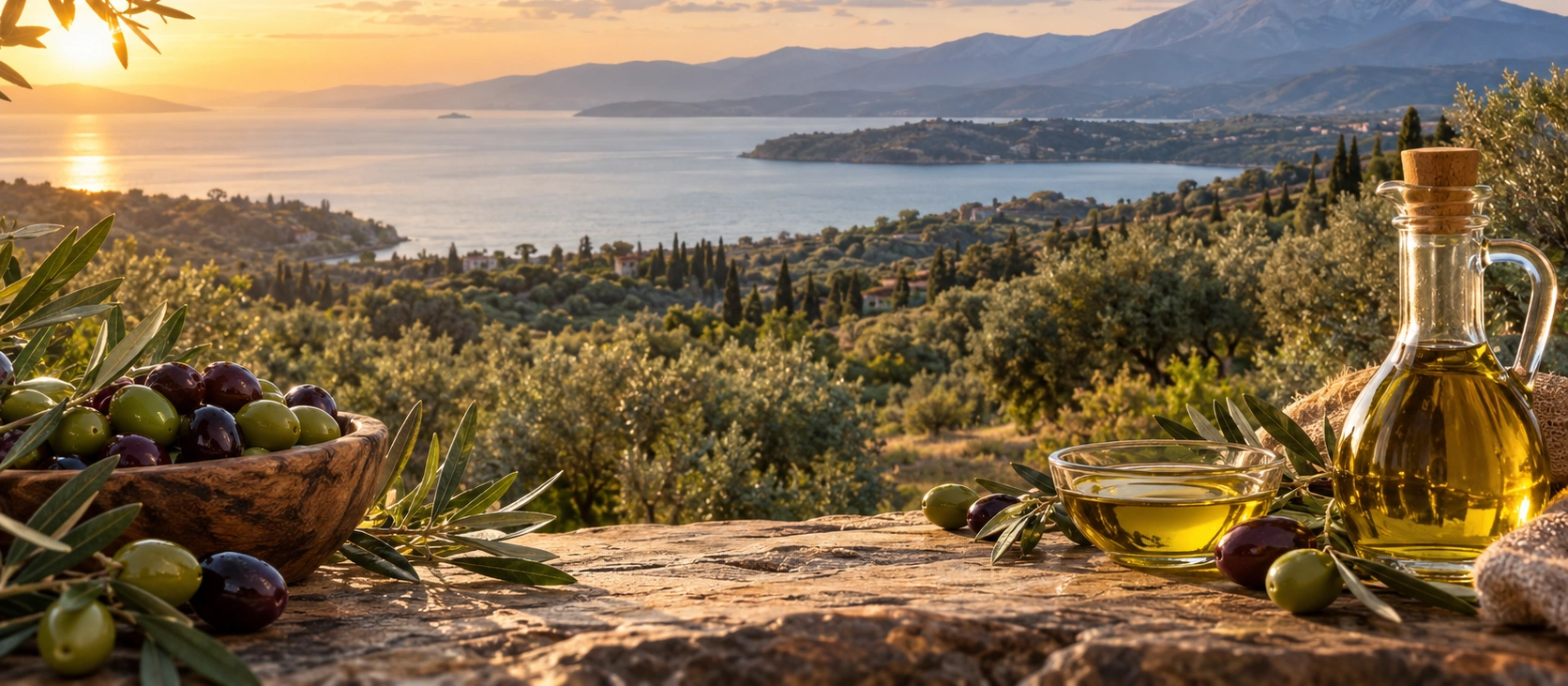
Combine Havran Mandalinası with the olive groves, protected foods and local flavours of the wider Edremit Gulf region.
Request This Tour