Eyüp Sultan Mosque, Abu Ayyub al-Ansari, Ottoman Tombs, Pierre Loti Hill, Golden Horn, Historic Cemetery & Sacred Istanbul

Eyüp Istanbul – Complete Eyüp Sultan Mosque, Pierre Loti & Golden Horn Guide

Discover one of Istanbul's most spiritual historic districts, where the tomb of Abu Ayyub al-Ansari, an imperial Ottoman mosque, centuries-old cemeteries, monumental mausoleums and the celebrated views from Pierre Loti Hill meet beside the Golden Horn.

Explore Eyüp

Istanbul's Sacred Ottoman District on the Golden Horn

Historic Eyüp, today part of the wider Eyüpsultan district, is unlike almost anywhere else in Istanbul. Its identity grew around the burial place traditionally associated with Abu Ayyub al-Ansari — known in Turkish as Eyüp Sultan — a close companion of the Prophet Muhammad who died during an early Arab campaign against Constantinople.

After the Ottoman conquest of Constantinople in 1453, Sultan Mehmed II established a mosque and tomb complex around the revered grave. Over the following centuries, Eyüp became one of the Ottoman capital's most prestigious religious centers and a deeply symbolic place for imperial ceremony, pilgrimage, burial and charitable foundations.

The district is much more than a single mosque. Around the sanctuary rise türbes, fountains, imarets, historic streets and vast cemeteries filled with some of the finest Ottoman gravestones in Istanbul. The hillside burial grounds climb toward Pierre Loti Hill, where cafés and terraces overlook the winding waters of the Golden Horn.

Modern transport has made the district especially easy to visit. The T5 Eminönü–Alibeyköy tram follows the Golden Horn waterfront, while the TF2 Eyüp–Piyer Loti cable car connects the lower district with the hilltop viewpoint.

A visit to Eyüp can therefore combine Islamic heritage, Ottoman history, funerary art, panoramic views and Golden Horn neighborhoods in one compact route.

Eyüp Sultan Mosque

The spiritual heart of the district, built around one of Istanbul's most revered Islamic shrines.

Abu Ayyub al-Ansari

The companion of the Prophet Muhammad whose traditional burial place gave Eyüp its name and sacred character.

Ottoman Cemetery

A remarkable hillside landscape of carved gravestones, mausoleums, cypress trees and centuries of Istanbul history.

Pierre Loti Hill

A famous Golden Horn viewpoint reached by cable car or by walking through the historic cemetery.

Know Before You Go

Eyüp Istanbul – Quick Facts

Essential information about historic Eyüp, Eyüp Sultan Mosque, the tomb of Abu Ayyub al-Ansari, Pierre Loti Hill, Ottoman cemeteries, Golden Horn transport and the best way to explore the district.

📍

Location

On the western side of the Golden Horn in Istanbul's European side, northwest of the Historic Peninsula.

🕌

Main Monument

Eyüp Sultan Mosque and the adjacent tomb traditionally associated with Abu Ayyub al-Ansari.

☪️

Religious Importance

One of Istanbul's most revered Muslim pilgrimage and devotional centers since the early Ottoman period.

👑

Imperial Tradition

Ottoman sultans traditionally came to Eyüp for the ceremonial girding of the Sword of Osman after accession.

🪦

Historic Cemetery

The surrounding cemeteries contain important Ottoman officials, religious figures, artists, soldiers and intellectuals.

🌅

Best View

Pierre Loti Hill offers one of the classic elevated panoramas over the Golden Horn.

🚋

Transport

The T5 tram serves the Golden Horn waterfront, with an easy connection to the TF2 cable car for Pierre Loti Hill.

⏱️

Recommended Visit

Allow three to four hours for the main district, or most of a day when combining Eyüp with Fener, Balat or the city walls.


Abu Ayyub al-Ansari, Mehmed the Conqueror, Ottoman Imperial Ceremony, Sacred Geography, Tombs, Cemeteries and the Golden Horn

Why Is Eyüp Important?

Eyüp became one of the most symbolically powerful places in Ottoman Istanbul because religion, dynasty, memory and urban life all gathered around the tomb of Abu Ayyub al-Ansari.

The district's importance begins with the traditional grave of Abu Ayyub al-Ansari, a companion of the Prophet Muhammad who hosted him in Medina and later joined an early Muslim campaign against Constantinople.

After the Ottoman conquest in 1453, the location of the grave became closely associated with Sultan Mehmed II and his spiritual teacher Akşemseddin. A shrine and mosque were established, transforming the area into an important devotional center outside the old land walls of Constantinople.

Eyüp soon acquired an imperial role. Newly enthroned Ottoman sultans came here for the girding of the Sword of Osman, a ceremony that publicly connected the ruler with the dynasty, conquest and the spiritual legitimacy of the Ottoman state.

The prestige of burial near Eyüp Sultan also reshaped the landscape. Statesmen, scholars, military commanders, religious figures and members of elite Ottoman families sought graves or mausoleums near the shrine, creating one of Istanbul's richest historical cemetery districts.

At the same time, charitable complexes, fountains, schools, kitchens and neighborhood mosques turned Eyüp into a living Ottoman suburb rather than merely a pilgrimage destination.

Today, the district remains active and deeply meaningful to worshippers while also offering visitors an exceptional introduction to Ottoman ceremonial culture, Islamic devotion, funerary art and the historic geography of the Golden Horn.


History of Eyüp Istanbul

Long before Ottoman Eyüp emerged, the upper Golden Horn contained settlements, monasteries, gardens and roads outside the main defenses of Constantinople. The wider area is often connected with the Byzantine district known as Kosmidion, associated with the Monastery of Saints Cosmas and Damian.

During the 7th century, Arab armies campaigned against Constantinople. Islamic tradition connects one of these expeditions with the death of Abu Ayyub al-Ansari, who was buried near the city.

Centuries later, after Mehmed II captured Constantinople in 1453, tradition holds that the location of Abu Ayyub's grave was identified through Akşemseddin. A tomb was built over the burial place and a mosque was established beside it.

The original mosque associated with Mehmed II was completed in the 15th century. As the sanctuary grew in prestige, Ottoman rulers, officials and ordinary believers supported additional fountains, kitchens, schools, tombs and charitable buildings around it.

The mosque was seriously damaged by the great Istanbul earthquake of 1766. The present principal structure was built during the reign of Sultan Selim III at the end of the 18th century and opened in 1800.

During the Ottoman centuries, Eyüp became closely connected with royal accession ceremonies and elite burial culture. Its hillsides gradually filled with graves and mausoleums, creating the extraordinary cemetery landscape seen today.

Modern Eyüp expanded dramatically as Istanbul grew, but the historic core around the mosque, tomb, cemetery and Golden Horn still preserves a distinct sense of place.

Byzantine Period

The upper Golden Horn contained suburban settlements and religious institutions beyond the main city center.

7th Century

Tradition connects Abu Ayyub al-Ansari's death and burial with an early Muslim expedition against Constantinople.

1453

The Ottoman conquest transformed the significance of the site and led to the establishment of the Eyüp Sultan shrine.

15th Century

Mehmed II founded the first mosque complex beside the revered tomb.

1766 Earthquake

The earlier mosque suffered severe damage and was later replaced by the present late Ottoman building.

1800

The rebuilt Eyüp Sultan Mosque was ceremonially opened during the reign of Sultan Selim III.

Who Was Abu Ayyub al-Ansari?

The person at the center of Eyüp's identity is Abu Ayyub al-Ansari, known in Turkish as Eyüp Sultan. His name was Khalid ibn Zayd, and he belonged to the Ansar of Medina.

Islamic tradition remembers him especially as the companion who hosted the Prophet Muhammad in his home after the Prophet's arrival in Medina.

In old age, Abu Ayyub is believed to have joined a Muslim military expedition against Byzantine Constantinople. He died during the campaign and was buried near the city walls.

The precise details of the early siege traditions developed over many centuries, but Abu Ayyub's association with Constantinople became deeply embedded in Muslim memory long before the Ottoman conquest.

For Ottoman Istanbul, his tomb provided a powerful spiritual link between the early Islamic world and the conquest of Constantinople. The shrine became a destination for rulers, soldiers, pilgrims and ordinary families.

Why the name “Eyüp”? The Turkish name Eyüp is the Ottoman-Turkish form associated with Abu Ayyub. The modern district name Eyüpsultan preserves this connection.

The Tomb Tradition After the Conquest of 1453

One of the most famous stories connected with the conquest of Constantinople concerns the rediscovery of Abu Ayyub al-Ansari's burial place.

According to Ottoman tradition, Akşemseddin, the respected scholar and spiritual mentor of Sultan Mehmed II, identified the location of the grave after the conquest.

The discovery gave the new Ottoman capital a sacred Islamic landmark linked to the earliest generations of Muslim history.

Mehmed II ordered a tomb and mosque complex to be created at the site. The sanctuary quickly attracted visitors, charitable foundations and new settlement.

Whether approached as religious tradition, dynastic memory or urban history, the story explains why Eyüp became far more than a suburban mosque district: it became one of the ceremonial and devotional centers of the Ottoman capital.

Eyüp Sultan Mosque

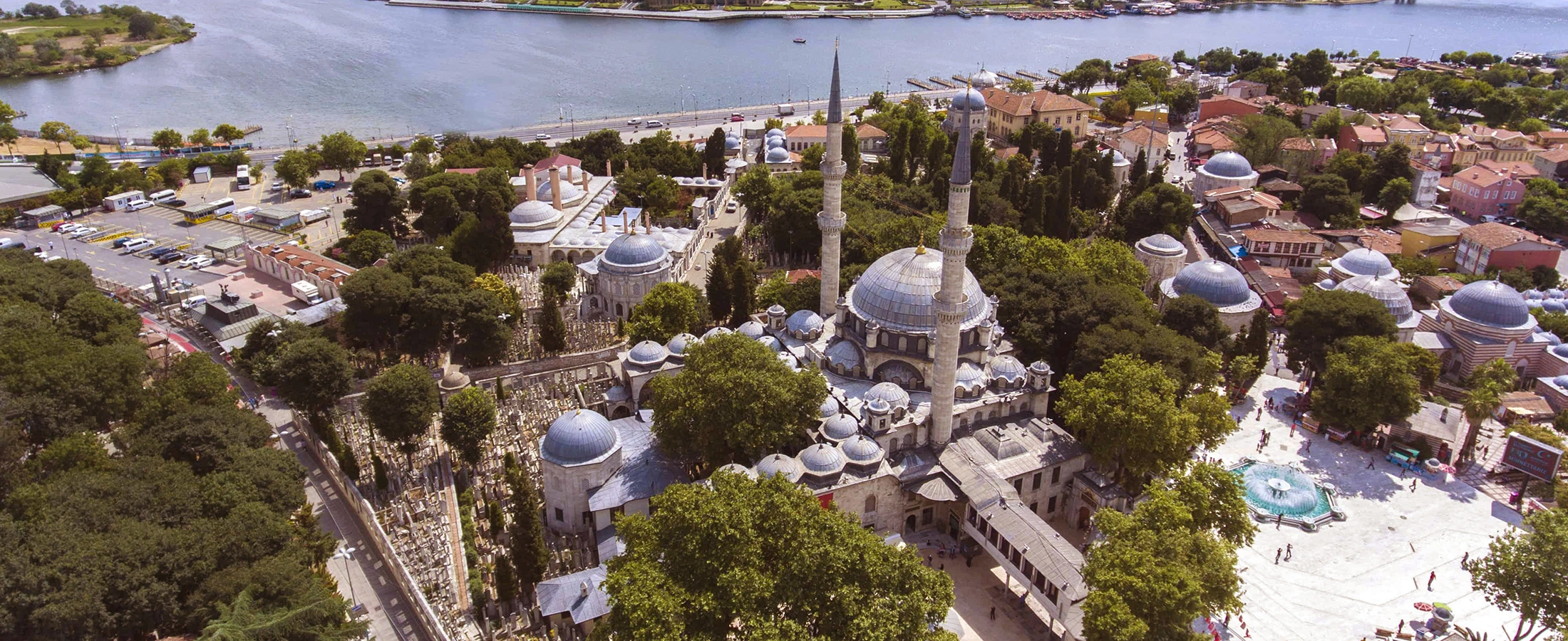
The Eyüp Sultan Mosque stands at the heart of the historic district and forms the architectural center of the sacred complex.

The first mosque was founded by Sultan Mehmed II soon after the Ottoman conquest and was completed in the 15th century beside the tomb of Abu Ayyub al-Ansari.

That early building did not survive intact. The destructive 1766 Istanbul earthquake left it so badly damaged that a major rebuilding became necessary.

Construction of the present mosque began during the reign of Sultan Selim III in 1798, and the new building was opened in 1800.

The mosque is organized beneath a large central dome with surrounding semi-domes and galleries. Its pale stone exterior, arcaded approach and elegant minarets create a monumental but intimate atmosphere appropriate to the revered tomb beside it.

Unlike monuments visited primarily as museums, Eyüp Sultan Mosque is a living place of worship. Prayer, Qur'an recitation, family visits and devotional practices remain central to the experience of the complex.

Visitor etiquette: dress modestly, keep voices low, remove shoes where required and avoid sightseeing through the prayer hall during congregational prayers.

Architecture of Eyüp Sultan Mosque

The present mosque belongs to the architectural world of the late 18th-century Ottoman Empire, although the site itself reaches back to the reign of Mehmed the Conqueror.

A broad central dome defines the prayer hall, supported and visually expanded by surrounding semi-domes and smaller domed elements.

The interior contains a marble mihrab and minbar, galleries and decorative surfaces that create a dignified ceremonial setting without the enormous scale of Istanbul's great imperial hilltop mosques.

Outside, the courtyard and surrounding religious buildings are inseparable from the experience. Visitors move between the mosque, tomb, fountains, old trees and passages used continuously by worshippers.

The pair of slender minarets also reflects earlier phases of the complex. Their survival and rebuilding history reveal how the sanctuary was repeatedly repaired, expanded and renewed by Ottoman patrons.

Central Dome

The main prayer space is unified beneath a large dome supported by a carefully balanced structural system.

Arcaded Approach

Columned and domed transitional spaces soften the movement between the busy square and the prayer hall.

Marble Elements

The mihrab, minbar and architectural details emphasize the ceremonial status of the mosque.

Minarets

The twin minarets form one of the most recognizable silhouettes on the Golden Horn side of Eyüp.

Imperial Presence

Special circulation and ceremonial spaces recall the mosque's close connection with the Ottoman dynasty.

Living Complex

The architecture works together with the adjacent tomb, courtyard and surrounding urban fabric rather than as an isolated monument.

The Tomb of Eyüp Sultan

The tomb of Abu Ayyub al-Ansari is the spiritual center of the entire district.

The mausoleum stands immediately beside the mosque, and visitors often approach it before or after entering the prayer hall.

Its interior is famous for richly colored tilework, calligraphy and the powerful sense of devotion created by generations of worshippers who have visited the shrine.

For many Muslims, the significance of the site comes from Abu Ayyub's closeness to the Prophet Muhammad and from his remembered participation in the campaign toward Constantinople.

The tomb has therefore attracted Ottoman sultans, soldiers, pilgrims, families and religious visitors for centuries.

Respectful visiting: the türbe is an active devotional space. Keep conversations quiet, avoid obstructing people at prayer and follow any current photography or access instructions.

The Sword-Girding Ceremony of the Ottoman Sultans

Eyüp Sultan was not only a pilgrimage site. It also played a remarkable role in the political theater of the Ottoman dynasty.

After accession, Ottoman sultans traditionally came to Eyüp for the ceremonial girding of the Sword of Osman, known in Turkish as kılıç kuşanma.

The ritual functioned as one of the empire's most important ceremonies of sovereignty. Rather than using a European-style coronation with a crown, the Ottoman ruler was symbolically invested through the sword.

Holding the ceremony at Eyüp linked the sultan with Osman, the founder of the dynasty; the conquest of Constantinople; and the sacred memory of Abu Ayyub al-Ansari.

The journey to Eyüp, the gathering of imperial officials and the ceremony itself made the district a stage on which political authority and religious symbolism met.

Dynasty The sword connected each new ruler with Osman, founder of the Ottoman house.
Conquest Eyüp's shrine connected the ceremony with the Ottoman capture of Constantinople.
Sacred Memory The presence of Abu Ayyub's tomb gave the ritual profound religious symbolism.
Public Legitimacy The ceremony helped mark the formal beginning of a new sultan's reign.

Eyüp as a Sacred Ottoman Suburb

The success of the shrine transformed the surrounding countryside into one of the Ottoman capital's most prestigious religious suburbs.

Visitors came for prayer and pilgrimage, but many also came for major moments of family life. The district became associated with circumcision celebrations, religious occasions, charity, funerals and visits to the graves of respected figures.

Ottoman patrons endowed mosques, fountains, schools, imarets, tekkes, tombs and public facilities throughout the area.

The result was a neighborhood whose urban character was shaped by religious endowments and by constant movement between the Golden Horn waterfront, the main sanctuary and the cemeteries rising up the slopes.

This is still visible today. Even amid modern streets and busy transport connections, the historic core retains a quieter ceremonial rhythm around the mosque and tomb.

Eyüpsultan Cemetery – A City of Ottoman Memory

One of Eyüp's greatest treasures is its enormous historic cemetery landscape.

Burial close to the tomb of Eyüp Sultan carried extraordinary prestige. Over the centuries, statesmen, religious scholars, military commanders, palace officials, artists, poets and prominent families were buried in the district.

The cemetery stretches from the immediate surroundings of the mosque upward toward Pierre Loti Hill, forming a dense landscape of cypress trees, stone walls, family enclosures, monumental mausoleums and thousands of carved grave markers.

For visitors interested in Ottoman art, the gravestones are especially important. Their inscriptions, calligraphy, carved headgear, floral motifs and symbolic forms can reveal the profession, rank, gender, social identity and artistic taste of the deceased.

The cemetery is not an abandoned archaeological zone. It is a place of burial, prayer and family memory, and many graves continue to receive visitors.

Calligraphy

Many gravestones preserve elegant Ottoman inscriptions carved by skilled stoneworkers and calligraphers.

Headgear

Carved turbans, fezzes and official headdresses can signal social rank, profession or historical period.

Floral Symbols

Flowers, vines and stylized trees add decorative meaning to many women's and family gravestones.

Mausoleums

Large türbes of Ottoman statesmen and elite families punctuate the cemetery landscape.

Cypress Trees

Tall cypresses create the distinctive silhouette and contemplative atmosphere associated with Ottoman burial grounds.

Living Memory

Families still visit graves, so the cemetery should be explored with the same respect as an active religious site.

How to Read the Ottoman Gravestones of Eyüp

Walking through Eyüp's cemetery becomes far more rewarding when the gravestones are treated as historical documents rather than simply decorative monuments.

Ottoman gravestones often communicate identity visually. Men's stones may be topped with carved forms resembling turbans, military headgear, official hats or fezzes. Women's stones frequently use floral decoration, elegant finials and richly carved borders.

Inscriptions can record names, titles, professions, family connections, prayers, dates and poetic reflections on death.

Because Ottoman Turkish was generally written in an Arabic-derived script, many modern visitors cannot read the text directly. Even so, differences in stone type, carving and headgear allow the cemetery to be approached as an open-air museum of social history.

Look carefully: small details in the headstone can tell you almost as much as the inscription. Clothing and status were translated into stone.

Historic Türbes Around Eyüp

Eyüp contains an exceptional concentration of Ottoman mausoleums. Some belong to grand viziers and palace officials; others were built for members of the imperial family, scholars and religious figures.

Sokollu Mehmed Pasha

The celebrated grand vizier is connected with an important tomb complex near Eyüp Sultan and the wider architectural legacy of Mimar Sinan.

Siyavuş Pasha

His monumental mausoleum is among the most imposing türbes in historic Eyüp.

Mihrişah Valide Sultan

Her late Ottoman charitable complex adds an important imperial and philanthropic layer to the district.

Sultan Mehmed V Reşad

The tomb of the late Ottoman sultan stands in Eyüp and reflects the district's continuing dynastic prestige into the 20th century.

Religious Scholars

Numerous şeyhülislams, sheikhs, scholars and Sufi figures were buried near the sacred center of Eyüp.

Statesmen & Soldiers

The cemetery includes generations of pashas, commanders and public figures from different periods of Ottoman history.

Not every tomb is always open to visitors, and restoration or religious use may affect access. The exterior architecture and surrounding gravestones are rewarding even when interiors cannot be entered.

Mihrişah Valide Sultan Complex

Among the most elegant late Ottoman monuments in Eyüp is the complex associated with Mihrişah Valide Sultan, mother of Sultan Selim III.

The complex reflects the Ottoman tradition of royal women creating charitable foundations that supported the urban population through food distribution, water facilities, religious services and public architecture.

Its türbe, sebil and related structures introduce the decorative language of the late 18th century into the older sacred landscape of Eyüp.

The complex is especially valuable because it shows that Eyüp's significance continued to grow long after the first mosque was established by Mehmed II.

Zal Mahmud Pasha Mosque & Complex

A short distance from the main Eyüp Sultan sanctuary stands the Zal Mahmud Pasha Mosque, one of the district's most important examples of classical Ottoman architecture.

The complex is associated with Zal Mahmud Pasha and Şah Sultan and belongs to the architectural world of Mimar Sinan.

Its position near the Golden Horn, layered interior galleries and strong stone-and-brick exterior make it very different in character from the later Eyüp Sultan Mosque.

Visitors interested in Ottoman architecture should not leave Eyüp after seeing only the main shrine. Zal Mahmud Pasha adds a valuable 16th-century perspective to the district.

Pierre Loti Hill – The Classic Golden Horn View

Above the cemetery rises Pierre Loti Hill, one of the best-known viewpoints on the Golden Horn.

The hill takes its popular name from Pierre Loti, the pen name of French naval officer and writer Julien Viaud, whose writings and Istanbul connections helped build a romantic European image of the late Ottoman city.

The traditional café area looks across the Golden Horn toward the dense urban hills of Istanbul. From the terraces, visitors can trace the waterway toward Fener, Balat, the Historic Peninsula and the distant city skyline.

The viewpoint is particularly atmospheric when approached through the cemetery on foot. The climb reveals layers of gravestones and cypress trees before suddenly opening onto the broad panorama.

Visitors who prefer an easier ascent can use the TF2 cable car from the waterfront.

Best experience: take the cable car uphill, enjoy the view, then walk downhill through the cemetery toward Eyüp Sultan Mosque. The reverse route is more physically demanding.

TF2 Eyüp–Piyer Loti Cable Car

The TF2 Eyüp–Piyer Loti cable car provides the easiest connection between the Golden Horn waterfront and Pierre Loti Hill.

The short aerial journey rises above the historic cemetery, giving passengers an unusual view of the graves, trees and urban landscape below.

At the lower station, the cable car connects conveniently with the T5 Eminönü–Alibeyköy tram line, making Eyüp easy to reach from central Golden Horn districts.

Because the line is also a popular sightseeing experience, queues can form at busy times, especially on weekends, holidays and around sunset.

Lower Station

Beside the Golden Horn and close to the historic center of Eyüp.

Upper Station

Directly beside the Pierre Loti viewpoint and café area.

Connection

Easy interchange with the T5 tram at the Eyüpsultan Teleferik stop.

Best Direction

Ride uphill and return on foot through the cemetery if mobility and weather allow.

Eyüp & the Golden Horn

Eyüp's history cannot be separated from the Golden Horn, the long natural harbor that shaped Constantinople and Ottoman Istanbul for centuries.

The waterway connected the imperial city with shipyards, ports, industrial areas, religious suburbs, gardens and residential neighborhoods.

Eyüp developed near the upper reaches of the Golden Horn, beyond the dense monumental center of the Historic Peninsula but still connected to it by water and road.

Today, the waterfront has parks, walking paths, tram stations and cultural spaces. The modern landscape makes it possible to move easily between Eyüp, Fener, Balat and Eminönü while remaining close to the water.

From Pierre Loti Hill, the shape of the Golden Horn becomes especially clear. The view helps explain why Eyüp grew where it did and why the district has always felt both connected to and separated from central Istanbul.

Historic Streets Around Eyüp Sultan

The square in front of Eyüp Sultan Mosque is only the beginning of the district.

Narrow streets around the sanctuary contain fountains, tomb walls, small shops, religious bookshops, food stalls and fragments of older residential architecture.

The most atmospheric route rises away from the square into the cemetery. Here, modern traffic falls away and the landscape becomes dominated by stone walls, trees and Ottoman gravestones.

Closer to the waterfront, the character changes again. Larger roads, public spaces and transport infrastructure reveal the modern transformation of the Golden Horn.

Eyüp is therefore best understood by moving slowly between sanctuary, cemetery, hillside and water rather than treating the mosque as an isolated stop.

What to Eat Around Eyüp

Eyüp's food scene is generally more traditional and family-oriented than the nightlife districts of central Beyoğlu.

Tea with a View

Pierre Loti Hill is famous for tea and simple refreshments overlooking the Golden Horn.

Turkish Breakfast

Cafés around the Golden Horn and hilltop area offer breakfast plates and leisurely morning stops.

Traditional Lokantas

Look for cooked dishes, soups, rice, vegetables and classic Turkish home-style meals.

Sweets

Baklava, lokum, puddings and other traditional desserts are easy to find around the main square.

Street Snacks

Simit, roasted chestnuts, corn and simple takeaway foods are common around busy pedestrian areas.

Golden Horn Cafés

The waterfront offers relaxed places to pause before continuing toward Fener, Balat or Eminönü.

The area can become extremely busy on religious holidays and weekends. If you want a quieter meal, move a little away from the immediate mosque square.

What to See in Eyüp Istanbul

Eyüp Sultan Mosque

Visit the active late Ottoman mosque at the center of the district's sacred landscape.

Tomb of Eyüp Sultan

Experience the revered türbe associated with Abu Ayyub al-Ansari.

Mosque Courtyard

Observe the movement between prayer, pilgrimage and everyday neighborhood life.

Eyüpsultan Cemetery

Walk among carved Ottoman gravestones, mausoleums and cypress trees.

Pierre Loti Hill

See one of Istanbul's classic panoramas over the Golden Horn.

TF2 Cable Car

Ride above the cemetery between the waterfront and the hilltop viewpoint.

Mihrişah Valide Sultan Complex

Discover elegant late Ottoman imperial charity architecture near the sacred center.

Zal Mahmud Pasha Mosque

Add a major Mimar Sinan-era monument to the Eyüp walking route.

Historic Türbes

Look for the mausoleums of Ottoman statesmen, religious figures and members of elite families.

Ottoman Gravestones

Study carved turbans, fezzes, floral symbols and calligraphic inscriptions.

Golden Horn Waterfront

Walk beside the water and connect with the T5 tram or nearby districts.

Historic Streets

Explore the smaller lanes surrounding the mosque rather than limiting the visit to the main square.

Best Walking Route Through Eyüp

Begin at the Eyüpsultan Teleferik area on the Golden Horn waterfront after arriving by T5 tram.

Walk toward the historic center and enter the square around Eyüp Sultan Mosque. Explore the exterior, courtyard and surrounding religious buildings before entering the mosque respectfully.

Visit the tomb of Eyüp Sultan, allowing time to observe the atmosphere without blocking worshippers.

Continue through the nearby historic streets and türbes. If architecture is a priority, add the Mihrişah Valide Sultan and Zal Mahmud Pasha monuments.

Then begin the ascent through the Eyüpsultan Cemetery. Move slowly and look carefully at the gravestones rather than treating the route simply as a shortcut.

Finish at Pierre Loti Hill for tea and the Golden Horn panorama. Return downhill through the cemetery or use the TF2 cable car.

Stop 1 Golden Horn waterfront
Stop 2 Eyüp Sultan Mosque square
Stop 3 Eyüp Sultan Mosque
Stop 4 Tomb of Abu Ayyub al-Ansari
Stop 5 Historic türbes and fountains
Stop 6 Eyüpsultan Cemetery
Stop 7 Pierre Loti Hill
Finish TF2 cable car back to the Golden Horn

Eyüp Visitor Information

The historic center of Eyüp is a public neighborhood and there is no general admission ticket simply to walk through the district.

Eyüp Sultan Mosque and the tomb are active religious sites. Access may be affected by prayer, ceremonies, religious holidays, maintenance or special events.

Visitors should dress modestly inside the mosque and follow instructions concerning shoes, photography and areas reserved for worship.

The cemetery can be explored on foot, but remember that it remains an active burial ground and should be treated with respect.

The T5 tram and TF2 cable car are working parts of Istanbul's public transport system. Normal city transport rules and fares apply, and service can occasionally change.

Mosque

Active place of worship; sightseeing should give priority to prayer and religious use.

Tomb

Active devotional shrine where visitors should remain quiet and respectful.

Cemetery

Free to walk through public paths, but avoid stepping across graves or entering private family enclosures.

Pierre Loti

The viewpoint is busiest on weekends, holidays and around sunset.

T5 Tram

Convenient Golden Horn connection from Eminönü toward Eyüpsultan.

TF2 Cable Car

Fast connection between the waterfront and Pierre Loti Hill.

Practical Tips for Visiting Eyüp

Dress Respectfully

Bring clothing appropriate for visiting an active mosque and sacred tomb.

Avoid Main Prayer Times

If sightseeing rather than worship is your priority, visit between congregational prayers when access is generally easier.

Wear Comfortable Shoes

The cemetery route to Pierre Loti includes slopes, steps and uneven historic surfaces.

Ride Up, Walk Down

Using the cable car uphill and descending through the cemetery creates an easier sightseeing route.

Allow for Crowds

Friday, Ramadan periods, religious holidays and weekends can bring large numbers of visitors.

Respect Graves

Stay on paths where possible and do not sit on, lean against or climb over gravestones.

Bring Water in Summer

The hillside can feel hot and exposed even though many cemetery paths are shaded by trees.

Continue Along the Golden Horn

Eyüp combines naturally with Fener, Balat and the city walls for a longer historical day.

Best Time to Visit Eyüp

Early Morning

Best for quieter streets, mosque exteriors, cemetery details and soft light.

Late Morning

A good balance for visiting the mosque, tomb and surrounding monuments before lunch.

Friday

Religiously significant and atmospheric, but the mosque area can become much busier around the main congregational prayer.

Afternoon

Ideal for combining the historic center with the cemetery and Pierre Loti Hill.

Golden Hour

The Golden Horn panorama from Pierre Loti is especially attractive in late-afternoon light.

Ramadan

The district can have a powerful evening atmosphere, but expect crowds and changes in the rhythm of visits and dining.

How Much Time Do You Need in Eyüp?

1 Hour

Enough for the main mosque square, exterior views and a brief visit to the tomb.

2 Hours

Visit the mosque, tomb and a small section of the surrounding cemetery.

3–4 Hours

Ideal for the sacred complex, cemetery walk, Pierre Loti Hill and cable car.

Half Day

Add Mihrişah Valide Sultan, Zal Mahmud Pasha, waterfront walking and a relaxed meal.

Full Day

Combine Eyüp with Fener, Balat, Chora-area monuments or the land walls.

Evening Extension

Stay for sunset over the Golden Horn or continue toward central Istanbul for dinner.

Photography in Eyüp

Eyüp is one of Istanbul's strongest locations for religious architecture, funerary art, landscape and historical street photography.

The mosque is most photogenic from the outer courtyard and surrounding approaches, where the domes and minarets can be framed with trees and the activity of the square.

The cemetery offers extraordinary details: carved turbans, inscriptions, flowers, cypress trunks, stone walls and narrow pathways create constantly changing compositions.

At Pierre Loti Hill, wide views of the Golden Horn work best when visibility is clear. Late afternoon can produce beautiful light, although the viewpoint also becomes more crowded.

Best Monument

Eyüp Sultan Mosque framed from the courtyard or surrounding historic streets.

Best Detail

Ottoman gravestones and carved headgear in the cemetery.

Best Panorama

Pierre Loti Hill overlooking the Golden Horn.

Best Transport Shot

The TF2 cable car crossing above the cemetery slope.

Best Atmosphere

The sanctuary square during a quieter early-morning period.

Best Light

Morning for the historic core; late afternoon for the Golden Horn panorama.

Photography etiquette: avoid photographing people at prayer without permission, obey restrictions inside the tomb and mosque, and never use gravestones as props or seating.

Accessibility in Eyüp

The Golden Horn waterfront and the main approach to Eyüp Sultan Mosque are easier to navigate than the steep cemetery slopes above the district.

The T5 tram uses low-floor vehicles and accessible station designs, making it one of the most convenient public transport options for reaching Eyüp.

The TF2 cable car provides an alternative to climbing the hill toward Pierre Loti and can accommodate wheelchairs, although crowding and station conditions should still be considered.

Within the historic core, accessibility varies because of thresholds, paving, religious-building entrances and dense pedestrian traffic.

The cemetery route is the most challenging part of the visit. Slopes, steps, narrow paths and uneven stone surfaces may make a complete walk unsuitable for some visitors.

Accessibility planning: use the T5 tram and TF2 cable car to reduce steep walking, and confirm current lift, ramp or station conditions on the day if step-free access is essential.

How to Get to Eyüp

The easiest public transport route for many visitors is the T5 Eminönü–Alibeyköy tram, which follows the Golden Horn and connects central Eminönü with Eyüp.

For the mosque and Pierre Loti area, use the Eyüpsultan Teleferik stop. From here, the historic center is within walking distance and the TF2 cable car provides access to the hilltop.

Visitors starting in the Historic Peninsula can reach the T5 line from Sirkeci and Eminönü connections, making Eyüp a natural half-day excursion from Sultanahmet.

Golden Horn ferry services and buses may also be useful depending on your starting point and the day's operating schedule.

Taxis are convenient outside peak traffic but can be slower than the tram when roads around the Golden Horn are congested.

T5 Tram

The most straightforward rail connection from Eminönü along the Golden Horn.

Eyüpsultan Teleferik Stop

Best stop for the mosque, tomb, cemetery and TF2 cable car.

TF2 Cable Car

Connects the lower district directly with Pierre Loti Hill.

From Sultanahmet

Travel toward Eminönü and continue on the T5 Golden Horn tram.

From Galata & Karaköy

Reach the Golden Horn corridor and continue toward Eyüp by tram, ferry or taxi depending on the route.

By Taxi

Useful for direct hotel transfers, though traffic can significantly affect journey times.

Suggested One-Day Eyüp & Golden Horn Route

Begin in the morning by taking the T5 tram to the Eyüpsultan Teleferik area.

Walk first to Eyüp Sultan Mosque and the tomb of Abu Ayyub al-Ansari. Morning usually provides a calmer setting for understanding the spiritual atmosphere of the sanctuary.

Explore the surrounding türbes, fountains and historic streets, then continue toward the Mihrişah Valide Sultan complex and Zal Mahmud Pasha Mosque if you want a broader architectural picture.

Around midday, stop for lunch or tea away from the busiest part of the mosque square.

In the afternoon, take the TF2 cable car to Pierre Loti Hill. Enjoy the Golden Horn panorama, then walk downhill through the cemetery while studying the Ottoman gravestones.

Finish beside the Golden Horn. From here, continue by T5 toward Fener and Balat, or return to Eminönü for the Historic Peninsula.

09:00 Arrive at Eyüp on the T5 tram
09:15 Eyüp Sultan Mosque square
09:45 Eyüp Sultan Mosque & sacred tomb
11:00 Historic türbes and streets
12:00 Mihrişah Valide Sultan / Zal Mahmud Pasha
Lunch Eyüp or Golden Horn waterfront
14:00 TF2 cable car to Pierre Loti Hill
14:30 Pierre Loti viewpoint & tea
15:30 Walk down through Eyüpsultan Cemetery
Evening Continue toward Fener & Balat or return to Eminönü

What to See Near Eyüp

Fener

Continue along the Golden Horn toward historic Orthodox institutions, churches and colorful residential streets.

Balat

Explore a layered neighborhood associated with Jewish, Greek Orthodox, Armenian and Ottoman urban heritage.

Walls of Constantinople

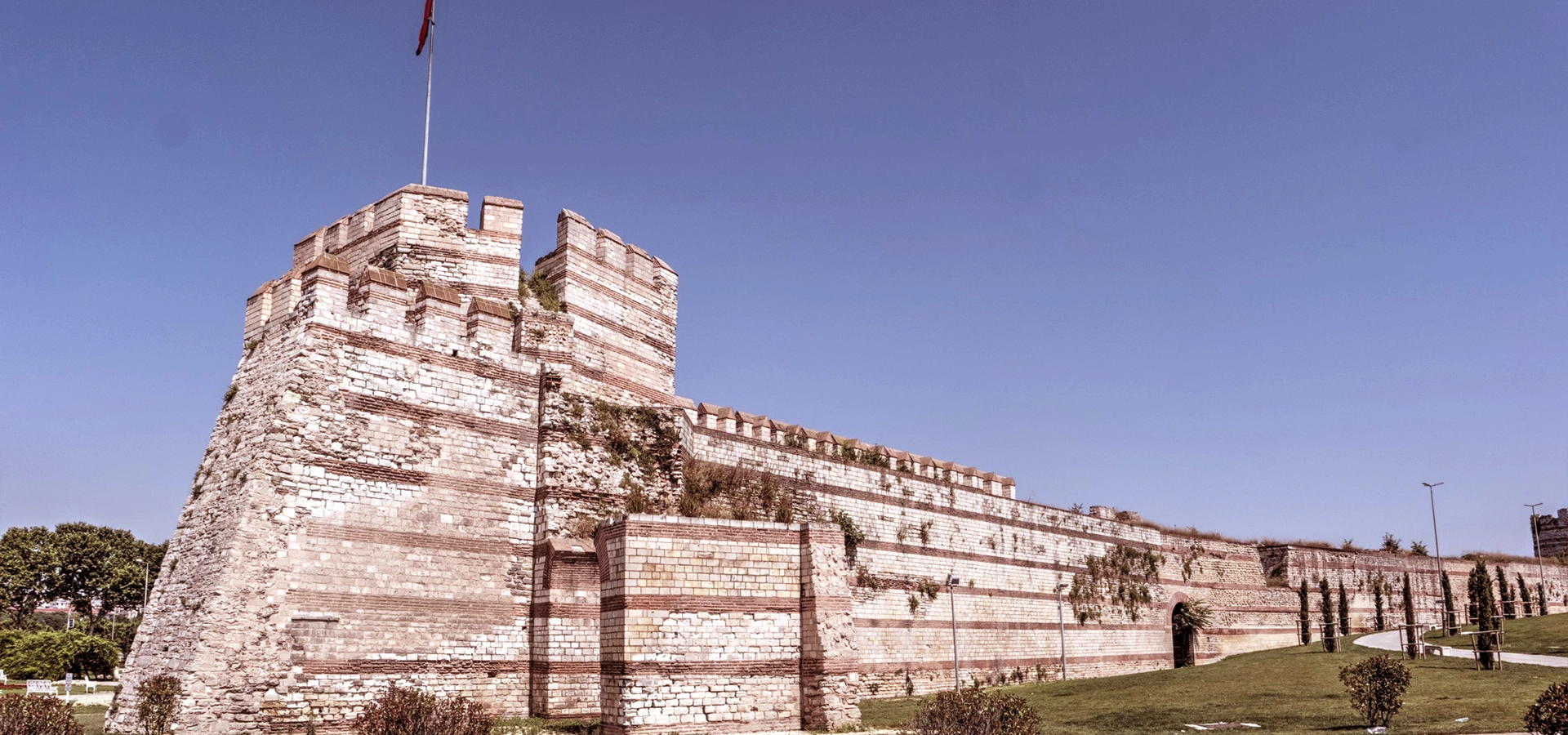
Reach the great land walls to understand how the Byzantine capital was defended for more than a thousand years.

Tekfur Palace

Visit the surviving Byzantine palace structure near the land walls and the historic Blachernae area.

Fethiye Mosque / Pammakaristos

Add an important Byzantine church complex in the historic neighborhoods inland from the Golden Horn.

Golden Horn Waterfront

Use the T5 tram to move easily between Eyüp, Balat, Fener and Eminönü.

Sirkeci & Eminönü

Return toward the transport, markets, waterfront and railway heritage of the Historic Peninsula.

More of Istanbul

Continue planning with Istanbul's mosques, palaces, museums, Byzantine monuments and historic neighborhoods.

Planning Your Visit

Frequently Asked Questions About Eyüp Istanbul

Where is Eyüp in Istanbul?

Historic Eyüp lies on the western side of the Golden Horn on Istanbul's European side, northwest of the Historic Peninsula.

What is Eyüp famous for?

Eyüp is famous for Eyüp Sultan Mosque, the tomb of Abu Ayyub al-Ansari, Ottoman cemeteries, imperial türbes, Pierre Loti Hill and Golden Horn views.

Who was Eyüp Sultan?

Eyüp Sultan is the Turkish name associated with Abu Ayyub al-Ansari, a companion of the Prophet Muhammad whose traditional burial place is in the district.

Why is Eyüp Sultan Mosque important?

The mosque stands beside the revered tomb of Abu Ayyub al-Ansari and became one of the most important devotional and ceremonial sites of Ottoman Istanbul.

When was Eyüp Sultan Mosque built?

The first mosque was founded under Mehmed II in the 15th century. After severe earthquake damage, the principal structure seen today was rebuilt under Sultan Selim III and opened in 1800.

Is Eyüp Sultan Mosque still active?

Yes. It is an active mosque and major devotional site, so sightseeing must respect prayer and religious use.

Can non-Muslims visit Eyüp Sultan Mosque?

Visitors are generally able to enter outside restricted prayer or ceremonial periods, provided they follow mosque etiquette and any current instructions at the entrance.

What should I wear at Eyüp Sultan Mosque?

Wear modest clothing covering shoulders and knees. Women may be asked to cover their hair inside the prayer area, and shoes are removed where indicated.

What was the Sword of Osman ceremony?

It was the Ottoman sword-girding accession ceremony traditionally held at Eyüp, symbolically marking the authority of a new sultan.

Why are there so many graves in Eyüp?

Burial near Eyüp Sultan was considered highly prestigious, so generations of Ottoman officials, scholars, soldiers, religious figures and prominent families chose the district for their tombs and graves.

Can I walk through Eyüpsultan Cemetery?

Yes, public paths cross the cemetery, including routes toward Pierre Loti Hill. Visitors should remain respectful and avoid stepping on graves or disturbing mourners.

What is special about Ottoman gravestones in Eyüp?

Many preserve elaborate calligraphy, carved turbans, fezzes, floral motifs and symbolic designs that reveal information about social identity and historical period.

What is Pierre Loti Hill?

Pierre Loti Hill is a celebrated viewpoint above Eyüp with cafés and panoramic views across the Golden Horn.

Who was Pierre Loti?

Pierre Loti was the pen name of French naval officer and writer Julien Viaud, who became closely associated with Istanbul in European literary culture.

How do I get to Pierre Loti Hill?

Use the TF2 Eyüp–Piyer Loti cable car from the Golden Horn waterfront or walk uphill through the historic cemetery.

How do I get to Eyüp from Eminönü?

The T5 Eminönü–Alibeyköy tram provides the most convenient direct public transport connection along the Golden Horn.

Which T5 stop is best for Eyüp Sultan Mosque?

Eyüpsultan Teleferik is the most useful stop for combining the historic center with the TF2 cable car and Pierre Loti Hill.

How much time should I spend in Eyüp?

Allow three to four hours for the mosque, tomb, cemetery and Pierre Loti Hill. A half or full day is better if you also explore additional Ottoman monuments or nearby Golden Horn districts.

Is Eyüp worth visiting if I am not religious?

Yes. The district is important for Ottoman history, architecture, imperial ceremony, cemetery art, urban history and Golden Horn scenery as well as religious heritage.

Is Eyüp good for photography?

Excellent. The mosque, Ottoman gravestones, cypress-lined cemetery, cable car and Pierre Loti panorama offer some of Istanbul's most distinctive historical images.

Is Eyüp good for families?

Yes. The waterfront, cable car and Pierre Loti viewpoint are family-friendly, although the cemetery slopes and busy religious periods may require extra planning with young children.

What should I combine with Eyüp?

The strongest combinations are Fener, Balat, the Golden Horn, the Walls of Constantinople, the Chora area and the Historic Peninsula.

Do I need a guide for Eyüp?

No, but a knowledgeable guide can make a major difference when interpreting the mosque's imperial history, the Sword of Osman ceremony, Ottoman türbes and the symbolism of the cemetery's gravestones.

Responsible Visiting

Respect Worship

Keep voices low in the mosque and tomb and give priority to people who are there to pray.

Dress Modestly

Follow the clothing expectations of an active Islamic religious complex.

Protect Gravestones

Do not lean on, climb over, move or touch fragile historic stones unnecessarily.

Respect Mourners

The cemetery is still active, and families may be visiting recent graves.

Photograph Thoughtfully

Avoid intrusive close-up photography of worshippers, funerals or people in private moments.

Support the Living District

Use local cafés and small businesses while remembering that Eyüp is a residential and religious neighborhood, not an open-air museum.

Private Eyüp & Golden Horn Experiences

Discover Eyüp through a private route shaped around Ottoman history, Islamic heritage, imperial ceremony, cemetery art, architecture, photography and the Golden Horn — without compulsory shopping stops.

Custom Eyüp Historical Walking Tour

Build a private route through Eyüp Sultan Mosque, the sacred tomb, historic türbes, the Ottoman cemetery and Pierre Loti Hill, with additional Golden Horn stops adapted to your interests.

Create a Private Eyüp, Golden Horn & Old Istanbul Day

Combine Eyüp with Fener, Balat, the Walls of Constantinople, Byzantine monuments, Ottoman neighborhoods or the Historic Peninsula according to your interests and available time.