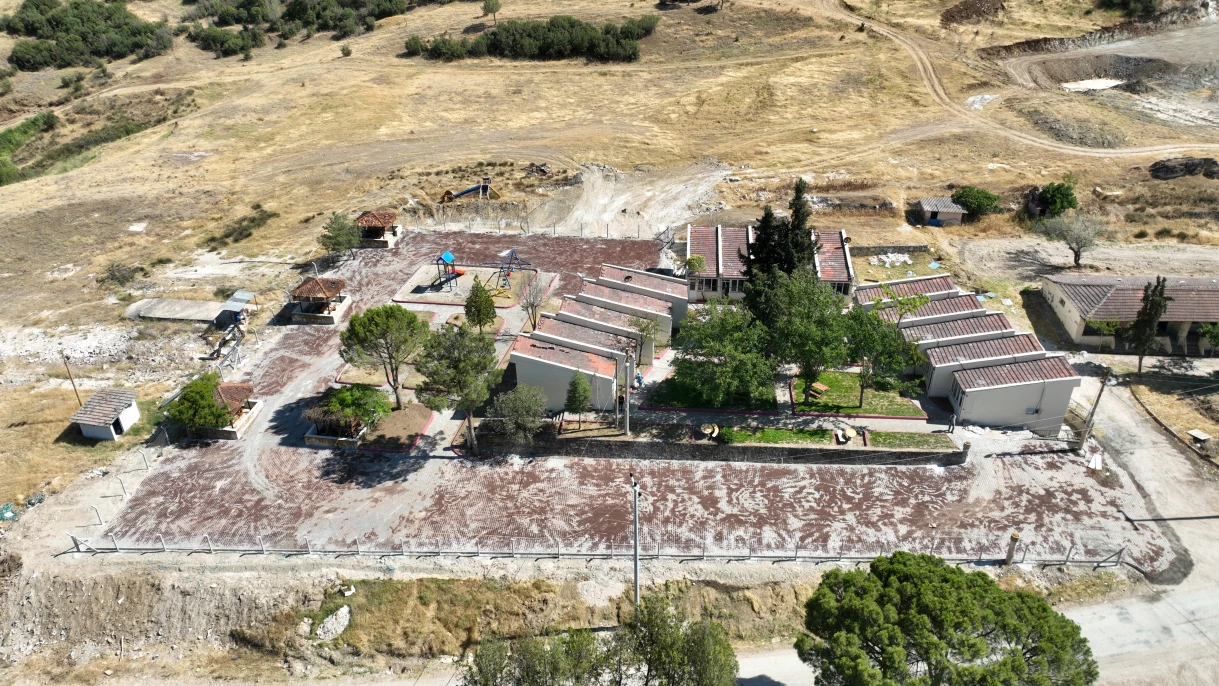
Private Emir Hot Springs Experience
Share your dates, group size and interests. We will propose a sensible route and confirm access before booking.
Request Your Private Programme





Emir Hot Springs belongs to the thermal landscape of Kula, not the Salihli town centre. Its existing page filename contains 'salihli' for consistency with the Manisa site’s established links, but the actual destination is in the Şehitlioğlu area of Kula district.
UNESCO's Kula–Salihli Global Geopark profile highlights Emir as a place with Roman and Ottoman bathing heritage, sometimes associated with the historical name Thermai Thessos.
The appeal is a combination of hot groundwater, rural scenery and evidence of long-standing use. Any present-day bathing arrangements should be confirmed separately from the historical story.
Hot mineral water is part of the geological system of the region. Never touch or enter an unregulated spring outlet.
Roman and Ottoman associations offer a cultural layer to the thermal setting; surviving fabric should be viewed respectfully.
The springs sit away from the main urban sightseeing circuit, making route planning and transport important.
Emir illustrates that the geopark protects a wider range of earth heritage than lava fields alone.
Useful orientation before planning a visit.
Şehitlioğlu area, Kula district (not Salihli)
Geothermal springs and historic bathing landscape
Ancient and Ottoman bathing traditions
Rural thermal area northeast of Kula
1–2 hours if current facilities are open
Confirm current entry and route conditions before travel
Emir makes the link between deep geology and human bathing traditions especially clear.
It is a useful thematic extension of a Kula geology tour, but only if current visitor access has been verified.
The wider Kula region has experienced both volcanism and tectonic activity, creating conditions for geothermal water to rise toward the surface.
Provincial tourism information describes remains of older bathing structures around the springs, indicating a tradition that predates modern spa facilities.
Descriptions of historic bath buildings and contemporary accommodation may not reflect present operations. The site’s history should not be mistaken for a guarantee that all baths can be entered today.
Thermal water and fault systems are part of the same active regional geological framework that shaped the Gediz basin.
Road and facility conditions may differ from older descriptions. Do not rely on a simple place name to navigate to an operating spa.
Hot mineral water is part of the geological system of the region. Never touch or enter an unregulated spring outlet.
Look at this feature in relation to the broader setting rather than as an isolated photo opportunity.
Roman and Ottoman associations offer a cultural layer to the thermal setting; surviving fabric should be viewed respectfully.
Small construction or geological details can tell a different story from the broad panorama.
The springs sit away from the main urban sightseeing circuit, making route planning and transport important.
What is visible today may reflect more than one historical period or natural process.
Emir illustrates that the geopark protects a wider range of earth heritage than lava fields alone.
Interpret this feature alongside the other highlights, while respecting current access limits.
Manisa brings together Lydian history, the Seven Churches of Revelation, Ottoman architecture, craft villages and volcanic geology. Emir Hot Springs offers a particular window into that varied region.
For a coherent itinerary, choose neighbouring sites by theme and geography rather than trying to cover the whole province in a single day.
Distinguish ancient bathing evidence from modern tourism claims. Archaeological remains do not necessarily prove uninterrupted use of a specific building.
Use UNESCO’s geopark overview to place Emir within the region’s volcanic and geothermal landscape.
Hot mineral water is part of the geological system of the region. Never touch or enter an unregulated spring outlet.
Roman and Ottoman associations offer a cultural layer to the thermal setting; surviving fabric should be viewed respectfully.
The springs sit away from the main urban sightseeing circuit, making route planning and transport important.
Emir illustrates that the geopark protects a wider range of earth heritage than lava fields alone.
Contact the current operator or local tourism office to verify whether bathing, day visits, changing rooms and reservations are available.
Hot-water bathing is not suitable for everyone; follow safety rules and seek medical advice if you have a condition affected by heat.
Pair Emir with Kula’s volcanic or historic-town sights only after confirming opening and road access.
If facilities are closed, treat it as a geology-and-heritage reference rather than promising a spa session.
Check facility operation and road conditions in all seasons. Thermal water is not a substitute for weather-appropriate clothing or safe transport.
Photograph landscape and permitted heritage remains; respect privacy and restrictions around any active bathing spaces.
Do not assume accessible pools or step-free approaches. Ask the operator about the actual layout before travelling.
The springs are in Kula district, in the Şehitlioğlu area. The established URL slug is retained, but travelers should navigate to Kula, not Salihli.
Explore Divlit Volcanic Park as a complementary stop. Check travel time and access before combining sites.
Explore Historic Kula Houses as a complementary stop. Check travel time and access before combining sites.
Explore Kula–Salihli UNESCO Global Geopark as a complementary stop. Check travel time and access before combining sites.
No. Despite this page’s legacy filename, Emir Hot Springs are in the Şehitlioğlu area of Kula district, Manisa.
The site is associated with Roman and Ottoman bathing traditions and appears in UNESCO’s Kula–Salihli geopark description.
Current access and facilities must be confirmed directly with local operators; historic descriptions are not a guarantee of operation.
Thermal bathing is a leisure activity for many visitors, but medical claims require professional advice.
Kula’s volcanic landscapes and historic town are thematic combinations if travel time and access allow.
Yes. Emir Hot Springs are highlighted in the Kula–Salihli UNESCO Global Geopark profile.
Respect signs, barriers and any directions from site staff.
Do not enter unstable historic bath ruins or unprotected geothermal outlets; respect private property and local water resources.
Keep entrances clear and ask before photographing residents or worshippers.
Carry away rubbish and avoid disturbing vegetation, rocks or historic material.
Wow Cappadocia / Venere Travel can plan a private, tailor-made route with a licensed guide and suitable vehicle, subject to confirmed access and without compulsory shopping stops.
Combine archaeology, living culture and natural landscapes at your preferred pace.
Share your dates, group size and interests. We will propose a sensible route and confirm access before booking.
Request Your Private Programme
Discover a related destination and plan a route with realistic travel times.
Read the Nearby Guide