Private Emecik Apollo Sanctuary Programme
Share your dates, interests and travel party so we can check access and propose a suitable route.
Request Your Private Programme





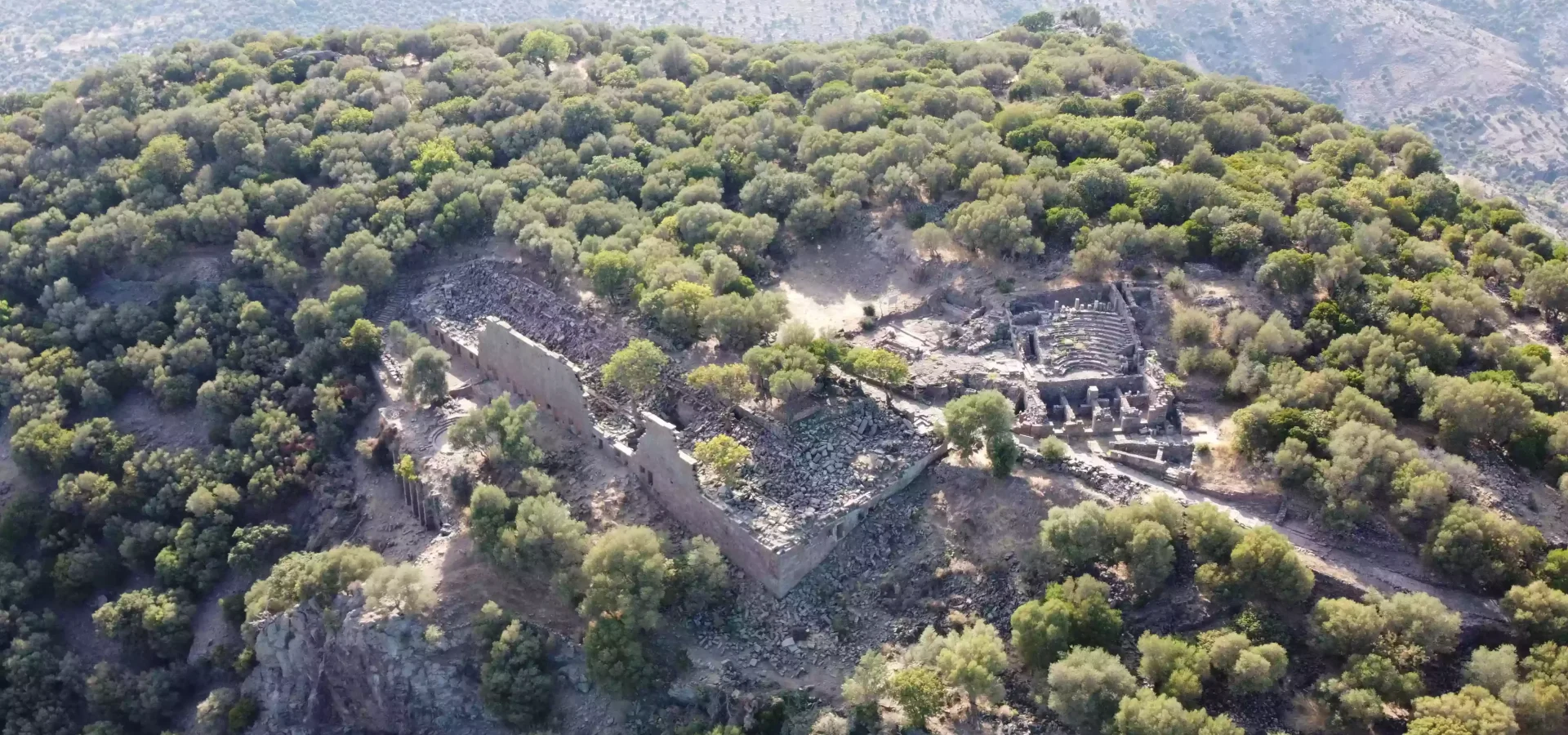
The sanctuary of Apollo near Emecik is a specialist stop for travellers interested in ancient religion and archaeology. Unlike the great temple complexes with standing columns, this is a landscape whose importance comes largely from excavation and finds.
Archaeological work has identified cult activity from the Geometric period, with a particularly significant role in the Archaic era. Finds such as votive figurines help reconstruct the networks of people and ideas that crossed the southeastern Aegean.
Because the site is not necessarily managed as a conventional walk-in attraction, it should be treated as a research location. Arrange access through appropriate local authorities rather than assuming an open monument with a ticket office.
Small dedicated objects are central to interpreting this sanctuary.
Apollo was worshipped in several forms across the Greek-speaking world.
These terms describe archaeological periods before the Classical city-states reached their familiar monumental form.
The Datça Peninsula sits near routes linking southwest Anatolia and Aegean islands.
An orientation to the landscape, heritage and practical visitor experience.
Near Emecik village, Datça Peninsula
Archaic-period religious archaeological site
Geometric and Archaic Greek periods
Inland sanctuary landscape with excavated remains
Research visit only where permission is confirmed
Apollo cult and votive offerings
Emecik Apollo Sanctuary offers a distinctive experience in Near Emecik village, Datça Peninsula: apollo cult and votive offerings. It is best appreciated with enough time to observe its setting and the details that make it different from other Muğla destinations.
The main reason to make time for Emecik Apollo Sanctuary is apollo cult and votive offerings. The setting—inland sanctuary landscape with excavated remains—adds meaning to the experience, but the details deserve attention as well as the view.
A thoughtful visit separates what is documented from what is only assumed. The place is part of a wider region with many layers of history, and its current visitor experience may differ from photographs or old guidebooks.
Excavations undertaken between 1998 and 2006 documented a sanctuary associated with Apollo. The evidence suggests that ritual use began in the Geometric period and became important in the Archaic world.
The sanctuary has been discussed in relation to the wider religious network of the Dorian communities, including traditions of Apollo Triopios. The precise relationship between ancient textual traditions and the excavated place requires careful scholarly interpretation.
Scientific analysis of limestone votive figurines has examined possible local and eastern Mediterranean sources of material. Such studies illuminate the movement of objects and craftsmanship without turning every imported object into proof of a specific ancient journey.
Geometric and Archaic Greek periods
Apollo cult and votive offerings
Inland sanctuary landscape with excavated remains
Public access, guiding and any permission requirements must be checked directly with local heritage authorities.
Emecik Apollo Sanctuary occupies inland sanctuary landscape with excavated remains in Near Emecik village, Datça Peninsula. This geography is not simply scenery: it shapes how people have moved through, used and understood the place.
The setting invites visitors to think about the relationship between this kind of place and the region's changing geography. It is worth slowing down to notice what can be seen from safe, permitted viewpoints.
A map can make the region look compact, but road bends, walking routes, protected zones and boat access can change what is realistic in a day. The sanctuary is associated with the Emecik area of the Datça Peninsula; use a confirmed local contact rather than an unverified map pin.
Small dedicated objects are central to interpreting this sanctuary. They reveal practices of offering and commemoration that can be archaeologically important even when monumental architecture has not survived.
Look for how this detail relates to the surrounding landscape and the wider regional story. It is worth comparing what can be seen today with what historical or local interpretation explains.
Apollo was worshipped in several forms across the Greek-speaking world. At Emecik, the local cult must be understood in its own landscape rather than assumed to match every famous Apollonian temple.
Look for how this detail relates to the surrounding landscape and the wider regional story. It is worth comparing what can be seen today with what historical or local interpretation explains.
These terms describe archaeological periods before the Classical city-states reached their familiar monumental form. Their material culture is crucial to understanding the long prehistory of later Knidian prominence.
Look for how this detail relates to the surrounding landscape and the wider regional story. It is worth comparing what can be seen today with what historical or local interpretation explains.
The Datça Peninsula sits near routes linking southwest Anatolia and Aegean islands. The sanctuary’s material record has contributed to discussion of those cross-sea relationships.
Look for how this detail relates to the surrounding landscape and the wider regional story. It is worth comparing what can be seen today with what historical or local interpretation explains.
Visitors may see only modest surface remains, and there may be no prepared interpretive route. A photograph of a field cannot substitute for excavation reports when describing the sanctuary’s layout.
Look for how this detail relates to the surrounding landscape and the wider regional story. It is worth comparing what can be seen today with what historical or local interpretation explains.
Cult sites often contain small, easily displaced material. Disturbing soil or collecting fragments destroys information that archaeologists need to understand context and dating.
This is one reason to spend time observing the place carefully instead of treating it as a quick stop. Do not dig, collect artefacts, enter trenches or cross boundaries around archaeological work.
A visit to Emecik Apollo Sanctuary becomes more meaningful when placed alongside other destinations in Muğla. Burgaz Ancient City and Knidos Ancient City offer contrasting perspectives, but they should be linked by realistic travel times rather than their apparent proximity on a map.
The province brings together Lycian and Carian archaeology, village heritage, protected coastlines and contemporary maritime life. Choosing a small number of complementary stops helps each retain its own identity instead of blending into a generic sightseeing day.
The historical setting of Emecik Apollo Sanctuary includes geometric and archaic greek periods. Different kinds of evidence—landscape, surviving architecture, local records and archaeological research—answer different questions and should not be treated as interchangeable.
To interpret Emecik Apollo Sanctuary responsibly, distinguish physical remains and documented facts from local tradition, travel marketing and uncertain reconstructions. Apollo cult and votive offerings is a useful starting point, but it does not explain the entire place.
Visitors should also consider what is absent from the visible scene: former buildings, seasonal activities, changing shorelines or communities whose history is not obvious in a photograph. A guide can help connect those layers without inventing certainty.
Focus on the features that are actually visible and accessible during your visit. Some places change with excavation, season, weather or conservation work; the points below are an interpretive guide, not a guarantee that every area is open.
Small dedicated objects are central to interpreting this sanctuary.
Apollo was worshipped in several forms across the Greek-speaking world.
These terms describe archaeological periods before the Classical city-states reached their familiar monumental form.
The Datça Peninsula sits near routes linking southwest Anatolia and Aegean islands.
Visitors may see only modest surface remains, and there may be no prepared interpretive route.
Cult sites often contain small, easily displaced material.
Practical details may change by season, conservation work, weather and local management. Verify the relevant official or local information before making a special journey; no fixed entrance fee or opening hour is assumed here.
Consider the sanctuary as a specialist archaeological visit alongside Burgaz and Knidos, not a casual roadside detour.
For a fuller day, consider Burgaz Ancient City and one other nearby place rather than adding every attraction in the district. Confirm whether each stop needs a road journey, boat transfer or substantial walk.
Allow time for breaks, local food and changes in weather. A flexible plan is more enjoyable and more respectful of protected landscapes than an itinerary built around exact minute-by-minute promises.
The sanctuary is associated with the Emecik area of the Datça Peninsula; use a confirmed local contact rather than an unverified map pin.
Research visit only where permission is confirmed
Consider Burgaz Ancient City if travel conditions allow.
Public access, guiding and any permission requirements must be checked directly with local heritage authorities.
Choose a mild-weather day if an authorised visit is possible; the site may be exposed.
The best time of day also depends on your goal: softer light for photography, comfortable temperatures for walking or suitable sea conditions for a boat or swim. Check the forecast and local guidance rather than assuming the same conditions every day.
Use approved viewpoints and avoid photographing unpublished excavation materials without permission.
The most useful images often include enough surrounding landscape to explain the place, rather than isolating one attractive detail. Respect private property, wildlife, archaeological barriers and any drone restrictions.
Do not assume accessible paths or facilities at this research-oriented site.
Ask about the exact route, distance, surface and available assistance if anyone in your group has mobility needs. A location may be reachable by vehicle yet still have steps, loose ground, boat ladders or uneven archaeological paths.
The sanctuary is associated with the Emecik area of the Datça Peninsula; use a confirmed local contact rather than an unverified map pin.
Confirm the final approach, parking or boat departure point and return options before travelling. The shortest straight-line distance is rarely the most useful estimate on the Datça Peninsula or around Fethiye’s mountain and island routes.
Use our Muğla travel guide to build a route. The places below are related by region or theme, not necessarily a short walk from Emecik Apollo Sanctuary.
Explore Burgaz Ancient City as a complementary stop. Check its access and the actual travel time from Emecik Apollo Sanctuary before adding it to your itinerary.
Explore Knidos Ancient City as a complementary stop. Check its access and the actual travel time from Emecik Apollo Sanctuary before adding it to your itinerary.
Explore Old Datça as a complementary stop. Check its access and the actual travel time from Emecik Apollo Sanctuary before adding it to your itinerary.
Explore Datça Travel Guide as a complementary stop. Check its access and the actual travel time from Emecik Apollo Sanctuary before adding it to your itinerary.
Emecik Apollo Sanctuary is in Near Emecik village, Datça Peninsula, in Muğla Province, southwestern Türkiye.
The main attraction is apollo cult and votive offerings. Its setting is inland sanctuary landscape with excavated remains.
Excavations undertaken between 1998 and 2006 documented a sanctuary associated with Apollo. The evidence suggests that ritual use began in the Geometric period and became important in the Archaic world.
A useful starting estimate is Research visit only where permission is confirmed. Allow extra time for transport, rest stops and any site-specific restrictions.
The sanctuary is associated with the Emecik area of the Datça Peninsula; use a confirmed local contact rather than an unverified map pin.
Public access, guiding and any permission requirements must be checked directly with local heritage authorities.
Choose a mild-weather day if an authorised visit is possible; the site may be exposed.
Do not assume accessible paths or facilities at this research-oriented site.
Consider Burgaz Ancient City or Knidos Ancient City, allowing for actual road, trail or boat conditions.
Do not dig, collect artefacts, enter trenches or cross boundaries around archaeological work.
Follow local access rules, avoid leaving waste and give residents, other visitors and protected habitats space. A thoughtful visit helps keep the destination welcoming and its heritage intact for future travellers.
Ask Wow Cappadocia / Venere Travel to help design a private regional journey according to your interests, realistic travel times and confirmed site access, without compulsory shopping stops.
Combine Emecik Apollo Sanctuary with a small number of complementary places in a well-paced itinerary.
Share your dates, interests and travel party so we can check access and propose a suitable route.
Request Your Private Programme
Discover ancient cities, coastal villages, protected nature and local traditions across the province.
View the Muğla Travel Guide