Plan a Private Muğla Experience
Tell us your interests and travel dates so we can suggest a practical regional route.
Request Your Private Programme





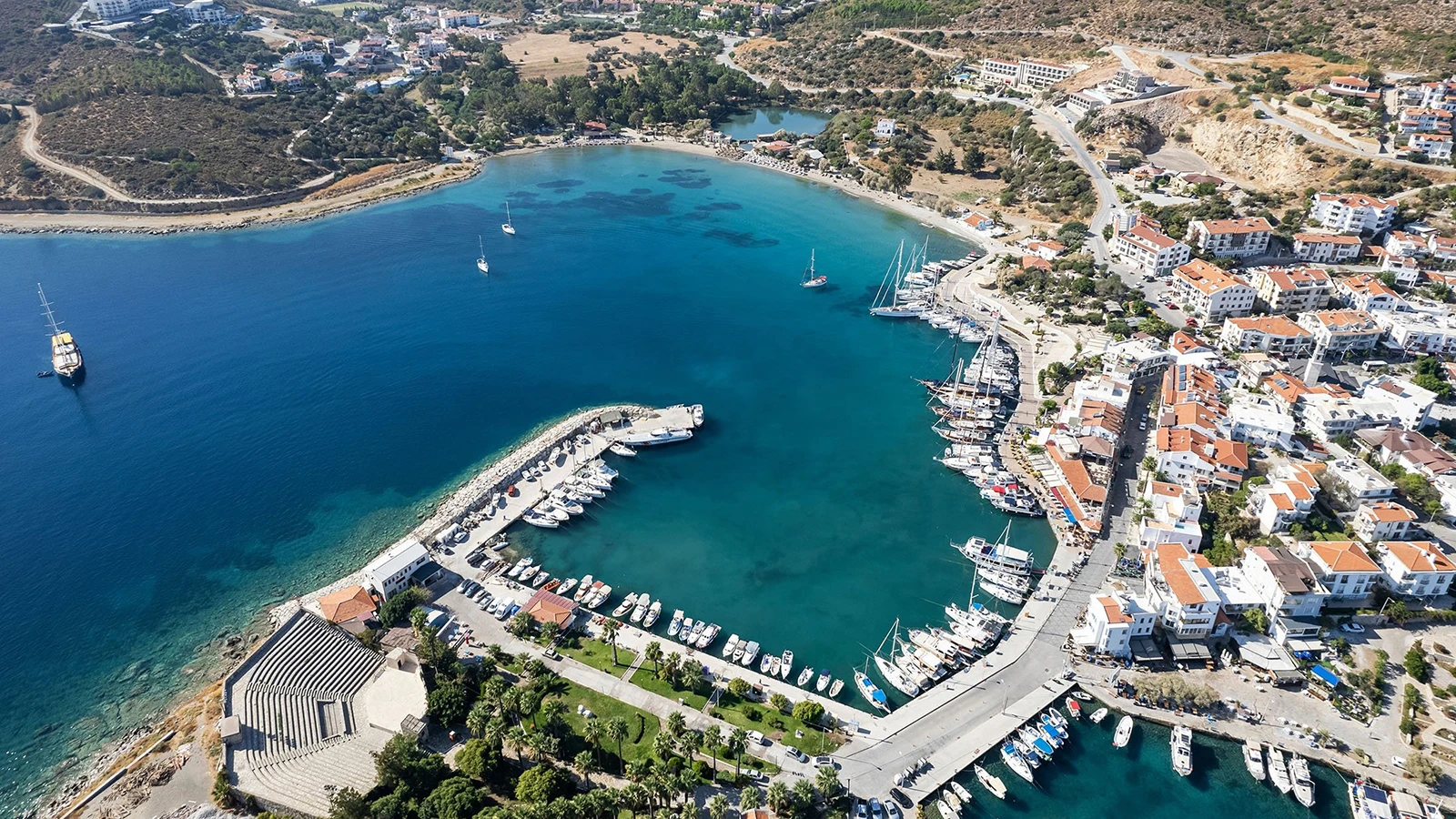
Datça occupies a long, narrow peninsula between the Aegean Sea to the north and the Mediterranean-facing waters to the south. Its appeal is not a single beach but the rhythm of small coves, inland villages, almond trees and a major ancient harbour city at the far western tip. The road journey is scenic and winding, so allow time rather than collecting stops in a hurry.
The ancient city of Knidos stood at the western tip, where maritime routes and the meeting of two sea-facing coasts shaped trade and scholarship. The district also preserves layers of rural settlement in Eski Datça and nearby villages. Knidos was known in antiquity for its sanctuary traditions, sculpture and medicine, but the famous Aphrodite sculpture itself is not on display at the site.
Most visitors reach Datça by road via Marmaris; ferry connections from the Bodrum side may operate seasonally. Knidos and the outer coves require a separate road journey. Check current road conditions, boat schedules and whether a beach has public facilities before setting out.
Stone houses, bougainvillea-covered lanes and small courtyards create a walkable village atmosphere. It is a living neighbourhood, so photograph doorways respectfully and do not assume private courtyards are public.
At the tip of the peninsula, remains of a theatre, temples and harbour works illustrate a city oriented toward the sea. Bring water and sun protection; exposed archaeological paths may be uneven.
A long bay with clear water and a village-scale waterfront is a popular swimming stop. The shoreline is often pebbly rather than a broad sandy beach, so water shoes may be useful.
These Mesudiye-area bays offer a quieter pace than the main town. They are close on a map but have different shoreline conditions and a limited amount of parking in busy periods.
An introduction to the landscape, heritage and practical choices that shape a good visit.
Datça Peninsula, Muğla
District and regional travel guide
The ancient city of Knidos stood at the western tip, where maritime routes and the meeting of two sea-facing coasts shaped trade a
Rugged hills, low scrub, pine patches, terraced fields and sheltered coves alternate along the peninsula. North-facing bays can fe
One day for selected highlights; two or more days for a fuller visit.
Ancient Knidos, Old Datça lanes, almond groves and two contrasting coasts
Datça occupies a long, narrow peninsula between the Aegean Sea to the north and the Mediterranean-facing waters to the south. Its appeal is not a single beach but the rhythm of small coves, inland villages, almond trees and a major ancient harbour city at the far western tip. The road journey is scenic and winding, so allow time rather than collecting stops in a hurry.
Rugged hills, low scrub, pine patches, terraced fields and sheltered coves alternate along the peninsula. North-facing bays can feel quite different from south-facing beaches when winds change. Almond orchards and small agricultural plots are part of the landscape, not merely decorative scenery.
The best experience comes from choosing a small number of stops that fit together geographically. The district is a living place, with local communities and sensitive heritage alongside visitor attractions.
The ancient city of Knidos stood at the western tip, where maritime routes and the meeting of two sea-facing coasts shaped trade and scholarship. The district also preserves layers of rural settlement in Eski Datça and nearby villages. Knidos was known in antiquity for its sanctuary traditions, sculpture and medicine, but the famous Aphrodite sculpture itself is not on display at the site.
Look for connections between older settlement patterns and today’s landscape. Modern towns, rural villages and archaeological sites preserve different evidence; not every story is visible in a single monument.
Datça Peninsula, Muğla
The ancient city of Knidos stood at the western tip, where maritime routes and the meeting of two sea-facing coasts shaped trade and scholarship. The district also preserves layers
Ancient Knidos, Old Datça lanes, almond groves and two contrasting coasts
Most visitors reach Datça by road via Marmaris; ferry connections from the Bodrum side may operate seasonally. Knidos and the outer coves require a separate road journey. Check current road conditions, boat schedules and whether a beach has public facilities before setting out.
Rugged hills, low scrub, pine patches, terraced fields and sheltered coves alternate along the peninsula. North-facing bays can feel quite different from south-facing beaches when winds change. Almond orchards and small agricultural plots are part of the landscape, not merely decorative scenery.
Seasonal weather, wind, road conditions and the distance between stops can change the feel of a visit. A beach day, a mountain walk and an archaeological excursion each require different preparation.
Respect protected environments, stay on established paths and leave enough time to enjoy the views without blocking roads or village lanes.
Stone houses, bougainvillea-covered lanes and small courtyards create a walkable village atmosphere. It is a living neighbourhood, so photograph doorways respectfully and do not assume private courtyards are public.
This is best enjoyed at an unhurried pace, with time to notice the relationship between the feature and the wider landscape. Spring is attractive for wildflowers, walking and village exploration; early autumn often suits sea swimming without peak-summer congestion. Summer brings intense sun and demand for popular beaches; winter travel rewards slower cultural visits but some seasonal businesses close.
At the tip of the peninsula, remains of a theatre, temples and harbour works illustrate a city oriented toward the sea. Bring water and sun protection; exposed archaeological paths may be uneven.
For a practical visit, check access and plan transport in advance. Most visitors reach Datça by road via Marmaris; ferry connections from the Bodrum side may operate seasonally. Knidos and the outer coves require a separate road journey. Check current road conditions, boat schedules and whether a beach has public facilities before setting out.
A long bay with clear water and a village-scale waterfront is a popular swimming stop. The shoreline is often pebbly rather than a broad sandy beach, so water shoes may be useful.
This is best enjoyed at an unhurried pace, with time to notice the relationship between the feature and the wider landscape. Spring is attractive for wildflowers, walking and village exploration; early autumn often suits sea swimming without peak-summer congestion. Summer brings intense sun and demand for popular beaches; winter travel rewards slower cultural visits but some seasonal businesses close.
These Mesudiye-area bays offer a quieter pace than the main town. They are close on a map but have different shoreline conditions and a limited amount of parking in busy periods.
For a practical visit, check access and plan transport in advance. Most visitors reach Datça by road via Marmaris; ferry connections from the Bodrum side may operate seasonally. Knidos and the outer coves require a separate road journey. Check current road conditions, boat schedules and whether a beach has public facilities before setting out.
The Nurlu almond is associated with Datça’s agricultural identity. Blossom season and harvest season are very different experiences; respect orchards and buy from legitimate producers.
This is best enjoyed at an unhurried pace, with time to notice the relationship between the feature and the wider landscape. Spring is attractive for wildflowers, walking and village exploration; early autumn often suits sea swimming without peak-summer congestion. Summer brings intense sun and demand for popular beaches; winter travel rewards slower cultural visits but some seasonal businesses close.
Viewpoints, villages and turnoffs are part of the journey. Resist squeezing the far western tip and every southern cove into a short day; narrow roads make timing variable.
For a practical visit, check access and plan transport in advance. Most visitors reach Datça by road via Marmaris; ferry connections from the Bodrum side may operate seasonally. Knidos and the outer coves require a separate road journey. Check current road conditions, boat schedules and whether a beach has public facilities before setting out.
Muğla is a province of varied landscapes and historic networks. Datça is connected to nearby coastal towns, inland routes and a shared heritage of Carian, Hellenistic, Roman, Byzantine and later Turkish settlement, though the balance differs from place to place.
Use the Muğla Travel Guide to compare the region with other destinations, but avoid planning solely from a map: mountains, bays and ferry routes complicate straight-line distances.
Avoid claiming that the entire peninsula can be seen in a few hours. Coastal weather and ferry operations change; never treat the ferry as a guaranteed daily service.
The ancient city of Knidos stood at the western tip, where maritime routes and the meeting of two sea-facing coasts shaped trade and scholarship. The district also preserves layers of rural settlement in Eski Datça and nearby villages. Knidos was known in antiquity for its sanctuary traditions, sculpture and medicine, but the famous Aphrodite sculpture itself is not on display at the site.
Different stops tell different parts of the story: Old Datça, Knidos Ancient City and Palamutbükü are not interchangeable experiences. A guide or a little reading beforehand can help separate documented history from local legend.
Be careful with dramatic claims about “hidden” sites or secret access. Many remains are protected, fragile or not open to independent exploration.
Choose from the six highlights below according to your interests, season and available transport. They are not necessarily adjacent.
Stone houses, bougainvillea-covered lanes and small courtyards create a walkable village atmosphere. It is a living neighbourhood, so photograph doorways respectfully and do not assume private courtyards are public.
At the tip of the peninsula, remains of a theatre, temples and harbour works illustrate a city oriented toward the sea. Bring water and sun protection; exposed archaeological paths may be uneven.
A long bay with clear water and a village-scale waterfront is a popular swimming stop. The shoreline is often pebbly rather than a broad sandy beach, so water shoes may be useful.
These Mesudiye-area bays offer a quieter pace than the main town. They are close on a map but have different shoreline conditions and a limited amount of parking in busy periods.
The Nurlu almond is associated with Datça’s agricultural identity. Blossom season and harvest season are very different experiences; respect orchards and buy from legitimate producers.
Viewpoints, villages and turnoffs are part of the journey. Resist squeezing the far western tip and every southern cove into a short day; narrow roads make timing variable.
Most visitors reach Datça by road via Marmaris; ferry connections from the Bodrum side may operate seasonally. Knidos and the outer coves require a separate road journey. Check current road conditions, boat schedules and whether a beach has public facilities before setting out.
Museums, protected beaches, boats and archaeological sites may have separate rules. Confirm current opening arrangements and fees from official or local operators before travel.
Carry water and sun protection for outdoor stops, and plan for uneven paving or slopes in historic settings.
Start with Old Datça if it fits your arrival point, then consider Knidos Ancient City as a second focus. Add Palamutbükü only when travel time and daylight allow.
A full day should include a relaxed meal and enough time for unexpected delays. If your main interest is almond landscape, make that the centre of the itinerary instead of forcing it into a crowded schedule.
For a two-day visit, separate heritage and nature/coast themes so neither feels rushed.
Spring is attractive for wildflowers, walking and village exploration; early autumn often suits sea swimming without peak-summer congestion. Summer brings intense sun and demand for popular beaches; winter travel rewards slower cultural visits but some seasonal businesses close.
Weather and sea conditions can affect the value of a planned stop more than the calendar alone. Check the forecast, road information and boat services shortly before travelling.
Early mornings are often pleasant for outdoor photography and quieter walks, while summer midday heat can make exposed ruins uncomfortable.
Begin with a broad composition that shows rugged hills, low scrub, pine patches, terraced fields and sheltered coves alternate along the peninsula. north-facing bays can feel quite different from south-facing beaches when winds change. almond orchards and small agricultural plots are part of the landscape, not merely decorative scenery.
Then move closer to details such as old datça or knidos ancient city. Use only safe public vantage points and never climb fragile ruins for a photograph.
Respect residents, nesting wildlife and other visitors. Drone use may be restricted; check the applicable rules and permissions before flying.
The district includes a mixture of modern streets, old lanes, exposed sites and natural paths. Step-free access cannot be assumed at every highlight.
Avoid claiming that the entire peninsula can be seen in a few hours. Coastal weather and ferry operations change; never treat the ferry as a guaranteed daily service.
Ask the specific attraction about ramps, toilets, parking and surfaces if mobility access is important. Families should adapt the route to the least mobile member of the group.
Most visitors reach Datça by road via Marmaris; ferry connections from the Bodrum side may operate seasonally. Knidos and the outer coves require a separate road journey. Check current road conditions, boat schedules and whether a beach has public facilities before setting out.
Do not treat a short straight-line distance as a reliable driving time. Roads around coves, mountains and archaeological landscapes can be winding, and parking may be limited.
Confirm return transport in advance when visiting remote beaches or rural sites.
These nearby or thematically related pages can help build a wider Muğla itinerary. Check actual travel time before combining them.
An excellent thematic addition to Datça. Check actual road time and site access before combining stops in one day.
An excellent thematic addition to Datça. Check actual road time and site access before combining stops in one day.
An excellent thematic addition to Datça. Check actual road time and site access before combining stops in one day.
An excellent thematic addition to Datça. Check actual road time and site access before combining stops in one day.
Datça is in Datça Peninsula, Muğla, southwestern Türkiye.
Datça occupies a long, narrow peninsula between the Aegean Sea to the north and the Mediterranean-facing waters to the south. Its appeal is not a single beach but the rhythm of small coves, inland villages, almond trees and a major ancient harbour city at the far western tip. The road journey is scenic and winding, so allow time rather than collecting stops in a hurry.
The ancient city of Knidos stood at the western tip, where maritime routes and the meeting of two sea-facing coasts shaped trade and scholarship. The district also preserves layers of rural settlement in Eski Datça and nearby villages. Knidos was known in antiquity for its sanctuary traditions, sculpture and medicine, but the famous Aphrodite sculpture itself is not on display at the site.
Begin with Old Datça and Knidos Ancient City, then choose additional stops according to travel time and your interests.
A full day covers selected highlights; two or more days give a better introduction to dispersed sites and coastal or village stops. The ideal duration depends on your starting point.
Most visitors reach Datça by road via Marmaris; ferry connections from the Bodrum side may operate seasonally. Knidos and the outer coves require a separate road journey. Check current road conditions, boat schedules and whether a beach has public facilities before setting out.
Spring is attractive for wildflowers, walking and village exploration; early autumn often suits sea swimming without peak-summer congestion. Summer brings intense sun and demand for popular beaches; winter travel rewards slower cultural visits but some seasonal businesses close.
Not necessarily. Museums, archaeological sites, boat services and private attractions have different operating arrangements. Verify each stop with its operator before departure.
Avoid claiming that the entire peninsula can be seen in a few hours. Coastal weather and ferry operations change; never treat the ferry as a guaranteed daily service.
Avoid claiming that the entire peninsula can be seen in a few hours. Coastal weather and ferry operations change; never treat the ferry as a guaranteed daily service.
Respect local residents, private land and protected heritage. Stay on signed paths, carry rubbish away and do not remove stones, plants or archaeological material.
Support local guides, producers and small businesses where practical; responsible tourism should benefit the communities who live here.
Ask Wow Cappadocia / Venere Travel about a tailored cultural and culinary itinerary with realistic travel times and no compulsory shopping stops.
Combine Datça with a comfortable selection of nearby cultural stops and local flavours.
Tell us your interests and travel dates so we can suggest a practical regional route.
Request Your Private Programme
Discover ancient cities, villages, protected nature and regional food traditions.
View the Muğla Travel Guide