Private Bodrum Travel Guide Programme
Share your dates, interests and group size so we can check access and suggest a practical route.
Request Your Private Programme





Bodrum is more than a summer resort: the modern town occupies ancient Halicarnassus, the city associated with Mausolus and one of the ancient world’s Seven Wonders. The castle and Museum of Underwater Archaeology introduce a maritime story that continues in the gulet harbours and peninsula villages. Good planning separates the walkable town centre from distant coves and settlements.
Ancient Halicarnassus was a major Carian centre and the seat of Mausolus, whose monumental tomb gave the word mausoleum to many languages. The Knights of St John later built the Castle of St Peter using stone from earlier structures. Modern Bodrum became closely associated with the writer Cevat Şakir Kabaağaçlı, known as the Fisherman of Halicarnassus, and the blue-cruise tradition.
For a rewarding visit, focus on how the setting, the surviving features and the surrounding district fit together. Arrive through Bodrum’s airport or regional road network. Explore the central monuments on foot where practical, but allow separate transport for Gümüşlük, Yalıkavak or other peninsula destinations.
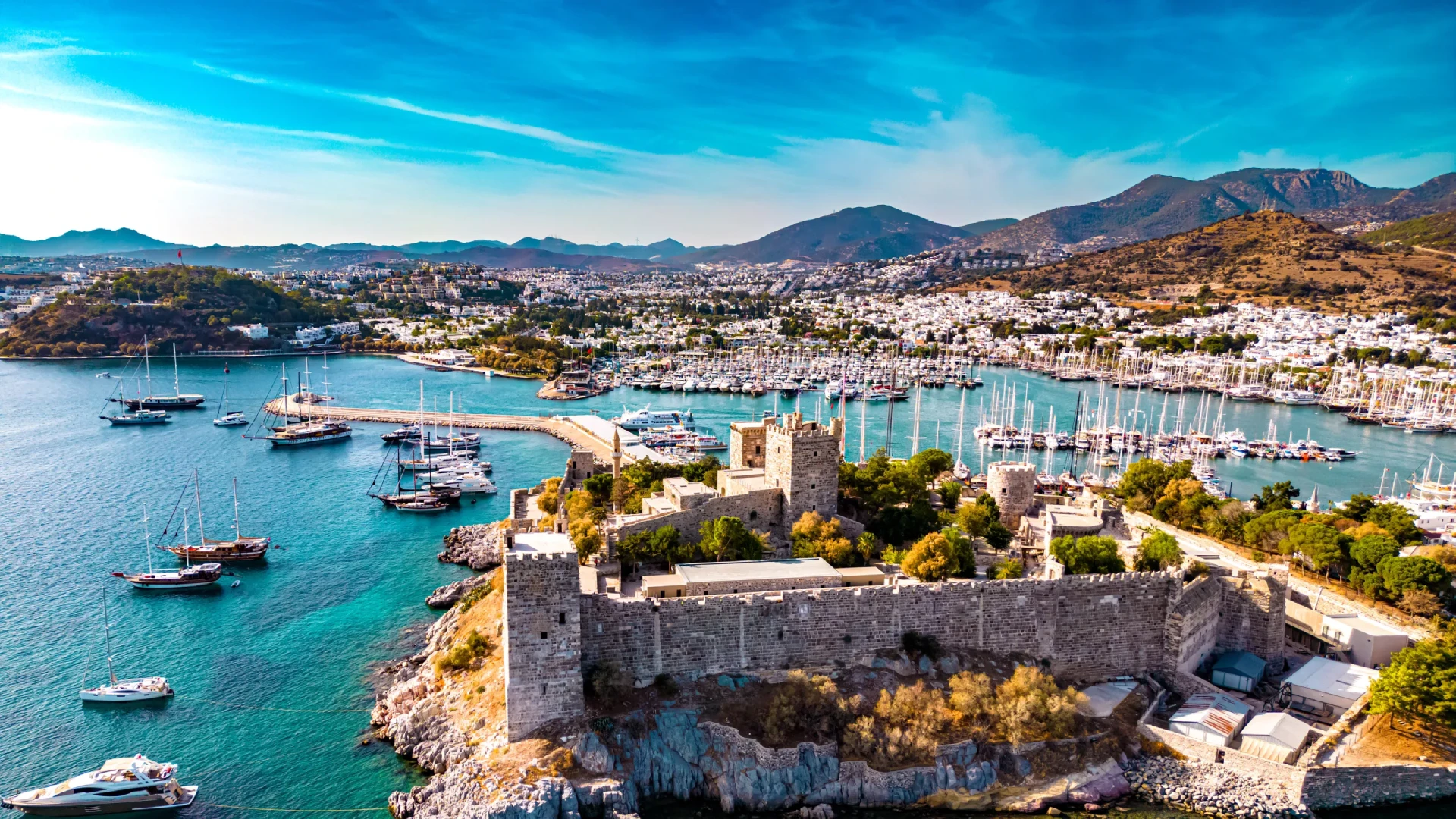
The harbour fortress is a major landmark and home to underwater archaeological collections.
The surviving archaeological site helps visitors imagine one of antiquity’s most famous tombs.
The hillside seating recalls public life in the Carian and later city.
Part of the ancient fortification system survives west of the centre.
Orientation, heritage and practical visitor advice before you travel.
Bodrum district, southwestern Muğla
Coastal town and peninsula guide
Ancient Halicarnassus, medieval Knights and modern maritime culture
Whitewashed coastal town, harbours, hills and peninsula villages
Plan at least 2–3 days for the town and peninsula; one day covers only selected highlights.
Bodrum Castle, the Mausoleum and lively Aegean waterfront
Bodrum is more than a summer resort: the modern town occupies ancient Halicarnassus, the city associated with Mausolus and one of the ancient world’s Seven Wonders. The castle and Museum of Underwater Archaeology introduce a maritime story that continues in the gulet harbours and peninsula villages. Good planning separates the walkable town centre from distant coves and settlements.
The distinctive experience here is bodrum castle, the mausoleum and lively aegean waterfront. The peninsula alternates between busy marinas, sheltered bays, dry hills and traditional village areas. The whitewashed townscape is only one face of the district; travel between beaches and archaeological sites takes longer than a central map may suggest.
Rather than rushing from one photo stop to another, make time to understand the place in its wider Muğla setting. Spring and autumn are good for archaeology and walking; summer favours swimming but brings traffic and heat.
Ancient Halicarnassus was a major Carian centre and the seat of Mausolus, whose monumental tomb gave the word mausoleum to many languages. The Knights of St John later built the Castle of St Peter using stone from earlier structures. Modern Bodrum became closely associated with the writer Cevat Şakir Kabaağaçlı, known as the Fisherman of Halicarnassus, and the blue-cruise tradition.
The key is to distinguish what can be seen on the ground from broader traditions, modern descriptions and reconstructions. Bodrum is more than a summer resort: the modern town occupies ancient Halicarnassus, the city associated with Mausolus and one of the ancient world’s Seven Wonders. The castle and Museum of Underwater Archaeology introduce a maritime story that continues in the gulet harbours and peninsula villages. Good planning separates the walkable town centre from distant coves and settlements.
Ancient Halicarnassus, medieval Knights and modern maritime culture
Bodrum Castle, the Mausoleum and lively Aegean waterfront
Bodrum district, southwestern Muğla
Arrive through Bodrum’s airport or regional road network. Explore the central monuments on foot where practical, but allow separate transport for Gümüşlük, Yalıkavak or other peninsula destinations.
The peninsula alternates between busy marinas, sheltered bays, dry hills and traditional village areas. The whitewashed townscape is only one face of the district; travel between beaches and archaeological sites takes longer than a central map may suggest.
The physical setting affects the pace and safety of a visit. Do not assume museum hours or ferry schedules remain constant. Respect residents in narrow lanes and archaeological protection zones.
The wider district also provides opportunities to connect scenery with cultural history, provided travel times and seasonal conditions are checked.
The harbour fortress is a major landmark and home to underwater archaeological collections.
This is a useful place to slow down and examine the relationship between the feature and the surrounding landscape. The peninsula alternates between busy marinas, sheltered bays, dry hills and traditional village areas. The whitewashed townscape is only one face of the district; travel between beaches and archaeological sites takes longer than a central map may suggest.
The surviving archaeological site helps visitors imagine one of antiquity’s most famous tombs.
Look for the details that distinguish this stop from the other features nearby. Ancient Halicarnassus was a major Carian centre and the seat of Mausolus, whose monumental tomb gave the word mausoleum to many languages. The Knights of St John later built the Castle of St Peter using stone from earlier structures. Modern Bodrum became closely associated with the writer Cevat Şakir Kabaağaçlı, known as the Fisherman of Halicarnassus, and the blue-cruise tradition.
The hillside seating recalls public life in the Carian and later city.
A practical visit should be shaped by conditions on the day. Do not assume museum hours or ferry schedules remain constant. Respect residents in narrow lanes and archaeological protection zones.
Part of the ancient fortification system survives west of the centre.
This is a useful place to slow down and examine the relationship between the feature and the surrounding landscape. The peninsula alternates between busy marinas, sheltered bays, dry hills and traditional village areas. The whitewashed townscape is only one face of the district; travel between beaches and archaeological sites takes longer than a central map may suggest.
A western peninsula village combines a waterfront atmosphere with traces of antiquity.
Look for the details that distinguish this stop from the other features nearby. Ancient Halicarnassus was a major Carian centre and the seat of Mausolus, whose monumental tomb gave the word mausoleum to many languages. The Knights of St John later built the Castle of St Peter using stone from earlier structures. Modern Bodrum became closely associated with the writer Cevat Şakir Kabaağaçlı, known as the Fisherman of Halicarnassus, and the blue-cruise tradition.
Yalıkavak, Turgutreis and smaller inlets offer distinct experiences; they are not all within walking distance.
A practical visit should be shaped by conditions on the day. Do not assume museum hours or ferry schedules remain constant. Respect residents in narrow lanes and archaeological protection zones.
Ancient Halicarnassus was a major Carian centre and the seat of Mausolus, whose monumental tomb gave the word mausoleum to many languages. The Knights of St John later built the Castle of St Peter using stone from earlier structures. Modern Bodrum became closely associated with the writer Cevat Şakir Kabaağaçlı, known as the Fisherman of Halicarnassus, and the blue-cruise tradition.
The place is connected to other destinations through geography, history and travel routes, but not all nearby-looking places are easy to combine. Arrive through Bodrum’s airport or regional road network. Explore the central monuments on foot where practical, but allow separate transport for Gümüşlük, Yalıkavak or other peninsula destinations.
Begin with the most visible elements: bodrum castle, the mausoleum and lively aegean waterfront. Then consider what they reveal about the people, water, terrain or transport that shaped this place.
Bodrum is more than a summer resort: the modern town occupies ancient Halicarnassus, the city associated with Mausolus and one of the ancient world’s Seven Wonders. The castle and Museum of Underwater Archaeology introduce a maritime story that continues in the gulet harbours and peninsula villages. Good planning separates the walkable town centre from distant coves and settlements.
Do not confuse a compelling legend, an old tourism description or a map label with a verified archaeological or conservation finding. Ancient Halicarnassus was a major Carian centre and the seat of Mausolus, whose monumental tomb gave the word mausoleum to many languages. The Knights of St John later built the Castle of St Peter using stone from earlier structures. Modern Bodrum became closely associated with the writer Cevat Şakir Kabaağaçlı, known as the Fisherman of Halicarnassus, and the blue-cruise tradition.
Choose the stops that best fit your interests and the conditions on the day. The six highlights below are not necessarily a fixed walking circuit.
The harbour fortress is a major landmark and home to underwater archaeological collections.
The surviving archaeological site helps visitors imagine one of antiquity’s most famous tombs.
The hillside seating recalls public life in the Carian and later city.
Part of the ancient fortification system survives west of the centre.
A western peninsula village combines a waterfront atmosphere with traces of antiquity.
Yalıkavak, Turgutreis and smaller inlets offer distinct experiences; they are not all within walking distance.
Plan at least 2–3 days for the town and peninsula; one day covers only selected highlights.
Arrive through Bodrum’s airport or regional road network. Explore the central monuments on foot where practical, but allow separate transport for Gümüşlük, Yalıkavak or other peninsula destinations.
Opening times, entry arrangements, boat schedules and facilities are not guaranteed by this guide. Check the relevant official authority or current local operator before setting out. Carry water and allow time for unexpected delays.
Start by confirming where the public entrance, departure point or appropriate viewpoint is located. Arrive through Bodrum’s airport or regional road network. Explore the central monuments on foot where practical, but allow separate transport for Gümüşlük, Yalıkavak or other peninsula destinations.
Once there, begin with bodrum castle, then consider mausoleum at halicarnassus and ancient theatre if they are safely accessible. This sequence is thematic, not a promise of a signed path.
Finish with a pause to take in the setting, rather than trying to include every possible feature. Plan at least 2–3 days for the town and peninsula; one day covers only selected highlights.
Spring and autumn are good for archaeology and walking; summer favours swimming but brings traffic and heat.
Summer heat, winter rain, sea conditions and visitor numbers affect different Muğla destinations in different ways. Check the local forecast and access rules before committing to a long journey.
A quiet hour can be more rewarding than a rushed stop. Allow flexibility for conservation closures, maintenance or changes in transport.
Start with a wide view that explains the landscape: whitewashed coastal town, harbours, hills and peninsula villages. Then look for details that tell the local story, such as bodrum castle or mausoleum at halicarnassus.
Photograph only from public, safe areas. Do not climb historic structures, approach protected wildlife or block narrow paths for a better angle.
Morning or evening light may flatter the scene, but access and safety rules always take priority over photography.
Do not assume museum hours or ferry schedules remain constant. Respect residents in narrow lanes and archaeological protection zones.
Accessible routes, toilets, handrails and step-free access cannot be assumed. Ask the site manager or operator for current details if mobility, balance or sensory access is a concern.
Families should match the route to the youngest or least mobile member of the group and be prepared to shorten the visit.
Arrive through Bodrum’s airport or regional road network. Explore the central monuments on foot where practical, but allow separate transport for Gümüşlük, Yalıkavak or other peninsula destinations.
Check actual travel time rather than straight-line distance. Some routes involve narrow roads, seasonal boat services, river crossings or rough tracks; a rental-car map does not establish public access.
If travelling independently, confirm where you can legally park and how you will return. For remote places, share your plan with someone before setting out.
Browse the Muğla travel guide for more regional ideas. The links below are thematic suggestions, not a guarantee of short driving distance.
Consider this as a complementary Muğla stop; verify the actual route, opening arrangements and time needed from Bodrum Travel Guide before combining them.
Consider this as a complementary Muğla stop; verify the actual route, opening arrangements and time needed from Bodrum Travel Guide before combining them.
Consider this as a complementary Muğla stop; verify the actual route, opening arrangements and time needed from Bodrum Travel Guide before combining them.
Consider this as a complementary Muğla stop; verify the actual route, opening arrangements and time needed from Bodrum Travel Guide before combining them.
Bodrum Travel Guide is in Bodrum district, southwestern Muğla, in Muğla Province, southwestern Türkiye.
Its defining appeal is bodrum castle, the mausoleum and lively aegean waterfront. The surrounding setting is whitewashed coastal town, harbours, hills and peninsula villages.
Ancient Halicarnassus was a major Carian centre and the seat of Mausolus, whose monumental tomb gave the word mausoleum to many languages. The Knights of St John later built the Castle of St Peter using stone from earlier structures. Modern Bodrum became closely associated with the writer Cevat Şakir Kabaağaçlı, known as the Fisherman of Halicarnassus, and the blue-cruise tradition.
Plan at least 2–3 days for the town and peninsula; one day covers only selected highlights. Add realistic time for transport, breaks and any access restrictions.
Arrive through Bodrum’s airport or regional road network. Explore the central monuments on foot where practical, but allow separate transport for Gümüşlük, Yalıkavak or other peninsula destinations.
Access, fees and operating hours can change. Check the relevant official site or local operator shortly before travelling; do not rely on an unverified price or timetable.
Spring and autumn are good for archaeology and walking; summer favours swimming but brings traffic and heat.
Do not assume museum hours or ferry schedules remain constant. Respect residents in narrow lanes and archaeological protection zones.
Consider Bodrum Castle, Mausoleum at Halicarnassus, Bodrum Ancient Theatre. Plan by actual travel time and conditions, not just map distance.
Do not assume museum hours or ferry schedules remain constant. Respect residents in narrow lanes and archaeological protection zones.
Leave no litter, follow official restrictions and give wildlife, residents and other visitors room. Do not remove stones, plants or artefacts, and do not touch protected paintings or historic surfaces.
Responsible travel is especially important in a province where archaeological landscapes, living villages, beaches and sensitive wetlands exist side by side.
Ask Wow Cappadocia / Venere Travel about a tailored regional itinerary, with realistic distances and confirmed site access rather than compulsory shopping stops.
Combine Bodrum Travel Guide with a small number of complementary places at a comfortable pace.
Share your dates, interests and group size so we can check access and suggest a practical route.
Request Your Private Programme
Discover ancient cities, coastal villages, protected nature and local traditions across the province.
View the Muğla Travel Guide