Simple Dough
The official Balıkesir recipe combines egg, yoghurt, sunflower oil, salt, baking soda and flour.






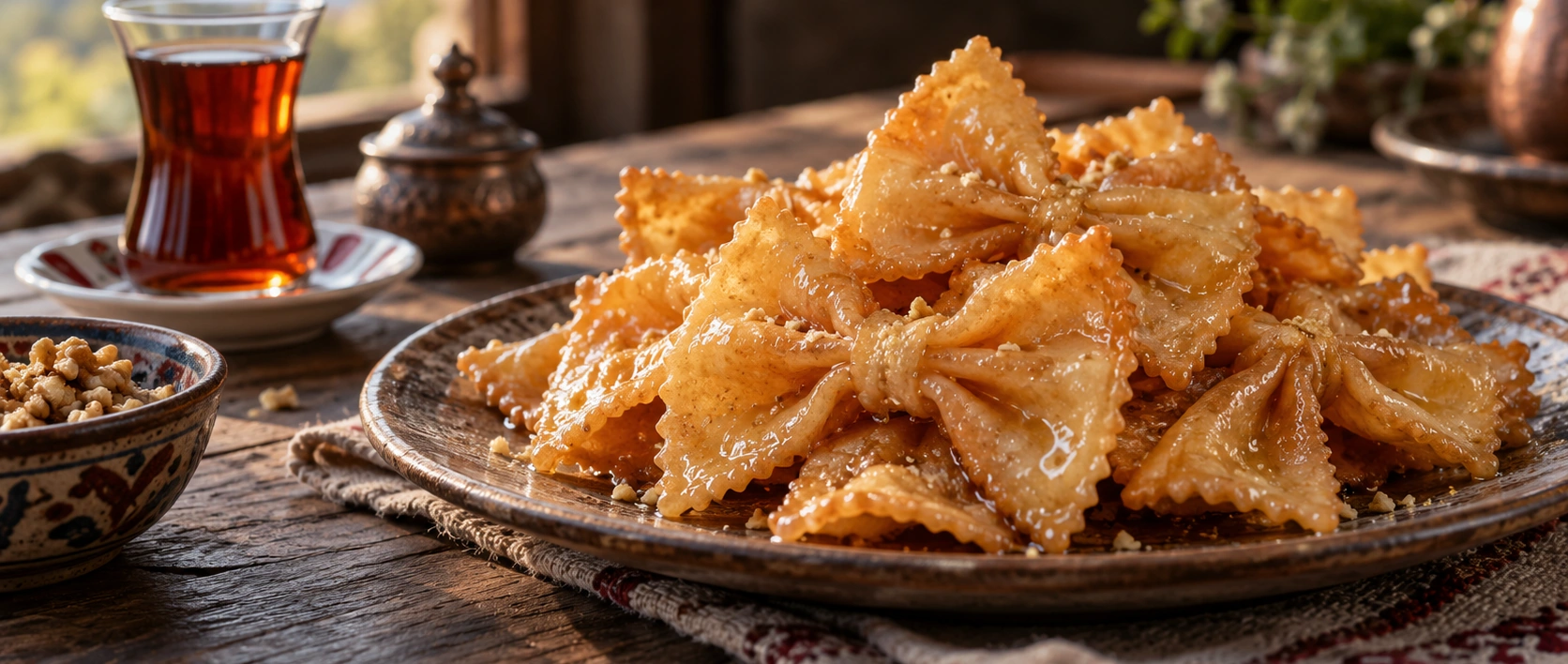
Mafiş Tatlısı is one of Balıkesir's traditional syrup desserts: a simple yoghurt-and-egg dough is rolled thinly, cut into small pieces, pinched through the middle into a bow shape, fried until crisp and immediately placed in cold syrup.
The Balıkesir Provincial Directorate of Culture and Tourism records a particularly concise version made with egg, yoghurt, sunflower oil, salt, baking soda and flour. The dough is divided into walnut-sized pieces, rolled thin with an oklava, cut into squares and shaped by squeezing the centre.
Its character comes less from a complicated ingredient list than from technique. Thin rolling gives the pastry a light crispness, the bow shape creates folds and ridges, hot-oil frying gives colour, and the final contact with cold syrup adds sweetness while preserving some of the fried structure.
Small dough squares are pinched in the middle to create the characteristic fiyonk, or bow, shape.
The traditional method uses an oklava to create a thin sheet before the dough is cut and shaped.
The shaped pieces go directly into hot oil, where they puff slightly and become golden at the edges.
Freshly fried mafiş is transferred into previously prepared cold syrup, one of the defining steps of the method.
Essential information about one of Balıkesir's traditional fried and syrup-soaked pastries.
Balıkesir Province in north-western Türkiye, where Mafiş Tatlısı is listed among the province's traditional foods.
Thin pieces of dough are pinched in the middle to resemble a small bow or ribbon.
The pastry is fried in hot oil rather than baked.
The hot fried pieces are transferred into cold syrup and removed once they have absorbed enough sweetness.
A modest pantry dough becomes memorable through rolling, shaping, frying and syrup.
Balıkesir's regional cuisine includes a broad range of grain dishes, dairy foods, vegetable preparations, meat dishes and sweets. Within that larger food culture, Mafiş Tatlısı represents the familiar Anatolian tradition of transforming a basic flour dough into a festive-looking dessert.
The province's culture authority records Mafiş Tatlısı directly within its traditional food collection. The published method is remarkably economical: there is no elaborate filling, long spice list or complicated finishing technique. The visual identity comes from the bow shape, while the flavour comes from frying and syrup.
This simplicity is part of the dessert's appeal. The same dough can be prepared from everyday kitchen ingredients, yet careful rolling and shaping turn it into something decorative enough for a shared table.
Modern household recipes often introduce small changes such as vinegar, baking powder, lemon in the syrup or a nut garnish. Those versions are useful to understand, but the provincial method remains the best reference point for describing Balıkesir's traditional form.
The dessert is defined by a combination of thin dough, a bow-like shape, hot-oil frying and cold syrup.
The official Balıkesir recipe combines egg, yoghurt, sunflower oil, salt, baking soda and flour.
The dough is divided into small pieces before rolling, making each sheet easier to handle.
Each portion is rolled thinly with the long rolling pin widely used in Turkish pastry making.
The rolled dough is cut into manageable pieces before shaping.
Squeezing the middle creates the dessert's characteristic bow-tie silhouette.
The thin pieces cook quickly and develop crisp edges and a golden surface.
The fried pastry is transferred while hot into syrup that has already been prepared and cooled.
Thin rolling and brief frying help distinguish mafiş from heavier syrup desserts.
Balıkesir Mafiş Tatlısı is a fried pastry dessert associated with the traditional cuisine of Balıkesir. A soft dough is rolled thin, cut into small pieces, pinched into bow shapes, fried and dipped into cold syrup.
Unlike filled pastries, mafiş does not depend on nuts, cheese or cream inside the dough. Its texture is created almost entirely by the thickness of the sheet, the folds produced during shaping and the speed of frying.
The result sits somewhere between a crisp fried pastry and a syrup dessert. The outside develops colour and delicacy in the oil, while the syrup supplies sweetness after cooking rather than being baked into the pastry itself.
Wheat flour forms the structure of the pastry.
Yoghurt is part of the traditional Balıkesir dough.
The bow is created by pinching each cut piece at the centre.
The pastry receives its syrup only after it leaves the hot oil.
The Balıkesir Provincial Directorate of Culture and Tourism records the dough with 1 egg, 1 cup measure of yoghurt, 1 cup measure of sunflower oil, a pinch of salt, 1 teaspoon of baking soda and enough flour to form the dough.
The ingredients are kneaded together, then divided into walnut-sized pieces. Each piece is rolled very thin with an oklava until it reaches roughly the size of two hands and is then cut into squares.
Each square is squeezed in the centre to form a bow. The shaped pieces are fried in hot oil, removed and placed directly into previously prepared cold syrup. Once they have taken up the syrup, they are transferred to a serving plate.
One useful distinction is that the official provincial description specifies cold syrup but does not publish a fixed sugar-to-water ratio. Later household recipes often provide their own syrup proportions.
Combine the wet ingredients, salt, baking soda and enough flour to create a workable dough.
Divide the dough into walnut-sized pieces.
Use an oklava to open each piece into a thin sheet.
Cut into squares and squeeze each one through the middle.
Cook in hot oil until crisp and lightly golden.
Move the hot pastry into cold syrup before serving.
The traditional Balıkesir formula is short, but each ingredient has a clear role. Egg adds structure and richness, yoghurt contributes moisture and tenderness, and sunflower oil enriches the dough without making it excessively stiff.
A small amount of baking soda provides lightness. Salt keeps the dough from tasting flat, even though the final pastry is sweet. Flour is added only as needed, so the exact amount can vary according to egg size, yoghurt consistency and the flour itself.
The goal is a dough firm enough to roll cleanly but not so dry that it cracks at the edges. Because the pieces are rolled thin, flexibility matters as much as firmness.
Helps bind the dough and contributes colour during frying.
Adds moisture and a gently tender character.
Enriches the dough in the documented provincial version.
Provides a small amount of lift and lightness.
Balances the sweetness that comes later from the syrup.
Added gradually until the dough becomes workable and suitable for rolling.
Thin rolling is one of the most important steps in the dessert. A thick piece of dough would fry more slowly and produce a heavier, breadier result. A thin sheet cooks quickly and develops the brittle, delicate edges associated with mafiş.
The official Balıkesir method describes each walnut-sized portion being opened to about two-hand size with an oklava. This gives a useful sense of the intended thinness without relying on a modern millimetre measurement.
Even thickness matters. Very thin edges can darken before the centre is ready, while thicker patches stay doughy. Turning the sheet during rolling and applying pressure evenly helps create a more consistent result.
Move the oklava across the full sheet rather than pressing one area repeatedly.
The pastry should fry quickly rather than behave like a thick doughnut.
Dust only enough flour to prevent sticking during rolling.
Dry, cracked edges usually mean the dough or work surface has become too floury.
Once the dough is rolled thin, it is cut into small squares. Each piece is then squeezed in the middle so the two sides flare outward like a bow or ribbon.
This shape is not merely decorative. The pinched centre creates a thicker middle while the open sides remain thinner. During frying, those different thicknesses produce a mix of crisp edges, small bubbles and folded surfaces.
The pieces should be pinched firmly enough to hold their shape when they enter the oil. If the centre is barely pressed, the pastry can open and lose the characteristic silhouette.
Similar-sized squares fry at a similar speed.
Bring the middle together firmly between the fingers.
The outer sections should fan out to create the bow shape.
Shape only as many pieces as you can fry without crowding the pan.
The shaped dough goes into hot oil and cooks quickly. Proper heat is essential: the pastry should begin bubbling soon after it enters the pan and should colour without sitting in the oil for too long.
If the oil is too cool, the dough can absorb excess fat before it becomes crisp. If the oil is excessively hot, the thin edges may darken before the centre of the bow has cooked through.
Fry in small batches so the oil temperature does not fall sharply. The pieces should have enough room to move and expand without sticking together.
Do not begin with barely warm oil.
Too many pieces at once reduce the temperature and encourage greasiness.
The bow ends colour quickly and indicate when the pastry is close to ready.
The traditional method sends the freshly fried pieces directly toward the cold syrup.
The official Balıkesir method is explicit about one temperature contrast: the fried pastries go into syrup that has been prepared in advance and allowed to cool.
This hot-pastry-and-cold-syrup approach gives the dessert sweetness while helping the fried dough retain more of its structure than it would if left for a long time in hot liquid.
Because the provincial source does not specify a syrup ratio, there is no reason to present one modern formula as the only authentic proportion. Household recipes commonly use sugar-and-water syrups, sometimes finished with a little lemon, but the defining traditional instruction is the cold temperature at the moment the pastry enters.
The syrup should be ready before frying begins.
The documented method specifically calls for cold syrup.
Move the freshly fried pieces into the syrup soon after draining.
Very long soaking can soften the thin pastry more than necessary.
Syrup desserts often rely on a temperature difference between pastry and syrup. In Balıkesir's mafiş method, the contrast is clear: the dough leaves hot oil and meets syrup that has already cooled.
The freshly fried pastry contains open spaces and crisp surfaces created by escaping steam. Syrup can move into those spaces and coat the surface, but the cold liquid also slows further cooking immediately.
The aim is balance. Mafiş should taste clearly sweet, yet still reveal that it began as a delicately fried pastry rather than becoming completely soft and saturated.
The pieces should be freshly fried when they meet the syrup.
The syrup is prepared ahead and cooled before use.
The thin fried structure takes up sweetness quickly.
Remove the pieces once they are sweetened to the desired degree.
Not exactly. The official Balıkesir version gives a useful traditional baseline, but household recipes vary in both dough and syrup.
Some modern versions replace baking soda with baking powder, use olive oil or another neutral oil, or add a little vinegar to encourage crispness. Syrup recipes may include lemon juice, and serving suggestions can add crushed walnuts, pistachios, coconut or kaymak.
Those additions should be understood as variations rather than compulsory features. The most stable core is the method: roll the dough thin, cut it, pinch it into bows, fry it and sweeten it with syrup.
The provincial recipe uses baking soda; modern recipes may use baking powder.
Sunflower oil appears in the official dough, while household versions may use another oil.
Home recipes often choose their own sugar-to-water proportions and may add lemon.
Nuts or kaymak appear in modern serving suggestions but are not required by the provincial method.
A well-made mafiş combines crisp fried pastry with clear syrup sweetness. The thin outer sections are the lightest and crunchiest, while the pinched middle is slightly denser.
The dough itself is intentionally mild. Yoghurt, egg and a little oil provide body, but the dessert is not strongly flavoured with spices or aromatics in the provincial version. That simplicity lets the fried texture and syrup dominate.
Freshness makes a noticeable difference. Soon after syruping, the pastry can still retain delicate crispness. As it rests, the syrup migrates further through the dough and the texture gradually softens.
The thinnest sections fry into delicate, brittle layers.
The flavour profile is direct and uncomplicated.
Yoghurt enriches the dough without making it taste strongly sour.
Freshly cooked dough gives the dessert its warm, toasty character.
Mafiş Tatlısı is served after the fried pastries have absorbed enough cold syrup. It can be arranged simply on a plate so the bow shapes remain visible.
The traditional Balıkesir description does not require a garnish. For that reason, a plain plate of syruped bows is the clearest way to understand the dessert itself.
Modern home cooks sometimes add crushed walnut, pistachio or coconut, and some serve mafiş with kaymak or ice cream. These pairings can be delicious, but they should be treated as optional accompaniments.
Arrange the pieces loosely rather than piling them so high that the bows disappear.
The contrast between crisp pastry and syrup is strongest not long after preparation.
If using nuts, keep enough pastry visible to preserve the dessert's identity.
Its sweetness makes unsweetened Turkish tea a natural companion.
The provincial recipe identifies Mafiş Tatlısı as part of Balıkesir's traditional cuisine rather than tying it to one single festival, religious day or ceremonial occasion.
Its ingredients are inexpensive and familiar, while the bow shape gives it a festive appearance. That combination makes it well suited to family tables, guests and gatherings without limiting it to one season.
Because the pastry is fried and then syruped, it is best prepared when it can be served relatively fresh. The texture is most distinctive before prolonged storage softens the fried layers.
The decorative bow shape makes a simple dough feel celebratory.
The ingredient list relies on everyday pantry staples.
Small pieces work naturally beside Turkish tea.
The pastry's fried character is clearest shortly after preparation.
Balıkesir's food identity is broader than any single ingredient. The province includes strong dairy traditions, olive-growing districts, agricultural plains, coastal foods, meat dishes and a large collection of breads, pastries and sweets.
Mafiş Tatlısı belongs to the pastry-and-dessert side of that story. Unlike Balıkesir's famous cheese-based höşmerim, mafiş is built around flour, shaping and frying rather than dairy curds or cheese.
That contrast makes the two desserts especially interesting to taste together. One reflects Balıkesir's dairy heritage; the other shows how a humble dough can become a regional sweet through technique.
Mafiş demonstrates the province's skill with hand-shaped flour doughs.
Sweetness is added after frying rather than baked into the dough.
The recipe relies on staples rather than rare or expensive components.
The characteristic bow form gives the dessert an immediate visual signature.
Türkiye has many fried and syruped sweets, but Mafiş Tatlısı has its own structure. It is not piped like tulumba, shaped into round balls like lokma or built from layers of pastry and nuts like baklava.
Its closest identifying feature is the thin hand-rolled dough cut into pieces and pinched into bows before frying. That shaping method gives mafiş a flatter, more delicate silhouette than many other fried syrup desserts.
The comparison is useful because the syrup alone does not define the dessert. Shape, rolling technique and frying behaviour are equally important to its identity.
Thin rolled dough, hand-pinched bow shape, fried and syruped.
Typically made from a softer yeast-based batter or dough formed into small round pieces.
Usually piped into ridged lengths before frying and syruping.
Layered, baked pastry usually combined with nuts and syrup.
To stay close to the documented Balıkesir version, begin by preparing your syrup first and allowing it to cool completely. The official source does not prescribe a fixed syrup ratio, so use your preferred simple dessert syrup rather than claiming one proportion is obligatory.
Knead together egg, yoghurt, sunflower oil, a pinch of salt, baking soda and enough flour to make a smooth, rollable dough. Divide it into walnut-sized pieces.
Roll each piece thinly with an oklava, cut into squares and pinch each square firmly through the middle. Fry in hot oil until lightly golden, then transfer the hot pastries to the cold syrup. Remove once they have absorbed enough sweetness and arrange on a serving plate.
It needs enough time to cool before the first batch is fried.
Stop when the dough is firm enough to roll cleanly.
Thin dough is fundamental to the characteristic texture.
A strong centre pinch helps the bow survive frying.
Maintain consistent oil heat for even colour.
Transfer the fried pieces to the cold syrup promptly.
The dessert is straightforward, but its texture depends on a few precise habits. Dough that is too stiff is difficult to roll thin, while dough that is too soft can distort when cut and lifted.
Rolling too thickly is another common problem. Thick pieces require longer frying and lose the delicate quality that makes mafiş distinctive.
Temperature also matters at both stages. Cool frying oil can make the pastry greasy, while warm syrup removes the clear hot-versus-cold contrast specified in the traditional Balıkesir method.
A very hard dough becomes difficult to roll evenly.
The pieces become heavy and bread-like instead of delicate.
The bows can open in the oil and lose their characteristic shape.
The pastry may absorb unnecessary oil before browning.
This moves away from the specific hot-pastry, cold-syrup method documented for Balıkesir.
Leaving thin pieces in syrup too long can erase their crisp texture.
If you see Mafiş Tatlısı in Balıkesir, look first at the shape. The traditional provincial method produces small bow-like pieces, which should make the dessert easy to distinguish from round lokma or ridged tulumba.
Ask whether the pastry is made fresh. Mafiş changes as it rests in syrup, so a recently prepared batch will usually show the contrast between fried edges and sweetened interior more clearly.
For a broader Balıkesir food experience, compare mafiş with höşmerim, keşkek, tirit, regional cheeses, Susurluk ayranı and the province's many olive-oil and vegetable dishes.
The fiyonk-like shape is the clearest visual clue.
Recently fried pastry retains more textural contrast.
Taste the pastry and syrup before adding cream, ice cream or extra garnishes.
Höşmerim reveals a completely different side of Balıkesir's sweet tradition.
Unsweetened tea balances the syrup naturally.
Traditional pastry shops and local-food venues are worth checking for seasonal or freshly made batches.
Mafiş Tatlısı is documented as a traditional Balıkesir dessert, but that does not mean every restaurant serves it every day. It is more likely to appear in businesses focused on regional cooking, traditional pastry and home-style dishes than on menus built entirely around national restaurant standards.
Because mafiş is at its best relatively fresh, availability may depend on when a kitchen prepares a batch. Asking directly can be more effective than expecting to find it permanently printed on every dessert menu.
Local food events, family-style restaurants, pastry shops and establishments highlighting Balıkesir cuisine are sensible places to look. When you find it, ask whether the kitchen follows the classic bow-shaped fried version.
Look for venues that promote Balıkesir home cooking.
Local bakeries and sweet shops may prepare fried regional pastries in batches.
Regional festivals and gastronomy events can be good places to encounter less common traditional dishes.
Fresh availability may matter more than permanent menu listings.
Mafiş Tatlısı shows how regional identity can come from technique rather than expensive ingredients. Flour, egg, yoghurt, oil and syrup are familiar across many kitchens, yet Balıkesir's documented shaping and serving method gives the dessert a recognisable form.
It also demonstrates the importance of hand skills in traditional cookery. The quality of the finished pastry depends on knowing how much flour to add, how thinly to roll, how firmly to pinch and when to move the pastry from oil to syrup.
That is part of what makes regional food worth documenting. A written ingredient list can look simple, but the knowledge contained in shaping, timing and texture often carries the real culinary tradition.
The method contributes as much identity as the ingredients.
Every bow carries the mark of manual preparation.
Regional character does not require rare ingredients.
Rolling, frying and syrup timing are skills traditionally learned through practice.
For travellers interested in regional Turkish desserts, Mafiş Tatlısı offers something different from the country's more internationally familiar sweets. Its charm lies in its handmade shape and fresh-fried texture rather than layers of nuts or elaborate fillings.
It is also a useful dessert for understanding Balıkesir beyond höşmerim. While höşmerim highlights dairy traditions, mafiş highlights flour pastry, hand shaping and syrup technique.
The best example should feel light enough to eat in small pieces, sweet without being shapeless from syrup, and crisp enough around the edges that the original fried pastry remains obvious.
The bow form gives the dessert an immediately memorable appearance.
Fresh mafiş combines crisp fried dough with syrup-softened areas.
The hot-pastry, cold-syrup method is central to the experience.
The pair shows two very different dessert traditions within the same province.
Mafiş Tatlısı is a perfect starting point for exploring Balıkesir's wider dessert, dairy, grain and regional food traditions.
Discover Balıkesir's famous cheese-based dessert and one of the province's best-known sweet traditions.
Explore one of the province's important slow-cooked grain traditions.
Continue with a traditional combination of bread, broth and meat.
Learn about a dish associated with communal and celebratory tables.
Meet one of Balıkesir's most famous dairy drinks and its distinctive foamy service.
Explore the province's strong dairy culture through a registered regional cheese.
Organisation matters because frying moves quickly. Prepare the syrup, cut the dough pieces and arrange a safe draining area before heating the oil.
Add flour gradually rather than all at once. The dough needs enough body to roll and cut, but excessive flour makes it difficult to open thinly and can produce a hard finished pastry.
Most importantly, treat the hot oil carefully. Use a deep, stable pan, keep water away from the frying area and lower the shaped pieces in gently rather than dropping them from a height.
Prepare it before the dough so there is no rush later.
The official formula deliberately says to use as much as the dough requires.
Uneven sheets produce uneven frying.
Have a small batch of bows ready before the oil reaches temperature.
A slotted spoon or spider makes transfer from oil to syrup easier.
Freshness preserves more of the dessert's characteristic texture.
It is a traditional fried pastry dessert from Balıkesir made from thinly rolled dough that is cut, pinched into bow shapes, fried and dipped in cold syrup.
The provincial recipe uses egg, yoghurt, sunflower oil, a pinch of salt, baking soda and enough flour to form the dough.
The cut dough pieces are squeezed in the centre so the two sides fan outward like a bow or ribbon.
The traditional Balıkesir version is fried in hot oil.
The official Balıkesir method specifically says that the freshly fried pastry is placed into previously prepared cold syrup.
The provincial recipe describes the syrup as cold but does not publish a fixed sugar-to-water ratio.
Yes. Yoghurt is one of the ingredients listed in the documented Balıkesir dough.
Yes. The official provincial recipe uses one egg.
The provincial ingredient list does not add sugar to the dough itself; the sweetness comes from the syrup after frying.
Nuts are not required in the official Balıkesir recipe, although modern versions may garnish the dessert with walnut or pistachio.
No. The traditional Balıkesir dough contains both egg and yoghurt.
The documented version contains no meat or fish, but it does contain egg and dairy yoghurt.
No. The traditional recipe is made with wheat flour.
Thin rolling allows the pastry to fry quickly and gives it a light, crisp structure rather than a thick bread-like texture.
The pinch forms the characteristic bow shape and creates a mix of thin wings and a slightly thicker centre.
Modern recipes sometimes do, but the published Balıkesir provincial recipe specifically lists baking soda.
Some household recipes include vinegar, but it is not part of the official provincial ingredient list.
Expect crisp fried pastry, straightforward syrup sweetness and a mild dough enriched with yoghurt and egg.
It is especially enjoyable relatively fresh, when the pastry still retains some crispness after taking up the syrup.
Mafiş is rolled thin and pinched into bow-like pieces, while lokma is generally formed as small round portions from a softer dough or batter.
Mafiş is hand-cut and pinched from rolled dough; tulumba is usually piped into ridged lengths before frying.
Unsweetened Turkish tea is a natural pairing because it balances the syrupy sweetness.
Yes. Türkiye's Culture Portal and the Balıkesir Provincial Directorate of Culture and Tourism both record Mafiş Tatlısı as part of Balıkesir's traditional cuisine.
The strongest photographs should make the shape and texture immediately obvious: several golden bow-shaped pastries with glossy syrup, crisp folded edges and a warm traditional table setting.
Show a generous plate of golden mafiş bows arranged so their shapes remain clearly visible.
Capture the tiny bubbles, folded centre and crisp thin edges created during frying.
Photograph a hand pinching a small dough square into the characteristic bow form.
Show the dough being rolled thin on a wooden board with a traditional long rolling pin.
A close-up of the bow-shaped pieces bubbling in hot oil communicates the technique instantly.
Capture the freshly fried pieces being moved into a bowl of clear cooled syrup.
Discover Mafiş Tatlısı together with regional cheeses, village dishes, markets, olive country and the many culinary traditions that shape Balıkesir.
Custom-designed private programs can combine Balıkesir's traditional sweets, local producers, markets, dairy culture, olive oil and northern Aegean landscapes according to your dates and interests.
Explore Balıkesir through traditional pastries, regional desserts, local dairy products, markets, olive oil, village cooking and classic regional flavours.
Request This Experience
Combine Mafiş Tatlısı with Balıkesir's cheeses, höşmerim, grain dishes, olive oil, village foods and northern Aegean landscapes.
Request This Tour