Private Atatürk Arboretum & Botanical Istanbul
Ask us about a tailor-made nature day focusing on botanical landscapes, photography, tree collections, Bahçeköy and the lesser-known green side of Istanbul.
Request a Custom Tour





Travel north from the monuments, palaces and crowded streets of central Istanbul and the character of the city gradually changes.
Dense neighborhoods give way to the greener landscapes of Sarıyer, Bahçeköy and Belgrad Forest.
Hidden within this woodland environment is one of Istanbul's most remarkable botanical destinations: Atatürk Arboretum — Atatürk Arboretumu.
An arboretum is not simply a park.
It is a carefully managed living collection of trees and other woody plants created for scientific research, education, conservation and observation.
Atatürk Arboretum occupies approximately 296 hectares on the southeastern side of Belgrad Forest near Bahçeköy.
Its collections contain roughly 2,000 plant taxa representing both the natural vegetation of Istanbul and species introduced from many different parts of the world.
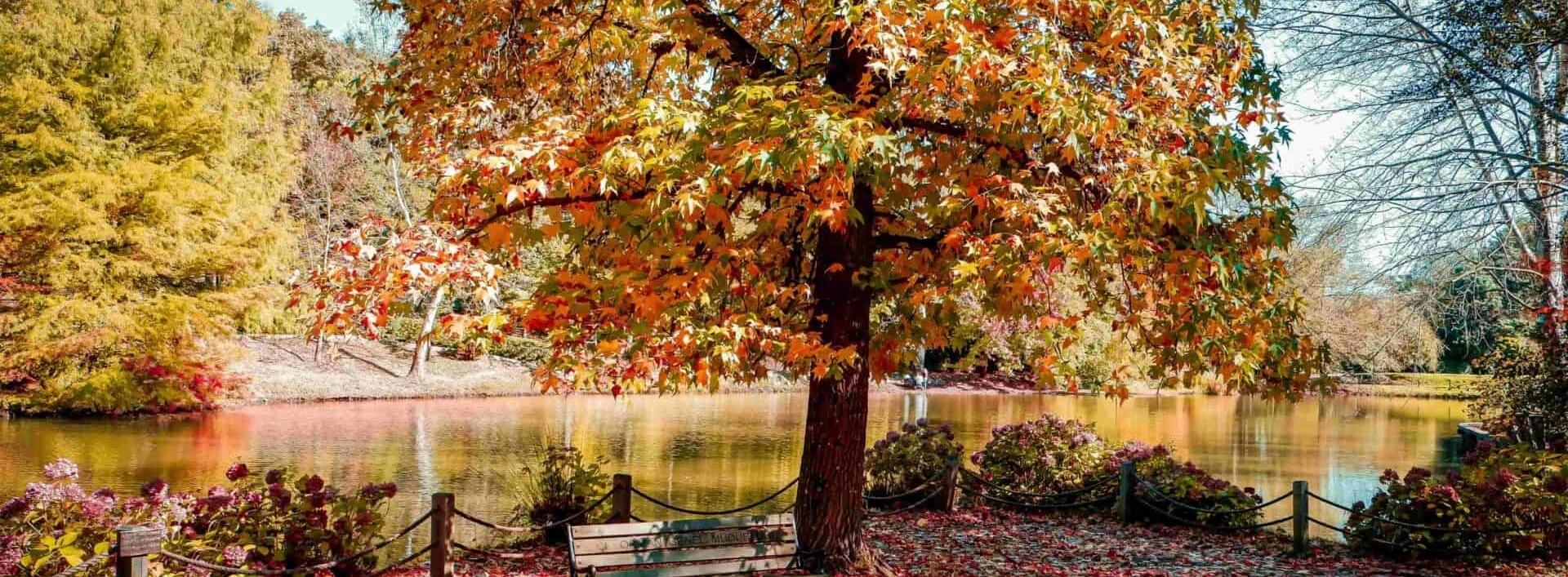
Visitors walk between labeled trees, botanical collections, forest landscapes and peaceful ponds where seasonal foliage is reflected across the water.
The arboretum is particularly famous during autumn, when maples, oaks, sweetgums, bald cypresses and numerous other deciduous trees transform the landscape into shades of yellow, orange, bronze and red.
Yet the site is equally rewarding in spring, when new leaves and flowering plants emerge, and in summer, when the dense canopy creates layers of green.
Unlike Istanbul's ordinary public parks, the arboretum maintains unusually strict visitor regulations.
Picnicking, cycling, pets and many forms of recreational or professional equipment are restricted in order to protect the collections and preserve the site's scientific character.
The result is one of the quietest, most controlled and most distinctive nature experiences available within Istanbul.
Discover an extraordinary scientific collection containing native and exotic trees and woody plants from Turkey and many regions of the world.
Walk beside peaceful ponds surrounded by mature trees, reflections, water-loving plants and some of Istanbul's most photogenic botanical scenery.
Experience one of Istanbul's finest autumn landscapes as deciduous collections change through gold, orange, crimson, bronze and deep red.
Explore a botanical institution created for forestry education, dendrology, scientific research, plant conservation and environmental awareness.
Essential information about Atatürk Arboretum's location, botanical collections, history, visiting hours, regulations, ponds, photography and relationship with Belgrad Forest.
Bahçeköy, Sarıyer, on the southeastern side of Belgrad Forest in northern European Istanbul.
Scientific arboretum, living tree museum, research landscape and controlled botanical visitor attraction.
Approximately 296 hectares within the wider Belgrad Forest landscape.
Approximately 2,000 plant taxa representing native and introduced species.
Work began in 1949 following the initiative of forestry professor Hayrettin Kayacık.
The institution received the name Atatürk Arboretum in 1982.
Monday is normally the weekly closure day; always confirm before travelling.
Published visitor information generally lists 09:00–17:00; seasonal or exceptional changes may occur.
Paid admission applies, with rates potentially differing between weekdays, weekends and visitor categories.
Allow approximately two to three hours for a relaxed first visit.
Atatürk Arboretum is important because it is much more than a beautiful collection of trees.
It functions as a living scientific institution.
Every properly documented tree in an arboretum can provide information about plant identification, geographic origin, adaptation, growth, ecology and long-term survival.
These living collections allow forestry students, botanists, landscape specialists and researchers to examine species that would otherwise be scattered across different regions and countries.
Atatürk Arboretum is therefore closely associated with the study of dendrology — the science of trees and woody plants.
It also performs an important conservation role.
Botanical institutions can help preserve genetic material, maintain uncommon species, exchange seeds with other collections and educate visitors about the extraordinary diversity of the world's trees.
The arboretum is especially valuable because it exists beside the natural ecosystem of Belgrad Forest.
Visitors can therefore observe the relationship between curated botanical collections and the native woodland environment of northern Istanbul.
Few places in the city combine scientific research, conservation, landscape beauty, education, photography and historic forest heritage so successfully.
The word arboretum describes a specialized botanical collection devoted particularly to trees, shrubs and other woody plants.
Unlike an ordinary public park, where planting is primarily intended for recreation or landscape design, an arboretum normally has scientific and educational objectives.
Trees may be arranged according to their botanical relationships, geographic origin, ecological requirements or research purpose.
Individual specimens are commonly identified with labels recording information such as botanical name, family and origin.
The collection can then function almost like an enormous outdoor library.
Instead of books, however, the information is stored within living plants.
Usually contains a very broad collection including trees, shrubs, flowers, herbs and specialized display gardens.
Concentrates particularly on trees, shrubs and other woody plants maintained as living collections.
Designed primarily for recreation, relaxation, events and general urban green space rather than scientific plant study.
A much larger ecological system in which natural or managed woodland communities dominate the landscape.
The origins of Atatürk Arboretum reach back to the middle of the 20th century.
In 1949, Professor Hayrettin Kayacık of Istanbul University's Faculty of Forestry proposed the creation of an arboretum at Bahçeköy.
The idea was accepted, beginning a collaboration between forestry authorities and the university.
The location beside Belgrad Forest was particularly suitable.
It provided a large protected landscape, varied terrain, relatively abundant rainfall and direct connections with forestry research and education.
The project developed gradually rather than appearing as a completed garden at a single moment.
Planting, infrastructure development and scientific organization continued over several decades.
During the late 1950s and early 1960s, French botanical specialist Camille Guinet contributed to planning work associated with the developing arboretum.
By the early 1980s, the institution had grown into an extensive botanical and forestry landscape.
In 1982, it received the name Atatürk Arboretum.
Since then, it has continued to serve scientists, forestry students, educational groups and members of the public interested in trees and nature.
Professor Hayrettin Kayacık proposes the creation of an arboretum in Bahçeköy.
Early planting, research and infrastructure work develops the scientific collection.
French botanical specialist Camille Guinet contributes to the planning of the growing arboretum.
The institution takes the name Atatürk Arboretum and enters a new phase of formal development.
Forestry students and researchers use the collections for plant identification, observation and scientific study.
The arboretum combines research, conservation, environmental education and carefully managed public access.
One of the most useful ways to experience Atatürk Arboretum is to stop thinking of it as a decorative park and begin viewing it as a museum.
The difference is that almost every important exhibit is alive.
Trees change constantly.
They produce buds, flowers, fruit and seeds.
Their leaves change color and eventually fall.
Their bark develops new textures and patterns.
Their form changes slowly over decades.
A species that appears unremarkable in summer may become spectacular during autumn.
Another may reveal its greatest character in winter when leafless branches expose the architecture of its crown.
Botanical labels help visitors identify specimens and understand that these are documented scientific collections rather than random ornamental plantings.
For anyone interested in trees, the arboretum can become one of the most rewarding educational attractions in Istanbul.
Atatürk Arboretum contains an extraordinary diversity of woody plants.
The collections bring together species from Turkey with trees and shrubs originating from many different climatic and geographic regions.
Rather than attempting to memorize every label, first-time visitors can concentrate on recognizing major groups and observing how differently they respond to Istanbul's climate.
Oaks are particularly important in both the arboretum collections and the natural forests surrounding Istanbul.
Different maple species contribute some of the strongest yellow, orange and red foliage during autumn.
Evergreen and deciduous conifers introduce contrasting forms, textures and winter interest throughout the landscape.
Water-loving bald cypress trees are particularly photogenic when their foliage turns coppery orange beside ponds.
Sweetgum species can produce dramatic autumn foliage ranging from yellow and orange to deep crimson.
The collections exist beside the naturally diverse flora associated with Belgrad Forest and northern Istanbul.
Trees from other regions allow students and visitors to compare growth forms, foliage, bark and seasonal behavior.
An arboretum is not limited to giant trees; shrubs and smaller woody plants also form an important part of the collection.
The ponds are among the most recognizable landscapes inside Atatürk Arboretum.
They transform what might otherwise feel like a purely woodland environment into a sequence of open reflections, wetland edges and waterside plant collections.
On calm mornings, trees can be reflected almost perfectly across the water.
The visual effect becomes particularly dramatic in autumn, when different species change color at different times.
A single pond may therefore contain green, yellow, orange, bronze and red trees simultaneously.
Water-loving plants also create an opportunity to observe species adapted to wetter environments.
Birds and other wildlife frequently use these quieter water habitats.
Visitors should enjoy the ponds from appropriate paths and banks without disturbing wildlife or entering planted areas.
The arboretum is not important only for plants.
Its landscape also preserves a connection with Istanbul's historic water infrastructure.
Within the wider area is Kirazlı Bent, one of the historic Ottoman dams associated with the water systems of Belgrad Forest.
These dams collected water flowing through the forest valleys and formed part of the complex infrastructure that supplied Ottoman Istanbul.
The presence of historic waterworks within and around the arboretum demonstrates why this landscape remained protected for centuries.
Preserving woodland helped preserve the water catchment.
Today, the relationship between trees, reservoirs and historic engineering creates an additional layer of meaning for visitors.
Anyone particularly interested in Ottoman water history should also explore the wider Belgrad Forest, especially its historic dam landscapes.
The arboretum landscape is also closely connected with the development of professional forestry in Turkey.
Bahçeköy's long association with forestry education, tree propagation and woodland management predates the establishment of the arboretum itself.
A forestry nursery established in this landscape in the early 20th century became an important part of Turkey's developing scientific approach to forests and plant cultivation.
That historical background helps explain why Bahçeköy became such a logical location for a major national arboretum.
The site already possessed the institutional knowledge, forest environment and educational traditions required to support long-term botanical collections.
Atatürk Arboretum has always had a strong scientific identity.
Students can observe living specimens while learning how to distinguish tree families, genera and species.
Researchers can monitor growth, adaptation and ecological behavior over long periods.
Plant records also make it possible to understand where specimens originated and how they developed after introduction.
This is especially valuable because trees often live far longer than an individual research project.
A specimen planted decades ago can continue providing information to future generations of scientists.
The arboretum therefore acts as both a collection and a long-term biological archive.
Atatürk Arboretum and Belgrad Forest are geographically connected, but visitors should not treat them as the same attraction.
The arboretum is a controlled scientific botanical collection.
Belgrad Forest is a vast woodland landscape containing recreation areas, walking routes, historic reservoirs, nature parks and forest roads.
Botanical collections, labeled trees, ponds, seasonal color, plant identification and peaceful photography.
Longer woodland walks, running, nature parks, designated picnic areas and exploration of historic Ottoman dams.
The arboretum offers highly composed botanical landscapes while Belgrad Forest provides a broader and more natural woodland environment.
The arboretum generally has much stricter regulations concerning food, equipment, recreation and photography.
The arboretum has its own entrance arrangements and should not be considered part of an ordinary Belgrad Forest admission.
Visitors with a full day can explore the arboretum first and continue into selected parts of Belgrad Forest afterward.
Walking is the essential Atatürk Arboretum experience.
This is not a destination that should be rushed.
The greatest pleasure comes from allowing enough time to observe individual trees, read botanical labels and notice changes in vegetation as paths move between open lawns, ponds and denser woodland.
You do not need to cover every corner of the 296-hectare property to enjoy a rewarding visit.
A focused route around the principal visitor landscape is usually much more enjoyable than attempting to walk the entire area.
Concentrate on the main botanical paths and pond landscapes close to the established visitor area.
Read labels carefully and compare foliage, bark, seeds, crown shapes and geographic origins.
Move slowly between ponds, specimen trees and open views rather than attempting a long-distance route.
Allow additional time because different sections can display dramatically different colors during the same visit.
One of the most fascinating qualities of an arboretum is that the collection never looks exactly the same twice.
Seasonal change is effectively part of the exhibition.
Fresh leaves, flowering trees, emerging vegetation and rich shades of green make spring one of the most rewarding botanical seasons.
The tree canopy becomes dense and the entire arboretum develops a lush green character.
Mature foliage dominates while ponds and shaded woodland offer a cooler alternative to central Istanbul.
The first yellow and orange tones begin appearing while much of the collection remains green.
Maples, sweetgums, cypresses and numerous deciduous species can create spectacular mixtures of red, bronze, orange and gold.
Fallen leaves cover paths while increasingly bare branches reveal the shapes of mature trees.
The botanical collection becomes quieter, allowing visitors to appreciate bark, conifers, branch structure and reflections without dense foliage.
Wet bark, saturated foliage and still water can create particularly atmospheric scenery, although paths may become slippery.
Autumn is the season that has made Atatürk Arboretum especially famous among Istanbul photographers and nature lovers.
The reason is botanical diversity.
In an ordinary forest dominated by only a few major species, autumn color can appear relatively uniform.
An arboretum contains trees originating from different regions and belonging to many different botanical groups.
Each species responds to shortening days and cooler temperatures differently.
Some turn yellow.
Others become orange, copper, crimson or deep burgundy.
Some remain green long after nearby trees have lost their leaves.
When these colors surround the ponds, their reflections effectively double the visual impact.
The exact timing of peak foliage varies every year according to temperature, rainfall, wind and individual species.
Atatürk Arboretum is one of Istanbul's most photographed natural landscapes.
The combination of specimen trees, water reflections, curving paths and intense seasonal change provides endless photographic opportunities.
However, photography rules here are significantly stricter than in ordinary city parks.
Visitors should distinguish between casual personal photography and organized or professional shooting.
Equipment such as tripods, drones and professional accessories may be prohibited during ordinary admission.
Commercial, wedding, catalogue, advertising or organized photography can be subject to separate permission, reservation and payment procedures.
Photograph the ponds during calm conditions when trees and clouds are clearly reflected across the water.
Look beyond wide landscapes and photograph individual leaves, bark textures, seeds and contrasting colors.
Curving paths disappearing between mature trees can create excellent depth and natural leading lines.
Use bare branches, reflections, mist and evergreen specimens to create more minimal compositions.
Ordinary handheld photography is very different from bringing equipment associated with professional or staged shoots.
Contact the arboretum in advance if you intend to conduct wedding, commercial, catalogue, advertising or other organized photography.
Atatürk Arboretum has stricter visitor rules than almost any ordinary park in Istanbul.
These restrictions are not intended simply to inconvenience visitors.
They help protect scientifically valuable plant collections, reduce litter, prevent damage and maintain the quiet atmosphere required by a research institution.
The arboretum should not be treated as a picnic ground. Plan meals before or after your visit.
Ordinary food and beverages are generally not permitted; published rules make exceptions for water and baby food.
Visitors should not plan to enter the arboretum with dogs or other domestic animals.
The arboretum is designed primarily for controlled pedestrian visitation rather than recreational cycling.
Tripods and various forms of professional photography equipment can be restricted during ordinary visits.
Do not arrive expecting to conduct aerial photography without formal authorization.
Balls and other recreational equipment incompatible with the scientific botanical environment may be prohibited.
Never collect leaves, seeds, flowers, branches or other botanical material, even when already lying on the ground.
Atatürk Arboretum should not be planned as a picnic destination.
Food restrictions are an important difference between the arboretum and designated recreation areas in Belgrad Forest.
Published visitor rules generally allow drinking water and baby food while restricting ordinary food and other beverages.
This helps prevent litter, food waste and disturbance to wildlife.
It also preserves the botanical character of the landscape.
If you intend to spend several hours here, eat before entering and plan another meal after your visit.
Bahçeköy and the wider Sarıyer area provide considerably more flexibility for cafés and restaurants.
Although trees are the main attraction, Atatürk Arboretum also provides habitat for many forms of wildlife.
The surrounding Belgrad Forest ecosystem, mature vegetation and ponds create excellent conditions for birds and smaller animals.
Waterfowl can often be observed around the ponds.
Woodland birds become particularly noticeable during quieter periods when visitor numbers are lower.
Insects, amphibians and countless smaller organisms are equally important components of the ecosystem.
Wildlife should always be observed without feeding or disturbing it.
Atatürk Arboretum can be an excellent educational experience for children who enjoy nature.
Instead of treating the visit as a conventional playground outing, families can turn the walk into a simple botanical exploration.
Children can compare leaf shapes, bark textures, tree sizes and colors.
They can search for botanical labels and learn how species from distant countries can grow beside plants native to Turkey.
The ponds also make the visit visually engaging.
Parents should nevertheless supervise younger children carefully around water and make sure they understand that plants must not be picked or damaged.
The arboretum is primarily an outdoor landscape rather than a completely level urban garden.
Conditions vary between broader maintained paths and more natural sections.
Visitors may encounter slopes, uneven surfaces, wet ground and fallen leaves depending on the season.
Strollers are generally easiest to manage on the principal paths.
Visitors using wheelchairs or mobility aids should check current accessibility conditions before travelling if step-free access is essential.
Rain can significantly affect the ease of movement on natural surfaces.
The best overall choice if you want fewer visitors, quieter paths and more time to study the botanical collections.
Arriving early generally provides quieter paths, softer light and calmer pond reflections.
Excellent for fresh foliage, spring growth, flowering plants and vivid new-season greens.
A strong period for dense foliage and a lush botanical landscape before the hottest summer weather.
Seasonal change begins to transform many deciduous species, although exact timing varies each year.
Often one of the strongest periods for autumn photography, depending on weather and annual foliage conditions.
A quieter season for appreciating tree structure, bark, evergreens, ponds and atmospheric woodland scenery.
Colors can appear especially saturated, but fallen leaves and natural surfaces may become slippery.
Enough only for a quick introduction to the main paths and pond landscape.
A good minimum for most first-time visitors who want a relaxed botanical walk and photography.
Ideal for visitors who enjoy trees, photography and slower exploration of different botanical sections.
Suitable for serious plant enthusiasts or photographers who want to explore without rushing.
Allow half a day for the arboretum followed by lunch or further exploration around Bahçeköy.
Allow most of a day if you also want a substantial forest walk or the historic Ottoman dams.
Atatürk Arboretum operates independently from ordinary public parks, so visitors should check its current schedule before travelling.
Published visitor information generally lists the arboretum as open from 09:00 to 17:00 from Tuesday through Sunday.
Monday is normally the weekly closing day.
Exceptional closures can also apply on particular public or religious holidays.
Admission is paid.
Different rates may apply to adults and students and between weekdays and weekends.
Because admission prices can change, it is better to confirm the current amount through the arboretum's official information channels immediately before visiting rather than relying on an old online price.
Atatürk Arboretum is located near Bahçeköy in Sarıyer on Istanbul's European side.
It lies considerably farther north than the city's main historic attractions.
Visitors staying in Sultanahmet, Taksim or the Bosphorus districts should therefore allow significant travel time.
The M2 metro line provides the most useful rapid-transit connection toward northern Istanbul.
From the Hacıosman area, continue toward Bahçeköy using local bus services or a taxi.
A taxi or private vehicle is especially convenient if you intend to combine the arboretum with Belgrad Forest or other northern attractions.
Connect with the metro network and travel north on the M2 line before continuing toward Bahçeköy.
Take the M2 metro north toward Hacıosman and continue by local transport or taxi.
Continue toward Bahçeköy using an appropriate local bus connection or taxi.
The arboretum is located close to the wider Belgrad Forest landscape and forestry institutions around Bahçeköy.
The most straightforward option when travelling with several people or combining multiple northern Istanbul attractions.
Provides flexibility for continuing into Belgrad Forest, although current parking and access arrangements should be checked.
Remember that Monday is normally the weekly closure day.
Opening schedules can change, so verify the latest information before travelling from central Istanbul.
The arboretum is not a picnic area and ordinary food is generally restricted.
Water is the safest drink to bring under the published visitor regulations.
You may encounter long walking distances, natural surfaces and slippery fallen leaves.
Cycling is not part of the ordinary visitor experience inside the arboretum.
Plan another destination if you are travelling with a dog or other domestic animal.
Tripods, drones and professional shooting equipment can be restricted or require separate permission.
Leave flowers, leaves, seeds and branches exactly where they are.
Weekdays are generally better for quiet botanical observation and photography.
Peak foliage periods can attract large numbers of photographers and nature lovers.
Rain can make leaves and natural paths slippery, while strong winds may reduce autumn foliage rapidly.
Atatürk Arboretum is large enough that trying to explore every path during a first visit can become unnecessary.
A better approach is to create a slow botanical circuit linking the principal collections and water landscapes.
Two hours provides enough time for a satisfying first visit without turning the arboretum into a rushed checklist.
Atatürk Arboretum and Belgrad Forest create one of Istanbul's strongest full-day itineraries for travelers who genuinely enjoy nature.
The key is to understand that the two experiences are very different.
Begin with the controlled botanical environment of the arboretum and then move into the much broader forest landscape.
Explore enormous woodland areas, walking routes, nature parks, streams and extraordinary historic Ottoman dams immediately beyond the arboretum landscape.
The traditional gateway to Belgrad Forest and the center of Istanbul's important forestry and botanical landscape.
Discover some of the most impressive surviving Ottoman reservoirs and dams within Belgrad Forest.
One of Belgrad Forest's best-known areas for walking and running through mature deciduous woodland.
Continue toward the Bosphorus waterfront for seafood restaurants, historic neighborhoods and northern Bosphorus scenery.
Compare the scientific collections of the arboretum with one of Istanbul's most famous landscaped Bosphorus groves.
Explore an imperial Ottoman garden landscape much closer to central Istanbul and the Bosphorus.
Continue planning with Istanbul's parks, forests, museums, palaces, mosques, churches, bazaars and historic neighborhoods.
Atatürk Arboretum is near Bahçeköy in Sarıyer on Istanbul's European side, beside the southeastern part of Belgrad Forest.
It is a scientific arboretum and living collection of trees and woody plants used for research, forestry education, conservation and controlled public visitation.
Yes, particularly if you enjoy trees, botanical gardens, nature photography, autumn foliage, peaceful walking or places away from Istanbul's busiest tourist areas.
The arboretum occupies approximately 296 hectares.
The collection is commonly described as containing roughly 2,000 plant taxa, combining native and introduced trees and other woody plants.
The project began in 1949 following a proposal by forestry professor Hayrettin Kayacık.
The institution received the name Atatürk Arboretum in 1982 in honor of Mustafa Kemal Atatürk.
An arboretum is a botanical collection specializing particularly in trees, shrubs and other woody plants maintained for research, conservation, education and display.
No. The arboretum lies within the wider Belgrad Forest landscape but operates separately as a scientific botanical institution with its own entrance and visitor regulations.
Yes. They create an excellent full-day nature itinerary, particularly if you have private transportation or use taxis between individual areas.
Published visitor information normally lists the arboretum as open from Tuesday through Sunday and closed on Monday. Always verify the current schedule before travelling.
Monday is normally the arboretum's weekly closure day.
Current published visitor information generally lists opening at approximately 09:00.
Published visitor information generally lists closing at approximately 17:00, although seasonal or exceptional arrangements can change.
No. Admission is normally charged, and weekday, weekend, adult and student rates may differ.
Two to three hours is ideal for most first-time visitors. Serious photographers and botanical enthusiasts may want longer.
Spring and autumn are particularly beautiful. Spring offers fresh foliage and new growth, while autumn creates spectacular seasonal colors.
Autumn color generally develops during October and November, but the precise timing varies from year to year and between individual tree species.
November can be exceptional for autumn foliage and fallen-leaf landscapes, although weather conditions determine how long peak color survives.
Ordinary personal photography is part of the visitor experience, but equipment associated with professional or organized shoots can be restricted.
Tripods are commonly listed among restricted items for ordinary visitors. Check current regulations if photography equipment is important to your visit.
Do not expect to use a drone during an ordinary visit. Aerial and professional shooting equipment is subject to strict regulations and authorization requirements.
Organized wedding and other professional shoots may require advance reservation, permission and separate payment. Contact the arboretum before planning such a session.
No. The arboretum should not be treated as a picnic area.
Published visitor regulations generally prohibit ordinary food and beverages, with limited exceptions such as water and baby food.
No. Pets are generally not admitted.
No. Bicycles are among the items normally restricted inside the arboretum.
No. Plants, leaves, seeds, flowers and other botanical material should never be collected from the arboretum.
Yes. The ponds are among the arboretum's most beautiful landscapes and are particularly famous for tree reflections during autumn.
Yes, especially for children interested in plants and nature. Parents should explain the strict visitor rules and supervise children around ponds.
Principal paths may be manageable with a stroller, but natural terrain, slopes, rain and fallen leaves can make some sections more difficult.
Accessibility varies across the large outdoor landscape. Visitors with specific mobility requirements should confirm current accessible routes before travelling.
Yes. A common approach is to travel north using the M2 metro toward Hacıosman and continue toward Bahçeköy by local bus or taxi.
No. Public transport is possible, although a taxi or private vehicle makes it easier to combine the arboretum with Belgrad Forest and other northern Istanbul attractions.
Weekends and peak autumn foliage periods can become busy. Weekdays are generally better for a quieter experience.
Comfortable walking shoes are recommended. Waterproof footwear with good grip is particularly useful during wet autumn and winter weather.
No. The arboretum can easily be explored independently. A botanical or forestry specialist can add considerable depth if your interest is scientific plant identification or dendrology.
Remember that even an ordinary-looking tree may be part of a documented scientific collection.
Leave leaves, seeds, flowers and fruit where they belong, including material already on the ground.
Avoid creating shortcuts through planted areas or trampling vegetation around specimen trees.
Do not enter the water, disturb banks or interfere with aquatic plants and wildlife.
The arboretum is a scientific and educational landscape rather than an entertainment park.
Respect restrictions concerning tripods, drones, costumes and commercial photography.
Feeding birds or other animals can alter their natural behavior and create ecological problems.
Take responsibility for everything you bring into the arboretum and keep the botanical landscape completely clean.
Never move, remove or damage the scientific identification labels associated with plants.
Temporary restrictions may protect research sites, sensitive collections or maintenance operations.
The purpose of the arboretum is to study living plants without damaging them.
The best visitor leaves no visible evidence of having been there.
Discover Istanbul beyond the historic peninsula with a private route connecting botanical landscapes, ancient woodland, Ottoman reservoirs, Bosphorus neighborhoods and the quieter northern side of the city — without compulsory shopping stops.
Create a private Istanbul nature route combining Atatürk Arboretum with Belgrad Forest, Bahçeköy, historic dams and northern Bosphorus landscapes according to current opening arrangements.
Ask us about a tailor-made nature day focusing on botanical landscapes, photography, tree collections, Bahçeköy and the lesser-known green side of Istanbul.
Request a Custom Tour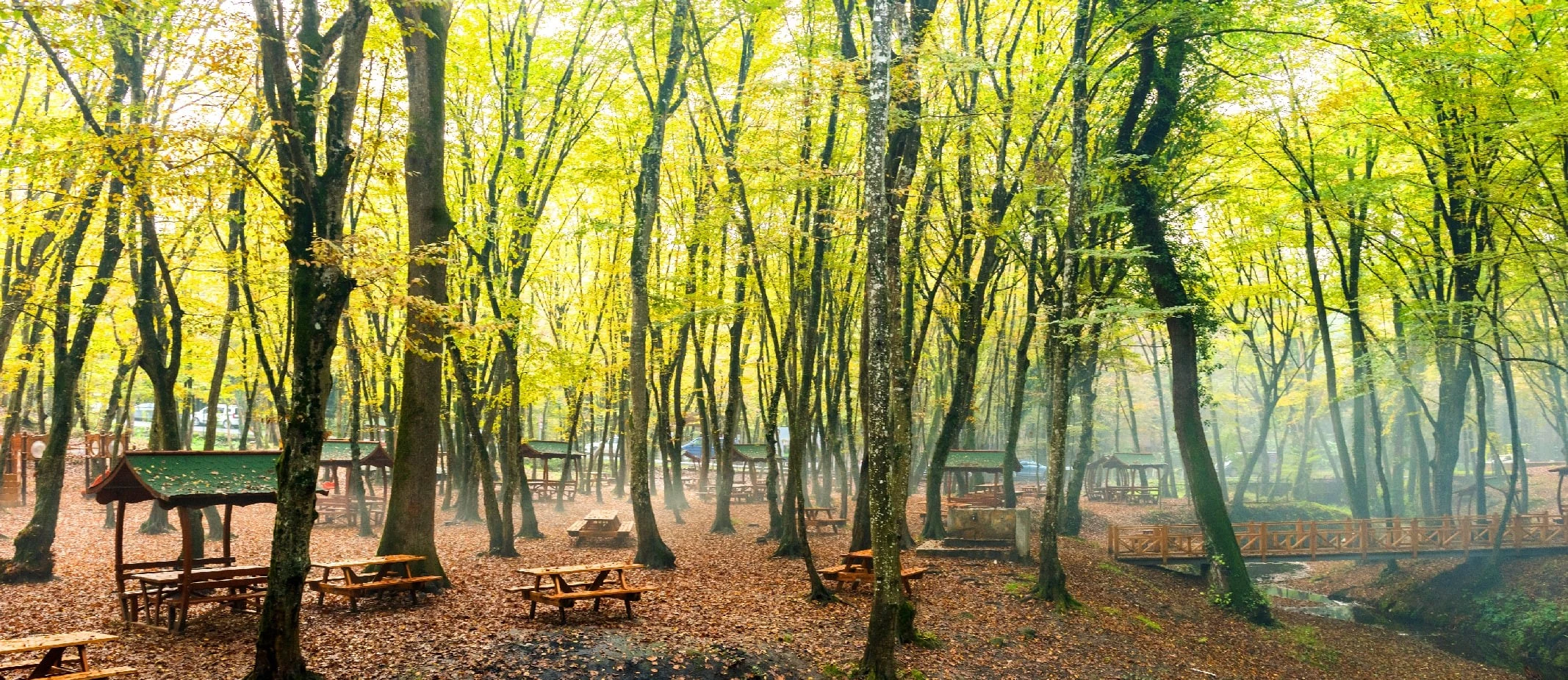
Combine Istanbul's most important living tree collection with extensive woodland, forest walking and extraordinary Ottoman reservoir landscapes.
Explore Belgrad ForestCombine the arboretum with Bosphorus parks, Sarıyer, historic waterworks, neighborhoods or other lesser-known Istanbul landscapes according to your interests.
Create a private Istanbul itinerary around Byzantine and Ottoman history, architecture, museums, forests, botanical gardens, neighborhoods, food and Bosphorus scenery.
View Private Istanbul Tours
Continue planning with Istanbul's mosques, churches, palaces, museums, bazaars, forests, parks, Bosphorus districts and historic neighborhoods.
Explore Istanbul