Plan a Private Heritage Experience
Tell us your dates, interests and group size. We can suggest a realistic route and check local arrangements.
Request a Private Programme





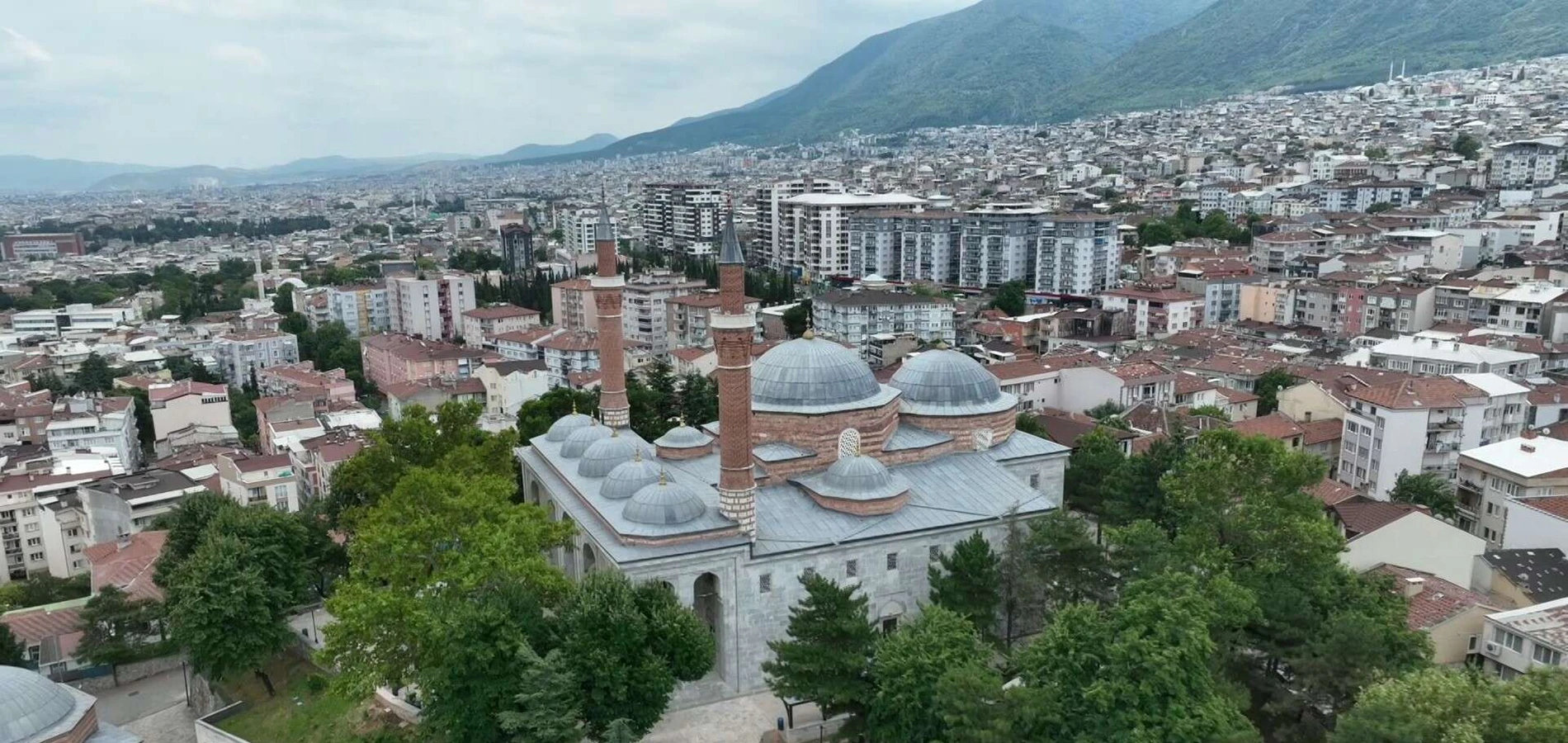
Alaşehir’s Yıldırım Bayezid Mosque is linked with the Ottoman takeover of the city in 1390. It is described by the district governor’s office as the town’s first mosque, originally part of a complex with a madrasa and bath.
The present building should not be mistaken for an intact fourteenth-century monument. The original mosque suffered severe losses and rebuilding; archival photographs and the surviving minaret base are important evidence for its earlier form.
That contrast is precisely what makes the site interesting. It offers a lesson in how historic buildings survive through use, repair and sometimes radical alteration.
The original surviving base is an especially important point of reference when comparing the present mosque with archival descriptions.
The relatively simple present roof and interior reflect later interventions rather than an untouched early Ottoman design.
The mosque once belonged to a wider religious and educational complex. Their absence changes how the urban site is perceived today.
Historic photographs can reveal vanished pointed windows, brickwork and proportions. Ask a guide to explain which features are documented and which remain uncertain.
A concise orientation for a meaningful visit.
Alaşehir, Manisa
Early Ottoman mosque with later rebuilding
Bayezid I period; altered after later damage
History, material and setting
20–35 minutes outside prayers
Confirm visitor access and current arrangements
This mosque adds an early Ottoman chapter to a town best known internationally for ancient Philadelphia and its Christian history.
The surviving fabric also encourages visitors to distinguish an institution’s historical foundation from the age of the walls they see today.
Following the Ottoman capture of Alaşehir under Bayezid I in 1390, a mosque complex was established with a madrasa and bath. Neither of the associated buildings survives.
Archive photographs held by the General Directorate of Foundations document an earlier rectangular mosque with rubble-stone walls, pointed-arched windows and a brick minaret with decorative work below the balcony.
The district governor’s account says the mosque was burned during the occupation period and later acquired its current appearance. The northwest minaret base is identified as the only original surviving portion; an archive record notes repairs in 1950.
Alaşehir sits at a crossroads of Hellenistic, Roman, Byzantine and Ottoman history. The mosque offers a different perspective from the surviving piers of St. Jean Church.
The original surviving base is an especially important point of reference when comparing the present mosque with archival descriptions.
The relatively simple present roof and interior reflect later interventions rather than an untouched early Ottoman design.
The mosque once belonged to a wider religious and educational complex. Their absence changes how the urban site is perceived today.
Historic photographs can reveal vanished pointed windows, brickwork and proportions. Ask a guide to explain which features are documented and which remain uncertain.
The town’s layers should not be flattened into a single story of replacement. Different monuments document different centuries, uses and communities.
Look for the difference between original and reconstructed fabric. The site is best understood through a combination of what survives and what official archival records describe.
Some researchers have proposed an unrealised domed design, but that is an interpretation rather than a certainty. Present such suggestions as hypotheses.
Observe this element from an authorised viewing area.
Compare visible evidence with published interpretation.
Ask what can be securely dated or identified.
Respect any barriers protecting this part of the site.
This is a working mosque. Dress appropriately, remove shoes when entering, avoid prayer times and do not photograph worshippers without permission.
No fixed tourist entrance fee should be assumed. Confirm whether the building is accessible during your intended visit.
Official reference: Alaşehir District Governor – Yıldırım Bayezid Mosque.
Visit the mosque after exploring the St. Jean Church remains and the ancient Philadelphia area. The contrast between late antique and Ottoman heritage makes a strong half-day narrative.
If continuing to Salihli or Kula, leave time for driving rather than trying to fit all of Manisa’s eastern districts into a short afternoon.
A short town-centre stop is possible year-round, subject to worship and conservation access. Summers can be very hot outdoors.
Photograph the wider setting as well as details, but respect worshippers, residents, barriers and fragile surfaces. Ask before taking portraits.
The mosque’s historic layout and thresholds may affect access. Ask locally about step-free entry before planning a mobility-sensitive visit.
The mosque is in Alaşehir, Manisa Province. The district governor’s website provides historical context; confirm practical visitor access locally.
Explore the full guide for this nearby Manisa destination and plan travel time according to your route.
Explore the full guide for this nearby Manisa destination and plan travel time according to your route.
Explore the full guide for this nearby Manisa destination and plan travel time according to your route.
Explore the full guide for this nearby Manisa destination and plan travel time according to your route.
It is associated with the period shortly after the Ottoman capture of Alaşehir in 1390.
No. Official descriptions state that the present building is substantially altered and that the northwest minaret base is the original surviving portion.
Yes. A madrasa and bath were associated with it, but neither survives today.
Damage and later rebuilding changed its appearance; historical photographs document an earlier form.
Visitors should avoid prayer times and follow local worship arrangements.
St. Jean Church and the ancient Philadelphia remains are the most natural historical pairing in Alaşehir.
Ask before photographing people, respect working spaces and follow local directions.
Support reputable local businesses and check claims about provenance.
Do not remove archaeological material or enter restricted sites.
Dispose of litter responsibly and avoid disturbing the environment.
Explore Manisa with a tailor-made route, thoughtful pacing and no compulsory shopping stops. Availability and site access are confirmed before booking.
Combine local culture, history and food at a comfortable pace.
Tell us your dates, interests and group size. We can suggest a realistic route and check local arrangements.
Request a Private Programme
Discover the province’s other cultural, archaeological and culinary highlights.
Read the Manisa Guide