





Aksaray Travel Guide / Ihlara Valley & Church Heritage
History and significance
Yılanlı, often translated “Snake Church,” takes its modern name from striking painted imagery. It is carved into the volcanic rock of Ihlara Valley and belongs to the broad Byzantine tradition of cross-shaped sanctuary planning.
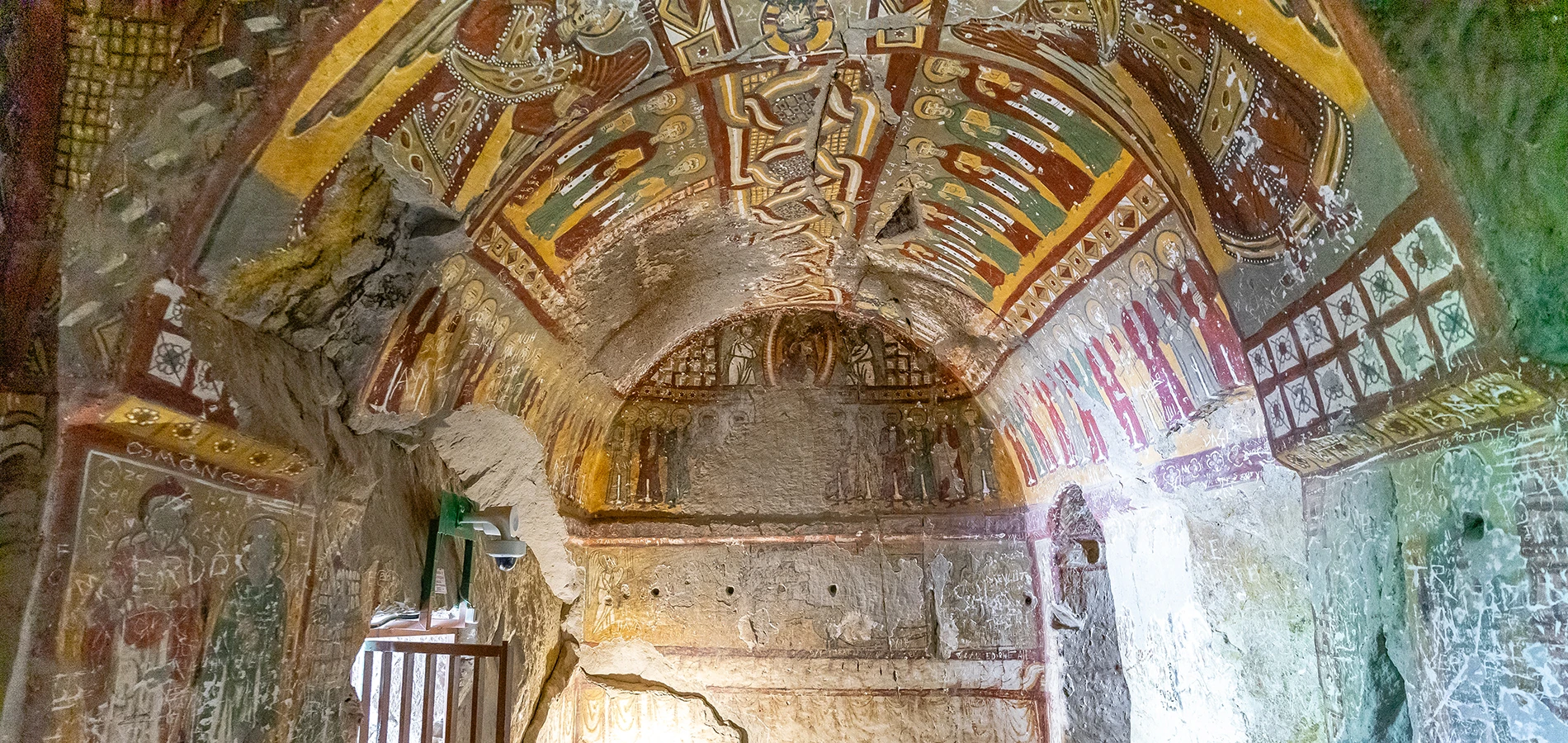
The provincial church inventory describes a free-cross arrangement with a narthex approached by a passage and scenes including the Crucifixion, Entry into Jerusalem and the burial of Mary of Egypt. The famous serpent imagery is often discussed in relation to judgment and moral teaching, but individual identifications should be treated cautiously where paint is damaged.
In-depth research: archaeology, architecture and context
What the Snake Church name does—and does not—tell us
Yılanlı means “with snakes,” a modern descriptive name that directs attention to frightening painted imagery. Such scenes have often been retold through highly specific tales of sinful women or punishment, but a tourist label is not the same as a contemporary Byzantine inscription explaining the whole narrative. Read the painting within a larger Christian visual culture that represented virtue, judgment, repentance and the fate of the soul. The church's wider program includes major episodes from Christ's life and the commemoration of saints. Its popular nickname should be a starting point for questioning the imagery, not an excuse to replace evidence with a sensational legend.
Cross plan, narthex and painted stories
The official inventory describes a broad free-cross arrangement, with an approach through a southern passage and a barrel-vaulted narthex. Narrow cross arms frame a central area whose ceiling carries a carved cross. The architecture of a narthex matters: it creates a transitional zone between the approach and the sacred interior and can have distinctive imagery or funerary uses. Recorded scenes include the Crucifixion, Christ's entry into Jerusalem, the Visitation and the burial of Mary of Egypt. These topics connect the church both to the Gospel narrative and to the broader Byzantine fascination with ascetic saints and repentance.
A cautious artistic date and visitor method
The provincial authority gives a broad stylistic range from the ninth to twelfth centuries for Yılanlı's decoration; that width reflects uncertainty and the difficulty of identifying phases in partly damaged rock-cut interiors. A useful method is to compare its moral and saintly subjects with Ağaçaltı's Daniel and infancy paintings and Sümbüllü's Virgin and Pantokrator themes. Note differences in scene placement, palette, inscriptions and the legibility of surviving figures before trying to assign a date. Routes through Ihlara change with maintenance and river conditions; a church appearing close on a map may require uneven steps or a temporarily closed path.
Closer look: evidence and interpretation
Why 'Snake Church' can mislead visitors
The popular name Yılanlı, meaning 'with snakes,' directs attention to a remarkable moralizing painted scene. Interpretations often associate its serpents and punishment imagery with sin and judgment, but a scene's complete identity requires comparison with surviving inscriptions and other Byzantine examples. It should not be presented as literal evidence that the valley was infested with snakes. The church's name also does not identify a single builder or a secure construction year. Visitors gain much more by connecting the imagery to the wider Christian tradition of moral instruction and visual storytelling.
Movement through a narthex to the painted core
The official church inventory describes an entrance passage on the south leading to a barrel-vaulted narthex, then a free-cross space with unusually wide arms. This progression matters: a narthex creates a liminal zone before the worship area. The raised or carved crosses in the ceiling and the location of saintly portraits help organize the painted interior. Scenes such as the Crucifixion, Entry into Jerusalem and the burial of Mary of Egypt are associated with the church. Rather than treating these as random panels, ask which are narrative, which offer exemplars of holiness, and which address spiritual danger.
Mary of Egypt and the vocabulary of repentance
Mary of Egypt became an important Byzantine exemplar of penitence. Her story, which circulated through texts and images, allowed worshippers to contemplate conversion and mercy. The presence of this saint in Yılanlı is one reason the church cannot be adequately explained by its snakes alone. Fresco dates have been placed across a broad early-medieval range by official publications, partly because the building and painting phases are not established with a single secure inscription. As you look, keep in mind that later losses have altered the original visual balance of the room.
On-site observation and suggested approach
Give time to the transition from the passage to the narthex before searching for the serpent imagery. A visitor who photographs only the most startling moral scene misses how the church combines penitence, saints and the Gospel. Compare the significance of Mary of Egypt here with the Marian themes in Sümbüllü, but remember the figures serve different narratives. Footing can be uneven and painted surfaces fragile. Identify accessible viewing positions in advance and avoid touching plaster for support.
What to look for
Use a small light only if permitted; never touch the painted surface. Compare the iconography with Ağaçaltı, whose emphasis includes infancy narratives and Daniel.
The most famous churches are not necessarily the oldest. Art historians distinguish construction, plastering and repainting phases; a broad date range is more responsible than a single unsupported year. Scenes of the Virgin, Christ and Old Testament figures should be interpreted in their architectural positions and liturgical context.
The historical landscape of Ihlara
The Melendiz River cuts through volcanic deposits to create a sheltered canyon historically associated with Peristrema. Rock-cut churches were carved and painted over several centuries. The region’s Byzantine art is not a single frozen tradition: donors, monastic communities and changing political circumstances left different visual languages in neighboring sanctuaries.
Planning your visit
Wear shoes with grip for uneven rock and steps. Church interiors can be dark and painted surfaces fragile; do not use flash, touch plaster or enter closed chambers. Arrange your return vehicle before starting a one-way valley walk.
Access, opening hours, admission arrangements and conservation closures can change. Check the official tourism information or contact the relevant site authority shortly before visiting; this guide deliberately avoids unverified ticket prices or fixed opening hours.
How this stop fits into a wider itinerary
For an itinerary that follows the actual sites rather than generic attractions, start with the Aksaray province guide. Nearby and related destinations are linked in the Explore nearby panel. Confirm local access before setting out, especially for places with active worship, excavations, cliffs or seasonal wetlands.
Further reading and official references
The following sources provide regional context and, where available, monument-specific documentation. Some dates and attributions remain debated; consult conservation publications for specialist study.