Ask About a Private Uşak Programme
Share your dates, party size and interests. We will check what can realistically be arranged.
Request a Private Programme





Flax seed is not a monument or a prepared dessert: it is an agricultural ingredient with its own story. In Uşak, the seed is connected to regional food production, while the flax plant more broadly has a long history as a source of fibre and oil. A thoughtful guide separates those different uses rather than presenting every flax product as identical.
TÜRKPATENT registered Uşak Keten Tohumu as a designation of origin on 16 June 2026 under number 1868. The official name concerns the seed of Linum usitatissimum grown and processed within its defined geographical area. Registration gives consumers a way to ask about traceability, but it does not establish medical benefits.
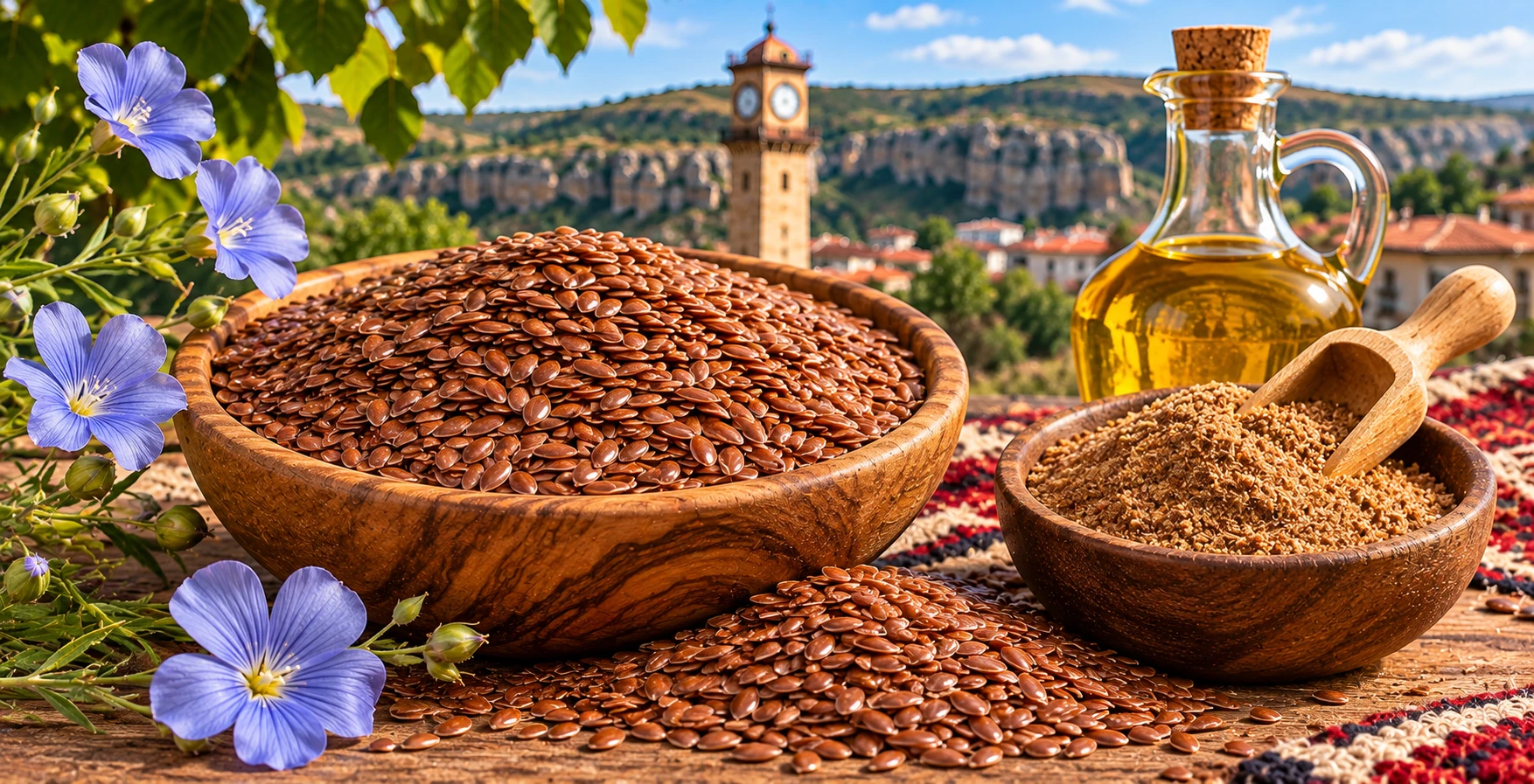
Flax seeds are typically flattened, oval and smooth, with a glossy surface; colour can vary by variety and handling.
Ground seeds can be incorporated into bakery products and mixtures; whole seeds and flax oil behave differently in cooking.
The same plant has been valued for stems and seeds, but textile fibre production and food-grade seed production are separate subjects.
Oil-rich seeds and ground flax require careful storage; check the date, packaging and smell rather than assuming shelf life is unlimited.
Practical orientation for an informed Uşak visit.
Uşak Province
Registered flax seed and its food uses
Designation of origin registered in June 2026
Food heritage and local production
20–40 minutes at a food market
Check current access, local conditions and any applicable permissions.
The distinctive value of Uşak Flax Seed (Uşak Keten Tohumu) lies in the relationship between recognising the seed and food preparation. These are useful details to ask about when tasting or buying a product associated with Uşak Province.
A local food guide should distinguish a documented recipe or registered product from a maker’s individual variation. The focus here is registered flax seed and its food uses, rather than unverified claims about a single origin story.
TÜRKPATENT registered Uşak Keten Tohumu as a designation of origin on 16 June 2026 under number 1868. The official name concerns the seed of Linum usitatissimum grown and processed within its defined geographical area. Registration gives consumers a way to ask about traceability, but it does not establish medical benefits.
The geographical focus is Uşak Province. For orientation, begin with recognising the seed and then consider fibre versus food; their relationship is more instructive than treating the subject in isolation.
Flax seeds are typically flattened, oval and smooth, with a glossy surface; colour can vary by variety and handling.
Ground seeds can be incorporated into bakery products and mixtures; whole seeds and flax oil behave differently in cooking.
The same plant has been valued for stems and seeds, but textile fibre production and food-grade seed production are separate subjects.
Oil-rich seeds and ground flax require careful storage; check the date, packaging and smell rather than assuming shelf life is unlimited.
For a fuller picture, compare Uşak Flax Seed (Uşak Keten Tohumu) with Uşak Sesame and Uşak Halva Traditions. These are related but distinct subjects; follow the relevant guides for their own historical or culinary context.
A useful first question is what makes recognising the seed different from food preparation. The following sections explain the practical details, materials or historical evidence needed to answer it.
The registered product is a seed, not a brand of bread, a supplement or an oil marketed under any name. The origin label should be understood in relation to the production specification.
When shopping, look for clear producer information and ask whether the product is whole, milled or processed into another form. Different formats have different handling needs.
Flax seed can contribute texture to breads, crackers and other grain-based preparations. Grinding changes how the seed disperses into a mixture, while heating and storage can alter flavour.
It is easy to find online claims that a single seed prevents disease. Such statements are not a reason to buy it, and they are not a substitute for individual dietary advice.
Compare Uşak flax seed with sesame: the seeds differ in shape, aroma and typical processing. Ask vendors how they recommend storing each product in local conditions.
A visit to a working producer is possible only when arranged and permitted. A city-centre food market is a more dependable stop for a short itinerary.
Flax seeds are typically flattened, oval and smooth, with a glossy surface; colour can vary by variety and handling.
Ground seeds can be incorporated into bakery products and mixtures; whole seeds and flax oil behave differently in cooking.
The same plant has been valued for stems and seeds, but textile fibre production and food-grade seed production are separate subjects.
Oil-rich seeds and ground flax require careful storage; check the date, packaging and smell rather than assuming shelf life is unlimited.
A shop visit is the normal visitor experience; a field or processing facility should not be entered without consent.
Opening hours, admission arrangements and product availability may change. Confirm them with the museum, municipality, venue or producer rather than relying on an old price list.
Make a short market stop, examine the registered product information and compare whole flax with ground preparations. Combine the visit with a bakery or the local gastronomy displays in Uşak.
Allow extra time for breaks and for local circumstances. A short, meaningful visit is preferable to a schedule that depends on unconfirmed access or shopping stops.
Seeds may be sold year-round once processed, but harvest timing and producer stock vary. Buy in quantities you can store properly.
If your visit involves exposed landscapes, check weather and daylight. For food or indoor heritage, opening hours and the availability of a knowledgeable host matter more than a particular season.
Photograph the preparation, product and its context only with permission. A sequence of raw ingredients, working hands and finished serving can tell a better story than a single staged plate.
Ask before photographing people, private property or production areas. Never enter restricted spaces or put objects at risk to obtain a picture.
Ask food shops about entrance steps and counter height. Farm tracks and working sites may not be accessible.
If travelling with reduced mobility or young children, confirm gradients, steps, seating and toilet access for each individual stop.
The starting area is Uşak Province. Verify actual road and public-transport connections, especially for rural sites or specialised producers; map distances alone do not guarantee a practical visit.
If an access point or venue is not clearly identified by an official operator, request directions before setting out.
Compare two registered oilseed products.
Understand local seed-based confectionery.
Explore weaving without conflating flax fibre with carpet production.
Plan a city visit around food and craft.
Check actual opening conditions and travel times before combining several stops. Links to new editorial guides in this package may not appear on the Uşak hub until the site owner adds them.
It is the harvested and dried seed of flax, Linum usitatissimum, produced under a defined Uşak geographical indication.
TÜRKPATENT lists registration number 1868, dated 16 June 2026, as a designation of origin.
No. They come from different plants and have different culinary properties and flavours.
It can be used whole or ground in baked goods and other preparations; storage needs differ by form.
Only if the producer has agreed to a visit. There is no guaranteed public farm-tour circuit.
No. It focuses on food heritage and responsible purchasing, not disease-treatment claims.
Treat the designation of origin as a traceability standard, not a health claim. Do not pick crops or photograph workers without consent.
Information on protected heritage, opening arrangements and local production should be rechecked before travel. This guide does not grant access to archaeological or private property.
This guide draws on Turkish cultural authorities and, where relevant, academic research. For background and current institutional information, consult: Official or research reference 1 Official or research reference 2.
Wow Cappadocia / Venere Travel can discuss a tailor-made Uşak itinerary with suitable transport and guiding, subject to availability and confirmed access. No compulsory shopping stops.
Choose archaeology, craft, cuisine or landscape according to your interests.
Share your dates, party size and interests. We will check what can realistically be arranged.
Request a Private Programme