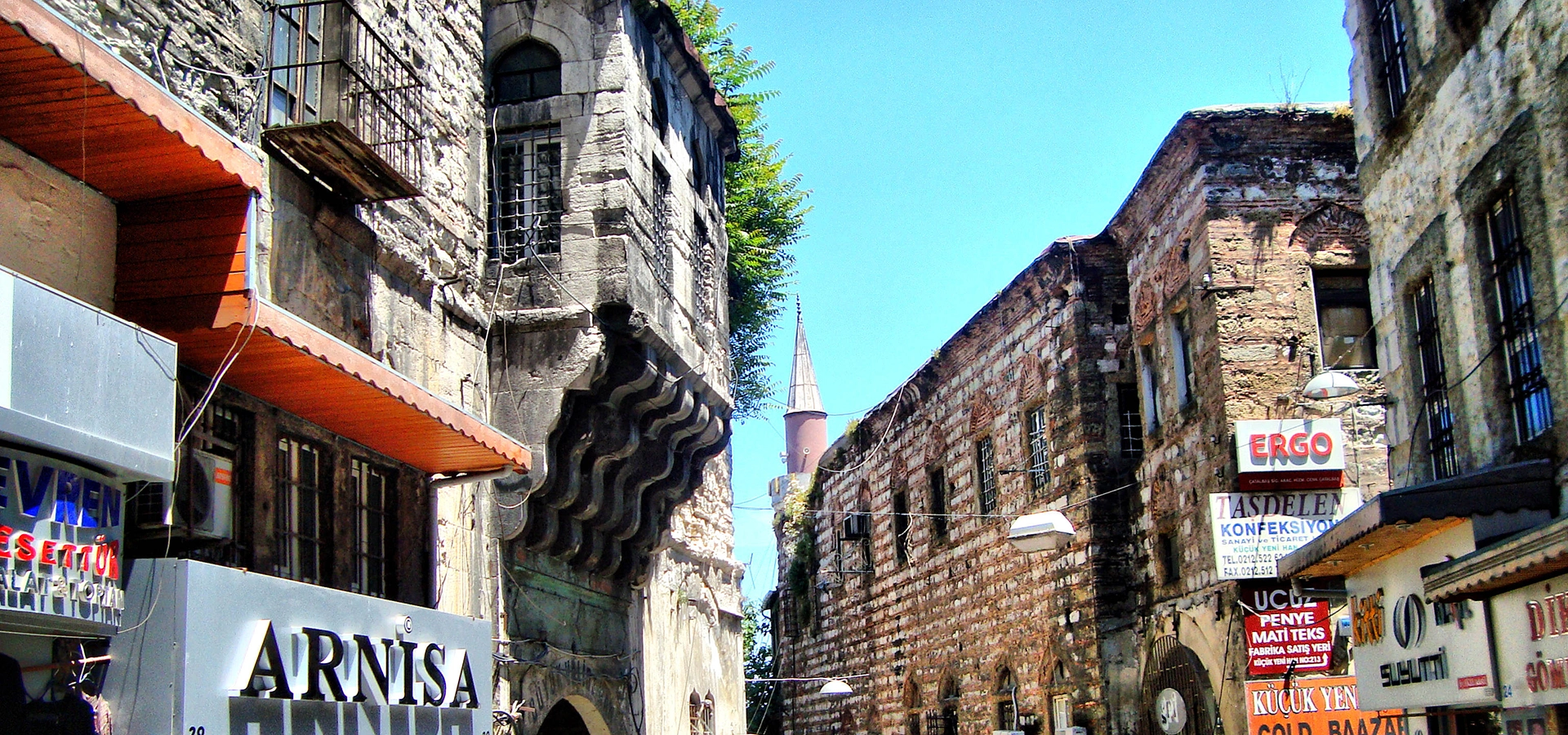
Private Tahtakale & Historic Markets Experience
Ask us about a tailor-made historic Istanbul route combining Tahtakale, Rüstem Paşa Mosque, the Spice Bazaar, New Mosque, historic hans, Eminönü, Mahmutpaşa and the Grand Bazaar.
Request a Custom Tour





Between the waterfront of Eminönü, the Spice Bazaar and the uphill market streets leading toward the Grand Bazaar, Tahtakale is one of the busiest and most historically fascinating commercial districts on Istanbul's Historic Peninsula.
At first glance, Tahtakale can seem like a maze of crowded streets filled with wholesalers, small shops, delivery carts, street vendors, historic hans and market passages. But this intense commercial atmosphere is not something new. Trade has shaped the identity of the area for centuries.
Its position between the Golden Horn waterfront and Istanbul's inland commercial center made Tahtakale especially important during the Ottoman period. Goods arriving by sea could be unloaded near Eminönü, stored in commercial hans and distributed through the markets of the capital.
During the 16th century, the area developed into an increasingly important center of trade, storage, food distribution and urban entertainment. Historic hans, mosques, fountains, shops and workshops filled the streets around Tahtakale.
The district also occupies an important place in the history of coffee culture in Istanbul. According to the traditional account preserved in Istanbul's urban history, two merchants named Hâkim from Aleppo and Şems from Damascus opened coffeehouses in Tahtakale in 1555, helping introduce a social institution that would eventually become inseparable from Ottoman urban life.
Today, Tahtakale remains a living commercial neighborhood rather than an open-air museum. Its appeal comes from experiencing the continuity between old Istanbul's trading world and the energetic wholesale district that survives here today.
Tahtakale developed between the Golden Horn port and Istanbul's great Ottoman market district.
The district is traditionally associated with some of the earliest coffeehouses established in Ottoman Istanbul.
Balkapanı Han and other commercial buildings preserve memories of the area's great wholesale trading network.
Tahtakale remains one of central Istanbul's busiest wholesale and retail shopping districts.
Essential information about Tahtakale's Eminönü location, Ottoman commercial history, historic hans, market streets, coffeehouse tradition and easy access from Istanbul's T1 tram.
Eminönü, Fatih, between the Golden Horn waterfront, Spice Bazaar and the market streets leading toward the Grand Bazaar.
Open on Google MapsWholesale shopping, historic market streets, commercial hans, household goods, decorations, accessories and traditional Istanbul street life.
One of Ottoman Istanbul's major commercial and distribution districts between the port and the city's great bazaars.
Tahtakale is traditionally associated with coffeehouses established by Hâkim and Şems in 1555.
Free. Tahtakale is a public commercial district rather than a ticketed attraction.
Eminönü station on Istanbul's T1 tram line provides the easiest approach for most visitors.
Tahtakale is important because it preserves the commercial geography of old Istanbul: goods arriving from the Golden Horn moved through warehouses, hans, markets and specialized streets before reaching the city's merchants and consumers.
The first reason is location. Tahtakale occupied a strategic position between Istanbul's waterfront trading zone and the great inland commercial district surrounding the Grand Bazaar.
This allowed merchants to move goods efficiently between ships, warehouses, wholesale markets, shops and caravan inns. The geography of the neighborhood was therefore closely tied to the economic life of the imperial capital.
The second reason is the concentration of commercial hans. From the early Ottoman period onward, inns and storage buildings became essential parts of the district. Some accommodated merchants, while others specialized in receiving, storing and distributing particular commodities.
The third reason is Tahtakale's connection with Ottoman food and coffee culture. The streets around the Golden Horn supplied Istanbul with products arriving from across the empire and beyond, while the neighborhood became famous in accounts of the city's early coffeehouses.
Finally, Tahtakale is significant because it remains a working market district. Unlike historic commercial areas that survive mainly as monuments, Tahtakale continues to be filled with businesses, workers, wholesalers, shopkeepers and customers every day.
Travelers following our guide to places to visit in Istanbul can easily combine Tahtakale with the Spice Bazaar, Rüstem Paşa Mosque, New Mosque, Eminönü and the Grand Bazaar.
The commercial importance of the area surrounding modern Tahtakale predates the Ottoman conquest. The nearby Golden Horn waterfront provided natural access for maritime trade, storage and distribution, and commercial communities operated in this part of Constantinople during the Byzantine period.
After Mehmed II conquered Constantinople in 1453, the new Ottoman capital underwent an enormous process of repopulation, reconstruction and economic development. Tahtakale became part of the commercial zone linking the city's port with its rapidly developing markets.
During the following centuries, the streets became increasingly filled with hans, warehouses, shops, workshops, mosques, fountains and food markets.
The reign of Süleyman the Magnificent was especially important for the surrounding area. The development of monumental buildings such as Rüstem Paşa Mosque and Süleymaniye, together with numerous commercial structures, strengthened Tahtakale's position within Istanbul's economic network.
Historic sources describe a remarkably diverse urban world. Merchants mixed with craftsmen, food sellers, street performers, poets, coffee drinkers, porters and travelers. Commerce and entertainment existed side by side.
Tahtakale was also strongly connected with the distribution of provisions. Commercial hans received products arriving in Istanbul, which could then be inspected, stored, sold wholesale and distributed throughout the city.
Fires repeatedly affected the densely built commercial quarter, damaging hans, shops and other historic structures. Yet the commercial life of Tahtakale repeatedly returned.
The types of products sold have changed dramatically, particularly during the modern period, but the basic identity of the neighborhood remains remarkably familiar: Tahtakale is still a place where Istanbul comes to trade.
The wider waterfront district already formed part of Constantinople's important commercial landscape.
Ottoman reconstruction and repopulation transformed the district into part of the new imperial capital's commercial core.
Numerous hans and commercial buildings strengthened Tahtakale's role in wholesale trade and urban provisioning.
Traditional accounts associate Tahtakale with pioneering coffeehouses opened by Hâkim and Şems.
Commercial inns stored goods, housed merchants and connected maritime trade with Istanbul's markets.
The district continues to function as an exceptionally active wholesale and retail market.
The precise origin of the name Tahtakale has produced several historical explanations. One of the most widely repeated connects it with the expression Taht-el Kale, meaning roughly “below the fortress” or “under the castle.”
The interpretation may relate to the district's position beneath fortified or elevated parts of the old city. Other traditions associate the name with a wooden tower, a palace or fortifications connected with the former Venetian commercial quarter.
Because several explanations survive, it is better to understand the modern name as the result of a long linguistic and urban evolution rather than assume that one single origin can be proven with absolute certainty.
The traditional linguistic explanation associates the name with a place situated beneath a fortress or fortified area.
One tradition connects the name with the district's position below the elevated area associated with the early Ottoman palace.
Another explanation connects the name with walls or fortifications once associated with merchants near the Golden Horn.
Whatever its exact origin, Tahtakale has identified this commercial part of Istanbul for centuries.
To understand Tahtakale, imagine Istanbul before trucks, railways and modern logistics. A city of hundreds of thousands of people needed enormous quantities of food, fuel, textiles, building materials and everyday goods.
Much of this merchandise entered Istanbul through its waterfronts. The Golden Horn was therefore not simply a scenic harbor: it was one of the great economic arteries of the city.
Tahtakale stood immediately behind this maritime world. Goods could move uphill from the waterfront into hans, depots, markets and specialized commercial streets.
The commercial hans were especially important. They provided secure spaces where merchants could store products, conduct transactions and sometimes find accommodation.
Different parts of the Ottoman market system became associated with particular commodities. The surviving name Balkapanı, for example, recalls the commercial organization of products such as honey within the district.
This network connected Tahtakale not only with Istanbul, but with Anatolia, the Balkans, the Black Sea, the Mediterranean, the Middle East and international maritime trade.
The Golden Horn waterfront allowed goods arriving by boat to reach the commercial city quickly.
Urban inns provided spaces for merchants, storage, workshops and wholesale transactions.
Large quantities of goods could be received and redistributed to retailers throughout Istanbul.
Human labor was essential for moving merchandise through streets too narrow for modern vehicles.
Different streets and buildings became associated with particular professions or commodities.
The products have changed, but wholesale trade remains fundamental to modern Tahtakale.
One of the most fascinating stories connected with Tahtakale concerns the arrival of the coffeehouse in Ottoman Istanbul.
According to the traditional account, in 1555 two men named Hâkim from Aleppo and Şems from Damascus opened coffee establishments in Tahtakale.
Coffee itself was already known in the wider Islamic world, but the development of the urban coffeehouse created something new: a public place where people could sit, talk, listen, play games, exchange information and spend time outside the home.
Coffeehouses soon became an important part of Ottoman social culture. They attracted merchants, craftsmen, storytellers, poets, travelers and men interested in news and conversation.
Authorities occasionally viewed these gatherings with suspicion, and coffeehouses were periodically restricted. Yet the institution survived, expanded and eventually became one of the most recognizable elements of urban culture across the Ottoman world.
Among the most interesting surviving commercial structures associated with Tahtakale is Balkapanı Han, one of the oldest trading hans in the Eminönü district.
Parts of the site contain very old masonry, and historical research has connected sections of the structure with the Byzantine commercial landscape that existed in this part of Constantinople before the Ottoman conquest.
During the Ottoman period, the han became closely associated with the storage and wholesale distribution of honey and other commodities entering the imperial capital.
The Ottoman kapan system helped organize the arrival, control, storage and distribution of important commodities. Names connected with products such as honey, flour or oil therefore became part of Istanbul's historical commercial geography.
Balkapanı is especially valuable because it reminds visitors that the hans of Tahtakale were not decorative monuments. They were working components of a huge urban supply network.
The property continues to contain commercial activity today. Visitors should therefore remember that access to particular areas can change and that businesses inside are working spaces rather than museum exhibits.
Balkapanı belongs to the commercial landscape between Tahtakale and Eminönü.
Parts of the lower structure have been associated with construction dating from the Byzantine period.
The han became closely connected with the storage and distribution of honey in Ottoman Istanbul.
Goods arriving in bulk could be stored here before continuing into the city's markets.
Balkapanı has continued to accommodate businesses rather than functioning purely as a historic monument.
Enter only areas that are clearly publicly accessible and avoid interfering with working shops or deliveries.
Walk through the dense commercial streets and experience one of Istanbul's most energetic working market districts.
Look for one of the historic commercial inns associated with the wholesale distribution networks of Ottoman Istanbul.
Visit the celebrated 16th-century Ottoman mosque overlooking the market district, famous for its extraordinary İznik tiles.
Explore the monumental covered market immediately beside Tahtakale and compare its atmosphere with the surrounding wholesale streets.
Discover the surviving Fatih-period bath structure, an important reminder of the neighborhood's early Ottoman development.
Look above modern shop signs for gateways, stone walls, courtyards and architectural fragments belonging to older commercial buildings.
Continue toward Eminönü to see one of the defining Ottoman monuments of the Golden Horn waterfront.
Porters, wholesalers, shopkeepers and delivery workers provide a glimpse of the commercial intensity that continues to define Tahtakale.
Modern Tahtakale is famous for the extraordinary variety of products packed into its narrow streets. It is especially important as a wholesale district, although many shops also sell individual items to retail customers.
The exact mix changes from street to street. One passage may specialize in party decorations, another in kitchen equipment, another in packaging, beads, accessories or household supplies.
For travelers, the attraction is often less about purchasing one particular souvenir and more about seeing how Istanbul's enormous everyday commercial system actually works.
Kitchen tools, containers, cleaning products and practical household items appear throughout the district.
Party, celebration, wedding and seasonal decorations are an important part of modern Tahtakale's trade.
Some streets contain shops specializing in beads, jewelry-making supplies, ribbons and decorative accessories.
Bags, boxes, wrapping materials and other products required by retailers are widely sold in the wholesale district.
Low-cost toys, novelty products and gift items can be found among the countless commercial streets.
Some prices or products may be intended for customers buying larger quantities, so ask before assuming retail conditions.
Tahtakale is most interesting when its shops and wholesalers are operating, generally from morning through the afternoon.
Narrow streets can become extremely busy with shoppers, porters, deliveries and handcarts.
A visit usually involves considerable walking on sloping, crowded and sometimes uneven historic streets.
Historic architecture is often hidden behind modern signs and merchandise. Look upward for stone arches, upper floors and old gateways.
As in any heavily crowded market area, keep phones, wallets, cameras and bags secure.
Request permission before photographing shopkeepers, workers or the interiors of commercial premises.
The district is busy and narrow, so large shopping bags can make movement through crowded streets difficult.
Tahtakale works best as part of a longer walk through Eminönü, the Spice Bazaar and surrounding Ottoman monuments.
Begin at Eminönü Square beside the Golden Horn. The waterfront immediately explains why this part of Istanbul developed into such a powerful commercial zone.
Walk toward the New Mosque and then enter the Spice Bazaar. This monumental Ottoman market forms an excellent introduction to the commercial history of the district.
Leave the covered bazaar toward the Tahtakale side and continue to Rüstem Paşa Mosque. Its elevated position provides a dramatic contrast with the crowded commercial streets surrounding it.
Then descend into Tahtakale itself. Walk slowly through the wholesale streets, look for old han entrances and observe the movement of goods between shops and warehouses.
Find Balkapanı Han and consider how similar commercial buildings once connected arriving cargo with merchants throughout Ottoman Istanbul.
From here, continue uphill toward Mahmutpaşa and the Grand Bazaar. The route reveals how Istanbul's historic commercial zone climbs continuously from the Golden Horn toward Beyazıt.
Book lovers can then continue toward Sahaflar Booksellers' Bazaar beside Beyazıt Mosque.
Tahtakale lies in the Fatih district of Istanbul, immediately inland from Eminönü and the Golden Horn. It is a public neighborhood and commercial area, so there is no entrance ticket.
Individual shops, hans and commercial premises operate independently. There is therefore no single opening schedule for the entire district.
Visitors interested in seeing Tahtakale at its most characteristic should generally come during the daytime while businesses are operating. Late morning and early afternoon offer a good balance between commercial activity and sightseeing.
The easiest arrival point for most travelers is Eminönü on the T1 tram line. From the tram stop, walk past the New Mosque and Spice Bazaar into the streets behind the market.
Shopping in Tahtakale is different from browsing a conventional tourist bazaar. Many businesses serve professional retailers and wholesale customers rather than primarily targeting foreign visitors.
That can produce excellent variety, but it also means prices may depend on quantity, product quality, payment method and whether you are purchasing wholesale or retail.
For larger purchases, clarify what is included before paying. Inspect products carefully, particularly when buying multiple pieces of the same item.
Some displayed prices may apply only when purchasing a minimum number of units.
Ask whether the quoted amount is for one item, a package, a dozen or a wholesale carton.
Check quality and condition before purchasing large quantities.
Payment options can vary between small businesses, so confirm before completing a purchase.
For significant purchases, request appropriate sales documentation.
Similar products may be available from several businesses within a very small area.
See businesses preparing for the day and deliveries beginning, although not every shop may yet be open.
One of the best times to visit because most businesses are active and the district's commercial character is fully visible.
A good period for combining Tahtakale with the Spice Bazaar, Rüstem Paşa Mosque and surrounding streets.
Usually the strongest choice for travelers who want to experience the wholesale district at full commercial intensity.
Milder temperatures make the steep walking routes between Eminönü, Tahtakale and the Grand Bazaar more comfortable.
Some covered markets and hans provide shelter, but much of Tahtakale consists of open streets, so bring suitable protection.
Enough for a quick walk from the Spice Bazaar through several Tahtakale market streets.
Recommended for exploring the commercial streets, searching for historic hans and visiting Rüstem Paşa Mosque.
Better for travelers interested in shopping, photography and exploring side streets more carefully.
Allow this for a complete Eminönü, Spice Bazaar, Tahtakale, Mahmutpaşa and Grand Bazaar walking route.
Tahtakale offers a very different photographic experience from Istanbul's monumental palaces and mosques. Its visual strength comes from movement, commerce, narrow streets, old buildings, shop displays, delivery carts and layers of historic architecture.
Some of the most interesting compositions appear where modern commercial activity sits directly beside old stone walls, arched han entrances or Ottoman religious buildings.
Remember, however, that Tahtakale is not a staged market. Most people you encounter are working. Do not block doors, loading areas, handcarts or narrow passages while taking photographs.
Use the long narrow streets to capture layers of shop signs, customers and commercial movement.
Old han entrances can create striking frames between modern merchandise and historic architecture.
Look upward for domes, minarets and upper floors rising above the crowded market streets.
Stacks of products and densely arranged shop displays can create fascinating patterns and textures.
Porters and shopkeepers reflect the working character of the neighborhood, but ask before taking close portraits.
Never stop in active loading areas or narrow passages simply to compose a photograph.
Tahtakale can be challenging for travelers with limited mobility. Although no long-distance hike is required, the district contains sloping streets, uneven paving, crowds, narrow passages and constant commercial movement.
Individual hans and shops can present additional difficulties. Historic entrances may contain steps, thresholds, tight corridors or uneven surfaces.
Visitors using wheelchairs, walking aids or strollers should consider approaching from Eminönü and exploring the lower portions of the district before deciding whether to continue uphill.
The route from Eminönü toward Mahmutpaşa and the Grand Bazaar climbs noticeably uphill.
Historic paving, thresholds and commercial loading activity can create difficult surfaces.
Some streets become extremely busy during peak commercial periods.
Small interiors and crowded merchandise can make access difficult for mobility devices.
The lower district can be approached conveniently from public transport around Eminönü.
A slower route makes it easier to manage crowds, slopes and changing street conditions.
Tahtakale lies immediately inland from Eminönü on Istanbul's Historic Peninsula. For most visitors, the easiest approach is through the waterfront transportation hub around Eminönü.
Leave the T1 tram at Eminönü, walk toward the New Mosque and Spice Bazaar, then continue into the commercial streets behind the bazaar.
Take the T1 tram toward Kabataş and get off at Eminönü. Tahtakale begins only a short walk inland.
Cross the Galata Bridge on foot or use the T1 tram to Eminönü, then continue toward the Spice Bazaar.
Use the F1 funicular to Kabataş and continue by T1 tram to Eminönü, or use the M2 metro and connect through the historic peninsula.
Use a ferry connection to Eminönü when available, or take Marmaray to Sirkeci and continue on foot.
Walk downhill through the Mahmutpaşa commercial streets toward Eminönü. Tahtakale lies between the Grand Bazaar area and the waterfront.
Tahtakale occupies one of the best locations in Istanbul for combining markets, mosques, commercial hans and historic neighborhoods. Several major sights are within easy walking distance.
Use our complete Istanbul visitor guide to continue planning your journey through the Historic Peninsula.
Explore one of Istanbul's most famous Ottoman markets immediately beside Tahtakale.
See one of Mimar Sinan's most beautiful smaller mosques and its remarkable collection of İznik tiles.
Visit the monumental Ottoman mosque dominating Eminönü Square and the Golden Horn waterfront.
Walk uphill through another of Istanbul's great historic commercial streets toward the Grand Bazaar.
Continue into one of the world's most famous covered markets and the monumental center of Ottoman Istanbul's commercial network.
Continue beyond the Grand Bazaar to Beyazıt and explore Istanbul's historic world of booksellers and antiquarian books.
Continue toward the upper Historic Peninsula to discover one of the defining early masterpieces of Mimar Sinan.
Discover more mosques, churches, bazaars, cisterns, palaces and historic neighborhoods throughout Istanbul.
Tahtakale is a historic commercial district in Istanbul's Fatih district, located between Eminönü, the Spice Bazaar, Mahmutpaşa and the wider Grand Bazaar trading zone.
Tahtakale lies immediately inland from Eminönü and the Golden Horn on Istanbul's Historic Peninsula.
The name is commonly connected with the expression Taht-el Kale, interpreted as “beneath the fortress” or “under the castle,” although several explanations for the name survive in Istanbul's historical tradition.
It is famous for centuries of commerce, historic hans, wholesale shopping, its position beside the Spice Bazaar and its traditional association with Istanbul's early coffeehouses.
Yes, particularly for travelers interested in Ottoman commercial history, markets and everyday Istanbul beyond the city's major monuments.
Not in the conventional sense. Tahtakale is primarily a working commercial district, which is precisely what makes it interesting.
No. Tahtakale consists of public streets and commercial areas and can be explored freely.
Products vary enormously and may include household goods, kitchen products, packaging, decorations, accessories, beads, toys, gift items and many other wholesale and retail products.
Yes. Wholesale trade is a major part of the district, although many businesses also sell individual products to retail customers.
Yes. Tourists can shop in the district, but some businesses primarily serve wholesale customers and may have minimum quantities for certain prices.
Yes. Its position between the Golden Horn waterfront and the major inland bazaars made it an important center for trade, storage and the distribution of goods.
Numerous commercial hans once operated in and around the district. Balkapanı Han is among the best-known surviving examples associated with Tahtakale's historic trading network.
Balkapanı Han is one of the historic commercial inns of the Eminönü-Tahtakale area. During the Ottoman period it became associated particularly with the wholesale handling and distribution of honey and other goods.
Research has identified very old structural elements in the lower parts of the site that have been associated with the Byzantine period, demonstrating the deep commercial history of this part of the city.
According to the traditional historical account, Hâkim from Aleppo and Şems from Damascus established coffeehouses in Tahtakale in 1555, making the neighborhood especially important in the history of Ottoman coffee culture.
Explore the market streets, historic han entrances, Balkapanı Han and the surrounding commercial architecture, then combine the district with Rüstem Paşa Mosque and the Spice Bazaar.
Eminönü station on the T1 tram line is generally the most convenient stop.
Tahtakale begins immediately behind and around the streets adjoining the Spice Bazaar, so the two areas can be explored together easily.
Yes. Walk uphill through the historic commercial streets toward Mahmutpaşa and the Grand Bazaar. The route is one of the best ways to understand Istanbul's historic market geography.
Yes. Rüstem Paşa Mosque stands directly within the surrounding commercial district and is one of the most important monuments to combine with a Tahtakale visit.
Allow around one to two hours for exploring Tahtakale itself. A complete route including the Spice Bazaar, Rüstem Paşa Mosque and Grand Bazaar can take three to five hours.
Late morning through early afternoon on an active commercial day is generally best if you want to experience the district while its businesses are operating.
Tahtakale is a public district and can always be walked through, but individual commercial businesses set their own schedules and many wholesale operations may have reduced activity or close on certain days.
Tahtakale is a heavily used commercial district. Visitors should exercise normal big-city precautions, particularly by watching personal belongings in dense crowds and staying aware of delivery traffic.
Some lower streets can be approached relatively easily, but steep gradients, crowds, uneven paving and narrow historic premises can make full exploration challenging.
Street photography is possible in public areas, but ask permission before photographing individual shopkeepers, customers or the interiors of private businesses.
The Spice Bazaar, New Mosque, Rüstem Paşa Mosque, Eminönü waterfront, Mahmutpaşa, Grand Bazaar and Sahaflar Booksellers' Bazaar form an excellent continuous walking route.
Tahtakale's streets and hans exist primarily for commerce. Give workers space to conduct deliveries and move goods.
Narrow doors and passages may be essential access routes for shops, warehouses and delivery workers.
Request permission before photographing people or entering private commercial spaces with a camera.
Do not climb onto, touch unnecessarily or damage architectural fragments within historic hans and monuments.
Buying responsibly from established shops helps preserve the commercial life that makes Tahtakale distinctive.
The district rewards observation. Many traces of historic Istanbul are easy to miss behind the intense modern market activity.
Connect Tahtakale with the Spice Bazaar, Rüstem Paşa Mosque, New Mosque, Eminönü, historic commercial hans, Mahmutpaşa and the Grand Bazaar through a private route shaped around your interests and without compulsory shopping stops.
Choose a private route focused on Ottoman commerce, historic bazaars, traditional hans, mosques, coffee culture, food history and the extraordinary commercial landscape between the Golden Horn and the Grand Bazaar.
Ask us about a tailor-made historic Istanbul route combining Tahtakale, Rüstem Paşa Mosque, the Spice Bazaar, New Mosque, historic hans, Eminönü, Mahmutpaşa and the Grand Bazaar.
Request a Custom Tour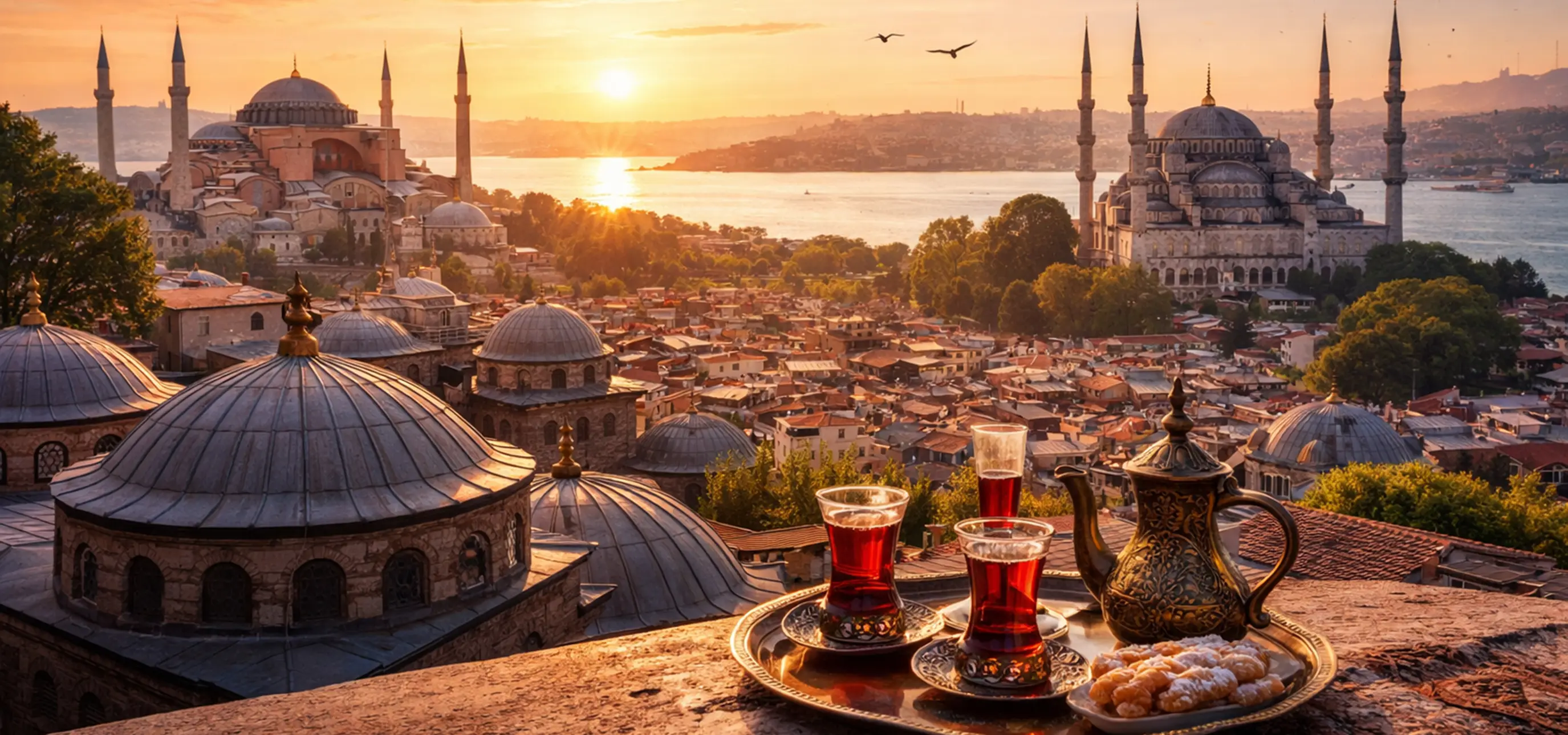
Continue beyond Tahtakale through Sultanahmet, Beyazıt, Süleymaniye, Fener, Balat, Beyoğlu, the Bosphorus and Istanbul's many layers of Roman, Byzantine and Ottoman heritage.
Explore IstanbulUse Tahtakale as the center of a wider journey through Istanbul's Ottoman markets, commercial streets, book bazaars, mosques and the extraordinary mercantile landscape of the Historic Peninsula.
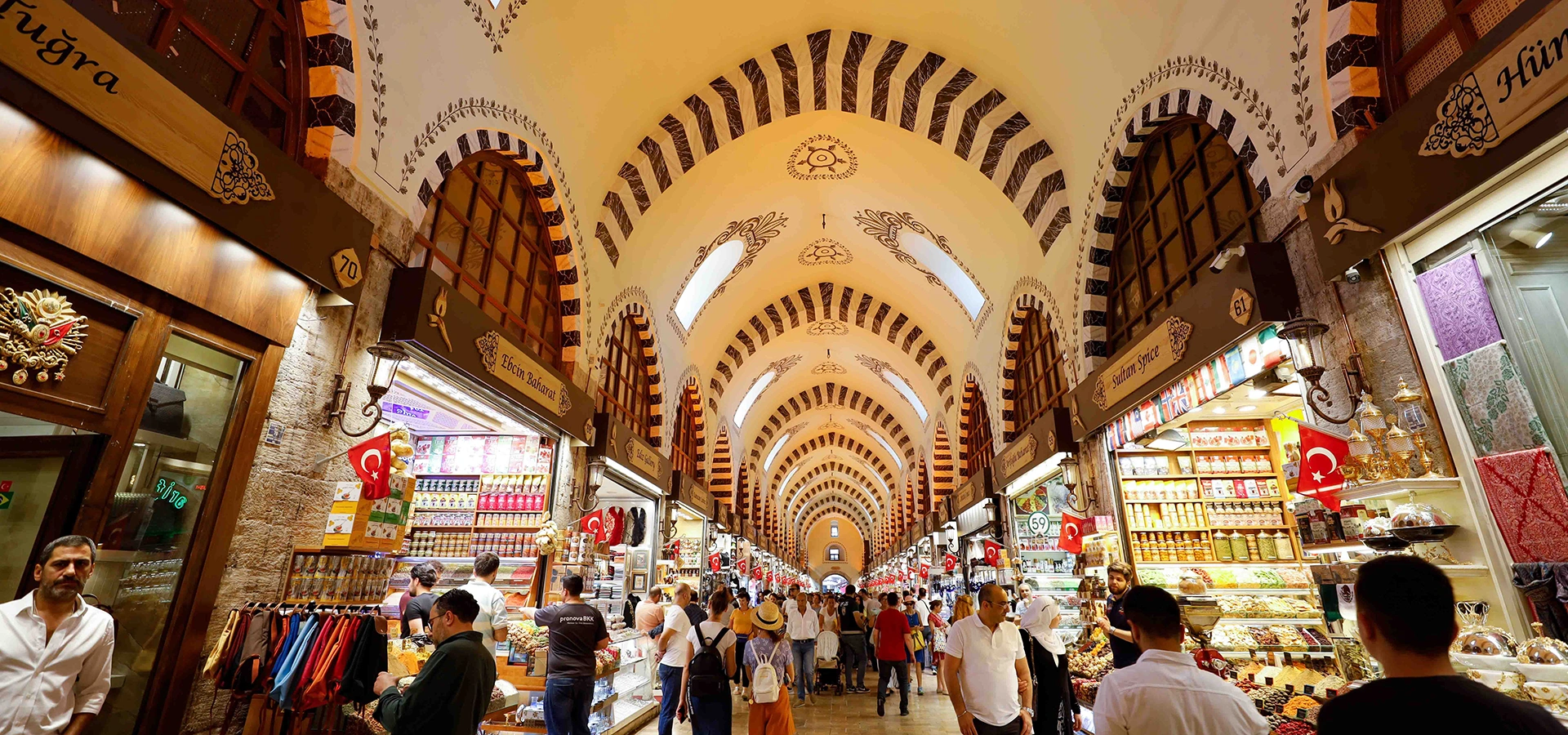
Step from Tahtakale into one of Istanbul's great covered Ottoman markets, where spices, teas, dried fruits, sweets and traditional food products continue centuries of trade beside the Golden Horn.
Explore Spice Bazaar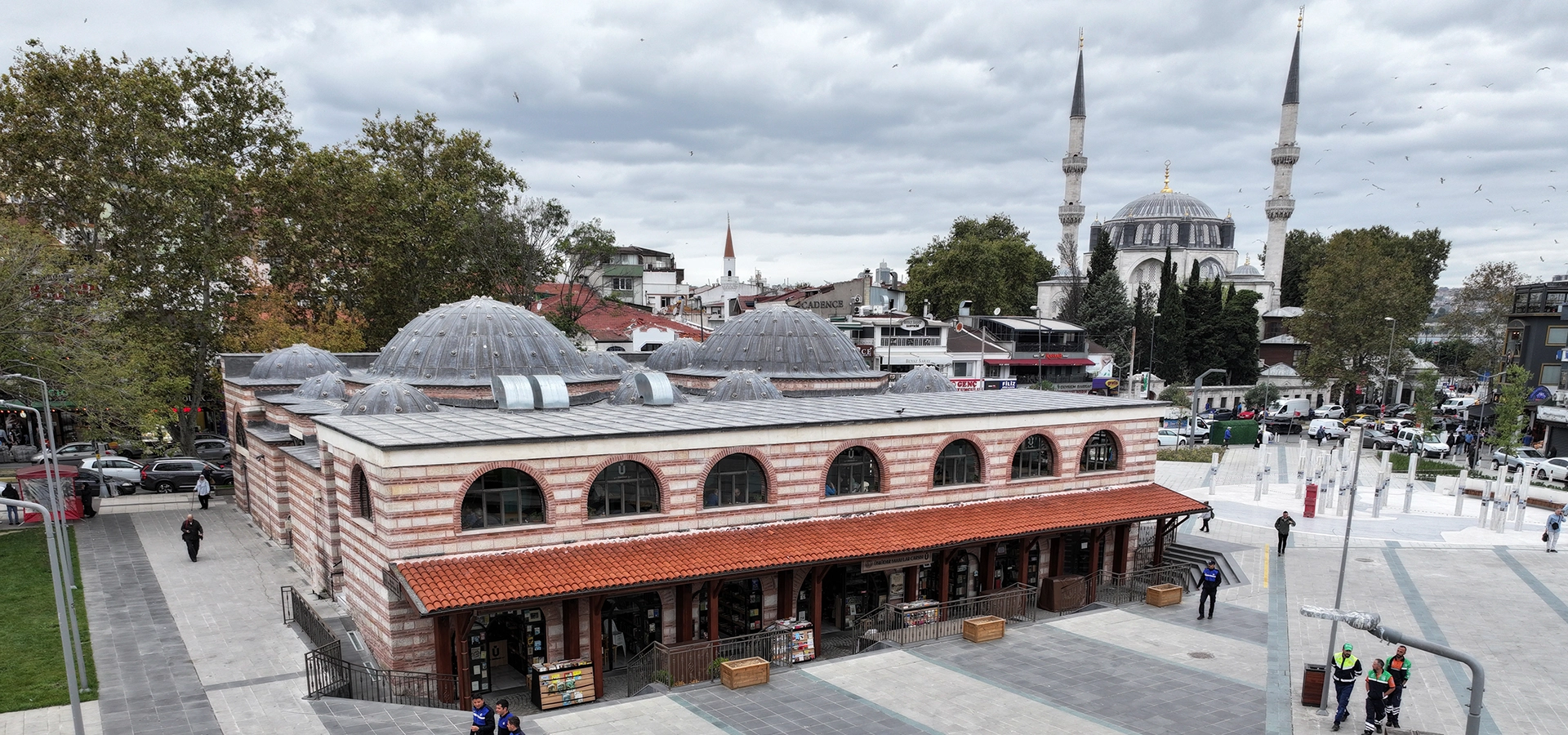
Continue uphill through Istanbul's historic commercial district to Beyazıt and discover the centuries-old world of booksellers, old editions, manuscripts and Ottoman intellectual culture.
Explore Sahaflar
Create a private Istanbul itinerary around Ottoman architecture, Byzantine monuments, historic bazaars, religious heritage, food culture, traditional neighborhoods and lesser-visited corners of the city.
View Private Istanbul Tours