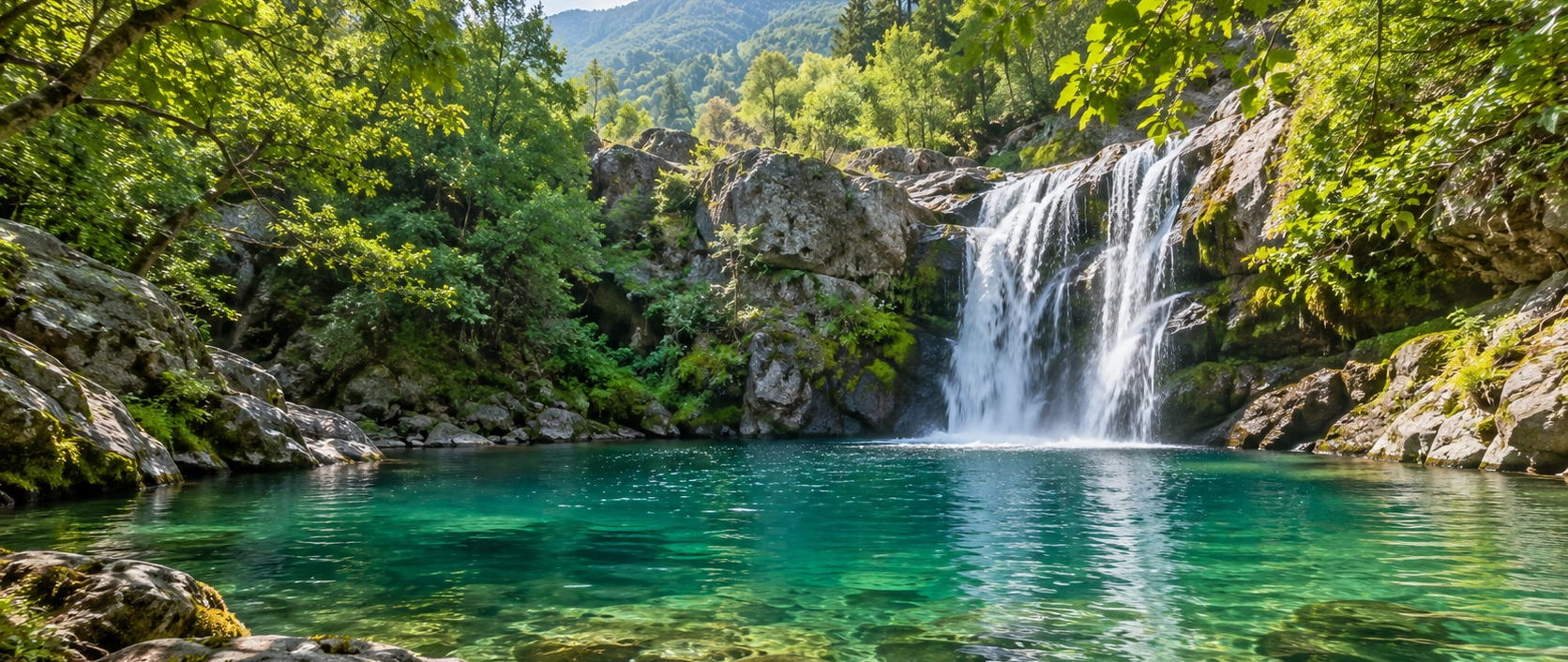
Private Kazdağı Waterfalls & Village Experience
Ask us about a tailor-made route combining Sütüven, Hasanboğuldu, village culture, local food and selected Kazdağı viewpoints.
Request a Custom Tour





On the southern slopes of Kazdağı — ancient Mount Ida — the waters descending toward the Edremit Gulf pass through one of the mountain's most visited day-use landscapes: Sütüven Waterfall and Hasanboğuldu Pond. The two natural attractions lie close together near Zeytinli and Beyoba in the Edremit district of Balıkesir and are officially identified as part of Kazdağı National Park.
Sütüven Waterfall forms on the Kızılkeçili Stream, where water drops approximately 17 metres through a rocky, wooded gorge. A short distance farther along the same watercourse lies Hasanboğuldu, a natural pool shaped among large rocks. The contrast between white falling water, dark stone, deep shade and remarkably clear mountain water makes this one of the most photogenic stops in the Edremit–Akçay area.
The landscape is also inseparable from the Hasan and Emine legend, a tragic local love story passed through oral tradition in several versions. Its literary fame grew enormously through Sabahattin Ali's “Hasanboğuldu”, published in his 1943 story collection Yeni Dünya. Visitors therefore arrive not only for scenery, but also for a place where local folklore, Turkish literature and the cultural identity of Kazdağı overlap.
Although the area is easy to visit compared with the deeper interior of Kazdağı National Park, it is still a protected mountain environment. Rocks can be wet and slippery, water remains extremely cold even in warm weather, and seasonal fire-prevention rules can affect access to surrounding forest routes. The best visit combines the waterfall, pond and forest paths slowly rather than treating the site as a quick roadside photo stop.
Official Balıkesir tourism information describes Sütüven as a waterfall descending approximately 17 metres on Kızılkeçili Stream.
Hasanboğuldu is a naturally formed pool in the same stream system, surrounded by forest, boulders and cool mountain water.
Both sites lie within one of north-western Türkiye's most important protected mountain landscapes.
The pond is associated with a famous local love legend later transformed into one of Sabahattin Ali's best-known stories.
Essential information for planning a visit to one of the most popular day-use areas on the southern slopes of Kazdağı.
Near Zeytinli and Beyoba in the Edremit district of Balıkesir, north of the Edremit–Akçay coastal corridor.
The waterfall and pond are within Kazdağı National Park.
Sütüven Waterfall is located on Kızılkeçili Stream, one of the watercourses descending from Kazdağı.
Approximately 17 metres according to Balıkesir's official tourism information.
A natural rock pool a short distance beyond the waterfall, formed within the same mountain stream environment.
The site is associated with the tragic local story of Hasan and Emine.
Sabahattin Ali's Hasanboğuldu appears in the 1943 story collection Yeni Dünya.
Forest, stream, waterfalls, boulders, shaded paths and cool mountain microclimates.
Easy day-use nature visit with short walks, though wet rocks and uneven surfaces require care.
National park or day-use entrance fees may apply and can change; check the current tariff before travelling.
Allow around 1.5–2.5 hours for the waterfall, pond, short walks and photography.
Spring for strong water flow; early summer and autumn for comfortable forest walks and softer light.
The strength of this site comes from the combination of dramatic water, dense forest, a famous local legend and easy access from the Edremit Gulf.
The first reason to visit is the waterfall itself. Sütüven is not a distant high-mountain cascade requiring an all-day trek. Its approximately 17-metre drop can be reached within a developed day-use area, giving travellers a relatively accessible introduction to the streams that descend from Kazdağı toward the Aegean coast.
The second reason is Hasanboğuldu Pond. Large rocks constrict the stream and create a clear natural pool whose colour changes with light, water depth and forest shade. Even when the waterfall is the initial reason for coming, many visitors remember the pool and surrounding boulders just as strongly.
The third reason is the site's cultural identity. Hasan and Emine's story has become part of the living folklore of the Edremit region, and Sabahattin Ali's literary treatment carried the name “Hasanboğuldu” far beyond Kazdağı. The landscape therefore works on two levels: it is both a natural attraction and a cultural place-name loaded with memory.
Finally, the area fits naturally into a wider Kazdağı and Edremit Gulf itinerary. Zeytinli, Tahtakuşlar, Pınarbaşı, Güre, Antandros and the mountain villages can all be combined with the waterfall and pond, allowing a single day to connect waterfalls, folk culture, olive landscapes, archaeology and the mythology of ancient Ida.
Sütüven Waterfall and Hasanboğuldu Pond are located in the Edremit district of Balıkesir Province, in the forested foothills of Kazdağı north of the Edremit–Akçay coastal road. The usual approach is through Zeytinli and then toward Beyoba, following signs into the mountain recreation area.
Official Culture Portal directions describe turning north from the Edremit–Akçay road at Zeytinli, continuing toward the national park area and following the signed road, with the waterfall and nearby pond reached after several kilometres beyond the relevant junction. The drive quickly changes character from coastal urban scenery to olive groves, village roads and wooded mountain slopes.
The two attractions should be understood as a single visit. Sütüven Waterfall is the dramatic cascade; Hasanboğuldu is the natural pool a little farther along the same stream landscape. There is no reason to choose only one unless access conditions or mobility limitations restrict the visit.
Travellers sometimes treat the names as if they describe the same feature, but Sütüven Waterfall and Hasanboğuldu Pond are distinct natural formations located very close to one another.
The waterfall is the vertical cascade where Kızılkeçili Stream drops approximately 17 metres through a narrow rocky setting.
The pond is a naturally formed rock pool farther along the watercourse, enclosed by large boulders and forest shade.
Both are part of the same Kazdağı stream environment, so the character of one cannot really be separated from the other.
Sütüven is about movement and sound; Hasanboğuldu is about still water, reflected green light and the atmosphere of the legend.
For first-time visitors, the best approach is to see the waterfall first, then continue toward Hasanboğuldu. This creates a natural progression from the strongest visual impact to the quieter cultural and landscape experience of the pond.
Sütüven Waterfall is one of the best-known cascades on the southern side of Kazdağı. Balıkesir's official tourism information describes it as falling approximately 17 metres on Kızılkeçili Stream, whose waters descend through the mountain's wooded valleys toward the Edremit Gulf.
Its appearance changes significantly with the season. During periods of strong flow, especially after winter rain and spring snowmelt in the higher mountain, the waterfall can be loud and forceful, filling the lower gorge with spray. Later in summer, water levels can be lower, but the shaded forest and cold stream continue to create a noticeably cooler microclimate than the coast below.
The waterfall's name is commonly explained in local and travel literature through an old expression associated with splashing or leaping water. Because the etymology is not consistently documented in modern linguistic sources, it is better understood as a traditional local explanation than as a firmly standardised dictionary definition.
The most rewarding views are not necessarily the closest ones. Wet rock can be extremely slippery, particularly where visitors leave established surfaces to approach the water. Use marked paths and viewpoints where available rather than climbing onto boulders simply to improve a photograph.
A short distance from Sütüven, the stream passes between large rock formations and creates the natural pool known as Hasanboğuldu. Official Balıkesir tourism descriptions refer to the place as a natural rock formation where the watercourse has created a pool suitable for a day-use recreation setting.
Visually, Hasanboğuldu is quite different from the waterfall. The attraction here is not a tall drop but the clarity and colour of the water, the sculptural forms of the boulders and the deep shade of the surrounding trees. On a calm day, the green canopy reflects into the pool and gives the water its characteristic turquoise-green appearance.
The name comes from the local legend of Hasan and Emine. For many visitors, this cultural association changes the mood of the site completely. Without the story, it is a beautiful forest pool; with the story, it becomes one of the most emotionally charged named landscapes in Kazdağı.
Do not assume that clear water means safe water. Mountain pools can be very cold, depth can change abruptly and smooth-looking rocks can become dangerously slippery. Follow all current signs, barriers and instructions about entering the water.
The story associated with Hasanboğuldu is a folk legend rather than a documented historical biography. Details vary between oral tellings, literary adaptations and modern retellings, so the safest way to understand it is through the shared core of the tradition rather than treating every detail as factual.
In the best-known version, Hasan is a young man from the lower country around Zeytinli, while Emine belongs to a highland or Yörük community accustomed to the demanding life of Kazdağı. They meet through the market world linking the mountain villages with the settlements below and fall in love.
Emine's family doubts that Hasan, raised in the lowlands, is strong enough for mountain life. Before accepting the marriage, he is required to prove himself by carrying a heavy sack of salt from the low country toward the highland settlement without resting. The climb, heat and salt become too much for him. Emine eventually takes the load and continues, expecting Hasan to follow.
From this point, versions diverge. In some tellings Hasan collapses and drowns in the mountain water; in others he disappears and is later understood to have died near the stream. Emine returns to search for him and, in the tragic ending of the legend, also dies. The pool becomes Hasanboğuldu — “where Hasan drowned”, while nearby landscape features are associated with Emine's memory.
The legend's endurance comes from more than romance. It contrasts mountain and lowland life, social expectations, physical endurance, family authority and the difficulty of crossing between two different communities. Those tensions are exactly what later made the story so powerful in Turkish literature.
The name Hasanboğuldu became known across Türkiye through the work of Sabahattin Ali, one of the major figures of twentieth-century Turkish literature. His short story “Hasanboğuldu” was written in the early 1940s and included in the collection Yeni Dünya, first published in 1943.
The literary story is deeply rooted in the geography of the Edremit region. Rather than using Kazdağı merely as a scenic background, Sabahattin Ali turns the mountain into an active force in the conflict between Hasan and Emine. Distance, steepness, weather, physical labour and different ways of life all shape the characters' choices.
Academic studies of the story emphasise its folkloric and oral-tradition elements. That distinction matters when visiting the pond: the place has inspired a powerful literary work, but the literary narrative should not be treated as documentary proof that every element of the legend occurred exactly as told.
Reading the story before or after visiting creates one of the most rewarding literature-and-landscape connections in western Türkiye. The forest, water and difference between coastal lowland and mountain interior become much easier to understand once you have physically travelled the same terrain.
Kazdağı National Park was declared a national park in 1993 and protects more than 21,000 hectares on the southern side of the Kazdağı massif. Official sources emphasise the mountain's deep valleys, canyons, biological diversity and rich forest ecosystems.
Sütüven and Hasanboğuldu form one of the park's established day-use recreation areas. This is important for travellers because access here is generally more straightforward than access to sensitive interior zones, where seasonal restrictions, ranger controls or local guide requirements can apply.
The national park is much larger than the waterfall area. Other well-known features include Pınarbaşı, Şahindere Canyon, mountain viewpoints and habitat associated with the endemic Kazdağı fir. Visiting Sütüven should therefore be seen as an introduction to the park rather than a complete experience of Kazdağı.
Summer fire risk is taken seriously. Access rules can change by season and year, and deeper forest sections may be closed while designated day-use areas remain open. Always obey current park signs and never enter a closed route simply because an older map or blog shows it as accessible.
Kazdağı receives significant precipitation compared with the hot coastal plain immediately below it. Rain, winter snow at higher elevations, springs and small tributaries feed streams that descend through steep valleys toward the Edremit Gulf.
At Sütüven, the stream meets a sharp change in rock level and forms the waterfall. Around Hasanboğuldu, the process is different: flowing water exploits fractures and low points between large rocks, gradually shaping a basin-like pool. The combination of steep terrain, hard rock and persistent flow produces the sequence of cascades, channels and clear basins visitors see today.
Water levels naturally fluctuate. Spring usually brings the strongest visual flow, while late summer can reveal more of the underlying rock forms. Heavy rain can make stream conditions more forceful, and winter weather can make paths and stone surfaces particularly slippery.
Because the water emerges from a mountain system, it remains strikingly cold even when temperatures on the coast are high. The cool air around the stream is one of the reasons the area is so attractive during summer, but the same cold water can create risk for swimmers and children.
Kazdağı is famous for the way different ecological zones meet within a relatively compact mountain mass. Official provincial information notes Mediterranean-type vegetation such as laurel, strawberry tree, myrtle, kermes oak, broom and wild olive in suitable lower areas, while different forest communities appear as elevation and exposure change.
The mountain's most celebrated plant is the Kazdağı fir, an endemic fir associated with protected higher habitats. You should not expect the Sütüven day-use area itself to represent every ecological zone of the national park, but it provides an immediate sense of the water-rich woodland environment that supports the mountain's biodiversity.
Along the stream, shade-loving plants, mosses and moisture-dependent vegetation contrast with the drier olive landscapes lower toward Zeytinli and the Edremit Gulf. That transition is one of the most interesting aspects of the drive: within a short distance, the scenery shifts from Mediterranean agriculture to a cool forested valley.
Wildlife should be observed without disturbance. Do not feed animals, remove plants, collect branches or leave food waste. In a protected area, apparently small actions repeated by thousands of visitors can cause significant damage.
Start with the main 17-metre waterfall and observe how the water narrows before dropping between the rocks.
The basin below the waterfall gives the best sense of the contrast between white water, dark rock and green forest.
Follow the water rather than focusing only on the named attractions; smaller cascades and channels are part of the experience.
Spend time at the natural rock pool and notice how reflections change the apparent colour of the water.
The rock formations around the pool help explain how the stream is constricted into small cascades and deep basins.
Look upward as well as toward the water; the shaded canopy is responsible for much of the site's cool atmosphere.
Read the Hasan and Emine story before visiting so the place-name carries more meaning than a simple photo stop.
Depending on season and current management, local vendors may offer herbs, olive products, preserves or other regional goods.
Compare the site by season: spring emphasises water power, while summer reveals more rock and swimming-hole colour.
Use permitted short paths to step away from the busiest gathering points without entering restricted forest zones.
Notice the change in vegetation as you drive from Zeytinli upward into the national park foothills.
Allow a few minutes without taking photographs; rushing water and forest sound are a major part of the experience.
The visit is generally based on short walking connections within the day-use area rather than a long mountain hike. This makes it suitable for travellers who want Kazdağı scenery without committing to a full trekking route.
That does not mean every surface is easy. Expect steps, natural stone, roots, damp sections and uneven ground close to the stream. Footwear with reliable grip is much more useful than sandals with smooth soles, especially in spring or after rain.
Stay on established and permitted routes. The temptation to follow the stream deeper into the forest can be strong, but national park access rules vary and some routes may be restricted because of fire risk, conservation or safety.
For a more substantial walking day, combine the waterfall area with a separate approved Kazdağı route rather than simply extending beyond signs. Officially recognised trekking areas and local guiding arrangements are the safer way to explore the mountain interior.
Visitors are often drawn to the clarity of the pools, especially in summer, but conditions and local rules can change. Do not assume that entering the water is permitted simply because other people are doing it. Follow current signs, barriers and instructions from national park staff or site management.
Even where access to the water is allowed, several hazards remain. Mountain water can be extremely cold, depths can change suddenly, submerged rocks are difficult to judge from above and algae can make stone surfaces unexpectedly slippery.
Sudden immersion can be physically stressful even on a hot day; enter cautiously if current rules allow it.
Wet polished stone around the waterfall and pond can cause serious falls.
Clear water can create a false impression of shallow depth, especially in shaded rock pools.
Keep young children within arm's reach near the stream and do not rely on calm-looking water as proof of safety.
Water volume and current can increase quickly after storms or periods of strong mountain runoff.
Do not cross ropes, fences or warning signs to reach a more dramatic photograph or swimming spot.
Sütüven and Hasanboğuldu are visited as part of a managed national park/day-use area. Entrance arrangements, operating hours and fees can change according to season, management contracts and national protected-area tariffs.
For that reason, avoid relying on old social-media posts for a fixed entrance price. A fee quoted several years ago may no longer apply. If your itinerary depends on arriving very early or late, confirm current opening hours locally before travelling.
Seasonal forest-fire measures are especially important in summer. In 2026, large areas of Kazdağı National Park were restricted between mid-June and the end of September because of fire risk, while the designated Hasanboğuldu Day-Use Area remained exempt and open. Future rules may differ, so use that as a reminder to check current official notices rather than as a permanent guarantee.
Cool weather and stronger stream flow can make the waterfall especially impressive, though wet surfaces may be slippery.
One of the best combinations of active water, green vegetation, long daylight and relatively comfortable walking temperatures.
The forest provides welcome relief from coastal heat, but the site can become very busy, particularly on weekends.
Warm weather continues, but visitor pressure often begins to ease after the peak holiday period.
Excellent for quieter walking, soft photography light and the changing colours of the forest.
A more atmospheric and less predictable visit; rain, cold and slippery surfaces require greater care.
If your priority is the strongest waterfall flow, spring is usually the most rewarding period. If your priority is cooling off from the Edremit coast, summer gives the strongest contrast between hot lowlands and shaded mountain water, but arrive early to avoid the busiest hours.
Morning is usually the best choice, particularly from late spring through early autumn. The site is cooler, parking and pathways are generally less pressured and you have a better chance of experiencing the waterfall without large groups around the main viewpoints.
Midday can still be attractive because the forest shade keeps the stream area cooler than the coast, but this is often when day-trippers and picnic visitors are most concentrated. On summer weekends, the atmosphere can feel very different from the quiet forest images seen in promotional photographs.
Late afternoon can produce beautiful reflected light in the pools and softer contrast on the rocks. However, do not remain on unfamiliar forest paths toward dusk, and allow enough time to return to the parking area before any site-closing arrangements begin.
For photography, a lightly overcast morning can be better than harsh sunshine. Waterfalls are difficult to photograph when bright sun creates extreme contrast between white water and deep forest shadow.
Drive toward the Akçay/Zeytinli side, turn north at Zeytinli and follow local signs toward the Kazdağı foothills and Hasanboğuldu area.
The site is a convenient mountain excursion from Akçay; head toward Zeytinli and continue inland through the foothill road system.
Zeytinli is the key orientation point on the approach and one of the principal gateways toward the southern side of Kazdağı.
Official tourism guidance identifies Beyoba as the village route used to reach the waterfall and recreation area.
The easiest option for most visitors, especially when combining Sütüven with other Kazdağı villages and attractions.
Local transport patterns can change; confirm the current connection to the recreation area rather than assuming a frequent direct service.
Mobile navigation is useful, but use the signed Hasanboğuldu / Sütüven route rather than following an app onto minor forest roads. In national parks, the shortest digital route is not always the permitted or safest route.
Enough for a quick look at Sütüven Waterfall and a short walk toward Hasanboğuldu without lingering.
A good minimum for both main attractions, photographs and a relaxed walk through the day-use area.
Recommended for most visitors who want to read the landscape, stop by the stream and avoid rushing.
Suitable for a slow nature visit with refreshments, additional short permitted paths and photography.
Combine Sütüven and Hasanboğuldu with Zeytinli, Pınarbaşı or Tahtakuşlar for a broader Kazdağı foothill experience.
Add Güre, Antandros, a village lunch and an Edremit Gulf sunset for a complete mountain-to-sea itinerary.
Step back enough to show the waterfall within its rocky channel rather than cropping out the surrounding landscape.
Compositions following the water toward or away from the falls create stronger depth than a flat frontal view.
Look for moments when green foliage reflects in the pool and turns the water into layered shades of turquoise and emerald.
Cloudy light reduces extreme contrast between bright water and dark forest and often produces better waterfall photographs.
If using a tripod where permitted, slower shutter speeds can soften the water, but do not block narrow paths or viewing areas.
Water spray, damp air and slippery ground make a strap, lens cloth and secure footing more important than usual.
Avoid climbing beyond barriers or onto wet boulders for a photograph. Some of the strongest images are made from safe, slightly more distant positions that show the relationship between water, rock and forest.
The Sütüven–Hasanboğuldu area can work very well for families because the main attractions are close together, the visit can be kept relatively short and children can immediately engage with moving water, rocks, forest and the story of the place.
The main concern is water safety. Young children should be closely supervised near the stream, waterfall viewpoints and natural pool. Slippery rocks are a more realistic risk than the walking distance itself.
Detailed, current official information about full step-free accessibility is not consistently published. Natural slopes, steps, uneven paving and streamside terrain may create difficulty for wheelchair users or travellers with limited mobility.
If accessibility is essential, confirm current site conditions before travelling and plan around the easiest viewpoints rather than assuming every path to the water is suitable.
Carry out everything you bring in, especially food packaging, wipes, bottles and cigarette ends.
Never light a fire or barbecue outside areas and periods explicitly permitted by current management.
Do not enter temporarily closed forest roads or paths during summer fire restrictions.
Avoid soaps, detergents, food waste or any substance that can enter the water.
Do not collect flowers, moss, branches or other natural material inside the protected area.
Human food changes animal behaviour and can harm species adapted to natural diets.
The sound of the waterfall is part of the experience; amplified music changes the atmosphere for everyone.
Remember that Hasanboğuldu is more than a social-media backdrop; it carries deep local cultural associations.
Morning is the easiest way to avoid peak summer crowds and enjoy the site as a nature experience.
Choose shoes with good traction; smooth soles are a poor choice around wet rock and damp paths.
The shaded stream area can feel much cooler than Akçay or Edremit, especially in spring and autumn.
National park and day-use tariffs change, so check current information rather than old blogs.
The pond is much more meaningful when you understand why the names Hasan and Emine are attached to the landscape.
Mobile signal can vary in mountain terrain; save the route before leaving the coast.
Summer rules can affect surrounding national park routes even when the day-use area itself remains open.
Tahtakuşlar, Pınarbaşı, Güre and Antandros can turn a short waterfall visit into a complete Kazdağı day.
The main foothill settlement on the approach, closely connected with the streams and olive landscapes descending from Kazdağı.
Another established Kazdağı day-use area known for cool spring water and forest shade.
A village associated with Turkmen/Yörük cultural heritage and an important stop for understanding the human traditions of Kazdağı.
A historic settlement between mountain and coast, known for thermal waters, old village texture and easy access to Kazdağı.
An important archaeological site beneath Mount Ida with Roman domestic architecture, mosaics and a deep connection to the ancient landscape.
A popular Edremit Gulf resort and a practical coastal base for visiting the waterfall and mountain villages.
One of Kazdağı's major canyon landscapes, with access subject to current national park conditions and designated routes.
A coastal town beneath the western Kazdağı slopes, useful for combining mountain scenery with beaches and archaeological excursions.
Explore the wider mountain landscape through currently permitted routes, viewpoints and designated recreation areas.
Pair Kazdağı's living folklore with the archaeology of an ancient city closely tied to the Mount Ida region.
Continue south to stone streets, former churches, olive-oil heritage and the island-dotted northern Aegean coast.
Head west toward one of the northern Aegean's great combinations of ancient archaeology, village architecture and sea views.
Explore smaller mountain and olive-growing settlements between Güre, Altınoluk and the lower slopes of Kazdağı.
For a completely different side of the province, continue to Ottoman monuments, the Clock Tower and Kuva-yı Milliye heritage in the provincial centre.
The Sütüven–Hasanboğuldu area sits between two strong food landscapes: the olive-growing Edremit Gulf and the mountain villages of Kazdağı. A good meal after the waterfall should reflect both.
The surrounding gulf is one of Türkiye's great olive regions; look for locally produced extra-virgin oils and simple dishes that let the oil dominate.
Seasonal Aegean herbs and greens often appear boiled, sautéed or dressed with olive oil and lemon.
Balıkesir is nationally famous for dairy and cheese production, making village breakfasts especially worthwhile.
Mountain honey and forest products are commonly associated with the Kazdağı villages and seasonal local markets.
Olives, cheese, butter, honey, tomatoes, herbs and fresh bread make an ideal start before a morning waterfall visit.
Finish with Balıkesir's best-known cheese-based dessert if continuing your day through the province.
It is in the Edremit district of Balıkesir, near Zeytinli and Beyoba on the southern slopes of Kazdağı.
Yes. Official Culture Portal and provincial tourism sources identify Sütüven and Hasanboğuldu within Kazdağı National Park.
Balıkesir's official tourism information describes the waterfall as dropping approximately 17 metres.
The waterfall is on Kızılkeçili Stream.
No. They are separate but nearby features in the same stream landscape: Sütüven is the waterfall, while Hasanboğuldu is a natural rock pool.
They are close enough to visit together on foot within the same day-use area; exact walking access can vary with the open route and current site layout.
The name comes from the local legend of Hasan and Emine, in which Hasan is said in traditional retellings to have died or drowned near the mountain stream.
No. It is best understood as a local folk legend preserved in multiple versions rather than as a fully documented historical event.
His famous short story Hasanboğuldu draws on the Kazdağı setting and folkloric tradition and was included in the 1943 collection Yeni Dünya.
The name is commonly interpreted in local travel tradition as referring to splashing or leaping water, although the etymology is not consistently standardised in modern linguistic sources.
Do not assume water entry is permitted. Follow current signs and management instructions; the water can be extremely cold and the rocks slippery even where access is allowed.
Yes. It is mountain water and can feel very cold even during hot summer weather.
Yes for a supervised family nature visit, but children require close attention near the stream, wet rocks and natural pool.
Full step-free accessibility is not clearly documented, and natural slopes, steps and uneven streamside surfaces may limit access.
National park or day-use fees can apply. Tariffs change, so check the current rate rather than relying on old online prices.
Hours can vary seasonally and with site management. Confirm locally if you plan to arrive very early or near closing time.
April through June is excellent for stronger waterfall flow and green scenery, while September and October are ideal for quieter walking and photography.
Yes, especially for the cool forest atmosphere, but summer weekends can be crowded and fire-prevention rules may restrict surrounding forest routes.
Morning is usually best for cooler temperatures, easier parking, fewer visitors and softer photography conditions.
Allow around 1.5–2.5 hours for both Sütüven Waterfall and Hasanboğuldu at a relaxed pace.
Heavy boots are unnecessary for the basic visit, but shoes with good grip are strongly recommended because wet stone and uneven paths can be slippery.
The established day-use area can normally be visited independently, but deeper or restricted Kazdağı routes may have separate access rules.
The area is historically used as a day-use recreation and picnic zone, but follow current site rules, especially regarding food preparation and fire.
Never assume open flame is permitted. Fire rules can change rapidly in summer and must be followed exactly.
Zeytinli, Pınarbaşı, Tahtakuşlar, Güre, Antandros Ancient City, Akçay and the wider Kazdağı National Park are natural additions.
Yes. An early waterfall visit followed by Tahtakuşlar or Güre and then Antandros makes an excellent full-day route.
Yes, because the experience is not only the cascade: Hasanboğuldu, Kazdağı forest, the local legend and the Sabahattin Ali connection give the site a distinctive cultural dimension.
They can affect surrounding routes. In 2026 the Hasanboğuldu Day-Use Area remained open while large parts of the national park were seasonally restricted, but future regulations may differ.
A private route can combine Sütüven and Hasanboğuldu with Kazdağı villages, local food, Antandros archaeology and the northern Aegean coast for a much richer day than a simple waterfall stop.
Tell us whether your priority is waterfalls, easy nature walks, local villages, mythology, archaeology, photography or food, and we can shape a private Edremit Gulf itinerary around your available time.
Ask us about a tailor-made route combining Sütüven, Hasanboğuldu, village culture, local food and selected Kazdağı viewpoints.
Request a Custom Tour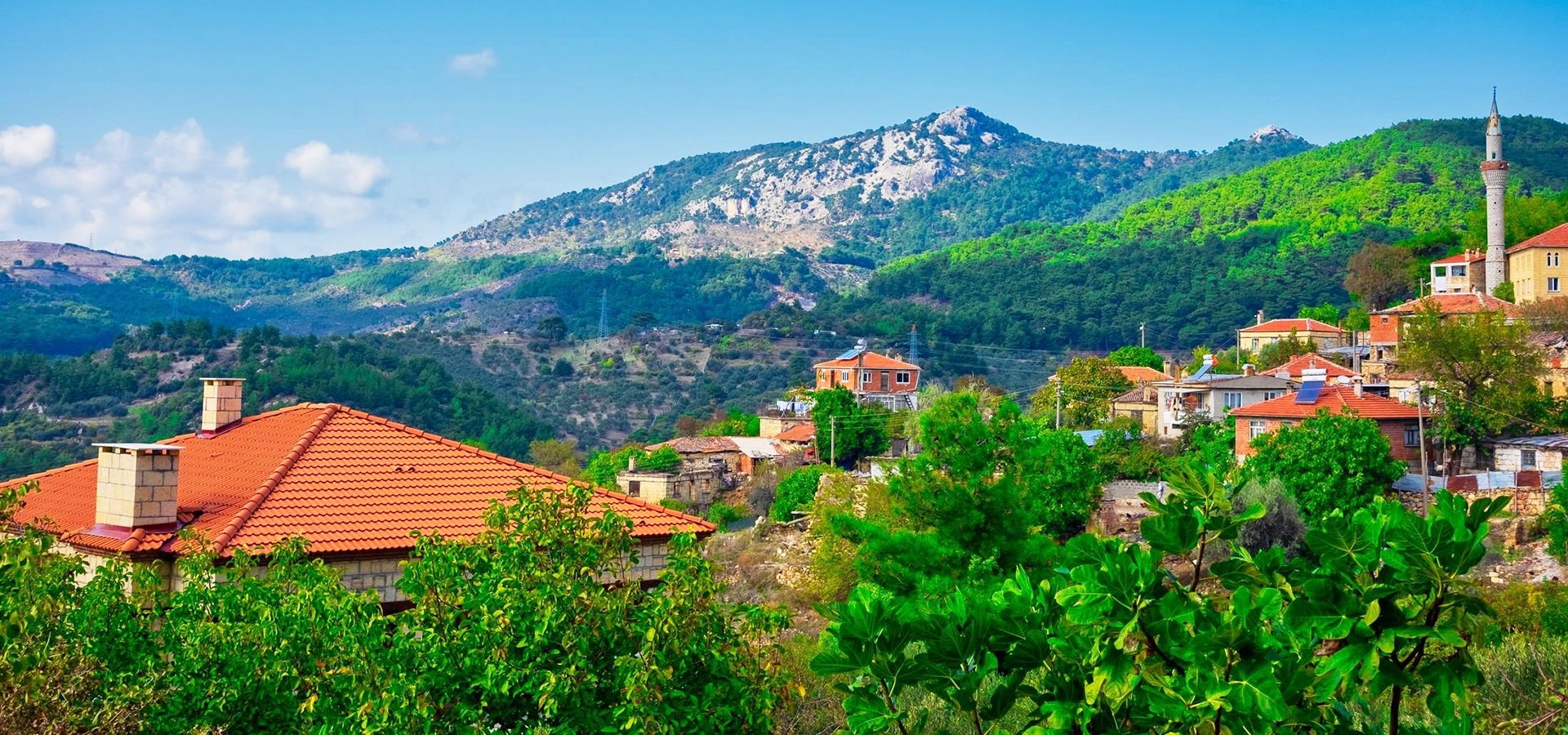
Go beyond the waterfall and explore the protected mountain's mythology, biodiversity, canyons, viewpoints and villages.
View Kazdağı National Park Guide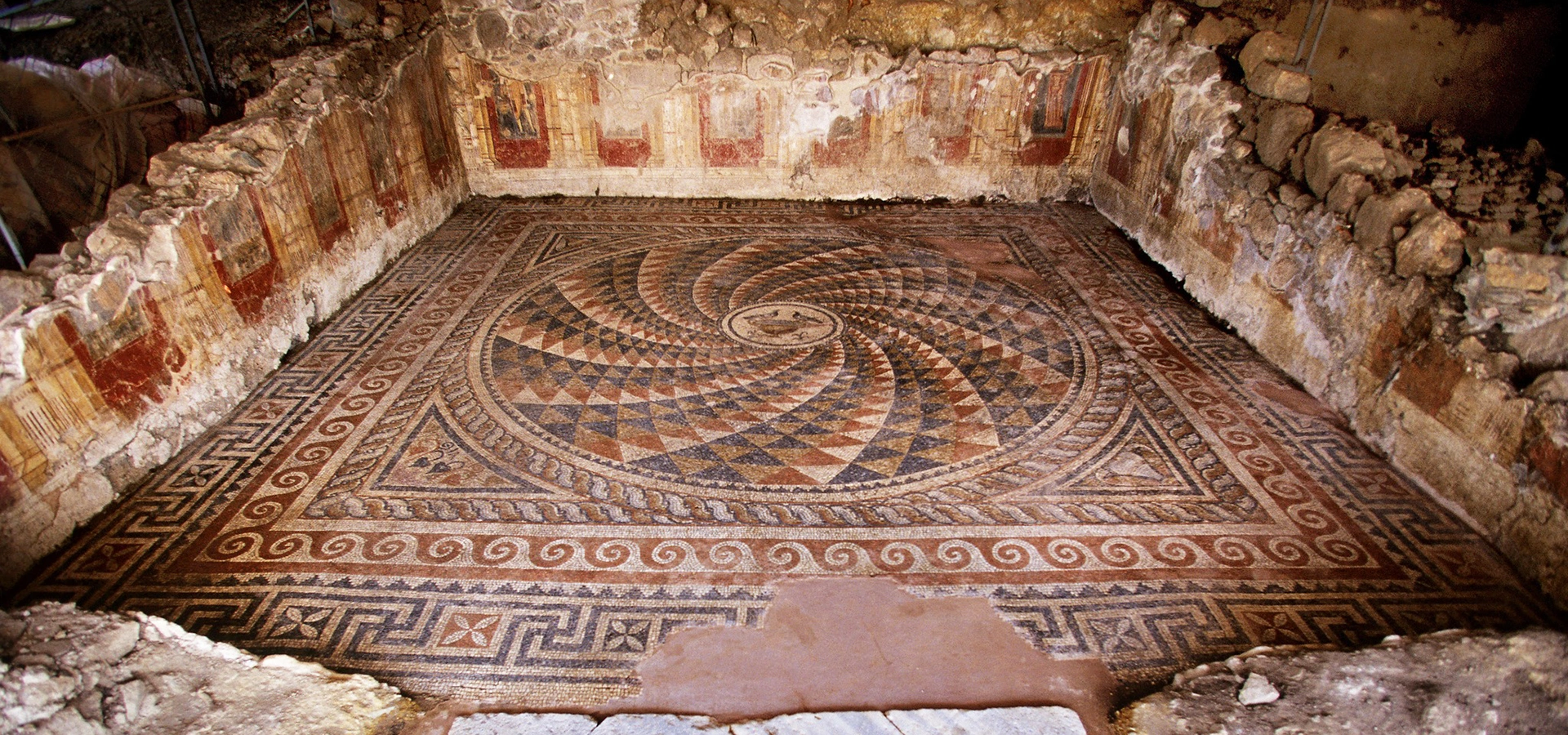
Continue from Kazdağı's folk legends to Roman villas, mosaics and the archaeology of ancient Mount Ida.
View Antandros Guide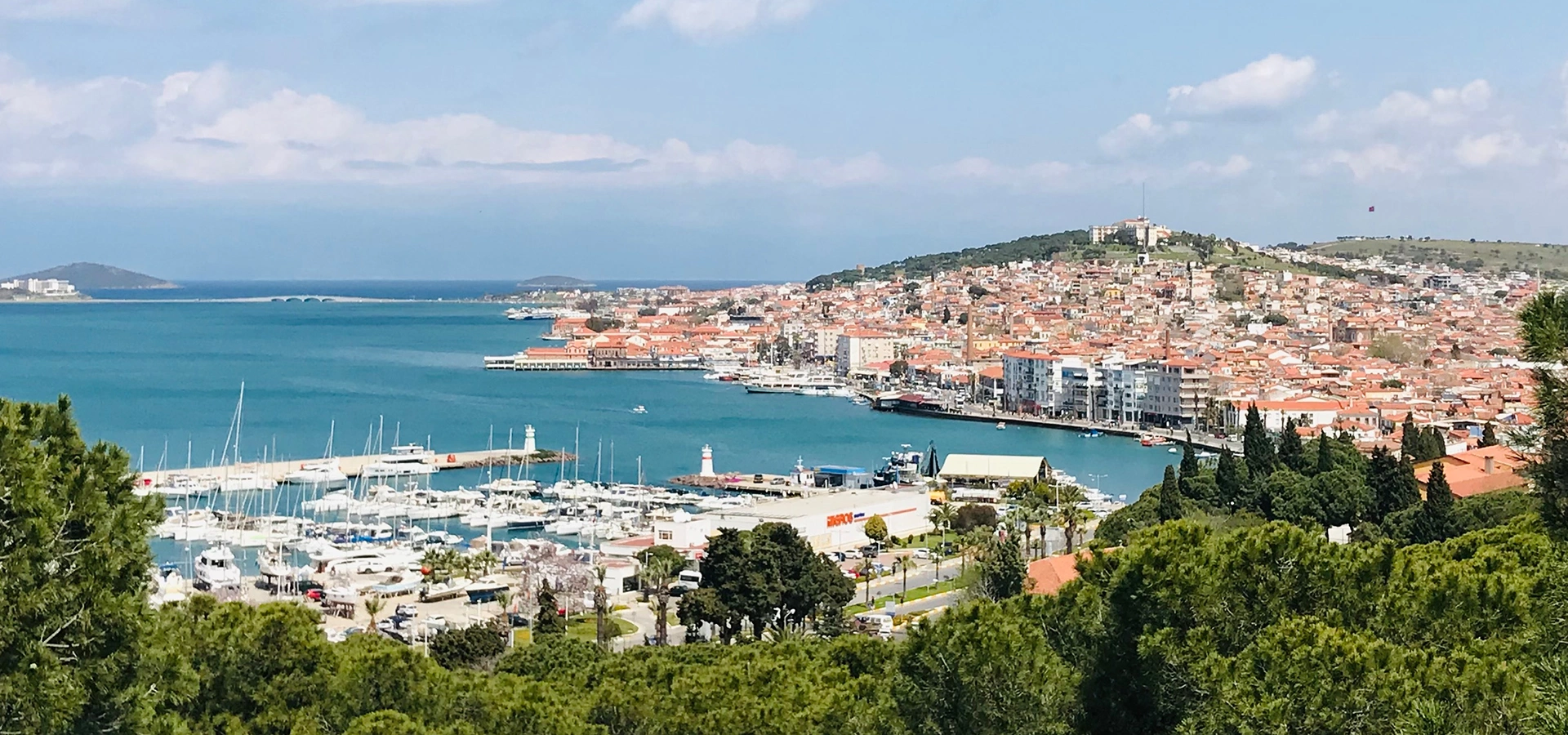
Extend your northern Aegean journey south to stone streets, island scenery, olive-oil heritage and historic churches.
View Ayvalık Guide