A hanging skewer system
Long skewers are suspended above an open hearth instead of being laid horizontally over a conventional grill.






Sebzeli Sivas Kebabı combines bone-in lamb, aubergine, tomatoes and long peppers cooked on separate vertical skewers above an open wood-fired hearth. It is an especially seasonal Sivas shop dish.
Long skewers are suspended above an open hearth instead of being laid horizontally over a conventional grill
Ribs, shoulders and leg portions contribute a distinctive roasting character
Aubergine, tomato and pepper are cooked individually so their timing can be controlled
The regional account associates the dish with the seasonal appearance of fresh peppers
Its place in Sivas cuisine and the defining preparation details.
Sivas province, Türkiye
Regional food
Cut the bone-in lamb into manageable portions.
No confirmed registration claimed for this specific dish
The provincial Culture and Tourism Directorate records Sivas Kebabı under the name Sebzeli Sivas Tandır Kebabı. Its oven is not an ordinary enclosed household oven: the traditional hearth is an open-topped, brick-built pit approximately a metre and a half across and deep, with metal supports from which long skewers can hang.
The cooking season is associated with the arrival of fresh vegetables, particularly peppers, from around June. Lamb and vegetables are deliberately put on different skewers because they cook at different rates. This is a practical choice as much as a visual one.
The kebab is linked with the wider Central Anatolian tradition of roasting meat over embers, but the regional method should not be presented as identical to every nearby city’s kebab. Its own skewer arrangement, open hearth and vegetable service are the features documented in the Sivas recipe.
Long skewers are suspended above an open hearth instead of being laid horizontally over a conventional grill.
Ribs, shoulders and leg portions contribute a distinctive roasting character.
Aubergine, tomato and pepper are cooked individually so their timing can be controlled.
The regional account associates the dish with the seasonal appearance of fresh peppers.
The meat is cut into whole pieces and not formed from minced meat.
These are ingredients documented in the local culinary sources or used in the explained traditional method. Amounts are included only where the available source specifies them; household quantities vary.
1 kg bone-in lamb pieces, such as rib or leg portions
About 1 kg aubergines, cut into chunks
About 1 kg tomatoes
About 500 g long green peppers, traditionally including Tokat peppers
Onion, salt and seasoning for marinating the lamb
Wood embers and long hanging skewers
As the skewers hang from supports over the embers, the chef manages distance and timing as well as heat. Bone-in lamb takes longer than tomato; using independent skewers prevents fragile vegetables from disintegrating while the meat continues to roast.
The traditional account specifically mentions peppers arriving from around June. Aubergines must be large enough to cut into pieces that hold on a skewer, while tomatoes provide juices that soften the richness of lamb at serving time.
Local kebab restaurants may use purpose-built brick hearths or modern adaptations.
The balance changes with the availability of fresh, meaty tomatoes, peppers and aubergines.
Serve with the vegetables cooked until soft and the lamb browned at the edges. The juices of the roasted vegetables balance the richness of the meat. Summer is a particularly suitable time to seek the dish in Sivas.
The meat arrives in portions cut from the bone, alongside large roast pieces of aubergine, pepper and tomato. This is not minced lamb wrapped in lavash; the dish belongs to a separate style of open-hearth oven cookery.
Separate skewers prevent aubergines becoming overdone while the bone-in meat is still roasting.
Do not label the kebab a geographically registered product without a confirmed registration record.
Ask local restaurants, bakers or specialist food shops for Sebzeli Sivas Kebabı. Availability depends on the dish and preparation schedule; slow-cooked, preserved and festival foods are not necessarily offered every day. For historical context and other Sivas places, browse our Sivas food and craft guide.
No. The traditional version uses bone-in lamb portions.
They cook at a different rate from the lamb.
The provincial account points to the arrival of seasonal peppers from June.
On long skewers suspended above an open wood-fired hearth.
The Sivas Provincial Directorate of Culture and Tourism publishes a documented introduction to Sebzeli Sivas Kebabı or the relevant Sivas culinary tradition, linked in the sources below.
This guide draws on the provincial Culture and Tourism Directorate’s culinary documentation and, where the product is registered, TÜRKPATENT’s official geographical-indication register. Historical traditions are identified as local culinary accounts, not dated archaeological proofs.
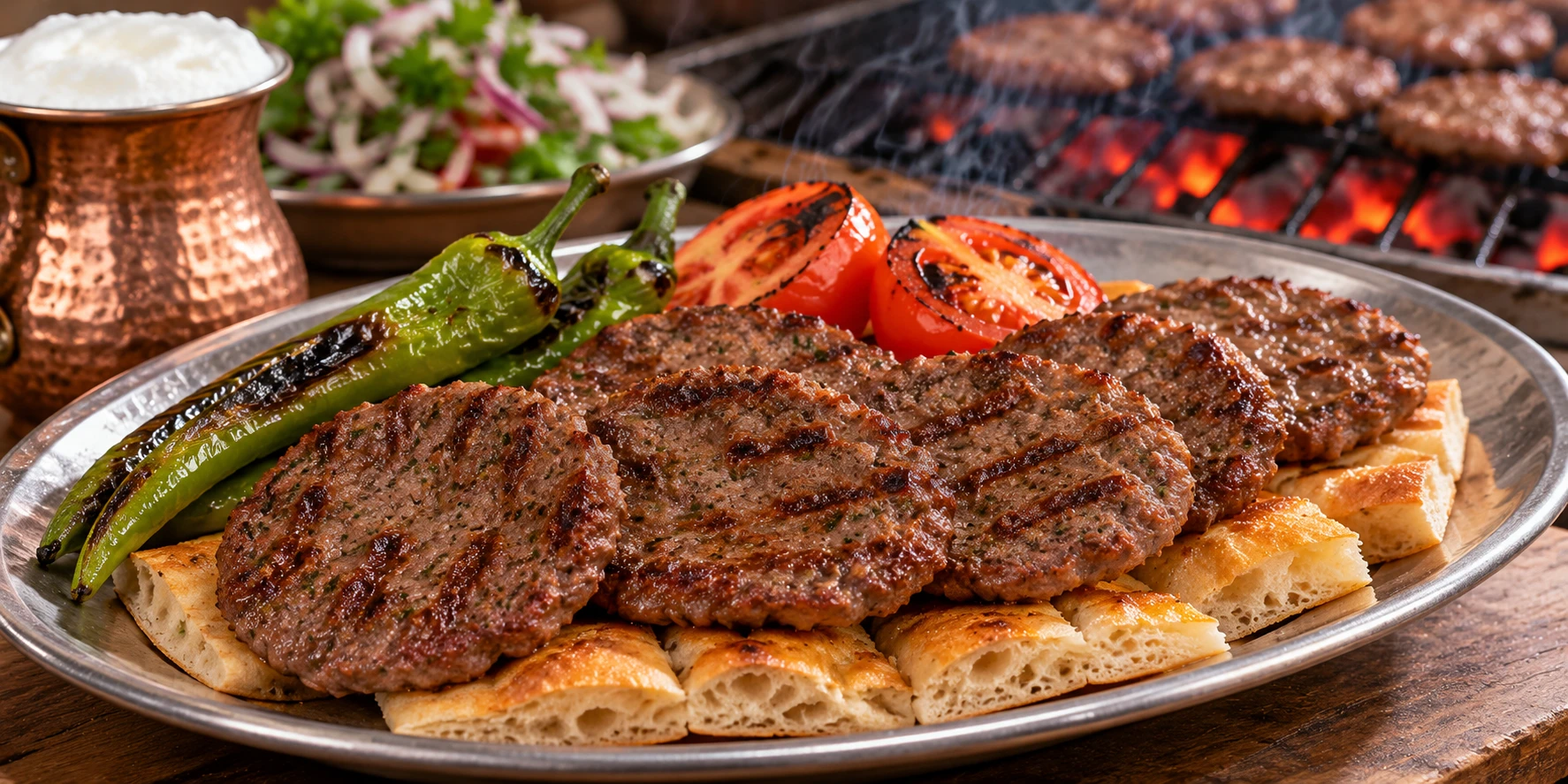
Sivas Köftesi is a thin, broad charcoal-grilled meatball associated with the city’s traditional köfte shops. Its defining preparation is seasoned beef and salt, careful resting and grinding, and quick grilling over embers.
Read Food Guide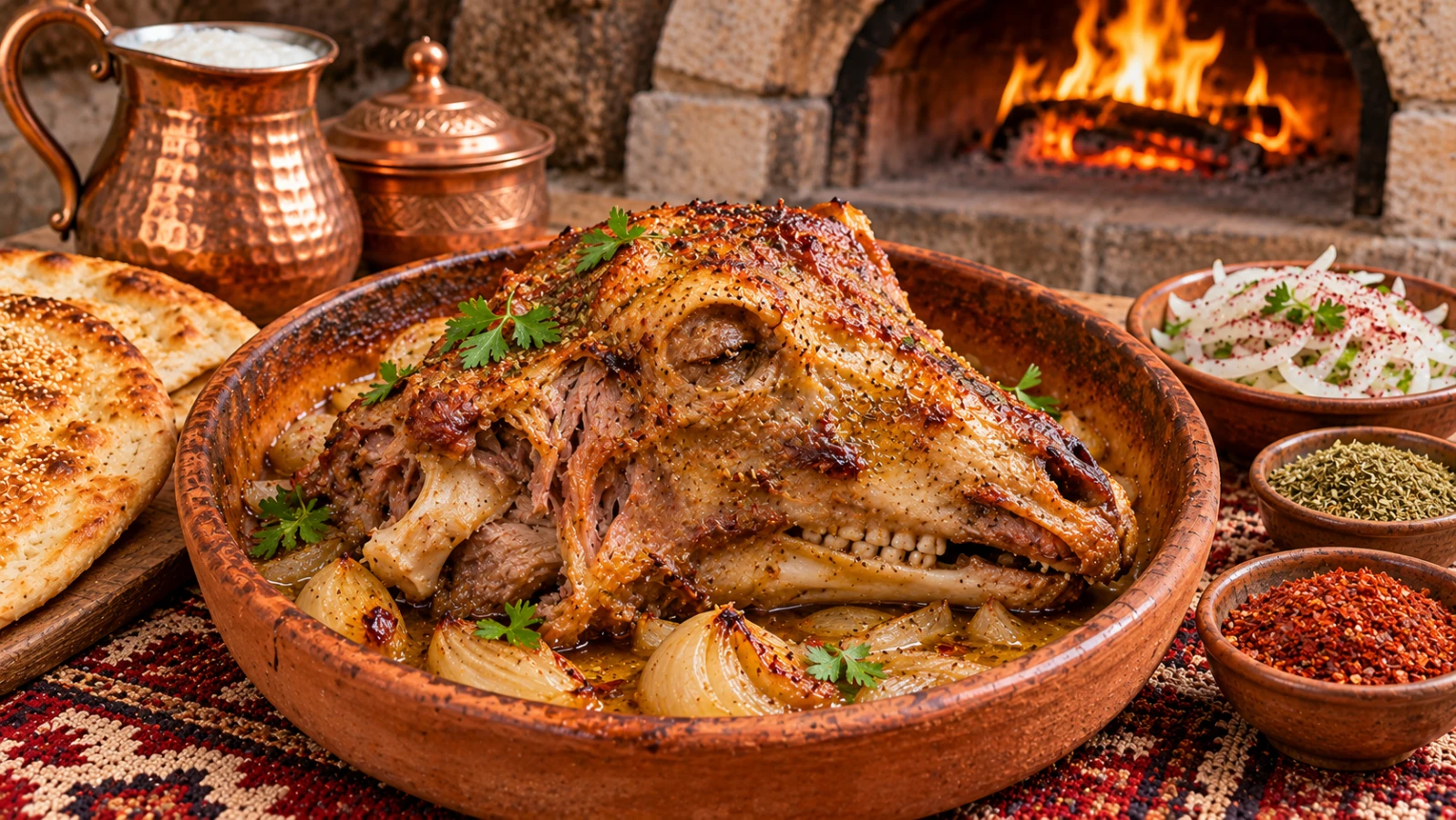
Fırın Kellesi is a traditional Sivas dish based on lamb head cooked slowly in a specialised oven and commonly eaten early in the day. The registered product is known as Sivas Kellesi.
Read Food Guide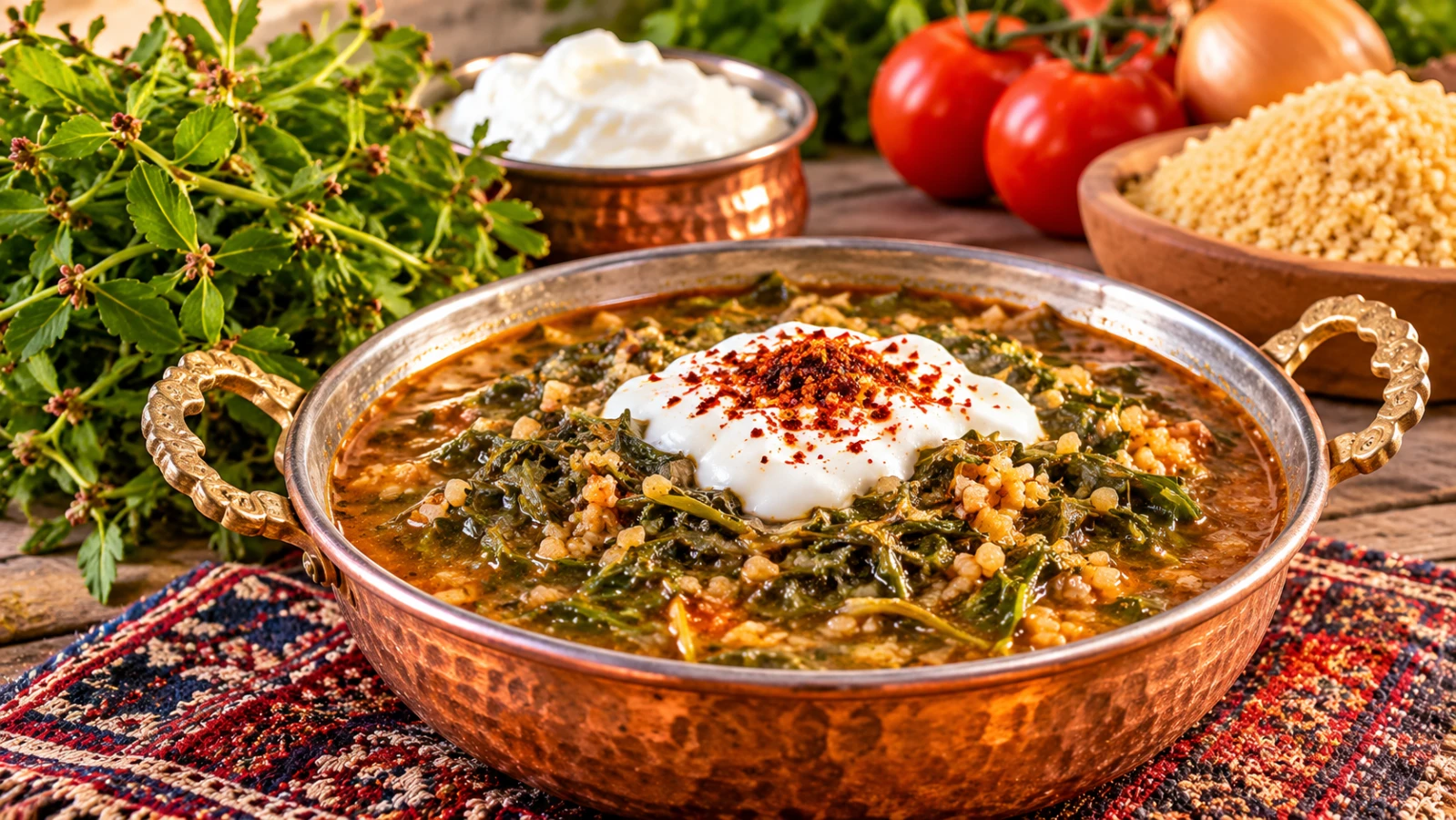
Madımak Aşı is a seasonal dish prepared from young madımak leaves, a wild edible green collected in the Sivas countryside. Bulgur, onion, butter and sometimes pastırma or çemen build the cooked flavour.
Read Food Guide