Basilica Therma
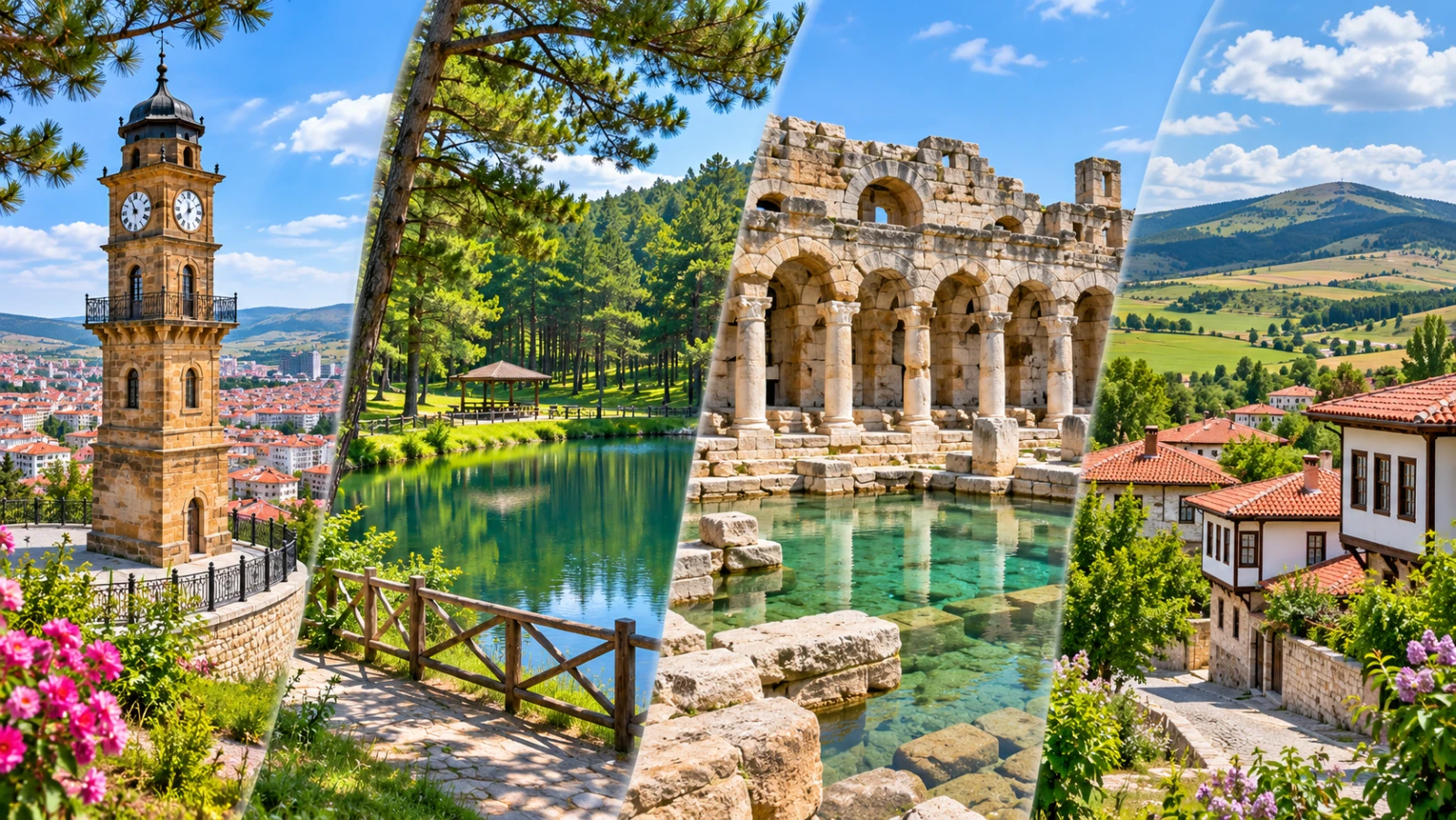
The monumental arched façade, pools and excavated heating features illustrate Roman bathing design. Consult the Ministry’s museum listing for current access.






A monumental Roman bathing structure stands within the streets of Sarıkaya itself. Its archaeological remains explain why thermal water mattered to settlement long before the modern district administration arrived. A spa visit and a heritage visit are two separate experiences.
Roman architecture and pools
Modern bathing facilities
An earlier administrative centre
Regional Bronze Age research
Sarıkaya district, Yozgat Province, Türkiye
Roman bathing architecture and the modern thermal town
Basilica Therma, Modern thermal springs, Aşağı Sarıkaya
4 heritage and landscape stops described below
Sarıkaya’s Roman bathing complex belongs to a settlement identified by the Ministry of Culture and Tourism as Aquae Sarvenae in the Roman period and Therma Basilica in the Eastern Roman period. Natural thermal water explains the ancient settlement’s bathing function; the surviving architecture gives this otherwise rural part of the Bozok plateau an unusually substantial Roman monument.
The site attracted the attention of Hans Henning von der Osten during the University of Chicago’s Alişar excavations. Later investigations clarified the building’s arrangement. Excavated spaces include pools and an area where stone supports survive from a raised floor heated from below. The archaeological complex is in the centre of the modern town, where surrounding development has complicated excavation and land acquisition.
The modern administrative history is separate from the ancient one. The district governorate describes the present centre as formerly known as Terzili Hamamı or Hamam Köyü. In 1935 the subdistrict administration moved from Aşağı Sarıkaya to this settlement, retaining the Sarıkaya name. The district was established in 1957. Thus an old thermal locality became a modern administrative town through a twentieth-century decision.
In 2018 Basilica Therma was added to Türkiye’s UNESCO World Heritage Tentative List. This is a formal stage of recognition and possible nomination, not inscription on the World Heritage List itself. Its archaeological interpretation should not be confused with the modern facilities that use geothermal water.
The monumental arched façade, pools and excavated heating features illustrate Roman bathing design. Consult the Ministry’s museum listing for current access.
The contemporary bathing tradition shares the geological resource but is separate from the archaeological monument. Verify individual facilities and avoid assuming that visitors can bathe in the ancient pools.
The old subdistrict centre matters for understanding the transfer of the district name in 1935. It is a historical settlement reference, not a claim of a major surviving visitor monument.
The archaeological mound belongs to the wider region’s prehistoric research history and is associated with the Chicago expeditions. Do not confuse its administrative location with the Roman bath.
The location of the ancient baths within the modern centre offers an opportunity to see the relationship between hot water and settlement, rather than treating the ruins as an isolated monument.
UNESCO’s tentative listing and Ministry excavation descriptions are useful starting points for understanding architectural significance.
Outdoor heritage viewing and a modern indoor thermal visit may be combined if both are operating; book the latter independently.
Allow a dedicated visit to the Roman bath.
Choose a modern thermal facility separately if desired.
If continuing to Boğazlıyan or Sorgun, allow additional driving and site-access checks.
A monumental Roman bathing complex built around naturally hot springs, with a surviving arched stone façade. On the UNESCO Tentative List since 2018.
Modern thermal bathing in the town where mineral-rich hot springs also sustained Roman Basilica Therma.
Southern agricultural plain, Cavlak thermal waters and rural settlements.
Explore the province’s districts, historic sites, landscapes and food traditions.
Plan a personal itinerary through Central Anatolia.
Contact Wow Cappadocia