Pancarlık Church
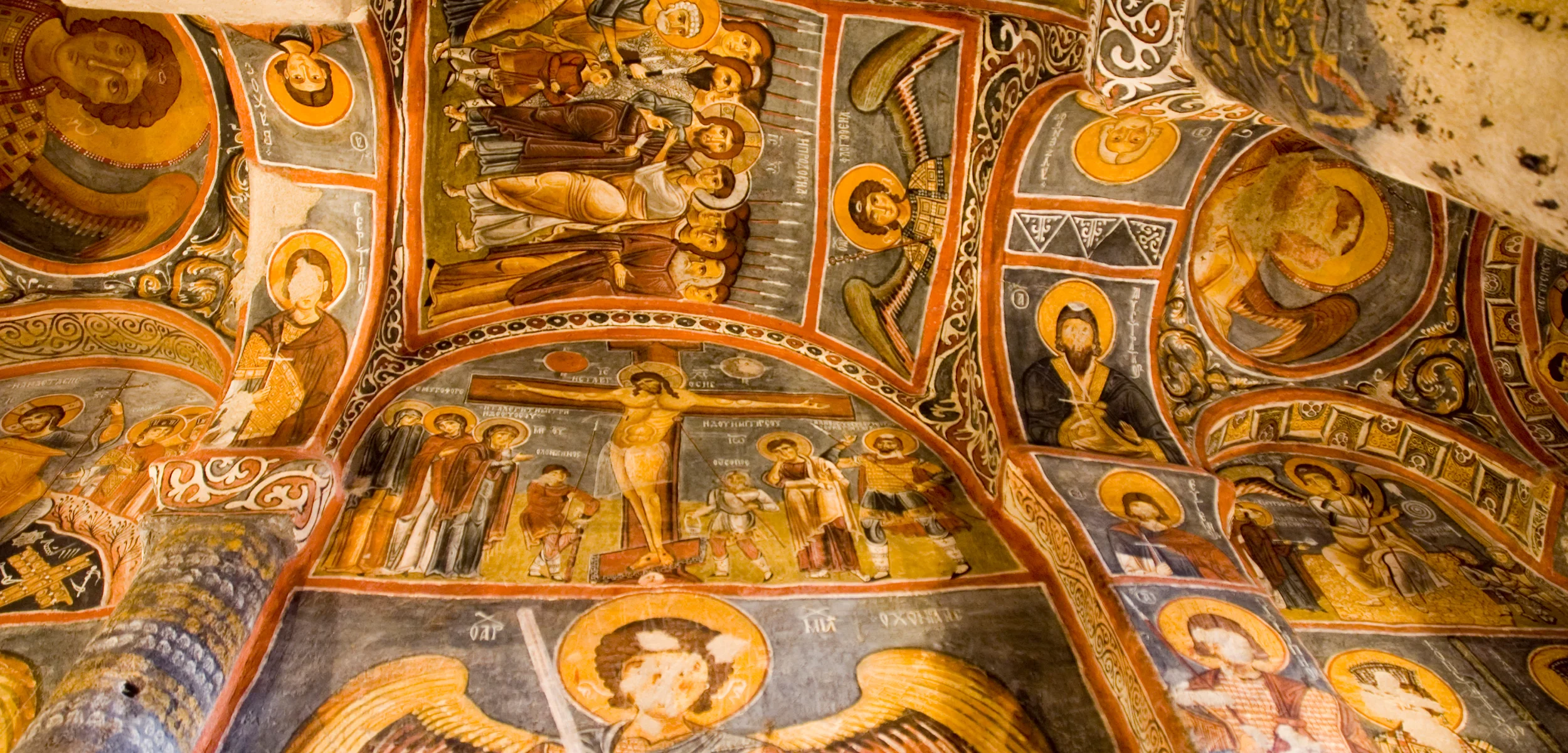
The main attraction featuring stunning 10th-century frescoes on a green background.
Pancarlık Valley is one of the most tranquil and naturally beautiful areas in Cappadocia. Located near Ürgüp, it offers a more secluded alternative to the busier tourist hubs, featuring a landscape characterized by undulating wave-like rock formations and deep green vegetation.
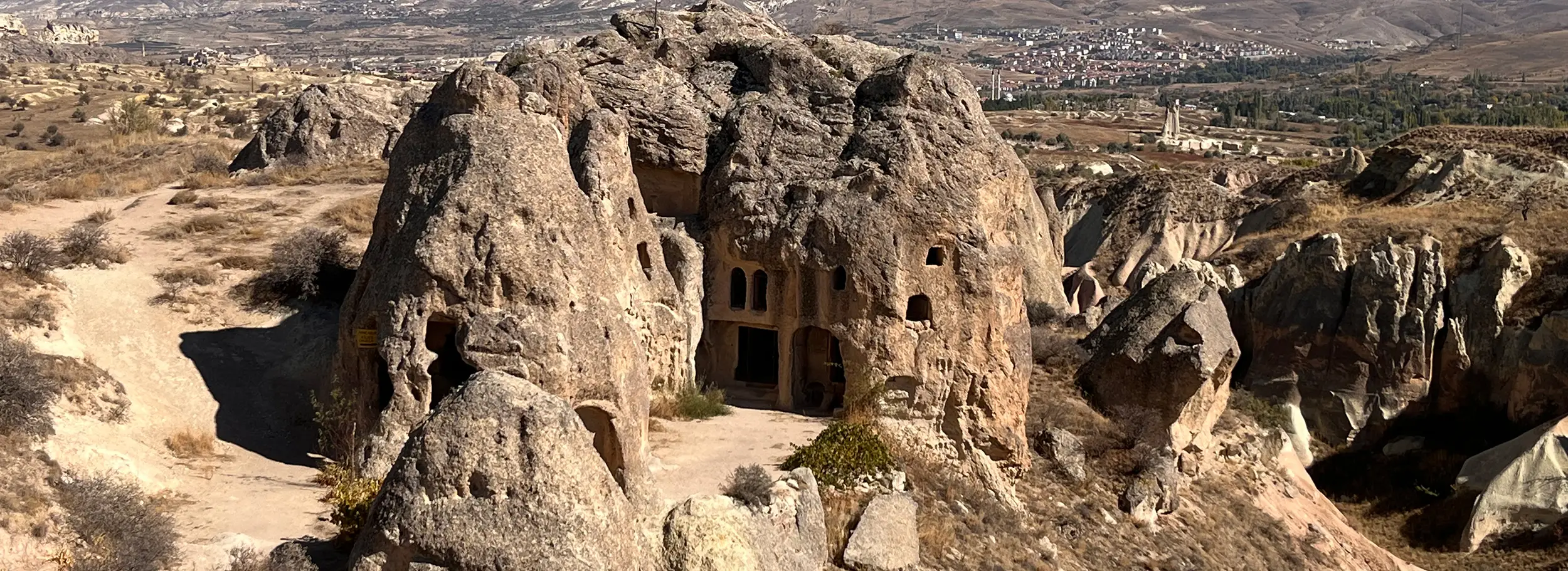
The heart of the valley is the Pancarlık Church, a monastic complex carved into a giant rock cone. It is famous among art historians and travelers alike for its remarkably well-preserved frescoes that still retain their original vivid colors despite the passage of centuries.
Walking through Pancarlık allows you to experience the "raw" beauty of Cappadocia. The valley floor is often used for traditional agriculture, and the paths lead through natural tunnels and past pigeon houses, culminating in panoramic views of the surrounding table mountains.
The church features 10th-century paintings with intense greens and oranges, depicting biblical scenes.
Unique soft-pink rock waves created by millions of years of wind and water erosion.
Unlike the major museums, Pancarlık offers a peaceful environment away from the crowds.
Explore a complex of carved rooms, kitchens, and storage areas used by early Christian monks.
Located south of Ürgüp, easily accessible from the Ortahisar-Mustafapaşa road.
Pancarlık Church frescoes, wave-like rock ridges, and its monastic complex.
1 to 2 hours for the church and a short valley walk.
Historical exploration, photography, and light hiking.
The Pancarlık Valley is a testament to both the geological power of nature and the spiritual dedication of early Christian communities. Geologically, the valley is known for its "pleated" rock surfaces, which look like frozen waves of volcanic ash, tinged with subtle pink and cream hues.
The primary historical attraction, Pancarlık Church (Pancarlık Kilisesi), dates back to the first half of the 10th century. It was part of a larger monastic settlement. The interior is a single nave with a flat ceiling, but what makes it stand out is the quality of the artwork. The frescoes are painted on a vibrant green background, which is rare for Cappadocian churches, making the figures of the saints and the life of Christ appear remarkably modern.
Surrounding the church, you will find the ruins of a monastery, including a large refectory (dining hall), a kitchen, and multiple burial chambers. The proximity of these living spaces to the chapel provides a clear window into the daily life of the monks who sought solitude in this valley.
Beyond the church, the valley transitions into a fertile agricultural zone. Here, local farmers still tend to small vineyards and orchards, continuing a tradition of land use that has remained largely unchanged for centuries. The valley is also home to several Pigeon Houses (Güvercinlik), which were carved high into the cliffs to collect fertilizer for the nearby fields.
For those who enjoy hiking, Pancarlık Valley connects via several trails towards the Kepez Valley and the village of Ortahisar. These paths offer a mix of narrow passages and wide-open ridges that provide views of Erciyes Mountain on clear days.
The main attraction featuring stunning 10th-century frescoes on a green background.
Carved kitchens and dining halls showing how monks lived and worked.
Photogenic, rippled rock ridges that define the valley's landscape.
Another smaller rock-cut church located nearby in the same valley system.
Observe the local agriculture that still thrives in the valley's fertile soil.
Higher paths that offer views over the Ürgüp and Ortahisar regions.
Pancarlık Valley is a managed site with a small entrance fee for the church area. While the valley itself is open for hiking, the main church complex is protected and maintained to preserve the fragile frescoes.
There is a small entrance fee for the Pancarlık Church site. It is usually open during daylight hours. The valley trails outside the church area are free to explore.
It is best reached by car or taxi from Ürgüp (approx. 10 mins) or Ortahisar. Some guided tours also include it as a "hidden gem" stop.
Morning light is excellent for seeing the valley colors, while the church interior is cool and pleasant even during the midday heat.
The frescoes inside the church are very sensitive. Flash photography is strictly prohibited to prevent the colors from fading.
If you are looking for a place where art, history, and nature meet without the noise of large crowds, Pancarlık is the perfect destination.
The frescoes in Pancarlık Church are considered some of the most vibrant in the region, offering a different color palette than the churches in Göreme.
Unlike Rose Valley or Love Valley, you can often walk the trails here for an hour without seeing another person, making it ideal for peaceful exploration.
The wave-like erosion patterns here are unique to this specific part of Cappadocia and look spectacular in photographs.
Its position makes it a perfect short detour when traveling between Ürgüp, Mustafapaşa, and Ortahisar.
No, it is a separate site located near Ürgüp. It requires its own entrance ticket and is much less crowded than the Göreme Open Air Museum.
The hike is generally easy to moderate. The paths around the church are flat, while exploring deeper into the valley involves some gentle slopes and uneven terrain.
Standard group tours (Red/Green) usually do not stop here. To visit Pancarlık, you typically need a private tour, a "Blue Tour" variant, or your own transport.
Discover the spiritual and historical depth of the region. We visit Pancarlık Valley as part of our specialized Biblical routes, focusing on early Christian heritage and monastic life.
Explore the footsteps of early Christians. This tour highlights the remarkably preserved frescoes of Pancarlık Church and the monastic complexes that served as a refuge for the faithful.
View Tour