Niğde City & Seljuk Heritage · Niğde, Türkiye

Gündoğdu Tomb – Complete Travel Guide

The Gündoğdu Tomb is in Yenice neighbourhood, south of Hüdavend Hatun’s mausoleum. An associated gravestone mentions Ahi Bevvap, son of Gündoğdu, who died in 1344; the tomb is.

Explore Gündoğdu Tomb

Discover Gündoğdu Tomb in Niğde

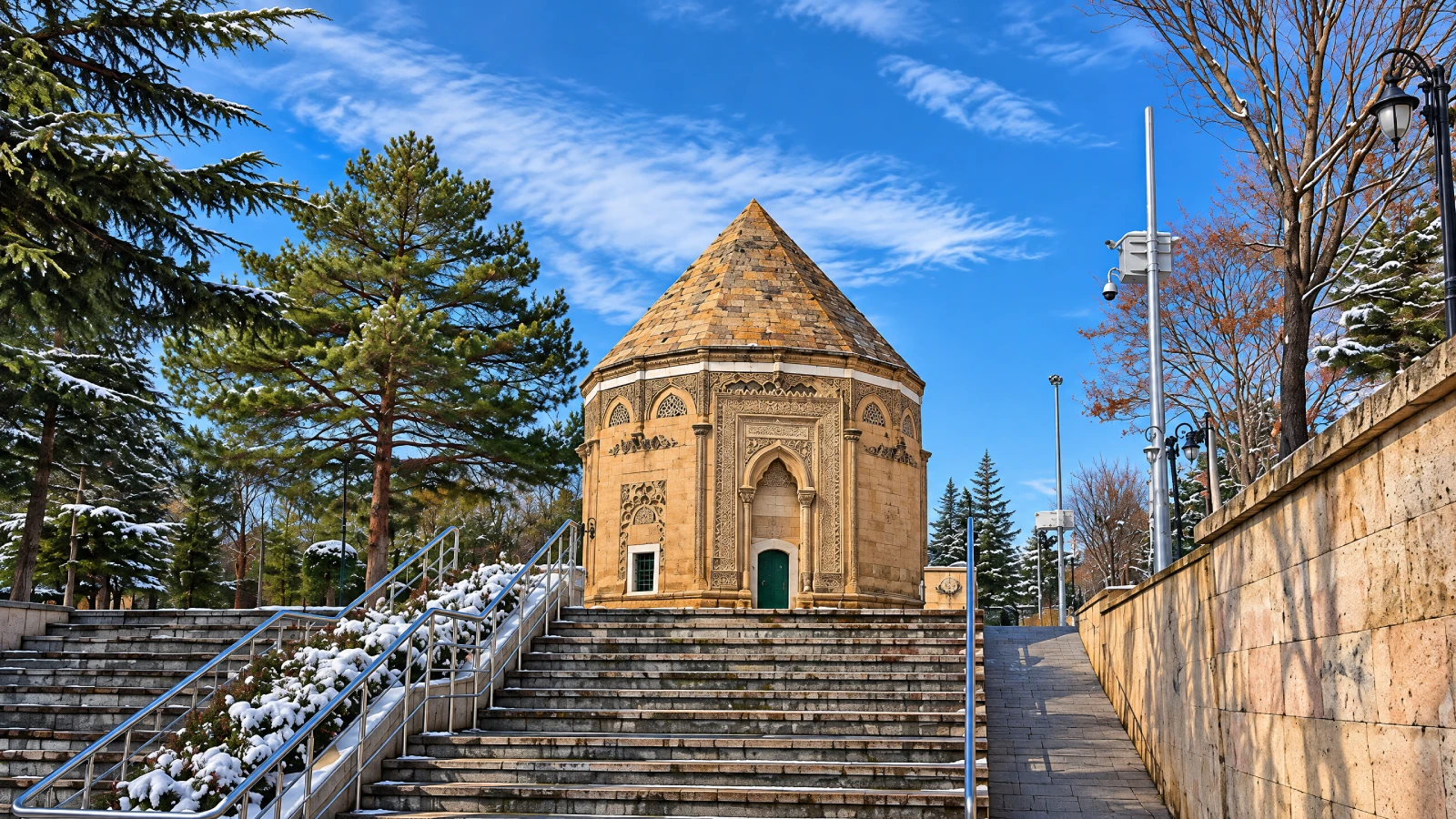
The Gündoğdu Tomb is in Yenice neighbourhood, south of Hüdavend Hatun’s mausoleum. An associated gravestone mentions Ahi Bevvap, son of Gündoğdu, who died in 1344; the tomb is commonly placed around that date, although its builder is unknown.

Its square lower plan changes toward a twelve-sided upper drum beneath a pyramidal roof. The yellowish trachyte, contrasting marble details and restrained portal decoration reward close architectural observation.

The Place

Gündoğdu Tomb in Niğde Province

Historical Lens

Gündoğdu Tomb is part of the series of medieval funerary buildings in Niğde’s historic centre. The historical character of the monument comes from its.

Explore

Architectural layers and local history

Plan Carefully

Some places remain in active community use and access can change with prayer, conservation work or local permissions.

Plan Your Visit

Gündoğdu Tomb – Quick Facts

Key context and practical notes for a responsible visit to Gündoğdu Tomb.

📍

Location

Yenice neighbourhood, Niğde city centre, Türkiye.

🏛️

Known For

Architectural layers and local history

🕒

Visit Planning

Time needed varies with access, season and the scope of the visit.

⭐

Important Note

Protected historic monument


Local Heritage & Researched Context

Gündoğdu Tomb – History & Significance

Explore the evidence, historical landscape and distinctive features of Gündoğdu Tomb.

The Gündoğdu Tomb is in Yenice neighbourhood, south of Hüdavend Hatun’s mausoleum. An associated gravestone mentions Ahi Bevvap, son of Gündoğdu, who died in 1344; the tomb is commonly placed around that date, although its builder is unknown.

Its square lower plan changes toward a twelve-sided upper drum beneath a pyramidal roof. The yellowish trachyte, contrasting marble details and restrained portal decoration reward close architectural observation.

Gündoğdu Tomb stands on Türbe Street in Yenice, south of Hüdavend Hatun’s tomb. The provincial inventory does not report a foundation inscription. Instead, a gravestone recording the June 1344 death of Hakkı Bevvap, son of Gündoğdu, was subsequently placed in the entrance; it therefore supports only an approximate date for the structure.

The monument has a square lower plan which transitions to a twelve-sided upper zone and a pyramidal external roof, with a domed interior. Yellow trachyte, contrasting coloured marble around the portal, and two marble sarcophagi make it especially interesting for architectural comparison.

Unlike the densely ornamented dynastic Hüdavend Hatun mausoleum, Gündoğdu offers a quieter view of regional funerary architecture under the Eretna political order. Avoid claiming that a reused stone definitively names either the patron or the first person buried here.

Gündoğdu Tomb is part of the series of medieval funerary buildings in Niğde’s historic centre. The historical character of the monument comes from its masonry, plan and relationship with neighbouring mausolea.

The short official summaries of such tombs can differ in the strength of their attribution. Rather than assigning a burial identity from a popular story alone, visitors should look for an inscription, published architectural record and documented restoration history.


What to See & Understand at Gündoğdu Tomb

Look beyond the headline attraction to understand its architecture, landscape, chronology and conservation.

Historical Setting

The Gündoğdu Tomb is in Yenice neighbourhood, south of Hüdavend Hatun’s mausoleum. An associated gravestone mentions Ahi Bevvap, son of Gündoğdu, who died in 1344; the tomb is commonly placed around that date, although its builder is unknown.

  • Focus: Architectural layers and local history
  • Context: Niğde City & Seljuk Heritage
  • Planning: Some places remain in active community use and access can change with prayer, conservation work or local.

Distinctive Features

Its square lower plan changes toward a twelve-sided upper drum beneath a pyramidal roof. The yellowish trachyte, contrasting marble details and restrained portal decoration reward close architectural observation.

  • Focus: Architectural layers and local history
  • Context: Niğde City & Seljuk Heritage
  • Planning: Some places remain in active community use and access can change with prayer, conservation work or local.

Responsible Exploration

A short stop works well as part of a walking route between the central tombs.

  • Focus: Architectural layers and local history
  • Context: Niğde City & Seljuk Heritage
  • Planning: Some places remain in active community use and access can change with prayer, conservation work or local.

Dating & Evidence

Gündoğdu Tomb is part of the series of medieval funerary buildings in Niğde’s historic centre. The historical character of the monument comes from its masonry, plan and relationship with neighbouring mausolea.

  • Focus: Architectural layers and local history
  • Context: Niğde City & Seljuk Heritage
  • Planning: Some places remain in active community use and access can change with prayer, conservation work or local.

Landscape & Connections

The short official summaries of such tombs can differ in the strength of their attribution. Rather than assigning a burial identity from a popular story alone, visitors should look for an inscription, published architectural record and documented restoration history.

  • Focus: Architectural layers and local history
  • Context: Niğde City & Seljuk Heritage
  • Planning: Some places remain in active community use and access can change with prayer, conservation work or local.

Responsible Interpretation

Some places remain in active community use and access can change with prayer, conservation work or local permissions.

  • Focus: Architectural layers and local history
  • Context: Niğde City & Seljuk Heritage
  • Planning: Some places remain in active community use and access can change with prayer, conservation work or local.

Tickets & Visiting Conditions

Plan your visit to Gündoğdu Tomb according to its type: Historic buildings may have conservation barriers, uneven steps or restricted interiors. Observe signs and property boundaries. Admission arrangements may change.

Admission & Fees

Do not assume that a visible historic monument has a ticket office, fixed hours or guaranteed interior access.

Visit Type

Protected historic monument

Conservation

Some places remain in active community use and access can change with prayer, conservation work or local permissions.

Local Confirmation

Use official provincial or site-management contact information before departure.

Opening Hours & Access Information

For Gündoğdu Tomb, check the relevant local authority, institution or operator before travelling. Historic buildings may have conservation barriers, uneven steps or restricted interiors. Observe signs and property boundaries.

Scheduled hoursOutdoor viewpoints and interiors may follow different rules and access times.
Entry arrangementsProtected historic monument
Possible restrictionsSome places remain in active community use and access can change with prayer, conservation work or local permissions.
Before travellingCheck season, road access, worship hours or excavation closures as appropriate.

Why Visit Gündoğdu Tomb?

Gündoğdu Tomb rewards travellers who want to understand architectural layers and local history and its place in the wider Niğde landscape.

A Distinctive Local Story

Gündoğdu Tomb stands on Türbe Street in Yenice, south of Hüdavend Hatun’s tomb. The provincial inventory does not report a foundation inscription. Instead, a gravestone recording the June.

Details Worth Noticing

The monument has a square lower plan which transitions to a twelve-sided upper zone and a pyramidal external roof, with a domed interior. Yellow trachyte, contrasting coloured marble around.

Connected Heritage

Combine the place with related attractions rather than treating it as an isolated landmark.

Thoughtful Travel

Some places remain in active community use and access can change with prayer, conservation work or local permissions.


This guide brings historical interpretation together with practical, responsible travel information for Niğde.

How to Get There

Use Niğde city and the appropriate district as orientation points. Exact approaches depend on the chosen site, road conditions and whether public access is permitted.

Starting from Niğde

Plan the route using the specific site name and district, not just the province on a navigation app.

Local Access

Some places remain in active community use and access can change with prayer, conservation work or local permissions.

Road Conditions

Check surface, weather and seasonal restrictions. Mountain and archaeological locations can require more than a standard road journey.

With a Local Specialist

An experienced guide can help interpret the site, find lawful approaches and separate documented facts from local traditions.

Visitor Tips

Confirm the Access Rules

Some places remain in active community use and access can change with prayer, conservation work or local permissions.

Protect the Place

Do not leave litter, remove artefacts, touch fragile paintings or disturb wildlife; choose the guidance relevant to the site.

Choose Appropriate Equipment

Carry water, suitable shoes and weather protection; a mountain route and an urban monument require different equipment.

Read the Evidence

Gündoğdu Tomb is part of the series of medieval funerary buildings in Niğde’s historic centre. The historical character of the monument comes from its masonry, plan and relationship.

Who Should Visit Gündoğdu Tomb?

History Curious Travellers

People who want to understand the chronology and local setting rather than only take a photograph.

Special Interest Visitors

History and architectural-heritage travellers.

Regional Explorers

Visitors connecting Gündoğdu Tomb with other Niğde attractions and distinct historic landscapes.

Careful Independent Travellers

People willing to confirm local permissions, access and seasonal limitations before setting off.

Frequently Asked Questions About Gündoğdu Tomb

What makes Gündoğdu Tomb historically or naturally important?

Gündoğdu Tomb is part of the series of medieval funerary buildings in Niğde’s historic centre. The historical character of the monument comes from its masonry, plan and relationship with neighbouring mausolea.

What details should visitors notice at Gündoğdu Tomb?

The short official summaries of such tombs can differ in the strength of their attribution. Rather than assigning a burial identity from a popular story alone, visitors should look for an inscription, published architectural record and documented restoration history.

Can I visit Gündoğdu Tomb without advance arrangements?

Some places remain in active community use and access can change with prayer, conservation work or local permissions.

Is there a confirmed admission fee or opening timetable?

Do not assume that a visible historic monument has a ticket office, fixed hours or guaranteed interior access. For a managed site, check with its responsible institution before leaving.

What else can I see nearby?

Explore Niğde Castle & Clock Tower, Alaeddin Mosque, Hüdavend Hatun Mausoleum. Links to these guides are provided above.

How can I visit Gündoğdu Tomb responsibly?

Some places remain in active community use and access can change with prayer, conservation work or local permissions. Respect local community, protected areas and site signage.

Photography & Observation at Gündoğdu Tomb

The most rewarding images document context as well as details. Choose lawful viewpoints and avoid harming sensitive buildings, habitats or excavations.

The Wider Setting

Show how Gündoğdu Tomb sits within its Niğde landscape.

Documented Details

The short official summaries of such tombs can differ in the strength of their attribution. Rather than assigning a burial identity from a popular story alone, visitors.

Close-Up Features

Photograph stonework, forms or natural textures only from a lawful safe distance.

Context & Scale

Use a wider frame to show landscape or urban relationships rather than isolated fragments.

Respect Boundaries

Some places remain in active community use and access can change with prayer, conservation work or local permissions.

Natural Light

Morning and late afternoon can reveal surface details; prioritize visitor safety and site regulations over a photograph.

Best Time to Visit Gündoğdu Tomb

Choose a season that matches the site and your interests. Access, surface conditions, daylight, agricultural work and visitor services vary throughout the year.

Spring (March–May)

Milder weather often suits walking and heritage exploration; occasional rain can affect rural tracks.

Summer (June–August)

Dry, hot days call for water, shade and a morning or evening visit when appropriate.

Autumn (September–November)

A useful season for architecture and cultural landscapes, with shorter days later in autumn.

Winter (December–February)

Cold, snow or icy roads can change the experience; confirm access to rural locations.


Best general approach

Match your timing to site conditions, not to a fixed universal month.

Best time of day

Use comfortable daylight for walking and visibility; consider worship or museum hours.

Travel note

Some places remain in active community use and access can change with prayer, conservation work or local permissions.

Research Sources & Verification

These references support the historical context; older inventories do not guarantee current opening hours or unrestricted entry.

Continue Exploring Niğde

Discover nearby and thematically related heritage, natural sites and local experiences in our Niğde destination guide.

Related Places & Suggested Themes

These links are destination guides, not confirmed inclusions in a scheduled or priced tour.

Niğde Castle & Clock Tower in Niğde

Niğde Castle & Clock Tower

The fortified hill formed the nucleus of old Niğde. Its walls have been altered, reused and partially lost, so the visible fabric should not be assigned to one uninterrupted…

Explore Guide
Hüdavend Hatun Mausoleum in Niğde

Hüdavend Hatun Mausoleum

This celebrated dynastic mausoleum dates to 1312 and is associated with Hüdavend Hatun, a daughter of Seljuk Sultan Kılıç Arslan IV. Its date belongs to the late Seljuk…

Explore Guide