Historic Wine Culture
Wine has been produced around Mürefte for generations, making viticulture one of the strongest elements of the settlement's cultural identity.
- Tradition: Vineyard cultivation
- Landscape: Ganos slopes
- Heritage: Family wine houses





On the northern shore of the Sea of Marmara, beneath the slopes of the Ganos Mountains, Mürefte is one of the most characterful stops on the coastal road between Tekirdağ and Şarköy.
The settlement is especially known for its long association with vineyards and winemaking. The surrounding hills have supported viticulture for generations, while historic producers and small museums preserve equipment, barrels, documents and stories connected with the region's wine culture.
Yet Mürefte is more than a wine destination. Its appeal also comes from the combination of a Marmara shoreline, local beaches, olive groves, village streets, seafood, vineyard landscapes and easy access to Şarköy and Hoşköy.
For travelers exploring western Tekirdağ, Mürefte provides an excellent place to slow down and experience the agricultural traditions and coastal atmosphere that make the Ganos region so distinctive.
Discover one of the best-known historic centers of viticulture and winemaking in Turkish Thrace.
Explore traditional equipment, barrels and production history at Mürefte's long-established wine houses.
Enjoy a relaxed seaside atmosphere, coastal views and seasonal swimming along the northern Marmara shore.
Travel through vineyard-covered slopes, olive groves and scenic roads linking Mürefte with Şarköy and Hoşköy.
Essential information for planning a visit to this vineyard town on the Marmara coast of Tekirdağ Province.
Mürefte is a coastal neighbourhood in Şarköy district, Tekirdağ Province, on the northern shore of the Sea of Marmara.
Open Mürefte on Google MapsVineyards, winemaking traditions, historic wine houses and the agricultural landscape of the Ganos region.
A small Marmara coastal settlement backed by vineyard-covered hills and the slopes of the Ganos Mountains.
Combine Mürefte with Şarköy, Hoşköy, Hora Lighthouse and other stops along western Tekirdağ's coastal road.
Mürefte's history is shaped by the Sea of Marmara, agriculture, trade, earthquakes and centuries of cultural change.
Historical sources identify the area with Myriophytum, a settlement known from the Byzantine period. It appears in medieval records and developed as part of the network of communities occupying the northern Marmara coast.
Its position was naturally important. The coastline offered access to maritime trade, while the slopes rising behind the settlement provided favorable conditions for grapes, olives and other agricultural products.
Viticulture became one of Mürefte's defining traditions. Grapes grown around the Ganos region were processed locally, and wine became closely connected with the economy and identity of the settlement.
Mürefte's architectural history was repeatedly interrupted by earthquakes. The most famous modern event was the destructive Şarköy–Mürefte earthquake of 9 August 1912, which caused severe damage across the region and became one of the major seismic events recorded in the western Marmara area.
The twentieth century brought further demographic, economic and social change, but vineyard cultivation and winemaking continued. Today, old production traditions survive alongside modern wineries, making Mürefte an unusual place where visitors can encounter both living agriculture and industrial heritage.
Mürefte combines a remarkably concentrated wine tradition with a relaxed Marmara coastline and easy access to some of the most scenic landscapes in Tekirdağ.
Wine has been produced around Mürefte for generations, making viticulture one of the strongest elements of the settlement's cultural identity.
A historic wine-production building preserves old machinery, barrels, bottles and documents connected with generations of winemaking in Mürefte.
Another long-established local wine house offers a glimpse into Mürefte's family-scale production culture and the continuation of regional winemaking traditions.
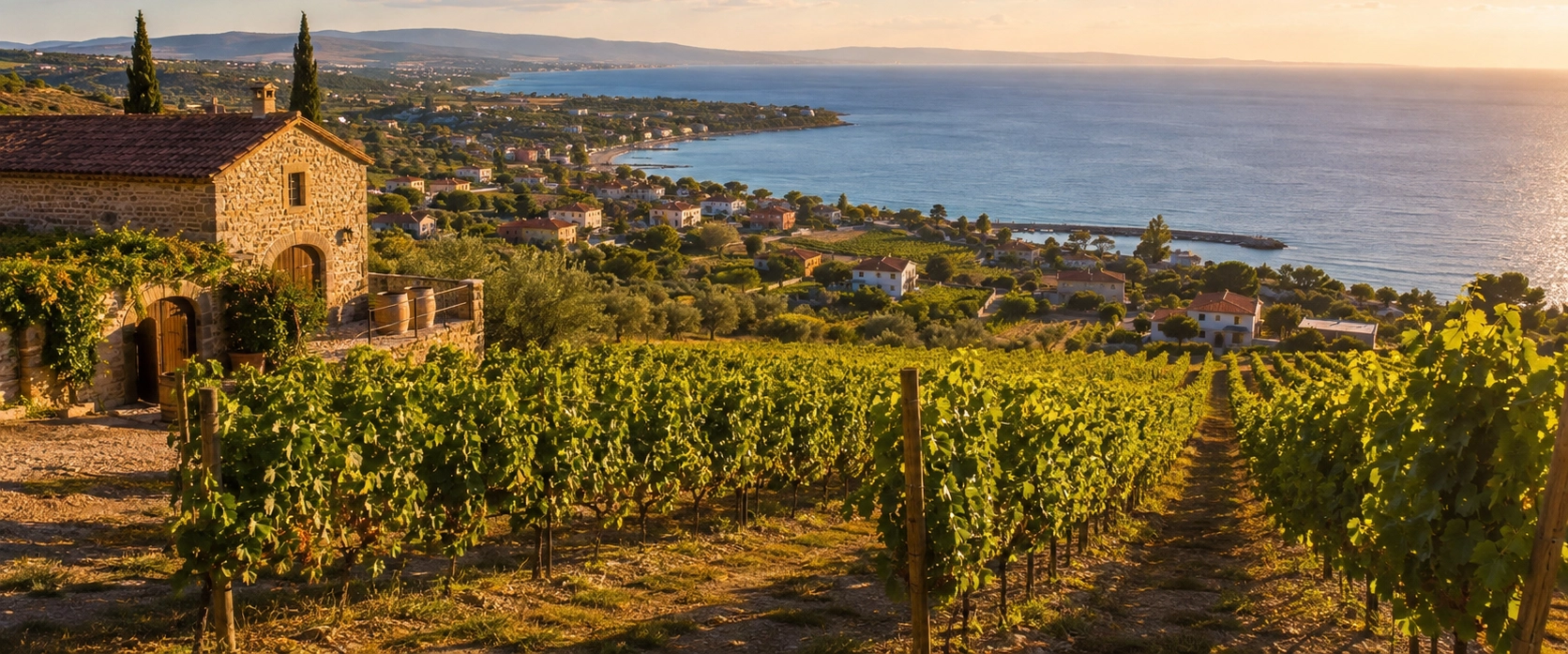
Rows of vines cover the surrounding countryside, creating some of the most attractive agricultural scenery on the Tekirdağ coast.
Mürefte sits directly on the Sea of Marmara, allowing visitors to combine vineyard exploration with a quiet walk beside the water.
During the warmer months, Mürefte's shoreline becomes part of the wider summer holiday culture of the Şarköy coast.
Vineyards share the landscape with olive trees, another important agricultural tradition of the Şarköy and Mürefte region.
Mürefte lies on one of Tekirdağ's most rewarding drives, linking the vineyards and coastal settlements of Şarköy, Hoşköy and the Ganos Mountains.
Mürefte occupies one of the most important viticultural landscapes in Turkish Thrace. Its identity is inseparable from the vineyards spreading across the hills between the Ganos Mountains and the Sea of Marmara.
The combination of sloping terrain, coastal influence and a long agricultural tradition encouraged generations of families to cultivate grapes and produce wine. Historically, products from the region could also move through small Marmara ports, linking local agriculture with wider trade networks.
Modern visitors can still see the continuity of this culture. Large producers, smaller family operations, vineyard estates, old cellars and wine museums all form part of the broader Tekirdağ Wine Route, with Mürefte standing out as one of its most recognizable historic centers.
Even travelers who are not interested in tasting can enjoy the region from a cultural perspective. The vineyards, production buildings, tools, labels, barrels and family archives tell an important story about agriculture and rural industry in western Turkey.
The wider Şarköy–Mürefte area supports both local and internationally known grape varieties. Regional viticulture has changed over time as producers have adapted vineyards to market demand, climate, soil and modern winemaking styles.
Among the varieties historically or currently associated with the broader Tekirdağ wine region are Yapıncak, Semillon, Cinsaut, Gamay and Papazkarası, together with internationally familiar grapes such as Cabernet Sauvignon, Merlot and Syrah.
For visitors, the important point is not simply the list of grapes. It is the landscape itself: vineyard rows climbing and descending the hills, wineries positioned near the coast, and an agricultural culture that remains visible throughout the year.
A traditional white grape strongly associated with the wider Tekirdağ and Şarköy viticultural landscape.
A white grape with a long history of cultivation in the region and an important place in local wine production.
A red grape that has historically been widely cultivated in parts of the Şarköy wine region.
Another red variety with an established presence in the vineyards of Tekirdağ and the Marmara region.
International varieties have increasingly joined older regional grapes in modern vineyard plantings.
Late summer and early autumn bring some of the most atmospheric vineyard scenery as grapes reach maturity.
One of Mürefte's most interesting cultural stops is the Kutman Wine Museum, created by a family whose winemaking story in the town dates to the late nineteenth century.
The museum opened in 2004 and preserves material connected with traditional wine production. Visitors may encounter old mechanical equipment, wooden barrels, bottles, weighing devices, production records and other objects illustrating how wine was made and stored before modern technology transformed the industry.
The setting is particularly valuable because the collection is not detached from the landscape that produced it. The museum stands in Mürefte, surrounded by the same regional wine culture whose history it explains.
Historic crushing, pressing, pumping and bottling equipment helps explain older production techniques.
Large historic barrels reveal how wine was once stored and matured before modern stainless-steel systems became common.
Historic bottles and packaging provide a visual record of changing styles and commercial history.
The collection preserves the memory of generations involved in winemaking in Mürefte.
Mürefte's wine identity is not represented by a single producer. The town contains multiple family traditions, and Aker is another name closely associated with its local winemaking heritage.
Historic production spaces and displays connected with the family offer visitors another perspective on how wine culture was passed from one generation to the next. Old tools, cellar spaces, documents and domestic details help preserve the atmosphere of an earlier period of Mürefte's agricultural life.
Together with other producers in and around the settlement, Aker helps explain why Mürefte feels different from a conventional beach town. Here, the sea, the village streets and the vineyards are all part of the same cultural landscape.
Medieval sources refer to a settlement known as Myriophytum, generally identified with modern Mürefte. The surviving written record connects the place with the Byzantine world of the northern Marmara coast.
One early reference appears in connection with a major earthquake in 1063. Later sources also place Myriophytum within the ecclesiastical and administrative geography of Byzantine Thrace.
Very little of that medieval town survives in a form that can be visited like a major archaeological site. Mürefte's historical importance is therefore best understood through its location, documentary history and continuity as a coastal settlement rather than through monumental ruins.
On 9 August 1912, a major earthquake struck the western Marmara region. The event is commonly known as the Şarköy–Mürefte earthquake and caused severe destruction across settlements in Tekirdağ and surrounding areas.
Modern studies estimate the earthquake at approximately magnitude 7.4. Research also shows that it generated tsunami effects in parts of the Sea of Marmara.
For Mürefte, the earthquake became a defining historical rupture. Much of the older building stock was damaged or destroyed, helping explain why visitors should not expect the town to preserve an uninterrupted streetscape of medieval or early Ottoman architecture.
Understanding this event adds an important layer to the town's story: Mürefte's heritage is not only about what survived, but also about how the community rebuilt while maintaining agricultural traditions that had defined the region for generations.
Mürefte sits directly beside the Sea of Marmara, giving the settlement a relaxed coastal character that contrasts beautifully with the working vineyards on the hills behind it.
During summer, the shoreline becomes livelier as visitors arrive for swimming and seaside holidays. Outside the peak season, the waterfront is quieter and particularly pleasant for walking, photography and enjoying the changing light across the Marmara.
The combination of vineyard visits in the morning and a coastal walk later in the day is one of the easiest ways to experience Mürefte's two defining landscapes in a single visit.
Explore local wine heritage, village streets and vineyard landscapes before the hottest part of the day.
Continue along the coast, stop for lunch and enjoy the relaxed atmosphere of the Marmara shoreline.
Soft evening light creates attractive views over the water and surrounding coastal hills.
Swimming can be added to the day when weather and sea conditions are suitable.
Although grapes dominate Mürefte's reputation, the wider Şarköy coast is also well known for olive cultivation and olive oil.
Olive groves share the landscape with vineyards, especially in the milder coastal zone between the Ganos Mountains and the Sea of Marmara. This combination gives the countryside its distinctive Mediterranean-like agricultural character despite its location in Thrace.
Travelers exploring the region should therefore look beyond wine alone. Local olive oil, seasonal produce, grape molasses and other products provide a broader introduction to the food culture of western Tekirdağ.
Late summer and early autumn are particularly evocative around Mürefte. As grapes ripen, the vineyards become active with one of the most important stages of the agricultural year: the harvest.
Exact harvest timing varies according to grape variety, weather and vineyard conditions. Some grapes may be collected earlier, while others remain on the vines longer to reach the desired balance of sugar, acidity and flavor.
For visitors, harvest season provides more than a technical winemaking story. It is the moment when the connection between landscape, agriculture and local identity becomes easiest to see.
Fresh green vineyards, mild temperatures and quieter roads make spring excellent for countryside exploration.
The coast is at its liveliest, with swimming, longer daylight hours and fully developed vineyard scenery.
Harvest activity and mature vineyards make this one of the most atmospheric periods for a wine-themed visit.
The town becomes much quieter. Vineyard scenery is more subdued, and some visitor-oriented businesses may reduce their hours.
Mürefte is especially rewarding for travelers interested in landscape and agricultural photography. The strongest images often come from combining the geometry of vineyard rows with the open blue horizon of the Sea of Marmara.
Use the repeating lines of the vines to create depth, especially on sloping ground.
Look for elevated viewpoints where agricultural fields descend toward the Marmara coast.
Old barrels, stone walls and winemaking equipment provide atmospheric interior details where photography is permitted.
Grape clusters, crates and working vineyard scenes can be particularly photogenic during harvest season.
Mürefte lies on the coastal route through Şarköy district in western Tekirdağ Province. The easiest way to explore the area is usually by car or private vehicle, particularly if you plan to visit vineyards and continue toward Hoşköy or other small settlements.
Travelers coming from Tekirdağ city can follow the roads southwest toward the Şarköy coast. Visitors approaching from Istanbul normally reach the region by road via Tekirdağ and then continue toward the Ganos area.
Mürefte also works naturally as a stop between Şarköy and Hoşköy, allowing travelers to create a full-day coastal itinerary rather than visiting the town in isolation.
This route brings together coastal scenery, viticulture, local food, rural landscapes and maritime heritage, making it one of the most rewarding day trips in western Tekirdağ.
A private vehicle gives you much more freedom to stop at vineyards, viewpoints and small coastal settlements.
Wine museums and cellars may have seasonal or changing opening arrangements, so advance contact is useful.
Do not treat Mürefte only as a winery stop; its seafront is an important part of the local atmosphere.
Late summer and early autumn can be especially interesting, but remember that wineries are also at their busiest.
Do not enter private vineyard rows without permission, particularly during pruning, spraying or harvest.
Şarköy, Mürefte and Hoşköy work far better as a connected route than as separate day trips.
Olive cultivation is another major part of the Şarköy region's food and agricultural identity.
Late-afternoon light can be beautiful across the Marmara coast and vineyard-covered hills.
Mürefte sits in the middle of an excellent coastal sightseeing corridor, making it easy to combine with several of western Tekirdağ's most attractive destinations.
Explore the district's main coastal town, known for its long waterfront, beaches, vineyards, olives and relaxed summer atmosphere.
Continue west to one of the coast's most atmospheric villages and its historic lighthouse overlooking the Sea of Marmara.
The mountains rising behind the coast create the dramatic backdrop for vineyards, forests and scenic rural roads.
A smaller historic settlement farther along the coast, surrounded by the rugged landscapes of the Ganos region.
Return toward the provincial capital for Ottoman monuments, museums, local cuisine and the Marmara waterfront.
Explore additional vineyard estates across western Tekirdağ, where modern producers continue the region's long winemaking tradition.
The food culture around Mürefte reflects both the Sea of Marmara and the agricultural landscape behind the town. Seafood, olives, olive oil and grape products naturally appear alongside the broader cuisine of Tekirdağ.
Fish and seafood are natural choices in a settlement sitting directly on the Marmara coast.
Olives and olive oil are among the most characteristic agricultural products of the district.
Beyond wine, look for seasonal grapes, grape juice, molasses and other products connected with local vineyards.
Try one of the province's best-known specialties when traveling through Tekirdağ.
Finish with the province's distinctive sweet traditionally made with fresh unsalted cheese.
Small local markets and roadside producers can be good places to discover seasonal products from the surrounding countryside.
Mürefte is a coastal neighbourhood in Şarköy district of Tekirdağ Province, on the northern shore of the Sea of Marmara.
Mürefte is especially famous for vineyards, winemaking, historic wine houses and its position on the scenic Şarköy coast.
Yes, particularly for travelers interested in vineyards, food culture, wine heritage, coastal scenery and quieter destinations away from Turkey's major tourism centers.
Around two to four hours is enough for the town itself, while a full day is ideal if you combine Mürefte with Şarköy, Hoşköy and Hora Lighthouse.
Yes. The surrounding Şarköy–Mürefte region is one of Tekirdağ's most important vineyard landscapes and has a long viticultural tradition.
Some producers welcome visitors or operate museums and tasting areas, but arrangements vary. It is best to confirm opening hours and visitor policies in advance.
Yes. The Kutman Wine Museum preserves historic winemaking equipment, barrels, bottles, records and other material connected with the town's wine heritage.
The museum opened in 2004 and was created to preserve the history of the family's winemaking tradition and older production techniques.
Yes. Aker is another long-established local producer associated with family winemaking and historic cellar culture in the settlement.
The broader region is associated with varieties including Yapıncak, Semillon, Cinsaut and Gamay, alongside internationally known varieties such as Cabernet Sauvignon, Merlot and Syrah.
Harvest generally takes place from late summer into early autumn, although exact timing changes according to grape variety and weather conditions.
Yes. Mürefte has a Marmara shoreline used for swimming during the summer season, as well as a pleasant seafront for walking.
Swimming is popular during warm weather when sea and local conditions are suitable. Always follow current beach and safety information.
Myriophytum is the historical name generally associated with medieval Mürefte in Byzantine sources.
Yes. The destructive Şarköy–Mürefte earthquake struck on 9 August 1912 and caused severe damage across the western Marmara region.
Olives and olive oil are particularly important throughout the Şarköy coastal region, alongside other seasonal agricultural products.
Spring through early autumn is generally the most rewarding period. Summer is best for the coast, while late summer and early autumn bring vineyard and harvest atmosphere.
Yes, but it is a long day by road. Mürefte works best as part of a private western Tekirdağ route combining Şarköy, vineyards and Hoşköy.
Yes. Şarköy and Mürefte are natural companions on the same coastal route and can easily be explored on the same day.
Yes. Continuing from Mürefte toward Hoşköy and Hora Lighthouse creates one of the most scenic vineyard-and-coast itineraries in Tekirdağ Province.
A car is strongly recommended if you want to explore vineyards, small producers, Hoşköy, rural viewpoints and the wider Ganos coastal region efficiently.
No. The town is also enjoyable for its coastal scenery, olive culture, food, photography and relaxed rural atmosphere.
Mürefte can be included in a private journey through western Tekirdağ combining vineyards, coastal villages, local food and the landscapes of the Ganos Mountains.
Explore the vineyard culture and Marmara coastline of Şarköy district with a flexible private route tailored to your interests.
Ask us about a tailor-made journey combining Mürefte's wine heritage, vineyard landscapes, coastal scenery, local food and nearby Şarköy.
Request a Custom Tour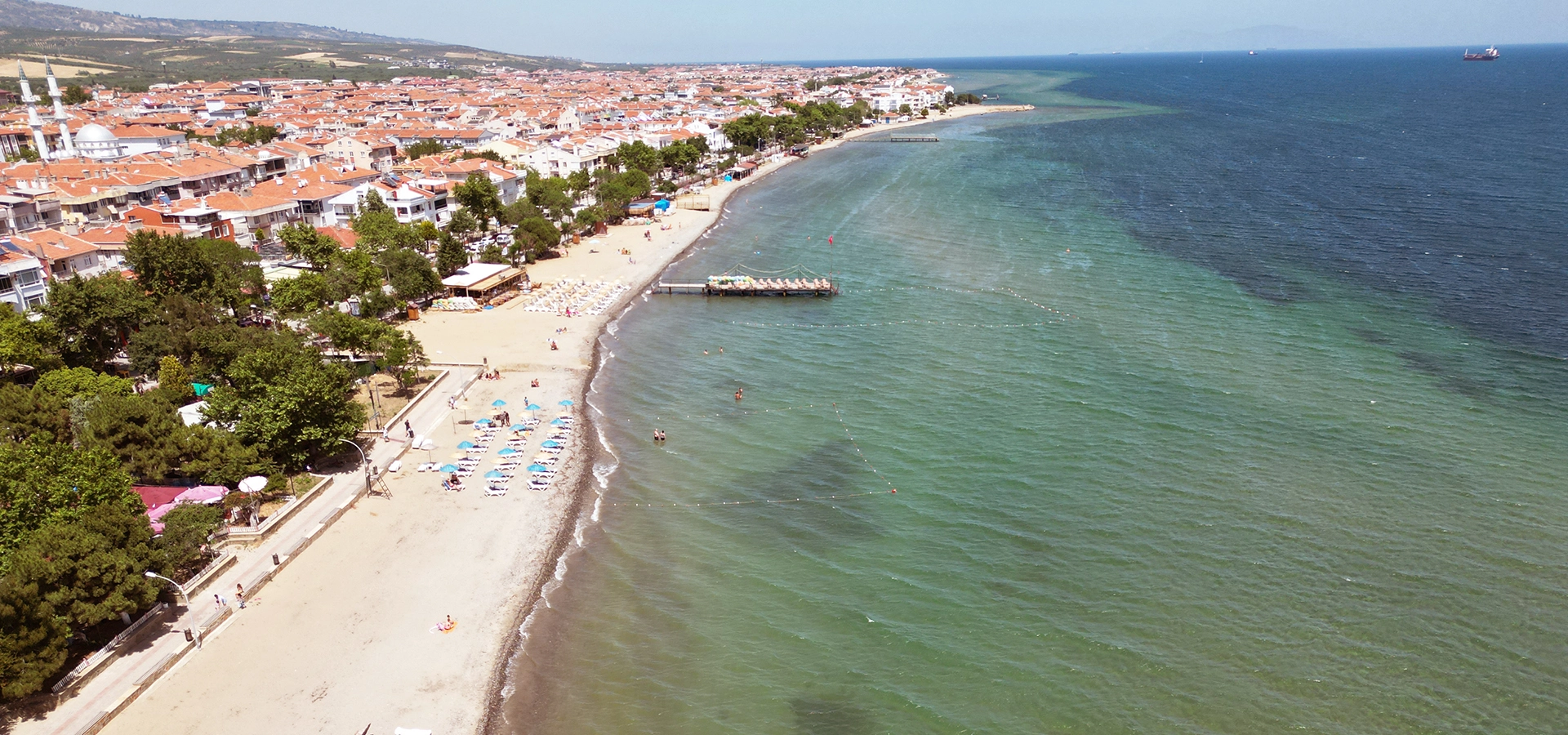
Continue planning your journey with our Şarköy guide covering beaches, vineyards, olives, local food and the Marmara coastline.
View Şarköy GuideExtend your route from Mürefte toward Hoşköy, Hora Lighthouse and the dramatic coastal landscapes beneath the Ganos Mountains.
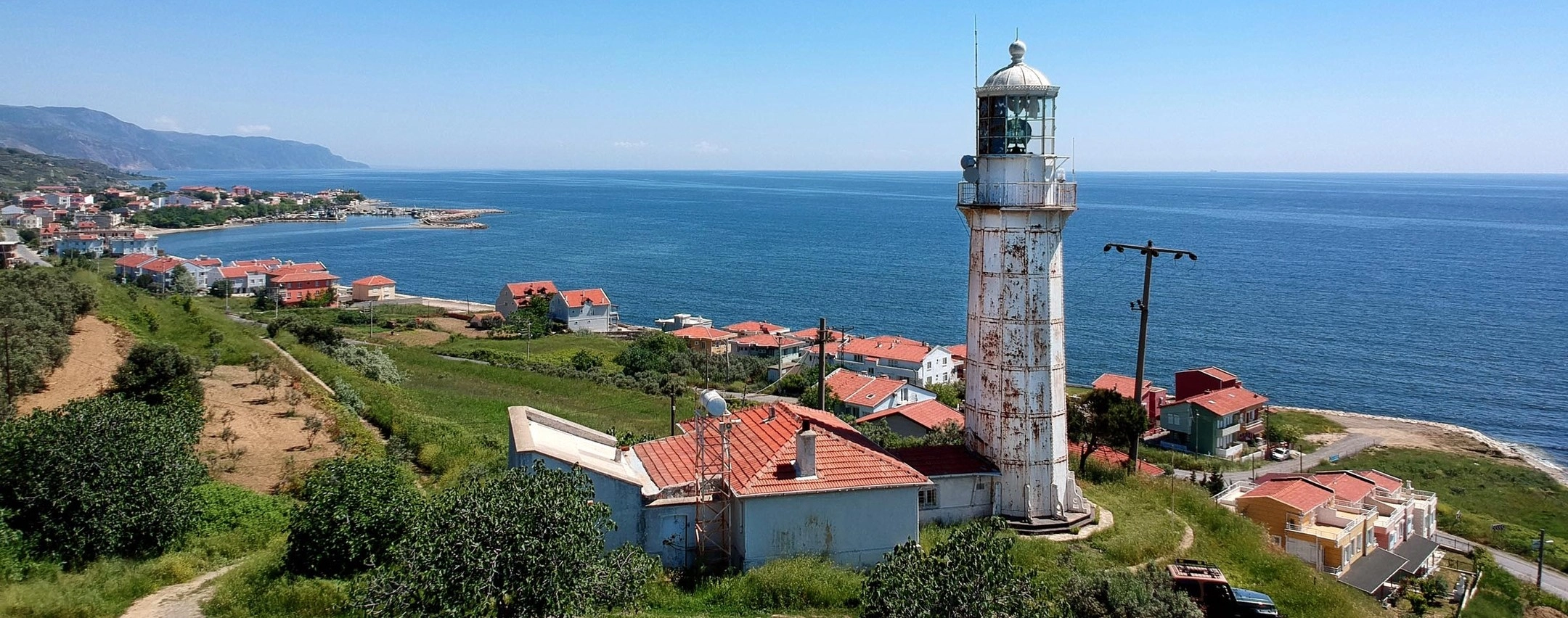
Continue west along the Marmara coast to historic Hoşköy and its landmark lighthouse surrounded by vineyards and Ganos scenery.
View Hoşköy Guide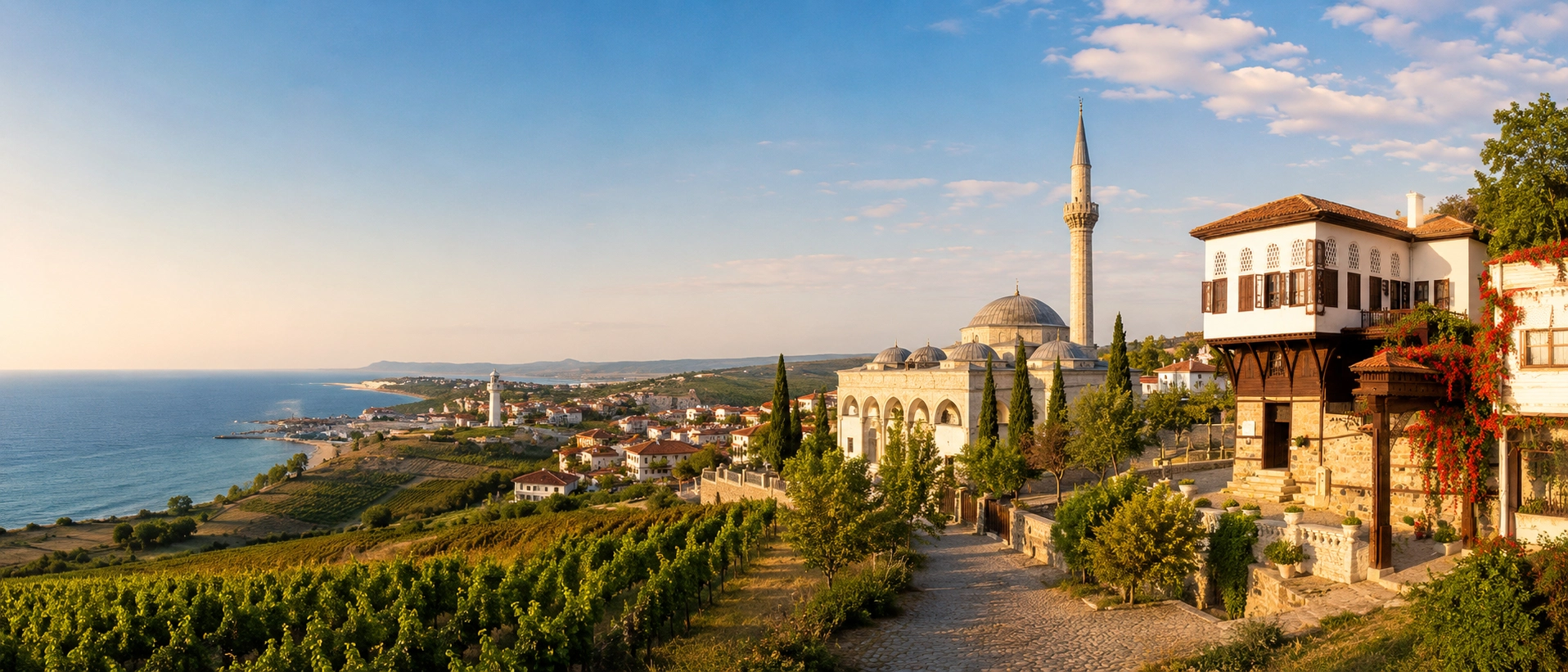
Create a private road trip linking Tekirdağ with Şarköy, Mürefte, Hoşköy, vineyard landscapes and other highlights of the western Marmara coast.
Plan Your Route