Plan a Private Food Experience
Tell us your dates, interests and group size. We can suggest a realistic route and check local arrangements.
Request a Private Programme





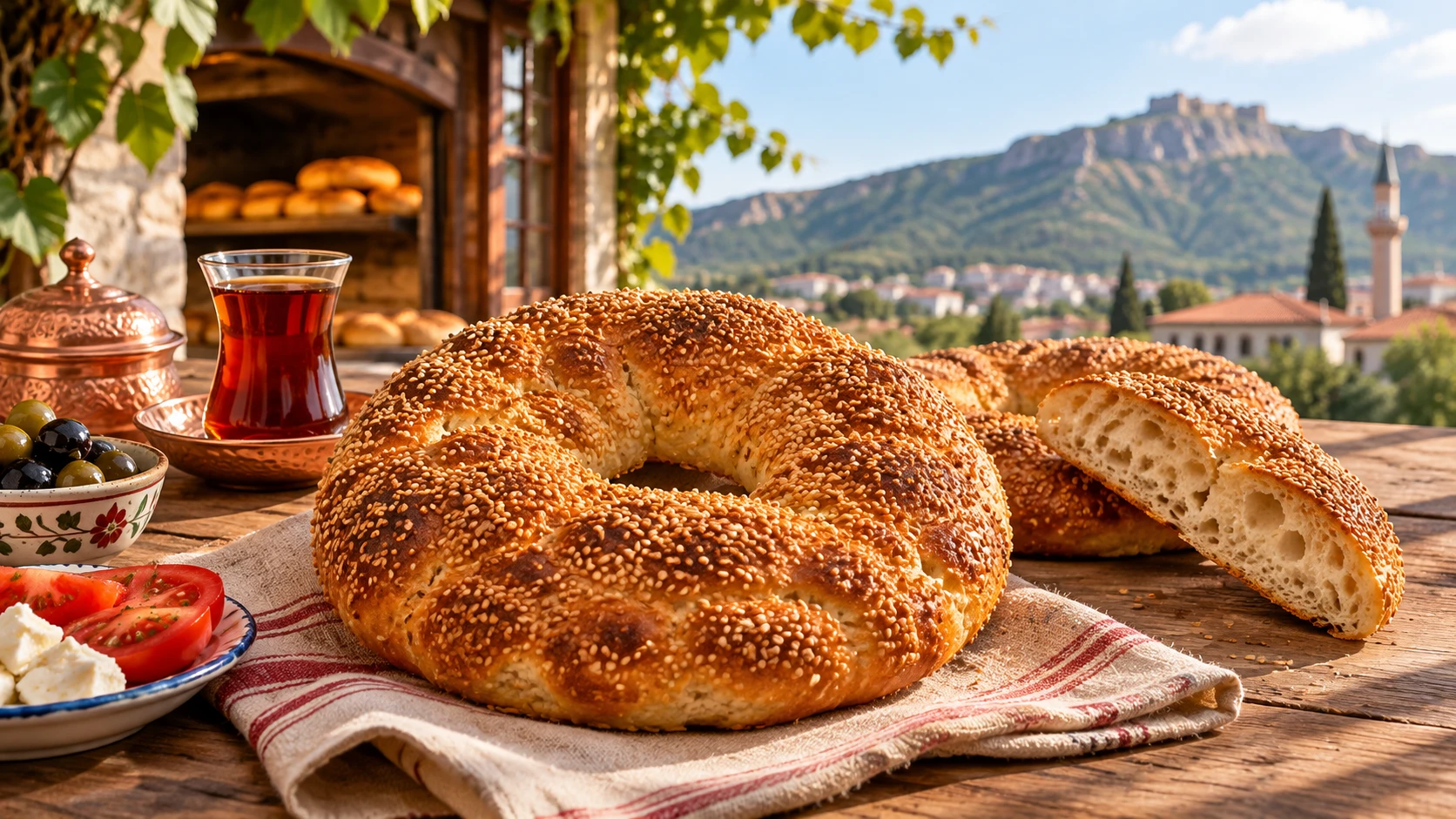
Manisa taban simidi is a local baked speciality that looks familiar at first glance but has a distinctive fermentation story. Its protected specification describes a dough made from flour, water, chickpea starter, grape molasses and sesame.
The chickpea starter, called nohut mayası, is the feature most often highlighted by local bakers. The dough is shaped into a ring and baked, producing a bread with a different character from the ubiquitous crisp street simit.
It is especially associated with Manisa’s Ramadan and pre-dawn meal traditions, although visitors may find it at other times depending on the bakery.
Nohut mayası is the defining fermentation element, giving the dough a different production process from ordinary yeast breads.
Pekmez and sesame contribute surface character and flavour; the registered specification lists both.
Do not expect the same crispness or shape as every Turkish street simit. Taban simidi is a distinct local bakery product.
Bakers report strong seasonal demand for sahur, the pre-dawn meal, connecting the bread to household routines.
An orientation to this Manisa food tradition.
Manisa, Manisa
Chickpea-fermented traditional ring bread
Traditional bakery craft; GI registered 2018
Ingredients and cultural identity
Bakery stop or breakfast
Check producer and ingredients
Taban simidi offers a window into traditional fermentation: local bakers preserve a method based on chickpea culture rather than simply changing the topping on a standard simit.
It also shows how a bakery product can become part of family routines and seasonal social life.
The Turkish Patent and Trademark Office registered Manisa Taban Simidi as a geographical indication in 2018, under registration number 349.
The official specification identifies flour, water, chickpea starter, molasses and sesame. Local bakers have described the product as a longstanding Manisa tradition particularly sought during Ramadan.
The registration documents a recognised method and origin; it does not mean every ring bread sold in Manisa is automatically made to the registered specification.
Manisa has a rich grain and baking culture alongside its kebabs, vineyards and confectionery traditions.
Nohut mayası is the defining fermentation element, giving the dough a different production process from ordinary yeast breads.
Pekmez and sesame contribute surface character and flavour; the registered specification lists both.
Do not expect the same crispness or shape as every Turkish street simit. Taban simidi is a distinct local bakery product.
Bakers report strong seasonal demand for sahur, the pre-dawn meal, connecting the bread to household routines.
Taban simidi is not the same as Akhisar simit ekmeği; both names deserve their own local descriptions and should not be merged simply because they contain “simit”.
Ask a baker whether the batch uses chickpea starter and whether it follows the registered recipe. The answer tells you more than appearance alone.
Try it fresh, noting the crumb, aroma and sesame coating. Pair with tea or local breakfast foods rather than assuming it is intended as a sweet dessert.
Compare how different producers express this characteristic.
Ask how preparation affects flavour and texture.
Consider how this element relates to local ingredients.
Look for this tradition in contemporary Manisa food culture.
Freshness matters. Ask when the batch was baked and whether it is best eaten immediately or can be kept until later.
The traditional product contains wheat and sesame; anyone with allergies should check ingredients and bakery cross-contact.
Official references: Turkish Patent – Manisa Taban Simidi, Anadolu Agency – Local bakers and taban simidi.
Visit a bakery in Manisa before or after a city-centre heritage walk. It is an easy local experience to add to Sultan Mosque or the museum area.
If travelling during Ramadan, check opening hours carefully; bakeries may shift production and sales towards the evening or pre-dawn.
Available depending on bakery production; demand is often especially visible during Ramadan. Do not assume every shop makes it daily.
Ask permission before photographing people, market stalls, kitchens or working premises. An authentic image should reflect the actual product and setting, not a misleading substitute.
A bakery purchase can be a short stop, but entrance thresholds and queuing arrangements vary.
Ask local bakeries specifically for “Manisa taban simidi” and whether they use nohut mayası.
Explore the full guide for this nearby Manisa destination and plan travel time according to your route.
Explore the full guide for this nearby Manisa destination and plan travel time according to your route.
Explore the full guide for this nearby Manisa destination and plan travel time according to your route.
Explore the full guide for this nearby Manisa destination and plan travel time according to your route.
Its traditional production uses chickpea starter, with flour, water, molasses and sesame in the registered specification.
No. It is a distinct Manisa bakery product with a characteristic fermentation method.
Yes. Sesame is listed in the geographical-indication specification.
Yes. Local bakers describe it as a familiar food for Ramadan and pre-dawn meals.
Yes. Turkish Patent registered it in 2018 under number 349.
Ask traditional bakeries in Manisa; availability depends on the producer and season.
Ask before entering workshops, kitchens, farms or working vineyards.
Read labels and ask about allergens or dietary restrictions.
Choose trustworthy producers and verify storage instructions.
Order realistic portions and dispose of packaging responsibly.
Explore Manisa with a tailor-made route, thoughtful pacing and no compulsory shopping stops. Availability and site access are confirmed before booking.
Combine local culture, history and food at a comfortable pace.
Tell us your dates, interests and group size. We can suggest a realistic route and check local arrangements.
Request a Private Programme
Discover the province’s other cultural, archaeological and culinary highlights.
Read the Manisa Guide