Private Lake İznik & Historic İznik Tour
Ask us about a tailor-made İznik journey combining ancient Nicaea, the city walls, Hagia Sophia, underwater basilica, Ottoman monuments, ceramics and sunset beside the lake.
Request a Custom Tour





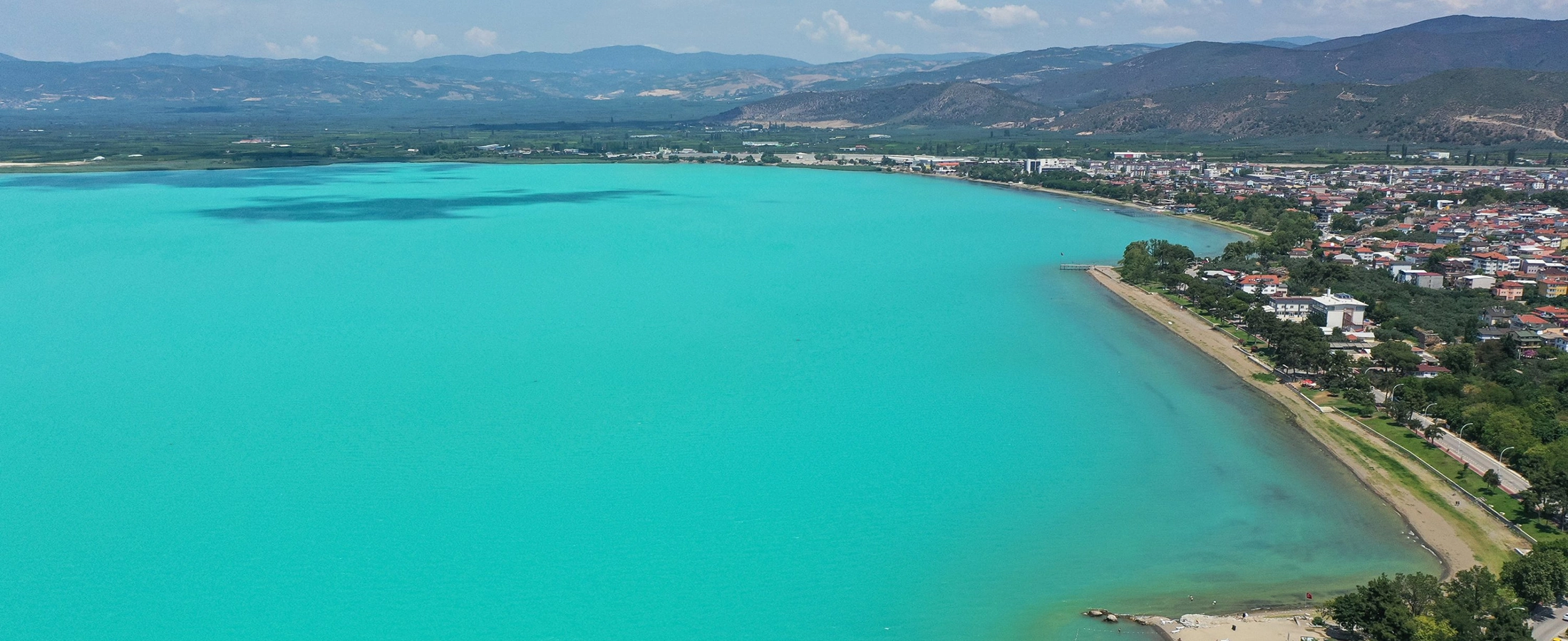
Lake İznik, known in antiquity as Lake Askania, is the great freshwater lake beside the historic town of İznik in Bursa Province. Surrounded by hills, olive groves, agricultural land and small settlements, the lake forms one of the most distinctive cultural landscapes in the Marmara Region.
The historic town of İznik — ancient Nicaea lies directly on its eastern shore. For thousands of years, the lake supplied water, fish, agricultural resources, transport possibilities and fertile land to the communities that developed around it. The relationship between İznik and its lake remains one of the defining features of the town today.
Lake İznik is also remarkable for its natural importance. It is a tectonic freshwater lake and the largest natural lake in the Marmara Region. The lake and its surrounding wetland support extensive birdlife, freshwater fish, reed beds and other habitats and are officially protected as a Nationally Important Wetland.
History also continues beneath the water. Just offshore from İznik, archaeologists discovered the remains of an early Christian basilica beneath the lake, transforming the shoreline into one of Türkiye's most fascinating archaeological landscapes.
Explore the largest natural lake in the Marmara Region.
See the shoreline beside İznik's remarkable submerged early Christian basilica.
Discover an important habitat for waterbirds, freshwater fish and wetland vegetation.
Watch the sun disappear across the lake from İznik's east-facing waterfront.
Essential information for exploring the lake, waterfront and natural landscape around historic İznik.
İznik and Orhangazi districts, Bursa Province, northwestern Türkiye.
A large natural tectonic freshwater lake surrounded by agricultural land and hills.
Approximately 80 meters at its deepest point.
The largest natural lake in the Marmara Region and among Türkiye's largest natural lakes.
Part of the nationally protected İznik Lake wetland ecosystem.
Ancient Nicaea stands directly beside the lake on its eastern shore.
The general lakeshore has no single entrance fee; individual facilities may have separate charges.
Allow 1–2 hours for the waterfront or combine the lake with a full day exploring İznik.
Lake İznik is simultaneously a natural habitat, agricultural resource, archaeological landscape and essential part of the identity of ancient Nicaea.
The importance of Lake İznik cannot be separated from the history of the city beside it. The fertile basin surrounding the lake encouraged settlement from prehistoric times onward, while the ancient city of Nicaea developed at a strategic point on its eastern shore.
Agriculture remains one of the defining features of the landscape. Olive groves, orchards and cultivated fields extend around large sections of the basin, continuing a relationship between settlement, agriculture and water that has existed for centuries.
This relationship is specifically recognized in the cultural significance of İznik's UNESCO World Heritage Tentative List, which emphasizes the historic town's connection with the lake and surrounding agricultural landscape.
The lake is equally important ecologically. Its waters, reed beds, shoreline habitats and surrounding countryside support a rich variety of birds, fish, reptiles, amphibians and mammals.
For visitors, this means Lake İznik is much more than a scenic background. It connects archaeology, wildlife, food production, local life and the extraordinary history of one of Anatolia's most important ancient cities.
Lake İznik occupies a broad tectonic basin in northwestern Anatolia. Mountainous and hilly terrain rises around the basin, while flatter areas near the water have long supported agriculture and settlement.
The historic town of İznik occupies the eastern end of the lake, while Orhangazi lies near its western side. Between them are olive-growing villages, agricultural areas, wetlands and long stretches of rural shoreline.
The lake's size becomes especially impressive when viewed from elevated roads and hills around the basin. From these viewpoints, visitors can understand how completely the lake dominates the surrounding landscape.
Historic İznik occupies the most important visitor area, with parks, promenades and archaeological sites beside the water.
The Orhangazi side provides a different perspective across the lake toward İznik and the surrounding hills.
Hills and agricultural landscapes rise behind the northern shore.
Villages, olive groves and quieter stretches create a more rural lakeside atmosphere.
Shallow shoreline zones and vegetation provide important habitat for birds and aquatic life.
The surrounding basin is strongly associated with olive cultivation and other agricultural production.
In antiquity the lake was known as Askania Limne, or Lake Askania. The settlement that became Nicaea developed on its eastern side, where the lake provided both natural resources and a distinctive geographical setting.
Nicaea became one of the most important cities of Roman and Byzantine Anatolia. Its fortified urban center stood immediately beside the water, and one of the city's principal gates opened westward toward the lakeshore.
The city entered Christian history through the First Council of Nicaea in AD 325 and the Seventh Ecumenical Council in AD 787. The discovery of an early Christian basilica beneath the lake has added an extraordinary new archaeological dimension to this religious history.
İznik later became an important center under the Seljuks, Byzantines and Ottomans. After the Ottoman conquest in 1331, it developed into a center of early Ottoman architecture and eventually became internationally famous for the ceramic production we know today as İznik tiles.
Throughout these political changes, the lake remained constant: supporting fishing, agriculture, water supply and everyday life around the basin.
The lake was known by versions of the name Askania in Greek and Roman geographical traditions.
The major Hellenistic, Roman and Byzantine city developed directly beside the eastern shore.
The First Council of Nicaea made the city one of the most important places in Christian history.
The Seventh Ecumenical Council was also held in Nicaea.
Ottoman forces captured İznik, opening a new chapter in the city's history.
Aerial observation brought the submerged basilica just offshore to international attention.
One of Lake İznik's most extraordinary features lies beneath the shallow water close to the town. In 2014, aerial archaeological work revealed the complete outline of a large early Christian basilica only a short distance offshore.
The structure consists of the recognizable plan of an early Christian church, including a central nave, side aisles and an apse. Archaeological research has investigated the building, its burials and the earlier structures beneath it.
Researchers have explored a possible association with Saint Neophytos, an early Christian martyr connected with Nicaea. Questions surrounding the exact history, dedication and earlier phases of the site remain part of ongoing archaeological research.
The ruins can sometimes be recognized through the water when conditions are favorable, especially from elevated viewpoints and aerial perspectives. Visitors should view the archaeological area responsibly and respect all restrictions protecting the site.
Lake İznik is an important freshwater ecosystem as well as a historic landscape. Its open water, reed beds, streams, agricultural fields and surrounding hills create habitats for a wide variety of species.
A biodiversity survey carried out for the Lake İznik Wetland Management Plan recorded 172 bird species in the lake and surrounding area, together with numerous reptiles, amphibians and mammals. The lake is particularly valuable for resident and wintering waterbirds.
The same research recorded 19 freshwater fish species, including several endemic species. This biological richness is one reason the area requires careful protection from pollution, habitat loss and irresponsible recreational use.
Grebes, herons, cormorants and other water-associated species can be observed around suitable shoreline habitats.
The lake supports important numbers of waterbirds during the colder months.
A diverse native fish community lives within the lake, including endemic species.
Reed beds provide feeding, shelter and nesting environments for numerous species.
Olive groves, orchards and fields surrounding the lake create additional wildlife habitat.
The wider lake ecosystem has national-level wetland protection status.
The lake can be enjoyed in many different ways. A first-time visitor may simply spend an evening beside the water, while travelers with more time can combine archaeological monuments, nature observation, swimming, photography and exploration around the basin.
Enjoy the parks and promenade where historic İznik meets the eastern shore of the lake.
Stay until evening to see the setting sun illuminate the lake and western hills.
Visit the shoreline overlooking the remarkable early Christian ruins beneath the water.
Look for waterbirds around quieter shoreline habitats, especially during migration and winter.
Capture reflections, fishing boats, distant mountains, reed beds and changing evening light.
Use recognized local swimming areas and follow current safety and water-quality guidance.
Canoeing, rowing, sailing and similar activities may be available through authorized local facilities.
Drive through the surrounding olive-growing countryside for quieter lake views beyond İznik town.
Combine the scenery with local restaurants, seasonal produce and İznik's regional cuisine.
Sunset is one of the best times to experience Lake İznik. Because the historic town lies on the eastern shore, the sun descends across the open water toward the western end of the basin.
On clear evenings, the water may change from deep blue to silver, gold, orange and red, while the hills beyond the lake become silhouettes. Clouds can make the scene even more dramatic.
The lakeside parks and promenade provide easy places to watch the sunset, making this an ideal way to finish a day exploring İznik's churches, mosques, gates, museums and ceramic workshops.
Arrive before sunset for softer light on the water and surrounding landscape.
Calmer evenings can produce beautiful reflections across the open lake.
Use trees, boats and piers as foreground elements against the evening sky.
The blue-hour light immediately after sunset can be equally atmospheric.
Swimming is one of the traditional summer activities around Lake İznik, and several shoreline areas are used for recreation during warm weather. However, a natural lake is very different from a controlled swimming pool.
Depth, underwater surfaces, aquatic vegetation, weather, local water conditions and access can vary significantly from one location to another. Visitors should therefore use established recreation areas and pay attention to local warnings and current water-quality information.
Choose established local beaches or recreational waterfronts rather than isolated unknown shoreline.
Wind, visibility and water conditions can change throughout the day.
Supervise children continuously around the lake, even in apparently shallow water.
Some shorelines may be pebbly, muddy or covered with aquatic vegetation.
Do not swim into restricted archaeological zones or disturb submerged structures.
Take all plastic, food packaging and other rubbish away from the shoreline.
Fishing has long been part of everyday life around Lake İznik. The lake supports numerous freshwater fish species and continues to contribute to the economy and food culture of surrounding communities.
Visitors may see small fishing boats, nets and fishermen along parts of the shore, providing a reminder that the lake is not simply a visitor attraction but a working natural resource.
Anyone wishing to fish recreationally should follow current national and local regulations, including seasonal restrictions, protected species, permitted methods and licensing requirements where applicable.
Perhaps the most rewarding way to understand Lake İznik is not to separate nature from history. The lake, ancient city, agricultural plain and surrounding hills form one connected landscape.
For centuries, fertile land around the basin supported olives, vegetables, fruit and other crops. Agricultural wealth helped sustain communities that lived beside Nicaea through Roman, Byzantine, Ottoman and modern periods.
This relationship remains clearly visible today. Historic walls stand close to working farms, olive groves descend toward the lake, and modern İznik continues to face the same body of water that ancient travelers knew as Askania.
Late afternoon allows time for a waterfront walk before the best evening light begins.
Summer days can be hot and exposed, especially around open waterfront areas.
Keep drinking water with you when exploring rural or undeveloped stretches of shoreline.
They are useful for observing waterbirds without approaching sensitive habitats.
Avoid forcing access through reed beds, private agricultural land or unstable shorelines.
Follow current local advice before entering the water.
Do not remove stones, ceramics or objects from either the shoreline or underwater areas.
The lake is best combined with the historic monuments inside the ancient city walls.
Begin your day inside historic İznik by exploring the İznik City Walls and Gates. The Roman and Byzantine fortifications immediately reveal the extraordinary antiquity of ancient Nicaea.
Continue toward İznik Hagia Sophia – Orhan Mosque in the center of town. This monument is closely connected with the city's Byzantine and Ottoman history and stands near the intersection of Nicaea's ancient street plan.
After lunch, explore İznik's artistic heritage through its famous ceramics and workshops. Our İznik Tiles & Ceramic Heritage Guide explains how the town became one of the greatest ceramic-production centers of the Ottoman world.
In the late afternoon, head toward the lake and the İznik Lake Basilica. Spend time along the waterfront before remaining for sunset across the water.
Lake İznik is an open natural landscape rather than a single ticketed attraction. Public waterfront parks and many shoreline viewpoints can generally be enjoyed freely, while private beaches, water-sports facilities, archaeological visitor areas or other individual attractions may have their own operating arrangements.
The easiest lake experience for first-time visitors is the İznik town waterfront, where the shore can be combined naturally with the historical center. Travelers with a private vehicle can also explore quieter sections of the wider basin.
Lake İznik can be visited throughout the year, but the atmosphere changes significantly with the seasons. Your ideal period depends on whether you prioritize walking, swimming, birdwatching, photography or archaeological sightseeing.
Green landscapes, wildflowers and comfortable temperatures make spring excellent for exploring.
Long daylight and warm weather suit swimming and waterfront evenings, although midday can be very hot.
Comfortable temperatures, agricultural activity and softer light create an atmospheric visit.
Quieter shores and wintering waterbirds make the lake appealing for nature enthusiasts.
Calmer conditions and softer light are excellent for birds, reflections and landscape photography.
The most popular time for relaxed walks and the famous sunset across the lake.
Enough for a short lake view and photographs while passing through İznik.
Enjoy the waterfront, submerged basilica area and a relaxed lakeside walk.
Add lunch, photography, birdwatching or exploration of another section of shoreline.
Combine the lake with İznik's city walls, Hagia Sophia, museums and ceramic heritage.
Ideal for travelers who want both historic İznik and slower exploration of the surrounding countryside.
Combine a short historic visit with open waterfront parks and a relaxed lakeside break.
Lake İznik offers an unusually broad variety of photographic subjects: wide landscapes, ancient monuments, submerged archaeology, fishing boats, birds, agricultural scenes and some of the finest sunset views in the region.
Photograph westward across the water as warm evening colors develop above the hills.
Remain after sunset for softer tones and reflections across the lake.
Clear water, elevated viewpoints and calm conditions can help reveal the outline of the submerged ruins.
Use a telephoto lens rather than approaching birds or entering reed beds.
Small boats and piers add scale and local character to lake landscapes.
Include agricultural landscapes to show the historic relationship between the basin and its communities.
Elevated viewpoints around the basin reveal the enormous scale of the lake.
Clouds, mist and winter skies can produce dramatic scenes very different from summer views.
Accessibility depends heavily on the part of the lake being visited. Developed waterfront areas in İznik are generally much easier to explore than natural beaches, agricultural tracks and undeveloped shoreline.
Developed lakeside parks and promenades provide the easiest experience for visitors with limited mobility.
Pebbles, mud, grass, sand and uneven terrain can make undeveloped sections difficult.
Private transportation is helpful for visitors who want to explore multiple locations around the basin.
Choose established waterfront facilities and confirm accessibility directly when using private venues.
Promenades and paved parks are preferable to natural shoreline paths.
İznik town provides cafés, restaurants, parks and other places to rest during a longer visit.
Most visitors approach Lake İznik through the town of İznik on the eastern shore. The town is connected by road with Bursa, Orhangazi, Gemlik and other destinations in the Marmara Region.
Drive toward the İznik basin using the regional road network; journey times depend on traffic and route.
İznik can be reached by road through the eastern Marmara transport network, making it possible as a long day trip.
The western end of the lake connects naturally with Orhangazi and routes toward Bursa and Istanbul.
Regional buses and minibuses connect İznik with Bursa and surrounding districts.
The most flexible option for combining the historic town with rural viewpoints and different parts of the lake.
The central waterfront can be reached easily from many of the historic monuments within town.
Lake İznik lies directly beside one of Türkiye's richest small historic towns. Several major Roman, Byzantine, Christian and Ottoman monuments can therefore be combined with the lake without a long transfer.
Discover the extraordinary early Christian church preserved beneath the shallow waters of the lake.
Explore one of the town's most important Byzantine monuments and its later Ottoman history.
Walk beside the Roman and Byzantine fortifications surrounding ancient Nicaea.
Discover the craftsmanship that made İznik famous throughout the Ottoman world.
See the monumental remains of Nicaea's Roman theatre near the southwestern side of the historic city.
Admire one of the finest monuments of early Ottoman architecture in İznik.
Visit an important early Ottoman charitable building now associated with İznik's museum heritage.
Continue to the first great Ottoman capital for mosques, tombs, bazaars, museums and traditional neighborhoods.
Lake İznik is in Bursa Province in northwestern Türkiye. The historic town of İznik stands on its eastern shore, while Orhangazi lies near the western end of the lake.
Yes. Ancient Greek and Roman sources referred to the lake as Askania or Askania Limne. Ancient Nicaea developed beside its eastern shore.
Yes. Lake İznik is a natural tectonic freshwater lake.
Official regional tourism information gives a maximum depth of approximately 80 meters. Depth varies considerably across the lake.
No. It is not Türkiye's largest lake, but it is the largest natural lake in the Marmara Region and one of the country's largest natural lakes.
Yes. Lake İznik and its surrounding ecosystem are designated as a Nationally Important Wetland in Türkiye.
Yes. Biodiversity research for the wetland management plan recorded 172 bird species in the lake and surrounding area. The lake is especially important for waterbirds.
The best-known underwater archaeological discovery is an early Christian basilica located in shallow water close to the İznik shoreline. Archaeological research has continued since its identification.
The complete structure was recognized through aerial archaeological work in 2014, although local people had been aware of submerged remains in the area.
Visibility depends on water level, clarity, sunlight and weather. The general archaeological area can be appreciated from the shore, while aerial views reveal the plan much more clearly.
Swimming is practiced at recognized recreation areas around the lake. Visitors should use established locations and follow current local safety and water-quality guidance.
There are several recreational shoreline areas around the lake, ranging from developed waterfronts to more natural stretches. Facilities vary considerably by location.
Fishing is a traditional activity around the lake. Recreational fishing must follow current regulations concerning seasons, methods and protected species.
Yes. Activities such as canoeing, rowing and sailing are associated with the lake, subject to local conditions and authorized facilities.
Spring and autumn are excellent for comfortable sightseeing. Summer is popular for waterfront recreation, while winter can be rewarding for birdwatching and quiet landscapes.
Late afternoon and sunset are particularly beautiful from the İznik waterfront, because visitors look westward across the open lake.
Yes. Sunset is one of the signature experiences of İznik, with the sun setting across the lake behind the western hills.
Allow at least one or two hours for a waterfront walk, the basilica area and sunset. A full day is recommended when combining the lake with historic İznik.
Yes. Lake İznik and historic İznik can comfortably form a full-day excursion from Bursa when transportation is planned in advance.
Yes. A road trip from Istanbul is possible, although a full day should be allowed if you also want to explore the historic monuments of İznik.
Absolutely. Few destinations combine a major freshwater landscape, protected wetland habitat, Roman and Byzantine history, early Christian archaeology, Ottoman heritage and beautiful sunsets in such a compact area.
Lake ecosystems are sensitive to pollution, disturbance and changes in water conditions. Every visitor can help protect Lake İznik by treating both the natural environment and archaeological landscape carefully.
Take bottles, plastic, food packaging, cigarette ends and all other waste away with you.
Do not enter or damage shoreline vegetation that provides habitat for birds and aquatic species.
Observe wildlife from a distance, especially during nesting and migration periods.
Never remove pottery, stones or other objects from the lake, shore or archaeological areas.
Olive groves and agricultural fields are working private landscapes, not public walking areas.
Never release chemicals, soaps, fuel, waste water or foreign organisms into the lake.
Choose responsible operators for boating, water sports and other lake activities.
Use local restaurants, shops, guides, ceramic workshops and family businesses when possible.
Combine Lake İznik with the Roman and Byzantine walls, Hagia Sophia, the submerged basilica, Ottoman monuments, ceramic workshops and the historic landscapes of ancient Nicaea through a private itinerary designed around your interests.
Choose a relaxed day focused on archaeology, Christian history, Ottoman heritage, ceramics, nature, photography or a combination of them all.
Ask us about a tailor-made İznik journey combining ancient Nicaea, the city walls, Hagia Sophia, underwater basilica, Ottoman monuments, ceramics and sunset beside the lake.
Request a Custom Tour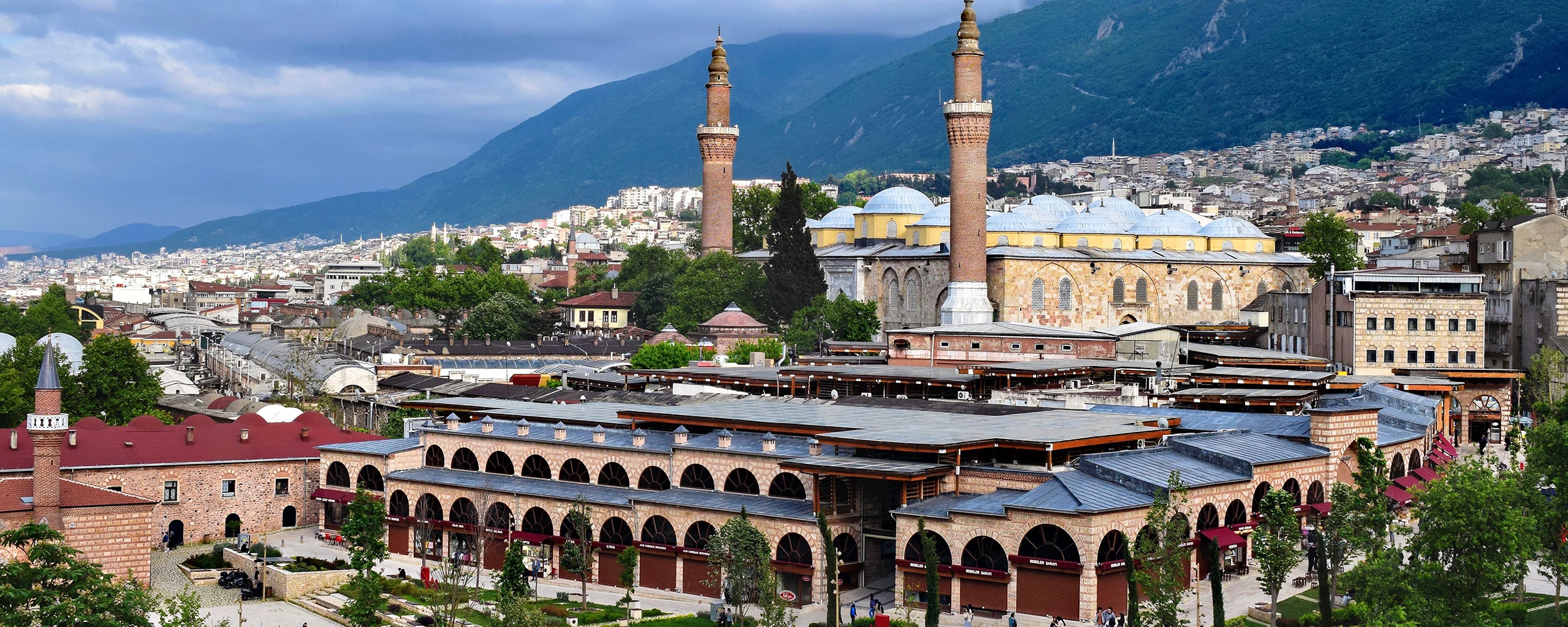
Continue through Bursa Province to discover the first Ottoman capital, UNESCO heritage, historic villages, waterfalls, museums, mountains and remarkable regional cuisine.
View Bursa GuideDiscover the monuments and artistic traditions surrounding Lake İznik and ancient Nicaea.
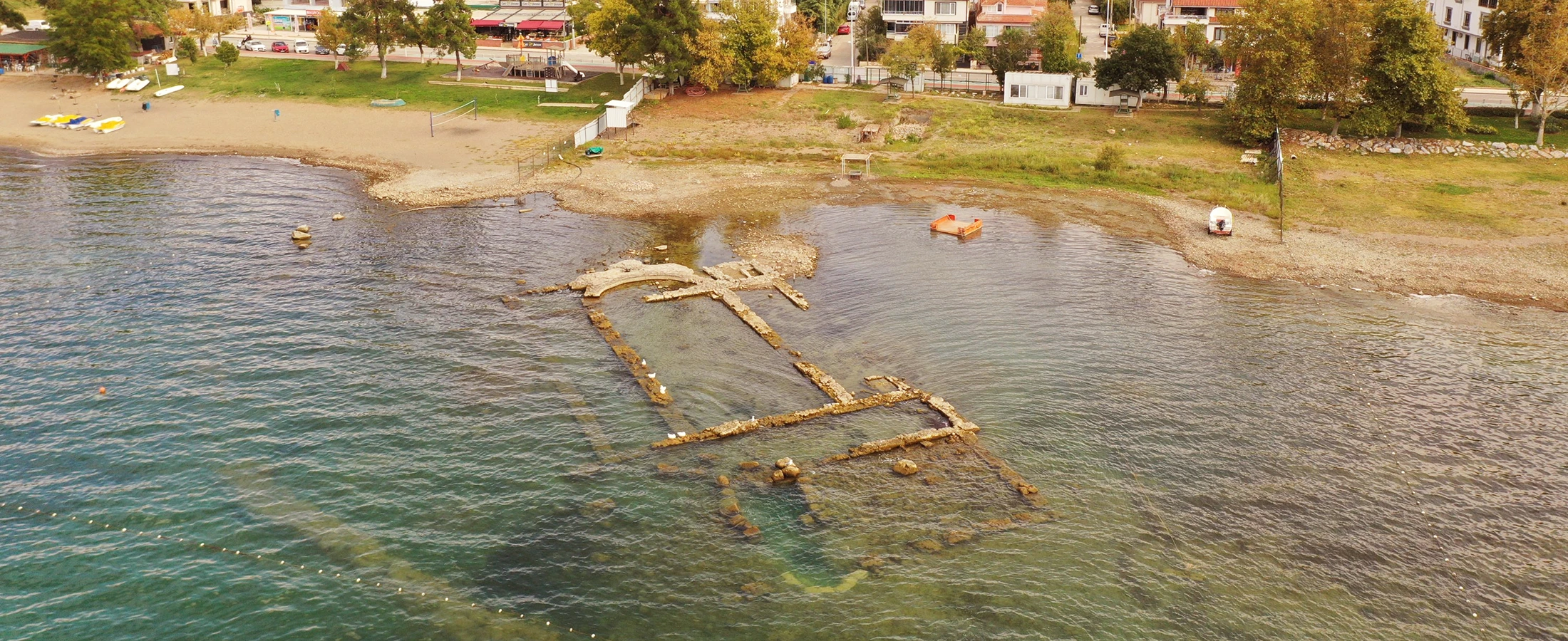
Discover one of Türkiye's most remarkable underwater archaeological sites, an early Christian basilica preserved beneath the waters of Lake İznik.
Explore the Basilica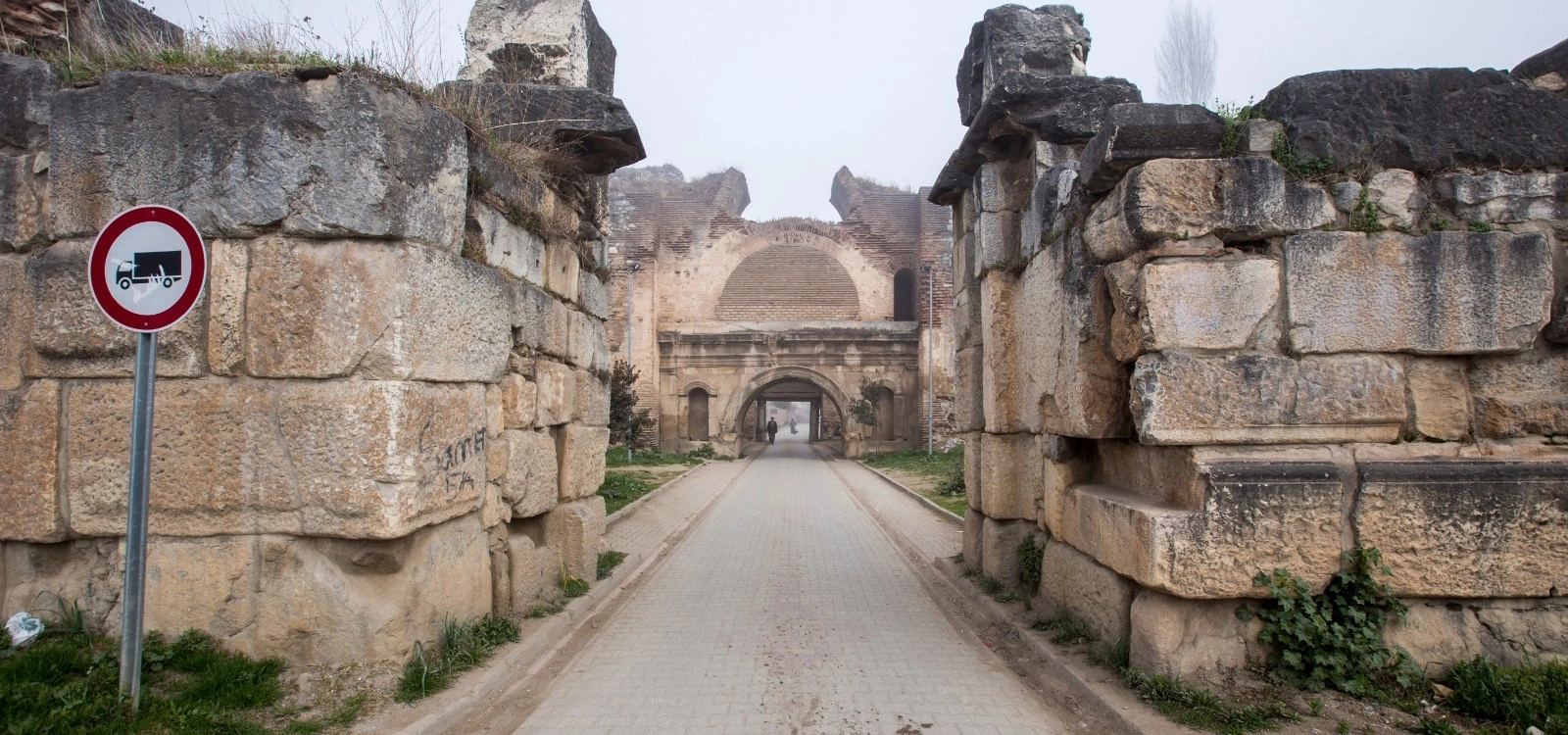
Explore the monumental fortifications that still surround ancient Nicaea, including Roman gates, Byzantine towers and centuries of reconstructed masonry.
Explore the City Walls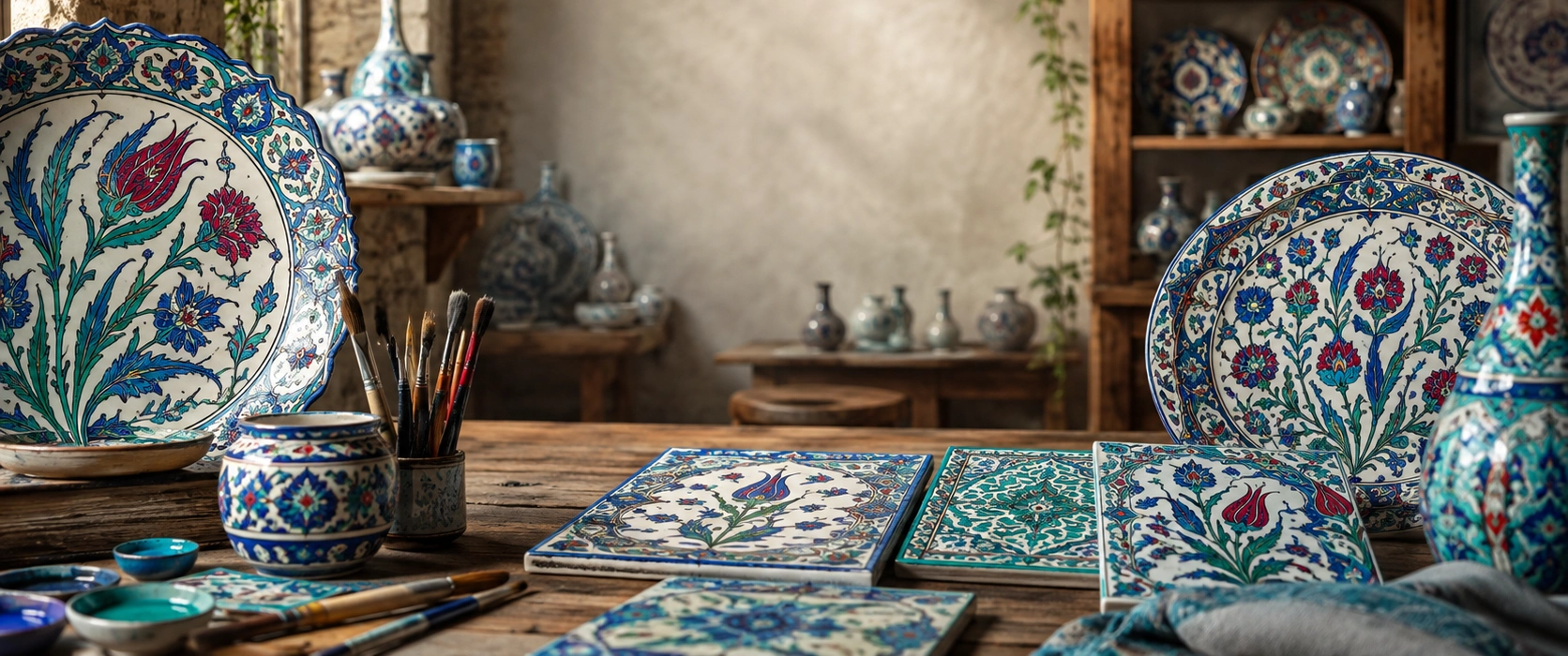
Discover the workshops, colors, techniques and Ottoman artistic tradition that made the name İznik famous around the world.
Discover İznik Ceramics