Private Kurubük Programme
Share your dates, interests and travel party so we can check access and propose a suitable route.
Request Your Private Programme





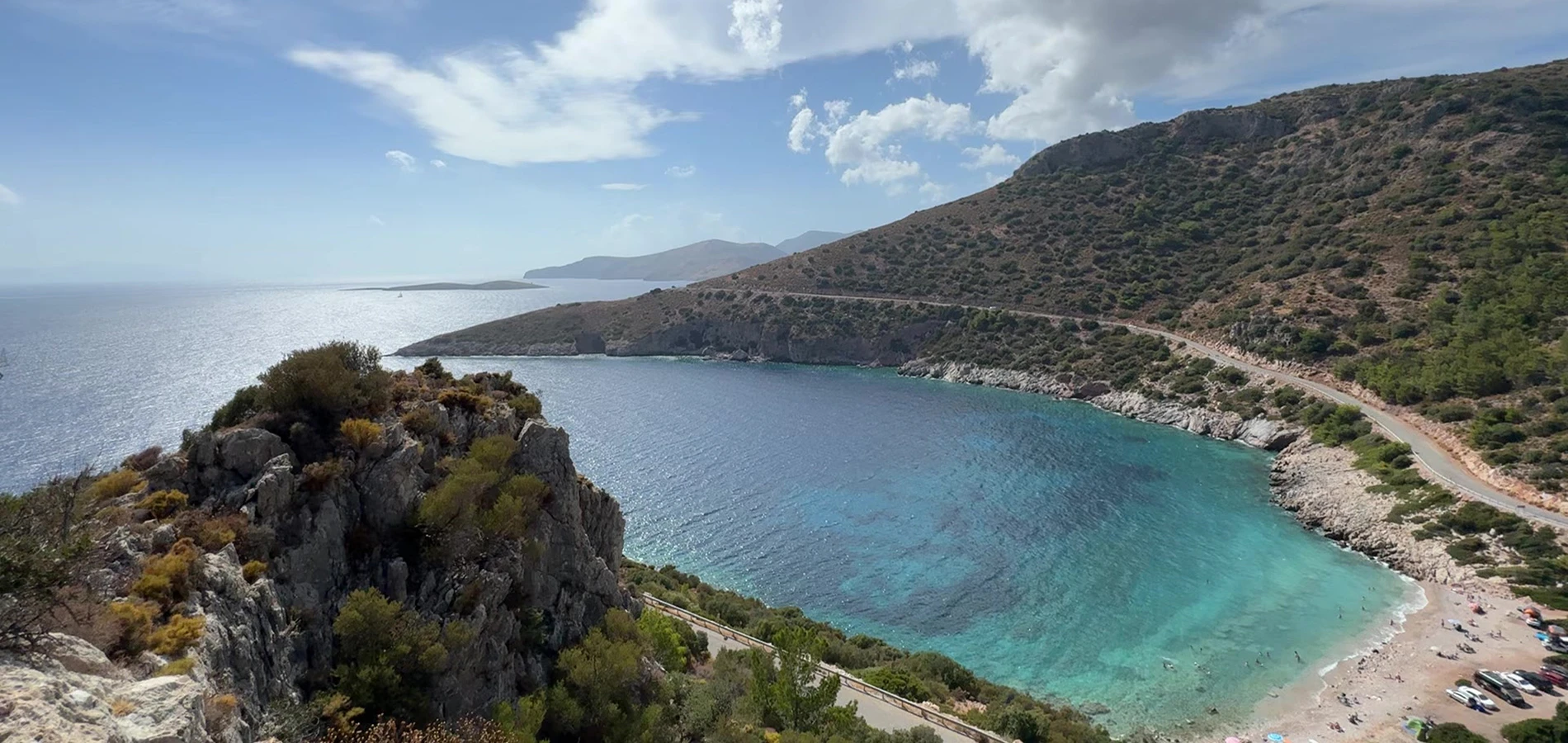
Kurubük is a smaller cove on the Datça Peninsula, often appreciated by travellers seeking a simpler beach experience. Its character is different from a serviced resort beach: expect a natural shoreline and plan for limited facilities.
The shore is generally stony, and the water may deepen or become choppy depending on the exact spot and weather. A photograph of turquoise water is not a safety assessment.
Kurubük can be a rewarding stop on a careful peninsula drive, but the best approach is to verify the current road and beach access before setting out, bring essentials and avoid arriving with expectations of a full-service beach club.
Water shoes can make entering and leaving the sea more comfortable.
On a calm day the water can appear strikingly transparent.
Do not count on toilets, food outlets, lifeguards or shade.
Small coastal access points can be narrow or rough.
An orientation to the landscape, heritage and practical visitor experience.
Datça Peninsula, on the route toward western coves
Low-key coastal cove
Natural coastal landscape
Pebbly shore and clear-water setting
1–3 hours depending on access and conditions
A quieter, relatively undeveloped beach stop
Kurubük offers a distinctive experience in Datça Peninsula, on the route toward western coves: a quieter, relatively undeveloped beach stop. It is best appreciated with enough time to observe its setting and the details that make it different from other Muğla destinations.
The main reason to make time for Kurubük is a quieter, relatively undeveloped beach stop. The setting—pebbly shore and clear-water setting—adds meaning to the experience, but the details deserve attention as well as the view.
A thoughtful visit separates what is documented from what is only assumed. The place is part of a wider region with many layers of history, and its current visitor experience may differ from photographs or old guidebooks.
Kurubük is best understood as a coastal landscape rather than a historic town or monumental archaeological site. The surrounding slopes and marine environment are the main reasons to visit.
The wider Datça Peninsula has hosted settlements and maritime routes for centuries, yet a general regional history should not be used to invent specific ancient structures at this cove.
As interest in smaller beaches grows, access pressure and litter become important concerns. Keeping a low-impact approach is part of enjoying a less developed shoreline.
Natural coastal landscape
A quieter, relatively undeveloped beach stop
Pebbly shore and clear-water setting
Expect few or no facilities; do not assume lifeguards, toilets or fixed opening arrangements.
Kurubük occupies pebbly shore and clear-water setting in Datça Peninsula, on the route toward western coves. This geography is not simply scenery: it shapes how people have moved through, used and understood the place.
The setting invites visitors to think about the relationship between this kind of place and the region's changing geography. It is worth slowing down to notice what can be seen from safe, permitted viewpoints.
A map can make the region look compact, but road bends, walking routes, protected zones and boat access can change what is realistic in a day. Travel along the Datça Peninsula road and verify the current turn-off and legal parking before leaving the main route.
Water shoes can make entering and leaving the sea more comfortable. Pebbles may shift underfoot, so take care when carrying equipment or helping children near the water.
Look for how this detail relates to the surrounding landscape and the wider regional story. It is worth comparing what can be seen today with what historical or local interpretation explains.
On a calm day the water can appear strikingly transparent. Wind, suspended sediment and seasonal changes can alter visibility, so conditions should be assessed on arrival.
Look for how this detail relates to the surrounding landscape and the wider regional story. It is worth comparing what can be seen today with what historical or local interpretation explains.
Do not count on toilets, food outlets, lifeguards or shade. Take drinking water, sun protection and anything you need for a short visit, then remove all waste.
Look for how this detail relates to the surrounding landscape and the wider regional story. It is worth comparing what can be seen today with what historical or local interpretation explains.
Small coastal access points can be narrow or rough. Park only where permitted and avoid obstructing local roads or emergency access.
Look for how this detail relates to the surrounding landscape and the wider regional story. It is worth comparing what can be seen today with what historical or local interpretation explains.
Kurubük works well as one short swim in a larger Datça exploration. Building a whole day around a single unserviced cove can be uncomfortable in extreme heat.
Look for how this detail relates to the surrounding landscape and the wider regional story. It is worth comparing what can be seen today with what historical or local interpretation explains.
Avoid removing stones, damaging vegetation or disturbing marine life. If the beach is crowded or access is restricted, choose another cove instead of forcing entry.
This is one reason to spend time observing the place carefully instead of treating it as a quick stop. Carry water, check wind and waves, and leave if the sea or access route feels unsafe.
A visit to Kurubük becomes more meaningful when placed alongside other destinations in Muğla. Palamutbükü and Hayıtbükü and Ovabükü offer contrasting perspectives, but they should be linked by realistic travel times rather than their apparent proximity on a map.
The province brings together Lycian and Carian archaeology, village heritage, protected coastlines and contemporary maritime life. Choosing a small number of complementary stops helps each retain its own identity instead of blending into a generic sightseeing day.
The historical setting of Kurubük includes natural coastal landscape. Different kinds of evidence—landscape, surviving architecture, local records and archaeological research—answer different questions and should not be treated as interchangeable.
To interpret Kurubük responsibly, distinguish physical remains and documented facts from local tradition, travel marketing and uncertain reconstructions. A quieter, relatively undeveloped beach stop is a useful starting point, but it does not explain the entire place.
Visitors should also consider what is absent from the visible scene: former buildings, seasonal activities, changing shorelines or communities whose history is not obvious in a photograph. A guide can help connect those layers without inventing certainty.
Focus on the features that are actually visible and accessible during your visit. Some places change with excavation, season, weather or conservation work; the points below are an interpretive guide, not a guarantee that every area is open.
Water shoes can make entering and leaving the sea more comfortable.
On a calm day the water can appear strikingly transparent.
Do not count on toilets, food outlets, lifeguards or shade.
Small coastal access points can be narrow or rough.
Kurubük works well as one short swim in a larger Datça exploration.
Avoid removing stones, damaging vegetation or disturbing marine life.
Practical details may change by season, conservation work, weather and local management. Verify the relevant official or local information before making a special journey; no fixed entrance fee or opening hour is assumed here.
Combine one short Kurubük stop with a more serviced beach such as Palamutbükü or with a scenic peninsula drive.
For a fuller day, consider Palamutbükü and one other nearby place rather than adding every attraction in the district. Confirm whether each stop needs a road journey, boat transfer or substantial walk.
Allow time for breaks, local food and changes in weather. A flexible plan is more enjoyable and more respectful of protected landscapes than an itinerary built around exact minute-by-minute promises.
Travel along the Datça Peninsula road and verify the current turn-off and legal parking before leaving the main route.
1–3 hours depending on access and conditions
Consider Palamutbükü if travel conditions allow.
Expect few or no facilities; do not assume lifeguards, toilets or fixed opening arrangements.
Choose calm weather and moderate temperatures; in summer, arrive prepared for strong sun.
The best time of day also depends on your goal: softer light for photography, comfortable temperatures for walking or suitable sea conditions for a boat or swim. Check the forecast and local guidance rather than assuming the same conditions every day.
Photograph the natural shoreline without moving rocks or entering sensitive vegetation.
The most useful images often include enough surrounding landscape to explain the place, rather than isolating one attractive detail. Respect private property, wildlife, archaeological barriers and any drone restrictions.
Stony ground and potentially awkward access make this a challenging option for visitors with limited mobility.
Ask about the exact route, distance, surface and available assistance if anyone in your group has mobility needs. A location may be reachable by vehicle yet still have steps, loose ground, boat ladders or uneven archaeological paths.
Travel along the Datça Peninsula road and verify the current turn-off and legal parking before leaving the main route.
Confirm the final approach, parking or boat departure point and return options before travelling. The shortest straight-line distance is rarely the most useful estimate on the Datça Peninsula or around Fethiye’s mountain and island routes.
Use our Muğla travel guide to build a route. The places below are related by region or theme, not necessarily a short walk from Kurubük.
Explore Palamutbükü as a complementary stop. Check its access and the actual travel time from Kurubük before adding it to your itinerary.
Explore Hayıtbükü and Ovabükü as a complementary stop. Check its access and the actual travel time from Kurubük before adding it to your itinerary.
Explore Datça Peninsula Bays as a complementary stop. Check its access and the actual travel time from Kurubük before adding it to your itinerary.
Explore Old Datça as a complementary stop. Check its access and the actual travel time from Kurubük before adding it to your itinerary.
Kurubük is in Datça Peninsula, on the route toward western coves, in Muğla Province, southwestern Türkiye.
The main attraction is a quieter, relatively undeveloped beach stop. Its setting is pebbly shore and clear-water setting.
Kurubük is best understood as a coastal landscape rather than a historic town or monumental archaeological site. The surrounding slopes and marine environment are the main reasons to visit.
A useful starting estimate is 1–3 hours depending on access and conditions. Allow extra time for transport, rest stops and any site-specific restrictions.
Travel along the Datça Peninsula road and verify the current turn-off and legal parking before leaving the main route.
Expect few or no facilities; do not assume lifeguards, toilets or fixed opening arrangements.
Choose calm weather and moderate temperatures; in summer, arrive prepared for strong sun.
Stony ground and potentially awkward access make this a challenging option for visitors with limited mobility.
Consider Palamutbükü or Hayıtbükü and Ovabükü, allowing for actual road, trail or boat conditions.
Carry water, check wind and waves, and leave if the sea or access route feels unsafe.
Follow local access rules, avoid leaving waste and give residents, other visitors and protected habitats space. A thoughtful visit helps keep the destination welcoming and its heritage intact for future travellers.
Ask Wow Cappadocia / Venere Travel to help design a private regional journey according to your interests, realistic travel times and confirmed site access, without compulsory shopping stops.
Combine Kurubük with a small number of complementary places in a well-paced itinerary.
Share your dates, interests and travel party so we can check access and propose a suitable route.
Request Your Private Programme
Discover ancient cities, coastal villages, protected nature and local traditions across the province.
View the Muğla Travel Guide