Private Kilyos Black Sea & History Tour
Explore Kilyos Castle, the historic village and Istanbul's northern Black Sea coast with time for coastal photography, local food and seasonal beach activities.
Request a Custom Kilyos Tour





Travel north from the Bosphorus through the green hills of Sarıyer, and Istanbul gradually begins to disappear.
Dense urban neighborhoods give way to forests.
Roads pass through quieter settlements.
The horizon becomes wider.
And then suddenly the Black Sea appears.
This is Kilyos.
Located on Istanbul's European Black Sea coast, Kilyos has been one of the city's best-known seaside escapes for generations.
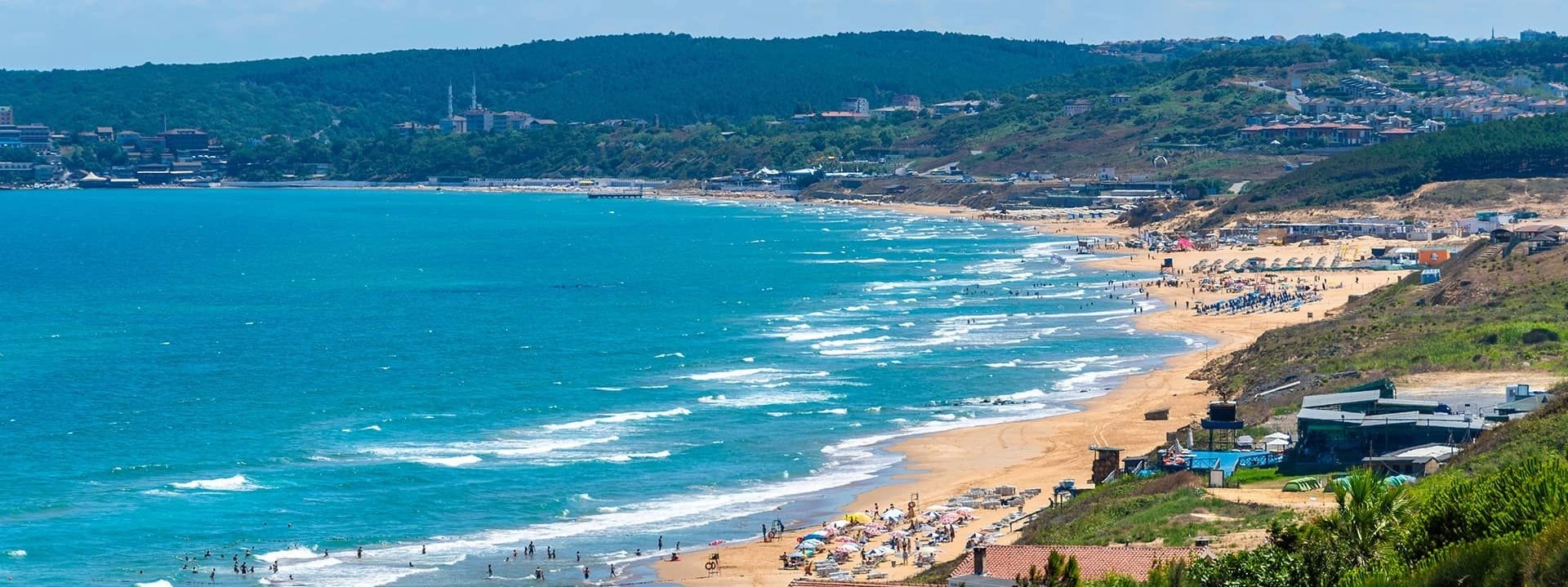
Its long sandy shoreline offers something that central Istanbul cannot: open sea, broad beaches, powerful waves and the feeling of being far beyond a city of millions.
But Kilyos is much more than a summer beach destination.
Its strategic position near the northern approaches to the Bosphorus gave the settlement military importance for centuries.
The remarkable Kilyos Castle preserves traces of this history, with origins generally associated with the Eastern Roman period and later use by Byzantine, Genoese and Ottoman authorities.
Historic water structures, stonework and a monumental plane tree add further layers to the old village.
Modern Kilyos developed into a popular summer destination particularly during the 20th century, when hotels, restaurants and beach facilities transformed the Black Sea settlement into one of Istanbul's classic seaside resorts.
Today visitors come for very different reasons.
Some arrive before breakfast simply to walk beside the sea.
Others spend the entire day swimming and relaxing on the sand.
Surfers and water-sports enthusiasts watch the wind.
Families fill the beaches on summer weekends.
Couples stay for dinner beside the coast.
History lovers search for the older Kilyos hidden behind its modern summer identity.
For travelers who want to discover Istanbul beyond palaces, mosques and crowded historic districts, Kilyos reveals another side of the city:
wild, windswept and facing directly toward the Black Sea.
Spend a summer day on broad sandy beaches along one of Istanbul's most famous Black Sea coastlines.
Discover a strategic coastal fortress whose history stretches through the Eastern Roman, Genoese and Ottoman periods.
Wind and waves have made the wider Kilyos coast popular for surfing, kitesurfing and other seasonal activities.
Combine the coast with forests, rural Sarıyer, seafood and a completely different landscape from central Istanbul.
Essential information about Kilyos, its Black Sea beaches, historic castle, swimming conditions, location, transport and recommended visit length.
On Istanbul's European Black Sea coast within Sarıyer district.
Kilyos faces directly onto the Black Sea rather than the Bosphorus or Sea of Marmara.
Wide sandy beaches, swimming, beach facilities, water sports and summer escapes from central Istanbul.
Kilyos Castle is the settlement's most important surviving historical monument.
Kilyos was officially associated with the name Kumköy during the Republican period, although the traditional name Kilyos remained widely used.
A monumental plane tree inside the castle area is traditionally dated to around the 15th century.
Swimming, sunbathing, coastal walking, surfing, kitesurfing, photography and seasonal beach activities.
The Black Sea can produce strong waves and currents. Always follow lifeguard instructions and swimming flags.
June through September for beach visits; spring and autumn for walking and quieter coastal scenery.
Allow half a day for the village and coast or a full day when spending time at the beach.
The 151 bus connects the Hacıosman Metro area with Kilyos and Demirciköy on selected services.
Beaches, couples, families, summer escapes, history, photography, seafood and outdoor activities.
Kilyos is special because it reveals a side of Istanbul many first-time visitors never imagine exists.
The great historic monuments of Sultanahmet lie far to the south.
The Bosphorus disappears behind forested hills.
Ahead lies nothing but open Black Sea.
Geographically, this changes everything.
The sheltered waterways of central Istanbul are replaced by a broad horizon, powerful winds, waves and long sandy beaches.
That geography also explains Kilyos's historical importance.
Any settlement facing the Black Sea near the entrance to the Bosphorus occupied a sensitive strategic position.
Ships approaching Constantinople from northern waters passed through a maritime landscape that needed observation and defense.
Kilyos Castle developed within this military geography.
The settlement consequently connects two completely different histories.
One is the history of fortifications, maritime routes and imperial defense.
The other is the modern story of summer holidays, beaches, swimming and outdoor recreation.
Very few places within Istanbul combine both identities so naturally.
You can stand beside a centuries-old fortress in the morning and spend the afternoon barefoot on the sand.
Settlement around Kilyos reaches deep into Istanbul's history.
Its location on the Black Sea naturally connected the area with maritime movement, fishing and the defense of the northern approaches to the Bosphorus.
Historical sources associated with Sarıyer describe Kilyos as a settlement known during the Roman and Byzantine periods.
During Byzantine times it appears to have remained relatively small, combining strategic importance with the character of a coastal fishing community.
The Black Sea was one of Constantinople's vital economic worlds.
Grain, fish, timber and other commodities moved across its waters.
The Genoese later became major participants in Black Sea commerce and controlled or used numerous strategic coastal positions throughout the region.
Kilyos Castle was among the fortifications associated with both Byzantine and Genoese activity before becoming part of the Ottoman defensive landscape.
The settlement continued through Ottoman rule.
Like several northern Sarıyer villages, its population changed through migration during the late Ottoman period.
The 1877–1878 Ottoman–Russian War caused major population movements throughout the empire, including migration toward Istanbul and its surrounding villages.
Another important demographic transformation followed the 1923 population exchange between Greece and Turkey.
Greek Orthodox residents left many settlements while Muslim exchange families arrived in different parts of Turkey, including communities around Istanbul.
During the Republican period, Kilyos gradually developed from a remote coastal settlement into a summer destination.
Tourism facilities expanded particularly from the middle of the 20th century onward.
By the 1970s, the combination of broad beaches, improved road access and accommodation had made Kilyos one of Istanbul's most recognizable places for swimming and summer recreation.
Visitors researching the area may encounter two names: Kilyos and Kumköy.
The traditional name Kilyos has remained deeply embedded in Istanbul's cultural memory.
Sarıyer municipal sources record that during the early Republican period the name was changed to Kumköy.
Nevertheless, residents and Istanbul visitors continued to use Kilyos so consistently that the older name never disappeared from everyday language.
Today Kilyos remains by far the name most travelers recognize.
The different names are therefore not two separate destinations.
They are part of the same settlement's historical identity.
The most important historical structure in Kilyos is Kilyos Castle.
Standing close to the Black Sea coast, the fortress recalls the strategic importance of controlling maritime approaches toward Constantinople and the Bosphorus.
Sarıyer historical sources generally associate the castle's construction with the 4th or 5th century during the Eastern Roman period.
The fortress was subsequently used by Byzantine and Genoese forces before continuing to play a defensive and observation role under the Ottoman Empire.
Its location is easy to understand.
From this coastline, movement across the Black Sea could be observed while the nearby entrance to the Bosphorus remained strategically critical.
The castle suffered damage during later conflicts and underwent several periods of repair.
Important Ottoman restoration campaigns are associated with the late 18th and early 19th centuries.
During the Crimean War of 1853–1856, the fortress was reportedly used as a hospital.
It continued to have military relevance into the early 20th century.
The fortress is generally connected with the late Roman or early Byzantine defensive landscape of the region.
Genoese influence reflects the wider importance of Black Sea trade and fortified coastal positions.
The castle continued as a strategic observation and defensive point after the Ottoman conquest of Constantinople.
The fortress served a medical role during the Crimean War in the mid-19th century.
Water-storage infrastructure inside the fortress reflects the practical needs of a defended military position.
The site demonstrates why Kilyos mattered long before the coastline became associated with beaches.
One of the less obvious but particularly interesting elements of Kilyos Castle is its historic water infrastructure.
Fortified positions needed a secure water supply even during periods when access outside the walls could be difficult.
The castle therefore incorporated a cistern and water-management structures.
Historical descriptions mention water scales or water towers positioned within the fortified complex.
Rainwater could be collected and directed toward storage areas.
These structures are easy to overlook when compared with defensive walls and towers.
Yet they reveal an essential reality of military architecture:
a fortress was not simply a wall.
It needed food, water, shelter, storage and infrastructure capable of supporting the people stationed inside.
Among the most unusual features associated with Kilyos Castle is a monumental plane tree.
Local historical sources traditionally date its planting to around 1460, only a few years after the Ottoman conquest of Constantinople.
Whether seen primarily as a botanical monument or a witness to centuries of history, the tree adds a remarkably human scale to the military landscape.
Fortress walls were repaired.
Armies changed.
Empires disappeared.
Yet the tree remained.
Historic trees such as this are valuable because they connect natural and cultural heritage in a way architecture alone cannot.
The beaches are the main reason most people know Kilyos.
Unlike the smaller urban swimming areas around the Sea of Marmara, the northern coast opens directly onto the Black Sea.
The landscape consequently feels broader and more dramatic.
Sand stretches along sections of the coastline.
Waves roll directly toward shore.
Strong northerly winds can completely transform conditions within a short period.
During calm summer weather, Kilyos can feel like a seaside resort far removed from Istanbul.
During rough weather, the same coastline reveals the power of the Black Sea.
The wider Kilyos area includes different types of beach experiences.
Convenient for visitors who want to remain close to Kilyos village, cafés and restaurants.
Seasonal venues may offer sunbeds, umbrellas, changing areas, showers, food and organized activities.
Areas farther from central Kilyos can feel more natural, although services and supervised swimming may be limited.
The sandy Black Sea shoreline creates a very different atmosphere from Istanbul's Bosphorus waterfront.
Expect the greatest crowds during hot Saturdays, Sundays and public holidays.
Weekdays generally provide a calmer beach experience with lighter traffic and fewer visitors.
Swimming is one of Kilyos's greatest attractions, but the Black Sea must be treated with respect.
Conditions here are fundamentally different from a swimming pool or a protected Mediterranean bay.
Waves can become powerful.
Currents may develop even when the surface initially appears manageable.
Wind conditions can change quickly.
For this reason, swimmers should always use supervised beach areas whenever possible.
Never ignore warning flags or lifeguard instructions.
Choose areas with active lifeguard services whenever possible.
Never enter the water when local warning systems indicate dangerous conditions.
Black Sea waves can become significantly stronger than they appear from shore.
Keep young children within immediate reach at all times, even in shallow water.
Avoid isolated unsupervised sections of coast, particularly when sea conditions are uncertain.
Strong swimmers can also experience difficulty when currents, waves and wind combine.
Expect rougher conditions and follow all temporary swimming restrictions.
Lifeguards and beach staff understand current conditions better than information found online before your visit.
The same wind and waves that require caution for swimmers have helped make Kilyos one of Istanbul's important coastal areas for water sports.
Depending on weather, season and individual operators, activities may include surfing, kitesurfing, windsurfing and other organized beach sports.
Conditions change constantly.
A calm swimming morning can become noticeably windier later in the day.
Experienced participants often follow detailed wind and wave forecasts before traveling.
Wave conditions occasionally create opportunities for surfers along sections of the Black Sea coast.
Open beaches and wind exposure can provide suitable conditions when organized operators and weather allow.
The northern coast has long attracted visitors interested in wind-powered water sports.
Beginners should use qualified instructors rather than attempting unfamiliar Black Sea conditions independently.
Rental availability varies seasonally and should be confirmed before traveling.
Wind direction, wave height and local restrictions determine whether activities are possible on any particular day.
Kilyos is not simply a row of beaches.
Behind the shoreline remains a real neighborhood with streets, houses, restaurants and the traces of a much older coastal settlement.
The central area is relatively compact.
Walking rather than driving every short distance allows visitors to notice the contrast between modern summer businesses and older village features.
The sea remains constantly present.
Roads descend toward the coast.
Views appear between buildings.
Fishing and seafood remain part of the local identity.
During winter the atmosphere can become extraordinarily quiet compared with summer.
This seasonal transformation is itself part of Kilyos's character.
In July, beach traffic may dominate the streets.
In January, the same coastline can feel like a remote Black Sea village.
You do not need to swim to enjoy Kilyos.
A simple walk beside the Black Sea can be one of the most rewarding experiences here.
The coast changes constantly with the weather.
On calm days, the water can appear surprisingly gentle.
When northern winds strengthen, whitecaps cover the horizon and waves crash dramatically against exposed sections of shore.
Early morning is particularly pleasant outside the busiest summer weekends.
The air is cooler.
Beaches are quieter.
Fishing boats and seabirds can become part of the landscape.
The quietest period for walking and photographing the coastline during summer.
Excellent for dramatic coastal scenery but remain well away from dangerous surf and slippery rocks.
A completely different experience with powerful sea conditions, fewer visitors and dramatic skies.
Use waves, clouds, sand and the castle to communicate Kilyos's distinctive Black Sea atmosphere.
One of the greatest pleasures of traveling to Kilyos is watching Istanbul's geography transform along the way.
Northern Sarıyer contains large areas of woodland, rural landscapes and coastal habitat.
The dense development of central Istanbul becomes progressively less dominant as you travel toward the Black Sea.
Around Kilyos, the combination of forest, sandy shoreline, open sea and coastal vegetation creates a landscape unlike the Bosphorus or historic peninsula.
Birdlife can also be rewarding.
The northern Istanbul region occupies an important position along wider migration corridors linking Europe, Asia and the Black Sea.
Visitors should remember that natural coastal systems are fragile.
Sand vegetation, dunes and undeveloped stretches should never be damaged by unauthorized vehicles, fires or litter.
Kilyos has played an important role in Istanbul's modern summer culture.
For generations of residents, traveling north for a day beside the sea became a way of temporarily escaping the heat and density of the city.
Over time, beach establishments developed very different personalities.
Some focus primarily on families and swimming.
Others emphasize music, dining, sports or a younger summer atmosphere.
Outdoor concerts and events have also periodically become associated with the wider Kilyos coastline.
This means visitors should choose a beach according to the experience they want rather than assuming every venue is identical.
Choose a facility focused primarily on swimming, umbrellas and family recreation.
Some seasonal venues organize entertainment, concerts or DJ programs.
Certain coastal areas are better suited to surfing or organized activities than relaxed swimming.
Look for supervised swimming zones, lifeguards, changing facilities and convenient food services.
Kilyos's coastal setting naturally makes seafood an important part of the local dining experience.
Restaurants range from casual establishments near the beach to traditional fish restaurants and seasonal venues connected with beach facilities.
Breakfast is another popular option.
Many Istanbul residents combine the drive north with a slow breakfast before spending the rest of the day beside the sea.
Menus naturally vary according to season.
Fresh fish selections should always be discussed directly with the restaurant rather than assuming every species is available throughout the year.
Ask which fish are currently in season rather than ordering only by a fixed menu.
A selection of cold starters works particularly well with a relaxed seaside meal.
A traditional Turkish breakfast is a popular way to begin a full day in Kilyos.
Simple seaside cafés provide an easy break during a coastal walk.
Seasonal establishments often offer casual meals directly beside the sand.
Popular restaurants can become busy during summer Saturdays and Sundays, making reservations worthwhile.
Kilyos provides photographic opportunities completely different from central Istanbul.
The dominant elements are sea, sky, wind and open space.
Combine historic stonework with the Black Sea to show the military geography of the coast.
Arrive before summer crowds for cleaner compositions and softer coastal light.
Powerful waves and dramatic skies reveal an entirely different personality of Kilyos outside calm summer weather.
Use the open horizon to contrast the coast with Istanbul's dense urban environment.
Castle stonework, water structures and village architecture provide alternatives to pure beach photography.
Muted light, empty sand and rough water create dramatic documentary images.
A quiet period for coastal walking when swimming is generally not the main attraction.
Longer days and greener countryside make May excellent for combining Kilyos with northern Sarıyer nature.
Beach season becomes increasingly active while crowds may remain lighter than peak summer.
The busiest beach period with warm weather, summer facilities and heavy weekend demand.
Often an excellent month for the coast, with summer atmosphere gradually becoming quieter.
Better suited to coastal walking, seafood and photography than traditional beach activities.
Expect wind, rough seas and an atmospheric Black Sea landscape with very few summer visitors.
Visit only from safe viewpoints and remain well away from exposed rocks, surf and unstable coastal edges.
Kilyos works particularly well for couples who want to escape Istanbul without traveling far outside the city.
A visit does not need to revolve around swimming.
The combination of sea views, a slow meal and coastal walking can be enjoyable throughout much of the year.
Arrive early and walk beside the sea before summer crowds build.
Spend several relaxed hours at a supervised beach during warm weather.
Finish the afternoon with fish and meze overlooking the Black Sea.
A local hotel can transform a day trip into a peaceful seaside break.
The sandy beaches make Kilyos appealing to families, but the Black Sea requires more attention than a sheltered resort bay.
Choose beaches with lifeguards and clearly defined swimming areas.
Keep children close even in shallow water.
Do not allow children to enter the sea when warning flags indicate unsafe conditions.
Prefer organized beaches with active supervision and clear safety information.
Small children should remain within immediate adult reach around the water.
Bring hats, sunscreen and sufficient drinking water during summer.
Morning visits reduce both traffic and exposure to the strongest midday sun.
Choose a beach offering umbrellas or shaded areas when spending several hours outside.
Wind can make children feel cool surprisingly quickly after leaving the water.
Accessibility varies greatly depending on the beach or attraction.
Modern restaurants and some organized beach facilities may provide relatively easy access from parking areas.
Sand naturally creates difficulties for conventional wheelchairs.
Historic areas around Kilyos Castle can contain uneven surfaces, slopes and older stonework.
Visitors requiring step-free access should contact individual beach facilities or restaurants before traveling.
The best overall choice during summer for lighter traffic, quieter beaches and easier restaurant access.
Excellent for photography, coastal walking and entering popular beach facilities before crowds increase.
A strong balance between summer conditions and crowds that may be lighter than July and August.
The peak beach season and also the period with the greatest weekend congestion.
An attractive period for visitors seeking a more relaxed end-of-summer atmosphere.
Ideal for combining the Black Sea coast with Sarıyer's forests and countryside.
Good for photography, seafood and coastal walks when beach crowds have disappeared.
Choose winter for dramatic Black Sea scenery rather than swimming or conventional beach activities.
Enough for a coastal walk, exterior views around the historic center and a coffee beside the sea.
Combine the village, Kilyos Castle area, beach views and a seafood or breakfast stop.
The best option during summer when spending several hours at a beach.
Ideal for a slower seaside escape with an evening meal and quiet morning coast.
A private vehicle allows Kilyos to be combined with forests or Bosphorus destinations farther south.
Allow flexible timing because changing light, waves and weather dramatically affect the coast.
Kilyos lies north of central Istanbul in Sarıyer district.
Despite belonging to metropolitan Istanbul, reaching the Black Sea coast requires more travel time than moving between central neighborhoods.
Private transportation provides the greatest flexibility.
The drive passes through northern Sarıyer and progressively greener surroundings before reaching Kilyos.
Public transportation is also possible.
The most useful connection is generally the M2 Metro to Hacıosman, followed by the 151 bus toward Kilyos / Demirciköy.
Not every departure necessarily follows exactly the same route, so schedules should be checked with IETT immediately before traveling.
The easiest option when carrying beach equipment or combining Kilyos with other northern Istanbul destinations.
Travel north to Hacıosman before continuing toward the Black Sea coast.
IETT's 151 route links the Hacıosman area with Kilyos and Demirciköy on applicable departures.
Convenient from northern Istanbul, although the return fare should also be considered.
Sunny weekends can produce substantial congestion on approach roads.
Allow extra time late on summer Sundays when many visitors leave the coast simultaneously.
Swimming safety matters more than whether the weather simply looks sunny.
Never ignore beach closures, warning flags or safety instructions.
Summer beaches and parking areas become much busier after late morning.
Monday through Friday provides a far more relaxed experience during peak summer.
Sea breezes can make strong summer sun feel cooler than it actually is.
Bring enough drinking water if spending several hours outdoors.
Black Sea winds can become cool even after a warm afternoon.
Private facility prices and services can change between seasons.
Popular seafood and beach restaurants can fill quickly during summer weekends.
Sand, saltwater and sea spray can damage electronics quickly.
Do not leave plastic, cigarette ends or food waste on the beach.
Wind and storms can alter Black Sea conditions much faster than visitors expect.
A first visit should combine the history of Kilyos with the Black Sea landscape that defines the settlement.
This route is particularly suitable for visitors who want more than a conventional beach day.
Kilyos can be combined with the forests of northern Istanbul for a day showing just how green the metropolitan region can become beyond its historic center.
Explore a historic settlement near the European entrance of the Bosphorus with Black Sea views, a lighthouse and maritime atmosphere.
Visit a small northern Bosphorus village surrounded by green hills and dramatic bridge scenery.
Continue through quieter countryside and additional stretches of the northern Sarıyer coastline.
Combine the Black Sea with historic reservoirs, woodland trails and one of Istanbul's most important forest landscapes.
Discover an exceptional botanical landscape of trees, ponds and seasonal color near Bahçeköy.
Explore the greener residential and countryside landscape between the Bosphorus and Black Sea.
Finish the day beside the Bosphorus with seafood, tea gardens and traditional waterfront neighborhoods.
Continue with Istanbul's palaces, mosques, museums, forests, parks, beaches and historic neighborhoods.
Kilyos is located in Sarıyer district on Istanbul's European Black Sea coast.
Yes. Although it feels like a seaside town outside the city, Kilyos is administratively part of Istanbul.
No. Kilyos faces directly onto the Black Sea, north of the Bosphorus.
Kilyos is famous for sandy Black Sea beaches, swimming, beach clubs, water sports, seafood and its historic castle.
Yes. Kumköy is an official name historically associated with the settlement, while Kilyos remains the traditional and widely used name.
Yes, especially for travelers interested in beaches, coastal landscapes, history or seeing a completely different side of Istanbul.
Yes. Long sandy sections of Black Sea coastline are among the main attractions of Kilyos.
Yes, but Black Sea conditions must always be checked. Use supervised beaches and follow lifeguard instructions and warning flags.
It can be safe under suitable conditions at supervised beaches, but waves and currents can become dangerous. Never swim when local authorities or lifeguards advise against entering the water.
Wind, waves and currents can create conditions that are difficult even for experienced swimmers.
Organized beaches generally provide safety services during their operating season, but facilities vary between locations.
Some sections and facilities may operate differently, while many organized beaches charge admission. Prices and access arrangements change seasonally.
Beach activity generally increases from late spring, with June through September forming the principal summer period.
June and September can provide an excellent balance between summer conditions and slightly lighter crowds than peak July and August.
It can become extremely busy during hot summer weekends and public holidays.
A summer weekday morning is generally the best choice for a quieter beach experience.
Yes. Winter is excellent for dramatic coastal scenery, seafood and photography, although it is not conventional beach season.
Kilyos Castle is a historic coastal fortress associated with the Eastern Roman, Byzantine, Genoese and Ottoman periods.
Local historical sources generally date its origins to the 4th or 5th century AD.
Its strategic purpose was connected with observing and defending the Black Sea approaches toward Constantinople and the Bosphorus.
Yes. The fortress is historically associated with Genoese use during the period when Genoese networks were deeply involved in Black Sea trade.
Yes. The fortress continued to serve defensive and observation purposes under Ottoman rule and underwent several repairs.
Yes. Historical sources record that it served as a hospital during the Crimean War of 1853–1856.
Access arrangements can change. Check locally before traveling specifically to enter the castle.
A monumental plane tree associated with the castle is traditionally dated to around the 15th century.
Yes, suitable Black Sea conditions periodically make the wider Kilyos coast popular for surfing and wind-based water sports.
Kitesurfing is practiced in the wider area when wind, sea conditions and local operating arrangements are suitable.
Yes, provided families choose supervised beaches and take Black Sea swimming conditions seriously.
Yes. Beach walks, seafood restaurants and seaside accommodation make it an easy escape for couples.
Yes. Kilyos and the surrounding area offer hotels and other accommodation options for seaside breaks.
Half a day is enough for sightseeing and lunch. Allow a full day when visiting primarily for the beach.
Yes. Kilyos is one of the most popular Black Sea day trips within Istanbul Province.
One useful route is to take the M2 Metro to Hacıosman and continue on an appropriate 151 bus service toward Kilyos or Demirciköy.
Yes. Current IETT route information includes Kilyos Merkez on relevant 151 services between Hacıosman and the northern Sarıyer area.
No, but a private car or transfer makes carrying beach equipment and combining Kilyos with other northern Istanbul destinations considerably easier.
Yes. Traveling by private vehicle makes it possible to combine the Black Sea coastline with Belgrad Forest on the same day.
Yes. Atatürk Arboretum can create an excellent forest-and-sea combination when current opening arrangements suit your itinerary.
No for a simple beach visit. A knowledgeable guide adds value if you want to explore Kilyos Castle, Black Sea strategy and the history of northern Istanbul.
Follow swimming restrictions and never underestimate Black Sea currents or waves.
Choose supervised beaches whenever possible.
Never leave plastic, food packaging, bottles or cigarette ends on the sand.
Avoid damaging dune plants and fragile natural areas behind beaches.
Northern Istanbul's forest and coastal vegetation can become extremely vulnerable during dry summer weather.
Do not disturb nesting birds or other coastal animals.
Do not climb unstable walls or remove stones from archaeological or historic structures.
Kilyos remains a living neighborhood beyond its role as a summer destination.
Avoid unnecessary disturbance in residential streets and quieter natural areas.
Do not block village roads, emergency access or private properties.
Local restaurants, cafés and small businesses form an important part of Kilyos's coastal economy.
Leave the coastline as clean as you would want to find it.
Discover Istanbul beyond the historic center with a private route connecting Kilyos's Black Sea coastline, centuries of maritime history, forests, coastal villages and the landscapes of northern Sarıyer — without compulsory shopping stops.
Create a private Kilyos experience combining historic fortifications, village atmosphere, spectacular Black Sea scenery, coastal walking and local dining.
Explore Kilyos Castle, the historic village and Istanbul's northern Black Sea coast with time for coastal photography, local food and seasonal beach activities.
Request a Custom Kilyos Tour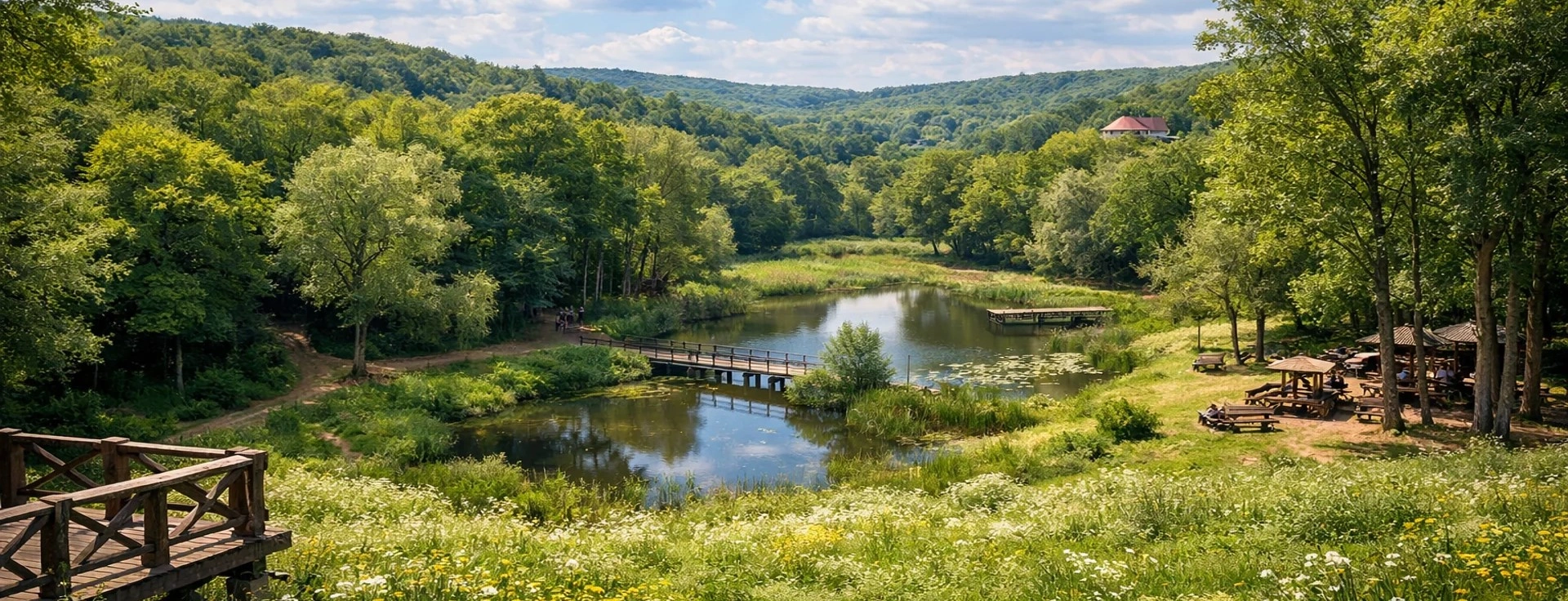
Combine Kilyos's open Black Sea landscape with Belgrad Forest, northern Sarıyer countryside and selected hidden natural destinations away from central Istanbul.
Request a Kilyos & Nature TourCombine Kilyos with Sarıyer, Belgrad Forest, Atatürk Arboretum, Rumeli Feneri, Garipçe, Bosphorus villages or other lesser-known Istanbul destinations according to your interests.
Create a private Istanbul itinerary around Byzantine and Ottoman history, neighborhoods, museums, food, forests, beaches, the Bosphorus and unusual cultural landscapes.
View Private Istanbul Tours
Continue planning with Istanbul's mosques, churches, palaces, museums, bazaars, forests, parks, beaches, Bosphorus villages and historic neighborhoods.
Explore Istanbul