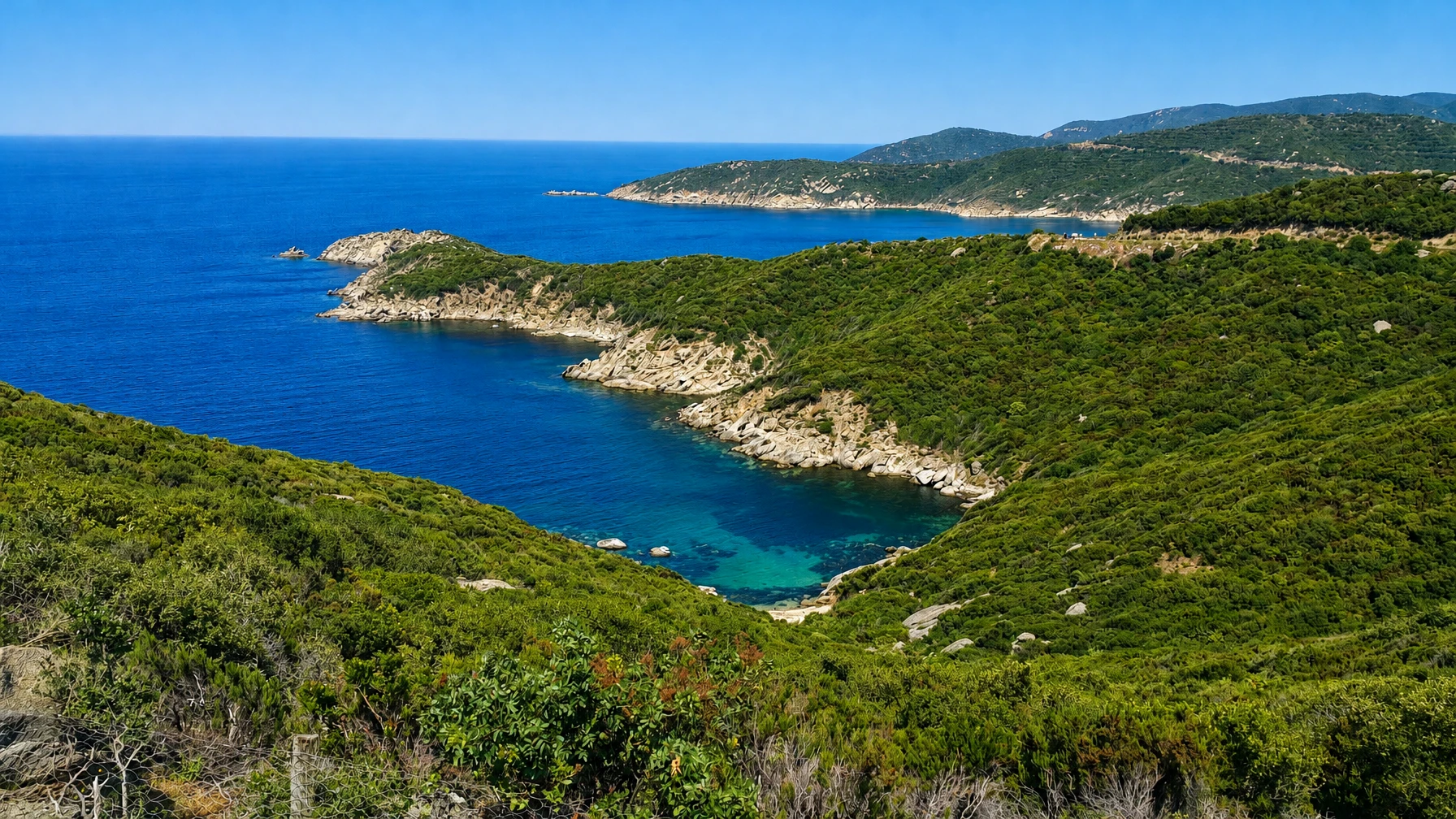
Private Kapıdağ Peninsula and Ancient Sites Programme
Share your dates, interests and group size so we can check access and suggest a practical route.
Request Your Private Programme





The Kapıdağ Peninsula is a place for travellers who enjoy walking, landscape and archaeology without expecting a restored open-air museum. Ancient Lydai (Lydae) is among the known remains, and access involves countryside paths rather than a standard ticketed entrance.
Official provincial accounts describe a walk from Ağa Limanı to Lydai, where visitors observed ancient tomb structures, cisterns and other remains. Ottoman-era cisterns are part of the same broader landscape. The names and exact identifications of other ancient sites on the peninsula require careful mapping; not every ruin can be assigned confidently to a particular city.
For a rewarding visit, focus on how the setting, the surviving features and the surrounding district fit together. Use an up-to-date local route description and consider an experienced guide. Some approaches begin from Ağa Limanı by boat, others from the Dalaman side; never assume a road reaches the ruins.
The ancient settlement has tomb and structural remains in a remote setting.
Water storage is a recurring clue to life on a dry peninsula.
An officially described walking approach links the cove with the inland ruins.
The nearby bay contains recorded historic structures and a different access experience.
Orientation, heritage and practical visitor advice before you travel.
Dalaman coast between Sarsala and the Göcek gulf
Peninsula walking and archaeological landscape
Ancient Lycian/Caria borderland with later Ottoman features
Forested ridges, remote coves and scattered ruins
Allow at least a half-day for a planned walk; do not treat it as a quick roadside stop.
Lydai ruins and remote coastal paths
The Kapıdağ Peninsula is a place for travellers who enjoy walking, landscape and archaeology without expecting a restored open-air museum. Ancient Lydai (Lydae) is among the known remains, and access involves countryside paths rather than a standard ticketed entrance.
The distinctive experience here is lydai ruins and remote coastal paths. Pine-covered hills rise between inlets, with long views over the Göcek gulf. The rugged coast helps explain why ancient settlements and maritime routes developed around particular coves and water sources.
Rather than rushing from one photo stop to another, make time to understand the place in its wider Muğla setting. Walk in mild, dry weather with ample daylight. Summer heat and limited shade can make remote routes demanding.
Official provincial accounts describe a walk from Ağa Limanı to Lydai, where visitors observed ancient tomb structures, cisterns and other remains. Ottoman-era cisterns are part of the same broader landscape. The names and exact identifications of other ancient sites on the peninsula require careful mapping; not every ruin can be assigned confidently to a particular city.
The key is to distinguish what can be seen on the ground from broader traditions, modern descriptions and reconstructions. The Kapıdağ Peninsula is a place for travellers who enjoy walking, landscape and archaeology without expecting a restored open-air museum. Ancient Lydai (Lydae) is among the known remains, and access involves countryside paths rather than a standard ticketed entrance.
Ancient Lycian/Caria borderland with later Ottoman features
Lydai ruins and remote coastal paths
Dalaman coast between Sarsala and the Göcek gulf
Use an up-to-date local route description and consider an experienced guide. Some approaches begin from Ağa Limanı by boat, others from the Dalaman side; never assume a road reaches the ruins.
Pine-covered hills rise between inlets, with long views over the Göcek gulf. The rugged coast helps explain why ancient settlements and maritime routes developed around particular coves and water sources.
The physical setting affects the pace and safety of a visit. Carry water and offline navigation, avoid lone off-trail exploration and never remove archaeological fragments.
The wider district also provides opportunities to connect scenery with cultural history, provided travel times and seasonal conditions are checked.
The ancient settlement has tomb and structural remains in a remote setting.
This is a useful place to slow down and examine the relationship between the feature and the surrounding landscape. Pine-covered hills rise between inlets, with long views over the Göcek gulf. The rugged coast helps explain why ancient settlements and maritime routes developed around particular coves and water sources.
Water storage is a recurring clue to life on a dry peninsula.
Look for the details that distinguish this stop from the other features nearby. Official provincial accounts describe a walk from Ağa Limanı to Lydai, where visitors observed ancient tomb structures, cisterns and other remains. Ottoman-era cisterns are part of the same broader landscape. The names and exact identifications of other ancient sites on the peninsula require careful mapping; not every ruin can be assigned confidently to a particular city.
An officially described walking approach links the cove with the inland ruins.
A practical visit should be shaped by conditions on the day. Carry water and offline navigation, avoid lone off-trail exploration and never remove archaeological fragments.
The nearby bay contains recorded historic structures and a different access experience.
This is a useful place to slow down and examine the relationship between the feature and the surrounding landscape. Pine-covered hills rise between inlets, with long views over the Göcek gulf. The rugged coast helps explain why ancient settlements and maritime routes developed around particular coves and water sources.
The combination of forest, ridges and sea is a major part of the reward.
Look for the details that distinguish this stop from the other features nearby. Official provincial accounts describe a walk from Ağa Limanı to Lydai, where visitors observed ancient tomb structures, cisterns and other remains. Ottoman-era cisterns are part of the same broader landscape. The names and exact identifications of other ancient sites on the peninsula require careful mapping; not every ruin can be assigned confidently to a particular city.
Paths are not a substitute for current maps, suitable footwear and a return plan.
A practical visit should be shaped by conditions on the day. Carry water and offline navigation, avoid lone off-trail exploration and never remove archaeological fragments.
Official provincial accounts describe a walk from Ağa Limanı to Lydai, where visitors observed ancient tomb structures, cisterns and other remains. Ottoman-era cisterns are part of the same broader landscape. The names and exact identifications of other ancient sites on the peninsula require careful mapping; not every ruin can be assigned confidently to a particular city.
The place is connected to other destinations through geography, history and travel routes, but not all nearby-looking places are easy to combine. Use an up-to-date local route description and consider an experienced guide. Some approaches begin from Ağa Limanı by boat, others from the Dalaman side; never assume a road reaches the ruins.
Begin with the most visible elements: lydai ruins and remote coastal paths. Then consider what they reveal about the people, water, terrain or transport that shaped this place.
The Kapıdağ Peninsula is a place for travellers who enjoy walking, landscape and archaeology without expecting a restored open-air museum. Ancient Lydai (Lydae) is among the known remains, and access involves countryside paths rather than a standard ticketed entrance.
Do not confuse a compelling legend, an old tourism description or a map label with a verified archaeological or conservation finding. Official provincial accounts describe a walk from Ağa Limanı to Lydai, where visitors observed ancient tomb structures, cisterns and other remains. Ottoman-era cisterns are part of the same broader landscape. The names and exact identifications of other ancient sites on the peninsula require careful mapping; not every ruin can be assigned confidently to a particular city.
Choose the stops that best fit your interests and the conditions on the day. The six highlights below are not necessarily a fixed walking circuit.
The ancient settlement has tomb and structural remains in a remote setting.
Water storage is a recurring clue to life on a dry peninsula.
An officially described walking approach links the cove with the inland ruins.
The nearby bay contains recorded historic structures and a different access experience.
The combination of forest, ridges and sea is a major part of the reward.
Paths are not a substitute for current maps, suitable footwear and a return plan.
Allow at least a half-day for a planned walk; do not treat it as a quick roadside stop.
Use an up-to-date local route description and consider an experienced guide. Some approaches begin from Ağa Limanı by boat, others from the Dalaman side; never assume a road reaches the ruins.
Opening times, entry arrangements, boat schedules and facilities are not guaranteed by this guide. Check the relevant official authority or current local operator before setting out. Carry water and allow time for unexpected delays.
Start by confirming where the public entrance, departure point or appropriate viewpoint is located. Use an up-to-date local route description and consider an experienced guide. Some approaches begin from Ağa Limanı by boat, others from the Dalaman side; never assume a road reaches the ruins.
Once there, begin with lydai ruins, then consider historic cisterns and ağa limanı approach if they are safely accessible. This sequence is thematic, not a promise of a signed path.
Finish with a pause to take in the setting, rather than trying to include every possible feature. Allow at least a half-day for a planned walk; do not treat it as a quick roadside stop.
Walk in mild, dry weather with ample daylight. Summer heat and limited shade can make remote routes demanding.
Summer heat, winter rain, sea conditions and visitor numbers affect different Muğla destinations in different ways. Check the local forecast and access rules before committing to a long journey.
A quiet hour can be more rewarding than a rushed stop. Allow flexibility for conservation closures, maintenance or changes in transport.
Start with a wide view that explains the landscape: forested ridges, remote coves and scattered ruins. Then look for details that tell the local story, such as lydai ruins or historic cisterns.
Photograph only from public, safe areas. Do not climb historic structures, approach protected wildlife or block narrow paths for a better angle.
Morning or evening light may flatter the scene, but access and safety rules always take priority over photography.
Carry water and offline navigation, avoid lone off-trail exploration and never remove archaeological fragments.
Accessible routes, toilets, handrails and step-free access cannot be assumed. Ask the site manager or operator for current details if mobility, balance or sensory access is a concern.
Families should match the route to the youngest or least mobile member of the group and be prepared to shorten the visit.
Use an up-to-date local route description and consider an experienced guide. Some approaches begin from Ağa Limanı by boat, others from the Dalaman side; never assume a road reaches the ruins.
Check actual travel time rather than straight-line distance. Some routes involve narrow roads, seasonal boat services, river crossings or rough tracks; a rental-car map does not establish public access.
If travelling independently, confirm where you can legally park and how you will return. For remote places, share your plan with someone before setting out.
Browse the Muğla travel guide for more regional ideas. The links below are thematic suggestions, not a guarantee of short driving distance.
Consider this as a complementary Muğla stop; verify the actual route, opening arrangements and time needed from Kapıdağ Peninsula and Ancient Sites before combining them.
Consider this as a complementary Muğla stop; verify the actual route, opening arrangements and time needed from Kapıdağ Peninsula and Ancient Sites before combining them.
Consider this as a complementary Muğla stop; verify the actual route, opening arrangements and time needed from Kapıdağ Peninsula and Ancient Sites before combining them.
Consider this as a complementary Muğla stop; verify the actual route, opening arrangements and time needed from Kapıdağ Peninsula and Ancient Sites before combining them.
Kapıdağ Peninsula and Ancient Sites is in Dalaman coast between Sarsala and the Göcek gulf, in Muğla Province, southwestern Türkiye.
Its defining appeal is lydai ruins and remote coastal paths. The surrounding setting is forested ridges, remote coves and scattered ruins.
Official provincial accounts describe a walk from Ağa Limanı to Lydai, where visitors observed ancient tomb structures, cisterns and other remains. Ottoman-era cisterns are part of the same broader landscape. The names and exact identifications of other ancient sites on the peninsula require careful mapping; not every ruin can be assigned confidently to a particular city.
Allow at least a half-day for a planned walk; do not treat it as a quick roadside stop. Add realistic time for transport, breaks and any access restrictions.
Use an up-to-date local route description and consider an experienced guide. Some approaches begin from Ağa Limanı by boat, others from the Dalaman side; never assume a road reaches the ruins.
Access, fees and operating hours can change. Check the relevant official site or local operator shortly before travelling; do not rely on an unverified price or timetable.
Walk in mild, dry weather with ample daylight. Summer heat and limited shade can make remote routes demanding.
Carry water and offline navigation, avoid lone off-trail exploration and never remove archaeological fragments.
Consider Sarsala Bay, Bedri Rahmi Bay, Göcek Travel Guide. Plan by actual travel time and conditions, not just map distance.
Carry water and offline navigation, avoid lone off-trail exploration and never remove archaeological fragments.
Leave no litter, follow official restrictions and give wildlife, residents and other visitors room. Do not remove stones, plants or artefacts, and do not touch protected paintings or historic surfaces.
Responsible travel is especially important in a province where archaeological landscapes, living villages, beaches and sensitive wetlands exist side by side.
Ask Wow Cappadocia / Venere Travel about a tailored regional itinerary, with realistic distances and confirmed site access rather than compulsory shopping stops.
Combine Kapıdağ Peninsula and Ancient Sites with a small number of complementary places at a comfortable pace.
Share your dates, interests and group size so we can check access and suggest a practical route.
Request Your Private Programme
Discover ancient cities, coastal villages, protected nature and local traditions across the province.
View the Muğla Travel Guide